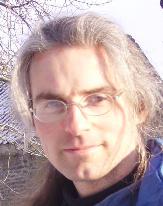
Neil DrummondView profile
Senior Lecturer
Neil Drummond is a Senior Lecturer in the Physics Department at Lancaster University, where he conducts research in computational condensed matter physics. He is affiliated with both the Quantum Technology Centre and the Condensed Matter Theory group, focusing on advanced computational methods for studying quantum systems. Dr. Drummond's research interests center on the development and application of quantum Monte Carlo methods for calculating material properties from first principles. His work spans several key areas including two-dimensional materials (particularly graphene, silicene, and transition metal dichalcogenides), materials at high pressure, and electron(-hole) gases. His computational approach enables precise modeling of quantum effects in condensed matter systems that are challenging to study with conventional methods. Analysis of Dr. Drummond's recent publications reveals a strong focus on quantum Monte Carlo techniques applied to two-dimensional electron systems and novel materials. His work consistently addresses fundamental questions about electron correlation, phase transitions, and quasiparticle properties in low-dimensional systems. The research demonstrates increasing computational sophistication, with recent papers exploring GPU acceleration of quantum Monte Carlo codes and reproducibility of computational methods. Dr. Drummond currently supervises two postgraduate research students, James Doughty and Clio Johnson, guiding them in the development and application of quantum Monte Carlo methods. He serves as Principal Investigator for the PAX-HPC (Particles At eXascale On high Performance Computers) project, funded by the Engineering and Physical Sciences Research Council, which runs from December 2021 to March 2025. This project represents significant research funding supporting advanced computational physics research at Lancaster University. Within the Lancaster University research ecosystem, Dr. Drummond contributes to the Quantum Technology Centre, where his computational expertise complements experimental work on quantum materials and devices. His research forms part of the broader condensed matter physics efforts at the university, which spans both fundamental theoretical investigations and potential applications in next-generation electronic materials.