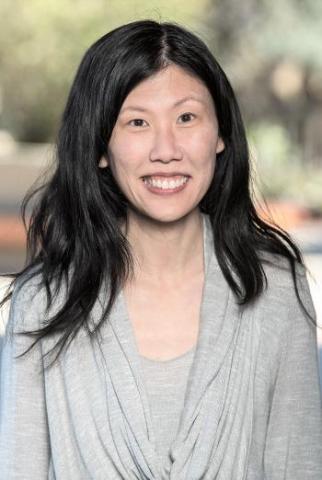
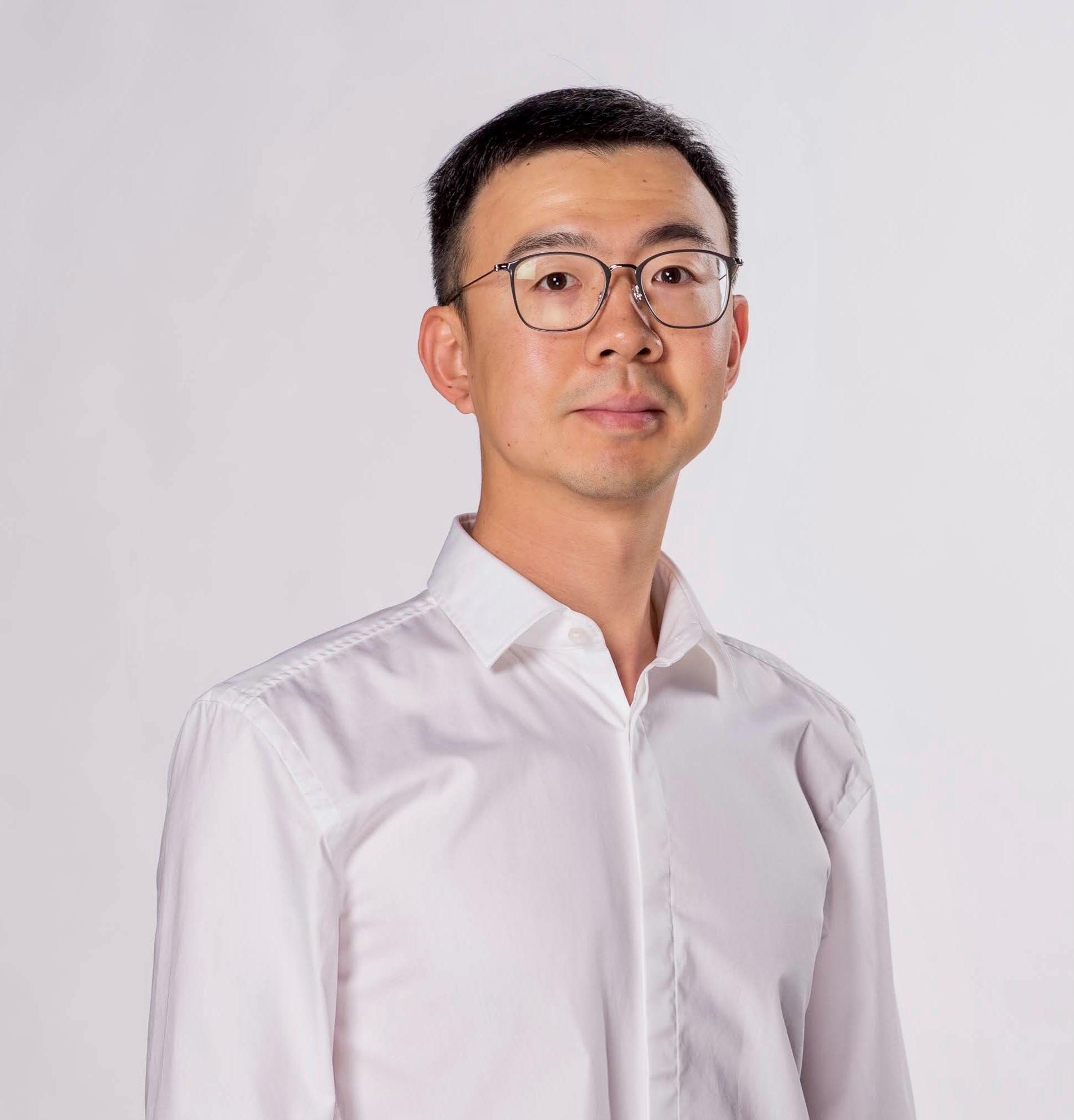
Wendy Mao is a Professor of Earth and Planetary Sciences, Photon Science, and (by courtesy) Geophysics at Stanford University, affiliated with SLAC National Accelerator Laboratory. Her research focuses on materials under extreme conditions, particularly high pressure, to understand planetary interiors, energy materials, and novel phases. Key interests include phase transitions in minerals, silicate melts, and light-element alloys, with applications in planetary core modeling and hydrogen storage. Education: Ph.D. in Geophysical Sciences from the University of Chicago (2005). Teaching includes Earth's interior dynamics, mineralogy, and a freshman seminar on diamonds. Research emphasizes high-pressure experimentation using diamond anvil cells and synchrotron X-ray techniques. Recent work explores metallic hydrogen, iron spin states in super-Earths, and amorphization in halide perovskites. Collaborations leverage machine learning and advanced imaging for material characterization. Her lab develops methods to stabilize metastable phases and study ultrafast structural responses under shock compression. The group also investigates defects in quantum sensors and novel synthesis pathways for energy materials.
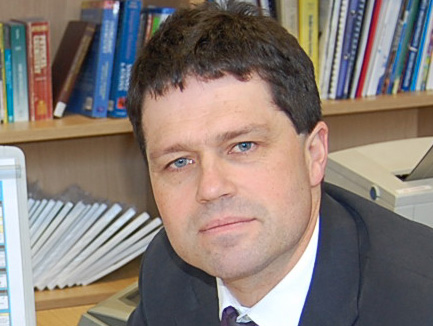
Professor Matthew Jonathan Rosseinsky holds the Chair of Inorganic Chemistry at the University of Liverpool, a position he has occupied since October 1999. His career includes significant appointments at the University of Oxford (1992-1999) and Bell Laboratories in New Jersey (1990-1992), following his DPhil at Merton College, Oxford. As a Fellow of the Royal Society and recipient of numerous prestigious awards, Professor Rosseinsky maintains an active research program and leadership roles in the international chemistry community. Professor Rosseinsky's educational background includes a First Class Honours degree in Chemistry with Quantum Chemistry from the University of Oxford (1987) and a DPhil in "Physical Properties of Superconducting Oxides and Radical Cation Salts" completed in 1990 under Professor P. Day FRS. His research focuses on the synthesis of new materials with applications in energy storage and generation, communications, separation, and catalysis. The Rosseinsky Group employs a broad range of synthesis and characterization techniques, including neutron and synchrotron X-ray diffraction, combined with computational methods in collaboration with Dr. George Darling. Current research areas include Dynapore, CO2 fuels, SOLBAT, and CATMAT projects that target specific material challenges. Professor Rosseinsky's publication record is exceptional, with 304 papers including 11 in Nature, 6 in Science, and 3 in Nature Materials, accumulating over 15,000 citations and an h-index of 56 as of 2012. His work demonstrates consistent excellence across materials chemistry, with particular emphasis on porous frameworks, electronic materials, and solid-state chemistry. Among his numerous accolades are the Harrison Memorial Prize (1991), Corday-Morgan Medal (2000), Royal Society Wolfson Research Merit Award (2002), De Gennes Prize (2009), and the prestigious Hughes Medal from the Royal Society (2011). He also holds an ERC Advanced Investigator Grant and has delivered distinguished lectures worldwide. Professor Rosseinsky has served in numerous editorial and advisory capacities, including as Associate Editor for Chemical Sciences, membership on the Royal Society Conference and Travel Grant Committee since 2007, and as a member of the International Advisory Board for the Max Planck Institut for Solid State Research since 2011. His professional activities extend to international review committees for research institutions in France, South Korea, and Saudi Arabia. The Rosseinsky Group operates within the Department of Chemistry at the University of Liverpool, collaborating extensively with researchers including Dr. John Claridge, Professor Andrew Cooper, and Professor Paul Chalker. The group maintains strong international partnerships and utilizes advanced facilities for materials synthesis and characterization to drive innovation in functional materials development.
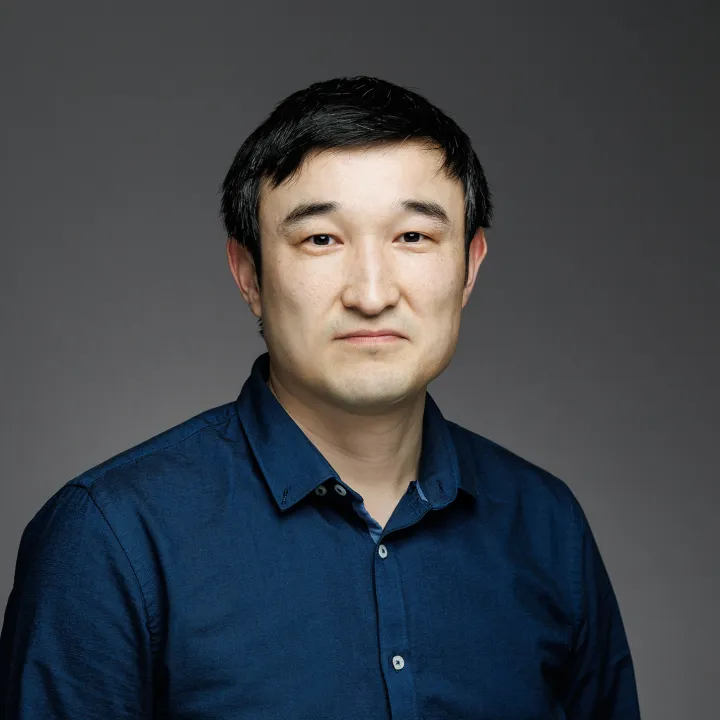
Bauyrzhan Primkulov is an Assistant Professor of Mechanical Engineering at Yale University. His research focuses on interfacial fluid dynamics and soft matter physics, with emphasis on fluid-fluid displacement in disordered environments and hydrodynamic pilot-wave theory. He holds a Ph.D. from MIT (2022) and B.Sc./M.Sc. from the University of Alberta. Primkulov's work bridges theoretical and experimental approaches to address energy and environmental challenges. His team investigates phenomena such as capillary flow dynamics in porous media, wettability effects on displacement patterns, and pilot-wave systems that mimic quantum behaviors. Key contributions include advancing Lenormand's phase diagram for multiphase flows and studying avalanches in imbibition processes. Recipient of InterPore PoreLab Award (2024) and MIT's CEE Best Doctoral Thesis (2022) Expertise spans experimental hydrodynamics, multiphase flow modeling, and granular media mechanics Active in developing novel methods like photoporomechanics to visualize stress fields in fluid-filled granular systems His recent studies explore crossover dynamics between stick-slip and steady sliding regimes in viscous slugs, as well as confinement effects in pilot-wave hydrodynamics. Primkulov collaborates across disciplines to translate fundamental fluid mechanics insights into practical solutions for energy storage and environmental systems.
S. Mohadeseh Taheri-Mousavi is an Assistant Professor in the Department of Materials Science and Engineering at Carnegie Mellon University (CMU), part of the College of Engineering. She joined CMU in September 2022 after postdoctoral appointments at MIT and Brown University. Her research is supported by major grants from NASA STRI, DARPA, the Army Research Laboratory, and the Naval Nuclear Laboratory, and she is affiliated with the NextManufacturing Center and the Wilton E. Scott Institute for Energy Innovation. Her educational background includes a Ph.D. from EPFL, Switzerland, and M.Sc. and B.Sc. degrees from Sharif University of Technology, Iran. She was awarded both early and advanced Swiss National Science Foundation fellowships during her postdoctoral studies. Taheri-Mousavi’s research focuses on the intersection of materials science, mechanical engineering, and computer science. She develops multi-scale computational models and AI-driven frameworks—such as AlloyGPT and generative AI agents—to design next-generation structural alloys, particularly for additive manufacturing and extreme environments. Her work emphasizes materials sustainability, industrial decarbonization, and uncertainty quantification in alloy design. The integration of machine learning with Integrated Computational Materials Engineering (ICME) and CALPHAD methods enables rapid exploration of high-dimensional composition and processing spaces. Her recent publications (2023–2025) show a strong trend toward AI/ML applications in alloy discovery, hydrogen embrittlement modeling, and high-temperature aluminum and tungsten alloys. These works reflect a deep commitment to accelerating materials innovation through human-AI collaboration and smart experimental validation. Her scientific honors include prestigious Swiss National Science Foundation fellowships. She has also received seed funding from the Scott Institute for Energy Innovation to study hydrogen embrittlement. She advises a dynamic team of doctoral students and a postdoctoral researcher, working on topics including hydrogen embrittlement, generative AI for welding, and gradient alloys. Her research is funded by high-impact grants from NASA, DARPA, the Army, and the Naval Nuclear Laboratory, supporting transformative projects in structural alloy design. She leads the Taheri-Mousavi Group, which operates within CMU’s Materials Characterization Facility and the NextManufacturing Center. The group focuses on developing novel AI-integrated computational frameworks to guide efficient and intelligent experimentation in alloy development.
Oleg Shpyrko is a Professor and Department Chair in the Department of Physics at the University of California, San Diego (UCSD). He leads a research group focused on nanoscale structural dynamics using advanced x-ray scattering techniques. His work bridges hard and soft condensed matter systems, including magnetic materials, energy storage materials, and biophotonic nanostructures. Shpyrko earned his Ph.D. in Physics from Harvard University in 2004. His research leverages national facilities like the Advanced Photon Source (APS) and Linac Coherent Light Source (LCLS). Key areas include coherent x-ray imaging, domain dynamics in magnetic systems, and operando studies of battery materials. His research interests span: Coherent X-ray Scattering and Imaging Magnetic Domain Dynamics Nanostructured Materials Energy Storage (battery cathodes) Biophotonic Structures Phase Transitions Notable achievements include pioneering X-ray Photon Correlation Spectroscopy (XPCS) for antiferromagnetic domain studies and revealing dislocation dynamics in battery materials. His work has been featured in Nature , Science , and Physical Review Letters . Shpyrko has mentored over 15 graduate students and postdocs, many of whom have become faculty at top institutions. Awards include the NSF CAREER Award (2010), Hellman Fellowship (2009), and the Rosalind Franklin Young Investigator Award (2008). His group operates facilities including Dynamic Light Scattering labs, AFM/EFM microscopes, and collaborates with synchrotron and neutron sources globally.
Shawn Xingshan Cui is Associate Professor in the Departments of Mathematics and Physics & Astronomy at Purdue University. His research bridges low-dimensional topology, quantum field theory, and quantum information science, with focus on topological quantum computation and tensor category applications. His work develops mathematical frameworks for topological quantum computing using knot theory, Hopf algebras, and modular tensor categories. Recent publications explore quantum error correction in topological codes (Kitaev model, toric code), non-semisimple invariants of 3-/4-manifolds, and quantum circuit implementations. He leads research on constructing fault-tolerant quantum gates using topological phases and anyonic braiding. Current projects investigate Floquet codes, fracton models, and the application of neural networks to quantum state representation. His SIAM News article 'Fighting Errors with Space' highlights spatial approaches to quantum error correction. He supervises graduate students working on quantum algorithms, topological phases of matter, and mathematical foundations of quantum computation. Teaching includes MA 261: Multivariate Calculus and specialized topics in topological quantum computation.
Professor Michael Thompson is a tenured faculty member in the Department of Materials Science and Engineering at Cornell University's College of Engineering. He holds the Dwight C. Baum Professorship in Engineering and specializes in advanced materials processing, particularly semiconductor materials under pulsed laser exposure. His research focuses on transient thermal processing (nanosecond to sub-second timescales) for material property modification and characterization, with applications in semiconductors, EUV lithography, and photonic materials. Thompson has authored over 120 papers and 20 patents, emphasizing industrial challenges like front-end junction formation and flexible electronics. Education: B.S. in Physics (CalTech, 1979), M.S./Ph.D. in Physics (Cornell, 1982/1984). He has received prestigious awards including the North American Award for Technical Contribution to the Semiconductor Industry (2009), multiple Cornell Excellence in Teaching Awards, and the Stephen H. Weiss Presidential Fellow designation (2021). His teaching focuses on thermodynamics and electronic properties, with a commitment to making abstract concepts accessible through real-world examples. Service: Leads curriculum development, ABET accreditation, and industry outreach. His lab develops novel methods for autonomous materials discovery using AI-driven approaches. Current projects include laser spike annealing for semiconductor doping and high-throughput synthesis of metastable materials.
Prof. Fakher Assaad is a Professor of Theoretical Physics I at Julius-Maximilians-Universität Würzburg. His research focuses on quantum many-body systems, with expertise in numerical methods like quantum Monte Carlo simulations. He investigates metal-insulator transitions, heavy fermion compounds, and correlated electron systems. His work spans topics including Hubbard models, graphene physics, and topological quantum phases. Assaad leads the Theoretical Physics I team and collaborates with postdocs and students such as Dr. Marcin Raczkowski and Jonas Schwab. Research interests include quantum phase transitions, strongly correlated systems, and emergent phenomena in condensed matter. His studies often address challenges like sign problems in fermionic simulations and the interplay between magnetism and topology. Recent publications highlight advancements in quantum criticality, lattice models, and topological defects. His work bridges theoretical frameworks with computational methods to explore novel materials and quantum phenomena. Advising includes supervision of PhD and master’s students in theoretical physics. His group is part of the Wilhelm Wien Institute and contributes to the FOR1807 research network. The team is based at the M1 Computer Science/Physics building in Würzburg.
Paul Nealey is the Brady W. Dougan Professor of Molecular Engineering at the University of Chicago's Pritzker School of Molecular Engineering. His research focuses on directed self-assembly of block copolymers for nanolithography, nanopatterning, and energy storage applications. He holds 14 patents and has authored over 180 publications. Notable collaborations include work with Prof. Juan de Pablo on block copolymer systems and Prof. Shrayesh Patel on ion transport in polymer electrolytes. His honors include American Physical Society fellowship and the 2010 Nanoscale Science Award. Education: PhD in Chemical Engineering (MIT), BChE (Rice University, magna cum laude) Previous Affiliation: Shoemaker Professor at UW-Madison Labs/Teams: Nealey Group (focusing on advanced lithography, nanofabrication, and cell-substrate interactions) His research spans interdisciplinary topics such as nanostructured surfaces for corneal prosthetics, polymer electrolytes for batteries, and computational-experimental teamwork with de Pablo. Current projects emphasize ion transport mechanisms in anion exchange membranes and solid electrolyte development. Awards: 2009 Inventor Recognition Award (SRC), 2010 AIChE Nanoscale Science Award Advising includes co-advised doctoral students and a focus on training graduate students in interdisciplinary molecular engineering. His lab employs postdocs and graduate students in areas like directed self-assembly, liquid crystalline polymers, and energy materials.
Davide Donadio is a Professor of Chemistry at the University of California, Davis. His research focuses on molecular modeling and simulations of materials, particularly in non-equilibrium processes, thermal transport, and nanostructure assembly. He leads the Naotheory Group, which develops predictive multiscale models for energy-related materials. Education : Habilitation in Materials Science, Italian Ministry for University and Research (2013) Ph.D. in Materials Science, University of Milano (2003) M.S. in Physics, University of Milano (1998) Research Interests : His work spans molecular-level understanding of energy conversion, thermal management, and nanostructure formation. Key areas include phononics, thermoelectrics, and interfacial phenomena in materials like ice surfaces, semiconductors, and clathrates. He employs machine learning and first-principles methods to bridge simulation and experiment. Awards : UC Davis Hellman Fellow (2017–2018) Young Scientist Award, Italian Institute for the Physics of Matter (1998) Grants & Labs : His funding and collaborations drive advancements in nanostructured materials and computational tools like PLUMED tutorials. The Naotheory Group actively publishes in high-impact journals and collaborates internationally on thermal transport and materials design.
Dr. Yu Zhang is a Lecturer of Data Science at the School of Business, UNSW Canberra. His academic career focuses on text mining, knowledge and information management, social computing, and bibliometric analysis, with interdisciplinary applications in areas such as sustainable logistics, supply chain management, and net-zero energy solutions. Fields of Interest: Text Mining, Information Management, Social Computing, Bibliometric Analysis, Machine Learning for Information Systems, Heterogeneous Network Analysis, Data Mining for Asset Management, Sustainable Logistics, Supply Chain Management, Net-zero Energy in Green Buildings, and Transportation. Grants: Served as CI in projects like "Online health monitoring in Li-ion batteries via trustworthy AI" (ACT Government, $1.22M) and "Delivering net-zero energy buildings" (TRaCE Lab to Market, $1.05M). Awards: Best Paper Award (Runner-up) at ADMA 2024 and Excellent Paper Award at ICEBE 2024. Teaching: Coordinated courses in Data Analytics, Workforce Planning Research, Business Capstone, and Logistics Intelligence with Big Data Analysis. Supervision: Guided research on topics like federated learning for healthcare fraud detection, blockchain-based carbon offset management, and tier-based supply chain visibility. His publications span materials science and photovoltaic technologies, with a focus on thin-film solar cells and defect passivation methods. For collaboration or supervision inquiries, contact him at m.yuzhang@unsw.edu.au .
University of Illinois Urbana-ChampaignUnited States
Karin A Dahmen is a Professor in the Department of Physics at the University of Illinois at Urbana-Champaign, affiliated with the Carl R. Woese Institute for Genomic Biology. Her research focuses on disordered systems, avalanche dynamics, and plasticity in metallic glasses. She explores material deformation mechanisms, critical phenomena, and the interplay between structure and mechanical properties in complex materials. Her work bridges condensed matter physics and materials science, with emphasis on slip avalanches in bulk metallic glasses, serration statistics in high-entropy alloys, and nanoscale magnetic ordering dynamics. Recent studies include experimental investigations of muscovite mica micromechanics and novel methods for analyzing compressive ductility in metallic glasses. Key achievements include the discovery of universal avalanche statistics across materials from nano-crystals to earthquakes, and the development of theoretical frameworks explaining memory effects in cyclically deformed glasses. Her honors include the APS Fellowship (2013), Guggenheim Fellowship (2016), and Sloan Research Fellowship (2001). Research trends show sustained focus on critical phenomena in materials under stress, with recent emphasis on seismic analogs in slip events and chemo-mechanical weakening mechanisms. Over 170 publications demonstrate her leadership in understanding deformation dynamics across multiple length scales.
Souvik Paul is an Assistant Professor in the School of Physics at Indian Institute of Science Education and Research Thiruvananthapuram, where he leads the Computational Materials Science (CMS) Laboratory established in 2023. His research employs advanced computational techniques to investigate fundamental properties of magnetic materials and topological phenomena. Education: Ph.D. (2015), Indian Institute of Technology Guwahati, India M.Sc. (2008), Presidency College, Kolkata, India B.Sc. (2006), University of Calcutta, India Dr. Paul's research focuses on computational materials science with particular emphasis on magnetism in two and three dimensions, topological magnetic quasiparticles like skyrmions, surface physics, strongly correlated systems, and multifunctional materials including Heusler alloys. His work primarily utilizes Density Functional Theory (DFT) to predict and explain material properties at the atomic scale, bridging computational predictions with experimental observations through international collaborations. His publication record reveals a consistent trajectory in magnetic skyrmions research, transition metal systems, and Heusler alloys, with significant contributions to understanding spin interactions, stability mechanisms, and electronic properties. His work frequently appears in high-impact journals including Physical Review Letters, Nature Communications, and npj Computational Materials, demonstrating both theoretical depth and practical relevance to materials design. Scientific Awards: Prime Minister Early Career Research Grant (2025) from Anusandhan National Research Foundation Departmental Postdoctoral Fellowship (2015), Uppsala University Doctoral fellowship (2009), IIT Guwahati Graduate Aptitude Test in Engineering (GATE) (2009), MHRD, India Dr. Paul actively mentors graduate students including Moinak Ghosh and Bipin Babu. Through the International PhD Program, he has established formal collaborations with Prof. Stefan Heinze at CAU Kiel, Germany, providing students with international research opportunities, access to high-performance computing facilities, and extended research stays at partner institutions. His recently awarded Prime Minister Early Career Research Grant supports innovative work on antiferromagnetic skyrmions. The Computational Materials Science Laboratory employs Density Functional Theory to investigate structural, electronic, magnetic, and optical properties of materials at the atomic level. The lab maintains strong international collaborations with research groups at CAU Kiel and Forschungszentrum Jülich in Germany, focusing on discovering novel materials, explaining fundamental material behaviors, and developing predictive materials theory with applications in electronics and energy technologies.
Yafei Ren is an Assistant Professor in the Department of Physics & Astronomy at the University of Delaware, part of the College of Arts & Sciences. She holds a B.S. and Ph.D. from the University of Science and Technology of China and joined UD in August 2023. Her research focuses on geometric phase effects and nonequilibrium phenomena in condensed matter systems, particularly electron-phonon-coupled systems with applications in spintronics, magnonics, and phononics. Her research interests include the study of topological materials, nonlinear magnonic processes, and the interplay between magnetism and band topology. Notable projects involve engineering corner states in topological insulators, exploring exciton-magnon coupling in layered semiconductors, and investigating light-driven phonon chirality in paramagnetic systems. Ren's work spans theoretical and applied condensed matter physics, with a focus on quantum materials and their novel functionalities. Her recent publications highlight advancements in topological phase transitions, orbital magnetization dynamics, and the design of higher-order topological insulators. She advises several graduate students and postdocs, including Saurabh, Randy, Will, Ali Kefayati, and Sanjib Das.
Dr. Andrew Logsdail is a Reader in Catalytic and Computational Chemistry at Cardiff University’s School of Chemistry, part of the Cardiff Catalysis Institute (CCI). He holds a PhD in Chemistry (University of Birmingham), an MRes in Materials and Nanochemistry, and a BSc in Natural Sciences. His research focuses on computational modeling of catalytic materials, software development (e.g., ChemShell), and heterogeneous catalysis with applications in energy and sustainability. He is a Fellow of the Higher Education Authority and a Chartered Chemist with the Royal Society of Chemistry. Key roles include UKRI Future Leaders Fellow (2020–2024) and leadership in international organizations like the IUPAC Division II. His work is funded by UKRI, EPSRC, and industry partners like BP and Johnson Matthey. Research interests span computational catalysis, nanomaterials, and data-driven materials discovery. Notable projects include QM/MM simulations for catalytic systems, development of the ChemShell software, and studies on zeolites, palladium catalysts, and CO₂ reduction. He supervises PhD students and contributes to teaching at undergraduate and postgraduate levels. Dr. Logsdail’s achievements include over 100 peer-reviewed publications and significant contributions to software development in computational chemistry. His awards include the UKRI Future Leaders Fellowship and leadership roles in national and international scientific committees. He actively engages in outreach, promoting chemistry education and catalysis research.