Michael Fitzka is a researcher at the Institute of Physics and Material Sciences , part of the Department of Natural Sciences and Sustainable Resources at the University of Natural Resources and Life Sciences, Vienna. His work spans advanced materials testing and atmospheric radiation studies, with a focus on ultrasonic fatigue analysis of metals and polymers, as well as long-term ozone and UV monitoring at the Hoher Sonnblick observatory. Key Research Areas: Materials fatigue testing, UV radiation climatology, synchrotron-based deformation analysis Recent Trends: Studies on hydrogen embrittlement, composite materials, and multi-axial fatigue behavior dominate his publications (2024-2011). Awards: No specific scientific awards mentioned in the dataset. Fitzka's work bridges fundamental material science and environmental monitoring, with applications in industrial engineering and climate change research.
Ryan B. Sills is an Assistant Professor in the Department of Materials Science and Engineering at Rutgers, The State University of New Jersey. His research focuses on condensed matter theory and condensed matter experiment, with particular expertise in dislocation dynamics, materials failure mechanisms, and computational modeling of materials behavior under various loading and environmental conditions. Dr. Sills' research interests span multiple critical areas in materials science, including the fundamental mechanisms of plastic deformation, fracture processes, and radiation damage in metallic materials. His work integrates advanced computational techniques including molecular dynamics simulations, dislocation dynamics modeling, and machine learning approaches to bridge length and time scales in materials modeling. He has made significant contributions to understanding hydrogen embrittlement phenomena, helium bubble formation in metals, and the complex interactions between defects in crystalline materials. Analysis of Dr. Sills' recent publication record reveals a strong and consistent research program focused on dislocation-related phenomena in metallic materials, particularly stainless steels used in nuclear applications. His work demonstrates an increasing integration of machine learning techniques with traditional physics-based modeling to create more efficient and accurate simulation frameworks. Notable research themes include void nucleation mechanisms, dislocation junction formation, anomalous hardening phenomena, and the development of multiscale modeling approaches to connect atomistic processes with macroscopic material behavior. Dr. Sills leads research supported by NSF CAREER funding, focusing on reconciling crack tip mechanics with plastic zone behavior during metal fracture. His work has significant implications for understanding hydrogen embrittlement and radiation damage in structural materials, particularly for applications in nuclear energy systems where material degradation under extreme environments is a critical concern.
Ryan Dehoff is a leading researcher at Oak Ridge National Laboratory (ORNL) , where he serves as the Director of the Manufacturing Demonstration Facility and Technical Area Lead for Advanced Manufacturing under the Nuclear Energy AMMT Program. His work focuses on additive manufacturing (3D printing) of metals and alloys, integrating digital thread for certification of advanced components. Education: Ph.D., Materials Science & Engineering, The Ohio State University (2008) M.S., Materials Science & Engineering, The Ohio State University (2005) B.S., Materials Science & Engineering, The Ohio State University (2002) Ryan's research spans process development in electron beam melting, laser metal deposition, and ultrasonic additive manufacturing. He explores material performance to enhance energy efficiency, reduce waste, and improve scalability. His projects include near-net-shape titanium fabrication and laser processing of nanocomposite coatings . His 15 most recent publications address topics such as irradiation capsule design , phase stability in intermetallic compounds , and deep learning-based defect detection . These works reflect trends in nuclear engineering , materials characterization , and data-driven manufacturing platforms . Scientific Awards: 2013 UT Battelle Early Career Award for Engineering 2012 R&D 100 Awards for NanoSHIELD Coating and Low-Cost Robotic Hand 1997–2007 Scholarships and Fellowships from The Ohio State University and NASA/DoD URETI
Jean-Michel Sallese is a Senior Researcher at École polytechnique fédérale de Lausanne (EPFL), affiliated with multiple units including the Group of Semiconductor Devices (GR-SCI-IEL) , SEL-ENS , and EDMI-GE . His work focuses on semiconductor device modeling, biosensors, radiation effects in electronics, and microfluidic systems. Research Areas: Field Effect Transistor (FET) physics and modeling Radiation-induced soft errors in integrated circuits High-energy particle solid-state sensors Nanowire and junctionless FET biosensors Microfluidic mixer modeling Recent publications highlight advancements in ISFET biosensors , radiation-hard CMOS , and negative capacitance FETs , with applications spanning medical diagnostics, high-energy physics, and industrial monitoring. He supervises PhD students and co-developed the EDLAB initiative for device modeling. Teaching includes core electronics courses and specialized topics like Modeling Micro-/Nano-Field Effect Devices . No scientific awards are explicitly mentioned in the provided texts.
Hilde Lea Lein is a Professor at the Department of Materials Science and Engineering, Norwegian University of Science and Technology (NTNU), where she has served as Deputy Head of Department for Education since 2019. She holds a master's degree (1999) and PhD (2005) in Inorganic Chemistry/Functional Materials from NTNU. Her research group affiliation is the Inorganic Materials and Ceramics Research Group. Her educational background includes: PhD in Inorganic Chemistry / Functional Materials (NTNU, 2005) Master of Technology in Inorganic Chemistry (NTNU, 1999) Research interests span: Functional coatings : Anti-icing/anti-fouling technologies and performance evaluation Ceramics & energy materials : Functional oxides for fuel cells/membranes Corrosion science : High-temperature degradation mechanisms and protection strategies Pedagogy : Teaching methodologies in chemistry/materials science Her publications emphasize materials synthesis (spray pyrolysis, hydrothermal methods), characterization of functional coatings/ceramics, and catalytic/perovskite systems. Recent work shows strong focus on energy materials (fuel cells), anti-icing surfaces, and hierarchical porous catalysts. Awards include: Excellent Teaching Practitioner (NTNU Teaching Excellence) She leads educational initiatives as Deputy Head and teaches core courses including TMT4110 Chemistry. Laboratory manuals authored by her are used in NTNU's curriculum.
Waqas Zulfiqar is a computational physicist at the University of Namur, Namur Institute of Structured Matter, focusing on light-matter interactions through atomistic simulations. His work contributes to sustainable technologies like hydrogen production, solar cells, and electrochromic devices, aligning with UN SDGs. PhD in Physics Active in materials science and optoelectronics Research spans perovskite materials, photocatalysis, and topological insulators. Recent studies examine strain effects in double perovskites and surface properties of inverse-perovskite compounds. He collaborates internationally on energy-related materials. His publications (h-index 7) highlight advancements in DFT modeling and opto-electronic property tuning. Collaborations include researchers in Belgium, Pakistan, and Saudi Arabia. He engages in electrokinetic remediation of contaminated soils and ion transport dynamics, though his primary focus is on energy materials.
Marco Salvalaglio is an Emmy Noether Group Leader at Technische Universität Dresden, leading the Mesoscale Material Modeling & Simulations Group since March 2021 under the DFG Emmy Noether Programme. He holds an apl. Professorship in Computational Materials Science (awarded 2024) and is affiliated with the Institute of Scientific Computing, Dresden Center for Computational Materials Science (DCMS), and Institute for Scientific Computing (IWR). His educational background includes a Ph.D. in Materials Science (2016), M.Sc. in Physics (2012), and B.Sc. in Physics (2010), all from the University of Milano-Bicocca. He completed an Italian Habilitation as Associate Professor (2020) and Full Professor (2025) in Theoretical Condensed-Matter Physics. Salvalaglio's research centers on continuum and mesoscale modeling of material properties , with expertise in Phase-Field/Phase-Field Crystal (PFC) modeling, surface diffusion, dewetting, heteroepitaxy, defect dynamics, and pattern formation. His work bridges solid-state physics, computational materials science, and applied mathematics, focusing on developing coarse-grained approaches to explain experimental outcomes. Current projects include elasticity in atomistic descriptions, PFC modeling for surface diffusion, solid-state dewetting simulations, and machine learning integration. Analysis of his 15 most recent publications reveals a strong emphasis on hyperuniformity analysis , grain boundary dynamics , and multiscale modeling of crystalline materials. Key trends include topological characterization of nanostructures, disconnection-mediated microstructure evolution, and thermodynamic modeling of non-equilibrium systems. Awards: DFG Heinz Maier-Leibnitz Prize (2025) Richard von Mises Prize - GAMM (2024) Young Academy of Europe Fellowship (2023) MSMSE Emerging Leader Award (2023) TU-Dresden Young Investigator (2021) He mentors students through research projects in computational materials science and applied mathematics, with funding primarily from the DFG Emmy Noether Programme. His group actively recruits for Ph.D. positions focused on mesoscale modeling challenges. Salvalaglio maintains extensive international collaborations, evidenced by invited talks at 25+ global conferences (2021-2026) including TMS Annual Meeting, GAMM, and E-MRS. The Mesoscale Material Modeling & Simulations Group operates within TU Dresden's computational ecosystem, leveraging resources from DCMS and IWR to develop open modeling frameworks for material microstructure evolution.
Daniele Pontiroli is an Associate Professor at the Department of Mathematical, Physical, and Computer Sciences of the University of Parma. With a career spanning over two decades, he transitioned from a PhD in Condensed Matter Physics (2006) through postdoctoral research (2006-2008), Research Fellow (2008-2012), and Researcher (2015-2022) roles to his current position since 2022. His work bridges experimental physics and materials science, focusing on advanced energy technologies. Research Interests : Condensed matter physics of carbon-based materials (graphene, fullerenes) Energy storage systems: supercapacitors, Li-ion, and Na-ion batteries Hydrogen storage mechanisms in nanostructured materials Magnetocaloric effects and magnetic nanocomposites Environmental applications of biochar and lichens Optically induced superconductivity in molecular systems Selected Publications Trends (2023-2025): Advancing laser-induced graphene for biosensors and supercapacitors Optimizing biomass-derived carbon materials for energy applications Investigating proton conduction in metal-organic frameworks Exploring photo-induced superconductivity in alkali fullerides
Jia-Jia Chen is a Professor at the Department of Chemistry, College of Chemistry and Chemical Engineering, Xiamen University. Her research focuses on electrochemical systems for energy storage and conversion, with a particular emphasis on polyoxometalates and polymer electrolytes. Education : PhD in Chemistry (2009-2014), Xiamen University BS in Chemistry (2005-2009), Xiamen University Research Interests include the structural evolution of redox-active materials, functional electrolytes in physical electrochemistry, and energy storage systems operating under solar/thermal/electrical environments. Her work addresses challenges in lithium-ion transport, polysulfide kinetics, and photo-energy conversion. Scientific Achievements demonstrate expertise in hierarchical electrocatalysts, polymer conductivity enhancement, and cluster-based energy materials. Recent publications highlight breakthroughs in light-driven water splitting and nanostructured battery components. Selected Scientific Awards : Nanqiang Young Top-notch Talent Fellowship Research Group includes doctoral students (Sun Pengfei, Lan Jinji), master’s students (Jiang Yuan, Ge Xinyue), and postdoctoral fellows (Cui Liping, Li Ke). Supported by grants from the National Natural Science Foundation of China (22393901, 22021001) and the National Key R&D Program (2021YFA1502300). Labs : Operates from Room 433 (Old Chemistry Building) and Room 5308 (Tan Kah Kee Innovation Laboratory).
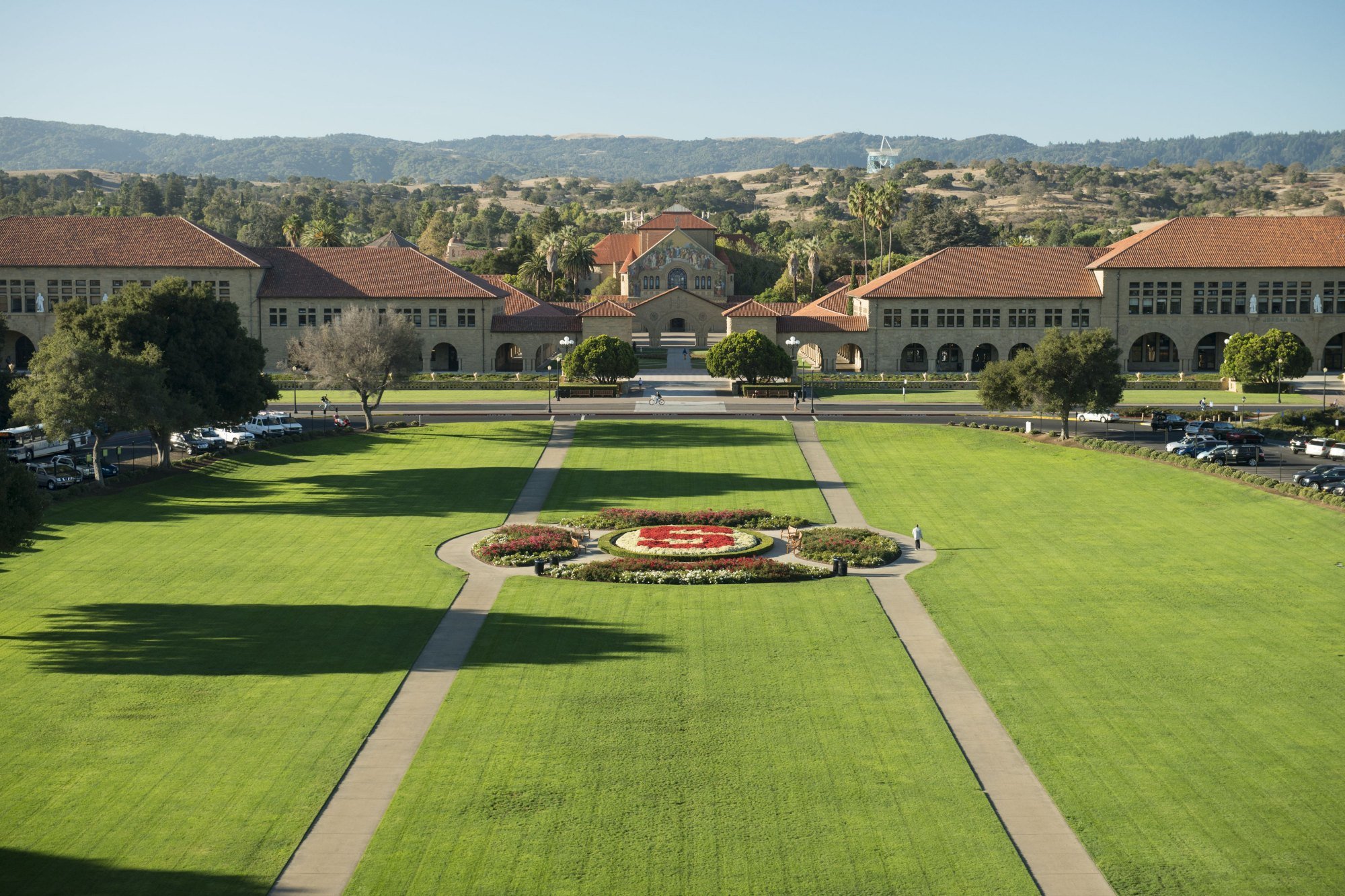
Joonhee Choi is an Assistant Professor of Electrical Engineering at Stanford University, where he leads the Choi Research Group focused on quantum science and engineering. His work bridges fundamental quantum physics with practical quantum technology applications. Education: PhD in Applied Physics, Harvard University AM in Physics, Harvard University BS/MS in Mechanical Engineering, Korea Advanced Institute of Science & Technology (KAIST) Professor Choi's research focuses on engineering quantum many-body systems to explore fundamental quantum phenomena while developing practical quantum applications. His work spans multiple disciplines within quantum science, with particular emphasis on improving quantum device fidelity through novel error-robust control protocols and efficient characterization methods. He investigates both atomic and solid-state quantum systems, working to advance quantum simulation, metrology, and information processing capabilities. His group develops large-scale quantum devices that push the boundaries of what's possible in quantum technology. Analysis of Professor Choi's recent publications reveals a strong focus on quantum error correction techniques, particularly erasure conversion methods that significantly improve quantum device performance. His work spans multiple quantum platforms including optical tweezers with neutral atoms, Rydberg atom arrays, and solid-state systems like diamond vacancy centers. A consistent theme across his research is the development of practical methods to characterize, control, and improve quantum systems for real-world applications in computing, sensing, and communication. Scientific Awards: Terman Fellowship, Stanford University (2023) Outstanding Young Researcher Award, The Association of Korean Physicists in America (2021) IQIM Postdoctoral Fellowship, Caltech (2019-2022) Samsung Fellowship, Samsung (2013-2018) Professor Choi actively mentors numerous graduate students and postdoctoral researchers at Stanford. He serves as Doctoral Dissertation Advisor for Timothy Chang and Nick Gharabaghi, and as Doctoral Dissertation Reader for twelve PhD students. Additionally, he advises seven Master's students and sponsors postdoctoral researcher Tsz Him Leung. His teaching portfolio includes core courses in quantum mechanics, quantum control, and photonics, reflecting his expertise in both theoretical and experimental aspects of quantum engineering. The Choi Research Group at Stanford focuses on developing and engineering large-scale quantum devices using both atomic and solid-state systems. The lab's work centers on devising novel protocols for error-robust quantum control and efficient characterization that enable certified quantum operations. Current research directions include quantum simulation with Rydberg atom arrays, quantum metrology with optical clock systems, and quantum information processing with solid-state qubits. The group collaborates extensively with other researchers in quantum science both within Stanford and across institutions.
Professor Piotr Furmański is a distinguished academic at the Institute of Heat Engineering, Warsaw University of Technology, where he is affiliated with the Division of Thermodynamics within the Faculty of Power & Aerospace Engineering. He has held significant leadership roles including Head of the Institute of Heat Engineering (2013-2016), Deputy Director of IHE (2006-2012), and Deputy Dean of the Faculty of Power & Aerospace Engineering (1999-2005). His research spans multiple thermal engineering domains including heat transfer in heterogeneous media, thermal properties of materials, radiative heat transfer, thermal contact resistance, and thermal energy storage. Professor Furmański has made substantial contributions to understanding heat transfer phenomena in composites, porous media, and phase change materials, with applications ranging from building engineering to space technology. His publication record demonstrates expertise in computational thermal engineering, with numerous high-impact papers in ASME and other prestigious journals. His recent work focuses on advanced numerical methods for complex heat transfer problems, including radiation-conduction interactions, thermal storage systems, and micro-scale heat transfer phenomena. His research has evolved from fundamental heat conduction studies to sophisticated multi-physics modeling of thermal systems. Among his notable recognitions are nine Rector's Awards from Warsaw University of Technology spanning three decades (1979-2009), an NSERC Stipend (1992), and multiple awards from the Ministry of Science and Higher Education for his scientific achievements. Professor Furmański has supervised six PhD theses (two in cooperation with Oregon State University) and served as reviewer for 20 PhD and 11 D.Sc. theses. He has been actively involved in international research collaborations and has served on committees including the Committee of Thermodynamics and Combustion of the Polish Academy of Sciences.
Livan Fratini is a Full Professor at the University of Palermo (UNIPA), specializing in advanced manufacturing engineering. His research focuses on friction stir welding (FSW), additive manufacturing, and sustainable metal recycling processes. Core Expertise: Friction Stir Welding, Hybrid Manufacturing, Finite Element Modeling Key Themes: Energy efficiency in manufacturing, life cycle assessment (LCA), and microstructural analysis of alloys Recent publications demonstrate strong emphasis on numerical modeling of hybrid additive manufacturing, optimization of FSW parameters for dissimilar joints, and sustainability-driven recycling of titanium/aluminum alloys. His work integrates experimental validation with computational simulations to address industrial challenges in aerospace, automotive, and biomedical sectors. Current trends include multi-step friction stir consolidation for recycled billets, magnetic field-assisted forming techniques, and decision support tools for green manufacturing selection. Process mechanics analysis and residual stress prediction remain central to his contributions.
Maitreya Dutta is an Associate Professor in the Department of Electrical and Computer Engineering at the University of Texas at San Antonio (UTSA), affiliated with the Klesse College of Engineering and Integrated Design. His research bridges semiconductor device engineering, quantum physics, and materials science. Ph.D., Electrical & Computer Engineering, University of California, Davis M.S., Electrical Engineering, University of Cincinnati His research focuses on semiconductor devices , particularly diamond-based electronics for power applications and neutron detection, alongside quantum transport phenomena in quantum point contacts . Recent work explores spintronic devices like all-electric spin valves and doping strategies for diamond semiconductors. The 15 most recent articles highlight advancements in wide bandgap semiconductors , including high-voltage diamond diodes, neutron sensors, and quantum transport hysteresis. Keywords span Electrical Engineering , Materials Science , and Quantum Physics , with subfields like Spintronic Devices , Device Characterization , and Radiation Detection .
Sandrine Tusseau-Nenez is a Research Engineer and Head of the X-ray diffraction platform (DIFFRAX) at École Polytechnique's Department of Physics, within the Condensed Matter Physics Laboratory. With a PhD in Chemistry and Physics from the University of Dijon, she has developed extensive expertise in materials characterization, particularly X-ray diffraction techniques for both polycrystalline and thin film materials. Member of the PANalytical Users Club office since 2010 Member of the Reciproqs professional network Member of the French crystallography association Competent person in radiation protection since 2005 Her educational background includes a Professional License in Materials Analysis from Paris-Diderot University and specialized courses at CNAM-entreprises, focusing on metallurgy, metallography, and X-ray diffraction. Her technical expertise spans X-ray diffraction, thermodynamic analyses (ATD-ATG, DSC), material characterizations (SEM-EDX, BET), and phase diagram calculations using the Calphad method. Dr. Tusseau-Nenez's research focuses on applications of powder diffraction techniques for analyzing materials microstructure, with recent expansion into XRD thin film analysis. Her publication record shows consistent output across materials science, nuclear physics, and chemistry, with particular emphasis on uranium carbide targets for radioactive beam production, cement chemistry, and nanomaterials characterization. The analysis of her 15 most recent publications reveals a strong interdisciplinary approach connecting materials characterization with applications in nuclear physics, energy production, and civil engineering. 64 total publications with 874 citations Research spanning nuclear target materials, cement chemistry, and nanomaterials Active collaboration across physics, chemistry, and engineering disciplines As a research supervisor, she has co-supervised multiple PhD theses and numerous internships, demonstrating her commitment to training the next generation of materials scientists. Her leadership of the DIFFRAX platform provides critical characterization capabilities for researchers across École Polytechnique and collaborating institutions.
Yogesh Singh is a Postdoctoral Researcher at Aalto University , affiliated with the Department of Chemistry and Materials . His research focuses on advancing material science through innovative work in Atomic Layer Deposition (ALD) , memristors , perovskite solar cells , and photoconductive materials , addressing challenges in renewable energy and nanotechnology. Education Ph.D. in Material Science from CSIR-National Physical Laboratory Research Interests His work spans thin films , device fabrication , and process development , with a strong emphasis on sustainability. Key contributions include advancements in heterojunction solar cells , NO2 gas sensors , and memristive technologies for next-generation electronics. Publications & Collaborations Yogesh has published extensively in journals like ACS Applied Materials & Interfaces , Solar Energy , and RSC Advances , focusing on materials like SnSe , Sb2Se3 , and transition metal dichalcogenides . His research often involves collaborative efforts with colleagues such as Dr. Vidya Nand Singh and Dr. Ashish Kumar. Research Group Member of the Inorganic Materials Chemistry research group at Aalto University