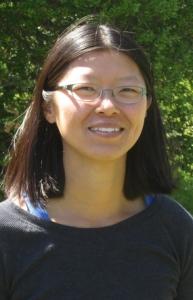
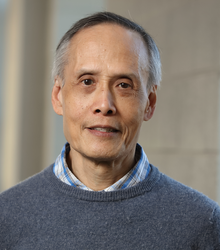
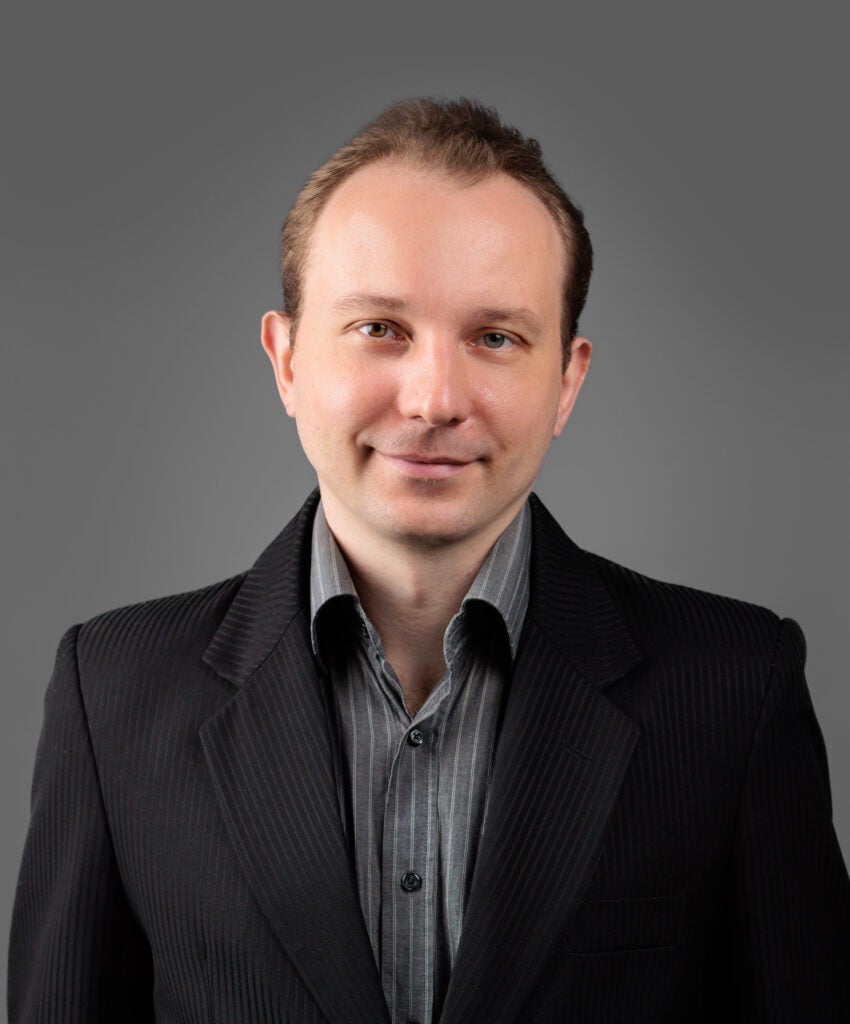
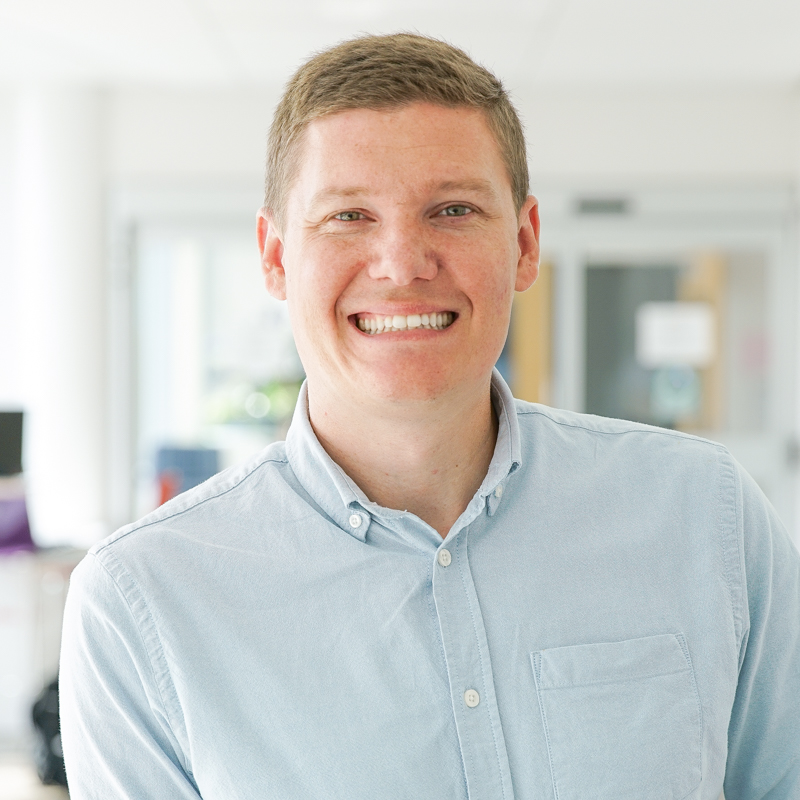
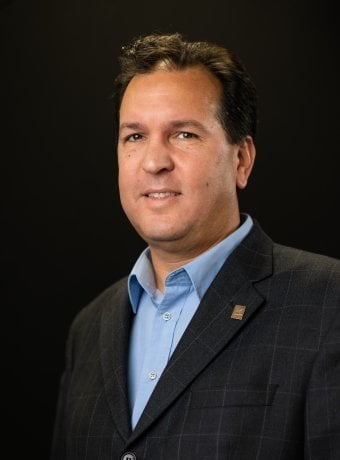
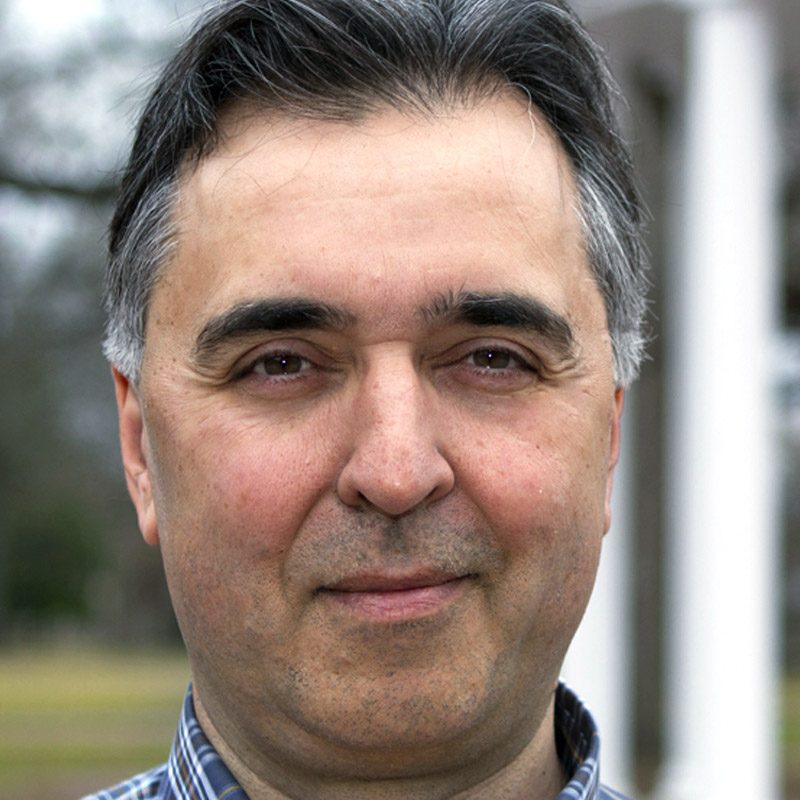
Patrick Ochieng is an Associate Professor at Oakwood University . His research focuses on molecular dynamics in RNA structures, protein folding, and metalloprotein interactions, particularly in the context of neurodegenerative diseases like Wilson disease. Key research themes include: RNA conformational sampling and tertiary structure formation in hairpin ribozymes Metallochaperone-target protein interactions and copper homeostasis Molecular mechanisms of disease-causing mutations in Wilson protein domains Recent publications highlight his work on transient interactions in ribozymes and copper transport defects using single-molecule nanovesicle trapping techniques.
Cathy Wong is an Associate Professor in the Department of Chemistry and Biochemistry at the University of Oregon's College of Arts and Sciences, affiliated with the Materials Science Institute and the Oregon Materials Institute (OMI). She leads a research group focused on photovoltaic and optoelectronic materials, particularly those assembled from nanoscale building blocks like quantum dots, organic molecules, and perovskite nanocrystals. B.Sc., McMaster University (2004) in Biological Chemistry Ph.D., University of Toronto (2011) in Physical Chemistry Postdoctoral work at UC Berkeley (2015) under Naomi Ginsberg Her research investigates how physical arrangements during materials self-assembly alter exciton and carrier behavior. Key areas include photovoltaic materials , optoelectronic properties , nanostructure formation , and in situ spectroscopy during processes like crystallization and chemical bond formation. She pioneered single-shot transient absorption spectrometers for real-time measurement of non-equilibrium systems. The 15 most recent publications highlight her expertise in perovskite nanocrystal growth , halide segregation dynamics , and organic film self-assembly . These works span physical chemistry , materials science , and ultrafast spectroscopy , with subfields including exciton dynamics , ligand engineering , and photovoltaic stability . Her lab trains students in advanced techniques while developing instrumentation for time-resolved microscopy and shot-to-shot correction of photoluminescence. She mentors undergraduates and graduate researchers, including award-winning advisees like Zach, Weston, and Logan.
S. Joseph Poon is the William Barton Rogers Professor of Physics at the University of Virginia in the Department of Physics, College of Arts and Sciences. He is an active experimental condensed matter physicist with a Ph.D. from the California Institute of Technology (1978). His research spans thermoelectric materials, magnetic skyrmions, and high-entropy alloys, combining experiment, computation, and data science. His research focuses on three main areas: (i) thermoelectric properties of narrow-gap semiconductors and topological semimetals, (ii) synthesis and computational modeling of ferrimagnetic and antiferromagnetic heterostructures exhibiting skyrmions and anomalous Hall effects for spintronics, and (iii) data-driven exploration of high-entropy alloys in high-dimensional composition space. These efforts aim to enable low-power, ultrafast computing and superior functional materials. The recent publications reflect a strong trend in topological magnetism and advanced materials design. His group leverages atomistic simulations, thin-film synthesis, and machine learning to uncover new physical phenomena and optimize material performance. Work on skyrmionics and high-entropy alloys demonstrates a forward-looking approach integrating physics with data science. Notable scientific recognition includes: 2020 Jesse W. Beams Research Award, American Physical Society (Southeastern Section) His research has attracted significant funding, including a $3.4 million DARPA grant for developing ultra-compact computing memory. He leads a vibrant research group and collaborates extensively with experts in spintronics and materials theory. He is also active in departmental governance, serving on key committees such as the APS/AAAS Fellowship Committee (Chair), Long Range Planning Committee, and Chair's Advisory Committee. His lab focuses on experimental and computational studies of quantum and emergent phenomena in complex materials.
Dr. Maciej Koperski is an Assistant Professor at the Department of Materials Science and Engineering, National University of Singapore (NUS). His research focuses on quantum phenomena in materials, including magneto-optics, quantum light emission, and magnetic/electronic properties of van der Waals materials. He co-authored influential reviews on magnetism in 2D systems (Nature Nanotechnology 2019) and magneto-optical properties of transition metal chalcogenides (Nanophotonics 2017). Research interests span excitonic physics across dimensionalities, optoelectronic properties, and structural/magnetic characterization of materials like CrI3, WSe2, and hexagonal boron nitride. His group pioneered studies on single photon emitters in layered materials and explores applications in quantum technologies. He leads a lab with advanced facilities for materials synthesis, optical characterization, and device fabrication. Notable contributions include discoveries in magnetic domain control via strain engineering (Nature Communications 2020), exciton dynamics in InSe (ACS Nano 2019), and Zeeman splitting in TMD monolayers (2D Materials 2018). His work bridges fundamental physics with practical applications in optoelectronics, energy storage, and quantum devices.
Ole Madsen is a Professor at the Department of Materials and Production within The Faculty of Engineering and Science at Aalborg University . His research focuses on Robotics and Automation , particularly in 5G Smart Production , AI for Manufacturing , and Industry 4.0 applications. He also holds a part-time position at Adding Robotics , applying his expertise in robot integration for industrial and healthcare settings. Research Interests : Robotics, Automation, AI, Sensor Systems, Modular Manufacturing, Welding Technology, Digital Twins, Human-Centered Robotics, Industry 4.0 His work spans 35+ years with over 205 publications , emphasizing smart production systems and robot-assisted processes . Key contributions include Swarm Production Architectures , 5G-Enabled Robotics , and Human-Robot Collaboration frameworks. He has supervised 10 PhD students and led major projects like RAU (Robot-Assisted Ultrasound) and GINP: Robotics & AI Innovation Network . Scientific Awards : SCAP2020 Best Presentation Award (2020) Ole's 31 projects include AP2030: Aseptic Factory 2030 (pharma production), AddSmart (robotics R&D), and 5G-Enabled Autonomous Systems . His 127 press/media mentions highlight advancements in robotic welding , industrial metaverse , and swarm production . He maintains an ORCID: 0000-0003-2133-2541 with extensive publication records across Swarm Robotics , Modular Manufacturing , and AI-Driven Production .
Arthur Bartels is a Professor at the Mathematical Institute, Department of Mathematics and Computer Science, University of Münster. He is a principal investigator in the CRC 1442 'Geometry: Deformations and Rigidity' and a key member of the Excellence Cluster 'Mathematics Münster', focusing on fundamental problems in topology and geometry. Research Interests: His work centers on topology , particularly algebraic K-theory , L-theory , and the Farrell-Jones conjecture . He investigates geometric rigidity , coarse geometry , and conformal field theory through operator algebras and higher categories. His research connects deep questions in group theory, manifold topology, and mathematical physics. Publication Trends: His recent work (2017–2022) shows a strong focus on conformal nets and higher categorical structures in quantum field theory, while continuing foundational work on isomorphism conjectures for K- and L-theory in geometric group theory. The articles reflect a dual expertise in abstract homotopy theory and concrete geometric analysis. Scientific Awards: No specific awards mentioned in the provided text. Advising and Grants: While no students are listed, he leads major research projects funded by the DFG, including CRC 1442 - C03 'K-theory of group algebras' and EXC 2044 - B2 'Topology'. These projects involve developing tools in index theory, surgery theory, and coarse geometry to study manifolds and group rings. Labs and Teams: He leads the 'AG Topologie' (Topology Research Group) at Münster and co-organizes the 'Advanced Seminar Topology' with colleagues. He is part of a large collaborative environment within Mathematics Münster, working closely with experts in analysis, geometry, and mathematical physics.
Artur Widera is a Professor in the Department of Physics at the University of Kaiserslautern, leading the Individual Quantum Systems research group. His experimental work focuses on quantum physics with single atoms, photons, solid-state defects, and ultracold quantum gases, operating advanced laboratories for quantum simulation and sensing. Research spans ultracold quantum gases in disordered potentials (Anderson localization, BEC-BCS crossover), quantum transport in fermionic systems, and solid-state quantum sensing using nitrogen-vacancy centers. Key projects include dipole oscillations in disordered traps, quantum engine cycles, and nanodiamond-based magnetometry. The group develops instrumentation like fiber-tip endoscopes and polymer waveguides for quantum control. Recent publications (2019–2024) reveal strong emphasis on disorder-induced phenomena in quantum gases, superfluid dynamics, and quantum sensor engineering. Trends show increasing integration of quantum simulation with solid-state systems, particularly using NV centers for metrology, and exploration of non-equilibrium thermodynamics in atomic ensembles. Prof. Widera actively supervises students across all academic levels, with recent theses covering entangled photon generation, quantum gas dynamics in speckle potentials, and NV-center integration into photonic chips. Group members operate experimental setups for ultracold atoms (Rb, Cs BECs) and quantum optics, utilizing facilities like the Nano Structuring Center for nanofabrication. The research group maintains two primary laboratories: one for ultracold quantum gases (featuring MOTs, optical lattices, and disorder potentials) and another for solid-state quantum systems (with nanodiamond manipulation, microwave control, and waveguide fabrication). Collaborations with theoretical physicists drive studies on localization, superdiffusion, and quantum phase transitions.
Erica Kinne, MD is an Associate Professor in the Department of Radiology at Loma Linda University School of Medicine . Currently serving as Program Director for the SM-Diagnostic Radiology Residency Program and Associate Program Director for the SM-Interventional Radiology Integrated Residency Program, she focuses on diagnostic radiology education and interventional radiology training. Education: Doctor of Medicine (MD), Loma Linda University , 2008 Research Interests: MRI techniques for visceral adipose tissue measurement Knee cartilage assessment in MRI Cerebral microhemorrhage detection post-cardiopulmonary bypass SNR optimization for meniscal tear diagnosis CT dose optimization in high-BMI patients Metabolic/perfusion brain abnormalities in mTBI Notable Research Projects: CT dose evaluation based on BMI (Investigator, 2024) C7 anterolisthesis prevalence in adults (PI, 2024) Knee cartilage health analysis (Investigator, 2019-2020) Umbilical fascial defect correlations with BMI (PI, 2024) Metabolic brain abnormalities post-mTBI (Investigator, 2025-2026)
Michael Hilton is an Associate Teaching Professor in the Software and Societal Systems Department of the School of Computer Science at Carnegie Mellon University. He also serves as the Associate Department Head for Education and directs both the Software Engineering Minor and Software Engineering Concentration programs. His work bridges academic research with practical software engineering education. Ph.D. in Computer Science, Oregon State University (2017) M.S. in Computer Science, Cal Poly San Luis Obispo (2013) B.S. in Computer Science, San Diego State University (2002) Professor Hilton's research primarily focuses on understanding and improving the developer experience, with particular emphasis on flaky tests, continuous integration practices, and software engineering education. His work combines empirical studies of real-world development practices with educational innovations to enhance how software engineers are trained. He has conducted extensive research on test flakiness, identifying patterns, causes, and potential solutions to this pervasive problem in modern software development. His scholarly contributions reveal a consistent focus on practical software engineering challenges, particularly those affecting developer productivity and software quality. The research trajectory shows increasing attention to educational aspects of software engineering, including team-based learning, structured feedback mechanisms, and the impact of emerging technologies like AI on programming education. Professor Hilton has over 20 years of professional experience in software development, including 9 years at SPAWAR Pacific where he worked on projects for the US Navy, Coast Guard, and White House. This industry background informs his teaching approach, which emphasizes preparing students for real-world challenges they'll face after graduation. He teaches software engineering-focused courses and has developed educational approaches that integrate practical development experience with theoretical foundations. His teaching philosophy centers on providing students with both immediate practical skills and enduring principles that will serve them throughout their careers, with special attention to software engineering in startup environments.
HUANG Li is an Associate Professor in the Department of Physics at Southern University of Science and Technology (SUSTech) , where she has been since September 2019. She joined SUSTech in February 2013 as an Assistant Professor, advancing to her current rank. Her research focuses on quantum materials , novel energy materials , nonequilibrium phase selectivity , and surface/interfacial phenomena using first-principles computational methods and theoretical models . Educational Background: Ph.D. in Physics, Fudan University (2006) M.Sc. in Physics, Xiangtan University (2002) B.A. in Physics, Xiangtan University (1999) Research Interests span quantum materials (e.g., Moire superconductors , topological insulators ), novel energy materials (e.g., thermoelectrics , supercapacitors ), and surface/interfacial dynamics. Her recent work emphasizes two-dimensional systems , spin-valley-layer coupling , and nonequilibrium phase transitions in van der Waals heterostructures and metal-organic frameworks . Publications highlight her expertise in ab initio molecular dynamics , density functional theory , and quantum transport . Key trends include Moiré engineering in twisted bilayers, strain-tunable magnetism , and ferroelectricity in layered materials. Scientific Awards and Grants include leadership roles in projects funded by the National Natural Science Foundation of China and Shenzhen Science & Technology Commission . Notable grants address quantum state control in Moiré superlattices , nonlinear Hall effects , and thermoelectric performance enhancement . Professional Experience: Postdoctoral Research Associate at Ames Laboratory (2008–2012) Joint Postdoc at Georgia Institute of Technology & Ames Laboratory (2006–2008) Visiting Scholar at Harvard University & Oak Ridge National Laboratory (2004–2006)
Dr. Chen Xihan is an Associate Professor in the Department of Mechanical and Energy Engineering at the Southern University of Science and Technology (SUSTech) . Since 2021, he has led a vibrant research group focused on ultrafast spectroscopy , solar energy conversion , and photocatalytic mechanisms . He is a principal investigator on the National Youth Project and a Shenzhen Overseas High-Level Talent (Category B). Education: Ph.D. in Physical Chemistry, University of California, Berkeley (2012–2017) B.S. in Chemistry, Hong Kong University of Science and Technology (2008–2012) Research Focus: Dr. Chen’s research integrates advanced ultrafast transient spectroscopy to probe and control energy-conversion processes at material interfaces. His group investigates ultrafast interface carrier dynamics , quantum spin control , and photocatalytic kinetics in perovskites, 2D materials, and hybrid systems. These studies provide real-time insights into surface recombination, charge separation, and reaction intermediates—knowledge critical for designing next-generation solar cells, solar-fuel devices, and spin-optoelectronic components. Publication Impact & Trends: With more than 60 peer-reviewed papers in journals such as Science , Nature Catalysis , Nature Communications , Energy & Environmental Science , and Journal of the American Chemical Society , Dr. Chen’s work has accumulated over 6,000 citations (h-index 36). Recent articles (2023–2024) emphasize hot-carrier extraction , spin-polarized lifetime tuning , and interface passivation strategies that push perovskite solar-cell efficiencies beyond 27 % and enable stable, metal-free photocatalytic fuel production. Scientific Awards: Shenzhen Overseas High-Level Talent (Category B), 2021 NREL Postdoc Publication Award, 2020 NREL Director’s Award, 2019 Overseas High-Caliber Personnel (Level B), Shenzhen, 2018 Funding & Team Leadership: Dr. Chen is PI on the National Youth Project and multiple provincial grants. His group presently includes postdoctoral researchers, PhD and MSc students, and visiting scholars working on three synergistic thrusts: (1) in-situ ultrafast reflectance spectroscopy of solar-cell surfaces, (2) transient spin-polarization studies of low-dimensional perovskites, and (3) time-resolved mechanistic studies of photocatalytic water splitting and CO₂ reduction. The team operates state-of-the-art femtosecond pump-probe and transient absorption laboratories at SUSTech’s Engineering Building North 312 .
Dr. Lea Kragt is a researcher in the Department of Oral and Maxillofacial Surgery at Erasmus MC. Her work focuses on oral health disparities, particularly in pediatric populations with craniofacial conditions. Research interests include: Dental caries epidemiology Cleft lip/palate pathologies Molar-Incisor Hypomineralisation (MIH) Socioeconomic determinants of oral health Longitudinal cohort studies Recent research analyzes global oral health trends, poverty-caries dynamics, and enamel defects in cleft patients. Her publications emphasize interdisciplinary collaboration and public health implications. Key affiliations: Erasmus MC, Oral and Maxillofacial Surgery Global Consortium of Oral Health Birth Cohort Studies (GLOBICS)
Nathir Rawashdeh is an Assistant Professor in the Department of Applied Computing at Michigan Technological University , with an affiliated appointment in Electrical and Computer Engineering . He is a Senior Member of the IEEE and a member of the Institute of Computing and Cybersystems (ICC) and Great Lakes Research Center . Education: Ph.D., Electrical Engineering, University of Kentucky, 2007 MS, Electrical and Computer Engineering, University of Massachusetts, Amherst, 2003 BS, Electrical Engineering, University of Kentucky, 2000 Dr. Rawashdeh's research focuses on unmanned vehicle perception , image analysis , control systems , and mechatronics , with applications in autonomous driving, winter weather adaptation, and industrial automation. His work includes sensor fusion, deep learning, and AI-enhanced manufacturing solutions. Recent publications highlight advancements in winter weather autonomous driving , UV disinfection robotics , and AI-driven industrial inspection systems . His research spans mechatronics curriculum development, industry 4.0 integration, and cross-cultural educational initiatives. Scientific Awards: Senior Member of the IEEE Dr. Rawashdeh has secured over $2 million in funding from organizations including the NSF , Ford Motor Co. , NIST , and the European Commission . His grants support projects like GPU clusters for research, winter weather autonomous driving standards, and UV sterilization robotics. He leads the Mobile Robotics Lab at Michigan Tech, focusing on collaboration and innovation in autonomous systems and mechatronics research.
Federico Salas-Lucia is an Assistant Professor in the Department of Medicine, Division of Endocrinology at the University of Chicago's Pritzker School of Medicine. His research integrates neurobiology and endocrinology to investigate thyroid hormone mechanisms in brain development and function, utilizing human iPSC-derived models, transgenic mice, and multi-omics approaches. His educational background includes a BS in Biology from the University of Alicante (2012), an MSc in Neuroscience from University Miguel Hernandez (2014), and a PhD in Neuroscience from the same institution (2018). Dr. Salas-Lucia's research focuses on intracellular mechanisms customizing thyroid hormone action during human brain development. His laboratory examines how thyroid hormones regulate bioenergetic processes supporting neurogenesis, with emphasis on mitochondrial function in neural progenitor cells and epigenetic regulation via DNA methylation. Using cutting-edge iPSC-derived cerebral organoids and advanced imaging, his work bridges molecular mechanisms to clinical correlations between maternal thyroid levels and neurodevelopmental outcomes. Current investigations include thyroid hormone transport via MCT8, deiodinase activity (DIO2/DIO3), and nuclear receptor signaling in neural cells. His publication portfolio since 2018 shows accelerating productivity, with 23 publications through 2025 (8 in 2023 alone). The research demonstrates strong thematic continuity in thyroid-brain interactions , evolving from foundational rodent studies to sophisticated human iPSC models. Recent work increasingly incorporates multi-omics approaches and addresses clinical implications for disorders like Allan-Herndon-Dudley syndrome and Alzheimer's disease. Emerging Group Leader Award, International Society for Neurochemistry (2025) As principal investigator of the Salas-Lucia Laboratory, he directs research on thyroid hormone signaling in neural development. His work receives significant attention, with publications referenced in clinical guidelines and covered by multiple news outlets. The laboratory maintains active collaborations with leading endocrinology researchers including Antonio Bianco and Samuel Refetoff, and participates in interdisciplinary networks exploring metabolic regulation and neurodevelopment. Current projects investigate epigenetic mechanisms in thyroid-mediated cortical development and therapeutic strategies for thyroid hormone transport disorders.
Sorin Mitran is a Professor in the Department of Mathematics at the University of North Carolina at Chapel Hill. His research focuses on computational simulation of multiscale and multiphysics systems, data-driven constitutive relations for hyperelastic materials, and information geometry for reduced stochastic models. PhD in Aerospace Engineering from Politehnica University Bucharest (1995) Professional background includes fellowships at University of Tokyo (1993), Karlsruhe Institute of Technology (1998-1999), and University of Washington (1999-2002) His research develops numerical tools to predict macro-scale behavior from micro-scale interactions, such as plastic deformation of metals from lattice defect dynamics, microtubule mechanics from molecular dynamics, and protein folding from atomic-level simulations. Mathematical approaches include adaptive computation, machine learning for constitutive law prediction, and information geometry for stochastic process analysis. Recent publications (2023-2018) span computational biology, multiscale fluid dynamics, and medical applications of continuum mechanics. Articles frequently explore data-driven modeling, wave propagation in biological systems, and GPU-accelerated numerical methods like Lattice Boltzmann and Lattice Fokker-Planck formulations.