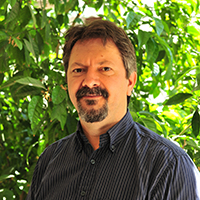
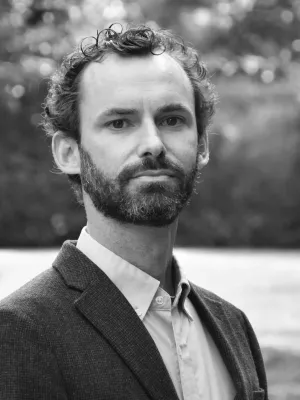
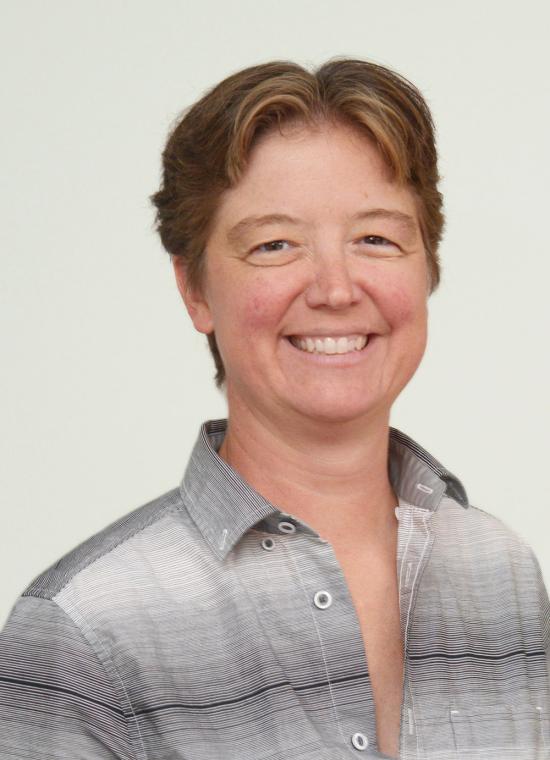
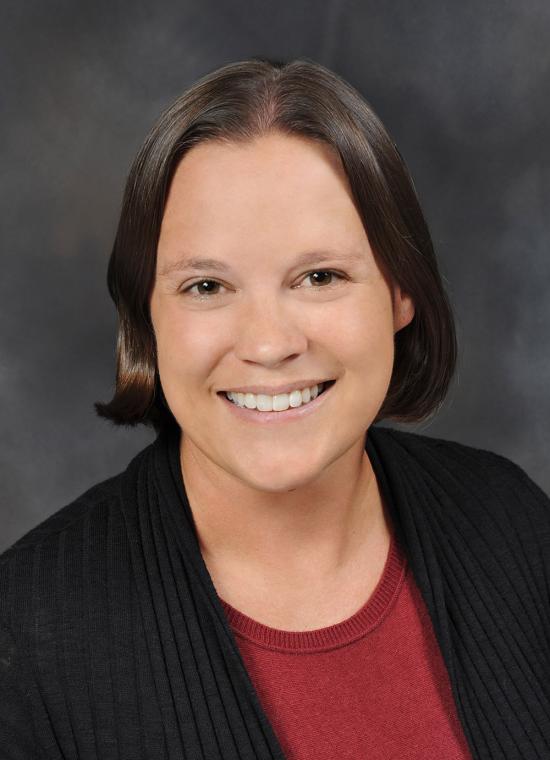
Jérôme Creuze is a Professor of Chemistry at Université Paris-Saclay, affiliated with the Institute of Molecular Chemistry and Materials of Orsay (ICMMO - UMR 8182) under the SP2M unit. He co-leads the Synthesis, Properties and Modeling of Materials team, focusing on thermodynamics of metallic nanoalloys , environmental effects on alloy surfaces , and metal-on-metal heteroepitaxy using atomic-scale simulations. Research Themes : Nanoalloys Thermodynamics, Surface Segregation, Heteroepitaxy, Ab Initio Modeling, Defects and Diffusion in Solids Recent Publications : 15+ studies on nanoalloy surface energy, dislocation loops, Vegard’s rule deviations, and environmental impacts on alloys. Collaborations : Partners include teams from ONERA (Châtillon), CEA Saclay, IWD-SINAP (Shanghai), and universities in Marseille, Montpellier, and Paris. Teaching : Coordinates CPGE L'Essouriau chemistry program and leads courses on thermodynamics, defects, and diffusion in crystalline solids at Master's level.
Silviu COLIS is a Professor in Inorganic Materials Chemistry at the Ecole Européenne de Chimie, Polymères et Matériaux (University of Strasbourg), conducting research at the Institut de Physique et Chimie des Matériaux de Strasbourg (IPCMS). His work focuses on multifunctional oxide thin films and multilayers for spintronic and photovoltaic applications, including magnetic tunnel junctions and ferroelectric solar cells. PhD in Physics, Louis Pasteur University (2001) Postdoctoral Researcher, Siemens AG (2001-2002) Research Habilitation, Louis Pasteur University (2008) His research spans magnetic oxides for spin electronics, oxide thin films for photovoltaics, and quantum materials. Recent work emphasizes ferroelectric thin films, oxygen vacancy effects, and transparent conductive oxides in solar cells. Key publications highlight advancements in Bi2FeCrO6 thin films, Yb-doped SnO2 nanoparticles, and gate-tunable phototransistors. Collaborations span institutions like IPCMS, ITI QMat, and Labex NIE. Marie Curie Fellowship Administrative roles include Head of the 'Functional Materials and Nanoscience' major, Research Coordinator for ITI QMat, and leadership in the ChemLab ECPM platform.
Jonathan Polk is a Professor at the Department of Political Science , Lund University , Sweden. Previously, he served as an Associate Professor at the University of Copenhagen and University of Gothenburg , where he held a docent title since 2017. His academic journey began with a PhD from the University of Georgia (2012) , followed by a post-doctoral fellowship at the Centre for European Research, University of Gothenburg (2012-2014) . He has contributed as a principal investigator for the Chapel Hill Expert Survey and co-principal investigator for the Swedish Party Membership Survey . Education Bachelor of Philosophy, Saint John's College (2002) Master's in Political Science, University of Georgia (2007) PhD in Political Science, University of Georgia (2012) Polk’s research examines political parties’ roles in contemporary democracies , focusing on multidimensional policy spaces , voter-party congruence , and intra-party dynamics . His work highlights how ideological incongruence leads to political dissatisfaction , voter defection , and support for anti-establishment parties . Recent studies analyze EU policy positioning , Ukraine conflict responses , and trade policy cleavages . His 15 most recent publications (2024-2019) span multidimensional party positioning , public opinion responsiveness , and anti-establishment voting patterns . These studies appear in journals like Journal of European Public Policy , Comparative Political Studies , and European Journal of Political Research , with methodological emphases on expert surveys , mixed-method designs , and cross-national data analysis . He supervises bachelor, master, and doctoral research on Comparative Politics , Political Behavior , and European Union studies . His work aligns with UN Sustainable Development Goals for Democratic Institutions and Peaceful Societies , supported by grants from the Norwegian Research Council , Swedish Research Council (VR) , and Riksbankens Jubeliumsfond (RJ) .
Professor Ian David Hickson is a distinguished academic serving as Professor of Molecular Aging, Head of the Department of Cellular and Molecular Medicine, and Theme Leader in the Center for Healthy Aging at the University of Copenhagen's Faculty of Health Sciences. He also directs the DNRF Center for Chromosome Stability, a major research center funded by a 65,000,000 DKK grant from the Danish National Research Foundation. Hickson's research focuses on understanding chromosomal instability and its impact on human disease, particularly cancer, neurodegeneration, and infertility. His laboratory pioneered the discovery of ultra-fine anaphase bridges (UFBs) and identified MiDAS (Mitotic DNA Synthesis), a process that completes DNA replication at difficult-to-replicate regions. His work combines protein biochemistry, molecular/cell biology, high-resolution imaging, and single-molecule biophysical techniques to study DNA metabolism and chromosome dynamics. The most recent publications demonstrate continued leadership in chromosome biology, with research spanning DNA topology, replication stress, chromosome mechanics, and the connection between DNA repair defects and cancer immunotherapy resistance. His work shows consistent focus on fundamental mechanisms of genome maintenance with clear implications for human disease. Fellow of the Royal Society (2010) Fellow of the Academy of Medical Sciences (UK) (2010) Member of EMBO (2011) ERC Advanced Grant recipient (2012) FEBS National Lecturer Award (2013) Professor Hickson has supervised over 40 PhD students who have gone on to prominent positions worldwide, including professors at major universities, group leaders at research institutes, and scientific officers in biotech companies. His laboratory has established international collaborations across Europe, the US, and Asia, particularly with Zhejiang University in China where he holds a Qiushi Guest Professorship. He actively participates in organizing major international conferences on DNA replication and chromosome stability.
Rachel S. Goldman is a Professor at the University of Michigan with joint appointments in Materials Science & Engineering , Physics , and Electrical Engineering & Computer Science . She serves as the Maria Goeppert Mayer Collegiate Professor (2023–present) and Associate Director of Applied Physics (2010–present). Her research focuses on experimental materials science, particularly in semiconductor films, nanostructures, and heterostructures, with applications in quantum computing, spintronics, and optoelectronics. Education: B.S. in Physics, University of Michigan (1988) M.S. in Applied Physics, Cornell University (1992) Ph.D. in Materials Science, University of California, San Diego (1995) Research Interests: Goldman develops strategies for atomic manipulation in inorganic materials, emphasizing processing-structure-property correlations. Her work spans high-efficiency solar cells, long-wavelength light emitters, high-temperature electronics, and quantum computing, using ultra-high vacuum techniques like molecular-beam epitaxy and scanning tunneling microscopy, alongside computational modeling. Scientific Awards: Fellow of AAAS (2021), APS (2012), and AVS (2012) National Science Foundation Career Award (1998–2003) Peter Mark Memorial Award (2002) and MRS Graduate Student Gold Award (1994) Williams' Award (1988) and Alumni Giving Scholarship (1984) Advising and Grants: Goldman has advised numerous graduate students and led over 20 grants, including NSF MRSEC (2023–2029) and a DoD MURI project (2023–2026) on topological states in dislocations. She also chairs editorial roles for Journal of Applied Physics (2017–present) and serves on multiple national review panels.
Janice Hudgings is the Seeley W. Mudd Professor of Physics and Chair of Physics and Astronomy at Pomona College, with appointments since 2013. She has held administrative roles including Vice President for Academic Affairs at Pomona and Associate Dean of Faculty at Mount Holyoke College. Dr. Hudgings is a Fellow of the Optical Society of America and a Senior Member of IEEE, with extensive contributions to optics and semiconductor device research. Her research focuses on optics, semiconductor devices, and photonic systems , with specific interests in solar cells, energy-efficient lighting, semiconductor lasers, and thermal imaging techniques. She pioneered thermoreflectance imaging for defect analysis in optoelectronic devices and co-founded Alenas Imaging, a startup commercializing thermal imaging technology. Her work integrates undergraduate students into publishable research, reflecting her commitment to inclusive STEM pedagogy. The 15 most recent publications highlight her expertise in VCSEL arrays, thermoreflectance microscopy, and charge transport in organic devices . These studies span thermal analysis of photovoltaics, laser arrays, and OLEDs, demonstrating her interdisciplinary approach. Awards include the NSF CAREER Award Esther Hoffman Beller Medal Wig Distinguished Professorship Rhodes Scholarship Dr. Hudgings has secured over $2 million in grants from NSF, DOE, and HHMI, focusing on thermal management, photonic device innovation, and undergraduate science education. She advocates for curriculum reform and inclusive teaching methodologies, emphasizing hands-on research opportunities for students.
Sara K. Olson is an Associate Professor of Biology in the Department of Biology at Pomona College, part of The Claremont Colleges. She has been at Pomona since 2012 and is based in Seaver Biology, where she leads a research lab focused on extracellular matrix dynamics during fertilization and early embryonic development in C. elegans . Her research explores the assembly and function of the nematode eggshell, using fluorescence microscopy, molecular genetics (including CRISPR), and biochemical approaches. A major goal is to identify evolutionarily conserved versus divergent mechanisms of eggshell formation, with implications for understanding basic developmental biology and targeting parasitic nematodes. Olson's scientific work has been supported by the National Science Foundation (NSF), the Research Corporation, and the Beckman Foundation. She has led or co-led several major grants, including an NSF CAREER Award and the Beckman Scholars Program. She is also deeply committed to inclusive pedagogy and undergraduate research, frequently involving students in authentic research experiences (CURE-based labs) and co-authoring publications with them. Her recent publications highlight a consistent focus on eggshell permeability, cortical granule exocytosis, proteoglycans, and glycan biology in C. elegans , with increasing integration of CRISPR and educational applications. The research demonstrates a strong interdisciplinary approach combining cell biology, biochemistry, and genetics. Wig Award for Teaching Excellence 7C Faculty Diversity Award for Teaching National Academies Education Fellow NIH IRACDA Postdoctoral Training Award Phi Beta Kappa She advises numerous undergraduate researchers and has mentored multiple students who have co-authored her publications. Her lab operates at the intersection of basic science and science education, promoting accessibility and diversity in STEM. She is also active in national efforts to bring CRISPR technology into undergraduate classrooms through networked teaching initiatives.
Prof. Dr. Silke Rolles is a Professor of Probability Theory at the Technical University of Munich (TUM) , specifically within the TUM School of Computation, Information and Technology. She has held this position since 2006 and previously held academic roles at the University of California, Los Angeles, the University of Zurich, and the Technical University of Eindhoven. Her research focuses on probability theory , particularly reinforced random processes , random processes in random environments , and statistical mechanics . Her recent work explores lattice Coulomb gas, supersymmetric hyperbolic sigma models, and localization phenomena. She was awarded the 2017 Golden Circle Teaching Award and the 2004 Stochastics Section Dissertation Prize . She has co-organized workshops such as Women in Probability and Stochastic Reinforcement Processes, and serves as an associate editor for probability journals.
Vitali Goussev is a Distinguished Professor at Le Mans Université, France, working at the Laboratory of Acoustics of the University of Maine (LAUM), a joint research unit with CNRS. He has been a professor at the École Nationale Supérieure d'Ingénieurs du Mans (ENSIM) since 1998, contributing significantly to the fields of acoustics, laser ultrasonics, and photoacoustics. Professor Goussev earned his PhD in physics and mathematics (laser physics) in 1982 from Moscow State University, Russia, followed by habilitations in mathematics and physics (acoustics) at Moscow University in 1992 and at Le Mans University in 1997. His academic journey spans institutions in Russia, France, Japan, Germany, and Canada through various prestigious fellowships. His research focuses on nonlinear acoustics, thermo-acoustics, laser ultrasonics, photoacoustics, interaction of laser radiation with matter, laser-induced ultrafast phenomena, physics of semiconductors and nanomaterials, and acoustic metamaterials . His work has significantly advanced our understanding of acoustic wave propagation in complex media, particularly granular materials and nanostructures. His recent research emphasizes time-domain Brillouin scattering applications for imaging, nonlinear laser ultrasound, acoustics of granular media, and non-destructive testing and evaluation of nanomaterials. Analysis of his 15 most recent publications reveals a strong trend toward advanced imaging techniques, particularly using time-domain Brillouin scattering for nanoscale characterization. His work bridges fundamental physics with practical applications in materials science, semiconductor technology, and non-destructive testing. A significant portion of his recent research focuses on understanding acoustic phenomena in complex materials like granular media, ice phases, and ferroelectric nanostructures. 2024: Gerald J. Diebold Prize in Theoretical Photoacoustics and Photothermics 2023: VEBLEO Fellow 2016: Fellow of the American Physical Society 2013: Fellow of the Acoustical Society of America 2010: Gay Lussac – Humboldt Research Award 2009: Knight in the Order of Academic Palms 2007: French Medal of the French Acoustical Society 2006: Senior Member of the Institute of French Universities (IUF) 2004: Senior Prize of International Photoacoustic and Photothermal Association Professor Goussev has served on numerous scientific committees including the International Advisory Board of the International Congress on Ultrasonics and the Advisory Committee of the International Conferences on Photoacoustic and Photothermal Phenomena. He is also a member of editorial boards for international journals including "Applied Sciences," "Scientific Reports," and "Photoacoustics." His laboratory, part of the Laboratoire d'Acoustique de l'Université du Mans (LAUM), conducts cutting-edge research in materials acoustics, opto-acoustics, ultrasonics, and related fields, with a strong focus on both theoretical and experimental approaches.
Austin Taranta serves as a Professor at the University of Southampton's Optoelectronics Research Centre (ORC), where he leads research and enterprise initiatives within the Hollow Core Fibres Group. Since joining the ORC in 2016, he has driven advancements in hollow core fibre technology for defence and space applications, authored over 50 peer-reviewed publications, secured significant research funding, and manages key industrial partnerships including a Microsoft research contract. His work bridges fundamental fibre physics with practical sensor development. His academic background includes a BSc in Chemical Engineering from the Massachusetts Institute of Technology (2006) and a PhD in Optoelectronics from the University of Southampton (2024). Prior to academia, he gained industry experience as Senior Optical Engineer at Honeywell Aerospace's Strategic Sensors Group developing fibre-optic gyroscopes. Taranta's research focuses on exploiting the unique properties of hollow core fibres for next-generation sensing systems. Key areas include: Hollow core antiresonant fibre guidance physics Gas pressure and temperature dynamics in hollow fibres Polarization behavior in nodeless antiresonant structures Novel sensor architectures for defence applications Bend-insensitive fibre designs for telecom integration Non-destructive characterization methodologies Analysis of his 2023-2024 publications reveals concentrated efforts on solving manufacturing challenges, environmental stability issues, and sensor integration barriers in hollow core fibre technology. His work demonstrates strong industry alignment through Microsoft collaborations and defence-focused applications, particularly in distributed sensing systems and next-generation gyroscopes. No specific scientific awards or medals are listed in the provided text, though his profile notes responsibility for multiple research awards and patent holdings including optical time domain reflectometry innovations. Taranta actively supervises PhD candidates Amalie Gjelsvik and Chiang Ping Saw (part-time), while managing industrial research contracts and academic partnerships. His funding portfolio includes strategic defence projects through Honeywell Aerospace and Microsoft collaborations, supporting the Hollow Core Fibres Group's translational research pipeline. He leads the Hollow Core Fibres Group within the ORC, focusing on commercializing hollow core antiresonant fibre technology through the Hollow Core Fibres Group. Current work targets polarization control, environmental resilience, and sensor integration with industry partners to develop deployable systems for aerospace and defence sectors.
Holger Dullin is a Professor of Applied Mathematics at the School of Mathematics and Statistics, University of Sydney. His research focuses on Hamiltonian dynamical systems, integrable systems, and their applications in mechanics, fluid dynamics, and biomechanics. He serves as a member of the Sydney Southeast Asia Centre and the Applied Mathematics Research Group. Member of Sydney Southeast Asia Centre Member of Applied Mathematics Research Group Research Interests include: Hamiltonian systems and integrability Quantum and classical monodromy Geometric phase phenomena N-body and rigid body dynamics Volume-preserving mappings His work spans from fundamental mathematical physics to interdisciplinary applications in biomechanics and space engineering , with recent studies on light sail stabilization and geometric phase optimization in diving. Publications cover 2024 to 2003, showing sustained contributions to nonlinear dynamics , stability analysis , and symplectic geometry . Teaching includes advanced courses in Hamiltonian dynamics and nonlinear ODEs. Current research students include Babak Attarha and Gleb Palshin , with past supervision of William Tong (PhD 2016) on geometric phases in diving.
Prof. Manoj A G Namboothiry is an esteemed academic at the Indian Institute of Science Education and Research Thiruvananthapuram , serving as Professor in the School of Physics since 2017 June. His expertise spans semiconductor devices, quantum materials, and optoelectronics, with a focus on organic, hybrid, and 2D materials. Ranks: Associate Professor (2017–Present), Assistant Professor (2010–2017) Research Focus: Organic solar cells, perovskite devices, photodetectors, interface engineering, and 2D material applications Techniques: Impedance spectroscopy, transient photovoltage, photo CELIV, and defect analysis Email: manoj@iisertvm.ac.in His Molecular Opto and Bio-Electronics Lab explores next-generation semiconductor technologies, addressing global energy and health challenges through device innovation. Recent work includes metal nanoclusters for interface engineering , defect passivation in perovskites , and anomalous photocurrent dynamics in WS2 . The group has published in high-impact journals like Advanced Energy Materials and ACS Nano . Scientific Recognition: Celebrated for advancing semiconductor understanding and honored with a Best Paper Award at the International Conference on Energy, Environment and Health (2024).
James A. Sherwood is a Professor and Associate Dean for Graduate Studies at the Francis College of Engineering, University of Massachusetts Lowell. He serves as Director of the Baseball Research Center and Co-Director of the Advanced Composite Materials and Textiles Research Laboratory (ACMTRL) and the Sports Collaborative for Open Research and Education (SCORE). Dr. Sherwood earned his B.S. in Engineering Science, M.S. in Applied Mechanics, and Ph.D. in Aerospace Engineering and Engineering Mechanics from the University of Cincinnati. With nearly 40 years of experience, he has established himself as an expert in finite element analysis and composite materials. His research interests focus on composite materials with specialty in the forming of composites, finite element modeling, sports engineering with emphasis on baseball and football, and constitutive modeling. Dr. Sherwood has developed novel modeling approaches for simulating composite forming using the finite element method and has expertise in characterizing textiles used for fabric-reinforced composites. His recent publications demonstrate a strong focus on wind turbine blade manufacturing, composite forming processes, and sports engineering applications, particularly in baseball equipment analysis. Fastballs, Flips and Physics - Science on the Sandlot - Baseball Hall of Fame Featured in ESPN Magazine for compliance testing of Major League Baseball E-Council Teacher of the Year for Mechanical Engineering (1999) E-Council Teacher of the Year for Mechanical Engineering (1998) Teacher of the Year for Mechanical Engineering (1997) Dr. Sherwood has led research projects totaling over $15 million, funded by NASA, AFOSR, NSF, DOE, US Army Natick Soldier Research Development and Engineering Center, NIST, Major League Baseball, Little League Baseball, NCAA, and various sporting goods companies. He currently leads the NIST FIBERS Consortium to address challenges faced by the U.S. Composites Manufacturing industry. His work bridges academic research with practical industry applications, particularly in wind energy and sports technology. As Co-Director of the Advanced Composites and Textile Research Lab (ACMTRL), Dr. Sherwood has built a research team focused on the structural behavior of composites and relating manufacturing processes to resulting structural stiffness. His Composites Forming research team has expertise in characterizing textiles for fabric-reinforced composites and has developed innovative approaches to simulating composite forming processes.
Prof. Radomír Kužel is a distinguished physicist at the Department of Condensed Matter Physics within the Faculty of Mathematics and Physics at Charles University . With a career spanning over three decades, he has made significant contributions to X-ray diffraction analysis and materials science. 1975: Secondary Education at Gymnasium Čakovice 1980: RNDr. in Solid State Physics, Charles University 1989: Ph.D. (CSc.) in X-ray Diffraction Analysis 2001: Docent Title 2015: Professor Appointment by the Czech Republic President His research focuses on X-ray diffraction studies of polycrystalline materials, thin films, and nanomaterials. Key areas include dislocation dynamics, residual stress analysis, texture development, and microstructural characterization using advanced diffraction techniques. He pioneered methods for dislocation type determination from line broadening and developed analytical approaches for microstructural parameters in nitrides and oxides. Recent publications highlight his work on TiO₂ thin films , hexaferrite synthesis , and ECAP-processed metals , demonstrating expertise in structure-property relationships and thermal stability of nanomaterials. His 2021 study on W-type hexaferrite thin films exemplifies his ongoing innovation in magnetic materials. Prague Convention Bureau Hybrid Congress Award (2022) Prof. Kužel has organized major international conferences, including the 25th IUCr Congress (2021) and multiple European Powder Diffraction Conferences . He serves on editorial boards (e.g., Materials Structure ) and leads the Czech Crystallographic Society.
Liu Jing is an Associate Professor at the School of New Materials and New Energy, Shenzhen University of Technology, recognized as a Shenzhen Overseas High-Level 'Peacock Plan' Talent (Category C). His research focuses on thermal management solutions for next-generation electronics and energy storage systems. His academic credentials include: PhD in Engineering Thermophysics from Iowa State University (2013-2017), supervised by Professor Xinwei Wang Bachelor's degree in Thermal Energy and Power Engineering from Southeast University (2008-2012) Dr. Liu's research program centers on Raman spectroscopy-based chip thermal management , thermal management material design for high-power semiconductor devices , and lithium-ion battery thermal management technology . His work bridges fundamental heat transfer phenomena with practical applications in third-generation semiconductor HEMTs and energy storage systems, emphasizing nanoscale thermal characterization and material engineering. Analysis of his 15 most recent publications reveals dominant themes in graphene thermal transport, Raman-based thermometry, and sustainable carbon materials. Key journals include Nanomaterials, ACS Applied Materials & Interfaces, and Carbon, with consistent focus on defect engineering, temperature-dependent properties, and advanced characterization techniques for nanomaterials. Major recognitions include: Shenzhen Overseas High-Level 'Peacock Plan' Talent (Category C), 2019 Iowa State University Research Excellence Award (top 10%), 2016 As Principal Investigator, Dr. Liu leads multiple funded projects including a Guangdong Provincial Basic Research Fund project (100,000 RMB) and a Shenzhen University High-Level Talent project (2.7 million RMB). His portfolio spans semiconductor thermal management, battery safety, and sustainable materials, with total secured funding exceeding 3 million RMB through national, provincial, and municipal grants.