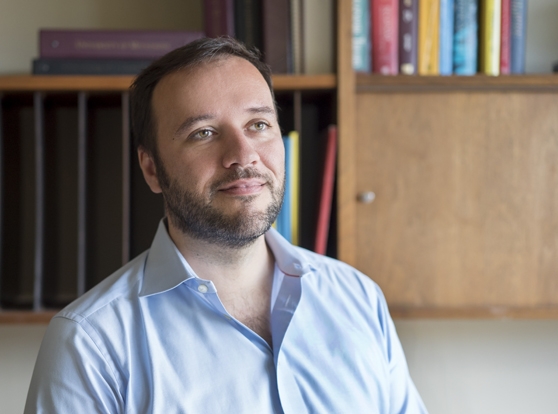
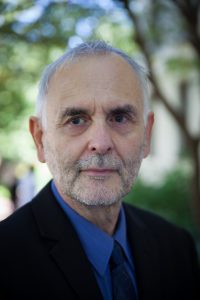
Xiaohui Gao Bakshi is a Research Professor at Temple University's Fox School of Business and Management , Department of Finance. She also serves as Assistant Director of the FOX-Tsinghua Doctoral of Science in Global Finance program . Her research focuses on empirical corporate finance, asset pricing, behavioral finance, entrepreneurship, international finance, and FinTech. She holds a Ph.D. in Finance from the University of Florida, alongside a Master of Science in Mathematics, and a Bachelor of Science in Mathematics from Fudan University. Key research contributions include studies on derivatives, commodities, and financial risk modeling. Notable awards include the 2013 William F. Sharpe Award and the 2010 Jensen Prizes First Prize. She teaches Courses: FIN 4596: Seminar in Corporate Finance (Undergraduate) FIN 9001: Corp Finance Theory (Graduate) Her work bridges theoretical and empirical finance, with recent publications exploring equity disasters, option risk premiums, and default risk modeling. She actively contributes to the FOX-Tsinghua Doctoral Program , fostering global finance research collaborations.
Alok Johri is a Professor in the Department of Economics at McMaster University , Canada. His research focuses on macroeconomics , international finance , and developmental economics , with particular emphasis on sovereign debt dynamics, organizational capital, and productivity shocks. Education includes a PhD in Economics from Boston University , a Master of Arts in Economics from Delhi School of Economics , and a Bachelor of Arts (Honours) in Economics from University of Delhi . Research trends span sovereign spreads , debt default mechanisms , financial accelerator models , and knowledge capital modeling . Recent work (2025) explores how political ideology impacts sovereign borrowing costs , while 2023 studies examine organizational taxation , bribery effects on debt , and credit cycles . Teaching includes graduate courses on DSGE models , macroeconomic theory , and workshop series in economics (2017–2025). Co-author network includes collaborations with Marc-Andre Letendre on 3 publications.
Marc-andre Letendre is an Associate Professor in the Department of Economics at McMaster University. His research spans international economics, macroeconomics, and financial modeling, with a focus on business cycle dynamics, risk propagation, and dynamic stochastic equilibrium frameworks. Bachelor of Business from HEC Montréal Master of Arts in Economics and PhD in Economics from Queen's University His scholarly work explores: International business cycles and risk shocks Financial accelerator mechanisms and credit risk Sticky-price persistence and macroeconomic stability Asset trading restrictions in equilibrium models Dynamic optimization and portfolio allocation Recent publications examine how financial shocks and risk dynamics influence economic fluctuations, particularly in small open economies. Teaching roles include Intermediate Macroeconomics II (ECON 2HH3), Macroeconomic Theory (ECON 723/724), and DSGE Models (ECON 741).
Simon Peters is Lecturer in Econometrics at the University of Manchester, specializing in micro-data modeling and statistical methods. His research applies econometric techniques to social science questions including ethnicity, poverty dynamics, and credit risk assessment. As co-investigator for the ESRC Centre on Dynamics of Ethnicity, he examines relationships between poverty, ethnicity, and social networks. He teaches statistics, econometrics, and computational methods across undergraduate and postgraduate programs.
Harjoat Bhamra is a Professor of Finance at the Imperial College Business School, Imperial College London. He holds a PhD from London Business School (2003) and degrees from the University of Cambridge (BA 1996, MMath 1998) with a Year Abroad at Heidelberg University (1994–1995). Prior to his current role, he was Associate Professor at Imperial College (2011–2024) and held academic positions at the Sauder School of Business, University of British Columbia (2003–2013). His research focuses on finance, financial economics, macroeconomics, investment strategies, and behavioral finance. Notable works include studies on behavioral biases in financial markets, inflation dynamics, corporate default risk, and household financial decision-making. His research has been published in top journals such as the Review of Financial Studies, American Economic Review, and Journal of Economic Theory. Bhamra’s work bridges theoretical models with real-world applications, exploring how psychological biases and market inefficiencies impact aggregate economic outcomes. He also contributes to policy discussions on financial stability and household finance. His professional experience includes roles as a structured products trader at First National Bank of Chicago (1996–1997). Education: PhD in Finance, London Business School (1998–2003) MMath in Mathematics, University of Cambridge (1997–1998) BA in Mathematics, University of Cambridge (1992–1996) Year Abroad in Mathematics and Theoretical Physics, Heidelberg University (1994–1995) Research interests include analyzing the effects of individual behavioral biases on financial markets and macroeconomic aggregates, the interplay between monetary policy and corporate finance, and the implications of household financial decisions on social costs. His work often employs dynamic equilibrium models to study investor heterogeneity and market inefficiencies. Recent contributions explore how psychological distance influences investors’ beliefs and portfolio choices, with implications for asset pricing and economic growth. Professional activities include editorial roles, keynote speaking, and collaborations with institutions like CEPR, NIESR, and the Centre for Macroeconomics at LSE. His research has been cited extensively and recognized for bridging behavioral finance with macroeconomic theory. Bhamra’s outreach efforts aim to translate academic insights into practical policy and market strategies.
Lara Cathcart is Professor of Finance at Imperial College Business School and Academic Director of MSc Finance, Risk Management, and Financial Technology programs. Her research examines credit risk modeling, behavioral finance, and climate-related financial risks. Current investigations focus on sovereign credit default swaps, media impact on financial markets, and climate change effects on corporate default probabilities. Recent publications analyze Lebanon's currency crisis, bankruptcy determinants post-deregulation, and early credit rating impacts on bond volatility. Professor Cathcart serves as Associate Editor for the European Journal of Finance and has consulted for investment banks and HM Treasury. Her ESRC-funded research develops novel approaches to measuring climate regulatory exposure and assessing default risks in changing environmental conditions.
Dr. Anthony Coache is a Research Fellow in Mathematical Finance at Imperial College London's Department of Mathematics. He holds a PhD in Statistics from the University of Toronto and specializes in reinforcement learning, stochastic modeling, and risk-sensitive decision-making in financial contexts. Research Focus: Coache develops algorithms for risk-sensitive control problems using dynamic risk measures, with applications in quantitative finance, algorithmic trading, and optimization under uncertainty. Recent Publications: Work includes robust RL with distortion risk measures, dynamic convex risk frameworks, and inverse RL for risk aversion modeling. Publications appear in SIAM Journal on Financial Mathematics and Mathematical Finance. Awards: Mathematical Finance Top Cited Article (2023) G-Research Grant (2025) NSERC Postdoctoral Fellowship (2024–26) SIAG/FME Conference Paper Prize (2023) Supervision: Mentored M.Sc. students from Morgan Stanley, Deutsche Bank, and Qube RT on projects spanning financial factor analysis, default correlation models, and liquidity prediction.
Luigi Bocola is an Associate Professor in the Department of Economics at Stanford University, and a Faculty Research Fellow at the National Bureau of Economic Research (NBER), as well as a senior fellow at the Stanford Institute for Economic Policy Research (SIEPR). His research focuses on macroeconomics, international finance, and financial economics, with a particular emphasis on risk-sharing mechanisms, monetary policy, sovereign debt crises, and DSGE modeling. He has contributed to understanding business cycle dynamics, financial market frictions, and policy responses to economic crises. His work integrates theoretical frameworks with empirical analysis, addressing topics such as central bank credibility, bond market behavior, and cross-border capital flows. Key areas of research include the interplay between fiscal and monetary policy, the transmission of sovereign risk in global markets, and the design of effective crisis management strategies. His recent work explores credibility in central bank mandates and the role of bond markets in shaping monetary policy expectations. Bocola actively engages with policy communities, contributing insights to inform regulatory frameworks and crisis preparedness. His publications span top-tier journals like the Quarterly Journal of Economics, Journal of Political Economy, and American Economic Review. He has collaborated with leading scholars including Guido Lorenzoni, Alexander Dovis, and Jesús Fernández-Villaverde, among others. Bocola’s research has been supported by grants from the National Science Foundation and the NBER, reflecting its interdisciplinary and policy-relevant nature.
Dr. Suzanne Bijkerk is a Visiting Fellow at the Erasmus School of Economics, Erasmus University Rotterdam, and a Researcher specializing in Diversity, Inclusion, and Entrepreneurship at Rabobank's RISE and RaboResearch divisions. Her work spans Information Economics, Labor Market Dynamics, and Organizational Behavior. She investigates topics such as labor market quotas, asset-based lending mechanisms, and policy impacts on socioeconomic outcomes. Education and Affiliations: Her academic background includes a doctoral degree in Economics. She collaborates with Rabobank on applied research in diversity and entrepreneurship, integrating theoretical frameworks with practical industry challenges. Research Interests: She focuses on labor market policies, economic inequality, and the intersection of information systems in firms. Her work bridges theoretical economic models with real-world applications in banking and social policy. Professional Activities: She actively participates in academic conferences including the European Economic Association Conference and Tinbergen Institute seminars, presenting on labor market dynamics and policy evaluations since 2020. Labs/Teams: Affiliated with RISE (Rabobank's research initiative on diversity) and RaboResearch, contributing to studies on entrepreneurial ecosystems and inclusive economic practices.
Alessandro Dovis is an Associate Professor of Economics at the University of Pennsylvania's School of Arts and Sciences, Department of Economics. He holds a Ph.D. from the University of Minnesota and previously served at Penn State University. His research focuses on macroeconomics and international economics, particularly sovereign debt crises, monetary-fiscal interactions, and optimal policy design. He is a Research Associate in the International Finance and Macroeconomics Program at the National Bureau of Economic Research (NBER). His work addresses critical issues like credibility in central bank mandates, fiscal rules, and crisis management in monetary unions. Contact: adovis@upenn.edu . Education : Ph.D. in Economics from University of Minnesota Affiliations : NBER Research Associate Research interests emphasize sovereign debt dynamics, including default risks, reputation effects, and the interplay between fiscal and monetary policies. His studies on lender-of-last-resort mechanisms and optimal currency areas contribute to debates on financial stability and institutional design. Recent work explores long-term contracts, information disclosure strategies, and the implications of commitment limitations in policy-making. Articles frequently analyze bond market reactions to central bank policies and the quantitative modeling of debt crises, including the European debt crisis. Publications span topics from financial repression to trade liberalization impacts, reflecting a broad engagement with global economic challenges. His analysis often combines theoretical models with empirical evidence to inform policy frameworks. Current projects likely extend his work on credibility, institutional governance, and crisis prevention in macroeconomic systems.
Professor Peter Pope is a distinguished academic in the Department of Accounting at the London School of Economics (LSE). His expertise spans Financial Reporting, Regulation, and Capital Markets, with a focus on topics such as Equity Valuation, Fundamental Risk, and IFRS. He holds a Professorship, reflecting his senior academic standing. His research interests include analyzing the interplay between accounting standards, financial transparency, and corporate decision-making. Notable works address issues like pension deficits' impact on corporate policy, auditor education effects, and the implications of mandatory reporting frameworks on tax havens. Professor Pope has received recognition for his contributions, including the Best Paper 2004-2008 from the Financial Accounting and Reporting Section of the American Accounting Association. His work frequently bridges accounting and finance disciplines, influencing both academic discourse and practical policy. He collaborates extensively with global institutions, evidenced by publications in prestigious journals such as the Journal of Finance , Review of Accounting Studies , and Strategic Management Journal . His research monographs, including Accounting for Asset Impairments: IFRS Reporting Practices and Outcomes in Europe , further highlight his leadership in IFRS-related studies.
José-Víctor Ríos-Rull is the Lawrence R. Klein Professor of Economics and Professor of Finance at the University of Pennsylvania, where he directs the Penn Institute for Economic Research. A Fellow of the Econometric Society and recipient of the Arrow Prize, his research spans macroeconomics, household economics, and inequality. Education includes a Ph.D. in Economics from University of Minnesota (1990) and degrees from Universidad Complutense de Madrid. Previously held positions at Carnegie Mellon, Federal Reserve Bank of Minneapolis, and University of Minnesota. Research examines macroeconomic dynamics, labor markets, household behavior, and inequality. Current work includes tax competition, institution building, and pandemic economics. Has advised over 50 doctoral dissertations and secured multiple NSF grants. Editorial roles include Quantitative Economics and Review of Economic Studies. Awards include Economic Theory Fellow (SAET) and honorary membership in Spanish Economic Association.
Roberto Quercia is the Trudier Harris Distinguished Professor in the Department of City and Regional Planning at the University of North Carolina at Chapel Hill . He specializes in housing policy, community development, and mortgage finance, particularly focusing on low-income homeownership, predatory lending practices, and financial service accessibility. His research has informed policy reforms and has been supported by entities like HUD, Fannie Mae, and Freddie Mac. Quercia co-authored key publications including Regaining the Dream (2011) and A Place Called Home (2017). He leads the UNC Center for Community Capital and is affiliated with the Center for Urban and Regional Studies . His work bridges academia and practice, with a focus on mitigating housing disparities through evidence-based interventions. Current projects include analyzing post-pandemic mortgage assistance programs and evaluating the long-term impacts of subprime lending on marginalized communities. Quercia teaches courses on housing policy, real estate finance, and urban planning, emphasizing the interplay between economic systems and social equity. Research highlights include studies on unemployment’s impact on mortgage defaults, the role of community reinvestment programs, and the socio-psychological benefits of homeownership. His articles frequently address regulatory failures, spatial inequality, and innovative solutions for sustainable housing access. Despite no explicitly listed awards, his distinguished professorship underscores his academic leadership and contributions to the field.
Delia Coculescu is an Associate Professor (part-time) of Quantitative Risk Analysis at the University of Zurich's Department of Finance, with a dual appointment in the Faculty of Science. She holds a PhD from Université Paris Dauphine (2006) and conducted postdoctoral research at ETH Zurich's Mathematics Department before joining UZH as a senior researcher in 2012. Her research focuses on Mathematical Finance, Quantitative Finance, and Risk Analysis, with a particular emphasis on default systems, insurance contracts, and systemic risk. She has held visiting positions at UC Irvine, Shandong University, and the Isaac Newton Institute in Cambridge. Research Interests: Mathematical modeling of financial risk Insurance contract design under default risk Systemic risk and contagion effects Cooperative game theory in finance Stochastic processes in financial markets Her work has been published in leading journals such as Mathematical Finance , Finance and Stochastics , and Risks . She teaches advanced courses in Mathematical Finance and collaborates with institutions globally. Her recent research explores opinion dynamics in financial networks and the fragility of mutual insurance arrangements.
Angelo Ranaldo is a Full Professor of Finance and Financial Economics at the University of Basel (since 2024) and holds a Swiss Finance Institute Senior Chair. He concurrently serves as an Adjunct Professor at the University of Zurich's Department of Finance. He is also a member of the Bank Council of the Swiss National Bank (SNB) since 2023. His career includes roles as Economic Advisor and Senior Management member at the SNB (2004–2012), and Full Professor of Systemic Risk at the University of St. Gallen (2012–2024). Education: PhD (Dr. rer. pol.) from University of Fribourg (2000), MSc in Economics & Finance from Università Bocconi (1995) Key Affiliations: Bank of England, European Central Bank (Wim Duisenberg Fellow 2018), Bank for International Settlements Research focuses on financial markets liquidity, systemic risk, currency markets, and monetary policy implementation. He has pioneered studies on FX market microstructure, safe asset dynamics, and algorithmic trading impacts. His work bridges academic rigor with central bank policymaking. Recent publications analyze global dollar liquidity shortages, blockchain currency markets, and pension fund liquidity risks. He frequently advises central banks on market infrastructure resilience and systemic stability. Notable Recognition: Wim Duisenberg Fellowship (ECB, 2018) Advising: No formal student advisees listed in provided materials. Collaborates extensively with institutions like FCA and SNB on regulatory projects. Labs/Teams: Leads research groups at Swiss Finance Institute and University of Basel's Finance Department focusing on market microstructure and systemic risk analytics.