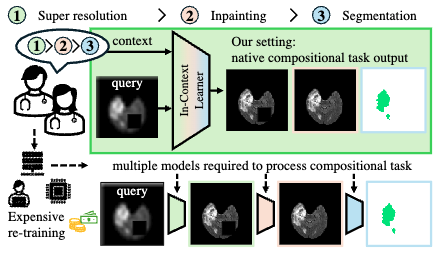
Prof. Dr. Erik Rodner is a faculty member at the University of Applied Sciences Berlin (HTW Berlin), where he serves as a Professor for Machine Learning and Data Science. He also contributes to the School of Engineering Sciences - Technology and Life. His research spans computer vision, machine learning, and biomedical applications, with a focus on learning with limited data, robust visual recognition models, and medical image analysis. He has developed innovative methods for medical diagnostics, industrial classification, and anomaly detection. Recent publications (2025-2016) highlight his expertise in visual in-context learning, semi-weakly segmentation, and active learning frameworks. He has collaborated with institutions such as ZEISS Group, Friedrich Schiller University Jena, and UC Berkeley. Scientific Awards: Award for Excellent Teaching (2023)
Hao Yang is an Assistant Professor in the Department of Civil and Systems Engineering at Johns Hopkins University, with dual affiliations at the Johns Hopkins Data Science and AI Institute and the Johns Hopkins Institute for Assured Autonomy. His research develops Trustworthy Machine Learning methods to enhance urban mobility systems, focusing on traffic safety, equity, and sustainability through ethical AI and human-machine cooperative systems. Yang earned dual bachelor's degrees in Electrical and Computer Engineering from Beijing University of Posts and Telecommunications and the University of London, followed by a Ph.D. in Civil Engineering (Transportation) from the University of Washington. His educational background bridges telecommunications, electrical engineering, and transportation systems. His research integrates spatio-temporal modeling, assured autonomous systems, and multimodal representation learning to address transportation equity and safety. Key projects include edge-AI-powered traffic surveillance, real-time crash identification, and cooperative signal assistance for vulnerable road users. His work emphasizes ethical AI deployment in cyber-physical infrastructure to create sustainable urban mobility solutions. Recent publications reveal a strategic shift toward large language models and multimodal AI for transportation challenges, with strong emphasis on explainability, reliability, and equity in traffic crash prediction, flow forecasting, and autonomous driving systems. This evolution demonstrates his commitment to adapting cutting-edge AI for real-world transportation problems. Yang's scientific contributions have earned significant recognition: Michael Kyte Outstanding Student of the Year Award (2022) High-Value Research Award from AASHTO (2022) Best Paper Award from TRB Information Systems Committee (2023) Best and Outstanding Dissertation Awards (2024) IEEE DTPI Outstanding Paper Award (2022) TRANSFOR22 Data Competition 2nd place (2022) ASCE Bridges Photo Contest First Place (2021) He actively mentors graduate researchers and seeks 2-3 PhD students for Fall 2025 to advance trustworthy AI in transportation. His research is supported by NSF, USDOT, and AASHTO grants including the Real-Time Truck Parking Information System project that received the High-Value Research Award. Current work focuses on edge-AI for traffic safety and multimodal data integration. Yang leads research within Johns Hopkins' Data Science and AI Institute and Institute for Assured Autonomy, collaborating with Transportation Research Board committees. His lab develops real-time perception systems using edge computing and representation learning, with active projects on non-motorized user safety and equitable traffic management for people with disabilities.
Shafaq Khan is an Assistant Professor in the School of Computer Science at the University of Windsor. She holds a PhD in Computer Science from the University of Salford (2017). Her research spans machine learning, deep learning, data analytics, and database systems with applications in healthcare informatics, agricultural technology, educational systems, and blockchain. Recent work focuses on AI-driven healthcare transformation, privacy-preserving data methods, federated learning for disease prediction, and computer vision applications in agriculture. Additional interests include educational technology for addressing disparities, blockchain implementations in government services, and open-source search engine development. Her work demonstrates consistent integration of cutting-edge computing techniques with practical domain applications.
Michihiro Yasunaga is an Assistant Professor in the Department of Computer Science at Stanford University's School of Engineering. He received his PhD in Computer Science from Stanford, advised by Percy Liang, Jure Leskovec, and Chris Manning. Prior to his faculty position, he worked as a researcher at Google DeepMind and Meta. His research focuses on building LLMs and agents that assist humans in diverse tasks, with particular expertise in post-training techniques (RL, reward models, and evaluation), reasoning systems (AnalogicalReasoner), retrieval and tool use for LLMs (LinkBERT, QAGNN, DRAGON, REPLUG, HippoRAG), and multimodality (RA-CM3, Med-Flamingo, Transfusion). His work spans both theoretical foundations and practical applications of large language models. Yasunaga's publication record demonstrates significant contributions to the field of AI, with 15 recent articles (2023-2025) covering diverse aspects of language model development, evaluation, and application. His research shows a clear trajectory toward building more capable, efficient, and reliable multimodal AI systems, with particular emphasis on knowledge integration and robust evaluation frameworks. Among his notable achievements is the Best Paper Award at AAAI 2023 Deep Learning on Graphs Workshop for the DRAGON paper. He has also been deeply involved in major benchmarking efforts including HELM and HEIM, which provide comprehensive evaluation frameworks for language and vision-language models. Yasunaga actively contributes to the research community through service roles including Organizing Committee for the Workshop on Knowledge-Augmented Methods for NLP (ACL 2024), Workshop on Structured and Unstructured Knowledge Integration (NAACL 2022), and the Workshop on Scientific Document Summarization (SIGIR 2017-2020). He has also served on program committees for top conferences including NeurIPS, ICML, ICLR, ACL, EMNLP, CVPR, and ICCV from 2020-2025.
Andrea Garzelli is a Full Professor at the University of Siena's Department of Information Engineering and Mathematical Sciences. His research focuses on remote sensing image processing, particularly in optical and SAR sensor technologies, image fusion, and spatial resolution enhancement. He holds teaching roles in 'Fundamentals of Signal Processing and Telecommunications' and 'Statistical Signal Processing.' He earned his Ph.D. in Computer Science and Telecommunication Engineering from the University of Florence. Notably, he was recognized as a World's Top 2% Scientist by Stanford University for 2019–2023 and his career-long contributions. He served as President of the University of Siena's Quality Assurance Committee (2016–2021) and currently coordinates the graduate program in Computer and Information Engineering. Research interests include satellite data analysis (e.g., Sentinel-2, PRISMA), hypersharpening techniques, and environmental monitoring. His work bridges theoretical advancements (e.g., pansharpening algorithms) and practical applications like urban land classification and vegetation index enhancement. Recent articles emphasize reproducibility, meta-analysis, and synthetic data generation through GANs. Awards: World's Top 2% Scientists (2019–2023 & career). Grants/Advising: Supervises remote sensing theses; no specific grants mentioned. Labs/Teams: Leading research in the department's remote sensing and signal processing groups.
Vassilis Christophides is a Professor of Computer Science at the University of Crete and holds an advanced research position at Inria Paris, where he leads work in the MiMove team. His research spans databases, web information systems, big data processing, and IoT analytics, with a strong emphasis on entity resolution, data integration, and scalable data mining. He has supervised numerous research projects funded by the European Union and the Greek State, and has published over 130 articles in top-tier conferences and journals. Research Interests: His primary research areas include Databases, Web Information Systems, Big Data Processing and Analytics, and Information Systems for the Internet of Things. He also focuses on entity resolution, knowledge graphs, streaming data, and explainable AI, particularly in the context of anomaly detection and fairness-aware data systems. His recent work explores hybrid attention models for entity alignment and causal analysis in time series classification. Recent Research Trends: Analysis of his recent publications (2021–2025) reveals a strong focus on entity resolution with fairness constraints, explainable anomaly detection, and adaptive scheduling in IoT edge analytics. He also investigates deepfake detection, crop type mapping using satellite data, and structural bias in knowledge graphs, demonstrating a broad and impactful research portfolio at the intersection of data management and machine learning. Scientific Awards: 2004 SIGMOD Test of Time Award Best Paper Award, ISWC 2003 Best Paper Award, ISWC 2007 Advising and Grants: While specific student names are not listed in the provided texts, Christophides has co-authored numerous papers with researchers such as Vasilis Efthymiou, Ioannis Tsamardinos, and Nikolaos Myrtakis, suggesting active mentorship. He has been the scientific coordinator of multiple EU and national research projects, indicating substantial grant leadership and project management experience. Labs and Teams: He is affiliated with the MiMove team at Inria Paris, a research group focused on mobility and data-intensive systems. His work bridges academic and applied research, leveraging Inria’s infrastructure for large-scale data experimentation and innovation in IoT and edge computing environments.
Andrew Ho is an active academic researcher with publications spanning computer science, electrical engineering, and interdisciplinary applications. His recent work focuses on hybridizable discontinuous Galerkin methods for plasma simulations (2024) and AI/LLM applications in scholarly knowledge organization. 2025: Project Alexandria (LLM for copyright-free knowledge) 2024: Hybridizable DG plasma methods, GPU-accelerated kinetic simulations 2023: Low-resource translation techniques 2022: Multimodal VR interfaces 2003-2006: High-speed serial link transceivers and radiography artifact detection His research interests include: Computer science applications in plasma physics and medical imaging LLM-based scholarly knowledge graphs and literature reviews High-speed communication systems Educational technology implementations Co-authors include Vladimir Stojanovic (Stanford, 2003-2005), Carl W. Werner (2003-2005), and Genia Vogman (GPU plasma simulations, 2024).
Maria Virvou serves as Professor and Chair of the Department of Informatics at the University of Piraeus, where she also directs the Graduate Program in Informatics and leads the Research Laboratory 'Software Technology'. She holds significant institutional leadership roles including membership in the University Senate and has chaired the Department of Informatics for multiple terms. As Editor-in-Chief of Springer book series 'Learning and Analytics in Intelligent Systems' and 'Artificial Intelligence-Enhanced Software and Systems Engineering', she maintains substantial academic influence across international scholarly platforms. Dr. Virvou earned her PhD in Computer Science and Artificial Intelligence from the University of Sussex with a scholarship from the State Scholarships Foundation, a Master of Science in Computer Science from University College London, and her undergraduate degree from the Department of Mathematics at the National and Kapodistrian University of Athens. Her educational background in both mathematics and computer science has provided a strong foundation for her interdisciplinary research approach. Professor Virvou's research spans Software Technology, Artificial Intelligence, Educational Software and Games, User Modeling, and Human-Computer Interaction. She has pioneered work in personalized interactive software systems, applying fuzzy logic and machine learning techniques to create adaptive educational environments. Her recent work demonstrates a strategic expansion into AI applications for healthcare, with significant contributions to medical diagnostics using large language models and multimodal AI systems. She has also made notable advances in smart tourism applications through personalization techniques. With over 400 publications to her name, Professor Virvou's scholarly output shows a clear progression from foundational work in user modeling toward increasingly sophisticated AI applications across multiple domains. Her publication trends reveal a strategic focus on explainable AI, multimodal systems, and practical implementations that bridge theoretical advances with real-world applications, particularly in healthcare and education sectors. Ranked #1 worldwide in 'User Modelling' publications (147,450 total publications) according to Scopus Ranked #1 worldwide in 'Educational Software' publications according to both Scopus and Microsoft Academic Search Recognized among the top 2% of most influential Artificial Intelligence scientists worldwide by Stanford University General Co-Chair at the 14th IISA Conference 2023 Invited Keynote Speaker at the 35th IEEE International Conference on Software Engineering Education and Training (CSEE&T 2023) As Director of the Research Laboratory 'Software Technology', Professor Virvou has built a robust research team focused on AI applications across multiple domains. She co-founded and co-chairs the IEEE Intelligent Information Systems and Applications international conference series, creating a significant platform for scholarly exchange. Her leadership extends to editorial roles with major academic publishers and active participation in international research collaborations that have secured substantial funding for innovative projects in AI and software engineering.
Dr. Georgiana Ifrim is an Associate Professor at the School of Computer Science, University College Dublin , where she serves as Director of Graduate Research and Co-Lead of the SFI Centre for Research Training in Machine Learning (ML-Labs). She holds concurrent appointments as an SFI Funded Investigator at the Insight Centre for Data Analytics and VistaMilk SFI Research Centre . Her academic journey includes postdoctoral research at Insight Centre, Cork Constraint Computation Centre (4C), and Aarhus University's Bioinformatics Research Centre (BiRC). Education: BSc in Computer Science, University of Bucharest, Romania MSc and PhD in Informatics, Max-Planck Institute for Informatics, Germany Dr. Ifrim specializes in scalable predictive modeling for diverse applications including: Sequence learning (DNA analysis, time series) Real-time prediction for streaming data (news/social media, energy) Interpretable machine learning models Knowledge graph exploitation (WordNet/Yago, Naga) Wearable sensor data analysis (sports science, health monitoring) Energy price forecasting for sustainable systems Her recent publications focus on time series explainability (TSHAP, tsCaptum), multivariate analysis (scalable channel selection), and healthcare applications (fall detection, walking speed estimation). Key contributions include open-source tools like SEQL (sequence learner) and Twitter-Topics (event detection). Scientific Awards: Winner of SNOW@WWW14 Data Challenge As Director of Graduate Research, she oversees advanced academic training while leading funded projects at the intersection of machine learning , real-time analytics , and domain-specific applications in agriculture, healthcare, and digital journalism. Her research group maintains active GitHub repositories with open-source implementations.
Aaqib Saeed is an Assistant Professor in the Department of Industrial Design at Eindhoven University of Technology. His research focuses on Human-Centric AI, Federated Learning, Self-Supervised Learning, and Audio Understanding, with applications in Personal Health. He holds a PhD (cum laude) from TU/e and an MSc (cum laude) from the University of Twente. Education: PhD in Computer Science (cum laude), TU/e (2021) MSc in Computer Science (cum laude), University of Twente (2018) Research Interests: Development of robust federated learning frameworks for decentralized data Self-supervised learning for audio and physiological signal analysis AI-driven solutions for healthcare monitoring Key Contributions: DeltaMask: Reducing communication overhead in federated fine-tuning FedNS: Mitigating noisy decentralized data in federated learning Labeling Chaos to Learning Harmony: Handling label noise in FL Professional Experience: Visiting Industrial Fellow, University of Cambridge (2023) Research Scientist, Philips Research (2019–2023) Research Internships: Google Research, TNO/EIT Digital Awards: UT Scholarship (MSc) Cum Laude awards for both PhD and MSc Labs/Teams: EAISI Health, EAISI Foundational, Computational Design Systems.
Prof. Dr. Aljosa Smolic is a Professor and Co-Head of the Immersive Realities Research Lab at Lucerne School of Computer Science and Information Technology, Lucerne University of Applied Sciences and Arts. He joined HSLU in 2022 and became Co-Head in 2023. Previously, he served as SFI Research Professor at Trinity College Dublin (2016-2021) where he led the V-SENSE group in visual computing, combining computer vision, graphics, and media technology. His career includes positions as Senior Research Scientist at Disney Research Zurich (2009-2016) and Scientific Project Manager at Fraunhofer HHI (2001-2009). He holds a PhD from RWTH Aachen University. Research focuses on immersive technologies including AR/VR, volumetric video, light-fields, and deep learning applications in visual computing. His work has resulted in over 50 Disney R&D projects, publications, patents, and technology transfers. Publications emphasize VR evaluation, volumetric video applications, 3D reconstruction, and XR in education, frequently employing deep learning and computer vision techniques. Awards and Recognition: IEEE ICME Star Innovator Award 2020 TCD Campus Company Founders Award 2020 Multiple best paper awards Co-founded Volograms (volumetric video startup) and holds editorial roles including Associate Editor for IEEE Transactions on Image Processing.
Ales Popovic is a Full Professor of Information Systems at NEOMA Business School, France. He holds a PhD in Management and Information Systems. His research focuses on the value of information systems (IS) in organizations, digitalization, AI, behavioral and organizational issues in IS, and IT in inter-organizational relationships. He has published widely in journals like Journal of the Association for Information Systems and Technological Forecasting and Social Change . Dr. Popovic’s research explores topics such as fake news engagement on social media, blockchain adoption in real estate, and the impact of digital platforms on traditional media. He serves on editorial boards for journals including International Journal of Information Management and Industrial Management & Data Systems . His work bridges theoretical and practical aspects of IS, emphasizing business value creation and ethical considerations in AI. Key contributions include studies on digital transformation, crisis management technologies, and the role of privacy in technology adoption. His research frequently addresses contemporary challenges like misinformation dynamics, gig worker burnout, and healthcare AI applications.
Ka Ho Chow is an Assistant Professor in the Department of Computer Science at the University of Hong Kong, part of the School of Computing and Data Science. He holds a PhD from Georgia Institute of Technology and was previously a research scientist at IBM Research. His research focuses on the intersection of machine learning, cybersecurity, and scalable systems, emphasizing trustworthy AI and defense against security/privacy threats in federated learning, large language models, and visual recognition systems. Key achievements include IBM PhD Fellowship (2022) and Croucher Scholarship (2021). Education: PhD in Computer Science from Georgia Tech (2020), advised by Prof. Ling Liu. His work spans algorithmic optimization, infrastructure resilience, and adversarial machine learning. Current research explores attack-resilient solutions for centralized/federated learning and AI system vulnerabilities. Recent articles highlight innovations in federated learning security, gradient inversion attacks, backdoor detection, and privacy-preserving techniques. He has openings for PhD students interested in AI security and trustworthy systems. His lab collaborates on projects involving blockchain fraud detection (ZipZap), facial recognition privacy (Personalized Masks), and graph neural network robustness. Awards: IBM PhD Fellowship (2022), Croucher Scholarship (2021). Active in guiding PhD candidates and advising on microservices cloud migration (Atlas/SCAD systems). Research outputs include over 30 peer-reviewed papers spanning cybersecurity, AI ethics, and distributed learning frameworks.
Samsung Lim serves as an Associate Professor of geographic information systems (GIS) in the School of Civil and Environmental Engineering at the University of New South Wales (UNSW) Sydney. With expertise spanning data science, artificial intelligence, and machine learning, Lim applies geospatial technologies to critical real-world challenges in natural disaster management and public health research. Lim's interdisciplinary work bridges engineering, computer science, and public health domains to develop practical decision-making tools for emergency response and disease surveillance. Ph.D. in Aerospace Engineering and Engineering Mechanics, University of Texas, Austin, TX, USA M.A. in Mathematics, Seoul National University, Seoul, South Korea B.A. in Mathematics, Seoul National University, Seoul, South Korea Lim's research focuses on applying GIS to natural disaster management and public health challenges. Key areas include machine learning methods for bushfire susceptibility mapping, spatial clustering for landslide susceptibility analysis, city-scale evacuation management in flood scenarios, and social media-based natural disaster assessment. In public health, Lim investigates geo-correlations between environmental factors and asthma occurrence, computational approaches to avian influenza outbreaks, emerging hot spot analysis of COVID-19, and early detection systems for emerging infectious diseases. This work combines advanced spatial analytics with machine learning to address complex environmental and health challenges. The recent publication record demonstrates a clear interdisciplinary trajectory where geospatial science intersects with public health emergency response and natural hazard management. Lim's work consistently applies machine learning techniques to geospatial data, with particular emphasis on disaster susceptibility mapping, disease outbreak detection, and infrastructure monitoring. The research spans multiple continents and addresses both immediate emergency response needs and long-term environmental health challenges, reflecting a commitment to practical applications of geospatial science. Associate Editor of Geospatial Information Science National Delegate of Commission 3 of International Federation of Surveyors (FIG) National Representative of the International Cartographic Association (ICA) Commission on Sensor-driven Mapping Senior Member of Institute of Electrical and Electronics Engineers (IEEE) Lim actively contributes to the development of early warning systems for emerging infectious diseases through collaborations with public health researchers. The work on EPIWATCH demonstrates how AI can enhance surveillance capabilities for outbreak detection. Lim's research on cruise ship transmission of diseases and the spread of avian influenza through bird migration patterns and poultry trade networks shows strong engagement with real-world public health challenges. These projects often involve multidisciplinary teams spanning engineering, computer science, epidemiology, and veterinary medicine. Lim's work integrates multiple geospatial data sources and analytical techniques to address complex environmental and public health challenges. This includes developing frameworks for performance analysis of OpenStreetMap data, creating specialized road datasets for pedestrian navigation, and applying Persistent Scatterer Interferometry for land motion monitoring. The research combines traditional geospatial methods with cutting-edge machine learning approaches to extract meaningful insights from complex spatial datasets.
Professor Wes Armour is a Professor of Scientific Computing at the University of Oxford and serves as the Associate Head of Department for Research in the Department of Engineering Science. He previously directed the Oxford e-Research Centre, an interdisciplinary research center within the Engineering Science Department. With over £31 million secured as PI or Co-I, his work spans supercomputing, signal processing, machine learning, computational fluid dynamics, and protein crystallography. Professor Armour's research focuses on extracting science from data through fundamental challenges in modeling, simulation, and data processing. His work draws from numerical analysis, signal processing, and machine learning to develop technologies enabling future scientific discoveries, particularly for the Square Kilometre Array (SKA) telescope. Key interests include GPU computing, high performance computing, and machine learning applications across diverse domains from radio astronomy to finance. As Director and Principal Investigator of JADE and JADE2, a 700-GPU machine, he established the UK's first national High Performance Computer facility dedicated to advancing Artificial Intelligence and Machine Learning. His research group has pioneered GPU applications across multiple fields, including Square Kilometre Array data processing, protein crystallography, and graphene simulations. Current projects span energy-efficient machine learning, stock price prediction in finance, prime number prediction in cryptography, and multi-modal CCTV data analysis. Professor Armour has been instrumental in developing real-time signal processing techniques for astronomical observations, including the ARTEMIS system for millisecond radio transient detection. His publications demonstrate consistent innovation in GPU-accelerated computing dating back to early work in 2008 on accelerating conjugate gradient routines for electron transport in graphene.