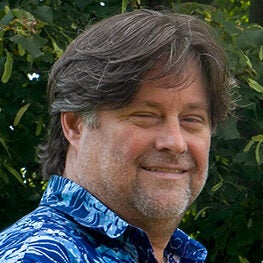
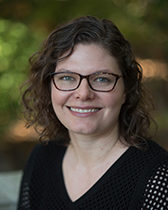
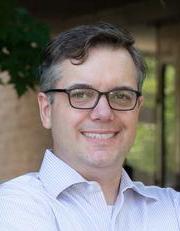
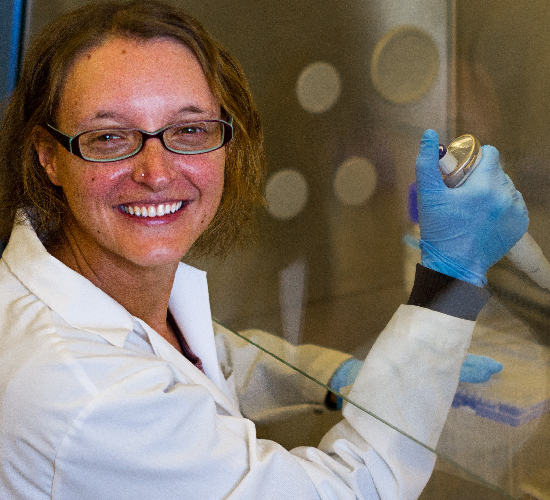
Cara M Santelli is an Associate Professor in the Department of Earth and Environmental Sciences at the University of Minnesota-Twin Cities. Her research focuses on biogeochemical cycling of metals and metalloids, particularly examining the role of microorganisms in these processes and their environmental applications. Her recent projects include: The Combined Impacts of Climate Change and Intensive Agriculture on Manoomin/Psi (Wild Rice) - Co-Principal Investigator with USDI U.S. Geological Survey Convergence Accelerator Track L: Real-time water pollutant monitoring with National Science Foundation - Principal Investigator Linking Manganese Reduction to Hydrocarbon Degradation with MN Pollution Control Agency - Principal Investigator CNH2-L: Co-creating socio-ecological knowledge with Indigenous communities - Collaborator Metal-Filtering Microbes project - Principal Investigator Her research outputs show a strong focus on: Manganese and iron biogeochemistry Sulfur cycling in subsurface environments Fungal metal oxidation and reduction Bioremediation techniques Environmental impacts on wild rice Microbial community analysis in extreme environments Her work has been recognized through citations in Scopus and readership metrics across various platforms including Mendeley and Bluesky. Santelli collaborates extensively with researchers from multiple disciplines and institutions.
Jennifer Macalady is a Professor of Geosciences and Director of the Ecology Institute at Penn State University's College of Earth and Mineral Sciences. She is affiliated with the Department of Geosciences and the Huck Institutes of the Life Sciences, where she leads the Macalady Group focused on environmental microbiology and biogeochemistry. Dr. Macalady earned her Ph.D. in Soil Science from UC Davis in 2000, following undergraduate studies in Geology and Russian language at Carleton College in 1991. She joined Penn State as a faculty advisor in 2004, after serving as a postdoctoral researcher at UC Berkeley. Her academic journey reflects a deep interdisciplinary approach, spanning geology, microbiology, and environmental science. Dr. Macalady's research centers on geomicrobiology, biogeochemistry, and astrobiology, with particular focus on microbial interactions in extreme environments. Her work explores sulfur cycling in both subsurface and sunlit environments that model early Earth conditions and potentially extraterrestrial habitats. She investigates the microbiology of acid mine drainage pollution related to coal extraction and studies how microorganisms degrade hydrocarbons ranging from methane to coal. A core value in her laboratory is that diversity, equity, and inclusion enable excellence and creativity in research. Analysis of Dr. Macalady's recent publications reveals a consistent focus on microbial processes in extreme environments, particularly sulfur cycling, acid mine drainage systems, cave ecosystems, and early Earth analogs. Her research employs emerging techniques in molecular biology, bioinformatics, and geochemistry to examine microbial diversity and activity through the lens of microbial ecology. The work spans field studies in locations like the Frasassi Caves in Italy to laboratory experiments modeling early Earth conditions, demonstrating both theoretical and applied significance for understanding Earth's history and addressing contemporary environmental challenges. Dr. Macalady serves as a faculty advisor in multiple Penn State graduate programs including Geosciences, Ecology (ICDP), Biogeochemistry (Dual Title), and Astrobiology (Dual Title). She has mentored numerous graduate students including Dani Buchheister (Ph.D. student, Fall 2022), Shavonne Morin (Ph.D. student, Fall 2021), Roger Ort (Ph.D. student, Fall 2021), and undergraduate researcher Emma Enos. Her lab maintains active research funding for projects related to microbial ecology in extreme environments. The Macalady Lab is part of Penn State's top-ranked Department of Geosciences and the Huck Institutes of the Life Sciences. The lab maintains active research in multiple areas including microbial communities in sulfuric acid caves, biogeochemical cycling in acid mine drainage systems, and early Earth analog environments. The group collaborates extensively with researchers both within Penn State and internationally, as evidenced by publications with colleagues from institutions worldwide. Dr. Macalady also serves on the Diversity Council at Penn State, reflecting her commitment to inclusive scientific practices.
Jonna M. Coombs is an Associate Professor in the Department of Biology within the College of Arts and Sciences at Adelphi University. Her research and teaching are centered on microbial responses to environmental stress, particularly heavy metal contamination and bioremediation mechanisms. Education: Ph.D., The Pennsylvania State University (2000) B.S., University of Maine (1994) Her research interests focus on microbially-mediated resistance to toxic heavy metals, the role of horizontal gene transfer (HGT) in the evolution of resistance traits, and the function of PIB-type ATPases in metal ion transport and detoxification. She investigates microbial communities in salt marshes on Long Island and deep terrestrial subsurface environments using molecular biology, microbiology, and metagenomic techniques. Her work has significant implications for environmental health and bioremediation of contaminated sites. Her recent publications span microbial ecology, HGT, plasmid biology, and enzyme adaptation, reflecting a strong interdisciplinary approach. Key themes include the evolution of metal resistance, viral metagenomics, and the genetic plasticity of environmental microbes. Scientific Awards and Honors: HHMI / National Academies Summer Institute Teaching Fellow (2013) Bettelheim Research Award Grant (2008) Adelphi Faculty Development Grants (2006, 2009, 2011) Li-Cor Genomics Education Matching Funds Grant (2005) US-EC Fellowship for Early Career Scientists (2002) Multiple travel grants for international conferences Jonna Coombs has advised numerous graduate and undergraduate theses, mentoring students in projects related to biofilms, plasmid isolation, qPCR optimization, viral detection, and metal resistance gene analysis. She has secured multiple internal grants supporting her research in viral metagenomics, metal resistance, and environmental microbial communities. She is also the co-author of a laboratory methods textbook and has contributed several book chapters in environmental microbiology. Her lab engages in guided research on exosomes, pharmaceutical toxicity, and metal-resistant biofilms, often involving student researchers. She has presented her work at major conferences including ASM Microbe, DIMACS, and international plasmid biology meetings.
Steven D’Hondt is a full-time Professor at the University of Rhode Island Graduate School of Oceanography with joint appointments in Marine Geology and Geophysics . His research focuses on subseafloor microbial ecosystems , particularly energy limitation in deep marine sediment , radiolytic hydrogen utilization, and biogeochemical impacts on Earth systems. As Interim Dean , he leads academic and research initiatives at GSO. Education: PhD in Geological & Geophysical Sciences (Princeton, 1990), BS in Geology (Stanford, 1984) Key Research Themes: Subseafloor microbial energetics, deep biosphere habitability, radiolytic hydrogen production, paleoceanographic reconstructions Scientific Leadership: Co-led IODP Expedition 329 in the South Pacific Gyre, led North Atlantic long-coring expeditions, and contributed to over 25 oceanographic missions. His work demonstrates oxygen penetration in 1/3 of ocean sediment and million-year microbial longevity . Technical Innovations: Developed shipboard porewater analysis methods, radiolysis rate quantification techniques, and microbial sampling protocols Collaborative Networks: Works with Center for Dark Energy Biosphere Investigations (C-DEBI) and Deep Carbon Observatory (DCO)
Peter W. Reiners is a Professor in the Department of Geosciences at the University of Arizona, where he has been on faculty since August 2006. He specializes in geochemistry, thermochronology, tectonics, and petrology, with research focusing on the application of radiogenic dating methods to understand Earth's tectonic and surface processes. His work spans diverse regions including the Andes, Antarctica, Tibetan Plateau, and the American Cordillera. Research Focus: Reiners' research integrates field geology with laboratory analysis to study landscape evolution, exhumation histories, and geodynamic processes. His current projects investigate diagenetic processes in sedimentary basins, subglacial erosion in Antarctica, and tectonic-climate interactions. He directs the Arizona Radiogenic Helium Dating Lab and leads international workshops on thermochronology techniques. Publication Trends: Reiners' recent publications demonstrate a strong focus on methodological innovations in (U-Th)/He dating, applications to glacial erosion systems, and subsurface fluid-rock interactions. His work frequently combines multiple geochronometers to resolve complex thermal histories and has contributed significantly to understanding mountain building processes in both active and ancient orogens. Students and Collaborations: He actively mentors graduate students in thermochronology applications and co-leads the Antarctichron/Chronothon workshops. Current students include Mariah Romero and Aislin Reynolds working on zircon thermochronology. Former students like Ursula Ginster and Victor Garcia have published significant work on radiation damage annealing and fault-related mineralization dating.
Cody Sheik is an Associate Professor in the Department of Biology at the University of Minnesota Duluth , affiliated with the Swenson College of Science and Engineering. His research integrates microbial ecology, genomics, and geochemistry to study aquatic environments, with a focus on microbe-water-rock interactions and carbon/nitrogen/sulfur cycling. Research Highlights : Subsurface microbiome biogeography (Deep Carbon Observatory projects) Sulfur cycling in Lake Superior sediments and hot springs Harmful algal bloom dynamics and microbial interactomes Iron mine and hydrothermal plume microbial ecology Teaching : General Microbiology (BIOL 3502) Bioinformatics for Biologists (BIOL 4201/5201) Geobiology: Slime Through Time (GEOL 4095/5095) Current Students : Emily Hyde (M.S., Integrated Biosciences) Jennifer Knack (Ph.D., Integrated Biosciences) Kaela Natwora (M.S., Integrated Biosciences)
Ricardo Amils is a Full Professor of Microbiology at the Department of Molecular Biology, Centre for Molecular Biology (UAM-CSIC), Autonomous University of Madrid, and Senior Scientist at the Centre for Astrobiology (INTA-CSIC). He serves as Interdisciplinary Scientist for the Mars Express Mission (2002-present) and previously held leadership roles including Dean of the Faculty of Sciences (1987-1993) and Director of the Department of Astrobiology (2003-2009). Education: Chemistry Degree, University of Barcelona (1969) Doctor of Science, University of Barcelona (1973) His research spans astrobiology , microbial ecology of extreme environments , and molecular biology of extremophiles with pioneering work on ribosome functional evolution, biomining, and bioremediation. He extensively studies the Río Tinto ecosystem in Spain—an acidic environment serving as a Mars analog—focusing on microbial survival mechanisms in extreme conditions and biogeochemical processes involving metal sequestration. Analysis of his 2010-2015 publications reveals consistent focus on extremophile microbiology in acidic environments, biomineralization processes, and astrobiological implications. Key themes include microbial community structure in extreme settings, iron/sulfur cycling, and planetary habitability assessments, particularly through Mars analog research at Río Tinto. Scientific Awards: Group Achievement NASA Award (2006) Torre de Nerva (2007) Grantee European Commission (1993-1996) Fellow European Molecular Biology Organization (1983) Recipient Antibiotic award Compania Espanola de Penicilina (1973) Professor Amils secured competitive funding including European Commission grants and NASA collaborations. He serves on editorial boards for Astrobiology , Extremophiles , and Environmental Microbiology , and actively mentors researchers through his leadership roles. His international collaborations include ESA advisory groups and the American Society for Microbiology. He leads interdisciplinary teams at the Centre for Astrobiology focusing on planetary habitability and extreme-environment microbiology, conducting field studies in Río Tinto and contributing to space missions like Mars Express. His lab investigates microbial-mineral interactions with applications in biomining and environmental remediation.
Dr. Bo Liu is a Researcher in the Marine Geochemistry department at the Alfred Wegener Institute (AWI). His work focuses on biogeochemical processes, stable isotope geochemistry, and numerical modeling of marine sediment systems. Key research areas include iron cycling in methanic sediments, carbon burial dynamics in North Sea muds, and diagenetic processes in deep-sea environments. He has contributed to studies on the Nankai Trough, Peru Margin, and Helgoland Mud Area, emphasizing interdisciplinary approaches combining field data with reactive-transport modeling. His research integrates diverse methodologies such as stable isotope analysis, porewater geochemistry, and multi-scale numerical simulations. Recent projects address carbon sequestration mechanisms, microbial-driven transformations in sediments, and the impact of environmental changes on coastal and deep-sea ecosystems. Over 50 publications since 2000 highlight his contributions to marine geochemistry, sediment diagenesis, and biogeochemical cycling.
Magdalena Osburn is an Associate Professor at Northwestern University's Department of Earth, Environmental & Planetary Sciences within the Weinberg College of Arts & Sciences. Her research focuses on geobiology of extreme environments, including the deep subsurface, hydrothermal systems, and caves, with a particular emphasis on compound-specific isotope organic geochemistry (H, C, S) applied to microbial ecology and biogeochemical cycling. She leads the Osburn laboratory, which includes specialized facilities like OrgGeoLab, BugLab, Stable Isotope Lab, and shares the GeoCAL Lab. Ph.D. (2013) and M.S. (2008) in Geobiology from Caltech B.A. (2007) summa cum laude in Earth & Planetary Sciences and Environmental Studies from Washington University in St. Louis Her work integrates organic geochemistry, microbiology, and stratigraphy to investigate microbial processes in modern and ancient environments through lipid biomarkers and isotopic analysis. Key research areas include: Hydrogen isotopic composition of lipids as environmental and metabolic indicators Geochemical modeling of aqueous environments for microbial life Neoproterozoic ocean-atmosphere chemical evolution Carbonate sedimentology with focus on microbialite preservation Recent publications highlight her contributions to deep subsurface biofilm characterization (2020), Greenland ice sheet carbon dynamics (2018), and microbialite studies in Mexico (2017). Her isotopic research reveals trends in microbial metabolism across various environments. Scientific recognition includes: Packard Fellowship (2017) NSF CAREER Award (2021) CIFAR Earth 4D Fellow (2019) Scialog Fellow (2020) AT&T Research Fellow (2021) She has secured major grants from NSF, NASA, and Packard Foundation for projects like the BRAILLE NASA PSTAR proposal and studies on subsurface microbe-rock-fluid systems. Her teaching portfolio includes graduate and undergraduate courses in geobiology, microbial ecology, and sedimentary geology fieldwork. Laboratory components under her supervision include: OrgGeoLab for lipid extraction and isotope analysis BugLab for microbial cultivation and imaging Stable Isotope Lab (GC-IRMS for δD and δ13C measurements) GeoCAL Lab for sediment core processing
Andrew Czaja is an Associate Professor in the Department of Geology at the University of Cincinnati, where he has been a faculty member since 2012, rising from Assistant Professor to his current position. His research bridges Earth's ancient history with the search for life beyond our planet, focusing on Precambrian paleobiology, astrobiology, and biogeochemistry. Dr. Czaja earned his B.S. in Environmental Science and Biology from the University of Connecticut in 1998, followed by a Ph.D. in Geology with a concentration in Paleobiology from the University of California, Los Angeles in 2006. His academic journey included postdoctoral research at the University of Wisconsin-Madison and lecturing positions at UCLA and California State University, Fullerton. His research investigates the early evolution of life on Earth, with particular focus on the Archean fossil record of South Africa and Australia, the geologic record of microbial metabolic evolution, and Mesoproterozoic terrestrial microbial ecosystems. He specializes in kerogen geochemistry and in situ morphological and geochemical analyses of Precambrian microfossils. His work has increasingly incorporated Mars exploration, particularly through his involvement with the Mars 2020 mission. Dr. Czaja's lab develops advanced analytical techniques for distinguishing true biosignatures from abiotic features in ancient rocks, knowledge directly applicable to the search for life on Mars. Analysis of Dr. Czaja's recent publications reveals a strong focus on Mars exploration and biosignature detection. His work with the Perseverance rover mission centers on analyzing Jezero Crater, an ancient river delta that may contain evidence of past life. His research combines field studies of ancient Earth environments with cutting-edge instrumentation to develop better methods for detecting potential biosignatures on Mars, particularly through the SHERLOC instrument that performs deep ultraviolet Raman spectroscopy. Dr. Czaja has received numerous awards and recognitions throughout his career, including: Lewis and Clark Field Scholar in Astrobiology (2010) Dissertation Year Fellowship from UCLA (2005) Eugene Waggoner Scholarship for Sustained Academic Achievement (2005) Graduate Research Fellowship from the National Science Foundation (2000-2003) Outstanding Undergraduate Researcher of the Year from the University of Connecticut (1999) Dr. Czaja has secured significant research funding, including multiple NASA and NSF grants totaling over $900,000 in active funding. His current projects include 'Life on an oxidizing planet: Microbial ecosystems of a Neoarchean carbonate platform' (NSF, $311,760), 'Searching for morphological and geochemical biosignatures on Mars to return to Earth' (NASA, $91,027), and participation in the Mars 2020 mission as part of the Participating Scientist Program ($439,000). His work often involves interdisciplinary collaborations with researchers across multiple institutions. Dr. Czaja's laboratory focuses on advanced analytical techniques for studying ancient microfossils and potential biosignatures, including Raman spectroscopy, confocal laser scanning microscopy, and geochemical analyses. His research group works at the intersection of geology, biology, and planetary science, developing methods to distinguish true biosignatures from abiotic features in ancient rocks - knowledge that directly informs the search for life on Mars. His team also conducts fieldwork in Precambrian rock formations in South Africa and Australia that serve as analogs for potential Martian environments.
Dr. Bradley Stevenson is a Research Associate Professor in the Department of Earth, Environmental, and Planetary Sciences at Northwestern University. His research investigates microbial ecosystems in extreme subsurface environments, with applications to biogeochemistry, astrobiology, and public health surveillance. Current projects span: Deep subsurface microbial adaptations Wastewater-based epidemiology Biogeochemical cycling in cave systems Planetary analog environments Anthropogenic impacts on subsurface ecology Publications demonstrate dual focus on fundamental subsurface microbiology and applied environmental monitoring. Recent work includes wastewater surveillance for pathogens like SARS-CoV-2 and West Nile virus, deep biosphere characterization in geological formations, and astrobiological investigations in analog environments. Methodological approaches include stable isotope analysis, metagenomics, geochemical characterization, and development of novel surveillance techniques. Field sites encompass Mammoth Cave systems, Colorado Plateau aquifers, and urban wastewater infrastructure. Research contributes to understanding microbial life in energy-limited environments, planetary habitability models, and public health monitoring frameworks through environmental sampling and molecular analysis.
Joseph Ghilarducci O’Rourke is an Assistant Professor at Arizona State University’s School of Earth and Space Exploration since 2020. He holds a PhD in Planetary Science from Caltech (2017) and a BS in Geology & Geophysics and Astronomy & Physics from Yale University (2012). His research focuses on planetary dynamics, particularly how internal processes like magma oceans, core evolution, and radiogenic heating shape surface conditions on worlds like Venus, Mars, Europa, and exoplanets. He uses numerical simulations and collaborates on mission proposals for planetary exploration. His work addresses topics such as Venusian volcanism, magnetic dynamo sustainment in super-Earths, and the habitability of ocean worlds like Ceres. He teaches courses in planetary science and geodynamics, including SES 421 Foundations of Planetary Science and graduate research seminars. Dr. O’Rourke’s research themes include: planetary interiors and surface interactions, exoplanet dynamics, and mission proposal development for Venus and asteroid exploration (e.g., NASA’s Psyche mission). His work bridges fundamental theory with applied space science, emphasizing interdisciplinary approaches. Key research trends in his articles (2022–2025) include Venus geodynamics, exoplanet magnetic fields, and the evolution of metallic cores in icy satellites. His recent studies on Venus emphasize resurfacing mechanisms, airburst scars, and CO2 sources in the atmosphere. He also explores the potential for life in Venus’ clouds and the origins of magnetization in asteroids like Psyche. His grants and collaborations involve NASA-funded projects on planetary magnetic dynamos and Venus exploration. He advises students on planetary geology and mission design topics. No specific awards are listed, but his active publication record reflects his contributions to planetary science.
Karyn Rogers is an Associate Professor at Rensselaer Polytechnic Institute and Director of the Rensselaer Astrobiology Research and Education Center (RARE). She is affiliated with the New York Center for Astrobiology (NYCA) and the Institute for Data Exploration and Applications (IDEA). Dr. Rogers serves as the US Lead for the Deep Carbon Observatory’s High Pressure Sampling, Transport, and Cultivation User Facility and co-chair of the UNOLS Deep Submergence Science Committee New User Program. PhD in Earth and Planetary Sciences, Washington University (2006) M.S. in Geological & Environmental Sciences, Stanford University (2001) A.B. in Environmental Science & Public Policy and Earth & Planetary Sciences, Harvard University (1996) Dr. Rogers’ research explores microbial communities in extreme ecosystems, focusing on their implications for the origin of life on Earth, planetary habitability, and modern extremophile survival. Her work combines field studies in terrestrial hydrothermal systems (Cerro Negro Volcano, Vulcano shallow marine vents, deep-sea mid-ocean ridges) with laboratory experiments on extremophile cultivation, genomics, and geochemical modeling under high-pressure, high-temperature, and anaerobic conditions. Her laboratory at Jonsson-Rowland Science Center houses a state-of-the-art high-pressure microbial cultivation facility. Research trends emphasize abiotic biomolecule synthesis, microbial adaptation to extreme conditions, and interdisciplinary data analytics for astrobiology and early Earth studies. Teaches Geobiology, Aqueous Geochemistry, Origin of Life, Advanced Geomicrobiology, and Planetary Habitability Collaborates with New York Center for Astrobiology and RARE Directed the Deep Carbon Observatory US facility
Dr. Jessica Labonté is an Associate Professor in the Department of Marine Biology at Texas A&M University at Galveston. Her research focuses on viral ecology, particularly the role of viruses in marine and subsurface environments, including their interactions with microbial hosts. She holds a Ph.D. in Microbiology and Immunology from the University of British Columbia (2013), an M.S. in Microbiology from Université Laval (2005), and a B.S. in Microbiology from Université Laval (2003). Her work combines molecular biology, bioinformatics, and field studies to investigate viral diversity, host interactions, and ecosystem impacts. Notable projects include studies on microbial communities post-Hurricane Harvey and collaborations on subseafloor viral dynamics. She teaches courses such as 'Seminar in Marine Biology' and 'Geomicrobiology.' Grants include NSF funding for microbial community recovery post-Hurricane Harvey and C-DEBI support for subsurface studies. Her lab emphasizes rigorous lab practices and student mentorship, with current advisees including Crista Kieley and Royoung Park. She collaborates on projects like the Brothers Arc Flux expedition, analyzing microbial life in submarine volcanoes.
Sophie Nixon is a Professor of Environmental Microbiology at the University of Manchester, affiliated with the Earth and Environmental Sciences department. Her research focuses on microbial life in extreme subsurface environments, with applications to planetary science and biotechnology. She holds a PhD in Microbial Iron Reduction from the University of Edinburgh (2014) and is a Visiting Research Fellow at The Open University’s OUAstrobiology since 2019. Nixon’s work addresses microbial consortia in shale gas and CO2 storage systems, aiming to mitigate biofouling while enhancing carbon sequestration. She leads projects in microbial ecology, astrobiology, and bioremediation, supported by fellowships such as the BBSRC David Phillips Fellowship (2021) and the Max Hey Medal (2021). Education: Doctor of Philosophy, Microbial iron reduction on Earth and Mars, University of Edinburgh (2014) Research Interests: Deep terrestrial subsurface microbiology Hydraulic fracturing and CO2 storage Microbial adaptation in extreme environments Bioclogging and biogenic gas mitigation Astrobiology and Mars analog systems Awards: BBSRC David Phillips Fellowship (2021) Dame Kathleen Ollerenshaw Fellowship (2020) NERC Industrial Innovation Fellowship (2017) Max Hey Medal (2021) Grants & Projects: Molecular Environmental Science Research Group (PI) 21ALERT: Advancing ‘omics analysis (Co-Investigator) Her affiliations include the Manchester Institute of Biotechnology and the Manchester Environmental Research Institute, where she collaborates on energy and environmental challenges.