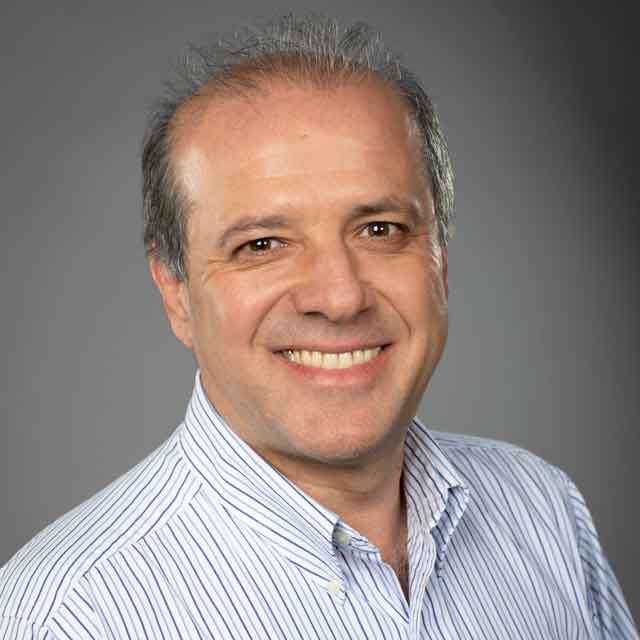
Professor Tommy Chan is Chair in Civil Engineering at Queensland University of Technology's School of Civil and Environmental Engineering. With over $10M in research funding, his work focuses on structural health monitoring of bridges and infrastructure systems. His research group develops cutting-edge methods for assessing structural integrity using vibration analysis, optical sensors, and machine learning. Professor Chan leads major projects including the ARC-funded 'Next Generation Bridge Monitoring' initiative developing real-time monitoring systems for prestressed concrete bridges. His team's innovations include GNSS-based settlement monitoring and synergic identification methods for prestress force evaluation. Current research explores vehicle-bridge interactions, damage detection algorithms, and novel materials for impact protection. He has received numerous honors including the Vice Chancellors' Leadership Award and Top Supervisor Award. Professor Chan founded the Australian Network of Structural Health Monitoring and serves on editorial boards for multiple journals in structural engineering.
Marco Martino Rosso is a Research Fellow at the Department of Structural, Building and Geotechnical Engineering (DISEG) at the Polytechnic University of Turin, where he also serves as an external lecturer and teaching assistant in both DISEG and the Department of Mathematical Sciences (DISMA). He is affiliated with the Doctoral School (SCDOTT) and completed his PhD under the supervision of Professor Giuseppe Carlo Marano. His academic work bridges civil engineering with advanced computational methods, focusing on structural health monitoring, optimization, and machine learning applications. His research interests center on Structural Health Monitoring , Machine Learning in Civil Engineering , Earthquake Engineering , Structural Optimization , Operational Modal Analysis , and AI-driven diagnostics for infrastructure. He applies deep learning, neural networks, and hybrid modeling techniques to problems such as damage detection, post-earthquake assessment, tunnel and bridge monitoring, and dynamic analysis of timber and concrete structures. His recent publications, spanning from 2023 to 2025, demonstrate a strong trend toward integrating artificial intelligence with structural engineering, particularly in automating modal analysis, optimizing structural forms, and enhancing seismic resilience. These works appear in journals like Mechanical Systems and Signal Processing , Computers & Structures , and Bulletin of Earthquake Engineering , as well as in proceedings of international conferences such as IOMAC and EWSHM. Marco Rosso has not received any explicitly mentioned scientific awards in the provided text. However, his extensive publication record and active role in research projects indicate strong recognition in his field. He has contributed to teaching as a course collaborator in subjects including Dynamic Identification of Structures , Statistics , Construction Techniques , and Safety Assessment and Retrofitting of Structures . He has also been involved in the ARTISTE 2025 Summer School, indicating engagement in advanced training programs. While no formal lab or team name is specified, his frequent collaborations with researchers such as Angelo Aloisio, Giuseppe Carlo Marano, and Jonathan Melchiorre suggest he is part of a vibrant research group focused on intelligent structural systems and data-driven engineering at Politecnico di Torino.
Gokhan Pekcan is a Professor at the University of Nevada, Reno, serving as Graduate Program Director and Associate Chair for Graduate Affairs. His research focuses on earthquake engineering, structural dynamics, seismic hazard mitigation, and structural health monitoring. Key research areas include: Seismic response of bridges and buildings under torsional ground motions Development of active and adaptive control systems for seismic resilience Integration of machine learning and compressive sensing for structural health monitoring Experimental validation of seismic retrofit techniques Analysis of structural and nonstructural systems' vulnerability Design of energy dissipation systems for civil infrastructure Recent publications highlight his work on torsional ground motion effects, hybrid simulation methodologies, and smart material applications in bridge systems. He employs deep learning for damage detection and data compression in monitoring frameworks.
Professor Peter Smith serves as the Head of School for the School of Built Environment at the University of Technology Sydney (UTS). With extensive expertise in project cost management and digital construction technologies, he leads academic initiatives focused on addressing global challenges in construction project delivery, cost overruns, and housing affordability. His leadership extends to international professional organizations in the field of cost engineering and quantity surveying. Professor Smith specializes in international research into Project Cost Management practices and the implementation of digital technologies such as Building Information Modelling (BIM) in the construction industry. His research primarily focuses on addressing the global problem of project cost overruns and extends to housing affordability through project life cycle costing applications. His work has significant implications for measuring the long-term cost of housing and understanding its societal impacts. He teaches across multiple domains including project management, procurement and contract management, project cost management, project risk management, and professional practice. His recent research outputs demonstrate a clear trend toward integrating artificial intelligence and computer vision technologies with traditional construction management practices. The most recent publications focus on deep learning applications for construction progress monitoring, particularly for indoor construction elements. This represents a shift toward more automated, data-driven approaches to construction management that complement his longstanding work on international standards for project cost management and BIM implementation strategies across different global contexts. Professor Smith has received numerous prestigious awards for his contributions to the field: DAB Outstanding Academic Leadership Award (2020, 2021, 2022) South American Cost Engineering Award (2016) Distinguished International Fellow Award (2016) ICEC Chair Award for significant global contribution (2016) AIQS Academic Teaching & Research Award - Runner Up (2014) Multiple PAQS Best Academic Paper Awards (2010, 2013) Professor Smith actively supervises Masters Research and PhD students through the University of Technology Sydney. His funded research projects include "International Project Cost Management Practices," "Digital Technologies Implementation in the Construction Industry," "Project Management," "Housing Affordability Measurement," and "Life Cycle Costing." These projects have received support from various organizations including Beverly Homes Pty Ltd, Leighton Holdings, and the RICS Education Trust, with recent funding extending through 2028. As Secretary-General of the International Cost Engineering Council and a Distinguished International Fellow, Professor Smith maintains strong connections with global professional bodies. He is also a Fellow of the Royal Institution of Chartered Surveyors and the Australian Institute of Quantity Surveyors. His work bridges academic research with industry practice, particularly through his role as an industry expert providing advisory and expert witness services for construction litigation matters.
Dr. Wai Kiong Oswald Chong is an Associate Professor at Arizona State University's School of Sustainable Engineering and the Built Environment, with a dual affiliation as Senior Global Futures Scientist at the Global Futures Scientists and Scholars program. He holds a PhD in Civil Engineering from the University of Texas-Austin, MSc and BSc in Building from the National University of Singapore, and focuses on integrating artificial intelligence with sustainable engineering systems. PhD (2005): Civil Engineering, University of Texas-Austin MSc (1999) & BSc (1997): National University of Singapore His research bridges lunar construction with Earth-bound sustainable systems, covering topics like: Space habitat modularization Resource circularity systems AI-enhanced building codes Climate-resilient infrastructure Advanced energy modeling Construction supply chain optimization Publications demonstrate consistent focus on: Semiconductor facility HVAC optimization Building energy consumption anomalies Life cycle assessment frameworks Construction risk management Deconstruction and material reuse AI-driven system modeling Current research projects include: Lunar MVI (Moon Village Initiative) Semiconductor fab design optimization Human-AI knowledge interfaces Thermal insulation systems for extreme environments Smart grid energy modeling
Fabiano Pallonetto is a Professor at Maynooth University's School of Business, with affiliations to the Hamilton Institute and Innovation Value Institute (IVI). He combines academic research with industry experience in energy, IT, and transport sectors. Role: Professor Location: Room 314, Maynooth University Contact: Fabiano.Pallonetto@mu.ie His research focuses on smart grid integration, energy system optimization, and sustainable development. Key projects include: NexSys (Funded Investigator): Developing net-zero energy pathways FLOW (Principal Investigator): Flexible EV-grid integration RES4CITY (Coordinator): Workforce upskilling for renewables Recent publications analyze energy flexibility software, deep learning optimization models, phase change materials for thermal storage, and blockchain security frameworks. His work spans smart cities , renewable integration , and AI-driven energy systems . Student Supervision: Currently advising MR B. Mohseni-Gharyehsafa (PhD research).
Arturo S. Leon is an Associate Professor at the Department of Civil and Environmental Engineering, Florida International University (FIU). His work focuses on water resources engineering, reservoir optimization, multi-phase flows, and resilient flood control. He leads a research group developing innovative solutions for urban infrastructure challenges, including real-time control systems for reservoirs and stormwater management. Education: Ph.D., University of Illinois at Urbana-Champaign, 2007. Research Interests: Dr. Leon’s group pioneers computational models for hydraulic systems, such as the Illinois Transient Model. They investigate geysers in storm sewers via experimental and numerical methods, achieving landmark results with lab-replicated 30m geysers. Their work also includes IoT-enabled remote control of wetland storage systems for flood mitigation, as seen in the Automated and Remotely Controlled 6″ Siphon project. They integrate machine learning for flood forecasting and sewer overflow optimization, highlighted in frameworks like FIDLAR and EcoFLow. Awards: EPA Early CAREER Award Diplomate by the American Academy of Water Resources Engineers (D.WRE) Advancing Flood Resilience: His group’s dynamic storage management approach retrofits wetlands and detention ponds with IoT-controlled systems. They also study climate-driven urban hydrology, such as thermal comfort in tropical cities like Miami. Their patented technologies, including remote siphon control frameworks, enhance infrastructure adaptability during extreme weather events. Labs & Projects: Active in the Resilient MAST@FIU initiative and the EcoFlow project, focusing on green infrastructure for sustainable water use. Ongoing work includes AI-driven flood hazard mapping and exergo-economic optimization of energy systems.
Samuel McDermott is an Associate Teaching Professor at the Department of Chemical Engineering and Biotechnology , University of Cambridge. He serves as the Sensor CDT Programme Manager , focusing on interdisciplinary research in healthcare, biotechnology, and open-source hardware. His research spans machine learning applications in medical imaging , laboratory automation , and web-of-things (WoT) integration for scientific equipment. Recent work emphasizes federated learning in healthcare, blood cell morphology classification, and low-cost diagnostic tools. Key article trends include: deep diffusion models for malaria detection , open-source microscopy platforms like OpenFlexure, and AI-driven clinical data generalization . His projects often combine 3D-printed hardware and IoT-enabled laboratory systems .
Dr. Haydar Aygun serves as Associate Professor in Acoustics and Building Services at the Bioscience and Bioengineering Research Centre, Department of Civil and Building Services Engineering, University of Salford. He holds multiple leadership roles including Course Director for the MSc Environmental and Architectural Acoustics, Diploma in Acoustics and Noise Control, and The Acoustics Apprenticeship programs. With a PhD in Acoustics and Vibration from the University of Hull (2006), his academic foundation includes a MSc in Advanced Materials, Processes and Manufacturing (2002) and a BSc in Mechanical Engineering. Dr. Aygun's research spans multiple critical domains of acoustics: Development and characterization of novel acoustic materials and metamaterials for noise control Duct acoustics and sound propagation through complex media Biomedical applications including bone analysis and respiratory sound detection Vibration control of porous materials using advanced computational methods Environmental noise assessment and building acoustics solutions His publication record shows consistent scholarly output with 46 research items from 2006-2025, demonstrating particular productivity in recent years (7 publications in 2023). His work shows increasing integration of computational methods with experimental validation, expanding applications in medical diagnostics and sustainable building technologies. Dr. Aygun actively contributes to the academic community through multiple service roles: Editorial Board Member for Journal of Applied Acoustics EPSRC Grant Reviewer Reviewer for Journal of Applied Acoustics and Journal of the Acoustical Society of America Deputy leader of Biomedical Acoustics Special Interest Group within UK Acoustics Network As an educator, Dr. Aygun has supervised numerous PhD students and teaches across multiple levels from undergraduate Building Services Engineering to specialized postgraduate Acoustics programs. His consultancy work bridges academic expertise with practical industry applications in noise assessment, building acoustics, and event sound management.
Vinh Nguyen is an Assistant Professor in the Department of Mechanical and Aerospace Engineering at Michigan Technological University, where he directs the Michigan Tech Center for AI and coordinates the NIST-PREP program. His research focuses on advanced manufacturing through Industry 4.0, human-robot-machine interaction, and physics-based/data-driven modeling. He has developed solutions for machining, additive manufacturing, metal forming, and robotic assembly to promote smart and sustainable manufacturing. Prior to joining Michigan Tech in 2022, he was a National Research Council Postdoctoral Fellow at NIST (2020–2022). Dr. Nguyen earned his PhD (2020), MS in Mechanical Engineering (2017), and MS in Electrical & Computer Engineering (2017) from Georgia Institute of Technology. He received dual bachelor’s degrees in Electrical and Mechanical Engineering from Rensselaer Polytechnic Institute (2014). His research portfolio spans Advanced Manufacturing Industry 4.0 and 5.0 Human-Robot Interaction Physics-Based/Data-Driven Modeling Industrial Automation based on his lab’s interdisciplinary focus on human-centric, resilient solutions. His recent publications address trends in Machine Learning for Manufacturing Autonomous Vehicle Sensors Hybrid Additive/Subtractive Manufacturing Augmented/Mixed Reality Interfaces Industrial Robot Diagnostics Material-Specific Machining with keywords spanning Robotics, Data Science, and Industrial Engineering.
Dr. Cliff Frohlich is a Senior Research Scientist Emeritus and Senior Research Scientist at the Institute for Geophysics, Jackson School of Geosciences, The University of Texas at Austin. He specializes in seismology with a focus on deep earthquakes, Texas and moonquakes, and statistical earthquake analysis. Education: Ph.D. and M.S. from Cornell University, B.A. from Grinnell College. Research Interests : Frohlich’s work spans induced seismicity, tectonic stress analysis, and the geophysical implications of energy resource activities. He investigates correlations between wastewater injection, fracking, and seismic events in Texas, Oklahoma, and other regions. His studies also address global patterns of deep earthquakes and moonquake mechanisms. Publications : Frohlich has authored/co-authored over 100 peer-reviewed articles and two books: Texas Earthquakes (UT Press) and Deep Earthquakes (Cambridge University Press). Recent work focuses on seismic vulnerability assessments, fault stress orientations, and the TexNet seismic network. Labs/Teams : Active within the UT Institute for Geophysics, collaborating on projects like the Scotia Arc GPS Project (SCARP) and educational outreach through films like Big League Earth Science .
Armin Stuedlein is a Professor of Geotechnical Engineering at Oregon State University's College of Engineering, specializing in ground improvement, liquefaction mitigation, and soil-structure interaction. He holds a Ph.D. from the University of Washington (2008) and joined OSU in 2009 after consulting in port and harbor engineering. His research focuses on geotechnical testing, probabilistic analysis, and seismic resilience, with over 150 peer-reviewed publications. Education: Ph.D., Civil Engineering, University of Washington (2008) M.S., Civil Engineering, Syracuse University (2003) B.S., Environmental Engineering, SUNY-Environmental Science & Forestry (2000) Research Interests: Liquefaction mitigation and ground improvement techniques Dynamic soil behavior and cyclic softening Seismic retrofit strategies for infrastructure Biocementation and soil modification Probabilistic geotechnical engineering Awards: 2018 ASTM Award for Outstanding Geotechnical Testing Article 2015 ASCE Journal Associate Editor of the Year 2013 Deep Foundations Institute Young Professor Award Advising/Grants: Active in mentoring graduate students and securing grants from NSF, DOTs, and industry partners. Leads the Full-Scale Geotechnics Group, focusing on field-scale geotechnical experimentation. Labs/Teams: Oversees the Full-Scale Geotechnics Group and collaborates with the Geotechnical Research team, advancing large-scale testing methodologies and field applications.
Saeed Reza Mohandes is an Assistant Professor in the Engineering Management Department at the University of Manchester , specializing in Construction Project Management with a focus on AI-based techniques and Digital Twin technology. His academic journey includes a Doctor of Engineering from Hong Kong University of Science and Technology (HKUST) , M.Sc. in Construction Technology from Universiti Teknologi Malaysia (UTM) , and B.Eng. in Technical Design from Islamic Azad University (IAU) . Education: Ph.D. in Engineering, Hong Kong University of Science & Technology, 2020 M.Sc. in Construction Technology, Universiti Teknologi Malaysia, 2014 B.Eng. in Technical Design, Islamic Azad University, 2010 His research leverages deep learning, fuzzy logic, and IoT to advance Construction Safety , Green Construction , and Infrastructure Management , aligning with UN Sustainable Development Goals (SDGs). Recent publications examine Digital Twin for net-zero buildings, blockchain in sustainable procurement, and UAVs for safety management. Scientific Awards : Best Paper Award, International Conference on Circular Economy (2023) Editorial Roles : Associate Editor, Guest Editor, and Reviewer for leading journals in construction and AI
Gulen Ozkula is an Assistant Professor of Civil Engineering at the University of the District of Columbia's School of Engineering and Applied Sciences. She specializes in seismic design, evaluation, and rehabilitation of steel structures, with a focus on steel columns and their behavior under extreme loading conditions. Her research integrates experimental methods, numerical modeling, and performance-based design principles to enhance structural resilience against earthquakes and seismic hazards. Education: Executive MBA, Istanbul University Post-Doctorate, Tokyo Institute of Technology Post-Doctorate, University of California, San Diego Ph.D., University of California, San Diego M.S., University of Illinois at Urbana-Champaign B.S., Celal Bayar University Research Interests: Ozkula’s work addresses critical challenges in seismic engineering, including cyclic stability of steel columns, high-performance steel materials, and seismic risk assessment. She explores innovative solutions for retrofitting existing structures and improving design codes through advanced testing methodologies and data analysis. Key Research Trends: Her publications emphasize experimental testing of steel beam-column subassemblages, field reconnaissance of recent earthquakes (e.g., Turkey 2023), and classification of buckling modes in steel columns. Findings often inform practical design guidelines and safety protocols for earthquake-prone regions. Grants & Advising: While specific grants are not listed, her active research program suggests involvement in funded projects related to seismic engineering. No current advisees are noted in the provided information. Labs & Teams: While not explicitly mentioned, her experimental work implies affiliation with structural testing facilities and interdisciplinary teams focused on earthquake engineering and materials science.
Dr. Vangelis Marinakis is an Assistant Professor at the School of Electrical and Computer Engineering (ECE) of the National Technical University of Athens (NTUA). His academic background includes an Electrical and Computer Engineering degree and a PhD in Decision Support Systems for Sustainable Energy Planning from NTUA. PhD in Decision Support Systems for Sustainable Energy Planning (NTUA) Electrical and Computer Engineer (NTUA) His research focuses on designing methodologies for intelligent energy management across Smart Homes, Buildings, Cities, and Districts, leveraging technologies like IoT, AI, and Big Data. He has contributed to over 25 European (Horizon Europe, H2020) and national projects, with more than 50 journal publications and book chapters. Key research areas include Decision Support Systems , Energy Efficiency , and Renewable Energy Integration . He has led research in AI-driven energy forecasting, federated learning for privacy-preserving data models, and blockchain applications in energy markets. His work explores the intersection of Smart Grids , Building Informatics , and Climate Resilience . Dr. Marinakis has developed frameworks for: Decarbonization-as-a-Service in building renovations Scalable Big Data architectures for smart buildings Multi-criteria optimization of EV charging stations Explainable AI in energy decision-making Climate resilience assessment for urban housing