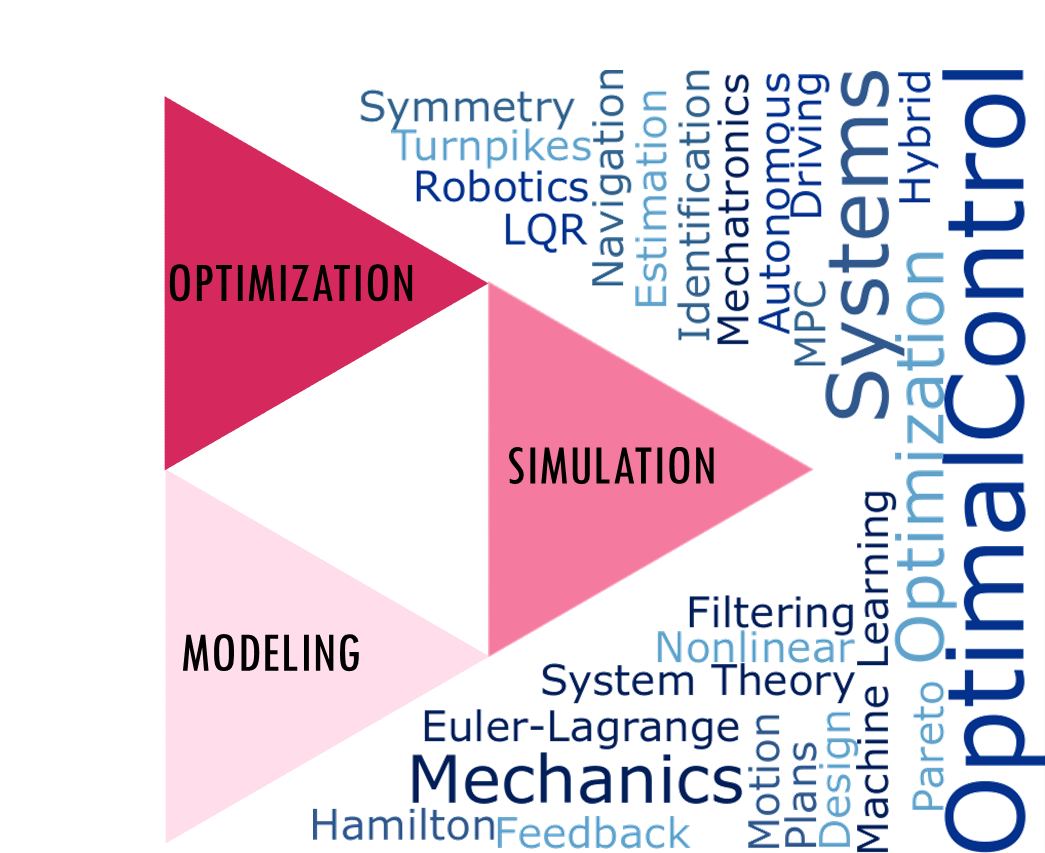
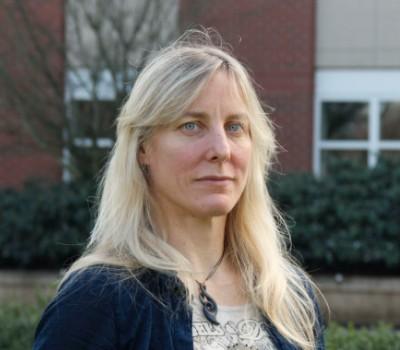
Kathrin Flaßkamp is a Professor at Saarland University, specializing in the Department of Systems Engineering. Her work focuses on modeling and simulation of technical systems, with applications spanning robotics, optimal control, and biomedical engineering. She is based at Campus A5 1, Room 1.04, Saarbrücken. Her research integrates control theory, artificial intelligence, and optimization to address challenges in mobile robotics, autonomous vehicles, and medical devices. A key trend in her recent articles involves leveraging model predictive control, neural networks, and Koopman operators for energy-efficient and cooperative trajectory planning. She also explores applications in stereotactic neurosurgery using continuum robots, emphasizing precision and adaptability. Her work frequently bridges theoretical advancements with real-world engineering problems, including systems with symmetries, multi-agent coordination, and data-driven methods for dynamical systems. Despite no explicit awards listed, her contributions to optimal control and robotics are evident in her extensive publication record.
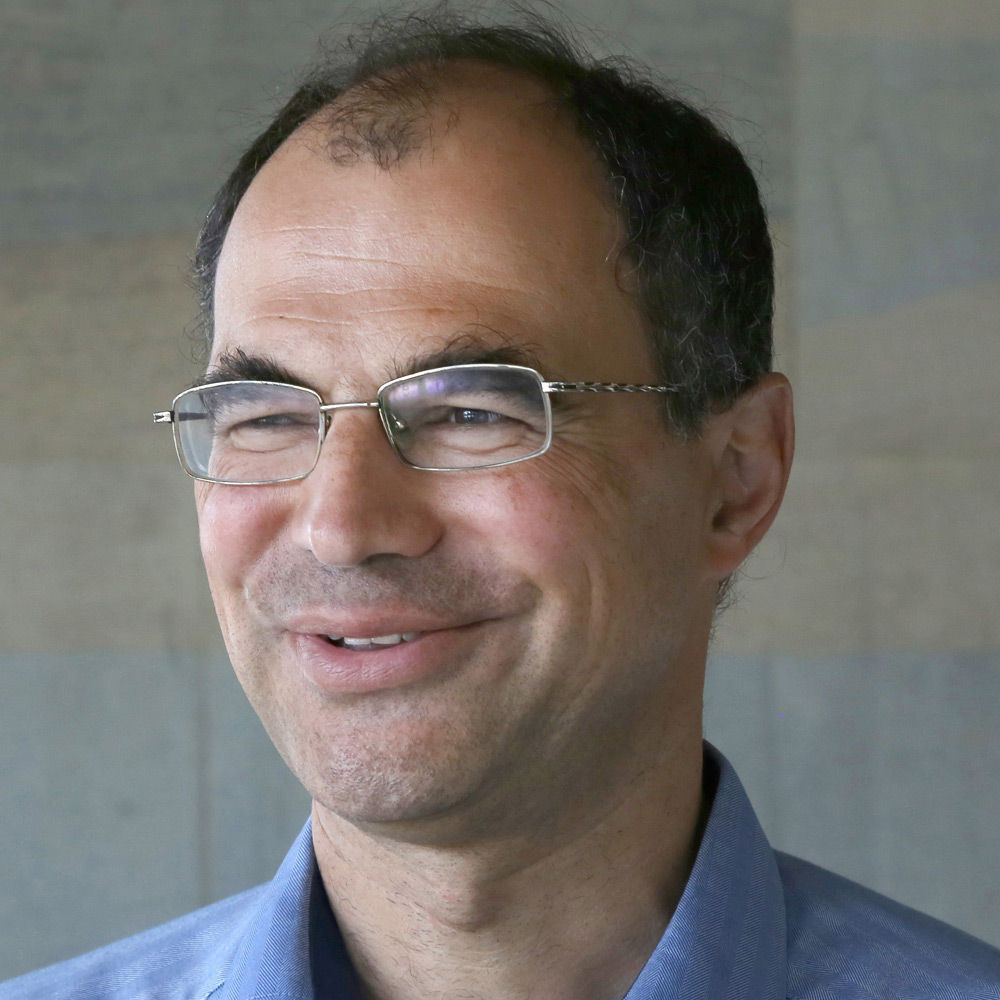
Danijel Skočaj is Full Professor at the University of Ljubljana, Faculty of Computer and Information Science , and serves as Head of the Visual Cognitive Systems Laboratory . He is an internationally recognized researcher in computer vision, machine learning, and cognitive robotics , with a strong focus on deep-learning solutions for real-world visual perception tasks and their ethical implications. Education: While specific degrees are not listed in the text, Professor Skočaj’s 2002 “Best PhD paper award” confirms he holds a PhD in the relevant field. Research Interests: His work spans Computer Vision & Pattern Recognition Deep Learning & Neural Networks Cognitive Robotics & Autonomous Navigation Visual Anomaly & Surface-Defect Detection AI Ethics & Societal Impact of AI These interests manifest in both theoretical advances and practical systems deployed in industry and public infrastructure. Publication Trends: Recent papers (2020-2024) emphasize deep-learning architectures for defect detection, robotic grasping, autonomous navigation, traffic-sign recognition, and 3-D anomaly detection , demonstrating a clear trajectory toward robust, real-time, and data-efficient visual intelligence. Awards & Honors: Prometheus of Science Award 2021 (Slovenian Science Foundation) Golden Plaque, University of Ljubljana 2020 ARRS National Award for Exceptional Scientific Achievement 2011 & 2022 Multiple Best-Paper awards at ERK conferences (2013, 2017, 2019) Top-downloaded paper recognition, Journal of Intelligent Manufacturing 2020 Grants & Projects: He currently leads or co-leads five major 2025-2028 national and EU projects (RTFM, SMASH, COMET, RoDEO, MUXAD) totaling several million Euros, focusing on advanced computer vision, machine learning for science & humanities, autonomous systems, and explainable AI. Past leadership includes EU FP7 CogX, GOSTOP, ViLLarD, and many ARRS programmes. Laboratory & Team: The Visual Cognitive Systems Laboratory hosts a dynamic group of doctoral and master’s students working on cutting-edge perception systems. The lab’s open-source low-cost robotic platform and datasets are widely adopted for education and research.
Jamal Atif is a Professor at Paris-Dauphine University and holds multiple significant leadership positions including Project Manager for 'Data Science and Artificial Intelligence' at the Institute of Information Sciences and their Interactions (INS2I) of the CNRS, Deputy Scientific Director of 3IA PRAIRIE, Head of the MILES team/project at LAMSADE (UMR CNRS-Université Paris-Dauphine), Co-leader of the Transverse Artificial Intelligence Program at PSL University, and Director of the Dauphine Numérique program. Professor Atif's primary research focuses on the foundations of responsible artificial intelligence, with specific expertise in privacy preservation in machine learning, robustness of deep learning algorithms to malicious attacks, causality, and explainability. His work bridges theoretical foundations with practical applications in security and reliability of AI systems. He has developed innovative approaches to address adversarial vulnerabilities in machine learning models and has made significant contributions to privacy-preserving techniques in data analysis. His publication record demonstrates a consistent focus on robust and trustworthy AI systems, with recent work exploring differential privacy in clustering, adversarial robustness, and explainable AI. The research spans theoretical foundations in logic and knowledge representation to practical applications in finance, healthcare, and computer vision. His publications appear in top-tier venues including Machine Learning journal, Neural Information Processing Systems, and International Joint Conferences on Artificial Intelligence. Scientific Awards: Recipient of two awards from the North American Society of Radiology for his thesis work Professor Atif has co-supervised or is currently supervising around fifteen doctoral students, demonstrating his commitment to mentoring the next generation of AI researchers. His leadership extends to directing major institutional programs including Dauphine Numérique and the Transverse Artificial Intelligence Program at PSL University, where he shapes strategic research directions in AI. He leads the MILES team/project at LAMSADE, which focuses on foundational aspects of machine learning and artificial intelligence. The team's research spans theoretical aspects of learning algorithms to practical applications requiring robust and reliable AI systems, with particular emphasis on security and privacy considerations in modern machine learning deployments.
Saptarashmi Bandyopadhyay is a Tenure-Track Assistant Professor of Computer Science at the City College of New York and the Graduate Center at the City University of New York (CUNY). Her research focuses on Artificial Intelligence Agents and Autonomous Decision Making, with special emphasis on Multi-Agent Reinforcement Learning, Multi-Agent Imitation Learning, and related paradigms. She has established significant collaborations with leading institutions including Google DeepMind, Carnegie Mellon University, Oxford University, and MIT. Dr. Bandyopadhyay received her PhD from the University of Maryland, College Park, where she was advised by Professor John Dickerson and Professor Tom Goldstein. Prior to that, she graduated from Penn State in 2020 with a thesis on Multimodal Computer Vision in Medical Domain advised by Prof. William Evan Higgins. Her research expertise spans multiple domains of AI including Multi-Agent Systems, Reinforcement Learning, Imitation Learning, and Multimodal Perception. She specializes in developing AI agents for applications in climate conservation, economic systems, and AI safety. Her work integrates techniques from computer vision, natural language processing, and robotics to create more robust and explainable AI systems that can operate effectively in complex, real-world scenarios. Current work includes improving explainable AI, developing Multimodal LLM/VLM/Robotic Agents, and creating libraries to speed up Multi-Agent evolutionary training with JAXMARL. Analysis of Dr. Bandyopadhyay's publication record reveals a clear progression from foundational work in medical imaging and natural language processing toward increasingly sophisticated multi-agent AI systems. Her recent publications demonstrate a strong focus on Multi-Agent Reinforcement Learning frameworks like JAXMARL, with applications spanning from supply chain orchestration to climate conservation. The interdisciplinary nature of her work is evident in publications spanning computer vision, NLP, and multi-agent systems conferences including AAAI, NeurIPS, AAMAS, EMNLP, and ACL. DoGood Fellow (2022) UMD Dean's Summer Fellow (2021) Dr. Bandyopadhyay has been actively involved in securing research funding from major agencies including NSF, NIH, DoD, and ARL. She served as the lead PhD student RA in a DoD project for Multi-Agent Explainable AI to improve AI trustworthiness. Her service to the academic community includes membership on program committees for major conferences including IJCAI 2024, KDD 2024, ACL 2024, and AAMAS 2023-2024. She has also created the AI Agents Seminar Series at UMD in 2022 with over 1,000 participants from six continents. Currently, Dr. Bandyopadhyay leads research on improving explainable AI, developing Multimodal LLM/VLM/Robotic Agents, and creating libraries to speed up Multi-Agent evolutionary training with JAXMARL. Her lab collaborates prominently with researchers from Google DeepMind, Carnegie Mellon University, Oxford University, University of Sheffield, Waymo, Meta AI, and MIT, with special focus on Dr. Jakob Foerster's and Dr. Robert Loftin's groups.
Dr. Ali Yousefi is an Associate Professor in the Department of Biomedical Engineering at the University of Houston's Cullen College of Engineering. His research focuses on developing statistical and computational methods for analyzing neuroscience data, particularly in linking neural activity to biological/behavioral signals. Key areas include model identification, Bayesian analysis, and real-time neural decoding for applications like brain-computer interfaces and closed-loop stimulation systems. Education: B.S. (Electrical Engineering, Iran University of Science & Technology, 1998), M.S. (Electrical Engineering, Sharif University of Technology, 2000), Ph.D. (Electrical Engineering, University of Southern California, 2014). Postdoctoral training at Harvard Medical School (2019) and Boston University (2019). Research Interests: Neural data analysis frameworks Dynamic neural ensemble modeling Closed-loop brain stimulation systems Bayesian statistical inference High-dimensional data decoding Labs/Teams: Principal Investigator of Yousefilab, focused on neurotechnology and BCI development. Active in interdisciplinary collaborations combining engineering, neuroscience, and machine learning. Key Contributions: Developed methodologies for neural signal decoding, including Bayesian Gaussian process models and latent variable techniques. Pioneered real-time cognitive state prediction and closed-loop systems for enhancing cognitive control in humans.
Rafał Weron is a Full Professor at Wrocław University of Science and Technology, where he has held leadership roles since 2015, including Head of the Department of Operations Research and Business Intelligence and Chairman of the Scientific Discipline Council for Management and Quality Sciences. His expertise spans electricity price forecasting, computational economics, and risk management, with significant contributions to probabilistic forecasting methods. As a globally recognized scholar, he has received prestigious awards such as the Hugo Steinhaus Prize (2018) and the Tao Hong Award (2017). Key Affiliations : Wrocław University of Science and Technology; Polish Academy of Sciences (Statistics and Econometrics Committee); Polish Mathematical Society. Research Trends: Weron's work focuses on electricity price forecasting, leveraging machine learning and statistical models to enhance accuracy and reliability. His publications emphasize probabilistic forecasting frameworks, quantile regression, and hybrid modeling techniques, reflecting a commitment to methodological rigor and practical applications in energy markets. Scientific Awards: Top 1% globally ranked economist (IDEAS/RePEc, 2013-2022) World's Top 2% Most Widely Cited Scientist (2019-2021) 'Hugo Steinhaus' Prize (2018) Tao Hong Award (2017) Emerald Citation of Excellence (2017) Minister of Science & Higher Education Prize (2016) Commission of National Education Medal (2016)
Yun Fu is a Distinguished Professor at Northeastern University, affiliated with the College of Engineering and Khoury College of Computer Science. He holds tenure in Electrical and Computer Engineering (ECE). His roles include Professor, Senior Vice President at Shiseido Americas, founder of Giaran (acquired by Shiseido), and co-founder of TVision Insights. He earned his Ph.D. from the University of Illinois at Urbana-Champaign. His research focuses on artificial intelligence, computer vision, machine learning, and data mining. Key achievements include over 500 publications, 50+ patents, and prestigious awards like IEEE Fellow, OSA Fellow, and AAIA Fellow. He leads the SMILE Lab, exploring AI applications in vision, robotics, and healthcare. Notable entrepreneurship includes AI-driven ventures in cosmetics and media analytics. Research interests emphasize AI-driven solutions for computer vision challenges, including anomaly detection, trajectory prediction, and multimodal learning. His work bridges academia and industry, with impactful contributions to both fields.
Cindy Grimm is a Professor and Graduate Program Director in the School of Mechanical, Industrial, and Manufacturing Engineering at Oregon State University (OSU), part of the College of Engineering. She is affiliated with the Robotics group, Human-Centered Computing, and Graphics and Visualization. Her research focuses on robotic grasping and manipulation for agricultural applications, ethics in robotics, and interdisciplinary projects such as 3D modeling, medical imaging segmentation, and bio-inspired sensor design. Education: Ph.D. in Computer Science, Brown University, 1996 M.S. in Computer Science, Brown University, 1992 B.A. in Computer Science and Art, University of California, Berkeley, 1990 Research Interests: Dr. Grimm’s work bridges computer science and robotics, emphasizing practical applications in agriculture and ethics. Key areas include robotic fruit harvesting systems, human-robot interaction, and the development of perception-driven algorithms for complex tasks like tree pruning and object manipulation. Her earlier projects explored surface modeling, bat sonar patterns, and 3D sketching interfaces. Publications: Her recent work addresses challenges in autonomous orchard management, robotic gripper design, and public understanding of service robots. Themes include precision agriculture, grasp planning, and sociotechnical aspects of robotics adoption. Awards: Recipient of the NSF CAREER Award, recognizing her contributions to robotics and interdisciplinary research. Service: Leads the Robotics graduate program at OSU, emphasizing ethical and technical training. Collaborates with the Collaborative Robotics and Intelligent Systems Institute (CoRIS) to advance robotics applications. Labs/Teams: Active in the CoRIS Institute, focusing on collaborative robotics and real-world robotic systems. Her lab develops hardware-software solutions for agricultural robotics and human-centered robotic interfaces.
Peng Hu is an Adjunct Professor at the University of Waterloo, focusing on cutting-edge research in satellite networks, 5G/6G non-terrestrial networks, and AI-driven solutions for space sustainability. His work emphasizes autonomous network management, edge computing in space, and IoT applications for industrial and healthcare systems. Research interests span satellite mega-constellations, space object detection via deep learning, and optimizing free-space optical (FSO) communication. He explores challenges in latency management, energy efficiency, and fault tolerance across heterogeneous networks, including UAV-assisted systems and industrial IoT. Key contributions include the SatAIOps framework for autonomous satellite operations and the SatNetOps multi-layer networking scheme. He has pioneered datasets like Satellite Object Detection (SOD) and developed anomaly detection methods using genetic algorithms and Monte Carlo dropout. Peng Hu’s recent work addresses global connectivity gaps via non-terrestrial networks and reviews reinforcement learning algorithms for space-air-ground integration. His technical leadership is reflected in workshops like the 5th IEEE ICC 2025 Satellite Mega-Constellations workshop.
Mohammad Ali Salahuddin is a Research Assistant Professor at the David R. Cheriton School of Computer Science, University of Waterloo , specializing in networking and machine learning. He holds a Ph.D. in Computer Science from Western Michigan University (2014), with prior academic roles at Université du Québec à Montréal and Concordia University. His research spans 5G network slicing, vehicular networks, and secure content delivery systems. Education: Ph.D. (2014, Western Michigan University); M.S. (2003, Western Michigan University); M.S. (2001, SZABIST); B.S. (1999, FAST-NUCES) Dr. Salahuddin's research focuses on 5G/6G network softwarization , autonomous threat mitigation , and machine learning for network management . His work integrates reinforcement learning and federated learning for scalable solutions in SDN/NFV , IoT , and edge computing . Recent studies address data drift in encrypted traffic classification and DDoS detection using outlier exposure-based federated learning . He has received multiple best paper awards at IEEE/IFIP NOMS (2023, 2022), IEEE CNOM (2021), and Kenneth C. Sevcik Outstanding Student Paper Award (ACM SIGMETRICS, 2021). His NSF-funded projects include vehicular cloud resource management and localization techniques. Dr. Salahuddin actively contributes to academic service as Vice-Chair of IEEE KW Section's Communications Society and TPC member for top conferences.
Sriraam Natarajan is a Professor and Director of the Center for Machine Learning at the Erik Jonsson School of Engineering & Computer Science, University of Texas at Dallas. He previously served as an Associate Professor at Indiana University (on leave since 2017) and Wake Forest School of Medicine. His research focuses on artificial intelligence, machine learning, and their biomedical applications, particularly in relational learning, reinforcement learning, and graphical models. He leads the StaRLing Lab and holds fellowships from hessian.AI and RBCDSAI. Education: PhD in Computer Science from Oregon State University (2007), advised by Prasad Tadepalli. Postdoctoral research at University of Wisconsin-Madison under Jude Shavlik and David Page. Research interests span statistical relational AI, causal inference, and healthcare applications. Notable awards include AAAI Fellow (2025), UTD Outstanding Graduate Teaching Award, and roles as AAAI Program Co-Chair and CODS-COMAD 2024 co-chair. Students supervised include over 20 PhD/MS graduates and current advisees in AI and machine learning. Active in editorial roles for JAIR, Machine Learning Journal, and conference PCs (ICML, AAAI, NIPS).
Dr. Alexei Vernitski is a Senior Lecturer in the School of Mathematics, Statistics and Actuarial Science (SMSAS) at the University of Essex. His research focuses on applying artificial intelligence (including reinforcement learning and deep learning) to mathematical problems in knot theory, algebra (e.g., braid theory), and universal algebra. He also explores mathematics education, particularly enhancing student motivation. Previously, he worked in the financial sector as a programmer and as a computer science lecturer. His research interests span AI-driven knot theory, algebraic structures (semigroups, groups), and mathematics education. Notable areas include the application of neural networks to braid untangling, automated reasoning in knot diagrams, and cognitive studies on math anxiety using EEG. He has supervised PhD students in mathematics education, universal algebra, and computer science applications of mathematics. His recent work demonstrates trends in combining machine learning with topological and algebraic problems, emphasizing practical AI solutions for abstract mathematical challenges. His articles reflect interdisciplinary approaches, merging computer science techniques with pure mathematics. Dr. Vernitski has advised multiple PhD students, contributing to diverse fields from knot theory to educational technology. His work bridges theoretical mathematics with real-world applications, such as optimizing data transmission and enhancing learning systems through neuroadaptive methods.
Diego Klabjan is a Professor at Northwestern University within the Department of Industrial Engineering and Management Sciences. He serves as the Founding Director of the Master of Science in Machine Learning and Data Science Program and Director of the Center for Deep Learning. Ph.D. in Algorithms, Combinatorics, and Optimization from Georgia Institute of Technology (1999) B.S. in Applied Mathematics from University of Ljubljana (1994) His research focuses on machine learning, deep learning, and analytics with applications in finance, transportation, sports, and bioinformatics. Key contributions include federated learning algorithms, reinforcement learning for cryptocurrency trading, and neural network applications in impact mechanics. Recent publications highlight advancements in blockchain-based federated learning, second-order policy gradient convergence, and ensemble deep reinforcement learning. His work bridges theoretical foundations with industrial applications across diverse sectors. Preseren’s Award for the Best Undergraduate Thesis (1994) Transportation Science Section Dissertation Prize (2000) Intel's Outstanding Researcher Award (2019) Jack Meredith Best Paper Honorable Mention (2022) Klabjan has advised notable students including Luis Guimarães (2015 APDIO/IO Award winner) and Young Woong Park (2015 INFORMS Computing Society Best Student Paper recipient). His collaborations span Fortune 500 companies and startups in analytics-driven domains.
Laura Toni is an Associate Professor in the Department of Electronic & Electrical Engineering at University College London (UCL). She serves as Director of the MSc in Telecommunications and Internet Engineering and the MRes in Telecommunications. Additionally, she is a Turing Fellow at the Alan Turing Institute and a member of ELLIS (European Lab for Learning and Intelligent Systems). Her research focuses on coding, streaming technologies, machine learning for immersive communications, decision-making under uncertainty, and large-scale signal processing. She leads the LASP (Learning And Signal Processing) group at UCL. Education: MSc (2005) and PhD (2009) from the University of Bologna, followed by postdoctoral research at UC San Diego and EPFL under Professors L. Milstein, P. Cosman, and P. Frossard. Key roles include Technical Program Chair at ACM MM 2022, Keynote Co-Chair at ACM MMSys 2022, and leadership in organizing workshops on graph-based machine learning and emerging technologies in performing arts. She is a Senior IEEE Member and holds editorial roles in IEEE Multimedia Magazine and EURASIP Journal on Signal Processing. Her work bridges communication systems and machine learning, with contributions to adaptive streaming, network optimization, and graph signal processing. She actively promotes diversity and inclusion in technical conferences, including roles as Diversity Chair at MMSys 2021 and PIMRC 2020.
Dong S. Ha is a Professor in the Bradley Department of Electrical and Computer Engineering at Virginia Tech. As Founding Director of the Multifunctional Integrated Circuits & Systems (MICS) Lab, he focuses on advanced circuit design for energy harvesting, RF systems, and high-temperature electronics. His work spans analog/RF ICs, power management circuits, and wireless IoT solutions with machine learning integration. Education: PhD (1986) and MS (1984) in Electrical and Computer Engineering from the University of Iowa; B.S. (1974) in Electrical Engineering from Seoul National University. Research interests include energy harvesting (piezoelectric, thermal, RF), high-temperature RF circuits for oil/gas/spacecraft applications, and smart IoT systems. He actively seeks students for projects in RF design, energy harvesting, and embedded systems. His lab develops cutting-edge solutions for harsh environment communication, sustainable energy systems, and smart agriculture monitoring. Awarded IEEE Fellow (2008) for contributions to VLSI design/test. Key publications span energy harvesting circuits, GaN-based high-temperature systems, and low-power IoT architectures. Current projects include self-sustaining smart farm networks using federated learning and attack-resistant sensor systems. Labs/Teams: Leads MICS Lab focusing on integrated circuits and systems. Collaborates on cross-disciplinary projects involving machine learning, embedded systems, and sustainable energy. Active in industry partnerships for aerospace and automotive applications.