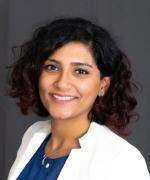
T. N. Vijaykumar is a Professor of Electrical and Computer Engineering at Purdue University's Elmore Family School of Electrical and Computer Engineering. His research focuses on computer architecture, VLSI design, and hardware acceleration for machine learning and datacenter systems. He holds a B.E. (Hons) in Electrical and Electronics Engineering and M.Sc.(Tech) in Computer Science from Birla Institute of Technology and Science, followed by M.S. and Ph.D. in Computer Science from the University of Wisconsin. His work spans GPU architecture optimization, memory systems, network security, and energy-efficient computing. Notable contributions include sparse tensor accelerators, disaggregated datacenter architectures, and secure speculative execution techniques. He has been actively involved in developing accelerators for machine learning inference and frameworks for distributed training of neural radiance fields. His publications address challenges in parallel computing, hardware-software co-design, and real-time systems, with applications in robotics, genomics, and microfluidics. He leads research initiatives funded by NSF and industry partnerships, emphasizing cross-layer optimizations across hardware, software, and networking layers.
Marco Donato is an Assistant Professor in both the Department of Electrical and Computer Engineering and the Department of Computer Science at Tufts University. He leads the TECS Lab (Testchip, Embedded Computing Systems) focused on hardware design for emerging applications. Prior to joining Tufts, he was a postdoctoral fellow at Harvard University's John A. Paulson School of Engineering and Applied Sciences. Dr. Donato received his academic training from prestigious institutions: Ph.D. in Electrical Sciences and Computer Engineering from Brown University (2016) M.Sc. in Electrical Engineering from Università di Roma La Sapienza, Rome, Italy (2010) B.Sc. in Electrical Engineering from Università di Roma La Sapienza, Rome, Italy (2008) Dr. Donato's research primarily focuses on designing reliable and energy-efficient hardware systems leveraging emerging technologies. His work centers on co-design methodologies for building specialized architectures for machine learning applications that utilize dense, fault-prone embedded non-volatile memories. He investigates noise modeling and reliability aspects of next-generation memory technologies, with particular emphasis on how these can be effectively integrated into system-on-chip (SoC) designs for edge computing and IoT applications. His research bridges the gap between circuit-level design and system-level architecture to create holistic solutions for hardware acceleration of machine learning workloads. Analysis of Dr. Donato's publication record reveals a strong focus on hardware acceleration for machine learning, particularly through innovative memory system designs. His work spans multiple domains including non-volatile memory technologies, energy-efficient circuit design, and flexible SoC architectures. A notable trend is his exploration of how emerging memory technologies can be leveraged to create more efficient implementations of deep neural networks, with particular attention to the trade-offs between reliability, density, and energy consumption. His research often involves full-stack approaches that consider everything from device physics to system architecture. Dr. Donato is actively involved in mentoring and has indicated he is "looking for Ph.D. students." His work has been supported by significant research grants that have enabled the fabrication of multiple test chips, as evidenced by his extensive publication record in top-tier venues including IEEE Journal of Solid-State Circuits, ISSCC, and MICRO. He leads the TECS Lab at Tufts University, which focuses on testchip development, embedded computing systems, and hardware acceleration. The lab appears to maintain connections with researchers at Harvard University and other institutions, reflecting Dr. Donato's collaborative approach to research. The lab's work emphasizes practical, real-world implementations of novel hardware concepts through actual silicon fabrication, which is relatively rare in academic settings.
Dr. Ke Chen is a Senior Lecturer in the School of Computer Science at The University of Manchester, leading the Machine Learning and Perception (MLP@UoM) Lab. His research focuses on machine learning, deep learning, reinforcement learning, and their applications in intelligent systems, computer vision, and audio/speech processing. He has supervised over 50 PhD students and holds editorial roles in journals like Neural Networks and IEEE Transactions on Neural Networks . Dr. Chen has received awards such as the NSFC Distinguished Principal Young Investigator Award (2001) and JSPS Research Award (1993). Education: PhD in Computer Science (1990), with academic positions at institutions including Peking University, The Ohio State University, and Kyushu Institute of Technology. His professional activities include roles in IEEE Computational Intelligence Society committees and external examiner roles at universities like Essex. Research interests span computational cognitive systems, biometric authentication, and video game AI. Key contributions include advancements in deep architectures, reinforcement learning, and speaker-specific feature extraction. His lab, MLP@UoM, explores topics like explainable AI and transfer learning. Recent publications (2024) include work on goal-conditioned reinforcement learning and bias-resilient algorithms. He is actively involved in international conferences, serving as a keynote speaker and program committee member.
Dr. Tharindu P. De Alwis is an Assistant Professor in the Department of Mathematics and Statistics at the University of West Florida, part of the Hal Marcus College of Science and Engineering. He is actively engaged in teaching and research, with a focus on high-dimensional data analysis and machine learning applications. Ph.D. in Mathematics (Statistics), Southern Illinois University Carbondale M.S. in Mathematics, Southern Illinois University Carbondale B.Sc. in Statistics and Operations Research, University of Peradeniya, Sri Lanka His research centers on dimension reduction techniques, particularly Sufficient Dimension Reduction (SDR), envelope methods, and their applications in multivariate time series and spatial-temporal data. He integrates deep learning and neural networks into statistical modeling, with recent work on stacking-based deep neural networks and Fourier-based SDR methods. His work bridges statistical theory with practical machine learning applications in complex datasets. His recent publications (2021–2024) demonstrate a strong focus on developing innovative statistical and machine learning methods for time series and high-dimensional regression. Key themes include nonlinear modeling, dimension reduction, R package development, and AI-augmented reliability analysis. These works reflect interdisciplinary applications in engineering, data science, and systems safety. Dr. De Alwis has presented his research at national academic conferences in the USA and has publications in peer-reviewed journals such as Statistical Methods & Applications and Reliability Engineering & System Safety , as well as preprints on arXiv and software on CRAN. He teaches a variety of courses including Precalculus with Trigonometry, Linear Algebra, Applied Statistics, and Data Science. While no formal advisees or grants are mentioned, his active publication record suggests ongoing research mentorship and scholarly engagement. He previously served as a post-doctoral scholar at Worcester Polytechnic Institute before joining UWF.
Henry Kang is an Associate Professor in the Department of Computer Science at the University of Missouri–St. Louis, College of Arts and Sciences. His expertise spans computer graphics, data visualization, and computational art, with extensive experience in full-stack web development and programming frameworks. Education: Ph.D. in Computer Science, Korea Advanced Institute of Science and Technology (2002) Research Interests: Kang's work focuses on computer graphics, non-photorealistic rendering, and data visualization. Key projects include coherence-enhancing filtering, stereoscopic 3D line drawing, and emotion-driven image recoloring. He integrates machine learning and GPU computing for real-time scene navigation and artistic effects. Publication Trends: His research emphasizes texture filtering, computational art, and perceptual modeling. Recent work includes Gaussian image binarization (2021) and coherence-enhancing GPU filtering (2018), while earlier contributions explore stereoscopic depth perception (2013) and directional stippling (2011). Contact: Email: kangh@umsl.edu Phone: (314) 516-5841 Office: 318 ESH
Dr. Chanchal K. Roy is a Professor of Software Engineering/Computer Science at the University of Saskatchewan (USask), Canada, and Director of the NSERC CREATE SOAR program. He leads the Software Research Lab (SRLab) and is renowned for his work on code clone detection (NiCad tool) and software maintenance. His research spans software evolution, big data analytics, and quantum computing applications in software engineering. Dr. Roy holds a Ph.D. from Queen’s University, an M.Sc. from RWTH Aachen University, and a B.Sc. from Khulna University. Research interests include software clone detection, maintenance, and evolution, with emphasis on semantic analysis and cross-language clones. He has published over 240 papers (h-index 52) and attracted $6M+ in funding, including NSERC grants and CFI-JELF support. Awards include the GSA Advising Excellence Award, Outstanding Young Computer Science Researcher Award, and multiple Most Influential Paper awards. Key contributions include developing NiCad, advancing Stack Overflow search techniques, and leading collaborative projects in software analytics. His work has been featured in ACM Tech News, TechRepublic, and Stack Overflow blogs. Dr. Roy actively engages in keynotes at conferences like WCRE, IWSC, and BIM.
Paul Franzon is the Cirrus Logic Distinguished Professor and Associate Department Head for Graduate Affairs at the Department of Electrical and Computer Engineering, North Carolina State University. He holds a PhD and Bachelor's in Electrical Engineering and a Bachelor's in Physics/Mathematics from the University of Adelaide, Australia. His research focuses on quantum information science, machine learning-driven hardware design, 3D integration, and high-speed systems. Education: PhD in Electrical Engineering, University of Adelaide (1988) Bachelor's in Electrical Engineering, University of Adelaide (1984) Bachelor's in Physics and Mathematics, University of Adelaide (1982) Research Interests: Quantum computing and algorithm optimization AI-driven design automation for 3D integrated circuits High-speed communication systems Hardware security and FPGA acceleration Awards & Honors: IEEE Fellow (2006) Alcoa Foundation Distinguished Engineering Research Award (2005) NC State Alumni Distinguished Undergraduate Professor Award (2003) NSW Australia Expatriate Scientist Award (2003) Advising & Grants: Advised PhD student Priyank Kashyap (2023 graduate) Recipient of NSF Young Investigators Award (1993) Labs & Collaborations: Center for Advanced Electronics Through Machine Learning (CAEML) IEEE EPS Society (Associate Editor)
Mehdi Sadi is an Assistant Professor of Electrical and Computer Engineering at Auburn University's College of Engineering. He holds a Ph.D. from the University of Florida, an M.S. from the University of California-Riverside, and a B.S. from Bangladesh University of Engineering and Technology. His research focuses on secure and reliable system-on-chip design, AI/ML-driven VLSI CAD/EDA, neuromorphic hardware, and emerging post-CMOS computing technologies. Notable achievements include earning the NSF CAREER Award for chiplet-based design optimization and a $175k NSF grant for magnetic RAM research. His work integrates machine learning with hardware co-design to enhance AI accelerators' performance, energy efficiency, and security. Recent projects include adversarial attack mitigation on AI hardware and reliability analysis of neuromorphic systems. Dr. Sadi's contributions span chiplet architecture, memory systems (e.g., STT-MRAM/SOT-MRAM), and fault-tolerant computing. He actively publishes on topics like skyrmion logic gates and TRNG implementations using MRAM. His work bridges theoretical machine learning advancements with practical hardware implementations, addressing critical challenges in next-generation computing systems.
Athinagoras Skiadopoulos is a computer systems researcher at Stanford University's School of Engineering, Department of Computer Science, focusing on the intersection of database systems and operating systems. His work centers around the innovative DBOS (Database-oriented Operating System) project and large-scale machine learning infrastructure, collaborating with prominent researchers including Christos Kozyrakis and Michael Stonebraker. His primary research interests include: Database-oriented Operating Systems (DBOS) Distributed systems for large-scale machine learning Resource management and optimization in data-intensive systems Transaction processing and data governance High-performance networking for accelerated computing Fault tolerance in distributed training systems Skiadopoulos's research trajectory shows a clear evolution from foundational DBOS architecture toward applications in large-scale machine learning systems. His early publications established the DBOS framework for operating system design using database principles, while his recent work addresses critical challenges in distributed training of massive neural networks. Systems like ReCycle and SlipStream demonstrate innovative approaches to pipeline adaptation and failure recovery during distributed training. His most recent 2025 work on accelerating Mixture-of-Experts training represents the cutting edge of efficient large model training infrastructure. Through his research, Skiadopoulos has established himself in both the database and systems research communities, with publications in premier venues including SOSP, OSDI, VLDB, and CIDR. His work consistently bridges theoretical database concepts with practical systems implementations, demonstrating how database techniques can solve real-world systems challenges in modern computing environments.
Shinji Kimura is a Professor at Waseda University's Faculty of Science and Engineering, specializing in VLSI design and electronic systems. He holds a Doctor of Engineering from Kyoto University and has been with Waseda since 2002, previously serving as Associate Professor at Nara Institute of Science and Technology (1993–2002) and Assistant Professor at Kobe University (1985–1993). Kimura's research spans low-power circuit design , approximate computing , FPGA optimization , video coding (HEVC) , and hardware acceleration for AI . His work focuses on energy-efficient architectures for applications like neural networks, computer vision, and ultra-high-definition video processing. Recent publications emphasize hardware-efficient multipliers, neural network compression, and 3D-stacked memory systems. Awards include the LSI IP Design Award (2000, 1999) and the Information Processing Society of Japan Encouragement Award (1993). He leads projects on HEVC encoding/decoding, non-volatile memory optimization, and 3D integrated circuits, with VLSI implementations achieving real-time 8K video processing.
Miryung Kim is a Professor and Vice Chair of Graduate Studies in UCLA's Computer Science Department, where she directs the Software Engineering and Analysis Laboratory. She is renowned for her pioneering work in software evolution, code clone management, and establishing the emerging field of Software Engineering for Data Intensive Computing (SE4DA and SE4ML). Her research focuses on automated testing and debugging for Apache Spark, developer tools for heterogeneous computing, and conducting systematic studies of refactoring practices in industry. She led the first large-scale study of data scientists in industry and developed JDebloat, a Java bytecode debloating tool that made significant tech transfer impact to the Navy. Her recent publications demonstrate strong trends in fuzz testing for big data analytics and heterogeneous computing, with a focus on natural input generation, co-dependence awareness, and leveraging hardware probes for acceleration. Her work bridges software engineering with data-intensive and heterogeneous computing paradigms. ACM SIGSOFT Influential Educator Award (2022) ICSME Most Influential Paper Award (2023 and 2020) NSF CAREER award Google Faculty Research Award Okawa Foundation Research Award Humboldt Fellow ACM Distinguished Member As an academic advisor, she has produced eight tenure-track faculty members at institutions including Columbia, Purdue, and Virginia Tech. Her research has been supported by National Science Foundation, Air Force Research Laboratory, Google, IBM, Intel, Okawa Foundation, Samsung, and Office of Naval Research. She previously served as Program Co-Chair of ESEC/FSE 2022 and has delivered keynotes at ASE 2019 and ISSTA 2022. She maintains active industry collaborations, serving as an Amazon Scholar at Amazon Web Services and having spent time as a visiting researcher at Microsoft Research.
Divya Mahajan is an Assistant Professor holding dual appointments in the College of Computing and College of Engineering at Georgia Institute of Technology. She directs the Systems Infrastructure and Architecture Research Lab, focusing on sustainable computing platforms for large-scale AI, machine learning, and data storage systems. Her research integrates computer architecture, distributed systems, and database technologies to optimize end-to-end data pipelines. Mahajan earned her PhD from Georgia Tech and Bachelor's from IIT Ropar (President's Gold Medal). Prior to academia, she was a Senior Researcher at Microsoft Azure, leading communication collective designs for distributed DNN training. Awards include NCWIT Collegiate Award (2017) and HPCA Distinguished Paper Award (2016). Research spans hardware-software co-design for ML systems, efficient recommendation architectures, federated learning optimization, and PIM/NPU acceleration. Recent projects address challenges in large-scale model serving, edge-cloud integration, and sustainable computing. Student advisees include PhD and MS researchers in systems and architecture. Publications demonstrate consistent innovation in accelerating ML workloads through novel hardware/software techniques, with work appearing in ISCA, MICRO, ASPLOS, NeurIPS, and VLDB. Current projects explore energy-efficient AI infrastructure and domain-specialized systems for emerging economies.
Professor Perumal Nithiarasu is a Professor and Director of Research in the College of Engineering at Swansea University. He also serves as Deputy Head of the College and Dean of Academic Leadership (Research Impact). His expertise spans computational engineering, biomedical engineering, and artificial intelligence, with a focus on blood flow dynamics and finite element methods. He has held leadership roles, including directing the Zienkiewicz Center for Computational Engineering and co-chairing international conferences like the Computational Biomedical Engineering series. Notable awards include the Zienkiewicz ICE Silver Medal (2002) and an EPSRC Senior Fellowship (2006). Research Interests: Computational Fluid Dynamics (CFD) Biomedical Engineering Applications Finite Element Method (FEM) Digital Twin Technology Artificial Intelligence in Biomedical Systems Scientific Contributions: Professor Nithiarasu has pioneered numerical methods like the Locally Conservative Galerkin (LCG) and developed influential tools such as the Zienkiewicz Lecture series. His work bridges computational models with clinical applications, including cardiovascular simulations and patient-specific coronary analysis. He leads a 30+ member research group and edits the International Journal for Numerical Methods in Biomedical Engineering . Grants & Impact: His research has been funded by EPSRC and other bodies, with applications in medical devices (e.g., glaucoma treatment shunts) and thermal systems. Collaborations include RAEng, IACM, and industry partners.
Muhammad Aaqib is a Doctor of Philosophy and Research Associate at the School of Computing , affiliated with the Faculty of Computing, Engineering and Built Environment . His work focuses on trust management in Internet of Things (IoT) systems, leveraging machine learning and deep learning methodologies. Education : Doctor of Philosophy (PhD) Research Interests : Internet of Things (IoT) Security Trust Management Systems Machine Learning and Deep Learning Models Explainable Artificial Intelligence for IoT Ensemble Learning Techniques Scientific Awards : Prize for Discriminative features-based trustworthiness prediction in IoT devices using machine learning models (2023)
Ariful Azad serves as an Associate Professor in the Department of Computer Science & Engineering at Texas A&M University, where he leads research at the intersection of high-performance computing and graph analytics. His work focuses on developing scalable algorithms for graph machine learning with applications in bioinformatics and security informatics. Educational Background: Ph.D. in Computer Science, Purdue University (2014) B.S. in Computer Science and Engineering, Bangladesh University of Engineering and Technology (2006) Research Focus: Dr. Azad specializes in high-performance graph algorithms , particularly for distributed-memory systems. His pioneering work includes the Combinatorial BLAS library and novel approaches for graph neural networks (GNNs), with emphasis on explainability through Shapley values and optimization of sparse matrix operations. His bioinformatics research tackles large-scale metagenomics challenges through projects like Exabiome. Publication Trends: Recent publications (2023-2025) reveal three dominant themes: (1) Scalable GNN explanation frameworks using distributed Shapley values, (2) High-performance sparse linear algebra for graph embeddings and knowledge graphs, and (3) Bioinformatics applications in metagenomics and network alignment. His work consistently bridges theoretical algorithm development with practical implementations for exascale systems. Scientific Recognition: NSF CAREER Award (2024) for foundational contributions to scalable graph algorithms Indiana University Trustee's Teaching Award (2024) U.S. Department of Energy Early Career Award (2021) Research Leadership: As principal investigator for multiple federal grants, Dr. Azad directs projects advancing graph analytics at extreme scales. His work on Weapons of Mass Destruction knowledge graphs demonstrates applied security research, while Exabiome represents significant contributions to computational biology. He actively develops open-source tools like PLANETALIGN for network analysis benchmarking, fostering reproducibility in computational science.