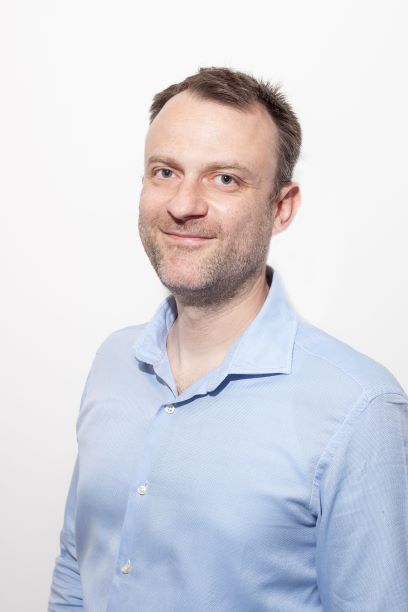
John Paparrizos is an Assistant Professor of Computer Science and Engineering at The Ohio State University's College of Engineering, where he directs The DATUM Lab (Data Analytics, Understanding, Mining, and Management Lab). He maintains an adjunct affiliation with the School of Informatics at Aristotle University of Thessaloniki. His research spans databases, data science, machine learning, and artificial intelligence , with focus areas including: Time-series analysis (clustering, anomaly detection) Scalable data mining for structured/unstructured data Adaptive algorithms for resource-constrained environments Foundational technologies for data-intensive applications His work addresses real-world challenges across relational, time-series, multimedia, text, graph, web, and IoT data domains. Notable recognition includes: 2025 ACM SIGMOD Test-of-Time Award for k-Shape time-series clustering 2023 IEEE TCDE Rising Star Award ACM SIGMOD Research Highlight Award NetApp Faculty Award His research has been featured in New York Times (front page), Washington Post , Forbes , and adopted by Fortune 500 companies (Exelon, Nokia) and the European Space Agency. He actively serves on program committees for premier conferences including ACM SIGMOD, VLDB, IEEE ICDE, ACM SIGKDD, and NeurIPS. His open-source tools have exceeded 100,000 downloads and are integrated into academic curricula at Brown, Columbia, Purdue, and University of Chicago.
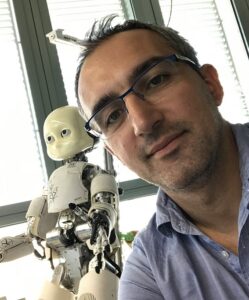
Ioannis Andreadis is a Professor in the Department of Electrical and Computer Engineering at the School of Engineering, Democritus University of Thrace. He has been a faculty member since 1993, following his appointment as a Visiting Professor at the School of Technological Applications of TEI Kavala (1991-1992). His academic journey began with a Diploma in Electrical Engineering from Democritus University of Thrace (1983), followed by an M.Sc. in Electrical Engineering & Electronics (1985) and a Ph.D. in Instrumentation & Analytical Science (1989), both from the University of Manchester. Professor Andreadis's research spans the Design and Implementation of Electronic Systems with particular emphasis on Intelligent Systems and Machine Vision . His work has resulted in over 230 publications in international journals, book chapters, and conference proceedings. He has made significant contributions to image processing, particularly in mathematical morphology, color image processing, and real-time implementation of image processing algorithms. His research has practical applications in seismic signal processing, crowd management systems, and 3D reconstruction technologies. The analysis of his recent publications reveals a strong focus on advanced image processing techniques, with increasing integration of deep learning approaches. His work spans both theoretical foundations (such as entropy estimation and moment calculations) and practical applications (including image stabilization, multi-focus image fusion, and crowd management systems). The interdisciplinary nature of his research connects electrical engineering, computer vision, and signal processing with applications in safety engineering, structural analysis, and robotics. Among his notable achievements are the IET Image Processing Premium Award (2009) , Best Paper Award at PSVIT 2007 , and Best Paper Award at EUREKA 2009 . He was elected Fellow of the Institute of Engineering & Technology (IET) in 2006 and Fellow of the Institute of Measurement & Control (InstMC) in 2021. He has also served as Subject Editor of the IET Electronics Letters and as Guest Editor for special issues of Pattern Recognition journal. Professor Andreadis has supervised 14 PhD theses , 21 Master's theses , and 88 Diploma works , demonstrating his commitment to academic mentoring. His research has been supported by significant grants including the EDUnet project (€280,000), wireless network implementation (€37,000), laboratory infrastructure development (€120,000), school information systems support (€478,000), the RESCUER project (€350,000 as Deputy P.I.), and the EDUSAFE project (Marie Curie Actions). He leads the Electronics Laboratory at Democritus University of Thrace, which has undergone significant infrastructure development through multiple funding sources. His work on the RESCUER project demonstrates collaboration with European partners on emergency risk management systems, while his EDUSAFE involvement shows commitment to advanced AR/VR safety systems development. His research group applies computational intelligence techniques to diverse challenges from seismic analysis to pedestrian evacuation modeling.
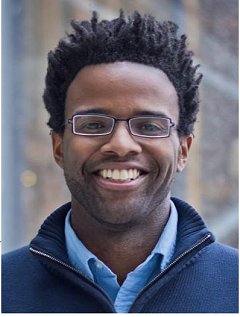
Christos Diou is an Associate Professor of Artificial Intelligence and Machine Learning at the Department of Informatics and Telematics, Harokopio University of Athens, Greece. His academic career spans over 15 years of participation in national and international research projects, with a focus on machine learning algorithms, domain generalization, causal inference, and bias mitigation. He earned a BSc and Ph.D. in Electrical and Computer Engineering from Aristotle University of Thessaloniki. His research emphasizes the application of machine learning to healthcare, addressing challenges such as visual bias mitigation, causal effect estimation from observational data, and fairness-aware representation learning. Notable projects include REBECCA and RELEVIUM , both EU-funded, and MELIORA , targeting lifestyle interventions for breast cancer risk reduction. He has published extensively in top-tier venues like IEEE TPAMI, CVPR, and ICCV. Christos is a leading voice in AI ethics and healthcare innovation, with over 150 publications and best paper awards at IEEE Big Data Service 2023 and AIAI 2022. His work includes developing platforms like Effector for feature effects and Beam for behavior studies. He collaborates with institutions such as Karolinska Institutet and CERTH/ITI, and his students include PhD candidates Ioannis Sarridis and Aristotelis Ballas.
George Papadopoulos is an Assistant Professor in the Department of Informatics and Telematics at Harokopio University of Athens, Greece. His research focuses on computer graphics, computational vision, artificial intelligence, and machine/deep learning, with emphasis on self-supervised learning, visual captioning, and X-ray image analysis. He holds a Diploma and Ph.D. in electrical and computer engineering from Aristotle University of Thessaloniki (AUTH). Education: Diploma in Electrical and Computer Engineering (AUTH) Ph.D. in Electrical and Computer Engineering (AUTH) He has over 20 years of experience in EU-funded research projects, currently serving as Principal Investigator (PI) for projects such as Ceasefire (Technical Manager), ONELAB, KLEPTOTRACE, TRIFFID (Coordinator), GANNDALF, ARMADILLO, and TORNADO (Deputy Coordinator). No scientific awards explicitly mentioned in the text. His advisory roles and grants are tied to his EU project leadership and coordination roles. His work is centered around interdisciplinary teams collaborating on ICT, security, and robotics initiatives.
Professor Kyriazis Dimosthenis holds a faculty position at the Department of Digital Systems, University of Piraeus. He earned his diploma in Electrical & Computer Engineering from the National Technical University of Athens (2001) and a cross-disciplinary MSc in Techno-Economic Systems (2004). His academic rank is Professor specializing in service-oriented architectures with a focus on quality of service and workflow management. He has led European projects like BigDataStack, CrowdHEALTH, and CYBELE, addressing challenges in cloud computing, edge computing, and AI-driven solutions for healthcare, finance, and industrial sectors. His research emphasizes resilient service-oriented systems, AI explainability, and human-centric digital transformation. Notable contributions include frameworks for dynamic resource allocation in hybrid cloud/edge environments, AI applications for maritime safety, and data governance solutions for cross-sector integration. He coordinates initiatives such as the Future Internet Architecture Board and Cloud QoS&SLAs, driving advancements in federated data marketplaces and sustainable computing practices. His recent work explores Large Language Model (LLM) applications in financial decision-making, conversational AI for MLOps, and neurosymbolic systems for defect detection. He also investigates XAI methodologies, including VirtualXAI, which leverages GPT-generated personas for explainability assessment. His projects often bridge technical innovation with societal impact, such as the iHELP platform for holistic health records and SmartCHANGE for behavioral change strategies in youth health. Key themes in his publications include bias mitigation in machine learning, dynamic deployment prediction in hybrid cloud settings, and energy-efficient data spaces for mobility. He has contributed to standards like the H2020-funded IRMOS and 5GTANGO, emphasizing interoperability and fault-tolerant architectures. His work frequently intersects with EU policy frameworks, particularly in data governance and ethical AI implementation.
Panagiotis G. Zervas is an Associate Professor at the Department of Electrical and Computer Engineering, University of Peloponnese (since 2020). His expertise spans audio signal processing, music information retrieval, and natural language processing for knowledge extraction. He teaches courses including Signals & Systems, Digital Signal Processing, and Machine Learning. His research focuses on AI-driven applications in sound analysis, music feature extraction, and multimodal information processing. Education: PhD (2007) in Electrical Engineering from the University of Patras, specializing in Greek prosody modeling for text-to-speech systems. Previous roles include Assistant Professorships at Hellenic Mediterranean University (2015–2020) and Technical Educational Institute of Crete (2008–2015). Research Interests: Natural Language Processing (NLP) for text analysis and large language models (LLMs) Audio signal processing, voice analysis, and embedded systems AI applications in job market analytics and skills frameworks Machine learning for music information retrieval Notable Projects: Principal Investigator in EU projects EU-ALMPO (2025–), Train4Blue (2025–), GROWTH4BLUE (2024–), and MICROIDEA (2024–) World Bank consultant (2023–) for AI-driven employment systems in Greece and Pacific Islands Publications in journals like 'Acoustics' and conferences like WAC 2022 and Forum Acusticum 2023 Office: Building K, Office K2.07 | Contact: pzervas@uop.gr
Professor Nikolaos Pelekis is a faculty member at the University of Piraeus, Greece, holding the position of Professor in the Department of Statistics and Insurance Science within the School of Finance and Statistics. His academic career focuses on Data Science, with a specialized emphasis on Mobility Data Management and Mining, a field he has contributed to for over two decades. He has authored two monographs and over 100 peer-reviewed articles, earning five Best Paper Awards and over 5,000 citations. Research Interests: Mobility Data Management and Mining Big Data Analytics Machine Learning Geographical Information Systems His work spans trajectory analysis, maritime and vessel traffic forecasting, and spatiotemporal data management. Notable projects include leading roles in EU-funded initiatives like GREEN.DAT.AI and EMERALDS, focusing on energy-efficient AI and urban mobility analytics. Awards and Recognition : Five Best Paper Awards, including the Ralf H. Güting Best Research Paper Award (2021) and Best Demo Paper Awards at SIGSPATIAL (2021). He also ranked 1st in the SemEval-2017 Task 4 for sentiment analysis. Professional Contributions : Serves on editorial boards (e.g., ECML PKDD, DMKD) and organizes workshops like BMDA. His teaching spans undergraduate and graduate courses in Data Science, Big Data Management, and Statistical Data Mining. Labs and Teams : Co-founder of the Data Science Lab at the University of Piraeus, collaborating across 4 departments and multiple researchers. Current efforts include maritime digitalization (VesselAI) and real-time trajectory prediction frameworks like ARGO.
Prof. Vana Kalogeraki is a Faculty Member at the Department of Informatics , Athens University of Economics and Business (AUEB) , and serves as the Dean of the School of Information Sciences and Technology and Director of the Computer Systems and Communications Laboratory . She has held academic positions at the University of California, Riverside and was a Research Scientist at Hewlett-Packard Labs . PhD: University of California, Santa Barbara M.S. & B.S.: University of Crete, Greece Her research focuses on Distributed and Real-Time Systems , Big Data Systems , Cloud Computing , Human-Centered Systems , and Crowdsourcing . She has published over 200 papers at top journals (IEEE TPDS, ACM TOS, etc.) and conferences (RTSS, DSN, ICDCS, VLDB, MDM), including co-authoring the OMG CORBA Dynamic Scheduling Standard . Her 2023-2025 publications address AI pipelines in serverless environments, edge computing for trauma detection via eye-tracking, and fairness in resource scheduling. She has received prestigious awards including an ERC Starting Grant , Best Paper Awards (DEBS 2017, IPDPS 2009), a Best Poster Award (EuroSys 2024), and multiple UC Research Awards . Her research is funded by the European Union (ARISTEIA, THALIS), NSF, and industry partners like SUN and Nokia. Advising Legacy : Supervised 10 PhD graduates (now at Google, Amazon, IBM, Apple) and over 60 MS/PhD committees Labs & Teams : Leads the Computer Systems and Communications Laboratory at AUEB, focusing on mobile human-centered systems and urban data analytics
Dr. Christos Antonopoulos is an Associate Professor at the Department of Electrical and Computer Engineering, University of Patras. He holds a Diploma and PhD in Electrical Engineering from the University of Patras (2002, 2008) and has participated in over 16 European research projects (FP5, FP6, FP7, Horizon 2020) and 6 national projects. Research Interests: Wireless Networks Cyberphysical Systems Embedded Software Architecture Internet of Things Cross-Layer Protocols Sensor Networks Technical Expertise: His work involves network simulation, power optimization, and reconfigurable computing. He has published >100 journal/conference papers and 13 book chapters with over 1000 citations.
Professor Dimitra Kaklamani is a distinguished faculty member at the School of Electrical and Computer Engineering at the National Technical University of Athens (NTUA), where she serves as a Professor in the Division of Information Transmission Systems and Material Technology. With over 300 publications to her name, she has established herself as a leading researcher in microwave engineering, wireless communications, and computational electromagnetics, having progressed through academic ranks from Lecturer (1995) to Professor (2009). Her research spans numerous critical areas in electrical engineering: Microwave Theory and Techniques Wireless Communications and MIMO Systems Computational Electromagnetics Object-Oriented and Distributed Computing Security & Privacy in Networked Systems Machine Learning Applications in Telecommunications Professor Kaklamani's research trajectory demonstrates a natural evolution from traditional microwave engineering toward cutting-edge areas like AI-enabled wireless communications and privacy-preserving network architectures. Her recent work (2023-2025) shows particular focus on intelligent metasurfaces for wireless communications, federated learning applications in next-generation networks, and security aspects of 5G/6G systems. This reflects both continuity with her foundational work in computational electromagnetics and adaptation to emerging technological frontiers. She serves as Editor of an international book by Springer-Verlag (2000) in applied Computational Electromagnetics and regularly reviews for IEEE journals, demonstrating her standing in the scholarly community. Her teaching portfolio is equally comprehensive, ranging from foundational courses like Linear Circuits Analysis to advanced topics such as Computational Electromagnetics and Machine Learning in Mobile Computing, reflecting her broad expertise across electrical engineering disciplines.
Dimitrios Tsoumakos serves as an Associate Professor of Big Data Management Systems at the School of Electrical and Computer Engineering of the National Technical University of Athens (NTUA) where he also directs DBLab, the Knowledge and Database Systems Laboratory. His academic career spans over two decades with significant contributions to large-scale data management and distributed systems. Diploma in Electrical and Computer Engineering from NTUA (1999) M.Sc. in Computer Sciences from University of Maryland (2002) Ph.D. in Computer Sciences from University of Maryland (2006) Professor Tsoumakos' research focuses on the intersection of big data management, cloud computing, and distributed systems. His work addresses fundamental challenges in large-scale data processing, including wavelet synopses for data summarization, vector embedding frameworks for analytics operators, multi-engine analytics systems, and cloud application deployment with failure recovery mechanisms. His research consistently bridges theoretical algorithms with practical implementations for real-world data challenges. His publication record demonstrates consistent innovation from early work on P2P data management systems through to current research on vector embeddings and deep reinforcement learning for cloud autoscaling. Recent work shows a clear progression toward content-based analytics, multi-dataset integration, and intelligent resource management in heterogeneous environments. Best Paper Runner Up Award at SSDBM 2019 Best Paper Award at CCGrid 2013 Professor Tsoumakos has secured substantial research funding through multiple European projects including RELAX (2023-2027), HiDALGO2 (2023-2026), DAPHNE (2021-2024), and previous initiatives like HiDALGO, TraMOOC, ASAP, CELAR, ARCOMEM, and GREDIA. These projects reflect his leadership in big data analytics, cloud computing, and distributed systems research. As director of DBLab, Professor Tsoumakos oversees research on the Knowledge and Database Systems Laboratory, which has produced significant work on analytics operators, multi-engine resource scheduling (IReS platform), cloud elasticity (TIRAMOLA), and RDF data management (H2RDF+). The lab maintains strong industry connections and has developed multiple open-source tools for big data analytics.
Michael Carbin is an Associate Professor at MIT in the Department of Electrical Engineering and Computer Science (EECS), where he leads the Programming Systems Group at the Computer Science and Artificial Intelligence Laboratory (CSAIL). His research centers on developing programming systems that handle uncertainty through probabilistic programming, quantum computing, and neural networks. Carbin's work spans programming languages, systems, and machine learning, with themes including uncertainty management, efficiency optimization, and formal verification. His publications demonstrate a strong focus on probabilistic inference methods, neural network optimization, and quantum programming frameworks. Awards and Honors: Sloan Research Fellowship (2020) Multiple Best Paper Awards (OOPSLA 2013, 2014; ICLR 2019) NSF CAREER Award (2018) Google Faculty Research Award (2018) As the head of the Programming Systems Group, he advises 10+ graduate students and postdocs, focusing on cutting-edge systems research. He has secured grants including Facebook Research Awards and NSF funding.
Eleni Tani is an Assistant Professor in the Department of Crop Science at the Agricultural University of Athens, affiliated with the Faculty of Crop Science and the Laboratory of Plant Breeding and Biometry. Her research focuses on molecular breeding for stress tolerance in crops, epigenetic mechanisms underlying environmental adaptation, and genetic variability in cultivated species and their wild relatives. Her work emphasizes the application of '-omics' technologies to improve crop resilience against abiotic and biotic stresses, including drought, salinity, and parasitic weeds like broomrape. She collaborates extensively on projects such as BENEFIT-Med and ZeroParasitic , targeting sustainable solutions for agricultural challenges. Dr. Tani has authored over 49 peer-reviewed articles and edited volumes, contributing to journals like Agronomy , Frontiers in Plant Science , and International Journal of Molecular Sciences . Her research trends highlight interdisciplinary approaches, integrating genomics, epigenetics, and AI-driven methodologies for crop improvement. She supervises 4 PhD candidates and has mentored over 10 postgraduate and 30 undergraduate students. Her teaching portfolio includes courses on plant breeding techniques, biotechnology, and experimental design. Office hours are held daily between 12:00 and 15:00 by appointment. Dr. Tani’s laboratory focuses on translational research bridging basic science and agricultural practice, with ongoing collaborations in Mediterranean crop sustainability and orphan legume revitalization.
Angelos Alexopoulos is an Assistant Professor at the Department of Economics , Athens University of Economics and Business . He has held Research Associate positions at the University of Cambridge, University College London, and University of Exeter in the UK. PhD: Athens University of Economics and Business Research Focus: Computational Statistics, Econometrics, Bayesian Analysis, Network Modelling Publications span Bayesian inference, epidemic forecasting, machine learning for fraud detection, and econometric methodology. Key journals include Journal of the Royal Statistical Society , Journal of Computational and Graphical Statistics , and Statistics and Computing . 2024: Gaussian invariance in MCMC 2024: Epidemic nowcasting models 2023: VAT fraud detection with ML Awards include certifications in Deep Learning (Coursera), Blockchain (edX), and Object-Oriented R Programming (DataCamp).
Dimitrios Karolidis is a Lecturer at the Department of Informatics and Computer Engineering within the School of Engineering at the University of West Attica (UniWA). He holds a Bachelor's degree in Physics from the University of Ioannina and a Master's in New Information and Communication Technologies from the National and Kapodistrian University of Athens (NKUA). Education: BSc in Physics, University of Ioannina MSc in New Information and Communication Technologies, NKUA His research focuses on Web Application Development , Internet Technologies , and Machine Learning . He has contributed to photovoltaic system optimization through projects like SmartPV , emphasizing fault detection, energy efficiency, and IoT integration. His publications highlight advancements in smart photovoltaic systems , including fault detection algorithms and communication protocols, aiming to reduce maintenance costs and improve energy output. He has also authored textbooks on programming languages like C and Python, widely used in academic settings. He has previously held academic positions at the Technological Educational Institute of Athens (2007-2018) and TEI Piraeus , working on laboratory and teaching roles related to computer systems and networks.