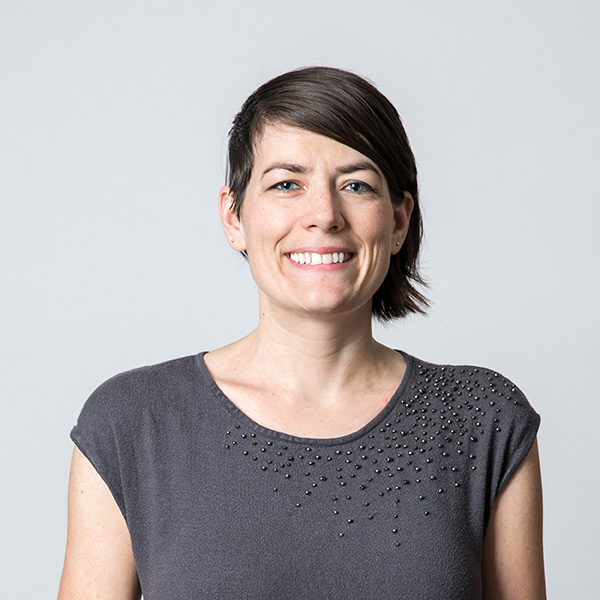
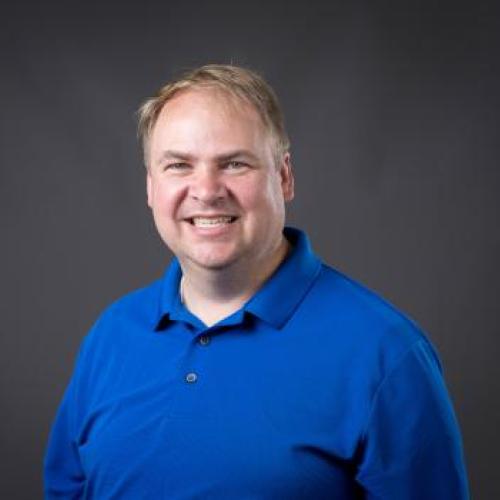
Dr. Lisa Star is Professor in the Civil Engineering and Construction Engineering Management Department at California State University, Long Beach. She holds BS, MS, and PhD degrees in Civil/Geotechnical Engineering from UCLA. Research specializes in soil-structure interaction effects during seismic events, employing large-scale field testing and advanced instrumentation. Key research areas include: Dynamic soil-foundation response characterization Geotechnical sensor implementation for infrastructure projects Tunneling-induced ground movement prediction Applied projects involve Los Angeles Metro tunneling operations, where she evaluates excavation impacts and ground behavior in complex soil conditions.
Nicholas Vlachopoulos is a Professor of Civil Engineering at the Royal Military College of Canada (RMC) with cross-appointments at Queen's University's Department of Geological Science and Geological Engineering and School of Environmental Studies. He holds a PhD (2009) from Queen's University and B/A.Sc/M.A.Sc degrees from RMC. His research focuses on geotechnical engineering, geomechanics, and environmental engineering, emphasizing physical testing, field observations, and analytical techniques to advance engineering practices. Key roles include Research Director of the GeoEngineering Centre, CEO of Geologos Inc., and Director of RMC's Green Team addressing environmental challenges in military facilities. Education: PhD in Geological/Geotechnical Engineering - Queen's University (2009) M.A.Sc in Civil Engineering - Royal Military College (1995) B.A.Sc in Civil Engineering - Royal Military College Research Interests: Geotechnical Engineering (rock mechanics, tunneling) Environmental remediation in defense facilities Structural health monitoring using fiber optics Rock bolt and ground support systems Military infrastructure resilience Professional Contributions: Founder of Geologos Inc., specializing in geotechnical solutions Recipient of DND Innovation Award for environmental solutions Teaching excellence awards (2018) Supervised award-winning graduate students (2017-2021) Lab/Team Leadership: RMC Green Team: Environmental engineering solutions for Canadian Forces bases GeoEngineering Centre: Interdisciplinary geotechnical research
B. F. Spencer Jr. is the Nathan M. and Anne M. Newmark Endowed Chair in Civil Engineering at the University of Illinois at Urbana-Champaign, where he directs the Multi-Axial Full-Scale Sub-Structured Testing & Simulation Facility and the Smart Structures Technology Laboratory. He joined the university in 2002 after serving as Leo E. and Patti Ruth Linbeck Professor of Engineering at the University of Notre Dame (1985-2002). Education includes: Ph.D. in Theoretical and Applied Mechanics, University of Illinois at Urbana-Champaign (1985) M.S. in Theoretical and Applied Mechanics, University of Illinois at Urbana-Champaign (1983) B.S. in Mechanical Engineering, University of Missouri-Rolla (1981) His research focuses on pioneering innovations in structural health monitoring, stochastic mechanics, and smart sensor technologies. Key areas include development of wireless sensor networks for real-time infrastructure assessment, seismic hazard mitigation strategies, and AI-driven damage detection systems. His work bridges theoretical computational mechanics with practical civil engineering applications to enhance resilience against natural disasters. Recent publications emphasize digital twins, UAV-based structural inspection, machine learning for damage identification, and advanced sensor networks. Trends show strong integration of AI, 3D visualization, and edge computing for rapid post-disaster evaluation and predictive maintenance of critical infrastructure. Major scientific honors: ASCE Housner Medal (2015) J.M. Ko Medal (2014) Foreign Member of Polish Academy of Sciences (2005) Structural Health Monitoring Person of the Year (2011) JSPS Fellowships (1999, 2000) He leads significant infrastructure projects including NSF-funded facilities and industry collaborations. Laboratory initiatives involve full-scale testing of bridges, gates, and seismic mitigation systems. Educational outreach includes K-12 STEM programs like 'Shakes and Quakes' to inspire future engineers.
Davide Guccione is an ARC Industry Fellow at the University of Newcastle within the College of Engineering, Science and Environment . His research focuses on rock mechanics , rockfall analysis , and photogrammetry , with significant contributions to understanding rock fragmentation dynamics and improving monitoring systems. Education : PhD in Civil Engineering (University of Newcastle, 2021), Master of Civil Engineering (University of Parma), Bachelor of Civil Engineering (University of Parma), and Diploma in Mining and Geoenvironmental Qualified Industrial Technician. Research Interests span experimental rock mechanics, rockfall hazard assessment, and photogrammetry. His work includes developing a novel VoxFall algorithm for volumetric rockfall detection and a stochastic fragmentation model for rockfall simulations. Current projects involve coastal cliff monitoring and deep learning-based photogrammetric calibration. Scientific Awards include: D.H. Trollope Medal (2023) Early Career Researcher Excellence Award - Highly Commended (2023) NSW Young Geomechanical Professionals Award 1st Runner-Up (2024) Australian Geomechanics Society Postgraduate Research Prize (2019) Grants and Funding highlight a $496,614 ARC Early Career Industry Fellowship and a $300,000 Newcastle City Council grant for coastal cliff monitoring. He supervises three PhD students and collaborates with institutions like Rocscience and the European Commission.
Stéphane Commend is an Associate HES Professor at the Fribourg School of Engineering and Architecture (HEIA-FR) under HES-SO Valais-Wallis. He also holds a lecturer role at the School of Engineering and Management of the Canton of Vaud. His primary research focuses on geotechnics, numerical simulations, and probabilistic modeling applied to infrastructure projects like tunneling and deep excavations. Education and affiliations include roles across multiple HES-SO institutions, with a strong emphasis on integrating advanced computational methods into geotechnical engineering. Notable projects include the Grand Paris Express tunnel project, Bayesian inference for wood constitutive modeling, and probabilistic risk analysis for urban construction. Research interests span soil-structure interaction, finite element modeling, and uncertainty quantification. Recent work emphasizes Bayesian methods for parameter calibration, machine learning in excavation design, and natural hazard vulnerability assessment. Key contributions include frameworks linking ZSOIL and UQLab for reliability analysis, and prototypes like SLIDE-PM for mudflow impact modeling. Current projects (e.g., iBAG and OptiSoil) focus on optimizing construction methods using AI and data-driven approaches. He leads collaborative teams across HES-SO institutes and academic partners like EPFL and CETU. Key Projects: iBAG Project (2022–2025): Bayesian methods in geotechnics OptiSoil (2019–2025): Machine learning for excavation design TULIP Project: TBM-pile interaction probabilistic analysis
Dr. Min Yu is an Imperial College Research Fellow (ICRF) in the Department of Mechanical Engineering at Imperial College London . He leads an independent research program focused on in-situ multimodal sensing of mechanical interfaces , integrating advanced materials, intelligent control, multiphysics modeling, and data-driven technologies. His work bridges tribology, robotics, and sensing with applications in lubrication systems and robotic haptic interfaces. Education: PhD in Mechanical Engineering, Imperial College London (2014–2018) MSc in Engineering, Zhejiang University (2011–2014) BEng in Engineering, Xi’an Jiaotong University (2007–2011) Research Interests: Dr. Yu’s core research areas include tribology , ultrasonic sensing , robotic haptics , lubrication systems , and data-driven control . He develops novel sensing technologies for real-time monitoring of mechanical interfaces, with applications in engines, bearings, transmissions, and robotic systems. His work emphasizes closed-loop intelligent lubrication and bio-inspired robotic sensing . Publications & Trends: Dr. Yu has authored over 60 peer-reviewed papers and holds 6 patents . His recent work (2024–2025) focuses on ultrasonic-based oil film measurement, triboelectric sensors for robotics, and advanced control systems for automotive suspensions. These publications reflect a strong interdisciplinary approach combining mechanical engineering , AI-driven control , and sensor innovation . Awards & Grants: Imperial College Research Fellowship (ICRF 2022–2026) Royal Society International Exchanges – Cost Share Scheme State Key Laboratory of Fluid Power and Mechatronic Systems Open Foundation Taiho Kogyo Tribology Research Foundation Grant Dame Julia Higgins Engineering Postdoc Collaborative Research Fund (2019) Peter Jost Travel Fund (2022) Collaborations & Labs: Dr. Yu collaborates with multiple groups at Imperial College London including the Tribology Group , Non-Destructive Evaluation (NDE) Group , Control and Power Group , Optical & Semiconductor Devices Group , and Geotechnics Group . He also partners with international institutions such as Georgia Tech , Xi’an Jiaotong University , Zhejiang University , HUST , and Tsinghua University , as well as industry leaders like Shell , ExxonMobil , Toyota , and Jaguar Land Rover .
Dr. Yiran Zhu is a Postdoctoral Research Fellow at the School of Mechanical and Mining Engineering, University of Queensland. He completed his PhD at the same institution in 2022, focusing on capillary trapping and gas-water flow in coal seam gas reservoirs. His research integrates mining engineering, energy fuels, and geomechanics to optimize resource extraction and subsurface processes. Research Interests: Dr. Zhu specializes in coal seam gas (CSG) recovery enhancement, rock mechanics, and mining technology. Key areas include: Capillary trapping dynamics in CSG reservoirs Rock mass damage prediction from blasting Coal fracturing using microwave/electric pulse technologies Horizontal borehole optimization for gas extraction AI applications in geoenergy systems Publication Trends: His recent work (2021-2025) emphasizes experimental and computational studies of coal permeability, fracture propagation, and reservoir modeling. Dominant themes include laboratory validation of CSG recovery techniques, blasting impact on mining infrastructure, and optimization of energy extraction processes. Supervision: Currently available for research student supervision. No specific grants or awards are documented in available sources.
J. Riley Edwards is an Assistant Professor in the Department of Civil and Environmental Engineering at the University of Illinois Urbana-Champaign (UIUC), leading track infrastructure research at the Rail Transportation and Engineering Center (RailTEC). He holds a Ph.D. and M.S. from UIUC and a B.E. from Vanderbilt University. His career includes roles from Lecturer (2007) to Assistant Professor (2023), with prior positions as Research Scientist and Senior Lecturer. Edwards' research focuses on railway infrastructure, including track system design, material performance, and AI-driven inspection technologies. He has advised numerous graduate and undergraduate students, contributing to RailTEC's mission of advancing rail engineering education and industry collaboration. His work spans over 150 peer-reviewed articles, with recent contributions emphasizing track buckling analysis, fastening system optimization, and data-driven infrastructure monitoring. Notable awards include the TRB William W. Millar Award (2024) and Progressive Railroading Rising Star Award (2015). Edwards is actively involved in professional societies like AREMA and TRB, organizing international symposia and serving on technical committees. Edwards has led major projects funded by agencies like FRA and FTA, advancing resilient track components, wireless sensing systems, and smart mobility solutions. His lab work includes field testing, laboratory experiments, and computational modeling to address challenges in heavy-haul, transit, and high-speed rail systems.
Irina Stipanovic is an Assistant Professor specializing in Market Dynamics, focusing on infrastructure maintenance, climate change adaptation, and railway systems. Her research integrates advanced technologies like Digital Twins and machine learning to enhance decision-making in civil engineering contexts. Her work addresses critical challenges in infrastructure management, including risk-based maintenance scheduling, structural health monitoring, and flood resilience. She explores innovative methods such as entity-embedding neural networks and vision-based 3D inspections to improve predictive maintenance and asset lifecycle management. Key themes in her research include: Railway earthwork maintenance under climate change Multi-objective decision models for infrastructure prioritization Integration of Structural Health Monitoring (SHM) into Digital Twin platforms Resilience planning for critical infrastructure against floods and other hazards She has contributed to EU initiatives on standardization of Digital Twin applications and has published extensively on railway, tunnel, and bridge management. Her work emphasizes data-driven approaches to sustainable infrastructure solutions.
Dr. Shan Huang is a Researcher at the School of Engineering, University of Newcastle. She holds a BE in Civil Engineering from Hunan University of Science and Technology, an MS in Road and Railway Engineering from Central South University, and a PhD in Civil Engineering from the University of Newcastle. Her research focuses on computational geomechanics and probabilistic geotechnics, particularly in soft soil consolidation and geotechnical risk assessment. Dr. Huang's work integrates numerical simulation and advanced probabilistic methods, with notable contributions to Bayesian back analysis for settlement prediction and parameter calibration in soft soils. Her research has been published in journals such as Computers and Geotechnics , ASCE Journal of Geotechnical and Geoenvironmental Engineering , and Soils and Foundations . Key projects include the analysis of embankments in Ballina, Australia, where she applied Bayesian methods to predict long-term settlements using monitored data. Her work emphasizes computational efficiency and practical applications in geotechnical engineering.
Shawn Griffiths is an Assistant Professor in the Department of Civil & Architectural Engineering at the University of Wyoming, within the College of Engineering and Physical Sciences. He holds a Ph.D. in Civil Engineering (Geotechnical) from the University of Texas at Austin, an M.S.C.E. from the University of Arkansas, and a B.S. in Civil Engineering from Utah State University. His academic appointment and active research and teaching roles confirm his status as a current faculty member. Education: Ph.D., Civil Engineering (Geotechnical), University of Texas at Austin, 2015 M.S.C.E., Civil Engineering (Geotechnical), University of Arkansas, 2011 B.S., Civil Engineering, Utah State University, 2009 Shawn Griffiths' research focuses on geotechnical earthquake engineering, particularly in surface wave testing, site response analyses, and uncertainty quantification in shear wave velocity profiles. He also has strong interests in engineering education, soil-structure interaction, and the rehabilitation of dams and levees. His work aims to solve real-world problems through interdisciplinary collaboration and practical modeling approaches. He emphasizes the importance of understanding soil behavior under seismic loads and improving predictive models for infrastructure resilience. The recent publications reflect a consistent focus on seismic site characterization, nonlinear soil behavior, and uncertainty in geotechnical models. His research integrates field data (e.g., surface wave and borehole testing) with computational methods to enhance the accuracy of seismic load estimation for bridges, buildings, and transportation systems. There is a clear trend toward quantifying uncertainty and improving modeling fidelity in complex geotechnical environments. Shawn Griffiths is affiliated with key professional organizations in his field: American Society of Civil Engineers (ASCE) Earthquake Engineering Research Institute (EERI) He teaches foundational and advanced courses in geotechnical engineering, including Soil Mechanics (CE 3600), Geotechnical Engineering (CE 4630/CE 5700-07), and Geotechnical Earthquake Engineering (CE 5640). His teaching philosophy emphasizes self-learning, critical thinking, and a positive, professional environment. He encourages students to embrace mistakes as part of the learning process and fosters a balanced, industrious academic culture. While no specific graduate students are named, he welcomes prospective students into his research group and values mentorship. Although no grants are explicitly detailed, his technical reports suggest involvement in funded projects related to seismic risk in transportation infrastructure. His research program is based at the University of Wyoming, where he continues to expand surface wave and borehole testing applications in high-seismic-risk regions.
Harald Köstler is an Associate Professor and Head of Research at the Erlangen National High Performance Computing Center (NHR@FAU) within the Department of Computer Science at Friedrich-Alexander-Universität Erlangen-Nürnberg (FAU). He leads the research group on HPC Software Design at the Chair of Computer Science 10 (System Simulation), focusing on software engineering for high-performance computing and data analytics. His research interests include: Software Engineering for HPC Code Generation for Numerical Solvers Performance Engineering on Hybrid Architectures Discontinuous Galerkin and Lattice Boltzmann Methods Multigrid Solvers and Parallel Algorithms Performance Portability across CPUs, GPUs, and FPGAs The recent publications highlight a strong trend in developing efficient, scalable, and portable simulation frameworks for complex physical systems. His work emphasizes code generation, performance optimization, and the integration of classical model-driven and data-driven approaches. Key application areas include computational fluid dynamics, geotechnical engineering, and climate modeling, often leveraging the waLBerla and ExaStencils frameworks. Harald Köstler has no listed scientific awards in the provided text. He advises students in the areas of high-performance computing, numerical methods, and software engineering for scientific applications. His research is supported by collaborations within the FAU HPC ecosystem and likely involves grants related to national high-performance computing initiatives. He is a key contributor to the waLBerla framework, a block-structured, high-performance software for multiphysics simulations, and is involved with the ExaStencils project, which focuses on advanced multigrid solver generation. These frameworks form the core of his research team's efforts in scalable scientific computing.
Dr. Madhu Murthy is a Lecturer in the Department of Civil, Maritime and Environmental Engineering within the Faculty of Engineering and Physical Sciences at the University of Southampton. His research focuses on advanced geotechnical investigations using cutting-edge imaging technologies and experimental methods to address complex engineering challenges in transportation infrastructure and marine environments. Research Interests Dr. Murthy's research spans multiple domains within geotechnical engineering, with particular expertise in: Advanced characterization of soil and granular materials using X-ray micro-computed tomography Mechanical behavior of railway ballast and development of sustainable reuse strategies Marine sediment mechanics and methane hydrate formation processes Unsaturated soil mechanics and water retention characteristics Gas migration phenomena in porous media His work integrates experimental techniques with computational analysis to provide fundamental insights into material behavior under various loading and environmental conditions. Dr. Murthy has established collaborations with international research teams and industry partners to address pressing infrastructure and energy challenges. Publication Trends Dr. Murthy's recent publications demonstrate a strong focus on applying advanced imaging techniques, particularly X-ray computed tomography, to solve complex geotechnical problems. His research spans from fundamental soil mechanics investigations to practical railway engineering applications. A notable trend is the integration of synchrotron imaging with geomechanical testing to visualize and quantify material behavior at the micro-scale. His work on methane hydrates bridges geotechnical engineering with energy resource exploration, while his railway ballast research addresses sustainability challenges in transportation infrastructure. Academic Supervision Dr. Murthy currently supervises PhD students working on cutting-edge geotechnical research topics: Rashid Salum Abeid: Investigating railway ballast behavior under various loading conditions Komeil Valipourian: Researching advanced geotechnical characterization methods His supervisory approach emphasizes both theoretical understanding and practical application, preparing students for successful careers in academia and industry.
Giuseppe Quaranta is an Associate Professor in the Department of Structural and Geotechnical Engineering at Sapienza University of Rome, Faculty of Civil and Industrial Engineering. He is actively engaged in teaching Construction Techniques and Construction Process Management, and maintains regular office hours for students. His research focuses on structural monitoring, dynamic identification, seismic protection systems, and AI applications in civil engineering. Department: Department of Structural and Geotechnical Engineering Faculty: Faculty of Civil and Industrial Engineering Institution: Sapienza University of Rome Email: giuseppe.quaranta@uniroma1.it Dr. Quaranta's research interests span structural monitoring and control, sensing systems, dynamic identification, diagnostics of civil structures, passive vibration control devices, structural concrete, and the analysis and design of reinforced concrete and composite steel-concrete structures. His work integrates computational modeling, experimental validation, and data-driven approaches, particularly using artificial intelligence and machine learning for structural health monitoring and seismic assessment. He investigates energy harvesting using piezoelectric materials for powering wireless sensors in smart infrastructure. The recent publications of Dr. Quaranta demonstrate a strong trend toward energy-based seismic engineering, machine learning for structural performance prediction, nonlinear dynamics of isolation systems, and advanced modal identification techniques. His work combines theoretical modeling, numerical simulation, and experimental testing, with applications to bridges, buildings, and historical structures like the Leaning Tower of Pisa and the Colosseum. Dr. Quaranta is involved in the research project titled "Smart technologies and decision support tools for the assessment of deteriorating reinforced concrete infrastructures in seismic areas at territorial scale," which aligns with his expertise in corrosion hazard mapping, seismic resilience, and smart monitoring systems. While student advising is implied through research collaboration, specific names of advisees are not listed in the provided materials. Smart technologies and decision support tools for the assessment of deteriorating reinforced concrete infrastructures in seismic areas at territorial scale His research team conducts experimental and computational studies on structural systems, including dynamic monitoring of iconic structures such as the Leaning Tower of Pisa and the Colosseum. The lab focuses on developing and applying advanced signal processing techniques, nonlinear system identification methods, and AI-driven tools for structural health monitoring and seismic risk assessment.
Michael Olsen is an Associate Professor of Geomatics in the School of Civil and Construction Engineering at Oregon State University (OSU). He holds a Ph.D. in Structural Engineering from the University of California, San Diego, and degrees in Civil Engineering from the University of Utah. His research focuses on terrestrial laser scanning, remote sensing, GIS, earthquake engineering, and 3D visualization, with applications to disaster response, hazard mapping, and infrastructure monitoring. Recent projects include developing mobile laser scanning guidelines for transportation agencies, advancing point cloud segmentation algorithms, and conducting post-disaster reconnaissance in regions like Chile, Japan, and Nepal. Education: Ph.D., Structural Engineering, University of California, San Diego, 2009 M.S., Civil Engineering, University of Utah, 2005 B.S., Civil Engineering, University of Utah, 2004 Research Interests: His work bridges geomatics and civil engineering, emphasizing innovation in 3D data collection and analysis. Key areas include landslide displacement modeling, coastal erosion forecasting, and the integration of UAS (drone) imagery for damage assessment. He also explores accessibility compliance via mobile LiDAR and has pioneered courses in 3D laser scanning and Building Information Modeling at OSU. Publications Trends: Recent articles highlight advancements in automated infrastructure analysis, disaster response technologies, and hazard vulnerability assessments. His work often combines geospatial data with machine learning to address real-world challenges in transportation, environmental science, and structural safety. Awards/Recognition: None explicitly listed in provided materials. Advising & Grants: While no student advisees or grant details are specified, Olsen’s research is supported by projects with state DOTs, federal agencies, and international collaborations. His contributions include developing protocols for post-earthquake bridge restoration and asset management frameworks for transportation networks. Labs/Teams: Collaborates with the National Science Foundation’s NHERI RAPID facility and leads OSU’s efforts in geospatial hazard modeling. His work integrates field data collection with computational tools, forming a multidisciplinary approach to infrastructure resilience.