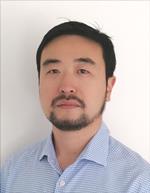
Jiaxiang Zhang is Professor of Artificial Intelligence in the Department of Computer Science at Swansea University's Faculty of Science and Engineering. He holds a PhD in Computational Neuroscience from the University of Bristol and previously held positions at the University of Birmingham, MRC Cognition and Brain Sciences Unit (Cambridge), and Cardiff University where he founded the Cognition and Computational Brain Lab. Zhang's research integrates computational modeling, machine learning, brain imaging (MEG/EEG/fMRI), and experimental approaches to study human cognition, aging, and neurological disorders. Key focus areas include: Neural mechanisms of decision-making and problem-solving Computational models of cognitive processes AI applications in healthcare diagnostics and neuroimaging Brain network dynamics in neurological conditions Recent publications emphasize deep learning models for neural data, multimodal brain connectivity, decision-making impairments in Parkinson's disease, and neuroinformatics tools. His work shows strong clinical translation through epilepsy biomarker development and emergency department outcome prediction. Zhang has led research grants from ERC, MRC, BBSRC, and Wellcome Trust. As primary investigator for multiple projects, he oversees significant computational neuroscience initiatives. He is available for postgraduate supervision.
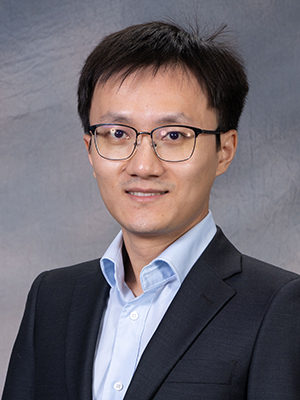
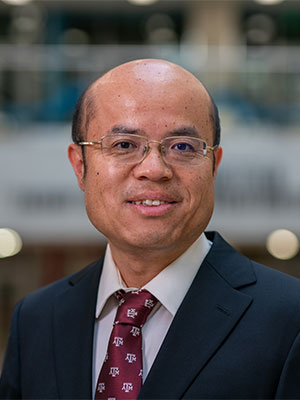
Chen Wei Wayne is an Assistant Professor in the Department of Mechanical Engineering at Texas A&M University. His research focuses on generative design AI, machine learning, uncertainty quantification, and advanced manufacturing. He leads the DIGIT Lab, which develops AI methods for design innovation, automation, and manufacturing integration. Education: Ph.D., Mechanical Engineering, University of Maryland, College Park (2019) M.S., Mechanical Engineering, Chongqing University, China (2015) B.S., Mechanical Engineering, Chongqing University, China (2012) Research Interests: Generative adversarial networks (GANs) for design synthesis Data-driven metamaterials and multiscale systems Uncertainty quantification in engineering design AI-driven design automation Awards & Honors: ASME Journal of Mechanical Design Reviewer of the Year Award (2023) ASME DAC Best Paper Award (2022) Journal of Mechanical Design Editors’ Choice Honorable Mention (2021) Lab Activities: Recent lab milestones include successful completion of TAMUQ Summer Research Programs (2024) Hosts undergraduate researchers like Wisam Gadam and Eddie Guerrero
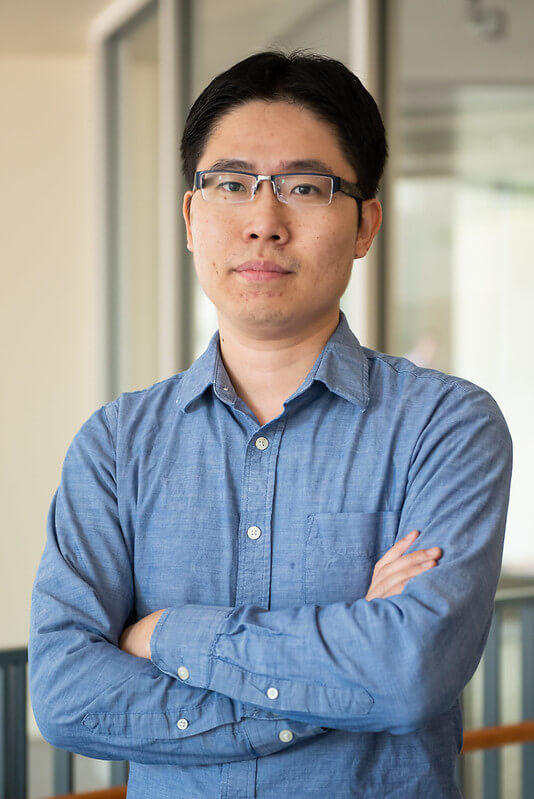
Xianyang Zhang is a Professor in the Department of Statistics at Texas A&M University, affiliated with the College of Arts & Sciences. He holds a Ph.D. from the University of Illinois at Urbana-Champaign (2013) and a B.S. from the University of Science & Technology of China (2008). His research focuses on high-dimensional statistics, functional data analysis, kernel methods, and genomics, supported by grants from NIH, NSF, and Texas A&M. Education: Ph.D., Statistics, University of Illinois at Urbana-Champaign, 2013 B.S., Statistics, University of Science & Technology of China, 2008 Research Interests: Xianyang Zhang develops statistical theories and methodologies for complex data structures, including high-dimensional inference, kernel-based testing, change-point detection, and microbiome analysis. His work bridges computational and theoretical statistics, addressing challenges in genomics, omics-wide studies, and spatial statistics. Key Contributions: Developed KDist , a package for kernel and distance-based statistical inference Authored fastcpd for efficient change-point detection Advanced covariate-adaptive FDR control methods for omics studies Contributed to microbiome analysis tools like MicrobiomeStat and LinDA Advising & Grants: Advises multiple Ph.D. students in statistics and interdisciplinary projects Recipient of NIH and NSF grants for high-dimensional statistical research Collaborates with institutions like Mayo Clinic and Chinese University of Hong Kong Labs/Teams: Leads research groups focused on statistical methodology development, software implementation, and applications in computational biology and genomics.
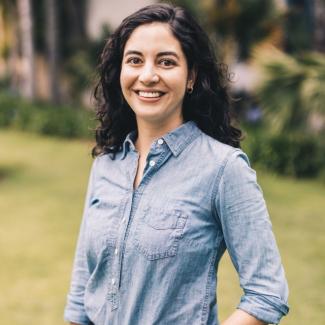
Carmen Galaz García is an Assistant Teaching Professor at the Bren School of Environmental Science & Management at UC Santa Barbara. She teaches data science courses including EDS 220 and capstone projects, emphasizing accessible technical education and DEIJ initiatives. Previously, she worked at the National Center for Ecological Analysis and Synthesis (NCEAS), analyzing remote sensing data and developing educational resources. Carmen holds a Ph.D. in Mathematics (UCSB) and a B.Sc. in Mathematics from the University of Guanajuato/CIMAT, Mexico. Her research focuses on environmental data science applications such as invasive species mapping using machine learning and geospatial analysis. She actively contributes to reproducible workflows in Python and collaborates on topological data analysis in environmental contexts. Professional affiliations include NCEAS and Bren School's environmental data programs. Education: Ph.D. in Mathematics, UC Santa Barbara (2021) B.Sc. in Mathematics, Universidad de Guanajuato/CIMAT (2015) Research emphasizes interdisciplinary approaches combining mathematics, ecology, and data science to address environmental challenges. She leads capstone projects integrating real-world environmental datasets and mentors students through collaborative data science workflows.
Shuiwang Ji is a Professor and Truchard Family Endowed Chair in the Department of Computer Science & Engineering at Texas A&M University, where he also holds Presidential Impact Fellow and Chancellor EDGES Fellow titles. He specializes in machine learning, AI for science/engineering, and language models/agents. His research bridges theoretical advances and practical applications in materials science, quantum chemistry, and biomedical engineering. Education: Ph.D. in Computer Science from Arizona State University (2010). Research focuses on equivaraint neural networks for symmetry-aware learning, graph-based molecular modeling, and generative AI for scientific discovery. He develops algorithms that integrate physics principles with deep learning, addressing challenges in materials design, PDE solving, and biomolecular structure prediction. Publications emphasize symmetry-aware architectures (e.g., equivariant Fourier neural operators), efficient interatomic potential computations, and diffusion models for protein/DNA design. Recent work explores trustworthiness in LLMs and causal reasoning in graph neural networks. Awards include NSF CAREER Award (2014), IEEE Fellow (2023), and Texas A&M teaching excellence awards. His work has been recognized in top venues like NeurIPS, ICML, and ICLR. His research group collaborates on projects funded by NSF, NIH, and industry partners, advancing AI applications in healthcare, robotics, and environmental science.
Christoph Schrank is an Associate Professor at QUT's School of Earth and Atmospheric Sciences, specializing in structural geology and rock physics. His research combines field studies with synchrotron-based experimental techniques to investigate deformation processes in tectonic settings. Research focuses on: Synchrotron analysis of rock deformation Tectonic modeling of fault systems Geothermal energy applications Pattern formation in porous media Publication analysis shows emphasis on experimental rock physics (40%), microstructural analysis (30%), and Precambrian tectonics (20%). His work frequently integrates advanced imaging techniques with mechanical modeling. Funded projects include ARC DP170104550 (pressure waves in earthquake mechanics) and DP140103015 (finite strain modeling). Coordinates Honours program for Earth Science and teaches structural geology field methods.
Dr. David Eggleston is an Alumni Distinguished Undergraduate Professor and Director of the Center for Marine Sciences and Technology (CMAST) at NC State University. He leads the Marine Ecology and Conservation program, focusing on fisheries ecology, habitat restoration, and deep-sea biology. His research integrates field observations, modeling, and molecular tools to address ecological theory and sustainable resource management. Eggleston holds affiliations with the Department of Marine, Earth & Atmospheric Sciences and serves on national/international advisory boards. His academic roles include teaching courses like Introduction to Oceanography and Marine Benthic Ecology . Eggleston’s research spans tropical to temperate marine systems, emphasizing interdisciplinary approaches linking biology, physics, and economics. Awards include NSF’s Early Career Award and recognition in teaching/outreach. Current students focus on topics like oyster reef acoustics, coral reef soundscapes, and blue crab habitat dynamics. Eggleston’s lab emphasizes graduate mentorship, fostering future leaders in academia and resource management. Outreach initiatives include Ecological Synergism and educational tools like The Blue Crab in NC . Collaborative projects involve NOAA, The Nature Conservancy, and international marine organizations.
Luis Emilio Bruni is an Associate Professor at Aalborg University’s Department of Architecture, Design and Media Technology, within The Technical Faculty of IT and Design. He leads the Media Cognition and Interactive Systems (MeCIS) research group and coordinates the Master of Science in Medialogy. Bruni is also the founder and director of the Augmented Cognition Lab, focusing on perception, cognition, and immersive technologies. His academic roles include PI on multiple interdisciplinary projects and board memberships in international associations like the Nordic Association for Semiotic Studies (2011–2017) and the International Society for Biosemiotic Studies (founding member, 2005). Academically, Bruni holds a Ph.D. in Molecular Biology and Theory of Science (University of Copenhagen), M.Sc. in International and Global Relations (Universidad Central de Venezuela), and B.Sc. in Environmental Engineering (Pennsylvania State University). His research spans narrative cognition, extended reality, biosemiotics, and the interplay between technology, cognition, and culture. He has conducted projects on neurocinematic analysis, interactive storytelling, and the psychological impact of digital media. Key research contributions include studies on EEG responses to branded advertising, functional connectivity in psychiatric disorders, and the role of narrative in immersive technologies. Bruni’s work bridges cognitive science, computer science, and semiotics, with applications in healthcare (e.g., pediatric counseling tools) and cultural engagement (e.g., citizen curation systems). Over 80+ publications and active participation in conferences and media discussions highlight his interdisciplinary impact.
Jia-Jie Zhu is a machine learner and applied mathematician currently serving as head of an independent research group at the Weierstrass Institute for Applied Analysis and Stochastics in Berlin, with an upcoming appointment as tenured associate professor at KTH Royal Institute of Technology in Stockholm. Previously, he conducted postdoctoral research in machine learning at the Max Planck Institute for Intelligent Systems in Tübingen, Germany, following doctoral studies in optimization and numerical analysis at the University of Florida. His research focuses on the mathematical foundations of machine learning and optimization, particularly at the intersection of computational algorithms, dynamical systems, and probability theory. Key areas include: Robust probabilistic machine learning algorithms Kernel methods for distribution manipulation Variational methods for optimization over probability distributions Gradient flows and optimal transport theory Wasserstein and Fisher-Rao geometry Applications in generative modeling and causal inference Dr. Zhu's recent work reveals deep connections between partial differential equations, kernel methods, and machine learning, resulting in theoretically grounded algorithms for handling distribution shifts. His publications demonstrate a consistent trajectory from foundational optimization theory to cutting-edge applications in robust learning and generative modeling, with increasing emphasis on the mathematical structures underlying modern ML systems. He has secured significant research funding, including a DFG Project on 'Optimal Transport and Measure Optimization Foundation for Robust and Causal Machine Learning' within the Priority Program 'Theoretical Foundations of Deep Learning' (SPP 2298), and actively organizes academic events such as the Workshop on Optimal Transport from Theory to Applications (OT-DOM) and upcoming sessions at ICSP 2025 and SwissMAP. As an educator, Dr. Zhu teaches nonparametric statistics at Humboldt University of Berlin and serves as area chair for major conferences including AISTATS 2025. He maintains an active research group with opportunities for master's students, PhD candidates, and postdoctoral researchers interested in the mathematical frontiers of machine learning.
Christof Weiß is a Professor for Computational Humanities at the CAIDAS / Institute of Computer Science, Julius-Maximilians-Universität Würzburg (JMU), Germany. He serves as Head of the DFG-funded Emmy Noether group on Computational Analysis of Music Audio Recordings: A Cross-Version Approach. His academic journey includes previous positions as Visiting Researcher at University Télécom Paris (2021), Visiting Lecturer at Karlsruhe University of Music (2020, 2021), and Research Assistant at International Audio Laboratories Erlangen (2015-2022) and Fraunhofer Institute for Digital Media Technology (2012-2015). His educational background encompasses a PhD in Media Technology from University of Technology Ilmenau (2017), Concert Diploma in Composition from Würzburg University of Music (2012), Physics Diploma from University of Würzburg (2012), and Music Diploma in Composition from Würzburg University of Music (2011). This unique combination of technical and artistic training forms the foundation of his interdisciplinary research approach. Weiß's research operates at the critical intersection of computer science and musicology, developing novel computational methods for analyzing musical structures in audio recordings. His work bridges technical audio processing with musicological insights, creating methodologies for tonal analysis, key estimation, and cross-version comparison of musical performances. His approach combines deep learning techniques with music theory to extract meaningful patterns from large music corpora, enabling new forms of musicological corpus studies that were previously impossible. His recent publications reveal a clear research trajectory toward integrating advanced machine learning with fundamental musicological questions. The consistent theme across his work involves analyzing classical music structures through computational lenses, with particular emphasis on cross-version consistency in performances, tonal complexity measurement, and developing datasets that support computational musicology. His publications span both highly technical audio processing journals and musicology-focused venues, demonstrating his commitment to bridging these disciplines. Best paper award at the 4th conference on Computational Humanities Research (CHR), 2023 KlarText award for science communication of the Klaus Tschira Foundation, 2018 2nd prize at Festival Pablo Casals composition competition, Prades (France), 2013 Youth Cultural Advancement Award (Kulturförderpreis) of the city of Amberg, Germany, 2011 As principal investigator of the DFG Emmy Noether group, Weiß leads a multidisciplinary research team investigating computational analysis of music audio recordings through a cross-version approach. His research has secured significant funding including the prestigious Emmy Noether program, supporting doctoral and postdoctoral researchers working on various aspects of music information retrieval and computational humanities. His collaborative network spans institutions across Europe, including University Télécom Paris, Queen Mary University of London, and multiple German research centers. Weiß leads the Computational Humanities research group at CAIDAS, which focuses on developing computational methodologies for music analysis with particular emphasis on classical repertoire. The lab creates specialized datasets (including the Wagner Ring Dataset and Schubert Winterreise Dataset), develops algorithms for structural music analysis, and applies these tools to address musicological questions that require computational scale and precision. Their work bridges the gap between technical audio processing capabilities and humanities research questions, creating new pathways for understanding musical structure and evolution.
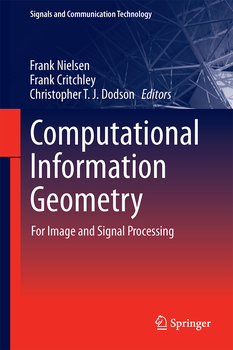
Frank NIELSEN is a Professor at École Polytechnique with expertise in information geometry, data science, and machine learning. He holds a PhD (1996) and HDR (2006) in computer science and has established himself as a leading researcher in geometric approaches to information science. His educational background includes a PhD in computer science (1996) followed by a Habilitation à Diriger des Recherches (HDR) in 2006, the highest academic qualification in France that qualifies one to supervise doctoral candidates. Dr. NIELSEN's research focuses on the Geometric Science of Information , where he develops theoretical frameworks for understanding data through geometric and information-theoretic lenses. His work bridges Computational information geometry Statistical manifold theory Bregman divergences and their applications Machine learning with geometric foundations High-dimensional data analysis He aims to address the challenge of inappropriate data representation in current Data Science by building a theory of Computational Information Geometry to enable Intrinsic Data Science with principled distances. His extensive publication record shows a clear trend toward developing geometric frameworks for understanding statistical divergences, with recent work focusing on Bregman geometry, Fisher-Rao metrics, and their applications in machine learning. His research spans theoretical developments in information geometry to practical implementations like the pyBregMan Python library, demonstrating both theoretical depth and practical relevance. Dr. NIELSEN has made significant contributions through his teaching and publications. He has taught courses at École Polytechnique including INF442, INF517, and INF591. His authored textbooks include Introduction to HPC with MPI for Data Science (2016), A Concise and Practical Introduction to Programming Algorithms in Java (2009), and Visual Computing: Geometry, Graphics, and Vision (2005). He has also edited influential volumes such as Computational Information Geometry for Image and Signal Processing (2016) and Geometric Theory of Information (2014). He actively organizes and participates in academic events, serving on program committees for major conferences including GSI (Geometric Science of Information), CVPR, and ICCV. His work has established him as a key figure in the growing field of geometric approaches to information science.
Christopher Grainge is a Conjoint Associate Professor at the University of Newcastle's School of Medicine and Public Health, and a Staff Specialist in Respiratory and General Medicine at John Hunter Hospital. Previously, he served as a Consultant Physician and Senior Lecturer at the University of Southampton. His extensive clinical background includes service in the Royal Navy, specializing in diving and remote medicine, and deployments to Antarctica and Southern Iraq. Dr. Grainge maintains active research collaborations with institutions worldwide, focusing on respiratory medicine. Dr. Grainge completed his undergraduate training at Imperial College, University of London, with an intercalated BSc. He earned his PhD from the University of Southampton in 2011, with research published in the New England Journal of Medicine. His thesis examined the effect of repeated bronchoconstriction on airways in asthma. He also holds membership in the Royal College of Physicians and was awarded the Diploma in the Medical Care of Catastrophes, specializing in remote and refugee medicine. Dr. Grainge's research focuses on the role of mechanical forces in asthma pathophysiology, environmental dusts in lung disease development, and platelet antagonists' effects on allergen challenge. His work demonstrates that mechanical forces play a crucial role in determining long-term changes in human airways. He leads investigations into how environmental exposure to inhaled particles leads to conditions like constrictive bronchiolitis, and explores novel therapeutic pathways for asthma through platelet activation inhibition. His research has significant clinical implications for difficult asthma and interstitial lung disease management. Dr. Grainge's recent publications reflect strong trends in interstitial lung disease research, particularly idiopathic pulmonary fibrosis, and asthma mechanisms. His work increasingly incorporates advanced technologies like artificial intelligence for disease stratification and deep learning for predicting disease progression. Collaborative research with international teams examines biomarkers for disease progression and novel treatment approaches for fibrotic lung diseases, with a particular focus on quantitative CT analysis and patient-reported outcome measures. Leatherdale Prize for Clinical Teaching: Finalist (2013) Military and Civilian Health Partnership Awards Winner (2011) University of Southampton Translational Medicine Research Prize (2011) Michael Arthur Clinical Research Prize (2014) British Lung Foundation Travel Fellowship (2011) Gilbert Blane Medal (2010) Colt Foundation Prize: Finalist (2010) Asthma UK Travel Fellowship (2009) Dr. Grainge has received significant research funding from the British Lung Foundation, the Southampton Marine and Maritime Institute, the Institute for Life Sciences, and the Gerald Kerkut Foundation. His projects investigate the effects of physical and environmental stress on lung disease, mechanisms underlying lung disease development following environmental particle exposure, and potential therapies. He has collaborated extensively with research teams across Australia, the UK, the Netherlands, and South Africa, contributing to the training of numerous students and junior researchers through his supervision and mentorship roles. Dr. Grainge collaborates extensively with the Respiratory Research group at the University of Southampton, the Asthma and COPD Research Group at the University of Groningen in the Netherlands, and the Microbiome group at the South Australia Medical Research Institute. His current work at the Hunter Medical Research Institute (HMRI) focuses on mechanical forces within airways and their impact on acute and long-term lung changes in patients with airway diseases. He is also involved in the Australian IPF Registry, contributing to multicenter studies on idiopathic pulmonary fibrosis progression and treatment outcomes.
Kohei Nakajima is an Associate Professor at the Department of Intelligent Mechano-Informatics, Graduate School of Information Science and Technology, The University of Tokyo. He holds concurrent positions at the Department of Creative Informatics and the Next Generation Artificial Intelligence Research Center (AI Center). As an Endowed Chair in Advanced Artificial Intelligence Education, he leads the Physical Intelligence Lab, which focuses on the intersection of soft robotics, nonlinear dynamics, and physical computing. His research interests center on Physical Reservoir Computing (PRC), a paradigm that exploits the natural dynamics of physical systems for computation, with applications in soft robotics, spintronics, and quantum machine learning. Nakajima's work demonstrates how physical systems can inherently process information without traditional digital computation, leveraging phenomena like chaos, bifurcations, and embodied intelligence. Nakajima's publications reveal a strong focus on understanding how physical systems can perform computational tasks. His recent work spans from biological applications (jellyfish cyborgs, ostrich-inspired robotics) to fundamental theoretical advances in reservoir computing. The research demonstrates how physical phenomena can be harnessed for information processing, with implications for energy-efficient computing and novel robotic control paradigms. As the organizer of the Reservoir Computing Seminar, Nakajima has built a vibrant research community exploring the nature of information processing across disciplines. His lab actively recruits graduate students and postdocs, indicating strong research momentum and institutional support for his work in physical intelligence.
Dr. Yanjie Fu is an Associate Professor in the School of Computing and AI at Arizona State University, part of the Ira A. Fulton Schools of Engineering. He maintains his office in BYENG 506 at the Tempe campus and can be reached at yanjie.fu@asu.edu. Dr. Fu received his Ph.D. from Rutgers University in 2016, the B.E. degree from the University of Science and Technology of China, and the M.E. degree from the Chinese Academy of Sciences. His industry research experience includes positions at Microsoft Research Asia and IBM Thomas J. Watson Research Center. His research focuses on developing disruption-robust machine intelligence that can handle imperfect and complex data. Dr. Fu's work spans two major efforts: Data for AI (D4AI), exploring how structure knowledge of data can guide AI, and AI for Data (AI4D), investigating how AI can augment, reprogram, and knowledgeize data. His current research interests include space-time intelligence, data-centric AI, sim2decision, multimodal reasoning, and LLM with agentic AI. His lab has contributed projects including D4AI-spatial, D4AI-timeseries, D4AI-causal outliers, AI4D-RL, AI4D-Gen, and AI4D-LLM. Dr. Fu's recent publications reveal a strong trend toward integrating causal reasoning with deep learning for robust anomaly detection, advancing time series forecasting with novel normalization techniques, and applying generative AI to urban planning. His work increasingly bridges traditional machine learning with large language models, particularly focusing on data-centric approaches for tabular data transformation and feature engineering. US NAE FOE early career engineer (2023) US NSF CAREER (2021) NSF CRII (2018) ACM KDD18 Best Student Paper Finalist IEEE ICDM Best Paper Finalist (2014, 2021, 2022) ACM SIGSpatial Best Paper Runner-up (2020) 2022 Baidu Scholar global top Chinese young scholars in AI 2021 Aminer.org AI 2000 Most Influential Scholar Award Honorable Mention Dr. Fu has successfully mentored multiple Ph.D. students who have secured tenure-track faculty positions at prestigious institutions including University of Kansas, Chinese Academy of Sciences, Great Bay University, Portland State University, and University of Macau. His research has been supported by significant grants including the NSF CAREER award, and he currently serves as Associate Editor of ACM Transactions on Knowledge Discovery from Data. He is also a senior member of both ACM and IEEE. Dr. Fu leads a research group focused on developing trusted and safe machine intelligence. The lab connects computing issues across representation learning, self-supervised learning, interactive learning, adaptive learning, and stream learning to build disruption-robust frameworks. The group executes two key steps: data representation construct (integrating structure knowledge, self-optimization, explainability) and learning strategy construct (integrating robust representations with adaptive and interactive learning).
Wayne Myrvold is a Professor in the Department of Philosophy at Western University, Faculty of Arts and Humanities. His research lies at the intersection of philosophy of physics and philosophy of science, with a focus on quantum mechanics, statistical mechanics, and the foundations of probability. His primary research interests include: Philosophy of Physics, especially quantum mechanics and relativity Foundations of probability and its role in science Statistical mechanics and thermodynamics Quantum state realism and ontology Unification and scientific explanation Epistemology of scientific inference Myrvold's recent publications, including his 2021 book Beyond Chance and Credence , explore hybrid conceptions of probability that bridge epistemic and physical interpretations. His articles span topics such as quantum collapse theories, Bell’s Theorem, and the nature of the wavefunction, reflecting a deep engagement with both technical and philosophical dimensions of modern physics. His work frequently appears in leading journals like Studies in History and Philosophy of Modern Physics , Physical Review A , and Synthese . He is the Subject Editor for Quantum Mechanics in the Stanford Encyclopedia of Philosophy and has co-authored key entries, including the comprehensive overview of Bell’s Theorem. His scholarly contributions emphasize rigorous analysis of foundational concepts in physics and their philosophical implications. Myrvold holds a BSc from McGill University and a PhD from Boston University. He maintains an active research profile with a continually updated list of publications available via Google Scholar. He advises graduate students in philosophy of science and supervises research in foundational physics. While specific grant details are not listed, his sustained publication output suggests active research support. He is affiliated with the Rotman Institute of Philosophy, which supports interdisciplinary research in philosophy of science.