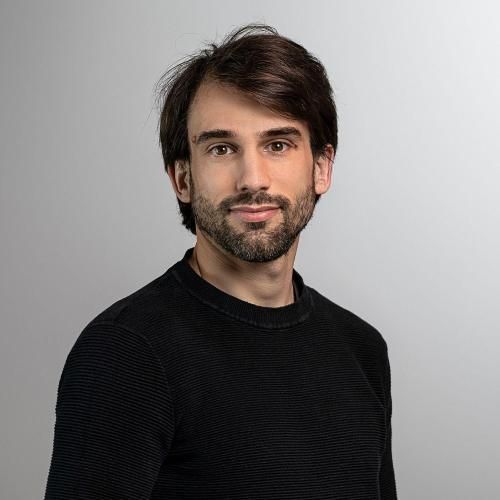
Emmanuel Dellandréa is an Associate Professor (Maître de Conférences, HDR) at Ecole Centrale de Lyon, specializing in image/video understanding, computer vision, and affective computing. His research develops methods for emotion recognition in visual media and robotic perception systems. He created benchmark datasets including Mikado (occlusion-aware segmentation), Jacquard (robotic grasping), and LIRIS-ACCEDE (emotional video analysis). Current projects investigate continual learning for robotics and diffusion model adaptation. Dellandréa holds a PhD in Computer Science and Habilitation from Université Lyon 1.
Associate Professor Weidong Cai is affiliated with the University of Sydney's School of Computer Science, serving as Director of the Multimedia Lab and Associate Director of the Biomedical & Multimedia Information Technology (BMIT) Research Group. He has held visiting roles at Harvard Medical School and holds a PhD in Computer Science from the University of Sydney. His research focuses on medical image computing, computer vision, machine learning, and computational neuroscience, with over 300 peer-reviewed publications. Dr. Cai leads projects on 3D point cloud processing, label-efficient learning, cross-domain medical image analysis, and neuroimaging computing. Dr. Cai's educational background includes a PhD from the University of Sydney (2001) and postdoctoral experience at Harvard Medical School (2014). He supervises students in courses like COMP3419 Graphics and Multimedia and COMP5424 Information Technology in Biomedicine. His current research explores cutting-edge topics like 3D neuron reconstruction, multimodal neuroimaging, and AI-driven medical diagnostics. His research interests span medical imaging, bioinformatics, and computer vision, with a focus on developing algorithms for big data analytics, deep learning, and biomedical applications. Projects include automated neuron tracing, cross-domain adaptation for medical imaging, and geometric deep learning for neuroimaging analysis. Dr. Cai's students have received numerous awards, including the MICCAI IUGC Grand Challenge (2024) and IEEE ISBI Travel Grants. He serves on editorial boards for journals like IEEE Transactions on Image Processing and Brain Informatics, and co-edits Springer's Brain Informatics & Health book series. His lab, the Multimedia Lab, collaborates on projects like 3D point cloud applications, label-efficient feature learning, and cross-domain medical image analysis. Research teams include the BMIT group, focusing on biomedical and multimedia technologies.
Virginia Franqueira is a Lecturer in the Department of Electronics, Computing and Mathematics. Her research spans digital forensics, blockchain security, and trust management systems, with applications in vehicular networks, cloud computing, and cybercrime investigation. She develops analytical frameworks for emerging security challenges, including ransomware, IoT vulnerabilities, and multimedia content verification. Her publications address blockchain forensics, behavioral analysis in digital investigations, and machine learning applications for privacy verification. Recent work includes automated violence detection in video, PhotoDNA vulnerability assessments, and trust models for vehicular ad-hoc networks (VANETs). She actively contributes to forensic methodology standardization, particularly for indecent image of children (IIOC) cases. Dr. Franqueira designs educational materials on IoT prototyping and security, emphasizing practical applications for students and professionals.
Dr. Gkamas Apostolos is an Associate Professor of Computer Applications in the Department of Chemistry at the University of Ioannina, Greece. His research focuses on cutting-edge topics in computer networks, telematics, IoT, and cross-layer design, with a particular emphasis on multimedia transmission optimization and 5G MIMO systems. He holds a Diploma, Master’s Degree, and Ph.D. in Computer Engineering and Informatics from the University of Patras, Greece. Dr. Gkamas has contributed over 130 publications in international journals and conferences, co-authored three books on computer networks and specialized network topics, and actively participated in EU-funded projects such as FP6, FP7, and Intereg eLearning initiatives. His work spans energy efficiency in 5G networks, adaptive beamforming techniques, and latency reduction strategies for IoT applications. Recent studies include groundbreaking research on copolymer architecture for drug delivery systems and simulation-based optimization of network slicing in 5G environments. His research interests also extend to machine learning applications in network resource allocation, chatbot technology assessment (with 40 case studies in Greece), and agent-based energy-saving models for large ships. He has pioneered systems like GuideMe for indoor navigation and long-range IoT search-and-rescue solutions using LoRaWAN technology. Dr. Gkamas has collaborated on projects such as the EU's IST initiative and Greek national programs like PENED and EPEAEK, demonstrating a strong commitment to both academic research and applied technology development. His work bridges theoretical advancements with practical implementations in telecommunications and materials science.
Sokratis Makrogiannis is a Professor in the Division of Physics, Engineering, Mathematics, and Computer Science at Delaware State University, where he directs the Mathematical Imaging and Visual Computing Group. His research focuses on medical image computing, machine learning, and visualization, with applications in biomedical imaging and computer vision. He holds a PhD in Electronics and Informatics from the University of Patras, Greece, and completed postdoctoral fellowships at the University of Pennsylvania and Wright State University. His work bridges industrial collaborations (e.g., GlaxoSmithKline, General Electric) and academic research, emphasizing computational neuroanatomy, image analysis algorithms, and medical imaging techniques. He has secured funding from NIH, NSF, DoD, and the State of Delaware. His teaching spans advanced topics like image processing, pattern recognition, and discrete mathematics. Collaborators include leading institutions such as the University of Delaware, Lund University, and the National Institute on Aging (NIH). Research interests include image analysis, machine learning applications in healthcare, and automated tissue quantification. His publications address cell segmentation, osteoporosis classification, and MRI/CT segmentation techniques. He serves as editor for journals like BioMedical Engineering OnLine and Frontiers in Computer Science, contributing to academic dissemination and peer review. The MIVIC Lab under his leadership develops innovative imaging solutions for clinical and environmental challenges.
Prof. Felix Alexander Gers is a Professor of Multimedia Development at the Berlin University of Technology’s Department of Computer Science and Media since 2005. He holds a PhD from EPFL (Switzerland) in AI systems, focusing on Recurrent Neural Networks with LSTM. His expertise spans Artificial Intelligence, Deep Learning, NLP, and Game-Based Learning (GBL). He pioneered the CoDi algorithm (Cellular Automata-based neural modeling) during his work at ATR (Japan) and received ATR’s Best Patent Award. His research includes virtual microbiology laboratories, dialogue systems for avatars, and neural network applications in drug development and 3D data classification. He co-leads the Data Science Group at BHT and has been a fellow in the “Excellence in Teaching” project since 2011, emphasizing virtual lab simulations. Notable projects include Brain Bots (NLP-driven lab assistants) and GBL in microbiology. Education: Diploma in Physics, Leibniz University Hannover PhD in AI Systems (LSTM), EPFL (Switzerland) Research Interests: Neural Networks (RNN/LSTM) Natural Language Processing Virtual Laboratories and GBL Industrial AI Applications Key Projects: Brain Bots: Voice-enabled lab assistants in virtual microbiology labs CoDi Algorithm: CA-based neural structure simulation GBL in the Lab: Game-based microbiology experiments Awards: ATR Best Patent Award (CoDi) Labs/Teams: Member of the Data Science Group and Online Learning Lab at BHT.
Xianghua Ding is a researcher in Human-Computer Interaction (HCI) and Computer-Supported Cooperative Work (CSCW) , with a focus on social media analysis , personal informatics , and health technology . Their work spans digital platforms for stress management, equitable participation in short-form video sharing, and VR-based educational tools. Key Research Areas : Health and wellbeing: Investigating stress tracking, emotion recognition, and self-management support in chronic disease contexts. Social media systems: Developing machine translation models tailored to user-generated content and analyzing distributed collaboration dynamics. Cultural heritage and digital inclusion: Exploring how digital making revitalizes traditional crafts and supports marginalized groups. Notable Collaborations : Co-authored works with researchers from institutions like ACM, CSCW, and CHI, focusing on urban accessibility, peer-support mental health systems, and cross-platform social interaction. Methodological Approach : Combines empirical user studies, algorithmic modeling (e.g., Transformer, LDA), and design interventions for real-world problems.
Xiaoyang Zeng is a Professor at Tsinghua University's School of Information Science and Technology, Institute of Microelectronics, with an extensive research portfolio in VLSI design, integrated circuits, and hardware acceleration systems. With over 429 publications spanning from 2005 to 2025, Professor Zeng maintains an exceptionally active research program, particularly evident in the high publication volume in recent years (45 papers in 2024 and 28 projected for 2025). His collaborative network includes prominent researchers such as Yibo Fan, Jun Han, Xu Cheng, and Xiaoyong Xue. Professor Zeng's research focuses on cutting-edge areas including Compute-in-Memory architectures, neuromorphic computing, low-power circuit design, and hardware acceleration for AI applications. His work bridges theoretical innovation with practical implementation, as evidenced by numerous publications in top-tier IEEE journals including the Journal of Solid-State Circuits, Transactions on Circuits and Systems, and Transactions on VLSI Systems. Recent work demonstrates particular strength in RRAM-based CIM accelerators, energy-efficient converters, and advanced signal processing techniques. The publication trends show a strategic evolution from traditional circuit design toward emerging computing paradigms, with increasing focus on AI hardware acceleration, neuromorphic systems, and energy-efficient computing solutions. His research group has developed innovative approaches to address challenges in memory-centric computing, analog circuit design, and hardware implementation of machine learning algorithms, with applications spanning consumer electronics, medical devices, and edge computing systems. Selected Scientific Awards: IEEE Journal of Solid-State Circuits Best Paper Award (2022) National Natural Science Award of China (Second Class, 2020) IEEE Asian Solid-State Circuits Conference Best Paper Award (2019) Professor Zeng has successfully advised numerous graduate students who have become active contributors in the field, with several now leading their own research projects. His research has been supported by multiple national-level grants from the National Natural Science Foundation of China and the Ministry of Science and Technology, focusing on next-generation computing architectures and advanced circuit design methodologies. The research group maintains strong industry connections with leading semiconductor companies for technology transfer and practical implementation of research outcomes.
Prof. Dr. Korinna Bade is a Professor in the Department of Computer Science and Languages at Anhalt University of Applied Sciences. She serves as Vice Dean of the Faculty, a member of the Departmental Council, and Deputy Equal Opportunities Officer. Her teaching focuses on advanced machine learning, data science, and information retrieval, including courses like Machine Learning (Bachelor/Master), Multimedia Retrieval, and Data Science Projects. Her research spans intelligent data analysis, machine learning applications, and promoting STEM interest among youth through initiatives like the intoMINT app. She leads projects such as KAT (Competence Network for Applied Research) and intoMINTgoesLSA, emphasizing interdisciplinary collaboration. Awards include best paper recognitions at DeLTA 2023 and ICEIS 2019. Her team includes researchers like Dr. Tobias Scheidat and Lars Schütz, and she collaborates with institutions like the Saxony-Anhalt Research Portal. Office located at Ratke Building, Room 23-129, Köthen, Germany. Research interests combine technical innovation with societal impact, including AI in emergency response and participatory decision-making systems. Ongoing work explores explainable AI, cluster analysis, and digital learning labs. Publications span machine learning, information retrieval, and education technology. Advises numerous doctoral and master's theses, emphasizing practical and theoretical contributions to computer science and STEM outreach.
Aidong Zhang is a SUNY Distinguished Professor Emerita in the Department of Computer Science and Engineering at the University of Virginia. She served as Department Chair from 2009 to 2015. Her primary affiliations include the School of Engineering and Applied Sciences. Dr. Zhang's research focuses on Bioinformatics, Data Mining, and Multimedia Database Systems, with recent work emphasizing robust AI systems, healthcare applications, and interdisciplinary machine learning techniques. Education: PhD in Computer Science from Purdue University (1994). Her academic contributions have been recognized through prestigious awards including IEEE Fellow (202?), CSE Faculty Distinguished Teacher Award (2004), and NSF CAREER Award (1998). Research interests span causal inference, algorithmic fairness, biomedical data analysis, and federated learning. Notable projects include improving group robustness in AI models, developing explainable neural architectures for healthcare, and advancing multimodal data integration. Her work consistently bridges theoretical computer science with practical biomedical and clinical applications. Key awards and honors include: IEEE Fellow UB Exceptional Scholar-Sustained Achievement Award (2003) SUNY Chancellor's Research Recognition Award (2002) NSF CAREER Award (1998) Her recent publications (2023-2025) highlight advancements in spurious bias mitigation, interpretability of large language models, and federated learning frameworks. Collaborative work with medical researchers has produced innovations in Alzheimer’s risk prediction and clinical decision support systems.
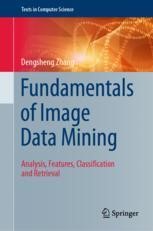
Dr. Dengsheng Zhang is a Senior Lecturer at Federation University Australia (formerly Monash University) and a Guest Professor at Xi'an University of Posts & Telecommunications, China. He holds a PhD in Computing (2002) and a GCHE (2006). His expertise spans over 25 years in artificial intelligence, big data, image processing, and music classification. He has published over 100 refereed papers (10,000+ citations) and authored the award-winning book Fundamentals of Image Data Mining (Springer, 2019). His research focuses on image classification, object detection, deep learning, and feature extraction. Dr. Zhang leads the Computational Science and Mathematics Group, contributing to projects like SIRBOT (Semantic Image Retrieval) and VFR (Visiting Friends and Relatives Travel Research). He serves as an Associate Editor for World Scientific's Transactions on Signal Processing. His teaching spans calculus, web design, computer networks, and project management. He has supervised 8 completed PhD students and actively engages in grants, including two ARC Discovery projects. His lab explores innovations in image retrieval, music classification, and machine learning applications.
MOURCHID Youssef is a Researcher-Lecturer at CESI (Campus Dijon), affiliated with the Engineering and Numerical Tools research team. He holds a PhD in Computer Science from Mohammed V University, Bourgogne University, and Osaka University (2014–2019), and completed a postdoctoral fellowship at Thales & IMS Lab, Bordeaux INP (2019–2020). His academic background includes a Master’s in Computer Science and Telecommunications from Mohammed V University (2012–2014). Roles: Researcher-Lecturer, Head of Building-Environment Chair, and reviewer for conferences like IEEE Image Processing and EGC. Teaching: Teaches computer science disciplines (Programming, AI, NLP) to engineering students and job applicants via courses, practical work, and active pedagogy. Research Interests: Focuses on Computer Vision, Machine/Deep Learning, Complex Networks, and Digital Healthcare . Key projects include applying graph neural networks for patient rehabilitation assessment, AI-driven impact fall detection, and satellite image colorization using GANs. His work bridges healthcare technology and multimedia analysis. Publications: Over 25+ peer-reviewed papers (6 journal articles, 13 conferences) spanning spatio-temporal graph networks, multilayer network models, and GAN applications. Recent work emphasizes healthcare applications like hypotension prediction and multimodal fall detection. Advising: Supervised master’s and PhD students on topics like GANs for image super-resolution, multilayer network analysis of movies, and AI for medical monitoring.
David Mera Perez is a Professor at the Department of Electronics and Computing, affiliated with the Higher Technical School of Engineering at the University of Santiago de Compostela. He holds a PhD in Computer Science from the same institution, completed in 2013 with a thesis on virtual oceanographic laboratories leveraging Grid computing. His research focuses on machine learning applications in environmental monitoring, geospatial data systems, and smart infrastructure. He leads the COGRADE research group (Computer Graphics and Data Engineering). Key areas include oil spill detection via SAR imagery, inverse problem solutions in medical imaging, and smart building temperature forecasting. He has contributed to frameworks like GeoHbbTV for interactive geographic TV content and Retelab, a geospatial Grid laboratory for oceanographic research. His work bridges computational methods with real-world challenges in environmental science and engineering.
Louis-Philippe Morency is an Associate Professor at Carnegie Mellon University's Language Technology Institute (LTI) within the School of Computer Science. He leads the Multimodal Communication and Machine Learning Laboratory (MultiComp Lab), focusing on computational foundations for analyzing human communicative behaviors during social interactions. His research integrates computer vision, machine learning, and social psychology, with applications in mental health and robotics. Education: Ph.D. in Computer Science from MIT's CSAIL. Previously held research roles at the University of Southern California's Computer Science Department. Research Interests include: Multimodal Machine Learning Artificial Social Intelligence Mental Health Computational Analytics Notable Awards: AI’s 10 to Watch (IEEE Intelligent Systems) NetExplo UNESCO Award 10+ Best Paper Awards at IEEE/ACM Conferences Advising 7 current Ph.D. students across interdisciplinary areas like multimodal learning and healthcare AI. Teaches advanced courses on multimodal machine learning and affective computing. His work has been featured in media outlets including The Economist, Wall Street Journal, and NPR. Labs/Teams: Director of MultiComp Lab, collaborating with interdisciplinary teams on multimodal systems and real-world social behavior analysis.
Arturo De La Bone Ladder is a Full Professor at the University Carlos III of Madrid (UC3M), affiliated with the Department of Systems Engineering and Automation. He leads the Intelligent Systems Laboratory and is part of the Duque de Santomauro Institute of Motor Vehicle Safety. His research focuses on autonomous systems, computer vision, robotics, and sensor fusion, with applications in intelligent vehicles, UAVs, and industrial automation. Key research areas include autonomous driving technologies, multi-camera obstacle detection, reinforcement learning for energy management, and deep learning for defect recognition. He has authored over 150 publications in top journals like Sensors, Robotics and Autonomous Systems, and IEEE Transactions on Intelligent Transportation Systems. Notable projects include the SUAFF fire-fighting drone system, energy management algorithms for hybrid UAVs, and vision-based navigation architectures for swarms. His work spans grants from the Madrid Government, Spanish Ministry of Science, and industry partners like Sacyr and Applied Artificial Intelligence. He advises on advanced driver assistance systems, UAV mission planning, and robotics for firefighting. His lab develops software architectures for autonomous navigation and collaborates on projects like the PEAV electric vehicle and fire-fighting drone systems.