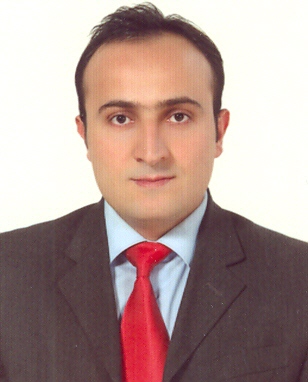
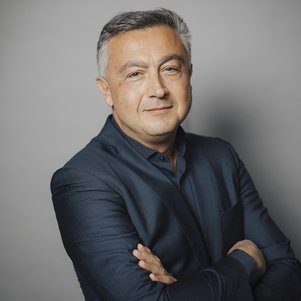
Glenn Van Wallendael is an Associate Professor at Ghent University's Faculty of Engineering and Architecture , affiliated with the Department of Electronics and Information Systems . He leads research in video coding, digital watermarking, and immersive media technologies. Academic Focus: Video compression standards (HEVC, H.266), AI for multimedia, virtual reality Key Collaborations: iMinds, imec, European research consortia Research Interests include: Video compression algorithms (HEVC, SVC, MV-HEVC) Digital watermarking for copyright protection Machine learning applications in image/video analysis Quality of Experience (QoE) in immersive environments Recent Publications (2024-2025) show expertise in: Deepfake detection using vision transformers Medical image landmarking tools Lightweight geometric approximation methods AI-driven video quality assessment Doctoral Mentorship includes supervising: 2021: Hannes Mareen (video forensics) 2020: Vasileios Avramelos (light field coding) 2017: Johan De Praeter (adaptive video encoding)
Dr. Andreas Aristidou is an Associate Professor at the Department of Computer Science, University of Cyprus, and a Senior Research Fellow at CYENS Centre of Excellence. He leads the Graphics & Extended Reality Lab and specializes in character animation, motion capture, and digital heritage. His research integrates machine learning, generative AI, and VR/AR technologies to preserve cultural heritage and advance interactive virtual environments. Educations: PhD in Signal Processing and Communications (University of Cambridge, 2007–2010) MSc in Mobile and Personal Communications (King's College London, with honors) BSc in Informatics and Telecommunications (National and Kapodistrian University of Athens) Research Interests: Focus on character animation analysis/synthesis, motion capture techniques, cultural heritage digitization, and applications of Conformal Geometric Algebra. His work bridges computer graphics with tangible/intangible cultural preservation. Key Projects: Lead Principal Investigator for Horizon Europe-funded HAMLET (2024–2027) to democratize generative AI for cultural industries. Principal Investigator for PREMIERE (2022–2025), enhancing performing arts with AI/XR. Developed the Virtual Dance Museum and 3D Reptiles Database for cultural and ecological documentation. Awards & Grants: Received ΔΙΔΑΚΤΩΡ Fellowship (2012–2014) and NVIDIA GPU Grant (2017). Secured over €8M in funding from Horizon Europe, ERASMUS+, and Cyprus Seeds. Best Paper Award at Eurographics Workshop on Graphics and Cultural Heritage (2014). Editorial & Community Roles: Editorial board member of The Visual Computer and Heritage journals; active in SIGGRAPH, Eurographics, and ACM-SCA program committees. Served in Cyprus’s Parallel Parliament for research policy (2020–2021).
Dr. Asif Karim is a Research Active Lecturer in the Department of Information Technology at the Faculty of Science and Technology, Charles Darwin University, Australia. He has been a full-time lecturer since August 2021, following a sessional role from 2018 to 2021. Prior to his current position, he served as a lecturer at Daffodil International University and Uttara University in Bangladesh. His research focuses on the application of machine intelligence in health informatics and blockchain technologies. He has significant industry experience in Software Engineering and actively supervises postgraduate research students. Machine Learning Health Informatics Blockchain Applications Smart Contracts Deep Learning Anomaly Detection The recent publications of Dr. Karim span a diverse range of applications in artificial intelligence, particularly in healthcare and secure computing. His work includes developing efficient deep learning models for medical diagnosis, privacy-preserving classification of diseases from medical images, and anomaly detection in cybersecurity. He also explores applications in mobile cloud computing and agricultural technology, demonstrating a broad interdisciplinary approach to solving real-world problems using machine learning. Dr. Karim actively contributes to research projects and supervises postgraduate students. He led the project "Machine Learning Diagnostics System for Bronchiectasis" and has extensive experience in teaching undergraduate and postgraduate courses in computer science, including Machine Learning, Operating Systems, and Software Engineering. He is involved in organizing academic events, such as a digital awareness workshop for rural indigenous communities, reflecting his commitment to community engagement and technology outreach.
Yao-Jen Chang is a researcher specializing in computer vision and machine learning, with significant contributions to 3D reconstruction, image registration, and biometric authentication systems. His work often involves collaboration with Tsuhan Chen at Cornell University and explores active learning frameworks, multi-view object recognition, and reinforcement learning applications. Key research areas: 3D modeling, multimedia security, and video processing Collaborations include National Tsing Hua University and Cornell University Research Trends Recent publications focus on: Deep reinforcement learning for image alignment User-interactive 3D reconstruction Biometric key generation for security Multi-view object recognition algorithms
Eva Rodríguez is an Associate Professor in the Department of Network Engineering at Pompeu Fabra University's School of Engineering, specializing in cybersecurity, digital rights management, and IoT security. With over 50 publications since 2003, she has established herself as a leading researcher in secure network architectures and privacy-preserving technologies. Her research focuses on applying machine learning techniques to cybersecurity challenges, particularly in mobile and IoT environments. Rodríguez has published extensively on deep learning for intrusion detection, privacy protection mechanisms, and security frameworks for next-generation networks (5G/6G). She has also made significant contributions to RISC-V processor security through the Horizon Europe Vitamin-V project. Recent work shows a strong emphasis on federated learning approaches for privacy preservation in fog computing environments and the development of security management architectures for resilient wireless ecosystems. Her publication record demonstrates consistent leadership in both theoretical frameworks and practical implementations of security solutions. Among her notable contributions are comprehensive surveys on deep learning techniques for mobile network security and machine learning methods for IoT privacy protection, which have become important references in these rapidly evolving fields. As a research supervisor, she has mentored several doctoral students including Norma Gutiérrez and Beatriz Otero, who now appear as co-authors on her recent publications. Her collaborative work extends across multiple European research projects, demonstrating strong integration within the international cybersecurity research community.
Luísa Coheur is an Associate Professor at the Department of Computer Science , Instituto Superior Técnico (University of Lisbon), and a researcher at INESC-ID 's Human Language Technologies group. She served on the Management Committee of IST-Taguspark (2020-2023), overseeing pedagogical organization and library services. Education: Ph.D. in Natural Language Processing (IST/Université Blaise-Pascal) Postgraduate in Higher Education Pedagogy (University of Lisbon, 2023) Degree in Applied Mathematics and Computer Science (IST) Research Interests: Specializes in NLP with focus areas in: Dialogue systems and conversational AI Machine translation (including Portuguese Sign Language) Question answering architectures Educational technology and accessibility Cyberbullying detection in social media Her work integrates linguistic theory with machine learning for real-world applications. Publication Trends: Over 120 publications emphasizing machine translation evaluation (e.g., fine-grained error detection), NLP for social good (cyberbullying datasets), sign language processing, and educational tools. Recent works leverage active learning and transformer models for low-resource scenarios. Awards: IST Outstanding Teaching Award (2023) Recognized as 'Excellent Professor' >20 times via IST QUC Advising & Projects: Supervised 10+ PhD and 80+ Master's students. Secured participation in 17 national/international projects (e.g., EU-funded initiatives in NLP). Leads pedagogical innovation like educational escape games for STEM courses. Labs/Teams: Core member of INESC-ID's Human Language Technologies group , developing resources for Portuguese NLP. Collaborates with clinicians on assistive tech (e.g., VITHEA-Kids for autism language skills).
Marija Marković Blagojević is a researcher at Singidunum University's Faculty of Informatics and Computing, with 17 years of experience in information and communication technologies (ICT) in education and business. She has published over 70 scientific and professional papers, co-authored the textbook Digital Business , and actively contributes to higher education quality assurance through accreditation and self-evaluation projects. Doctoral Studies: Applied Management, University of Privredna Akademija Novi Sad (2013-2018) Master's Studies: Informatics Management, Union University Belgrade (2009-2010) Bachelor's Studies: Industrial Engineering, Union University Belgrade (2002-2004) Her research focuses on ICT in education , artificial intelligence applications , digital transformation , sustainable development , and modern teaching methodologies . She has led projects like Erasmus+ initiatives on AI in adult education and founded the Center for Innovative Learning 'Better ME - Better WE' in Kruševac. Her 15 most recent publications span topics including IoT security , AI in education , and renewable energy forecasting , with a particular emphasis on digital tools' impact on student engagement and workforce adaptation . She has organized lectures on 'Artificial Intelligence in Education' and 'Business Communication in Digital Environments'. She coordinates academic journals and conferences through systems like Moodle and OJS , and has implemented national projects such as the 'Skillful with Skilled ChatGPT' initiative (2024). Her work aligns with Industry 5.0 principles, integrating humanization and sustainability in technological applications.
Dr. Siddhartha Bhattacharyya is a Professor in the Department of Computer Science and Engineering at Christ University, Bangalore, with expertise spanning hybrid intelligence, quantum computing, and multimedia data processing. He has authored/edited 65 books and published over 300 research articles, focusing on interdisciplinary applications of machine learning and computational methods. Editorial Board Member, PeerJ Computer Science Holder of two PCT patents Active in academic leadership (organizing conference committees) His research integrates Artificial Intelligence , Computer Vision , and Quantum Computing to solve complex problems in education, healthcare, and environmental monitoring. Recent work includes multimodal student learning assessment, gas plume detection, and Metaverse applications. He leads an active academic lab focused on hybrid intelligence systems and their practical implementations. Key trends in his publications include: deep learning architectures for computer vision (YOLOv7, CNN-Transformer), quantum-inspired algorithms for graph coloring and bioinformatics, and educational technology innovations for remote learning environments. His work bridges theoretical advancements with real-world applications across diverse domains.
Prof. Dr. Ünal Çavuşoğlu is an Associate Professor at the Department of Software Engineering, Faculty of Computer and Information Sciences, Sakarya University. With a doctorate in chaos-based encryption algorithms (2016) and a master's degree comparing network simulation tools (2014), his research focuses on cybersecurity, machine learning, and chaos theory. He has contributed extensively to intrusion detection systems, IoT security, and cryptographic protocols. Education: Doctorate (2016), Master's (2014), and Bachelor's (2011) in Computer Engineering. Research Interests: Cybersecurity frameworks, machine learning adaptation for threat detection, chaotic encryption, and IoT communication protocols. Recent Work: 2025 publications on homomorphic encryption and LSTM-based intrusion detection demonstrate cutting-edge applications of deep learning in security domains. His 2019-2024 publications reveal a trajectory from foundational chaos theory to applied IoT and cloud security solutions. Key methodologies include genetic algorithms, fractional calculus, and hybrid encryption systems.
Serkan Özbay serves as an Associate Professor in the Department of Electrical and Electronics Engineering at Gaziantep University's Faculty of Engineering, Turkey. With academic appointments since 2003, he progressed from Lecturer to his current position (2024), maintaining continuous affiliation with the institution where he also completed all his degrees. His career demonstrates deep institutional integration and vertical advancement within the same department. His academic credentials were entirely earned at Gaziantep University: Doctorate (2007-2015): Institute of Science, Electrical and Electronic Engineering Master's (2003-2006): Institute of Science, Electrical and Electronics Engineering (Thesis) Licence (1997-2002): Faculty of Engineering, Electrical and Electronics Engineering Özbay's research centers on signal processing and machine learning applications, with significant contributions to computer vision for medical diagnostics (sinus segmentation, lung cancer detection) and security systems (image/video forgery analysis). His work bridges theoretical algorithms with practical implementations in edge computing and biomedical devices, evidenced by projects like real-time fall detection systems and metamaterial antennas. Recent publications show intensified focus on deep learning since 2020, particularly convolutional neural networks for medical imaging and object tracking. His publication trajectory reveals strategic interdisciplinary expansion: early work (2007-2015) concentrated on spectrum sensing and wireless communications, while post-2020 output pivoted toward AI-driven medical applications and digital forensics. Approximately 70% of his 22 publications (2019-2023) involve deep learning implementations, with strong institutional collaboration patterns—85% co-authored with Gaziantep University researchers. Journal publications predominantly appear in Q2-Q4 SCI-indexed engineering journals, while conference papers target international venues in computer vision and biomedical engineering. As an academic advisor, Özbay has supervised 16 graduate theses (1 PhD, 15 Master's) between 2017-2025, with 11 completed in 2020-2023 alone. Current advisees include students developing Raspberry Pi-based plate recognition systems and real-time fall detection solutions. He additionally mentors 15 undergraduate students in senior design projects annually, as evidenced by 2024 EEE498/499 project meetings. Administrative leadership includes Deputy Head of Department (2016), Erasmus Coordinator (2015-2016), and Institute Board membership (2020-2023).
Mehmet Can Yavuz is an Assistant Professor at Işık University's Faculty of Engineering and Natural Sciences, Department of Computer Engineering. As Principal Investigator of the Multimedia Lab, he bridges machine learning with artistic expression through projects like Arky Multimedia, ConvergedMachine, and Duyukoru. His research spans biomedical imaging, human-computer interaction, and cross-modal analysis of multimedia storytelling. 2019-2023: PhD in Computer Science & Engineering, Sabancı University 2010-2016: MS in Physics, Boğaziçi University 2006-2010: BS in Physics, Işık University 2004-2010: BS in Electrical-Electronics Engineering, Işık University Current research explores: Advanced machine learning architectures (Variational Contrastive Learning, Cross-D Convolution) Biomedical imaging applications for disease detection Computational analysis of dramatic/literary works through graph theory and sentiment analysis AI-driven threat detection systems using sensor fusion Creative technology intersections in multimedia production His lab develops frameworks for: Noisy data processing in semi-supervised learning Cross-dimensional knowledge transfer Ensemble approaches in 2D/3D medical imaging Temporal-sentiment analysis of urban events Document embedding-based character analysis Projects include: ARKY MULTIMEDIA - Combining creative exploration with ML DUYUKORU - Machine learning-enhanced sensor threat detection CONVERGEDMACHINE - Multimodal ML research repository He oversees the Işık University Multimedia Lab , which integrates medical image computing with animation production, pushing boundaries in both scientific and artistic domains.
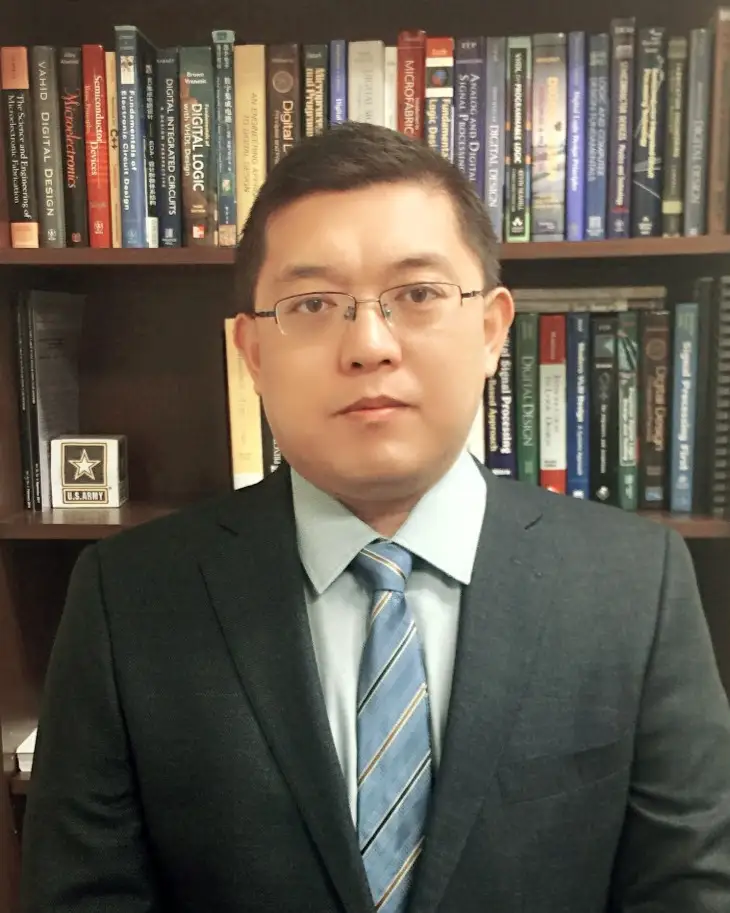
Jinhui Wang is a Professor in the Department of Electrical and Computer Engineering at the University of South Alabama's College of Engineering. His research focuses on cutting-edge technologies in Artificial Intelligence , VLSI Circuits , and Neuromorphic Computing . Education: Postdoctoral work in VLSI Design at University of Rochester, NY, USA; Ph.D. and B.S. in Electrical Engineering from Beijing University of Technology and Hebei University, China. His work addresses 3D IC Design , Emerging Memory Systems , and Cooling Techniques for Electronic Devices , with recent publications emphasizing privacy-preserving AI hardware and intelligent memory architectures for mobile and embedded systems. Collaborative projects span applications in Wireless Sensor Networks , IoT , and UAV Electronic Subsystems .
Alan Hanjalic is Professor of Computer Science at Delft University of Technology, holding the Antoni van Leeuwenhoek Chair and serving as Head of the Multimedia Computing Group and Head of the Department of Intelligent Systems within the Faculty of Electrical Engineering, Mathematics and Computer Science (EEMCS). Recognized as an IEEE Fellow and AAIA Fellow, he has been a driving force in multimedia information retrieval for over two decades. Education: 1995: Dipl.-Ing. in Electrical Engineering, Friedrich-Alexander University Erlangen-Nuremberg, Germany (specialization in motion estimation for video compression) 1999: PhD in Computer Science, Delft University of Technology (specialization in video indexing and search) Research Interests: Prof. Hanjalic’s research spans the broad domain of multimedia information retrieval , with pioneering contributions to affective video content analysis . By modeling videos as trajectories in the arousal-valence emotional space, he enabled indexing and retrieval based on emotional impact, laying the groundwork for an entire subfield. His group further advances socially-responsible recommender systems , cross-modal retrieval and generation , graph learning , and network influence prediction . Recent work also delves into fairness in recommendation and deep-learning-based side-channel security . Publication Trends: His latest publications (2024–2025) showcase a diversification into fairness and reproducibility in recommender systems, security-oriented deep learning for side-channel analysis, and advanced metrics for influence prediction in complex networks. These papers reflect both foundational algorithmic contributions and critical validation studies that strengthen the reliability of machine-learning approaches across multimedia and security domains. Scientific Recognition: IEEE Fellow (2016) – for pioneering contributions to multimedia information retrieval AAIA Fellow – acknowledging outstanding impact in artificial intelligence and multimedia Named Antoni van Leeuwenhoek Professor – university-wide recognition of research excellence Education, Mentorship & Leadership: Over 25 years at TU Delft, Prof. Hanjalic has served as lecturer, course coordinator, and chair of the Computer Science Board of Studies. He has promoted more than 30 PhD students and held leadership roles such as: Head, Intelligent Systems Department (2018–present) Member, EEMCS Career Development Committee Chair, TU Delft central appointment advisory committee for full professors Management team member, 4TU.NIRICT (Netherlands Institute for Research on ICT) TU Delft representative, ICT Research Platform Netherlands (IPN) Laboratory & Research Environment: He founded the Delft Multimedia Information Retrieval (DMIR) Lab , which evolved into the current Multimedia Computing (MMC) section . Under his guidance, the group has led national (FES, BSIK) and European Union projects—including a Network of Excellence—advancing responsible and human-centered multimedia technologies.
Professor Shujun Li is a distinguished academic at the University of Kent , where he has served as a Professor of Cyber Security since November 2017. He is also the Director of the Institute of Cyber Security for Society (iCSS) , a UK government-recognized Academic Centre of Excellence in Cyber Security Research (ACE-CSR), and leads the Cyber Security Research Group at Kent's School of Computing. His research spans interdisciplinary cyber security , focusing on human-centric approaches, privacy, digital forensics, multimedia computing, and AI applications. He actively collaborates across disciplines such as Electronic Engineering, Psychology, Sociology, Law, and Business. Previously held roles include Deputy Director of Surrey Centre for Cyber Security (2014–2017) at the University of Surrey. Key projects include EPSRC-funded initiatives on human-centric cyber security and privacy. His recent publications highlight expertise in areas like data privacy , deepfake analysis , password security , and MaaS (Mobility-as-a-Service) vulnerabilities , with contributions to journals such as IEEE Transactions on Dependable and Secure Computing and Frontiers in Big Data . Scientific Honors: Two Best Paper Awards ISO/IEC Certificate of Appreciation (2012) Fellow of BCS Senior Member of IEEE Member of ACM As a principal/co-supervisor, he has guided students including Mohamad Imad Mahaini , Nandita Pattnaik , and Ali Raza . He also serves on editorial boards and advisory groups like the Scientific Board of RISCS and the Steering Committee of ARES .
Petros Maragos is a Professor at the National Technical University of Athens (NTUA) in the School of Electrical and Computer Engineering, where he directs the Division of Signals, Control and Robotics. He founded the Computer Vision, Speech Communication & Signal Processing Lab (1999) and the Hellenic Robotics Center of Excellence (2025). His research spans signal processing, computer vision, robotics, and machine learning, with 450+ publications and leadership in 50+ EU/Greek/US projects. Education includes a Dipl.Ing. from NTUA (1980), M.Sc./Ph.D. from Georgia Tech (1982/1985), and faculty positions at Harvard University (1985-1993) and Georgia Tech (1993-1998). Research Focus: Multimodal perception, nonlinear systems, assistive robotics, and deep learning. Recent work integrates tropical geometry with neural networks, robotic healthcare applications, and sign language technologies. Articles emphasize neural architectures, real-world robotics, and AI for social good. Awards: IEEE Fellow (1995), EURASIP Fellow (2010) IEEE W.R.G. Baker Prize (1995) NSF Presidential Young Investigator Award (1987-1992) CVPR/PETRA Best Paper Awards (2022-2025) Advising & Grants: Supervised 30+ PhDs and 130+ Master's students. Secured funding from EU Horizon 2020, NSF, and Greek national programs for projects like i-Walk (robotic mobility) and e-Prevention (mental health monitoring). Labs: Leads NTUA's Intelligent Robotics Lab and co-founded the Robotics Institute at Athena Research Center, focusing on human-robot interaction and perception systems.