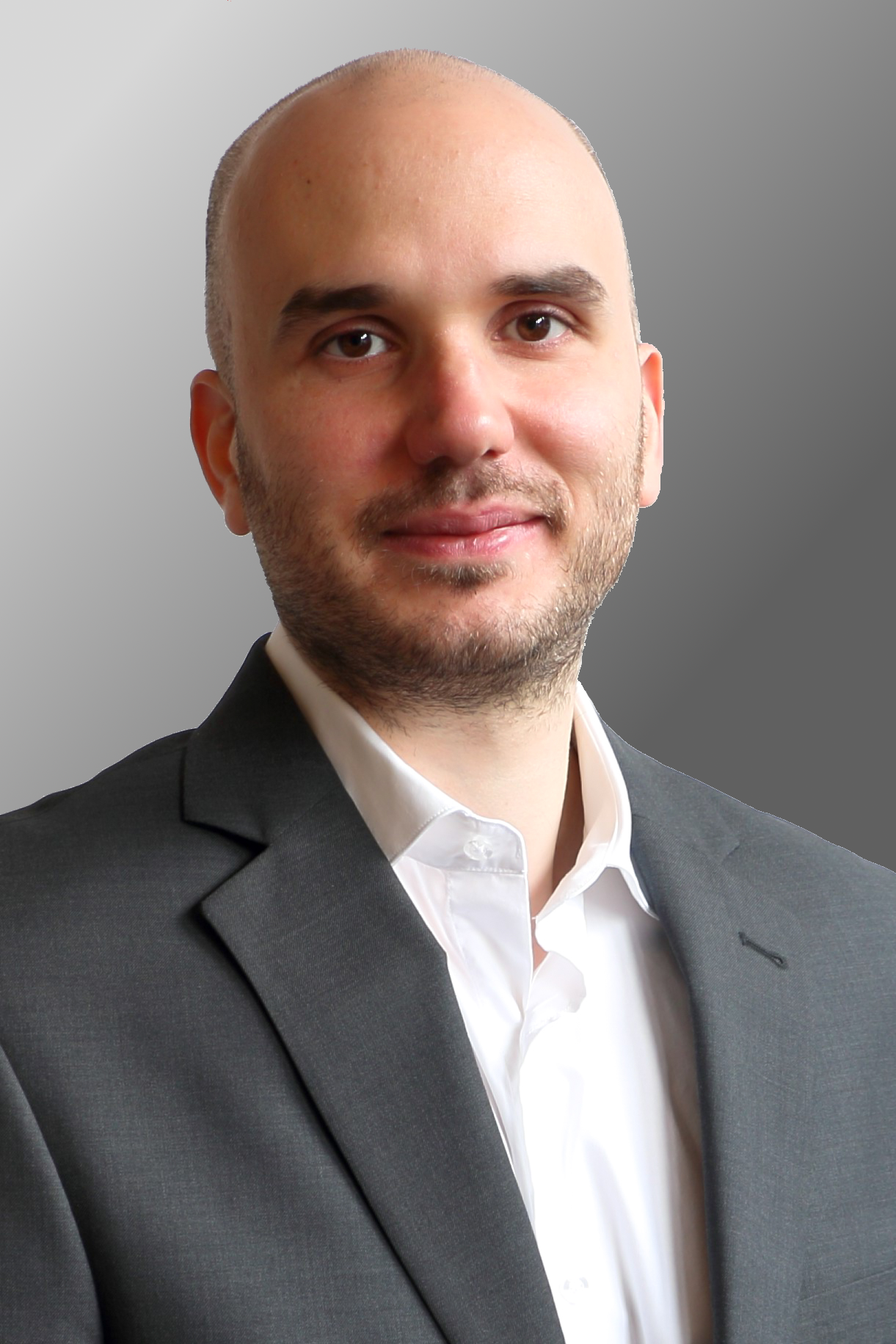
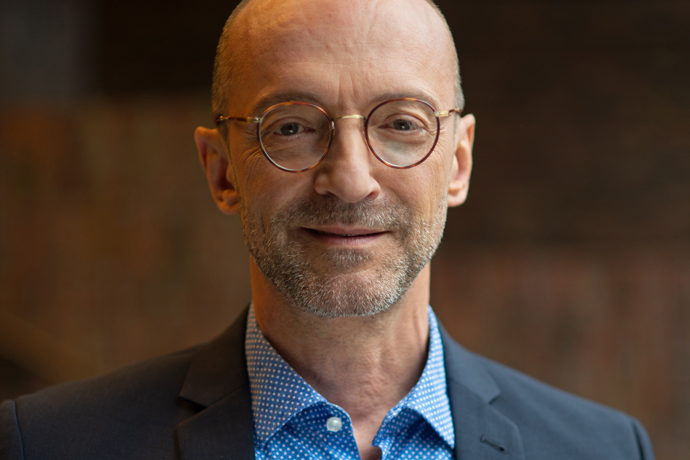
Dr. Jason Raphael Rambach is a Senior Researcher and Deputy Director at the German Research Center for Artificial Intelligence (DFKI) in Kaiserslautern, leading the team "Spatial Sensing and Machine Perception." His work focuses on Scene Perception and Reasoning using Machine Learning, with affiliations spanning Computer Vision, Augmented Reality, and Robotics. Education Diploma in Computer Engineering, University of Patras, Greece (2012) M.Sc. in Information and Communication Engineering, Technical University of Darmstadt, Germany (2014) PhD in Computer Science, University of Kaiserslautern (2020) Dr. Rambach's research bridges Object Pose Estimation , Semantic Scene Understanding , Hybrid AI , and Robotic Vision . His publications (50+ in top conferences) and projects like EU Horizon HumanTech highlight AI applications in construction and recycling. Recent articles analyze symmetry ambiguity resolution, spherical image segmentation, and radar-camera fusion. Scientific Awards CVPR 2025 Outstanding Reviewer Best Paper Award, ISMAR 2017 Five BOP Challenge Awards (ECCV 2022, ICCV 2023) Best Industrial Paper, ICPRAM 2024 Scan2BIM Third Place (CVPR2023, CVPR2024) As a coordinator of EU Horizon HumanTech and contributor to projects like COPPER, BERTHA, KIMBA, and TWIN4TRUCKS, Dr. Rambach integrates AI into industrial workflows. He reviews for CVPR, T-PAMI, ECCV, ICCV, and organizes workshops on AI in Construction Robotics.
Puze Liu is a Senior Research Scientist & Deputy Head at the Systems AI for Robot Learning (SAIROL) group within the German Research Center for Artificial Intelligence (DFKI) . He earned his Ph.D. from the Intelligent Autonomous Systems group at Technische Universität Darmstadt (TU Darmstadt) , supervised by Prof. Jan Peters . Research Interests Robotics Robot Learning Safe Reinforcement Learning Control and Optimization Human-Robot Interaction Machine Learning Recent Publications focus on safe reinforcement learning, constraint manifold theory, and real-world robotic applications, with papers accepted at ICML 2025 , RSS 2025 , CoRL 2024 , and T-RO 2024 . His work addresses safety in high-dimensional robotic tasks and real-time motion planning under constraints. Scientific Awards IROS Student Travel Award (2022) Best Paper Award Finalist at CoRL 2021 Best Entertainment and Amusement Paper Award Finalist at IROS 2021 Selected as R:SS Pioneers 2025 Collaborations include work with researchers like Jan Peters , Davide Tateo , and Kuo Zhang , focusing on robotics safety, exploration algorithms, and practical implementations for manipulation, navigation, and interaction tasks.
Andreas Dengel is a Professor in the Department of Computer Science at Rhineland-Palatinate University of Technology Kaiserslautern-Landau (RPTU) and Executive Director of the German Research Center for Artificial Intelligence (DFKI) in Kaiserslautern. He leads the Smart Data & Knowledge Services research area and the DFKI Deep Learning Competence Center. Doctorate from University of Stuttgart Professor since 1993 (C3), upgraded to C4 (1997) and W3 (2013) International academic appointments in Japan (Osaka Metropolitan University, Kyushu University) His research spans machine learning , pattern recognition , and semantic technologies , with applications in document analysis and earth observation. Recent publications focus on diffusion models, multi-view learning, and gaze behavior analysis. Notable awards include: Order of the Rising Sun (2021) ICDAR Outstanding Achievement Award (2019) NVIDIA Pioneer Award (2018) Gründungsförderer des Jahres (2015) He has supervised over 500 theses and secured €100 million in third-party funding. His projects include AI4DTE (Digital Twin Earth), Ageing Smart (interdisciplinary aging research), and ML4Sim (composite materials simulation).
Prof. Dr. Didier Stricker is a leading academic in computer science, serving as Scientific Director at the German Research Center for Artificial Intelligence (DFKI) and Professor at the University of Kaiserslautern-Landau (RPTU). His career spans over two decades, including leadership roles at Fraunhofer IGD and founding the Augmented Vision research unit at DFKI/RPTU, which now includes ~30 researchers. Education: Electrical Engineering (Technical University of Grenoble, Karlsruhe) PhD: Computer Vision-based Calibration and Tracking Methods for Augmented Reality (2002, TU Darmstadt) His research focuses on virtual and augmented reality , computer vision , human-computer interaction , and on-body sensor networks . He leads major EU/national projects like LUMINOUS (Language-Augmented XR) and SHARESPACE (Ethical Hybrid Shared Spaces), with industrial partnerships including Sony, Google, and John Deere. Recent publications emphasize 3D reconstruction , neural network optimization , and XR systems . Key trends include event camera processing , scene flow estimation , and multimodal AI for industrial applications . He holds patents in AR tracking and has received the 2006 Innovation Prize from the German Society of Computer Science. Scientific Awards : Innovation Prize (2006) Best Paper/Demonstration Awards at ISMAR, EUSIPCO, CVPR, and ICRA As a reviewer for journals and conferences in VR/AR and computer vision, he contributes to shaping research standards. His lab ( AG Augmented Vision ) combines academic and industrial collaborations to advance cognitive interfaces and extended reality systems.
David Bani-Harouni is a researcher at the Chair of Computer Aided Medical Procedures at Technische Universität München (TUM). His work focuses on Medical Informatics , Artificial Intelligence , and Deep Learning , with an emphasis on Clinical Decision Support and Medical Image Analysis . Research Interests : Large Language Models (LLMs), Vision Language Models (VLMs), interpretability in deep learning, multimodal clinical decision support, and medical image analysis. Teaching : He contributes to lectures and practical courses such as Computer Aided Medical Procedures I , Medical Augmented Reality , and Deep Learning for Medical Applications . Publications : His research spans reinforcement learning for clinical decision-making, multimodal operating room datasets, toxin prediction systems (e.g., ToxNet), and graph convolutional networks for intoxication prediction. Contact : david.bani-harouni@tum.de
Matthias Keicher is a Postdoc and Research Manager at the Chair for Computer Aided Medical Procedures at the Technical University of Munich , affiliated with the IFL Lab at Klinikum Rechts der Isar. His work focuses on deploying AI for clinical applications, particularly vision-language models and large language models for structured report generation and decision support systems. Education: Dipl.-Ing. in Mechanical Engineering and Management from TUM (2006-2013) Industry Experience: Former CTO and Managing Director at SurgicEye GmbH (2016-2018) Research Interests: Medical Vision-Language Models (VQA, structured reporting) Multimodal Deep Learning for diagnostics Interpretable AI with generative models Decision support systems integrating patient data Article Trends: Over 2024-2014, his publications span surgical phase recognition (TeCNO), vertebral fracture grading (iMIMIC best paper), chest X-ray classification (FlexR), radiology report generation (RaDialog), and toxin prediction (ToxNet). Keywords include Medical Imaging, Graph Networks, Language Models , with subfields like 3D Computer Vision, Federated Learning, Clinical Reasoning . Scientific Awards: MICCAI iMIMIC 2023 Best Paper Teaching: He organizes two lectures ( Computer Science for Medical Students , Innovation Generation in Healthcare ) and tutors courses such as Deep Learning for Medical Applications and Machine Learning in Medical Imaging . Labs & Teams: Works at the IFL Lab (Intelligent Future Lab) in Munich, leading a research team funded by the DIVA project focused on vision-language models in clinical settings.
Fabian H. Sinz is a Professor at the University of Tuebingen, leading the Neuronal Intelligence Group . His research focuses on understanding how biological neuronal networks leverage model biases through architecture, nonlinearities, and dynamics to enhance robust inference and accelerate learning. He employs deep learning and system identification techniques on large-scale neurophysiological and anatomical data. His work spans theoretical and applied domains, including system identification , neuroscience , reinforcement learning , and medical AI . Recent studies explore bidirectional coding in visual cortical neurons, contrastive learning for neuroscience time-series, and foundational models predicting neural responses to novel stimuli. Key publications highlight advancements in functional connectomics , invariance manifold learning , and neural likelihood estimation . Collaborations with institutions like the University of Texas and Max Planck Institute underscore his interdisciplinary impact. Tools like LAMINR (Learning and Aligning Manifolds of Single-Neuron Invariances) demonstrate his contributions to open-source neuroscience research.
Prof. Dr. Christian Müller leads the Müller Group at the Department of Chemistry , part of the Chemistry and Biochemistry faculty at Free University of Berlin . His research spans both Inorganic Chemistry and Neuroscience , focusing on interdisciplinary connections between chemical synthesis and cognitive processes. Key research areas include synthesis and reactivity of phosphininium salts in chemistry, alongside neural mechanisms of language processing , aphasia therapy , and brain-constrained deep neural networks in neuroscience. His work bridges organophosphorus chemistry and cognitive neuroscience , emphasizing cross-modal interactions and computational modeling. Current students in his group include B.Sc. Duy Nguyen , and the Müller Group actively explores neuroplasticity, semantic grounding, and sensory integration through experimental and computational approaches. Despite no explicit mention of scientific awards, his publications highlight a robust interdisciplinary portfolio.
Prof. Dr. Kristian Hildebrand is a Professor of Computer Graphics and Interactive Systems at Berlin University of Applied Sciences and Technology since 2015, leading the Intelligent Interactive Systems research group. His work bridges computer graphics, VR/AR, computer vision, and machine learning. PhD in Computer Graphics (Technical University of Berlin, 2013) Diploma in Computer Science and Media (Bauhaus University Weimar) Academic experience: University of British Columbia, Max Planck Institute Saarbrücken Industry experience: ART+COM Studios Berlin, Disney Research Zurich, co-founder of kunstmatrix Research Interests span computer graphics , AR/VR systems , computer vision , and digital fabrication , with applications in: Medical therapy (AnorexiaVR, PAN-Assistant, VITALAB.mobile) Human-robot interaction (Digit gestures, Non-verbal communication) Machine learning (Domain adaptation, GAN-based medical image synthesis) Digital fabrication (Optimized 3D printing, crdbrd fabrication) Publications show trends in: Medical VR applications for mental health and geriatrics GAN-based medical image generation and segmentation Redirected walking and spatial navigation techniques Domain adaptation for industrial object classification Scientific Contributions : Principal investigator in multiple DFG-funded projects (tele.interaction, Manipulation of virtual self-perception) Recipient of Best Student Paper Award (ECML-PKDD 2023) Key role in BMBF projects: Vitalab.mobile, BewARe, SynthNet Academic Leadership includes: Supervision of PhD students (Christopher Kümmel, Tabea Kossen) Teaching: Computer Vision, Game Programming, Scientific Computing Founding director of Human.VR.Lab (interdisciplinary computer science/life science collaboration)
Christoph Reich is a Professor at Furtwangen University (HFU), Germany, actively engaged in research and teaching within network technologies, IT security, and cloud computing systems. His academic profile reflects strong industry-relevant expertise in cyber-physical systems and industrial digitalization. Research interests include: Middleware Network Technologies IT Security Cloud Computing Quality of Service Ambient Assisted Living Distributed Software Architectures IT Management Recent publications (2020-2023) demonstrate concentrated focus on machine learning and blockchain applications in Industry 4.0 contexts. Key thematic clusters include distributed decision trees with corruption resistance, verifiable ML models via blockchain, real-time anomaly detection in industrial networks, and secure ML pipelines for manufacturing. Work consistently addresses security vulnerabilities, robustness requirements, and quality-of-service metrics in cyber-physical production systems. Scientific awards: None listed in available documentation. No information provided regarding student advising, research grants, laboratory affiliations, or collaborative teams. Office hours are conducted by appointment at Campus Furtwangen, Room C 2.08.
Osbert Bastani serves as an Associate Professor in the Department of Computer and Information Science at the University of Pennsylvania. He leads the trustml@Penn research group and holds affiliations with the ASSET, PRECISE, and PRiML research centers, as well as PLClub. His academic work centers on developing reliable and interpretable artificial intelligence systems through interdisciplinary approaches combining programming languages, formal methods, and machine learning. He earned his Ph.D. in Computer Science from Stanford University under the guidance of Alex Aiken, followed by a postdoctoral position at MIT working with Armando Solar-Lezama. This foundation in both theoretical computer science and practical systems has shaped his research trajectory. Bastani's primary research areas include Trustworthy Machine Learning (focusing on robustness against adversarial attacks, fairness in algorithmic decision-making, and explainable AI), program synthesis, and formal verification. His recent publications address critical challenges in large language models, such as defending against jailbreaking attacks and ensuring trustworthy retrieval-augmented generation. He also develops methods for conformal prediction under distribution shifts and neurosymbolic program synthesis for complex tasks like web question answering. His teaching portfolio features advanced courses including CIS 7000: Trustworthy Machine Learning and CIS 4190/5190: Applied Machine Learning, where he integrates cutting-edge research into the curriculum. Through his research group, he mentors graduate students on projects spanning neurosymbolic programming, uncertainty quantification, and fairness in sequential decision-making. As an active member of Penn's research ecosystem, Bastani contributes to the ASSET center's mission of building secure systems, PRECISE's work on cyber-physical systems, and PRiML's machine learning initiatives, while collaborating with PLClub on programming language innovations.
Wing-Kwong Chan is an Associate Professor in the Department of Computer Science at City University of Hong Kong. With a background that includes industry experience as a software engineer, Dr. Chan returned to academia and has established himself as a leading researcher in software engineering with a focus on emerging technologies. Dr. Chan received his BEng, MPhil, and PhD all from The University of Hong Kong. His academic journey began with a hardware-oriented Computer Engineering degree before shifting to software engineering for his graduate studies. His research interests center on software engineering, particularly the technical aspects interfacing with machine learning, blockchain, and GPU technologies. He addresses challenges in program analysis and concurrency, with recent work focusing on deep learning model verification and robustness. His publications span top venues including TOSEM, TSE, ICSE, ESEC/FSE, and ASE. Dr. Chan's recent publications demonstrate a strong trend toward integrating software engineering principles with deep learning systems, particularly in verification, testing, and robustness of AI models. His work bridges theoretical software engineering concepts with practical applications in emerging technologies. Best Paper Award from COMPSAC'04 Best Paper Award from COMPSAC'08 Best Paper Award from COMPSAC'10 Best Paper Award from QSIC'11 Best Paper Award from QRS'16 Best Paper Award from ISET'18 CityU President's Award 2017 Dr. Chan has successfully advised numerous PhD and MPhil students, with alumni dating back to 2006. He has secured substantial research funding through multiple Hong Kong Research Grants Council projects, ITF grants, and international collaborations. His current research focuses on patch robustness certification for deep learning models, reflecting his ongoing commitment to advancing software engineering practices for emerging technologies. As Program Leader for the MSc in E-Commerce program from the CS Department, Dr. Chan also contributes significantly to academic administration and curriculum development at City University of Hong Kong.
Xiang Gao is a Pre-tenure Associate Professor in the School of Software at Beihang University, China. His research focuses on applying program analysis, test generation, and formal methods to improve software quality through automated bug fixing and program synthesis. He has established significant collaborations with Fujitsu Laboratories of America, Microsoft Research, and other leading institutions in the software engineering field, demonstrating strong industry-academia connections. Dr. Gao received his Bachelor's degree in Computer Science (Elite Class) from Shandong University in 2016, followed by a Ph.D. from the School of Computing at the National University of Singapore, where he also served as a Postdoctoral Fellow until December 2021. His educational background spans both Chinese and Singaporean academic institutions, providing him with a global perspective on software engineering research. His primary research interests span multiple cutting-edge areas of software engineering: Program Analysis techniques for detecting and fixing software bugs with formal methods Software Security vulnerabilities with focus on automated repair methods Automated Program Repair systems that generate high-quality patches without overfitting Program Synthesis for creating transformation rules from examples Software Engineering for Artificial Intelligence (SE4AI) to improve AI model reliability and security Mobile Software Engineering with particular attention to UI testing and automation Deep Learning Security including model protection and obfuscation techniques Dr. Gao's recent publication trajectory shows a strategic evolution toward integrating large language models with traditional software engineering approaches, particularly in test generation and program repair. His work on DNN modularization (NeMo, CNNSpliter, SeaM) represents an innovative approach to enhancing model reusability and security in resource-constrained mobile environments, addressing critical challenges in deploying AI on edge devices. His scientific contributions have been recognized with multiple prestigious awards: ACM SIGSOFT Distinguished Paper Award for "ProveNFix: Temporal Property guided Program Repair" at FSE'24 IEEE TCSE Distinguished Paper Award for "Investigating and Detecting Silent Bugs in PyTorch Programs" at SANER'24 ACM SIGSOFT Distinguished Paper Award for "Modularizing while Training: A New Paradigm for Modularizing DNN Models" at ICSE'24 Distinguished Artifact Award for "Automated Patch Backporting in Linux (Experience Paper)" at ISSTA'21 Dr. Gao actively mentors students at various levels, seeking "self-motivated Ph.D, master, undergraduate students and interns with strong programming skills" for his research projects. He serves on numerous program committees for top software engineering conferences including ICSE, ASE, ISSTA, and FSE, demonstrating his growing influence in the academic community. His research has been supported through collaborations with industry partners including Microsoft Research and Fujitsu Laboratories of America, translating theoretical advances into practical applications. His laboratory focuses on several key research projects including Automated Software Vulnerability Repair (with techniques like Fix2Fit, VulnFix, and ExtractFix that address the overfitting problem in program repair), Program Synthesis for Program Transformation (including Semi-supervised synthesis and FixMorph for automated patch backporting in Linux), and Software Engineering for Artificial Intelligence (with projects like CNNSpliter, SeaM, and Sensei that apply software engineering principles to improve AI model usability and robustness). These projects represent cutting-edge work at the intersection of traditional software engineering and modern AI techniques, addressing critical challenges in software reliability and security.
Fuyuki Ishikawa is an Associate Professor at the Information Systems Architecture Science Research Division of the National Institute of Informatics (NII) in Tokyo, Japan, where he also serves as Director of the GRACE Center. Additionally, he holds positions as Associate Professor at Sokendai (The Graduate University for Advanced Studies) and Visiting Associate Professor at The University of Electro-Communications. His research program, which he describes as 'Trustworthy & Smart Software Engineering,' focuses on dependability in Cyber-Physical Systems and Machine Learning Systems through techniques of formal methods and automated test generation. He investigates verification, reasoning, optimization, automated test generation, and self-adaptation by utilizing various models for requirements, specifications, and designs. His group promotes international and industry-academia collaborations with members from different organizations. Ishikawa's recent work has increasingly concentrated on quantum program testing, autonomous driving systems verification, and quality assurance frameworks for AI systems. His publications demonstrate significant contributions to software engineering, particularly in applying formal methods to emerging domains like quantum computing and machine learning. His research often bridges theoretical foundations with practical applications in safety-critical contexts, particularly for autonomous systems. Awards for Science and Technology (Research Category) from the Minister of Education, Culture, Sports, Science and Technology (April 2024) IPSJ/IEEE Computer Society Young Researcher Award for 'Research on Intelligence-driven Engineering of Dependable Smart Systems' (March 2020) Multiple Best Paper Awards at conferences including ICFEM 2020, SEKE 2020, ICECCS 2019, and ISSRE 2019 Industry Track Best Artifact Award at ISSTA 2015 Ishikawa actively supervises research projects and interns through the ERATO-MMSD Project and MIRAI-eAI Project. He has served on numerous program committees for major software engineering conferences including ASE, ICSE, and ICST, and has organized workshops on machine learning systems engineering (SIG-MLSE) and quality assurance for AI systems (QA4AI). His laboratory provides two main research directions: generative AI for trustworthy software engineering and testing/trust exploration for AI systems, with specific focus on autonomous driving and deep learning applications.
Ding Li is an Assistant Professor in the School of Computer Science at Peking University. He holds a Ph.D. in Computer Science from the University of Southern California (USC) and a B.S. from Peking University. His research focuses on program analysis, energy optimization for mobile applications, and security, with publications in top conferences including ICSE, FSE, and ASE. His research interests span: Program Analysis : Techniques to optimize mobile application energy consumption. System Security : Identifying vulnerabilities in Android apps and WebAssembly binaries. Cloud/Edge Computing : Enhancing serverless computing efficiency and federated learning security. Dr. Li's recent work explores the integration of large language models into pointer analysis and automated optimization of resource inefficiencies. His publications demonstrate a consistent focus on practical system optimizations and security enhancements across mobile, cloud, and machine learning domains. Awards: Viterbi Undergraduate Research Mentoring Award (2014)