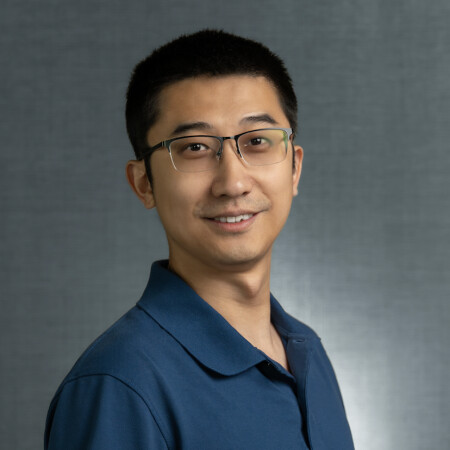
CHANG Ee ChienView profile
Associate Professor
CHANG Ee-Chien is an Associate Professor in the Department of Computer Science at the School of Computing, National University of Singapore (NUS). He serves as the Lead Principal Investigator of the National Cybersecurity R&D Laboratory (NCL) and previously served as Deputy Director of the Center for Technology, Robotics, Artificial Intelligence and the Law (TRAIL) from 2019 to 2022. He also chaired the Joint Academic Committee for the Bachelor of Computing in Information Security program from 2016 until April 2023. Dr. Chang received his Ph.D. in Computer Science from New York University in 1998, following his M.Sc. and B.Sc. in Mathematics from the National University of Singapore in 1993 and 1991 respectively. He completed postdoctoral work with DIMACS at Rutgers University and NEC Labs America. His research focuses on information security, multimedia security, and their intersection. His work spans from foundational research in cryptographic techniques for noisy data and image watermarking to contemporary challenges in data privacy, cloud security, and adversarial machine learning. Dr. Chang has published extensively in top-tier security and computer science venues including CCS, EUROCRYPT, USENIX Security, and ACM Multimedia. Analysis of his recent publications reveals a strong emphasis on practical security solutions using hardware features like Trusted Execution Environments, innovative approaches to watermarking using generative models, and addressing emerging threats in machine learning systems. His work bridges theoretical cryptography with real-world security challenges, particularly in cloud infrastructure and privacy-preserving technologies. Active leadership in National Cybersecurity R&D Laboratory Extensive service on program committees for major security conferences Consultancy roles with Huawei, i-Sprint, and Singapore Accreditation Council Media commentary on cybersecurity issues for major Singaporean outlets Dr. Chang has mentored numerous research fellows and students who have gone on to academic and industry positions worldwide. His educational contributions include developing cybersecurity curriculum and innovative teaching methods such as penetration testing using real-world university applications. He has taught core security courses including CS2107 Introduction to Information Security continuously since 2014.