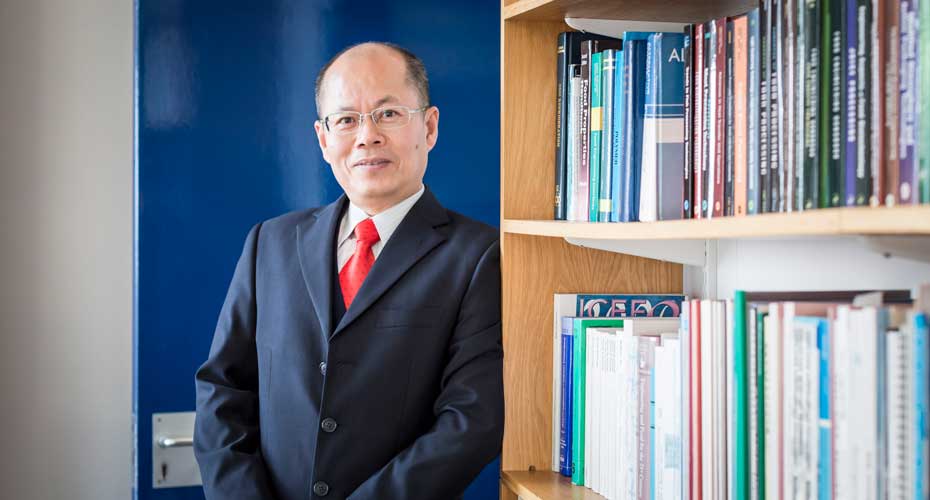
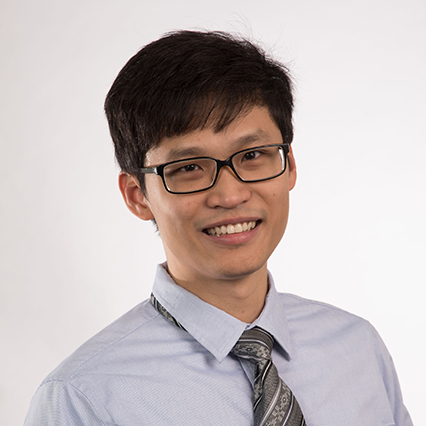
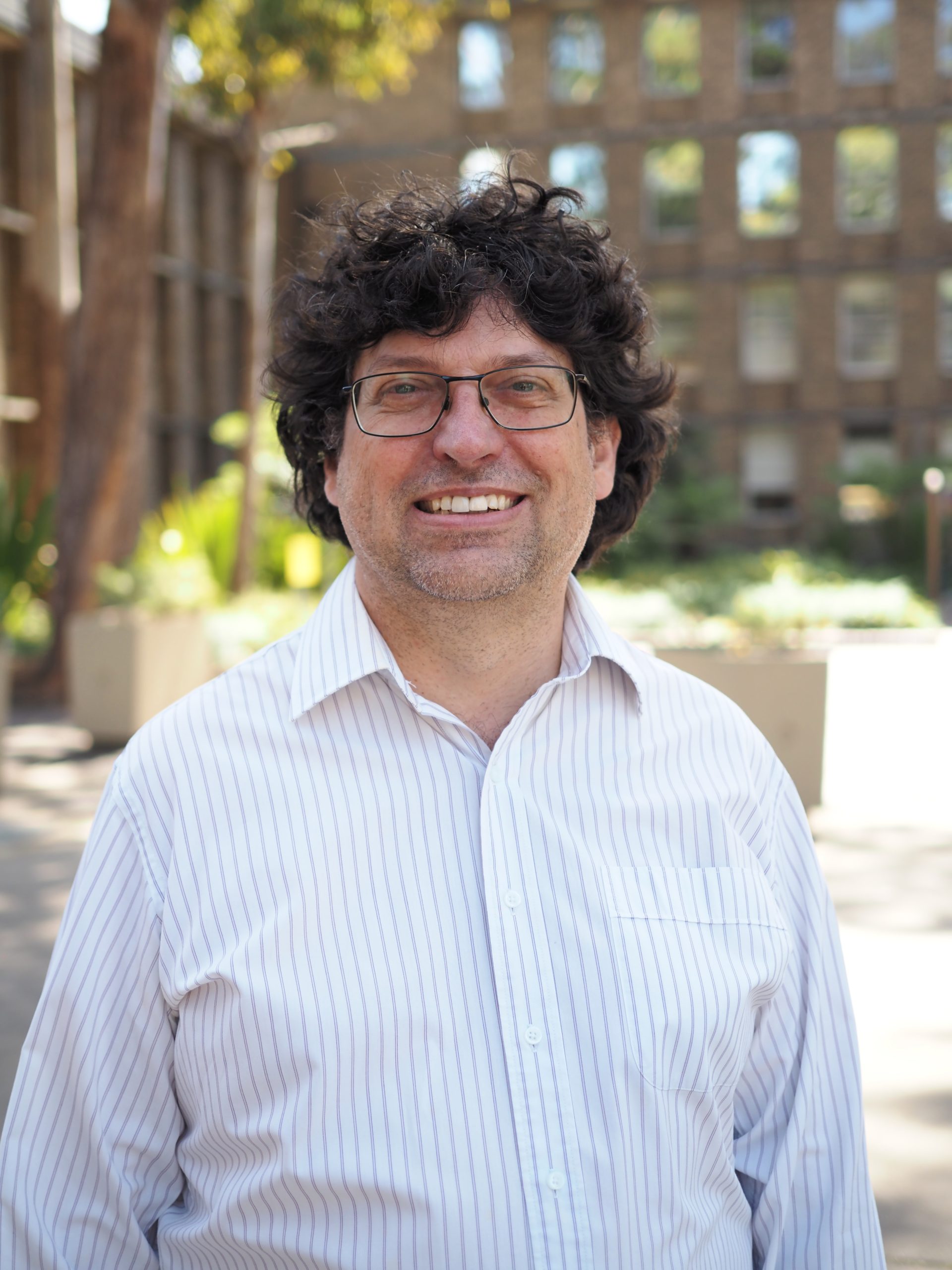
Gias Uddin is an Associate Professor at York University's Lassonde School of Engineering and an Adjunct Professor at the University of Calgary . His research bridges Software Engineering (SE) and Artificial Intelligence (AI) , focusing on AI Trustworthiness Assessment (SE4AI) and AI-Driven Productivity Tools (AI4SE) . PhD in Software Engineering & AI, McGill University (2018) MSc in Software Engineering, Queen’s University (2008) BSc in Computer Science & Engineering, Bangladesh University of Engineering and Technology (2004) His research explores: Metamorphic Relations for LLM Hallucination Detection AI-Enhanced Software Documentation Foundational Models for Runtime System Modernization Developer-Centric AI Tooling Recent article trends show expertise in LLM Trustworthiness , Low-Code Platforms , and IoT Developer Communities . Awards include Distinguished Paper at FSE 2025 , multiple IBM Champion recognitions, and York Research Award . He leads the Data Intensive Software Analytics (DISA) Lab and mentors PhD students in SE-AI Intersections .
Dr. Bei Jiang is an Associate Professor in the Department of Mathematical and Statistical Sciences at the University of Alberta , Canada. She holds the Canada CIFAR AI Chair and is affiliated with the Alberta Machine Intelligence Institute (Amii) . Her academic journey includes a PhD in Biostatistics (2014) from the University of Michigan, MS (2008) and BS (2004) from the University of Alberta and Beijing University of Technology, respectively. Current Positions : 2021–Present (Associate Professor), 2022–Present (CIFAR AI Chair) Past Appointments : Assistant Professor (2015–2021), Postdoctoral Fellow at Columbia University (2014–2015), Research Assistant at University of Michigan (2009–2013) Research Interests : Dr. Jiang specializes in methods for joint modeling of longitudinal and health outcome data , Bayesian hierarchical modeling , functional and imaging data analysis , and statistical machine learning . Her work integrates kernel machine regression , differential privacy , and synthetic data generation to address challenges in heterogeneous health data and neuroimaging. Scientific Awards : Highlights include the 2015 SAMSI New Research Fellow , multiple Rackham Conference Travel Awards (2013, 2012), and prestigious NSERC scholarships (2009–2012). She has also received the J Gordin Kaplan Graduate Award (2008) and Statistical Society of Canada Travel Award (2008). Grants : $375,000 (CIFAR AI Chairs, 2022–2027), $480,000 (MITACS Accelerate, 2022–2025), and $210,000 (Canadian Statistical Sciences Institute, 2022–2025) Students and Postdocs : She mentors numerous PhD , MSc , and Postdoctoral Fellows , including Junxi Zhang (2023–Present), Enze Shi (2022–Present), and former advisees like Wenxing Guo (now Lecturer at University of Essex) and Yafei Wang (Assistant Professor at University of Alberta).
Dr. Anwar Ali is a Lecturer in the Department of Electronic and Electrical Engineering at Swansea University's Bay Campus, affiliated with the School of Aerospace, Civil, Electrical and Mechanical Engineering. He holds an M.S. in Electronic Engineering (2010) and a Ph.D. in Electronic and Communication Engineering (2014) from Politecnico di Torino, Italy. His research focuses on: Power electronic converters and conditioning systems Embedded systems for aerospace applications Analog/mixed-signal circuit design Satellite technologies including power management Attitude determination and control systems Thermal modeling of aerospace systems Dr. Ali has authored over 50 publications with recent works concentrated in satellite power systems, thermal analysis of spacecraft, machine learning applications in healthcare/robotics, and energy harvesting techniques. His research demonstrates consistent innovation in small satellite technologies and cross-disciplinary applications of electrical engineering principles. He currently supervises PhD projects on: Wireless power transfer for implantable medical devices Integrated power and attitude control optimization for small spacecraft and teaches modules including Analogue Design, Software Engineering, Embedded System Design, and Integrated Circuit Design.
Professor Da-Wen Sun is a globally recognized authority in food and biosystems engineering at the UCD School of Biosystems & Food Engineering , University College Dublin. His research focuses on enhancing food preservation through innovative technologies like ultrasound-assisted freezing to minimize nutrient loss and structural damage in frozen foods. Key contributions: Developed ultrasound freezing methods to reduce ice crystal damage Editor of seminal texts including Handbook of Frozen Food Processing Founded the journal Food and Bioprocess Technology His work bridges computational modeling (e.g., CFD simulations , machine learning ) with industrial applications, particularly in freezing, drying, and vacuum cooling. Recent studies explore terahertz imaging for pest detection, deep eutectic solvents for moisture control, and cold plasma for allergen reduction. Scientific awards include: Frozen Food Foundation Freezing Research Award (2013) - First non-US recipient CIGR Honorary President title (2016) for leadership in agricultural engineering He leads the UCD Food Refrigeration & Computerised Food Technology group , collaborating internationally on technologies like nanosensors and green cryoprotectants to advance sustainable food systems.
Peng Li is a Professor in the Department of Electrical and Computer Engineering at the University of California, Santa Barbara. His research focuses on integrated circuits, brain-inspired computing, electronic design automation, and hardware machine learning systems. He holds Fellow status in the Institute of Electrical and Electronics Engineers (IEEE). His work emphasizes neuromorphic engineering, spiking neural networks, and the intersection of machine learning with analog circuit design. Education includes a PhD in Electrical and Computer Engineering from Carnegie Mellon University, an MS in Systems Engineering from Xi'an Jiaotang University, and a BS in Information Science and Engineering from the same institution. His research has been recognized with prestigious awards including the ICCAD Ten-Year Retrospective Most Influential Paper Award and multiple Design Automation Conference Best Paper Awards. Key research trends in his articles include advancements in spiking neural networks (SNNs), hardware accelerators for neuromorphic computing, Bayesian optimization for analog circuit design, and robustness in machine learning systems. He explores topics like adversarial robustness, energy-efficient architectures, and data-efficient prediction techniques. His work bridges theoretical machine learning models with practical hardware implementations, particularly in 3D integration and systolic array acceleration. Notable contributions include pioneering hybrid approaches combining formal verification with machine learning for analog circuits (HFMV framework), and innovations in neuromorphic processors such as the 3D Liquid State Machine architecture. His research also addresses challenges in semiconductor manufacturing, including wafer map pattern recognition and failure detection through semi-supervised learning and contrastive methods. Awards highlight his impactful contributions to both design automation and neural computing. His grants and collaborations likely span industry partnerships in semiconductor technology and neuromorphic computing. He leads a lab focused on next-generation hardware-software co-design for intelligent systems, emphasizing energy efficiency and scalability.
Vincent Sitzmann is an Assistant Professor at the Massachusetts Institute of Technology (MIT), affiliated with the Computer Science and Artificial Intelligence Laboratory (CSAIL). He leads the Scene Representation Group and is part of the Visual Computing research community at CSAIL. His work focuses on advancing artificial intelligence's ability to perceive and interact with the physical world, particularly through neural fields, 3D scene representations, and robotics. His research bridges computer vision, machine learning, and robotics, aiming to create systems that emulate human perception and decision-making. He holds a dual role in the PI Core/Dual program at MIT and contributes to interdisciplinary efforts in AI & ML, Graphics & Vision, and Robotics. His recent projects include developing generative models for 3D avatars, robust camera pose estimation, and learning-based control for soft robots. He collaborates widely within MIT’s engineering ecosystem and has led initiatives such as the Collaborative Research grant on compositional implicit representations for 3D scene understanding (2022). His lab, the Scene Representation Group, emphasizes scalable 3D reconstruction, material estimation, and embodied AI. Notable technologies include Flowmap for camera calibration and Dittogym for soft robotics control. While no awards are explicitly listed, his work has been featured in top conferences like SIGGRAPH and IEEE Robotics.
Summary Associate Professor Mehrdad Arashpour is an internationally recognized researcher and educator in construction and civil infrastructure, focusing on automation and information technologies. He leads the ASCII Lab at Monash University's Department of Civil and Environmental Engineering. His academic roles include Head of Construction Engineering and membership in the CIB's Working Commission on Off-site Construction (W121) and Infrastructure Task Group (TG91). Education: Ph.D., RMIT University, Australia M.Sc., Grenoble University, France B.Sc., IU University, Iran Research Interests: Digital twins, computer vision, robotics, BIM integration, sustainable construction, and automation in construction processes. His work contributes to UN Sustainable Development Goals, particularly in sustainable cities and communities. Grants & Awards: Over $6M in grants from ARC, Austroads, and industry partnerships. Recognitions include Editor's Choice Paper (ASCE, 2019) and Outstanding Reviewer (Elsevier, 2016). Teaching: Courses like Risk Management in Engineering Projects and Infrastructure Research Project. Advises on PhD topics in computer vision, robotics, and BIM. Labs & Collaborations: ASCII Lab focuses on smart, sustainable solutions for construction. Collaborates with global researchers and organizations like SPARC Hub and Building 4.0 CRC.
Wenchao Li is an Assistant Professor in the Department of Electrical and Computer Engineering at Boston University, directing the Dependable Computing Laboratory. He holds a B.S., M.S., and Ph.D. in Electrical Engineering and Computer Sciences, along with a B.A. in Economics from UC Berkeley. His research focuses on dependable computing, applying formal verification, machine learning, and control theory to cyber-physical systems, electronic design automation, and AI safety. Key research interests include neural network verification, safe reinforcement learning, autonomous systems security, and resilient control strategies for connected vehicles. His work emphasizes provable safety guarantees and defense against adversarial attacks in critical infrastructure systems. Notable awards include the ACM Outstanding Ph.D. Dissertation Award and the Leon O. Chua Award. His lab investigates topics such as neural network repair, secure multi-robot coordination, and formal methods for autonomous systems. He advises students like Jiameng Fan and collaborates on projects funded by grants in AI safety and cyber-physical systems. Labs/Teams: Dependable Computing Laboratory Grants: Focus on formal verification, AI safety, and autonomous systems resilience
Professor Dian Tjondronegoro is a leading academic at Griffith University's Department of Management within the Griffith Business School. He holds roles such as Acting Head of Department and Deputy Head (Research), and is affiliated with the Centre for Work, Organisation and Wellbeing, Griffith Asia Institute, and the Griffith Inclusive Future Beacon. His research focuses on AI ethics, eHealth systems, and digital governance, with over $9M in grants from bodies like the ARC and NHMRC. He has published 145+ peer-reviewed papers and leads initiatives like the 'Governing in the Digital Age' program. A Fellow of the Australian Computer Society and Senior Member of IEEE/ACM, he has won the Gold Disrupters Award (2019) and multiple teaching accolades. Education: PhD in Information Systems (Deakin University, 2005), BIS (QUT, 2001). Research Interests: AI, machine learning, healthcare innovation, responsible AI, workplace design, and digital economy strategies. His articles emphasize AI applications in healthcare monitoring, workplace productivity, and ethical surveillance. Recent work explores post-COVID workplace trends and AI-driven public health solutions. He advises on government policy and innovation through roles like Gold Coast Health's Digital Innovation Advisory Committee. His teaching includes courses on digital strategy and innovation management.
Dr. Tim Oates is a Professor in the Department of Computer Science and Electrical Engineering at the University of Maryland, Baltimore County . His research spans machine learning, artificial intelligence, and brain-machine interfaces, with a focus on weakly supervised methods, human-in-the-loop reinforcement learning, and grounded policy development for robotics. Ph.D., Computer Science, University of Massachusetts, Amherst, 2000 M.S., Computer Science, University of Massachusetts, Amherst, 1997 B.S., Computer Science and Electrical Engineering, 1989 Current research threads include: Developing non-invasive brain injury severity assessment via medical time series Modeling human brain development through computational frameworks Designing algorithms for autonomous robotic learning Recent publications highlight AI security mechanisms (backdoor detection via tensor decomposition, matrix factorization) Medical applications (3D artery reconstruction, skin lesion diagnosis, EEG denoising) Neuro-symbolic integration (holographic representations, language-guided reinforcement learning) Mathematical reasoning (schema-based problem solving, subitizing algorithms) Contact: oates@cs.umbc.edu | Office: 336 Information Technology and Engineering (ITE) Building
Anuj Pathania serves as an Assistant Professor in the Parallel Computing Systems (PCS) group within the Informatics Institute at the University of Amsterdam's Faculty of Science. His research pioneers sustainable computing systems operating under severe power, thermal, and reliability constraints, with significant contributions to energy-efficient hardware design and embedded systems. Education: PhD in Computer Science (2018), Karlsruhe Institute of Technology MSc in Computer Science (2012), National University of Singapore B.Tech in Computer Science (2009), Maharaja Agrasen Institute of Technology Pathania's research centers on low-power design and sustainable systems for constrained environments, with particular expertise in thermal management of 3D-stacked architectures and energy-efficient machine learning inference . His work bridges electronic design automation with real-world reliability challenges, developing novel power budgeting techniques like T-TSP that incorporate transient temperature effects ignored by conventional methods. Current projects include EU-funded initiatives on energy labeling for digital services, addressing ecological impacts through technological, behavioral, and legal frameworks. His publication trajectory reveals a strategic evolution toward zero-waste computing , with recent work (2023-2025) focusing on hardware-software co-design for edge AI, energy modeling across computing continua, and parameter-efficient neural adaptation. Key themes include thermal-aware scheduling for S-NUCA many-cores, cooperative processor utilization in heterogeneous systems, and sustainability metrics for digital services. Scientific Recognition: Best Paper Award Nomination at IEEE Computer Society Annual Symposium on VLSI 2023 for 3D-TTP power budgeting technique Pathania actively mentors 4 PhD students (Ehsan Aghapour, Saeedeh Baneshi, Sudam Wasala, Yixian Shen) and has successfully supervised 5 Master's theses (including Cum Laude defenses by Joris op ten Berg and Jurre Wolff). His research is supported by major grants including Energy Labels for Ecologically Sustainable Digital Services (2023-2024) and Towards Zero-Waste Computing (2021-2025), developing simulation frameworks like HotSniper and CoMeT for thermal analysis. The PCS group maintains strong industry collaborations with ARM and NVIDIA, particularly through tools like ARM-CO-UP for heterogeneous processor utilization.
Professor Jason Evans is a leading climate scientist at the University of New South Wales (UNSW), serving as Chief Investigator at the Climate Change Research Centre. He completed his undergraduate degrees in physics and mathematics at Newcastle University in 1996 and earned his PhD in Environmental Management from the Australian National University in 2001. After six years as a postdoctoral and research fellow at Yale University, he returned to Australia in 2007 to join UNSW's Climate Change Research Centre. Education: Bachelor's degrees in Physics and Mathematics, Newcastle University (1996) PhD in Environmental Management, Australian National University (2001) Research Interests: Professor Evans specializes in regional climate dynamics, focusing on land-atmosphere interactions and the water cycle in the context of climate change. His research integrates advanced modeling tools with extensive observational datasets, particularly emphasizing satellite-based remote sensing and earth observations . His work addresses critical questions about regional climate change impacts, including urban climate dynamics, extreme weather events, drought mechanisms, and renewable energy implications under changing climate conditions. His research spans multiple interconnected domains: from developing novel approaches for moisture source identification using Lagrangian methods , to investigating flash drought prediction using deep learning techniques , and evaluating the performance of high-resolution climate simulations across diverse geographical regions including Australia, Alaska, and Saudi Arabia. Scientific Recognition: Lead Author, IPCC Special Report on Climate Change, Desertification, Land Degradation, Sustainable Land Management, Food Security, and Greenhouse Gas Fluxes in Terrestrial Ecosystems Member, Science Advisory Team for CORDEX (World Climate Research Programme) Editor, Journal of Climate (2016-2022) Fellow, Modelling and Simulation Society of Australia and New Zealand (2020) Biennial Medal, Modelling and Simulation Society of Australia and New Zealand (2021) Fellow, Royal Society of New South Wales (2021) Research Impact and Contributions: Professor Evans has made significant contributions to understanding regional climate change through his extensive publication record of over 50 articles since 2021. His work has advanced knowledge in areas including urban climate dynamics , drought mechanisms and prediction , extreme weather events , and renewable energy impacts under climate change . His research has informed climate policy through his role as a Lead Author for the IPCC and his involvement with international climate research initiatives like CORDEX.
Lyndia Wu is an Assistant Professor in the Department of Mechanical Engineering at the University of British Columbia's Faculty of Applied Science, where she holds the prestigious Canada Research Chair in Wearable Brain Injury Sensing. She leads the SimPL (Sensing in Biomechanical Processes Lab) and maintains an active research program focused on biomechanics and medical device development. Her educational background includes: B.A.Sc. from the University of Toronto M.S. from Stanford University Ph.D. from Stanford University Postdoctoral Fellowship from Stanford University Dr. Wu's research program centers on developing novel sensing and data analytics technologies to study human biomechanics in health and disease states. Her primary research areas encompass brain injury or concussion biomechanics using advanced sensing, modeling, and machine learning approaches, as well as the development of innovative sensors and algorithms for studying sleep disorders like obstructive sleep apnea. She specializes in wearable sensors for brain health monitoring, traumatic brain injury mechanisms, and AI applications in healthcare settings. Analysis of her recent publications reveals a strong focus on sports-related head impacts (particularly in soccer), EEG monitoring following impacts, and sleep monitoring after concussions. Her work demonstrates interdisciplinary collaboration across biomechanical engineering, neuroscience, and clinical medicine, with publications spanning biomechanics, neurotrauma, biomedical instrumentation, and signal processing domains. Dr. Wu has received significant recognition for her work, including: Scholar Award from the Michael Smith Foundation for Health Research (2019) Junior Faculty Teaching Award from UBC Mechanical Engineering (2022) She actively supervises graduate students in Mechanical Engineering programs (MASc and PhD) and collaborates extensively across disciplines. Dr. Wu is affiliated with multiple research centers including the Institute for Computing, Information and Cognitive Systems (ICICS), Origins of Balance Deficits and Falls, and SmarT Innovations for Technology Connected Health (STITCH), reflecting her interdisciplinary approach to solving complex biomedical challenges. As director of the SimPL lab, she leads a research team developing cutting-edge sensing solutions for biomechanical processes with particular emphasis on brain injury prevention, monitoring, and recovery assessment through innovative engineering approaches.
Insa Feinkohl is a Professor at the Chair of Medical Biometry and Epidemiology within the Faculty of Health at the University of Witten/Herdecke . Her research focuses on risk factors for cognitive dysfunction and mental health in older adults, particularly post-surgery, with emphasis on metabolic and cognitive risk factors. Bachelor of Science (BSc) in Psychology (1 st class honors) – University of Dundee (2006-2009) Master of Science (MSc) in Psychology of Individual Differences (with distinction) – University of Edinburgh (2009-2010) PhD in Community Health Sciences – University of Edinburgh (2010-2014) Post Doc in Knowledge Construction Group – Leibniz Institute for Knowledge Media, Tübingen (2014-2015) Postdoc in Molecular Epidemiology Group – Max Delbrück Center, Berlin (2015-2022) Habilitation in Molecular Epidemiology – Charité Universitätsmedizin Berlin (2021) Her research integrates medical biometry and epidemiology to study postoperative cognitive dysfunction (POCD), delirium, and aging-related cognitive decline. Key areas include biomarker validation (e.g., leptin, interleukins), brain connectivity (dopaminergic networks, thalamus), and metabolic risk factors (diabetes, obesity). She contributed to the BioCog project , an EU-funded initiative for personalized risk prediction of postoperative cognitive impairment. Her recent publications highlight trends in perioperative neuroscience, including brain mineralization, cytokine associations with neurocognitive disorders, and structural/functional imaging in delirium. Articles also explore metabolic syndrome, cognitive reserve, and delirium prediction models using machine learning. Insa Feinkohl is affiliated with major academic societies, including the German Society for Epidemiology , German Society for Medical Informatics, Biometry and Epidemiology , and the German University Association .
Benoit Rosa is currently a CNRS Researcher within the Robotics, Data science, and Healthcare technologies Team at the ICube Laboratory, University of Strasbourg. Previously, he was a Research Fellow at the Pediatric Cardiac Bioengineering Lab, Boston Children's Hospital, Harvard Medical School (2015-2016), and a postdoctoral fellow in the Robot Assisted Surgery group at the Mechanical Engineering department of KU Leuven, Belgium (2013-2015). He received his Ph.D. in 2013 from Pierre & Marie Curie University (now Sorbonne University) under the supervision of Pr. Guillaume Morel and Pr. Jerome Szewczyk. His PhD was awarded the best PhD thesis award by the CNRS research group on robotics for 2013. Prior to his PhD, he obtained an Engineering Degree (equivalent to a Master's) from Ecole Centrale Paris. Rosa's research focuses on surgical robotics and image-guided control, with particular expertise in the design and control of miniature, distally-actuated and flexible systems for minimally invasive surgery. His work spans from mechatronic design of minimally invasive surgical devices to advanced control algorithms for surgical robots. Key areas include continuum robotics, visual servo control, surgical tool segmentation, and OCT-guided interventions. His research has significant applications in cardiac surgery, endomicroscopy, and various minimally invasive procedures, with a strong emphasis on translating theoretical robotics into practical clinical solutions. His recent publications demonstrate a growing trend toward applying deep learning techniques to enhance surgical robotics, with focus on autonomous systems that improve precision and reduce surgeon cognitive load while addressing challenges in medical imaging and surgical navigation. Scientific Awards: Best PhD thesis award by the CNRS research group on robotics (2013) Rosa has led multiple significant research projects including Image-based tracking of continuum robots (ongoing), Robot-assisted endomicroscopy (2010-2013), Beating heart intracardiac cardioscopy-guided interventions (2015-2019), and Intuitive control of active catheters (2014-2015). His work has resulted in numerous patents and collaborations with leading medical institutions worldwide, securing research funding for advancing surgical robotics technology. He actively participates in the academic community through invited talks and workshops, and maintains strong collaborations with institutions including Harvard Medical School, KU Leuven, and various French research entities, bridging theoretical robotics with practical clinical applications across multiple medical specialties.