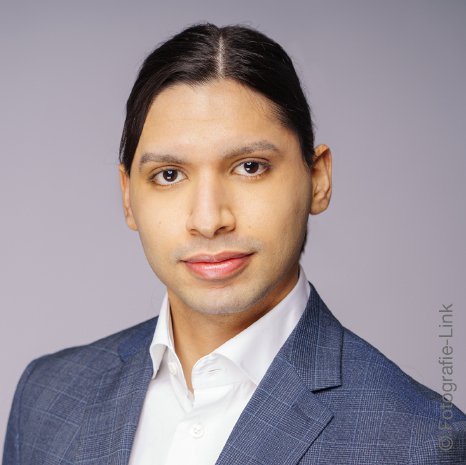
Friedrich Fraundorfer is a Professor at Graz University of Technology, specializing in 3D Computer Vision and Autonomous Systems at the Institute of Computer Graphics and Vision (ICG). He has held academic positions at institutions including ETH Zurich, University of North Carolina at Chapel Hill, and Technische Universität München, where he served as Deputy Director of the Chair of Remote Sensing Technology. Research : Focuses on Micro Aerial Vehicle (MAV) autonomy, Visual-Inertial Fusion, and Multi-View Geometry. Projects : Led EU-funded SFly (autonomous MAVs for search-and-rescue), SNF MAV (camera-only 3D mapping), and VCharge (vision-based self-driving cars). Teaching : Offers courses like 'Camera Drones' and 'Mathematical Principles in Vision.' His Pixhawk project created open-source MAV platforms adopted globally. Key Collaborations : With NVIDIA, Volkswagen AG, University of Zurich, and German Space and Aerospace Center (DLR). His students (e.g., Dominik Hirner, Rafael Weilharter) have published on lightweight CNNs for stereo vision and self-supervised 3D reconstruction.
Andreas Uhl is a University Professor in Artificial Intelligence and Human Interfaces at the Department of Computer Science, University of Salzburg. With a prolific research career spanning from 1996 to present, he has authored or co-authored 534 publications and led or participated in 59 research projects. His work demonstrates sustained academic productivity with recent publications and projects extending through 2025. Professor Uhl's research interests span multiple domains at the intersection of artificial intelligence and practical applications. His primary focus areas include computer vision, biometrics, biomedical imaging, and digital forensics, with significant contributions to pattern recognition and image analysis. His work bridges theoretical computer science with practical applications in cultural heritage preservation, medical diagnostics, and security systems, demonstrating a versatile research portfolio that addresses both fundamental challenges and real-world problems. His recent publications reveal a strong emphasis on temporal image forensics, biomedical image analysis, and biometric security. The research shows a clear trajectory toward increasingly sophisticated applications of AI in specialized domains, with particular attention to validation methodologies and limitations of current approaches. His work on cultural heritage applications demonstrates an innovative application of computer vision techniques to historical artifacts. Best paper award @ 25th ACM Symposium on Applied Computing (Applications Track), 2010 Best Paper award @ 2nd European Workshop on Visual Information Processing (EUVIP'10), 2010 IEEE Biometrics Council Best Paper Award (TBIOM), 2022 Kurt Zopf Preis, 2023 Professor Uhl actively leads multiple significant research initiatives, including the CDL-POSA project on People and Object Surface Authentication (2025-2032), Artificial Intelligence driven Biomedical Imaging Innovation (2025-2029), and the AIBIA Research and Transfer Junior Lab (2023-2025). His research group maintains active collaborations with institutions like Carnegie Mellon University, as evidenced by his recent research stay there in September 2024. The scope and duration of his current projects indicate substantial grant funding and institutional support for his research agenda. His laboratory activities focus on AI applications in biomedical imaging, border security through vehicle-integrated technologies (AutoBorder project), and cultural heritage analysis. The research environment appears to integrate academic inquiry with practical transfer through initiatives like the FFG Student Internships program, suggesting a strong commitment to both fundamental research and real-world implementation.
Dr. Sebastian Michel is a researcher at the Institute of Biotechnology in Plant Production , part of the Department of Agricultural Sciences at the University of Natural Resources and Life Sciences Vienna (BOKU) . His work focuses on applying genomic and phenomic selection to improve disease resistance and climate adaptability in wheat species. Research interests include: Genomic selection for complex traits Plant disease resistance (Fusarium, Septoria, common bunt) Climate-resilient crop breeding Wheat genomics and QTL mapping Scientific contributions span numerous publications on Fusarium resistance mechanisms, deoxynivalenol detoxification, and genomic prediction models. He has supervised multiple MSc theses on transgenerational defense induction, allele prediction, and stripe rust resistance. Projects include EU-funded initiatives for: Climate Resilient Orphan Crops PhenoMix: Deep Learning in Wheat Breeding Sustainable Resistance Breeding in Ethiopia/Kenya/Zimbabwe Community engagement features keynote lectures on modern breeding methods and peer-review roles for journals like Frontiers in Plant Science and Theoretical and Applied Genetics .
Andreas Unterweger is a Senior Lecturer and Head of the Department of Networking & Cyber Security at the Center for Secure Energy Informatics. He leads research initiatives focused on integrating digital technologies with energy systems, including IoT, blockchain, and data privacy solutions for smart grids. Research Interests: His work spans secure energy informatics, privacy-preserving technologies for renewable energy communities, IoT-enabled energy services, and machine learning applications for industrial and socio-demographic energy data analysis. Key domains include smart meter analytics, electric vehicle ecosystems, and blockchain-based prosumer networks. Awards: Christian-Doppler Award for contributions to natural sciences (2019) Science Award (2015) Projects & Leadership: He directs the Center for Secure Energy Informatics and manages projects like: Digital Energy Twin (2019–2023): Developing real-time industrial energy management systems. ProChain (2018–2019): Blockchain integration for prosumer energy networks. WhichWay (2022–2023): IoT middleware for energy services.
Armin Dadras serves as a Junior Researcher at the University of Applied Sciences St. Pölten within the Media Computing Research Group of the Institute of Creative Media Technologies and Department of Media and Digital Technologies. His academic qualifications include: Bachelor of Arts (BA) Bachelor of Science (BSc) Master of Science (MSc) His research bridges computer vision and biomedical engineering, specializing in interpretable geometric feature extraction for photography composition analysis and deep learning applications in medical imaging. Current work focuses on rule-of-thirds detection algorithms and glottis segmentation failure identification in endoscopic videos. Publications reveal a strong interdisciplinary trajectory merging media technologies with healthcare solutions, particularly through computational photography and speech pathology diagnostics. Dadras actively contributes to the Media Computing Research Group, driving innovation in media technology applications through advanced computing methodologies. No documented information exists regarding student supervision or research grant acquisitions.
Van Quoc Huynh is a Researcher at the Institute for Application-oriented Knowledge Processing, Johannes Kepler University Linz (JKU), Austria. His work focuses on advancing machine learning and data mining techniques with emphasis on rule-based systems and symbolic artificial intelligence. His primary research interests include Machine Learning , Data Mining , and Symbolic AI , specializing in rule extraction algorithms, classification systems, and knowledge representation. He develops novel approaches for efficient pattern mining and interpretable model construction, bridging neural and symbolic paradigms. Recent publications demonstrate a clear trajectory toward hybrid neural-symbolic models for classification tasks and memory-efficient rule mining architectures. His work addresses critical challenges in scalability, parallel processing, and interpretability within knowledge discovery systems, with strong emphasis on practical implementations for complex datasets. Dr. Huynh actively contributes to FFG-funded research projects including the ongoing Automated Rule Extraction and Interpretation from Symbolic Regression Trees (2025-2026) and completed PreMoBAF (2021-2025). He engages with the academic community through conference organization (e.g., 20th International Conference on Foundations of Digital Games, 2025) and technical presentations on frequent itemsets mining. He operates within JKU's Institute for Application-oriented Knowledge Processing, which provides interdisciplinary infrastructure for applied AI research focusing on practical knowledge processing solutions.
Bernhard Aichernig serves as a University Professor at the Institute of Formal Models and Verification at Johannes Kepler University Linz. His academic career focuses on bridging theoretical computer science with practical software verification techniques. He actively contributes to the international research community through publications, program committees, and doctoral examinations. Professor Aichernig's research primarily centers on formal methods and model verification, with significant contributions to automata learning and software testing methodologies. His work explores the intersection of theoretical computer science and practical verification techniques, particularly in state-merging approaches for passive learning systems. His research has direct applications in improving software reliability through formal testing frameworks. His recent publication trends indicate a strong focus on advancing automata learning techniques, particularly extending the AALpy framework with passive learning capabilities. This work represents the cutting edge of model inference and formal verification, addressing challenges in state-merging algorithms for complex software systems. His research bridges theoretical foundations with practical testing applications. Professor Aichernig serves as an active member of the academic community through various roles including doctoral examination committees and program committees for major conferences like the NASA Formal Methods Symposium. He has examined PhD theses on advanced reasoning techniques for quantified Boolean formulas, learning Mealy machines with local timers, and deep integration of SAT solving with model checking. He currently participates in the Cluster of Excellence 'Bilateral Artificial Intelligence' project as a Principal Investigator, working alongside prominent researchers in the AI field. This active research project, funded by the Austrian Science Fund (FWF), runs from October 2024 through September 2029 and represents a significant collaborative effort in artificial intelligence research at JKU Linz.
Siavash Arjomand Bigdeli serves as an Associate Professor of Computer Vision at the Technical University of Denmark, following prior employment as a scientist at the Swiss Center for Electronics and Microtechnologies (CSEM). His research focuses on: Ante-/Post-Hoc explainability of machine learning models Integration of statistical models in learning/inference processes Philosophical methodologies in artificial intelligence development Advanced computer vision techniques for visual understanding Recent publications reveal consistent specialization in image restoration and stereo vision, employing deep learning architectures and probabilistic graphical models to solve core challenges in visual data reconstruction and temporal coherence. His work demonstrates strong interdisciplinary connections between theoretical machine learning, practical computer vision applications, and epistemological considerations in AI systems.