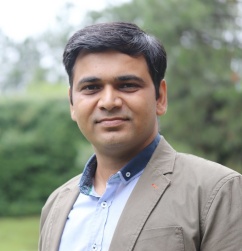
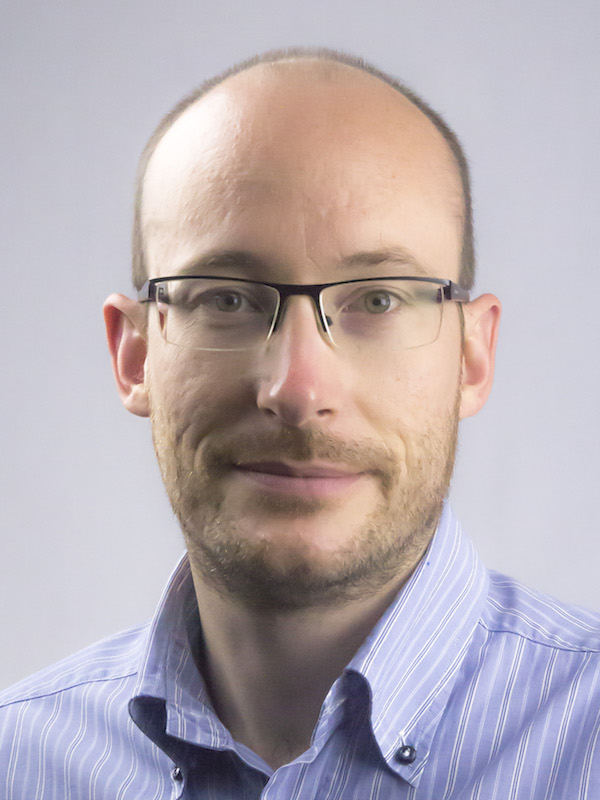
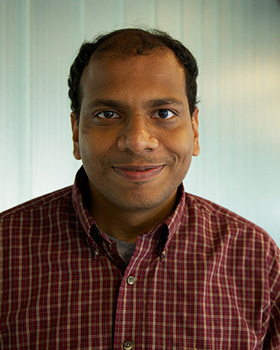
Özlem Özgöbek is an Associate Professor at the Department of Computer Technology and Informatics, Norwegian University of Science and Technology (NTNU). Her research spans artificial intelligence, machine learning, and recommender systems with a focus on privacy, fake news detection, and educational technology. NTNU - Department of Computer Technology and Informatics Her work explores multimodal fake news detection, privacy implications in recommender systems, and technology-enhanced classroom interaction. Recent publications analyze digital education trends and classroom tools. Özgöbek collaborates with international researchers and contributes to news recommendation workshops. Her projects address ethical AI, environmental sustainability, and real-time information processing.
Tushar Sharma is an Assistant Professor in the Faculty of Computer Science at Dalhousie University, Canada. His research focuses on software engineering, particularly software quality, refactoring, technical debt, and the application of machine learning in software engineering (ML4SE). He leads the SMART Lab and is actively involved in projects related to Green AI and sustainable software development. PhD : Software Engineering, Athens University of Economics and Business, Greece (2019) MS : Computer Science, Indian Institute of Technology-Madras, India His research interests span software design and architecture, code and design quality, refactoring, technical debt, mining software repositories, and applied machine learning for software engineering. He is particularly interested in sustainable AI, green software engineering, and the use of large language models for code. His work bridges empirical studies with practical tool development to improve software maintainability and quality. His recent publications highlight a strong trend in code smell detection, refactoring automation, energy-aware AI, and the reliability of large language models in software engineering. He has developed tools like Designite and DPy and contributed datasets such as MaRV and DACOS, emphasizing empirical validation and reproducibility in software engineering research. Dean's Research Excellence Award Best Artifact Award, SCAM 2023 IEEE Senior Member Tushar Sharma has secured significant research funding, including an NSERC Discovery Grant for DevQOps, Mitacs Accelerate grants with industry partners, and contributions to the $154M Canada First Research Excellence Fund project. He actively mentors students and collaborates with industry. He leads the SMART Lab at Dalhousie and has organized workshops such as SATToSE 2018. He is also a founding developer of Designite, a widely used software design quality assessment tool.
Andrea Volkamer is a computational chemist and active principal investigator in the field of computer-aided drug design (CADD), with a focus on kinase targets, druggability prediction, and machine learning applications. She has published extensively in journals such as the Journal of Chemical Information and Modeling and Journal of Medicinal Chemistry , with recent work up to 2025 indicating an ongoing academic research program. Her research group, referred to as 'volkamerlab,' develops open-source tools including DoGSite, KiSSim, KinFragLib, and TeachOpenCADD, which are widely used in both academic and industrial drug discovery settings. Her research interests span computational drug discovery , structural bioinformatics , kinase inhibitor design , off-target and polypharmacology prediction , and educational platforms for CADD . She emphasizes open science and reproducibility, particularly through the TeachOpenCADD initiative, which provides interactive Jupyter Notebooks and KNIME workflows for teaching cheminformatics concepts. The 15 most recent publications reflect a strong trend toward integrating machine learning and deep learning (e.g., transformers, graph neural networks) with structure-based methods such as molecular docking, free energy calculations, and binding site comparison. Her work increasingly addresses real-world challenges in drug discovery, including kinase mutation resistance, selectivity optimization, and in vivo toxicity prediction using conformal and hybrid models. Scientific Contributions and Awards: Development of key computational tools: DoGSite, KiSSim, KinFragLib, TeachOpenCADD. Leadership in open-source and open-education initiatives in cheminformatics. Active publication record in top-tier journals with interdisciplinary impact. Advising and Grants: While specific student names and grant details are not mentioned in the provided text, her role as a corresponding author on numerous publications and the existence of a dedicated research lab ('volkamerlab') imply that she mentors students and postdoctoral researchers. She likely secures competitive funding to support her research in computational drug discovery and method development. Labs and Teams: She leads the Volkamer Lab ('volkamerlab'), which focuses on developing and applying computational methods for drug discovery. The lab collaborates with both academic and pharmaceutical partners and emphasizes open-source software development and educational outreach.
Guido Zuccon is a Professorial Research Fellow at the School of Electrical Engineering and Computer Science , The University of Queensland (UQ), where he leads the Information Engineering Lab (ielab) . He serves as the AI Director for the Queensland Digital Health Centre (QDHeC) and is an Affiliate Professor at the UQ Centre for Health Services Research . He was previously a Lecturer and Senior Lecturer at Queensland University of Technology and a Postdoctoral Fellow at CSIRO. His research spans Information Retrieval , Health Search , Formal Models of Search , and Health Data Science , with a strong focus on consumer health search, cohort identification, clinical decision support, and systematic review automation. He has pioneered work on search interaction, semantic models, and the evaluation of retrieval systems in health contexts. His recent publications highlight a strong trend toward leveraging large language models (LLMs) for zero-shot retrieval, federated search, dense retrieval, and query formulation. His work integrates advanced neural methods with practical applications in healthcare, including systematic review automation and clinical AI. He frequently publishes at top venues such as SIGIR, ECIR, and WSDM, often in collaboration with key researchers like Bevan Koopman, Shengyao Zhuang, and Harry Scells. ARC DECRA Fellow (2018–2020) Best Paper Awards at AIRS 2017, CLEF 2016, ALTA 2015, ECIR 2012 Best Reviewer Award at ECIR 2014 Principal Investigator on ARC Discovery Projects and MRFF grants Guido Zuccon actively supervises a large cohort of PhD students, primarily in areas related to neural information retrieval, health search, and systematic review automation. He has led significant research projects funded by the ARC, Google, Microsoft, GRDC, and CSIRO. He is a key organizer of international evaluation labs such as the CLEF eHealth Consumer Health Search task and the TREC 2019 Decision Track. He leads the ielab , a vibrant research group focused on information retrieval and data science, and contributes to major open-source initiatives like Big Brother , a tool for logging user interactions in web studies.
Ashish Khisti is an Associate Professor at the University of Toronto's Department of Electrical and Computer Engineering (ECE), where he directs the Signals, Multimedia and Algorithms Laboratory (SMA Lab). He holds the Canada Research Chair (Tier II) and maintains affiliations with the Vector Institute for Artificial Intelligence. His research bridges communication systems, information-theoretic security, and machine learning, with a focus on real-time streaming and privacy-preserving algorithms. Research Trends: Recent publications emphasize streaming codes for latency-sensitive networks , machine learning-driven compression , and privacy mechanisms in federated learning . Scientific Recognition: Canada Research Chair (Tier II), 2012 and 2017 renewal Cisco Research Center Award, 2017 Ontario Early Researcher Award, 2012 Best Paper at NeurIPS 2021 Deep Generative Models Workshop Academic Contributions: Supervised PhD students Ahmed Badr, Farrokh Etezadi, and Si-Hyeon Lee. Served as Associate Editor for IEEE Transactions on Communications (2012-2015) and IEEE Transactions on Information Theory (2015-2018). Labs & Collaborations: Leads the Signals, Multimedia and Algorithms Laboratory, collaborating with institutions like KAUST, Texas A&M University (Qatar), and the Vector Institute. Organized workshops at BIRS and IEEE conferences.
Thomas Pasquier is an Assistant Professor in the Department of Computer Science at the University of British Columbia, where he is affiliated with both the UBC Security & Privacy Group and the Systopia Lab. His research focuses on designing and implementing computer systems that are inherently observable and transparent, with particular emphasis on security, privacy, and system accountability. Dr. Pasquier earned his PhD in Computer Science from the University of Cambridge in 2016, following an MPhil in Advanced Computer Science from the same institution in 2012. His educational background also includes a Diplôme d'Ingénieur from Institut Supérieur d'Electronique de Paris and a Diplôme Universitaire de Technologie from Conservatoire National des Arts et Métiers. His primary research interests span Security, Intrusion Detection, Digital Provenance, Operating Systems, Distributed Systems, Data Protection, and Privacy. His work specifically addresses the design of systems with built-in observability and transparency mechanisms, focusing on provenance-based security solutions. Analysis of his recent publications reveals a consistent focus on provenance-based intrusion detection systems, with significant contributions in making these systems more practical, usable, and robust. His research also extends to eBPF technology in the Linux kernel, exploring security applications and performance optimizations. Amazon Research Award 2023 for Building Robust Provenance-based Intrusion Detection Incredible Instructor Award Dr. Pasquier has advised numerous graduate students at both UBC and the University of Bristol, where he previously held an Assistant Professor position. His students have gone on to careers at major technology companies including Amazon, Salesforce, Huawei, and Oracle Labs. He has served on program committees for prestigious conferences including ACM ASPLOS, EuroSys, USENIX Security, and ACM CCS. His research is conducted within the Systopia Lab at UBC, which focuses on systems research broadly construed, with particular emphasis on security, privacy, and performance optimization. The lab collaborates with industry partners including Amazon through the Amazon Research Awards program.
Changhyun Choi is an Assistant Professor in the Department of Electrical and Computer Engineering at the University of Minnesota (UofM), Twin Cities. His research focuses on visual perception for robotic manipulation using deep learning. Assistant Professor, UofM Electrical and Computer Engineering (2018–present) Postdoctoral Associate, MIT CSAIL (prior to 2018) Research Interests : Visual perception for robotic manipulation Deep learning for object grasping and assembly Soft manipulation techniques Object pose estimation and tracking Active perception and reinforcement learning Combining vision with manipulation Scientific Awards : NSF CAREER Award (2022) Sony Research Award (Faculty Innovation Award, 2021 & 2024) Russell J. Penrose Excellence in Teaching Award (2021) IEEE ICRA 2022 Outstanding Student Paper Award Advising & Collaborative Research : He advises 5 PhD students (Jiacheng Yuan, Alireza Rezazadeh, Houjian Yu, Ross Worobel, Mingen Li) and 2 Master's students (Chase Anderson, Nikhilanj Venkata Pelluri). His work involves grants from NSF, MnRI, and NRF (Korea).
Jilles Vreeken is a Professor of Computer Science at Saarland University and tenured faculty at the CISPA Helmholtz Center for Information Security, where he leads the Exploratory Data Analysis research group. He is also an ELLIS Fellow and Faculty of the Saarbrücken Unit on AI and ML. His work bridges theoretical foundations with practical applications in causal inference, unsupervised learning, and exploratory data analysis. Dr. Vreeken's research focuses on developing theory and algorithms for answering fundamentally exploratory questions about data: "what is going on in my data?", "what causes what and how?", and "what can we learn from this model?" without making unnecessary or unjustified assumptions. He takes a principled approach based on information theory to identify what is worth knowing, then develops efficient algorithms for extracting useful interpretable results. His work spans causal inference under realistic conditions (including hidden confounding, selection bias, and non-i.i.d. data), summarizing complex data and models in understandable terms, and combining these threads to create more robust and useful models across diverse data types. His recent publications demonstrate a strong trend toward causal discovery in increasingly realistic settings, including non-stationary time series, event sequences, and scenarios with hidden confounders. He has made significant contributions to federated learning, interpretable machine learning, and pattern mining. His work consistently applies information-theoretic principles to develop methods that are both theoretically sound and practically useful for extracting insights from complex data. Dr. Vreeken has received numerous prestigious awards including: IEEE ICDM'18 Tao Li Award for Excellence in Research IEEE ICDM'18 Best Paper Award UdS-CS'15 Busy Beaver Teaching Award ACM SIGKDD'11 Best Student Paper Award ACM SIGKDD'10 Doctoral Dissertation Runner-Up Award ECML PKDD'09 Best Student Paper Award As an advisor, Dr. Vreeken has mentored numerous doctoral researchers to completion, including Dr. Osman Ali Mian, Dr. David Kaltenpoth, Dr. Boris Wiegand, Dr. Sebastian Dalleiger, Dr. Janis Kalofolias, Dr. Jonas Fischer, Dr. Alexander Marx, Dr. Panagiotis Mandros, Dr. Kailash Budhathoki, Dr. Roel Bertens, Dr. Koen Smets, and Dr. Michael Mampaey. He has secured significant research funding as PI for multiple projects including "AI for Prediction and Therapy Guidance in Acute Stroke" (HAICU, 2025-2028), "Neuro-Explicit Models of Language, Vision and Action" (RTG, DFG, 2023-2028), and "Crushing Antimicrobial Resistance using Explainable AI" (HAICU, 2021-2024). Dr. Vreeken leads the Exploratory Data Analysis (EDA) research group at CISPA, which focuses on developing theory and algorithms for discovering novel insights from data, learning inherently interpretable models, and drawing reliable causal conclusions. The group has produced numerous influential algorithms and frameworks in causal inference, pattern mining, and exploratory data analysis, with applications spanning healthcare, materials science, and cybersecurity.
Zhe Hou is a Senior Lecturer at the School of Information and Communication Technology , Griffith University, Australia. His academic journey includes a PhD in automated reasoning for separation logic from the Australian National University (2015) and prior research roles at Nanyang Technological University, Singapore (2015-2017). He joined Griffith University in 2017 and became permanent faculty in late 2019. Research Interests : Formal methods for software verification Automated reasoning with logical frameworks Blockchain technology and security Quantum computing verification Integration of LLMs with rigorous reasoning Sports analytics via model checking Recent Publications demonstrate expertise in neural-symbolic reasoning, blockchain security, quantum SAT solvers, and runtime verification frameworks. His work combines formal logic with machine learning for applications in cybersecurity and AI trustworthiness. Scientific Awards : ACM SIGSOFT Distinguished Paper Award (2025) Supervision Roles : Principal/Associate Supervisor for 6+ doctoral projects in blockchain security, AI verification, and network security. Professional Activities : Editor for Springer-Nature and Formal Aspects of Computing special issues, conference chair for ICFEM, ICECCS, and ISACE symposia.
Dr Zhe Wang is a Senior Lecturer at the School of Information and Communication Technology, Griffith University, focusing on artificial intelligence, knowledge graphs, and semantic technologies. He earned his PhD in Computer Science from Griffith University (2011) and previously worked as a Research Fellow at the University of Oxford (2011-2013) on ontology-based systems. Research: Specializes in knowledge graph construction, rule mining for explainable AI, and integrating machine learning with logical reasoning. Led development of the scalable RLvLR rule-mining system and contributed to the HermiT ontology reasoner. Teaching: Instructs undergraduate and postgraduate courses including Introduction to Artificial Intelligence, Secure Development Operations, and Software Engineering Fundamentals. Grants: Funded by Australia's Economic Accelerator Ignite Grant (2025) for AI-driven marine life survey systems and Office of National Intelligence projects (2021-2022). Publications: Active in top venues like AAAI, ICASSP, and ISWC, with recent work on temporal knowledge graph reasoning, auction design algorithms, and neurosymbolic AI systems.
Shweta Yadav is an Assistant Professor in the Department of Computer Science at the University of Illinois Chicago (UIC). Prior to this, she was a Bridge to the Faculty (B2F) fellow at UIC and a postdoctoral research fellow at the U.S. National Library of Medicine, NIH. She holds a Ph.D. in Computer Science from the Indian Institute of Technology Patna, India. Education: Ph.D. in Computer Science, Indian Institute of Technology Patna, India Research Interests Her research focuses on the intersection of Natural Language Processing (NLP), Healthcare Informatics, Biomedical Text Mining, and Computational Social Science. She develops machine learning algorithms to advance AI applications in healthcare, particularly in medical document summarization , disease progression modeling , and health outcome prediction using electronic health records and social media data. Her work emphasizes interdisciplinary collaboration to address real-world healthcare challenges. Recent Publications Her recent publications highlight advancements in Multimodal Mental Health Analysis , Perspective-aware Healthcare Summarization , and Biomedical Relation Extraction . She employs techniques like Transformer models , Contrastive Learning , and Attention Frameworks to tackle low-resource settings and extract insights from complex data sources.
Erik Quaeghebeur is an Assistant Professor at Eindhoven University of Technology's School of Mathematics and Computer Science, focusing on uncertainty modeling in artificial intelligence. His work spans probabilistic circuits, imprecise probability theory, and wind energy applications. PhD in Applied Mathematics (Ghent University, 2002-2009) Master's in Applied Mathematics (Université catholique de Louvain, 2001-2002) Master's in Physics Engineering (Ghent University, 1998-2001) Research interests include probabilistic modeling under uncertainty, with applications in AI and wind energy systems. His recent work explores tensor factorizations, equivariant graph neural networks, and scalable probabilistic circuits. Scientific contributions include 60 research outputs and 2 datasets . Awards encompass the ERCIM Alain Bensoussan Fellowship (2013), BOF Postdoc (2010), and B.A.E.F. Francqui Fellowship (2009). He serves on committees for the Society for Imprecise Probability and acts as editorial board member for related conferences. Foundations of Artificial Intelligence course (since 2020) Uncertainty Representations and Reasoning course (since 2021)
Tianming Liu serves as a Distinguished Research Professor in the School of Computing at the University of Georgia, with courtesy faculty appointments in the Department of Epidemiology and Biostatistics at the College of Public Health and the Institute of Bioinformatics. His academic career at UGA spans from Assistant Professor (2008-2013) to Associate Professor (2013-2015) to full Professor (2015-present), culminating in his recognition as a Distinguished Research Professor in 2017. He also serves as Graduate Program Faculty in the School of Computing. Education: Ph.D. in Computer Engineering, Shanghai Jiaotong University, China (2002) Master of Science in Computer Science, Northwestern Polytechnical University, China (1999) Bachelor of Arts in Computer Science, Northwestern Polytechnical University, China (1998) Dr. Liu's research focuses on the intersection of computer science and neuroscience, with particular expertise in biomedical image analysis, computational neuroscience, and biomedical informatics. His work centers on cortical architecture imaging and discovery, developing advanced computational methods for analyzing brain structure and function. His research spans multiple disciplines including neurosciences, cognitive sciences, biomedical engineering, and clinical sciences, with applications in understanding Alzheimer's disease progression, brain connectomics, and neural architecture. Analysis of Dr. Liu's recent publications reveals a strong trajectory in applying deep learning techniques to neuroimaging data. His work increasingly focuses on developing sophisticated neural network architectures specifically designed for brain connectome analysis, with particular attention to spatiotemporal dynamics and hierarchical organization of brain networks. Recent publications demonstrate his leadership in applying neural architecture search methods to optimize brain network analysis pipelines, with applications spanning from Alzheimer's disease research to fundamental neuroscience questions about cortical folding patterns. Scientific Recognition: Distinguished Research Professor at the University of Georgia (2017) Dr. Liu has secured substantial research funding through multiple competitive grants from NIH and NSF, demonstrating the significance and impact of his work. His most notable projects include the NIH R01 grant "Developing an Individualized Deep Connectome Framework for ADRD Analysis," the NIH R01 grant "Mapping Trajectories of Alzheimer's Progression via Personalized Brain Anchor-nodes," and the NSF CRCNS grant "Exploring the Mechanism of 3-Hinge Gyral Formation and its Role in Brain Networks." These projects highlight his leadership in applying computational methods to address critical challenges in neuroscience and medicine, particularly in the domain of Alzheimer's Disease and Related Dementias (ADRD). Dr. Liu collaborates extensively across disciplines, working with researchers at institutions including University of Virginia, Emory University, UNC Chapel Hill, and UT Arlington. His work has contributed to the development of BiomedGPT, an open-source visual-language foundation model for biomedical applications, demonstrating his commitment to creating accessible tools for the broader research community.
Christian Desrosiers is a Research Professor at the Department of Software Engineering and IT, École de technologie supérieure (ÉTS), with a Ph.D. from Polytechnique Montréal. His research focuses on data mining, machine learning, and computer vision, particularly in medical imaging and optical network analysis. Research Units: Zebra Research Chair in Computer Vision for Industrial Applications, LIVE – Interventional Imaging Laboratory, LIVIA – Imaging, Vision and Artificial Intelligence Laboratory Research Axes: Intelligent and autonomous systems, Health technologies His expertise spans medical image analysis, domain adaptation, and computer vision. Recent publications highlight advancements in 3D point cloud learning, MRI harmonization, domain generalization, and real-time segmentation networks. Scientific awards include the prestigious Zebra Research Chair. He has co-supervised over 30 graduate students in topics ranging from optical network diagnostics to brain imaging and machine learning applications.
Patrick Desrosiers serves as an Adjunct Professor in the Department of Physics, Physical Engineering and Optics within Université Laval's Faculty of Science and Engineering, while conducting neuroscience research at the CERVO Brain Research Center. He co-directs Dynamica, a multidisciplinary complex systems research group, and participates in UNIQUE (neuroscience-AI integration) and CIMMUL (mathematical modeling applications). His academic training spans physics and mathematics at Université Laval, the University of Melbourne, and CEA-Saclay. Dr. Desrosiers' research centers on mathematical and computational neuroscience , with signature contributions in dimensionality reduction and network resilience analysis . His work bridges biological and artificial neural networks , zebrafish brain mapping , and neurovascular coupling using advanced techniques from spectral graph theory , random matrix theory , and dynamical systems . Current investigations focus on neural decoding under chronic stress and structural-functional relationships in brain networks. Analysis of his 2023-2025 publications reveals three dominant trajectories: (1) Low-dimensional representations for predicting cognitive decline and neural dynamics, (2) Network reconstruction methodologies applied to neuroscience and biodiversity, and (3) Development of computational tools like NeuroTorch for neural data analysis. His work consistently integrates mathematical rigor with biological relevance across species and scales. His recognition includes: Professeur étoile prize for exceptional teaching (Faculty of Science and Engineering, Université Laval, 2018) As Dynamica co-director, he mentors a research team comprising Antoine Légaré, Arthur Légaré, Benjamin Claveau, Jordan Charest, Marziyeh Pourmousavi, Pierre-Luc Larouche, Vincent Savard, Vincent Thibeault, and Zahra Yazdani. His collaborative framework connects physics, mathematics, and neuroscience to address fundamental questions in neural network organization, with funding evident through sustained publication output and lab operations. Dynamica Lab ( https://dynamicalab.github.io/ ) serves as the operational hub for his interdisciplinary research, maintaining active collaboration with CERVO Brain Research Center and international institutions.