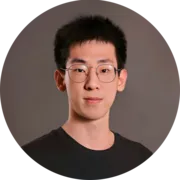
Weilong Chen is a researcher at the Multiscale Modeling of Fluid Materials group in the School of Mechanical Engineering at Technical University of Munich (TUM). He is affiliated with the Atomistic Modeling Center (AMC) and Munich Data Science Institute (MDSI), working on computational methods for fluid materials and molecular simulations. Education: MSc in Mathematics (2024, Chalmers University, Sweden) and BSc in Aerospace Engineering (2022, National University of Defense Technology, China) His research focuses on AI for Science , particularly Graph Neural Networks , Deep Generative Models (including Flow Matching/Diffusion), and Machine Learning Potentials for applications in Coarse-grained Molecular Dynamics and scalable simulations. Recent work involves developing frameworks like chemtrain-deploy for million-atom molecular dynamics and generative thermodynamics modeling. He actively collaborates on projects at the intersection of machine learning and physics-based modeling, with involvement in workshops and team events. Weilong Chen is available for master's thesis supervision and can be contacted via email.
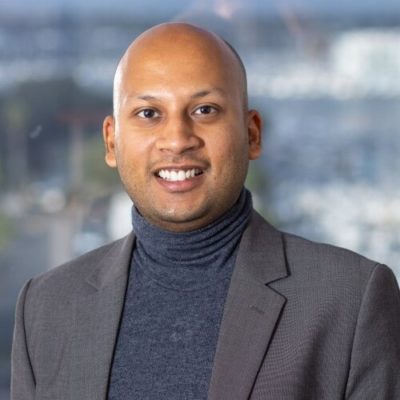
Yaohua Zang is a Professor at the Technical University of Munich , affiliated with the Department of Data-driven Materials Modeling . Their research bridges computational materials science, machine learning, and mathematical modeling, focusing on advanced methods for solving partial differential equations (PDEs), inverse problems, and optimal control in complex systems. Research Interests include: Physics-informed neural operators for PDEs Stochastic generative modeling for materials design Optimal control in robotics and dynamic systems Bayesian inference and uncertainty quantification High-dimensional numerical analysis Adversarial and weak formulation-based neural networks Recent work highlights physics-aware neural operators (DGenNO), weak adversarial networks for inverse problems, and applications in elastography and robotic assembly. Their scientific contributions span PDEs, materials science, and computational control. Labs & Teams : Part of the Chair of Data-driven Materials Modeling, located in Garching b. München, Germany.
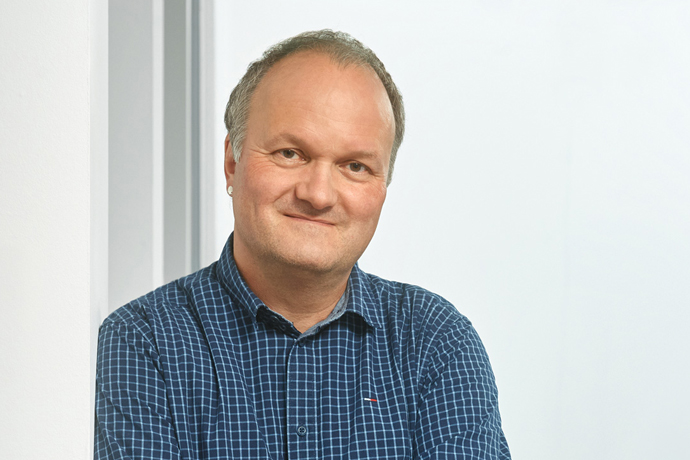
Claus Wimmer is a researcher at the Chair of Thermodynamics within the Faculty of Mechanical Engineering at the Technical University of Munich (TUM), holding the position of Researcher. His work bridges mechanical engineering principles with clinical medicine, specifically focusing on orthopedic applications through interdisciplinary collaboration with medical institutions. His primary research interests include: Artificial Intelligence in Medical Imaging and Diagnosis Orthopedic Surgery and Arthroplasty Optimization Bone Tumor Classification and Analysis Wearable Sensor Technology for Gait Assessment Machine Learning for Surgical Outcome Prediction Digital Health Implementation in Clinical Settings Analysis of Wimmer's recent publications (2024-2025) reveals a concentrated research trajectory in developing AI-driven solutions for orthopedic challenges. Key trends include deep learning applications for bone tumor segmentation in radiological images, predictive modeling of arthroplasty failures using national registry data, and systematic evaluations of wearable technology for postoperative rehabilitation. His work consistently emphasizes practical clinical translation, with frequent collaborations leveraging German healthcare datasets and addressing real-world implementation barriers in medical AI. No scientific awards were documented in the available information. Details regarding student supervision, research grants, laboratory infrastructure, or collaborative research teams were not provided in the source material, though his publication patterns suggest active engagement with clinical partners in orthopedic departments and medical technology development.
Fabian David Schmidt is a Research Associate and Doctoral Student at the CAIDAS Chair for NLP at Julius-Maximilians-Universität Würzburg. He works on multilingual representation learning and sample-efficient cross-lingual transfer, co-advised by Prof. Dr. Goran Glavaš (University of Würzburg) and Ivan Vulić (University of Cambridge). Research Interests: His work focuses on cross-lingual transfer methods, low-resource NLP, and robust knowledge editing in LLMs. He also explores vision-language benchmarks, process mining, and semantic encoders for information retrieval. Key areas include Robust Cross-Lingual Transfer Sample-Efficient Training Vision-Language Integration LLM Evaluation Publication Trends: Fabian's recent publications emphasize multilingual and cross-lingual NLP advancements, including sliced fine-tuning for NER, model averaging for robustness, and domain adaptation. His 2025 work extends into vision-language tasks and LLM generalization across cultures. He also contributes to spoken language understanding benchmarks. Labs & Teams: Affiliated with the WüNLP group and the CAIDAS Chair at the University of Würzburg, collaborating with international researchers on cross-lingual NLP and LLM optimization.
Dr. Petra Bevandic is a researcher at the Faculty of Engineering at Universität Bielefeld within the Machine Learning Group . Her work spans key areas in computer vision and machine learning. Primary Affiliation: Faculty of Engineering, Machine Learning Group, Universität Bielefeld Research Interests: Specializes in semantic segmentation and anomaly detection Focus on open-set recognition and domain adaptation Active in diffusion models and garment reconstruction Scientific Contributions: Pioneering work on virtual try-on/try-off systems Developing robust methods for out-of-distribution detection Advancing multi-domain image segmentation techniques
Jonas Geiping is a Professor at the ELLIS Institute Tübingen, leading the Safety- and Efficiency- aligned Learning research group. He has previously worked at the University of Maryland, University of Siegen, and University of Münster. His research focuses on safety and efficiency in machine learning, exploring data poisoning principles, watermarking for generative models, privacy in federated learning, and adversarial attacks against large language models. He also investigates how to make AI systems more efficient through weight averaging, recursive computation, and computational constraint analysis. His recent work includes test-time computation scaling using recurrent depth approaches, adversarial attacks on LLMs beyond jailbreaking, and zero-shot detection of machine-generated text through contrasting LLMs (Binoculars method). He has contributed to arithmetic capabilities in transformers with positional embeddings and scalable LLM training frameworks like AxoNN. His research addresses critical questions about the intersection of safety and efficiency in AI systems: Can models reason well without sacrificing safety? How do computational constraints affect safety guarantees? Can systems be designed where intelligence and safety reinforce each other?
Anna Midlenko serves as an Instructor in the Department of Medicine at Nazarbayev University School of Medicine, bringing extensive clinical expertise in surgical oncology since joining in 2017. Her work bridges clinical practice and academic research in cancer treatment. Her educational foundation includes: Doctor of Medicine, Ulyanovsk State University, Russia (with honors) Residency in General Surgery (2007-2009) Internship in Surgical Oncology (2009-2010) Ph.D. in Surgical Oncology, Bashkir State Medical University, Ufa, Russia (2012) Dr. Midlenko's research centers on breast cancer biology and treatment innovations, with specific focus on genetic mechanisms, early detection methodologies, elderly patient care protocols, and oncoplastic surgical techniques. She actively develops AI-driven diagnostic tools using thermal imaging to improve accessibility of breast cancer screening. Her recent publications (2023-2024) reveal two dominant research trajectories: computational approaches applying physics-informed neural networks and deep learning to thermography-based detection, and population-level studies examining breast cancer epidemiology and genetic biomarkers within Kazakhstan's healthcare system. As Co-Principal Investigator for the colorectal cancer biomarker project (2019-2020), she contributes to translational research while mentoring through clinical teaching workshops including the University of Pittsburgh Master Class. Her conference participation spans oncology congresses in Salzburg and Shanghai, focusing on gastrointestinal cancers and breast pathology diagnostics.
Ludwig Lautenbacher is a researcher at the Chair for Computational Mass Spectrometry at Technische Universität München (TUM). He contributes to projects democratizing machine learning (ML) applications in proteomics research. University: Technische Universität München Academic Rank: Researcher Email: ludwig.lautenbacher@tum.de Research Interests: Ludwig focuses on integrating machine learning with proteomics, emphasizing accessibility, interoperability, and reproducibility of ML models. His work addresses computational challenges in predicting peptide properties, fragment intensities, and retention times, while developing open-source resources like Koina and ProteomicsDB . Recent Publications (2021–2024) demonstrate expertise in: Temporal proteomics for drug mechanism analysis Deep learning for TMT-labeled peptide identification Fragment ion intensity prediction Open-source platform development Mass spectrometry data interpretation Collaborative software integration (Skyline, EncyclopeDIA, FragPipe) Laboratory Affiliation: Works in the research group of Prof. Dr. Mathias Wilhelm at TUM, contributing to computational mass spectrometry advancements.
Mayank Kejriwal is a Research Assistant Professor in the Department of Industrial and Systems Engineering at the University of Southern California (USC) and a Research Lead at the USC Information Sciences Institute (ISI). His work focuses on applying AI technologies for social good, particularly through knowledge graphs and neuro-symbolic AI. Education: PhD in Computer Science, University of Texas at Austin Research Interests: Dr. Kejriwal's primary research is in knowledge graphs (KG), neuro-symbolic AI, and complex systems. He explores how AI can address real-world issues such as human trafficking, crisis response, and healthcare. His work bridges theory and application, combining symbolic reasoning with modern machine learning techniques. He is also active in computational social science, network science, and AI ethics, with a strong emphasis on human-centered computing. Scientific Awards: USC Graduate Student Mentorship Award (2021) AAAS Early Career Award for Public Engagement with Science Finalist (2021) Yahoo! Faculty Research Engagement Program Recipient (2019) Copper Black Award for Creative Achievement, Mensa Foundation (2019) Key Scientific Challenge Award, Allen Institute for AI (2018) International Best Dissertation Award, Semantic Web Science Association (2017) Grants & Funding: His research has been funded by DARPA, corporate sponsors, and philanthropic organizations. He has led multiple projects under the MEMEX and other federal programs aimed at AI for social impact. Teaching & Mentorship: He teaches courses such as ISE 540: Text Analytics and ISE 599: Applied Predictive Analytics. He has received the USC Graduate Student Mentorship Award for his dedication to student development.
Johannes Schmid, M.Sc., is a Research Associate at the Chair of Vibroacoustics of Vehicles and Machines at the Technical University of Munich . His work focuses on integrating machine learning with computational acoustics, particularly in physics-informed deep learning and uncertainty quantification for vibroacoustic systems. Research Interests Physics-informed deep learning for acoustic modeling Data-driven surrogate modeling for dynamic systems Uncertainty quantification in industrial applications Stochastic Finite Element Methods Interactive acoustics apps for education Publications Schmid has authored/co-authored over 15 publications in computational acoustics, with recent work on neural networks for boundary integral methods, metamaterial design, and hybrid machine learning techniques. His research spans automotive applications, noise control, and educational tools. Laboratory Affiliation He is affiliated with the Chair of Vibroacoustics of Vehicles and Machines , contributing to projects on vehicle acoustics, fluid-structure interaction, and deep learning applications in engineering.
Jörn Hees is a Professor at the German Research Center for Artificial Intelligence (DFKI), affiliated with the Smart Data & Knowledge Services department. His work bridges deep learning, linked data, and knowledge graphs, with projects like TreeSatAI (AI for environmental monitoring) and DeFuseNN (deep network fusion). Research Interests : Deep learning, machine learning, data mining, knowledge graphs, semantic web, linked data, and association modeling. Projects : TreeSatAI (remote sensing AI), MInD (machine intelligence for digital transformation), DeFuseNN (neural network fusion), MOM (multimedia opinion mining). Recent publications focus on outlier detection for tabular data (Fin-Fed-OD, RECol), super-resolution techniques, and transformer-based models. He actively develops open-source tools like the RDFLib Python library and Graph Pattern Learner for SPARQL query generation. No scientific awards are explicitly mentioned in the available data.
Chien-Yu Chen is a Professor of Biomechatronics Engineering at National Taiwan University, where he has been on faculty since 2005, progressing from Assistant Professor to Associate Professor and currently serving as Professor. His research integrates computational approaches with biological systems, focusing on bioinformatics, genomics, and machine learning applications in medicine. Dr. Chen's educational background includes: PhD in Computer Science and Information Engineering from National Taiwan University (1999-2003) MS in Electrical Engineering from Stanford University (1996-1998) BS in Electrical Engineering from National Taiwan University (1992-1996) His research interests span multiple interdisciplinary domains at the intersection of computation and biology. Dr. Chen has made significant contributions to bioinformatics methodology development , particularly in genomic data analysis, variant interpretation, and integration of multi-omics data. His work frequently applies machine learning and deep learning approaches to solve challenging problems in genomics and precision medicine. A substantial portion of his research focuses on cancer genomics , particularly acute myeloid leukemia, as well as immunogenetics including HLA and KIR gene complex analysis. He has also contributed to population genomics with studies focused on the Taiwanese population, and to reproductive medicine through mitochondrial DNA research. Analysis of Dr. Chen's recent publications (2023-2024) reveals a strong focus on advancing computational methods for genomic analysis. His work increasingly incorporates deep learning techniques, including BERT models and variational autoencoders, to tackle complex biological questions. There's a clear emphasis on translational research with medical applications, particularly in cancer diagnostics and risk stratification, immunogenetics, and population-specific genomic medicine. His collaborative work spans multiple institutions and reflects an interdisciplinary approach that bridges computer science, engineering, and clinical medicine. Dr. Chen has been actively involved in mentoring students and leading research projects, though specific details about advisees are not provided in the available information. His research has been supported by various grants that enable large-scale genomic studies and methodological development in computational biology. His work appears to be conducted within a collaborative research environment that likely includes bioinformatics specialists, clinicians, and laboratory scientists, though specific lab or team names are not mentioned in the available information.
Sahar Ahmad is a Research Instructor in the Department of Radiology at the University of North Carolina at Chapel Hill School of Medicine, holding this position since June 2022 after serving as a Postdoctoral Research Associate at the same institution from July 2017 to May 2022. She earned her Ph.D. from the National University of Sciences and Technology in Islamabad, Pakistan, between 2012 and 2016. Dr. Ahmad specializes in medical imaging with expertise in neuroimaging , computational anatomy , and machine learning applications for infant brain development. Her research focuses on developing advanced image processing techniques including super-resolution, deformable registration, and deep learning models for analyzing pediatric MRI data, significantly contributing to understanding early brain growth and structural changes. Analysis of her 14 publications (2018-2025) reveals consistent innovation in computational neuroimaging, particularly in infant brain MRI analysis. Her work spans atlas construction , longitudinal brain development modeling , and GAN-based image synthesis , with high-impact contributions in journals like Nature Communications and NeuroImage. Recent publications demonstrate increasing sophistication in multimodal brain mapping and developmental trajectory prediction. Dr. Ahmad actively contributes to scientific discourse through peer review for journals including Nature Communications, Scientific Data, and PLOS One, though no specific awards are documented in available records. She maintains active collaboration within UNC Chapel Hill's radiology research ecosystem, particularly in projects involving infant brain imaging and computational tool development, though specific lab affiliations or grant details aren't explicitly stated in the source material.
Sebastian Möller serves as University Professor at Technical University of Berlin's Faculty of Electrical Engineering and Computer Science and leads the Speech and Language Technology research department at DFKI since 2017. Previously, he held leadership roles as Pro-Dean for Research (2015-2017) and Dean (2017-2019) of his faculty, while maintaining adjunct positions at University of Technology Sydney since 2018 and previously at University of Canberra. His academic journey includes: Electrical Engineering studies at Ruhr University Bochum, University of Orléans, and University of Bologna Ph.D. (1999) on speech quality assessment at Ruhr University Bochum Habilitation (2004) on telephone-based speech dialog system quality Möller's research spans speech/text processing, Quality of Experience modeling, and usability engineering with significant applications in virtual reality and security. His work consistently bridges theoretical models with practical telecommunication systems, emphasizing user-centered evaluation methodologies. Recent 2025 publications reveal three key research trajectories: ethical challenges in medical AI (fairness considerations), audio deepfake security (SSL model analysis), and explainable AI systems (natural language explanation generation), demonstrating his leadership at the intersection of speech technology, security, and AI ethics. His distinguished recognition includes: GEERS-Preis (1998) for infant cry analysis in hearing impairment detection ITG-Preis des VDE (2001) and Johann-Philipp-Reis-Preis (2009) Lothar-Cremer Prize (2003) and Heisenberg Fellowship (2005) As active standardization leader in ITU-T since 1997 and former ISCA President (2021-2023), Möller has shaped international research agendas while securing continuous funding through DFG and institutional grants. His DFKI laboratory pioneers speech technology evaluation frameworks with strong industry collaboration.
Prof. Dr. Sascha Brune is a leading geodynamic modeler at the GFZ German Research Centre for Geosciences and Professor at the University of Potsdam . As head of the Geodynamic Modelling Section since 2019, he integrates advanced computational models with field observations to study continental rifting, CO₂ degassing, and their links to climate change. His ERC Consolidator Grant-funded EMERGE project combines drone-based CO₂ flux measurements and global rift data spanning 540 million years. Education: Physics, Humboldt University Berlin, 2002–2006 Diploma in Biophysics Research Focus: Lithosphere Dynamics Rift Systems and Natural Hazards Deep Carbon Cycle Natural Hydrogen Exploration Mantle-Climate Coupling Brune's recent publications reveal a trend in tectonic CO₂ emissions , rifting processes , and natural hydrogen formation through rift-inversion systems. His interdisciplinary approach bridges geodynamics , micrometeorology , and paleoclimatology . Scientific Awards: ERC Consolidator Grant (2023) Key Projects: EMERGE (ERC, 2023–2028) TALENTS Doctoral Network (Horizon Europe, 2024–2028) Mantle Plume Interaction with European Lithosphere (Chinese Scientific Council, 2022–2026)