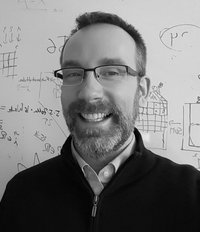
Prof. Dr.-Ing. Jürgen Brauer is a professor at the Kempten University of Applied Sciences , holding positions in both the Faculty of Computer Science and Faculty of Electrical Engineering . He chairs the AI and Computer Vision and Driver Assistance Systems programs for Master’s students. His research spans Computer Vision, Machine Learning, Robotics, Deep Learning , and Sensor Data Processing , with a focus on applications in autonomous systems and medical imaging. Education : Doctoral Thesis (2014) at Karlsruhe Institute of Technology (KIT). Recent Research Trends : His work emphasizes unsupervised representation learning, addressing objective function mismatches in pretext-target task relationships, and advancing generative models for 3D human pose estimation. Publications : He has contributed to journals like Neural Computing and Applications and conferences such as IEEE CVW , ICMLA , and RoboCup , often in collaboration with industry partners like AGCO Fendt and academic institutions. Scientific Awards : Best Paper Award at ACM ARTEMIS 2010. Advising : Supervised over 40 theses (2016–2025), including topics in autonomous driving, reinforcement learning, and robotics. Collaborations : Partnered with Fraunhofer IOSB, DLR, Bosch, and others on projects involving sensor systems and industrial applications.
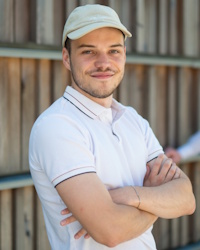
Antonin Königsfeld is a Scientific Researcher and doctoral candidate at the Institute for Technologies and Management of Digital Transformation (TMDT) at the University of Wuppertal, where he has been active since July 2024. He holds an M.Sc. in Industrial Engineering with a focus on Information Technology and Digitalization. His research centers on machine learning in industrial contexts, particularly explainable AI and data analysis for manufacturing processes. His work bridges the gap between theoretical AI models and practical industrial applications, such as arc welding and automated filling systems. The 2025 article he co-authored explores the application of generative adversarial networks in optimizing industrial filling systems, reflecting a trend toward AI-driven automation and intelligent process configuration in smart manufacturing environments. Scientific Awards: No scientific awards listed in the provided text. Advising and Grants: Antonin is currently a doctoral candidate and research assistant, indicating active mentorship under senior faculty at TMDT. While specific grants are not mentioned, his publication in Procedia CIRP suggests involvement in funded industrial AI research projects. Labs, Teams, and Research Groups: He is a member of the research team at the Institute for Technologies and Management of Digital Transformation (TMDT), University of Wuppertal, which focuses on digital transformation in industrial settings, integrating AI, data analytics, and engineering solutions.
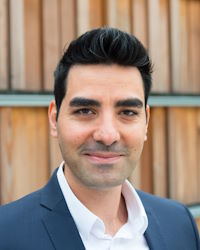
Dr.-Ing. Hasan Tercan is a Scientific Researcher and Head of the Research Field 'Industrial Deep Learning' at the Institute for Technologies and Management of Digital Transformation, University of Wuppertal, where he has been since December 2018. His work focuses on the development and application of machine learning and artificial intelligence methods in industrial environments, particularly in production quality assurance and intelligent process control. Education: PhD (Dr.-Ing.) in Computer Science, University of Wuppertal (2023) Master's in Computer Science, Technical University of Darmstadt (specialization: Database Systems and Data Mining) Research Assistant, Chair of Information Management in Mechanical Engineering, RWTH Aachen University His research interests lie at the intersection of machine learning and industrial applications. He specializes in transfer learning , lifelong learning , deep reinforcement learning , and predictive quality modeling in manufacturing. A key focus is bridging simulation and real-world data through simulation-to-reality approaches and enabling continuous model adaptation in dynamic production environments. His recent publications (2025) reflect a strong trend in applying advanced AI techniques—such as AttentiveGRUs, GANs, Decision Transformers, and deep reinforcement learning—to industrial challenges like radar-based object detection, job shop scheduling, robot end-effector control, and process configuration. These works demonstrate a consistent emphasis on deploying scalable, adaptive AI solutions in real-world industrial systems. Scientific Awards: Ph.D. Prize from the Friends and Alumni Association of the University of Wuppertal (FABU) Hasan Tercan leads the 'Industrial Deep Learning' research group, indicating active mentoring and project leadership. While specific grant details are not mentioned, his multiple 2025 publications in high-impact journals (e.g., Procedia CIRP, AI, Autonomous Agents and Multi-Agent Systems) suggest involvement in funded research projects. He collaborates closely with Prof. Dr. Meisen and other researchers, contributing to a robust research ecosystem in industrial AI. He is affiliated with the 'Industrial Deep Learning' research group, which focuses on advancing deep learning methodologies tailored for industrial transformation, including intelligent planning, control, and quality assurance in manufacturing and assembly processes.
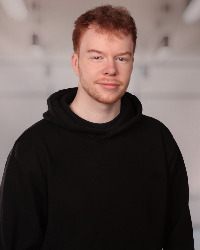
Jan Voets is a Scientific Researcher and doctoral candidate at the Institute for Technologies and Management of Digital Transformation (TMDT) at the University of Wuppertal, where he conducts research in machine learning and deep learning with applications in industrial contexts. He holds an M.Sc. in Industrial Engineering with a focus on information technology and digitization. His research interests include: Time Series Classification Deep Learning and Machine Learning Explainable AI Computer Vision Generative and Augmentative Techniques for Data Enhancement Global Predictive Modeling for Environmental Events His work bridges advanced AI methodologies with real-world industrial and environmental challenges, particularly in improving flood prediction systems using deep learning. While no publications or awards are listed in the current profile, his research trajectory emphasizes practical, data-driven solutions in digital transformation. He has been continuously affiliated with the University of Wuppertal as a research assistant and now as a doctoral researcher, indicating strong institutional engagement. Jan Voets advises no students at this time and has not received any mentioned scientific awards. He is part of the TMDT research team, contributing to projects at the intersection of AI and industrial digitization.
Dr. Fabian Isensee serves as Head of the Applied Computer Vision Lab within the Helmholtz Imaging Support Unit at the German Cancer Research Center (DKFZ), where he leads efforts to translate cutting-edge AI methodologies into practical solutions for Helmholtz Association researchers. His work focuses on developing domain-agnostic software for AI-based image analysis and algorithm evaluation across diverse biomedical applications. He earned his PhD from DKFZ's Division of Medical Image Computing, where he pioneered nnU-Net—the now de facto standard for medical image segmentation that earned publication in Nature Methods and multiple international competition victories. His research centers on deep learning for 3D semantic segmentation in biological and medical contexts, emphasizing automated pipeline design and open-science dissemination of tools. Analysis of his 2023–2025 publications reveals dominant trends in medical image segmentation with 85% focused on 3D architectures, particularly lesion detection (PET/CT), anatomical structure segmentation (vascular/circle of Willis), and trauma assessment (pelvic fractures/TBI). Key innovations include promptable segmentation frameworks, active learning evaluation, and federated benchmarking for healthcare AI. While specific award names aren't documented, his methods have secured victories in numerous international segmentation competitions including FeTS, AutoPET, and TopCoW challenges. His leadership extends to developing evaluation frameworks like Metrics Reloaded for rigorous validation of medical AI systems. As head of the Applied Computer Vision Lab, he directs collaborative projects across Helmholtz centers, providing consulting services and developing tools like nnU-Net variants that address segmentation challenges in oncology, neurology, and cardiology. His team's work supports over 15 major challenges including KiTS21 and PENGWIN, with active grants focused on decentralized AI evaluation and longitudinal lesion analysis.
Jiawei Zhang is an active researcher with primary affiliations at institutions like the University of California, Davis and other universities in China and the USA. His work spans Computer Science , Artificial Intelligence , and Biomedical Engineering , focusing on applications in image processing , autonomous vehicles , and remote sensing . Research interests include deep learning , graph neural networks , 3D reconstruction , and medical image analysis . Recent publications emphasize transformer models , lightweight AI frameworks , and multimodal data fusion . His work has been published in prestigious venues such as IEEE Transactions on Biomedical Engineering , CVPR , and IEEE Internet of Things Journal . Collaborations include researchers from institutions in China, the US, and Europe. Key trends in his 2024-2025 articles involve industrial anomaly detection , liver tumor segmentation , autonomous vehicle control , and AI-driven sensor networks . Methodologies often integrate attention mechanisms , generative models , and real-time optimization .
Jongse Park is currently an Associate Professor at the School of Computing (SoC), KAIST , and a core member of the Computer Architecture and Systems Laboratory (CASYS) . He holds co-affiliations with the School of Electrical Engineering , Graduate School of AI Semiconductor , Graduate School of System Architect , and Department of Semiconductor System Engineering at KAIST. Since 2025, he has been serving as a Visiting Associate Professor at Stanford University's Pervasive Parallelism Lab within the EECS department. PhD in Computer Science, Georgia Institute of Technology (2018), advised by Prof. Hadi Esmaeilzadeh MS in Computer Science, KAIST (2012), advised by Prof. Seungryoul Maeng BS in Computer Science and Engineering, Sogang University (2010) His research focuses on accelerating AI serving systems , enabling on-device AI , processing-in-memory (PIM) architectures , and flexible AI compiler frameworks . Recent work explores transformer optimization, heterogeneous AI semiconductors, and efficient video-language processing. Recent publications include MICRO 2025 work on PIM for LLMs, VLDB 2025 research on video-language engines, and ISCA 2025 contributions to LLM quantization. His team's projects have received funding from the K-Cloud Project , NRF Young Researcher Program , and IITP Core Technology Development grants . Teaching Innovation Award Excellence Prize, KAIST (2025) Samsung Humantech Paper Award Gold Prize (2025) IEEE Senior Member (2024) Best Paper & Distinguished Artifact Awards at IISWC (2024) and ISCA (2024) He actively supervises PhD and MS students in AI systems research and serves on program committees for top conferences like ASPLOS , ISCA , and MICRO , including organizing roles as Sponsorship Chair for MICRO 2025.
Carlos Zednik is an Assistant Professor for Philosophy of Artificial Intelligence at Eindhoven University of Technology. He holds a PhD from Indiana University Bloomington (2011), an MA in Philosophy of Mind from the University of Warwick, and a BA in Computer Science and Philosophy from Cornell University. Areas of Specialization: Philosophy of Mind, Cognitive Science, Artificial Intelligence Current Projects: alignAI (Horizon Europe MSCA), ROBUST (NWO Long Term Program), Cognitive Models as Surrogate Models for XAI (EAISI) His research explores metascientific questions about explanation, reduction, modeling, and mechanistic analysis in cognitive science, with a focus on neuroscience and artificial intelligence. He investigates how explainable AI systems can address the black box problem while promoting trustworthy technologies. Key publication trends include: 1) Explainable AI applications in healthcare and autonomous systems; 2) Philosophical analysis of mechanistic explanations; 3) Integration of cognitive modeling with machine learning; 4) Ethical implications of AI transparency. Scientific Awards: StandICT Fellowship (2023) for ISO/IEC TS 6254 standardization Leadership: Director of Eindhoven Center for Philosophy of AI Editorial: Associate Editor for Philosophy and the Mind Sciences As an educator, Zednik teaches courses on AI ethics, decision theory, and philosophy of mind at Eindhoven University. He supervises PhD students working on language model epistemology, intelligent machine ethics, and cognitive modeling applications in AI. He leads international collaborations through the DFG-funded GeSiMEx project (2019-2022) and participates in ISO/IEC SC42 standardization efforts. His lab integrates philosophical analysis with technical AI research, particularly in self-driving car applications and deep learning alignment.
Professor Heike Trautmann is a distinguished academic at Paderborn University, where she serves as Professor of Machine Learning and Optimisation in the Department of Computer Science within the Faculty of Computer Science, Electrical Engineering and Mathematics. Since April 1, 2025, she also holds the position of Vice President for International Relations at the university. Her academic career spans prestigious institutions including the University of Münster, where she was Professor of Data Science: Statistics and Optimization from 2013 to 2023, and the University of Twente, where she serves as Guest Professor of Data Science until February 2026. Dr. Trautmann's educational background includes: University Studies in Statistics (Diploma), TU Dortmund, Germany (1997-2000) University Studies in Economic Mathematics (First Diploma), TU Dortmund, Germany (1996-1998) PhD student at Graduate School of Production Engineering and Logistics, TU Dortmund University (2002-2004) Habilitation in Statistics, TU Dortmund University, Germany (April 15, 2013) Professor Trautmann's research program centers on cutting-edge topics in artificial intelligence and optimization. Her primary research interests include (Trustworthy) Artificial Intelligence, Machine Learning, Data Science, Automated Algorithm Selection and Configuration, Exploratory Landscape Analysis, (Multiobjective) Evolutionary Optimisation, and Data Stream Mining. She leads the Machine Learning and Optimisation research group at Paderborn University, which develops innovative approaches for understanding and improving optimization algorithms through landscape analysis and automated configuration techniques. Her work bridges theoretical foundations with practical applications, particularly in the domains of trustworthy AI and algorithm selection. Her extensive publication record reveals a clear trajectory toward increasingly sophisticated integration of deep learning with traditional optimization techniques. Recent work demonstrates a strong focus on multi-objective optimization problems, exploratory landscape analysis using deep learning methods, and the development of automated algorithm configuration systems. A notable trend is the application of transformer architectures to landscape analysis, as seen in her Deep-ELA work, which represents a significant innovation in the field. Her research consistently addresses the challenge of characterizing complex optimization problems to enable better algorithm selection and configuration. Professor Trautmann has received notable recognition for her scholarly contributions, including: GECCO Best Paper Award for "Deep reinforcement learning for instance-specific algorithm configuration" As an academic leader, Professor Trautmann has secured significant research funding for projects including "Towards Robustness of Disinformation Campaign Detection Algorithms in Open Online Media in the Context of Trustworthy AI" and "Automated rail transport as a backbone for sustainable, networked mobility in rural areas." She actively mentors students through her teaching of advanced courses in machine learning, optimization, and data science. Her industry connections, stemming from her previous work as an Analytics Consultant at Roland Berger Strategy Consulting, enable her to bridge academic research with practical applications. Professor Trautmann leads the Machine Learning and Optimisation research group at Paderborn University, which collaborates extensively with international partners. She is a key supporter of the Confederation of Laboratories for Artificial Intelligence Research in Europe (CLAIRE) and a member of the European Research Center for Information Systems (ERCIS). Her group maintains strong connections with research centers across Europe, particularly through her involvement with the Transregional Collaborative Research Centre 318.
Marie Bexte is a Research Assistant at the FernUniversität in Hagen's Computational Linguistics professorship since April 2022. She previously worked at the Language Technology Lab at the University of Duisburg-Essen (2021–2022). Holding an MSc in Applied Cognitive and Media Sciences with a focus on Cognition and Artificial Intelligence (2021), and a BSc in the same field (2018), her work centers on automated content scoring and image-based task analysis. Education: MSc Applied Cognitive and Media Science (Cognition and Artificial Intelligence), 2021 BSc Applied Cognitive and Media Science, 2018 Her research focuses on developing and evaluating methods for automated assessment in educational contexts, particularly examining text similarity approaches, zero-shot learning for content scoring, and visio-linguistic model sensitivity to color naming. She co-developed the LeSpell spelling error benchmark and investigates confidence-based grading systems to reduce manual effort. Key publication trends include: Advancing BERT/S-BERT for educational text scoring Multimodal analysis of image-text interactions Argument mining and prompt sensitivity in writing Spelling error detection in learner language Cold-start problem solutions using LLM-generated data She participates in major NLP/educational application workshops (BEA 2022–2025), LREC-COLING, and ACL conferences. Her work bridges computational linguistics with practical classroom applications through systematic benchmarking and model evaluation.
Lukas Heinrich is an Assistant Professor of Data Science in Physics at the Technical University of Munich (TUM), affiliated with the Department of Physics within the TUM School of Natural Sciences. His position specifically focuses on the intersection of data science methodologies and physics research, particularly in high-energy physics contexts. Based at the campus in Garching near Munich, he contributes to both research and teaching activities at one of Europe's leading technical universities. Professor Heinrich's research primarily centers on particle physics, with a strong emphasis on data analysis techniques for experiments conducted at the Large Hadron Collider (LHC), particularly using the ATLAS detector. His work spans Higgs boson physics, searches for new physics beyond the Standard Model, and the development of advanced machine learning methods for particle physics applications. The research fingerprint shows strong engagement with ATLAS Detector technologies, proton-proton collisions, Standard Model physics, lepton physics, transverse momentum analysis, Higgs boson studies, and Large Hadron Collider operations. His recent publications demonstrate a clear trend toward integrating sophisticated data science approaches with traditional particle physics analysis. The 2025 publications particularly highlight work on neural simulation-based inference for parameter estimation, searches for exotic Higgs boson decays, and combination of search channels for various physics phenomena. This reflects a growing emphasis on machine learning and advanced statistical methods to extract maximum information from complex particle collision data. Professor Heinrich is actively involved in teaching, with courses including Data Science Methods, Data Science Tools, Machine Learning and Deep Learning in Physics, and Experimental Physics. His teaching appointments for the 2024/25 and 2025 summer terms show a strong commitment to educating the next generation of physicists in modern data analysis techniques. He also participates in seminars on Physics of Strong Interaction, demonstrating breadth in his teaching responsibilities beyond pure data science topics. Through his Assistant Professorship of Data Science in Physics, Heinrich leads efforts to bridge traditional physics research with cutting-edge computational approaches, contributing significantly to both the academic curriculum and research output of the TUM physics department.
Dr. Andreas Kretschmer is a scientific collaborator in the Algebraic Geometry group led by Prof. Gavril Farkas at the Institute of Mathematics, Humboldt University of Berlin, within the Faculty of Mathematics and Natural Sciences. Previously, he spent five months as a member of the Nonlinear Algebra group at the Max Planck Institute for Mathematics in the Sciences (MPI MiS) in Leipzig. He completed his PhD in September 2024 at Otto von Guericke University Magdeburg (OvGU) under the supervision of Professors Benjamin Nill and Thomas Kahle, where he was part of the MathCoRe research training group. His academic journey includes a master's degree from Bonn University with Georg Oberdieck and a bachelor's degree from Friedrich-Alexander University Erlangen-Nuremberg (FAU). Dr. Kretschmer's research focuses on the intersection of algebraic geometry, commutative algebra, and combinatorics. His work addresses fundamental problems in enumerative geometry, particularly concerning cubic hypersurfaces, as well as the study of lattice polytopes through their local h*-polynomials. He has made significant contributions to algebraic statistics, exploring generalizations of Gaussian graphical models. His research demonstrates a strong connection between theoretical mathematics and practical applications, bridging abstract algebraic concepts with concrete combinatorial structures. His publication record shows a consistent trajectory of high-quality research in top mathematics journals, with a clear focus on the structural properties of algebraic varieties and their combinatorial representations. Recent work demonstrates increasing sophistication in handling complex algebraic structures while maintaining connections to geometric intuition. Dr. Kretschmer is actively engaged in the mathematical community, regularly presenting his work at international conferences including SIAM Conference on Applied Algebraic Geometry, MEGA conferences, and specialized workshops at institutions like Oberwolfach. He has also supervised research interns through the RISE Germany program of the DAAD, demonstrating commitment to mentoring the next generation of mathematicians. His current work within the Algebraic Geometry group at HU Berlin continues to explore deep connections between algebraic structures and geometric phenomena, with particular emphasis on the combinatorial aspects that underlie complex algebraic varieties.
Xavier Maldague is a Professor in the Department of Electrical and Computer Engineering at Université Laval's Faculty of Science and Engineering, with over 35 years of research in infrared thermography and non-destructive testing methodologies. His work spans theoretical algorithm development to practical industrial applications across aerospace, cultural heritage, medical diagnostics, and infrastructure inspection domains. Dr. Maldague's research interests focus on advanced thermal imaging techniques, sensor fusion systems, and machine learning applications for defect detection and material characterization. His work has evolved from fundamental thermographic algorithms in the 1990s to current research integrating deep learning, drone-based platforms, and multi-sensor fusion systems for industrial inspection. Key areas include pulsed thermography, line-scan techniques, coplanar capacitive sensing, and hyperspectral infrared imaging. Analysis of his 15 most recent publications reveals a strong emphasis on deep learning integration with traditional thermographic methods, particularly for defect detection in composite materials, cultural heritage objects, and infrastructure components. His recent work shows increasing focus on multi-modal data fusion, drone-enabled inspection platforms, and synthetic data generation for training machine learning models. The research spans both theoretical algorithm development and practical implementation across diverse application domains. Dr. Maldague has maintained a highly productive research trajectory with consistent publication output, particularly in high-impact journals such as Sensors, IEEE Access, and Remote Sensing. His work demonstrates strong international collaboration, with numerous co-authors from European institutions alongside his primary Canadian research team. His research group appears to focus on developing practical inspection systems that bridge theoretical image processing with real-world industrial applications, with recent emphasis on automation, deep learning integration, and multi-sensor approaches to enhance detection capabilities and reliability in non-destructive testing scenarios.
Marius Lindauer is a Professor of Machine Learning at the Department of Artificial Intelligence , Leibniz University Hannover , and Deputy Head of the Institute since 2025. Previously, he served as Spokesperson of Computer Science Professors (2023-2025) and Head of the Institute (2022-2024). PhD (Dr. rer. nat, 2010-2015), Master (2008-2010), and Bachelor (2005-2008) in Computer Science from University of Potsdam His research focuses on democratizing AI through AutoML innovations, including: Green AutoML for sustainable deep learning Human-Centered AutoML for user-centric optimization Dynamic Algorithm Configuration in reinforcement learning Generalization techniques for production and health applications Recent publications show strong multi-objective optimization trends across medical imaging , protein design , and time series forecasting , with 15+ papers in 2024-2025 at venues like NeurIPS, AAAI, and IEEE TPAMI. Key scientific awards : ERC Starting Grant (2022), NeurIPS BBO-Challenge winner (2020), multiple AutoML/ML competition victories Advisory role in 140+ publications and leadership of LUHAI Institute
Michael Riesener serves as Associate Professor at RWTH Aachen University and Managing Director of RWTH Innovation GmbH, while leading the Deep Tech Innovation research area and participating in the Rectorate Commission for Translation. His interdisciplinary work bridges academic research with industrial technology transfer in production systems and sustainable manufacturing. His research focuses on circular economy integration, factory planning automation, and sustainable business model innovation. Key interests include developing frameworks for circular production structures, scalable factory concepts for green hydrogen, and digital shadow applications for manufacturing reconfiguration. His work emphasizes data-driven approaches to reduce environmental impact while maintaining economic viability in global production networks. Recent publications (2024-2025) reveal strong trends in systematic literature reviews on circular production costs and structures, machine learning applications in quality control, and strategic frameworks for sustainable factory planning. His interdisciplinary approach connects engineering principles with environmental science and business strategy, particularly in electrolyzer manufacturing scaling and subscription-based sustainability models. Scientific Awards: No awards explicitly mentioned in source materials Advising and grants activities are not detailed in provided texts, though his leadership roles at RWTH Innovation GmbH suggest significant involvement in technology transfer initiatives and industry-academia collaboration projects. As Managing Director, he oversees funding mechanisms supporting deep tech commercialization, but specific grant awards or student supervision details remain undisclosed. Labs and Teams: He actively contributes to the Smart Logistics Cluster and Prolog-HCIC research group at RWTH Aachen, focusing on logistics optimization, digital factory planning, and circular production system development. These teams develop practical frameworks for scalable production systems and sustainable business models through close industry partnerships.