Lance Rips is a Professor in the Psychology Department at Northwestern University , Evanston, IL. His research focuses on cognitive psychology, particularly concepts, reasoning, and autobiographical memory. Academic Rank: Professor Institution: Northwestern University Department: Psychology Department Contact: ripslab@gmail.com , rips@northwestern.edu Research interests include: Deductive and inductive reasoning Concepts of objects/events over time Causal cognition Mathematical thinking (numbers, non-Euclidean geometry) Informal argumentation and survey methodology His lab investigates foundational questions in cognition, with recent work on conditional reasoning, object individuation, and developmental understanding of substances. Publications span journals like Cognitive Science , Psychological Science , and Cognition .
Sanjay Modgil is a Professor of Artificial Intelligence at King's College London's School of Informatics, specializing in argumentation theory, non-monotonic logic, and AI applications in medicine. He contributes to ethical AI research aligned with UN Sustainable Development Goals. Research Interests Argumentation Theory Non-monotonic Logic Normative Reasoning Agent Reasoning AI in Healthcare Human-AI Collaboration His recent publications focus on depth-bounded reasoning, ethical debates, and large language models. He leads EPSRC-funded projects like CONSULT and RESPECT, emphasizing responsible AI technologies and multimorbidity management systems.
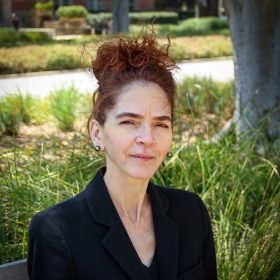
Sherrilyn Roush is a Professor in the Department of Philosophy at University of California, Los Angeles (UCLA) , with a PhD in Philosophy from Harvard University (1999). She holds dual B.S. and B.A. degrees with highest distinction from Pennsylvania State University (1988). Her work spans Epistemology , Formal Epistemology , Scientific Method , and Bayesian Reasoning . Harvard University, PhD in Philosophy (1999) University of California, Los Angeles, Department of Philosophy Research interests include the epistemic value of knowledge, probabilistic reasoning in legal contexts, and the distinction between knowledge and understanding. She has extensively analyzed the role of statistical evidence in judicial verdicts, simulation methods in science, and epistemic self-doubt through a Bayesian framework. Her publications cover topics like the epistemic superiority of experiments over simulations, epistemic injustice in testimonial contexts, and evolutionary stable strategies for knowledge. While she has not been explicitly linked to scientific awards or formal student mentoring in the provided texts, her work intersects with medical epistemology through collaborations on self-knowledge in illness .
Dr. Thomas Land is an Associate Professor of Philosophy at the University of Victoria, part of the Faculty of Humanities. He holds a BA equivalent from Heidelberg University and a PhD from the University of Chicago. His research focuses on Kantian philosophy, German idealism, early modern philosophy, and epistemology, with particular emphasis on Kant's theory of perception, self-consciousness as foundational to rationality, and innate concepts. He has held prior positions at Ryerson University and a postdoctoral fellowship at Corpus Christi College, Cambridge. His work critically engages with Kant's theoretical philosophy, including analyses of the Transcendental Deduction , concepts in perception, and the relationship between spontaneity and sensibility. Key publications include studies in the Canadian Journal of Philosophy , Journal for the History of Philosophy , and Kantian Review . Recent scholarship highlights debates on conceptualism/nonconceptualism, transparency of mental states, and Kant's methodology of faculty analysis. His articles often address foundational questions in epistemology and metaphysics, such as the role of apperception, spatial representation, and the structure of judgment. Dr. Land’s contributions are featured in edited volumes and ongoing research tracks, including discussions of Kant’s B Deduction and critiques of contemporary interpretations of Kantian spontaneity. He actively participates in academic discourse through peer-reviewed reviews and engagement with contemporary Kantian scholarship.
Jens Lemanski is an Associate Professor at the Philosophical Seminar of the University of Tübingen, with part-time roles as an Adjunct Professor at the University of Münster and a Researcher at Fernuniversität Hagen. His research spans Logic and Philosophy of Logic , Linguistic Communication , 19th Century German Philosophy , and Visualization in Mathematics . His work focuses on the historical and philosophical foundations of logic diagrams, including projects like Logic Diagrams in Kantianism (Fritz-Thyssen-Stiftung) and Gestures and Diagrams in Visual-Spatial Communications (DFG-priority programme). He has contributed extensively to understanding the evolution of logic from antiquity to modernity, emphasizing the role of diagrams in Euler-type systems , Byzantine logic , and Kantian thought . Lemanski co-edits Historia Logicae (College Publications) and serves as a Book Review Editor for History and Philosophy of Logic . His recent publications analyze the interplay between transcendental philosophy , formal logic , and AI-driven multimodal communication . He holds a PhD from Johannes Gutenberg University Mainz (2011) and contributes to conferences like Diagrammatic Representation and Inference (2024).
Alan Baker is a Professor of Philosophy at Swarthmore College, with affiliations in Philosophy and Cognitive Science. He holds a Ph.D. from Princeton University and has held positions globally, including at the University of Cambridge and Kyoto University. His research focuses on the intersection of philosophy of mathematics and science, particularly mathematical explanation and the enhanced indispensability argument. He has explored case studies like periodical cicadas' life cycles to argue for mathematical platonism. His work also addresses scientific methodology, complexity science, and the role of simplicity in theory choice. He has received a New Directions Fellowship from the Mellon Foundation. Baker teaches logic, philosophy of science, and philosophy of mind. Beyond academia, he is a U.S. Shogi champion and team captain, and has resided at the Whitehall Museum House to promote philosophy. Research interests include the metaphysics of mathematics, mathematical explanation in science, and the methodological use of experimentation in mathematics. Key contributions include co-authoring Indispensability (2023) and analyzing the explanatory role of prime numbers in cicada life cycles. His Mellon-funded work in 2008–09 investigated complexity science's conceptual foundations, focusing on emergence and network approaches. He critiques traditional views on a priori/a posteriori knowledge, as seen in his lecture Experimental Mathematics, Armchair Physics . Awards include the Mellon Fellowship, and his outreach spans international academic collaborations and public philosophy initiatives. He has advised no formal students listed here but has influenced through teaching and interdisciplinary projects. His work bridges philosophy with scientific practice, emphasizing the indispensability of mathematics to scientific understanding.
Lisa Shabel is an Associate Professor and Department Undergraduate Studies (DUS) member in the Department of Philosophy at The Ohio State University. Her research focuses on Kantian philosophy, the history of philosophy of mathematics, and the philosophy of mathematics. She is particularly noted for her work on Kant's Critique of Pure Reason and the foundations of mathematical cognition. Shabel holds a Ph.D. (1998) and M.A. (1994) in Philosophy from the University of Pennsylvania, as well as a B.A. in Mathematics from Dartmouth College (1987). Her interdisciplinary background bridges philosophy and mathematics, reflected in her scholarship on Kant's philosophy of mathematics and its implications for epistemology and metaphysics. Her research interests emphasize Kant's transcendental philosophy, the role of intuition in mathematical knowledge, and the historical development of mathematical concepts. She has contributed significantly to understanding Kant's 'symbolic construction' of mathematical concepts and the synthetic a priori nature of mathematics. Shabel has been honored with prestigious teaching awards, including the 2023 Rodica C. Botoman Award for Distinguished Undergraduate Teaching and Mentoring, the 2015 Ronald and Deborah Ratner Distinguished Teaching Award, and the 1998 Dean’s Award for Distinguished Teaching. These awards highlight her dedication to undergraduate education and mentorship. Her publications span edited volumes, journal articles, and monographs, including co-editing Kant: Studies on Mathematics in the Critical Philosophy (2015) and authoring Mathematics in Kant's Critical Philosophy (2003). Her work bridges philosophical analysis with historical scholarship, offering novel insights into Kant's mathematical epistemology.
Professor Peter Schroeder-Heister is a prominent faculty member at the University of Tuebingen, working within the Faculty of Science, Department of Computer Science at the Wilhelm-Schickard-Institute. He maintains an active research program focused on foundational aspects of logic and reasoning, particularly through his development of proof-theoretic semantics. Schroeder-Heister's research interests center on the proof-theoretic basis of inference, with special emphasis on systems of formal logic and general reasoning systems based on inference rules for atomic sentences. His work extends from proof theory toward interactive approaches like dialogical and game-theoretic semantics. He explores philosophical questions related to logic, the historical development of modern logic, and connections between cognitive science, meaning, and deduction. His research has significantly shaped contemporary understanding of logical consequence and the semantics of logical constants. His recent publications reveal consistent focus on proof identity, the intensional aspects of proofs, and the relationship between structural rules and logical validity. A notable trend across his work is the examination of how proof-theoretic approaches can provide foundations for logical constants beyond traditional model-theoretic semantics. His research shows increasing engagement with historical perspectives on logic, particularly through his editorial work on Karl Popper's logical writings, while maintaining rigorous technical development of proof-theoretic concepts. Schroeder-Heister has secured significant research funding through multiple collaborative projects, including the current DFG-funded project 'Being Logical: On Possible Ways to Expand our Understanding of Logicality' (2024-2027). Previous projects include 'Falsity and Refutations' (2018-2022), 'Beyond Logic - Hypothetical Reasoning' (2015-2019), and 'HYPOTHESES' (2012-2015), demonstrating sustained research productivity and international collaboration. His academic contributions extend to organizing major conferences and editing significant volumes in the field, including the proceedings of the conference celebrating 50 years of Dag Prawitz's 'Natural Deduction' and the first collection devoted to proof-theoretic semantics.
Rob Ely serves as Professor in the Department of Mathematics and Statistical Science within the College of Science at the University of Idaho. His academic career focuses on advancing mathematics education through research connecting historical mathematical developments with contemporary pedagogical practices, particularly in calculus and algebra instruction. His educational qualifications include a PhD in Curriculum and Instruction (2007) and an MA in Mathematics (2003) from the University of Wisconsin-Madison, complemented by a BA in History and Mathematics (2000) from the University of Northern Colorado. This interdisciplinary background informs his approach to mathematical cognition and curriculum design. Professor Ely's research centers on student reasoning in calculus and algebra, with emphasis on covariational reasoning, infinitesimal approaches to calculus, and the development of proof concepts in middle grades. He investigates how historical perspectives on mathematical concepts like infinitesimals can enhance modern teaching methods, while exploring playful and activity-based approaches to deepen conceptual understanding. His work consistently addresses challenges in student interpretation of graphs, functions, and mathematical arguments. Analysis of his 2018-2025 publications reveals three dominant research strands: (1) innovative calculus pedagogy using infinitesimals and accumulation concepts, (2) algebraic reasoning through scaling and covariation in K-12 contexts, and (3) historical foundations of calculus intersecting with student cognition. His recent editorial work on definite integrals and playful math activities demonstrates commitment to translating research into practical teaching strategies. No scientific awards were documented in the source materials. Information regarding student advising, research grants, or laboratory affiliations was not provided in the available texts, though his publication record suggests active mentorship in mathematics education research.
John Callanan is Reader in the History of Philosophy (equivalent to Associate Professor) in the Department of Philosophy at King's College London. His research focuses on Kant's critical philosophy and early modern thought, particularly epistemology and metaphysics. Education includes: D.Phil from University of Oxford (2004) M.Litt from University College Dublin (1999) Undergraduate degree from University College Dublin Research examines Kant's Critique of Pure Reason, his moral philosophy, and historical context within Enlightenment debates. Special interests include Kant's theories of reason, spontaneity of mind, methodological conservatism, and comparisons with philosophers like Mendelssohn and Strawson. Recent publications analyze Kant's views on suicide, animal cognition, and transcendental boundaries. His scholarly output demonstrates consistent focus on Kant's epistemology, ethics, and philosophical method. Publications explore Kant's responses to skepticism, nativism debates, and the acquisition of concepts. Teaching includes Kant's Epistemology & Metaphysics and Kant's Moral & Aesthetic Philosophy at undergraduate level, and graduate modules on Critique of Pure Reason and Kant's Ethics & Aesthetics. Supervises PhD students in early modern philosophy and Kant studies.
Heinz Steinbring is a Professor at the University of Duisburg-Essen, where he leads the Steinbring working group within the Research Group EInmaL. His academic career centers on mathematics education with a distinct epistemological perspective, focusing on primary school learning environments and teacher development. Research Focus: Steinbring investigates how visual materials, manipulatives, and mathematical signs function as epistemological tools in knowledge construction. His work emphasizes the interplay between social interaction and cognitive constraints in mathematical learning, particularly examining how students interpret visual representations and how teachers facilitate meaning-making through discourse. Key themes include the role of semiotic systems in transitioning from concrete to abstract thinking and the epistemological foundations of classroom communication. Publication Trends: Analysis of his 15 most recent publications (2011-2020) reveals consistent exploration of visual-semiotic dimensions in mathematics education. His research demonstrates evolving sophistication in analyzing classroom interactions, with increasing emphasis on stochastic concepts, frame-based interpretation models, and epistemological barriers in primary mathematics. The corpus shows strong continuity in theoretical frameworks while expanding empirical applications across diverse mathematical topics. Academic Leadership: As working group leader, Steinbring supervises doctoral fellow Katharina Mros and maintains active research collaboration within the EInmaL group. His email contact (heinz.steinbring@uni-due.de) and office location (WSC-O-2.43) indicate ongoing institutional engagement at the University of Duisburg-Essen.
Michael J. Pearce is a Professor in the Art Department at California Lutheran University (CLU) , where he has taught painting and drawing since 2005. Internationally recognized as the founder of The Representational Art Conference series (TRAC), he advocates for skill-based figurative art amidst the dominance of conceptualism. His scholarly work intersects with curatorial practice, having directed CLU’s Kwan Fong Gallery of Art and Culture until 2016 before transitioning to freelance curation of imaginative realism and psychedelic art exhibitions. Academic Affiliation: CLU Art Department (2005–present) Curatorial Leadership: Kwan Fong Gallery (2005–2016), freelance exhibitions (2016–present) Pearce’s research critiques the avant-garde’s detachment from traditional skills, emphasizing storytelling, beauty, and craftsmanship. His writings in Mutual Art , American Art Collector , and Fine Art Connoisseur challenge art market cynicism while profiling artists like Odd Nerdrum and Adam Miller. His books, including Art in the Age of Emergence (2015, 2017), propose emergence theory as a framework for understanding art’s societal role. Recent articles analyze the Guggenheim’s acquisition of Maurizio Cattelan’s duct-taped banana as elitist symbolism and argue for a post-pandemic renaissance of private art patronage. Themes span art historical cycles , emergent aesthetics , and 21st-century representational art across digital, fantasy, and surrealist domains. His work underscores the tension between artisanal sincerity and institutional absurdity . Scientific Awards & Recognition: None explicitly mentioned As a practicing oil painter and installation artist, Pearce’s creative output complements his academic and critical roles. He continues to promote artists prioritizing technical excellence over novelty, positioning himself as a counter-ideologue to the avant-garde establishment.
Stephen A White is Professor of Classics and Philosophy at the University of Texas at Austin, where he has made significant contributions to the study of ancient Greek philosophy and literature. His work spans from Presocratic thinkers to Hellenistic philosophy, with particular expertise in Aristotle, the Peripatetic school, and Greek poetic traditions. PhD, University of California, Berkeley St. John's College (undergraduate) University of Illinois University of Nebraska Professor White's research interests encompass Ancient Philosophy, Greek Literature, Hellenistic Philosophy, Presocratic Philosophy, and Classical Greek studies. His work particularly focuses on Aristotle and his associates, early Greek astronomy, the early Academy, and Callimachus. He has ongoing projects grappling with Parmenides' epistemology and Aristotle's theories of pleasure, as well as reconnecting the fifth-century poet Praxilla with her cultural context. White's scholarly output demonstrates a consistent focus on the intersection of philosophical thought and literary expression in antiquity. His publications reveal expertise across multiple periods of Greek intellectual history, from the Presocratics through the Hellenistic era. A recurring theme is the examination of philosophical schools and their development, particularly the Peripatetic tradition following Aristotle. His work often bridges disciplinary boundaries, connecting philosophical concepts with literary analysis and historical context. Professor White teaches a wide range of courses including Ancient Philosophy, Greek language at all levels, Greek literature surveys, and specialized topics like Female Poets of Ancient Greece and Wisdom Poetry. His teaching reflects his research interests, covering figures from Aristotle to Zeno and spanning Greek poetry from classical lyric to Hellenistic hexameters. As an active scholar, White has edited and contributed to several important volumes on Hellenistic philosophers including works on Lyco of Troas, Hieronymus of Rhodes, Clearchus of Soli, and Aristo of Ceos, significantly advancing our understanding of post-Aristotelian philosophical traditions.
Professor Karin de Boer holds a full professorship at the Institute of Philosophy at KU Leuven, affiliated with the Centre for Metaphysics, Philosophy of Religion and Philosophy of Culture . Her research focuses on Kantian and post-Kantian philosophy, particularly the reform of metaphysics, German idealism, and the dialectics of philosophical systems. She critically engages with historical figures like Hegel, Heidegger, and Derrida, exploring themes of objectivity, critique, and the tragic in modern philosophy. Her work bridges historical analysis with contemporary debates, emphasizing Kant’s transcendental turn and Hegel’s dialectical method. She participates in academic governance roles at KU Leuven, contributing to programme committees and institutional councils. Her scholarship is characterized by rigorous textual analysis and interdisciplinary engagement with metaphysics, epistemology, and political philosophy. Key research themes include Kant’s Critique of Pure Reason, the evolution of metaphysical thought from Wolff to Hegel, and the interplay between philosophy and cultural critique. Her articles often address methodological questions in metaphysics, the legacy of German idealism, and the philosophical implications of tragedy in modernity.
Marcel Quarfood is an Associate Professor at the Department of Historical, Philosophical and Religious Studies (Section: Philosophy) at Umeå University . He holds a Ph.D. in Theoretical Philosophy from Stockholm University (2004), with a thesis focused on Kant's Transcendental Idealism and the Organism. Quarfood has previously held academic positions at Södertörn University College, Uppsala University, and Stockholm University. Contact: marcel.quarfood@umu.se Location: Humanisthuset, HUM.J.131, Umeå University Research Focus: Quarfood specializes in Kant's philosophy, particularly transcendental idealism, logic, teleological judgment in biology, and the foundations of morality. His work bridges systematic questions in metaphysics with detailed interpretations of Kantian texts. Teaching: Regularly teaches the history of philosophy, with occasional courses in metaphysics, epistemology, and philosophy of science. Publication Trends: His scholarly output spans Kantian metaphysics, biological teleology, disjunctive judgment, practical reason, and the interpretation of critical philosophy. Notable themes include the antinomy of teleological judgment, the discursivity of reason, and the two-level interpretation of organisms in Kant.