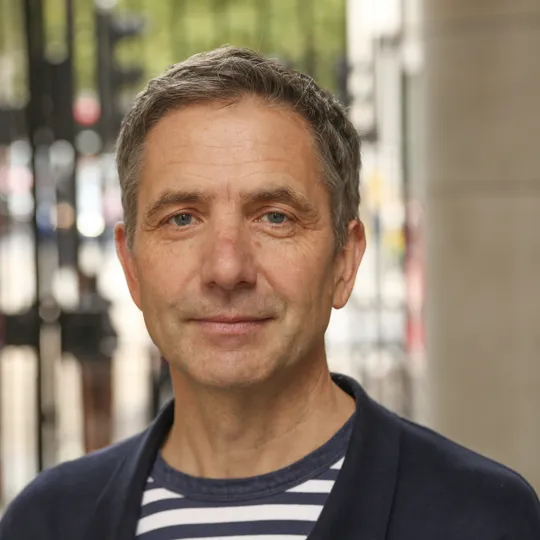
Nicholas Harrison is Professor of French and Postcolonial Studies at King's College London, where he has taught since 2005. Elected Fellow of the British Academy (2023) and Member of Academia Europaea (2016), he specializes in French and francophone literatures, particularly from the Maghreb. Harrison's research examines colonial/postcolonial literature through theoretical frameworks including censorship, translation, and education history. His book 'Our Civilizing Mission' (2019) analyzes colonial education's cultural impact. His publications demonstrate consistent engagement with postcolonial hermeneutics, examining how literary texts function politically. Recent work focuses on Algerian literature, colonial education legacies, and cross-cultural translation challenges in world literature. Awards & Honors: Fellow of the British Academy (2023) Member of Academia Europaea (2016)
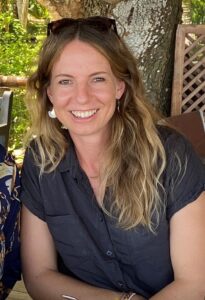
Dr. Jennifer Veilleux is an Assistant Professor in the Department of Cultural Geography at Wageningen University & Research. Her research focuses on water sovereignty, environmental justice, and the intersection of climate change with Indigenous knowledge systems. She employs interdisciplinary methods combining GIS, qualitative/quantitative data analysis, and participatory research with local communities to address water security challenges in transboundary watersheds such as the Nile, Mississippi, and Mekong Rivers. Veilleux emphasizes decolonizing spatial narratives through counter-mapping efforts to restore Indigenous placenames and perspectives. Her work examines how scale and colonial histories influence policy impacts on frontline communities, particularly in dam development projects and extractive capitalism. She collaborates with governments, militaries, and international organizations to evaluate development project efficacy while advocating for equity-centered approaches. Recently, she led the Mindmapping Climate Change and Research Intersections Symposium , showcasing frameworks for integrating art-based methods and participatory visual communication into climate research. Veilleux teaches courses on gender and diversity in transnational contexts, geopolitics, and climate entanglements. Her expertise spans environmental justice, human rights, and spatial policy analysis across Ethiopia, the USA, and other transboundary regions. She actively engages in policy advocacy through interdisciplinary research projects designed within the Sector Plan Spatial Issues framework at WUR.
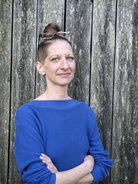
Prof. Doris Pokitsch is a Professor of Migration Education with a focus on linguistic diversity at the Upper Austria University of Teacher Education's Institute of Inclusive Pedagogy. Her work integrates discourse analysis, subjectivation theory, and intersectional approaches to address multilingualism in education and societal contexts. Key research themes include migration-based social hierarchies, linguistic justice, and critical pedagogical practices. She holds a PhD in German Philology from the University of Vienna and has held academic positions at institutions including the Bergische Universität Wuppertal and the University of Vienna. Her professional affiliations include leadership roles in the ÖDAF (Austrian German as a Second/Foreign Language Association) and the Migrationspädagogische Zweitsprachdidaktik network. Current Projects: LiDiSu: Subjectivization-sensitive literature didactics (with LMU Munich and Leipzig University) merrem: Teacher training for multilingualism reflection (collaboration with Landau, Wuppertal, and Upper Austria institutions) Translanguaging educational materials for the Austrian Language Center Research Interests: Multilingualism, discourse analysis, educational justice, critical language policy, and intersectional pedagogy Teaching: Specializes in multilingual education, academic writing, and inclusive didactics Her interdisciplinary approach bridges linguistics, sociology, and education science, with publications focusing on subjectivation processes, linguistic discrimination, and equity in migration societies. She actively contributes to policy development through collaborative projects and teacher training initiatives.
Mary Bunch is an Associate Professor at York University’s School of the Arts, Media, Performance & Design (AMPD), holding the Canada Research Chair in Critical Media Arts Ecologies. Her work bridges critical theory with media arts creation, focusing on decolonizing frameworks, queer theory, and critical disability studies. Research Focus: Transitional worldmaking via socio-political concepts, emphasizing ethics in extended reality (XR) and collaborative methodologies. Collaborations: Co-directs the Peripheral Visions CoLab, integrating diverse epistemologies through community-based practices. Creative Outputs: Artworks co-created with Dolleen Tisawii’ashii Manning exhibited at Nuit Blanche (2022), ImagineNative (2023), Aga Khan Museum (2024), and UN Water Conference (2023). Leadership: Co-editor of a special issue on Access Aesthetics in the journal Public , with a monograph-in-progress titled Ecstatic Ethics . Research Trends: Combines critical theory (feminist, queer, decolonial, crip frameworks) with media arts practice, exploring XR’s ethical implications, biopolitics, and marginalized subjectivities. Collaborative projects emphasize embodied knowledge and anti-oppressive methodologies. Scientific Awards: Canada Research Chair; SSHRC-funded Pluriversal Worlding with Extended Reality. Advising: Only accepts graduate students aligned with her research in critical theory and media arts. Collaborative grants and community-based projects dominate her funding, prioritizing interdisciplinary and inclusive approaches.
Dr. Franziska Fay is an Assistant Professor of Political Anthropology at the Institute of Anthropology and African Studies (ifeas) at Johannes Gutenberg University Mainz. Her research focuses on gender, violence, decolonization, and child protection in East Africa and the Arabian Peninsula. She holds a PhD from SOAS, University of London, and conducted extensive fieldwork in Zanzibar. Notable contributions include her book Disputing Discipline (2021), examining child protection practices through participatory ethnography. Fay has held fellowships at Goethe University Frankfurt and the Leibniz Zentrum Moderner Orient (ZMO). Her teaching includes courses on Political Anthropology, African Feminisms, and Decolonizing Anthropology. Current research explores feminist praxis in Tanzania and colonial archives related to sexual violence. She actively engages in public anthropology through media interviews and co-authored works on ethical contestations in anthropological practice.
Dr. Gideon Boadu is a Lecturer in Secondary Curriculum & Pedagogy Education at RMIT University's School of Education. He leads programs such as the Master of Teaching Practice (Primary/Secondary Education) and focuses on history curricula, public histories, and digital pedagogies. His research explores historical consciousness, AI integration in education, and career-changer teacher training. Dr. Boadu holds editorial roles at journals like History Education Research Journal and co-convenes the Critical Forest Collaboratory. His research emphasizes under-researched contexts in history education, including Ghanaian curriculum analysis and youth engagement with historical narratives. He has published widely, with a focus on African historiography and innovative teaching methodologies. Dr. Boadu advocates for inclusive education policies and collaborates internationally on projects like historical-democratic consciousness intersections. Teaching responsibilities include courses on curriculum design, humanities education, and assessment strategies. He actively supervises HDR students and advises on teacher education programs in partnership with the Victorian Department of Education.
Esther Lezra is an Associate Professor in the Department of Global Studies at the University of California, Santa Barbara. She holds a PhD in Comparative Literature from UC San Diego (2005) and was awarded a two-year fellowship from the UC Office of the President under Professors Susan Gillman and George Lipsitz. Her research focuses on the literary and cultural study of the Caribbean, Europe, and North Africa from the 18th century to the present, with a particular emphasis on memory, colonial archives, and postcolonial histories. Her publications include the monograph The Colonial Art of Demonizing Others: A Global Perspective (2014) and articles in Dissidences , Anthurium , and the edited collection African Diasporas . Her current research explores submerged knowledges in transatlantic revolutionary archives and the interplay between memory and forgetting in colonial contexts. Lezra’s work bridges multiple disciplinary frameworks, integrating comparative literature, cultural anthropology, and postcolonial theory to analyze colonial and postcolonial dynamics across regions. Her scholarship emphasizes multilingual archival work and the decolonization of academic narratives.
Dr Cristina Mio is a Senior Lecturer in Mathematics Education at the University of Glasgow's School of Education, where she has been since 2019. She holds a PhD and Master’s in Chemical Engineering from the University of Padova, Italy. Prior to her current role, she worked in chemical engineering research at institutions such as UC Berkeley and the University of Strathclyde, and taught mathematics in various educational settings including Loreto Sixth Form College and the Open University. Her teaching spans secondary and higher education, focusing on mathematics pedagogy and teacher education. Mio is currently the joint programme leader for the Post-Graduate Diploma in Education (PGDE) and course leader for "Curriculum, Pedagogies and Practice in the Primary and Secondary" course. Education: PhD and Master’s in Chemical Engineering, University of Padova, Italy PGCE in Secondary Mathematics, University of Manchester Research Interests: Approaches to learning in Mathematics and Engineering Student autonomy in group projects Peer-assessment methodologies Teacher attitudes and pedagogical knowledge Teacher Educator Identity Her work emphasizes socially just pedagogies and curriculum design, integrating interdisciplinary approaches like STEM and Indigenous knowledge systems into mathematics education. Grants and awards include leadership in projects funded by University of Glasgow and Falkirk Council, focusing on enhancing mathematics education through collaborative and innovative methods. Notably, she received the 2022-23 Teaching Excellence Award (Team Award) for PGDE Maths Team. She supervises doctoral students in mathematics education, including topics like early years mathematics in Chinese contexts and computer-based assessment. Teaching responsibilities include Primary and Secondary Mathematics Education courses for PGDE programs and MEduc students. She also contributes to professional development through roles like External Examiner at Durham University and membership in organizations such as the British Society for Research into Learning Mathematics. Active in networks like the Teaching Maths for Social Justice Network and the Mathematical Association, she collaborates on initiatives to improve mathematics teaching practices and curriculum alignment.
Dr. Sadasivam Karuppannan is a Senior Lecturer at UniSA Creative, University of South Australia. His research focuses on urban sustainability, climate migration dynamics, cultural heritage conservation, and the socio-ecological impacts of urban design. With extensive fieldwork in South Asia and Australia, he examines how built environments influence community resilience and ecological health. His research explores: Urban green spaces and biodiversity conservation in rapidly developing cities Climate-induced migration patterns and urban adaptation strategies Sustainable housing design in tropical regions Cultural heritage preservation in post-disaster contexts Age-friendly urban infrastructure and services Dr. Karuppannan's publications demonstrate consistent focus on interdisciplinary approaches to sustainable development, particularly analyzing how policy frameworks intersect with community needs across diverse cultural contexts. Recent work emphasizes participatory planning methods and metrics for assessing urban livability. He maintains active collaborations with international researchers on projects addressing urbanization challenges in Global South contexts, particularly examining equitable resource distribution and resilience planning.
Dr. Goutam Karmakar is an Assistant Professor at the Department of English, School of Humanities, University of Hyderabad, India. He holds an Alexander von Humboldt Postdoctoral Fellowship at the Multidisciplinary Environmental Studies in the Humanities (MESH) at the University of Cologne, Germany, and is an honorary research associate at Durban University of Technology’s Faculty of Arts and Design, South Africa. His research focuses on subaltern environmentalism, decolonial ecologies, and Global South literature, examining environmental injustice, epistemic violence, and colonial legacies. He has held prestigious fellowships at institutions including the University of South Africa, University of Ghana, and Linnaeus University. Education: PhD in English from National Institute of Technology Durgapur, India. Previous academic roles include Senior Lecturer at Universiti Sains Malaysia and Visiting Scholar at the Rachel Carson Centre (LMU Munich). Research Interests: His work bridges literary studies with environmental justice, advocating for decolonial frameworks rooted in Indigenous and marginalized knowledges. Key themes include climate coloniality, infrastructural violence, and planetary sustainability through African and South Asian case studies. Publications: Over 30 peer-reviewed articles in journals like ISLE , Journal of Postcolonial Writing , and Scrutiny2 , plus multiple edited special issues on environmental humanities, decoloniality, and African literature. Awards: Alexander von Humboldt Fellowship, MIASA Junior Fellowship, NRF Postdoctoral Fellowship. Grants: Multiple international fellowships supporting his research on environmental injustice in Nigeria and South Africa. Labs/Teams: Active collaborator in MESH (University of Cologne) and part of global environmental humanities networks.
Moa Sandström is affiliated with Umeå University's Faculty of Arts, previously part of the Centre for Sami Research (CeSam) before its closure in 2019. She holds a PhD in Sámi Studies (2020) and specializes in decolonization, artivism, and Indigenous rights. Her research examines how art and activism shape political and social change in Sápmi, particularly addressing colonialism and climate justice. She co-edited Under the Same Sun (2015), comparing Sami and San peoples' struggles. Her work critiques historical and ongoing colonial structures, advocating for Indigenous self-determination through cultural expression. Publications span academic monographs, edited volumes, and op-eds, including analyses of the Gállok mining conflict and Sámi responses to climate change. Her interdisciplinary approach bridges art, ethnology, and political activism. Funded by the Kempe Foundations, her research highlights intersectional Indigenous movements and their global relevance. Collaborations include co-authoring with scholars like Coppélie Cocq and Peter Sköld. Her work appears in journals like Dagens Nyheter and Västerbottens Kuriren , emphasizing public engagement. While no formal awards are listed, her scholarship has influenced debates on Sámi sovereignty and decolonial methodologies.
Diane Borsato is an Associate Professor in the Department of Studio Art at the University of Guelph’s School of Fine Art and Music. She holds a BFA from York University, an MFA from Concordia University, and an MA in Performance Studies from New York University’s Tisch School of the Arts. Her interdisciplinary practice merges art, ecology, and social engagement, focusing on themes like food systems, environmental learning, and human-nature interactions. Research & Teaching Borsato coordinates the Experimental Studio program, teaching courses on art and everyday life, including Food and Art, Walking, and LIVE ART. Her work explores interventionist practices, performance, and participatory projects, often collaborating with dancers, naturalists, and community groups. Notable projects include Orchard (a public art initiative planting rare fruit trees), Outdoor School (a book and series of environmental workshops), and Your Temper, My Weather (a durational beekeeper performance). Exhibitions & Awards Her work has been exhibited globally, including the Art Gallery of Ontario, Vancouver Art Gallery, and institutions in France, Germany, and Japan. She received the Victor Martyn-Lynch Staunton Award (2012) and two Sobey Art Prize nominations. Recent projects include Mushrooming: The Joy of the Quiet Hunt (2022), a book blending fungal biology with art, and Falconers (2021), a video exploring raptor movement with dancers. Community Projects Borsato’s Swimming with Mathematicians (2018) brought artists and scientists together in glacial waters, while Cloud Party (2017) transformed museum tours into meteorological learning experiences. She also leads initiatives like ALL THE NAMES FOR EVERYTHING (2017), decolonizing nature education through Indigenous and scientific perspectives. Labs & Collaborations Her Walking Studio (2012–present) is a mobile field lab for outdoor research. Projects like Outdoor School and collaborations with institutions like the Banff Centre highlight her commitment to site-responsive practices and interdisciplinary dialogue.
David Silverman is a Professor at The George Washington University where he has taught since 2003. He specializes in Native American history, Colonial America, and American racial history, with particular focus on Wampanoag Indians, colonial interactions, and racial formation. Silverman earned his Ph.D. from Princeton University in 2000. His research explores the complex relationships between Native American communities and European colonists, examining themes of cultural adaptation, religious conversion, land disputes, and the development of racial ideologies. His work spans from the 17th century through the Revolutionary era, with emphasis on how indigenous communities navigated colonial pressures while maintaining cultural continuity. Silverman's publications demonstrate a consistent focus on Native American agency in colonial encounters, with recent work examining the historical interpretations of Thanksgiving and decolonizing methodologies in indigenous studies. His scholarship combines rigorous archival research with engagement in contemporary debates about historical memory. Selected Awards: Herbert H. Lehman Prize for Distinguished Scholarship in New York History (2012) Douglass Adair Memorial Award (2008) Lester J. Cappon Award (2005) Erminie Wheeler-Voegelin Prize Finalist (2011) He advises both undergraduate and graduate students whose work has received multiple honors. As a public historian, Silverman contributes to museum exhibits, legal briefs, and media productions while frequently lecturing on Native American history and colonial legacies.
Dr. Melinda M. Adams is an Assistant Professor in the Department of Geography and Atmospheric Science and Indigenous Studies at the University of Kansas. A member of the N’dee San Carlos Apache Tribe, her work focuses on Indigenous-led cultural fire practices, combining Traditional Ecological Knowledge with environmental science. She holds a BS from Haskell Indian Nations University, MS from Purdue University, and PhD from UC Davis. Her research examines plant and soil responses to cultural fire, emphasizing climate adaptation and wildfire mitigation. Key areas include pyrogeography, Indigenous methodologies, and environmental justice. She has secured grants from NSF EPSCoR, KU Office of Research, and the Sloan Foundation. Notable awards include the Indigenous Data Sovereignty Fellowship and Switzer Environmental Fellowship. Dr. Adams mentors students like MK Kerron (Wichita and Affiliated Tribes) and Celina Hall (Ho-Chunk Nation), focusing on Indigenous fire stewardship and GIS analytics. She has conducted cultural burns across California and the Midwest, collaborating with over 130 Tribal Nations. Her work bridges science and Indigenous epistemologies, advocating for data sovereignty in fire research. Publications include studies on cultural fire ecology, climate policy, and environmental justice, with a focus on decolonizing fire science. She is also featured in media such as NPR and PBS for her advocacy of Indigenous fire practices as climate solutions.
Jay T. Johnson is the University Distinguished Professor of Geography & Atmospheric Science at the University of Kansas, serving as Associate Chair of the department and Director of the Center for Indigenous Research, Science, and Technology (CIRST). His work focuses on Indigenous geographies, cultural survival, and place-based struggles, with comparative research in North America, the Pacific, and Aotearoa/New Zealand. Johnson teaches courses in cultural geography, qualitative research methods, and Indigenous geographies, emphasizing anti-colonial pedagogies. Johnson’s research explores Indigenous methodologies, resource management, and the politics of place. Notable projects include studies on energy sovereignty in Alaska, Indigenous participation in climate science, and the ethical challenges of qualitative data sharing. He has published extensively on Indigenous knowledge systems, decolonial methodologies, and the intersections of environmental justice and racial equity. His honors include the Docking Faculty Scholar award from the University of Kansas (2019) and recognition for diversity contributions from the Association of American Geographers (2014). Johnson leads multi-institutional initiatives like the Haskell-NCAR environmental training program and the MOONS Indigenous STEM mentorship workshop. His work bridges academic and Indigenous communities through collaborative research centers like CIRST, fostering ethical partnerships and innovative methodologies. Johnson’s career reflects a commitment to Indigenous self-determination, evidenced through his advocacy for research sovereignty, place-based pedagogy, and the integration of Indigenous epistemologies into mainstream geosciences. His recent work emphasizes multispecies coexistence frameworks and the spectral agency of historical landscapes.