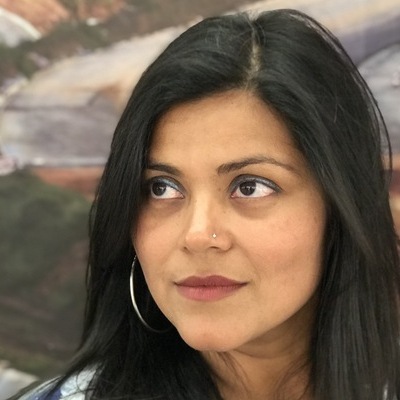
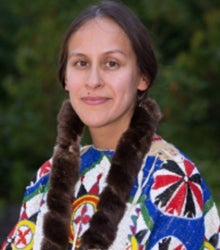
Bhakti Shringarpure is an Associate Professor in the Department of Social and Critical Inquiry at the University of Connecticut. Her work bridges decolonization studies, Cold War analysis, and cultural studies. She serves as Creative Director of the Radical Books Collective and Editor-in-Chief of Warscapes magazine. She has held prestigious fellowships including the Fulbright U.S. Scholar Award (2019-2020) and a research fellowship at the Institute for Advanced Studies in Edinburgh (2022). Her research focuses on decolonization, migration, and the intersections of Cold War politics with postcolonial literatures. Key publications include Cold War Assemblages: Decolonization to Digital (2019) and edited volumes such as Mediterranean: Migrant Crossings . She has contributed to major platforms like Africa is a Country , Los Angeles Review of Books , and Literary Hub . Her awards highlight scholarly impact in postcolonial and global studies. She co-leads initiatives like the Decolonize | Defund | Abolish series and has conducted global surveys on African literature pedagogy. Her work often critiques 'fake decolonization' and explores digital humanities' role in reimagining postcolonial narratives.
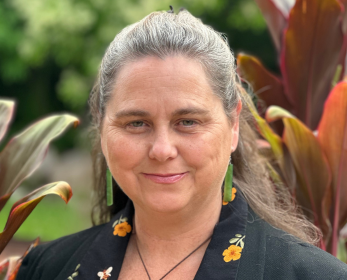
Nicola Wilson is a researcher specializing in library and publishing history, with a focus on understudied topics such as subscription libraries, feminist bibliography, and transatlantic literary networks. She received the 2013 Justin Winsor Essay Award for her groundbreaking work on Boots Book-Lovers' Library, which highlighted intersections between social history, censorship, and readership practices. Her research spans from 19th-century subscription libraries to modernist publishing houses like the Hogarth Press, with notable contributions to understanding women's roles in early 20th-century publishing and the cultural politics of literary societies. Wilson's scholarship bridges library history with broader cultural studies, addressing themes such as LGBT issues in historical contexts, copyright challenges in digital archives, and the economic dimensions of small-press publishing. Her work often emphasizes collaborative networks—between authors, publishers, and readers—while interrogating how publishing practices shape literary canons and access to knowledge. Her most recent publications (2024) explore transatlantic book clubs and modernist authorship, continuing her commitment to uncovering marginalized voices in publishing history. Despite no explicitly stated institutional affiliation in the provided texts, her extensive bibliography reflects sustained academic engagement with archival research and interdisciplinary approaches to cultural history.
Associate Professor Melissa Carey is affiliated with the School of Nursing and Midwifery at Edith Cowan University (ECU) and holds an Honorary Research Fellow position at the University of Auckland. Her research focuses on Indigenous health methodologies, end-of-life care, cultural safety, and interprofessional practice. She has held academic roles across multiple institutions in Australia and New Zealand. Education: Doctor of Philosophy (2016), Queensland University of Technology Research Interests: Her work emphasizes Kaupapa Māori research, autoethnography, and decolonizing health measurement. She explores cultural identity in healthcare, voluntary assisted dying, and palliative care equity. Recent studies include analyzing New Zealand’s End of Life Choice Act and evaluating immersive technology in medical education. Awards: Te Tohu Rapuora Medal (Royal Society Te Apārangi) Health Research Council Postdoctoral Fellowship (2020) Outstanding Doctoral Thesis (QUT, 2016) Grants & Projects: Leading the Keteparaha community framework for Māori ageing and end-of-life care, and the A different grief project on assisted dying support groups (Health Research Council-funded, 2025–2026). Labs/Teams: Collaborates with Te Arai Palliative Care Research Group (University of Auckland) and the Voluntary Assisted Dying Research Network (Victoria University of Wellington).
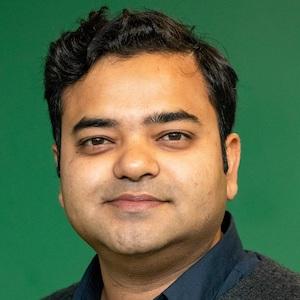
Dr. Saumava Mitra is an Assistant Professor at the School of Communications, Dublin City University (DCU), within the Faculty of Humanities and Social Sciences. His research focuses on the interplay between production processes and narratives in conflict and crises visuals. Notably, he has investigated the working conditions of women photographers in conflict-affected Global South regions and Afghan photographers collaborating with international organizations. Prior to DCU, he held roles in academia, journalism, and communications across South Asia, East Africa, North/Central Americas, and Europe. Education: PhD in Media Studies, University of Western Ontario Erasmus Mundus MA in Journalism and Media within Globalization (Swansea University, Aarhus University, University of Amsterdam) Post Graduate Diploma in Radio and TV Journalism, Indian Institute of Mass Communications Bachelor of Arts (Honours), Jadavpur University Research Interests: Conflict Journalism, Photojournalism, Images of Wars and Crises, Foreign Correspondence, and International News. His work emphasizes gendered inequities in conflict reporting and de-Westernizing media studies. Publications: Over 20 peer-reviewed articles and edited volumes, including Reporting Global while being Local (Routledge, 2021) and contributions to Journalism Practice , Journalism Studies , and Global Media and Communication . Collaborations: Active with institutions like the University for Peace, the Islamic World Educational, Scientific and Cultural Organization (ICESCO), and editorial boards of Media, War and Conflict and Journalism Studies . Teaching: Coordinates courses such as Photojournalism (CM2760), Peace and Conflict Journalism (CM3013), and Cultural Studies (CM102).
Professor Anja Schwarz holds the Chair of British Cultural Studies at the University of Potsdam, Germany. She is affiliated with the School of Global Affairs and the Faculty of Social Science & Public Policy. Her work bridges postcolonial studies, cultural history, and Indigenous knowledge systems, focusing on German-Australian colonial entanglements and decolonization. She co-directs the Berlin's Australian Archive project, exploring natural history collections through an Indigenous lens, and leads the Research Training Group minor cosmopolitanisms , training PhD students globally. Notable collaborations include workshops with First Nations communities and international institutions like the Museum für Naturkunde Berlin. Her research on Polynesian navigator Tupaia and the Te Ara Vaka Moana conference highlight her engagement with Oceanic heritage and navigation. Active in academic governance, she chairs the Menzies Australia Institute’s advisory board and contributes to the university’s anti-right-wing extremism initiatives. Education and career milestones include prior roles at the University of Konstanz and Freie Universität Berlin, as well as extensive research in Australia. Funded projects like the DAAD-sponsored German Anthropological Legacies in Australia reflect her transnational approach. Current projects emphasize settler decolonization, Indigenous-settler collaboration, and ethical museum practices. Her work is published in postcolonial journals and edited volumes, addressing topics like colonial archives, migration, and cultural restitution. Grants and partnerships include the German Lost Art Foundation and DAAD, supporting her interdisciplinary research. She advises PhD candidates and collaborates across disciplines, fostering dialogues between Indigenous knowledge and Western academic frameworks. Future initiatives include workshops in Australia and Berlin to advance decolonial methodologies and Indigenous sovereignty over cultural heritage.
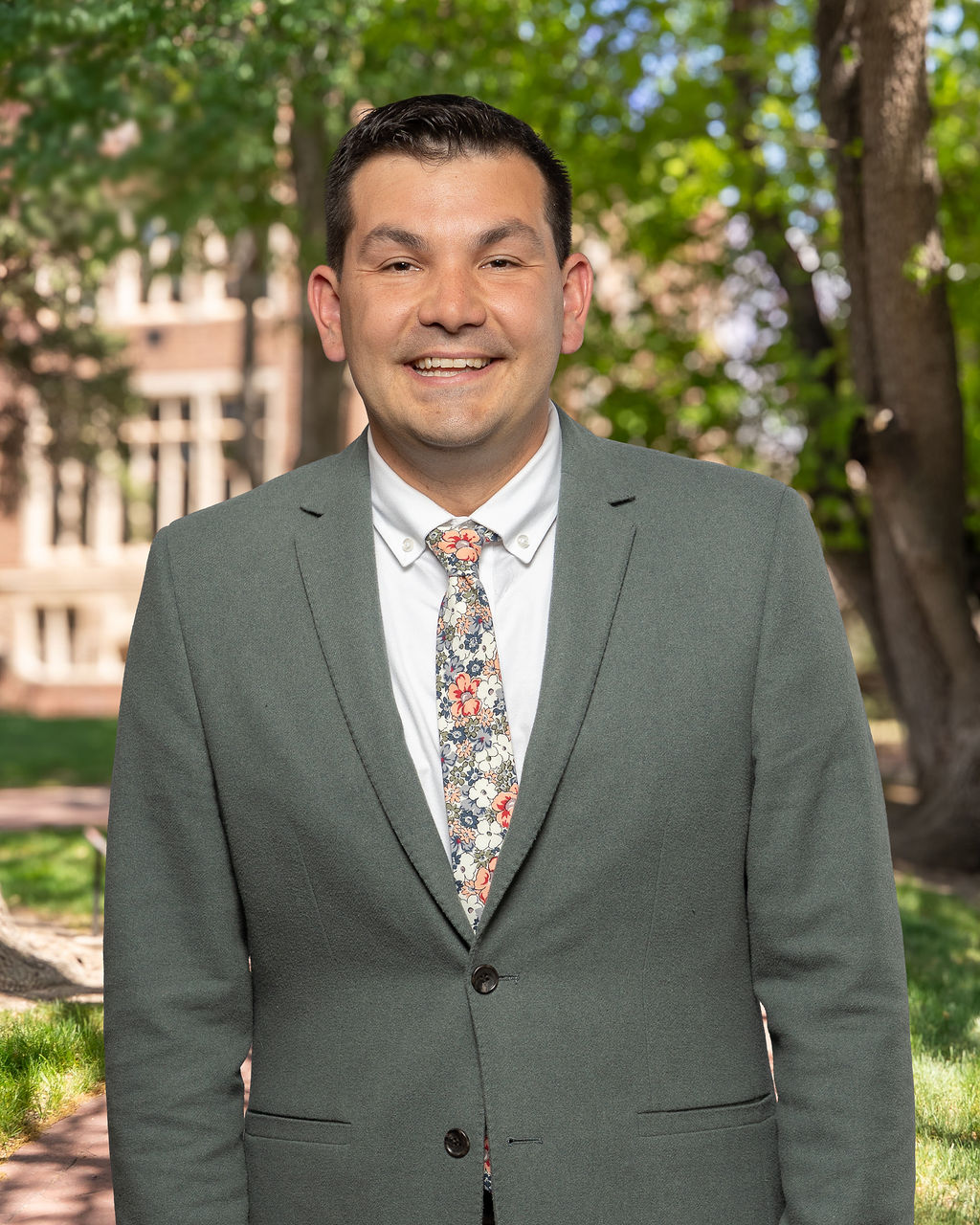
Stefan Chavez-Norgaard is a Teaching Assistant Professor of Public Policy at the University of Denver’s Douglas and Mary Scrivner Institute of Public Policy, part of the Josef Korbel School of International Studies. His work bridges procedural justice, urban development, and equity, with a focus on South Africa and the United States. Education : PhD in Urban Planning (Columbia, 2024), MPP from Harvard Kennedy School (2019), BA in Public Policy and Urban Studies from Stanford (2015). His research examines urban planning history and theory, local-government law, and mixed-methods analysis of planning practice in late-liberal contexts. He explores how residents contest and repurpose formal urban plans, particularly in post-apartheid South Africa and U.S. cities like Denver. His 2024 articles address racial modernism in urban planning and place renaming in South Africa, while recent book chapters focus on digital infrastructure and housing policy in African cities. Recent work includes public-facing commentaries on transportation history, urban design, and national urban policy. He has received travel/research awards from AAG (2022, 2023) and the NYC Urban Fellows Program (2017). Collaborations span Harvard’s Bloomberg Center for Cities, Ash Center for Democratic Governance, and Lincoln Institute of Land Policy.
Madhav Khosla serves as the B. R. Ambedkar Professor of Indian Constitutional Law and Professor of Political Science at Columbia University. He directs the B.R. Ambedkar Program in Global Constitutionalism at Columbia Law School and participates in Columbia University's Committee on Global Thought, focusing on constitutional design and democratic governance. Education: Ph.D., Harvard University, 2017 LL.M., Yale Law School, 2010 B.A, LL.B., National Law School, Bangalore, 2008 His research centers on comparative constitutional law, constitutional theory, and Indian constitutional law, examining how constitutional frameworks shape democracy in South Asia. Khosla investigates the interplay between legal structures, political theory, and historical context, with emphasis on India's constitutional evolution and global constitutionalism. Recent publications (2020-2025) reveal consistent focus on democratic resilience, constitutional design challenges, and India's unique constitutional journey. Key trends include analysis of authoritarian threats, federal dynamics, judicial power, and decolonization's impact on constitutional identity across comparative contexts. Honors and Awards: The Order of the Coif Book Award (for India's Founding Moment) 2021 Edward M. Chase Prize, Harvard University 2018 Inlaks Shivdasani Foundation Scholarship 2009–2010 No specific information about student advising or research grants appears in available materials. His scholarship demonstrates extensive engagement with constitutional institutions through publications and program leadership rather than direct mentorship documentation. He leads the B.R. Ambedkar Program in Global Constitutionalism, which organizes the Ambedkar Law Lectures series, fostering interdisciplinary dialogue on constitutional challenges in emerging democracies and postcolonial contexts.
SherAli Tareen serves as an Assistant Professor at Franklin & Marshall College, specializing in Islamic Studies and Religious Education. His academic work focuses on innovative pedagogical approaches to teaching religion, particularly Islam, in undergraduate settings. Tareen's research interests center on critical approaches to religious education, with particular emphasis on decolonizing pedagogical frameworks for teaching Islam. His work explores how to present complex theoretical arguments about Islam to introductory students without overwhelming them with theoretical jargon, focusing instead on accessible and meaningful learning experiences. He investigates the intersection of colonial modernity, tradition, and contemporary Islamic thought through the lens of educational practice. His publications reveal a consistent trend toward critically examining the legacies of colonialism and Orientalism in religious studies curricula. Tareen's work emphasizes genealogically attuned teaching methods that help students navigate complex identity formations while studying Islam. His scholarship advocates for pedagogical approaches that acknowledge historical power dynamics while fostering critical thinking skills in students. Tareen has contributed to the 'Teaching Islam' blog series at the Wabash Center, where he has published multiple articles exploring innovative teaching strategies for introductory courses on Islam. His work demonstrates a commitment to developing teaching methodologies that are both theoretically sophisticated and accessible to undergraduate students.
Dr. Yuwei Xu serves as Associate Professor in Early Childhood Education at the University of Nottingham since 2023, holding concurrent Visiting Professorships at Zhejiang Normal University and Central China Normal University. She founded the Global Childhoods Research Group (GCRG), co-directs Nottingham's Taught Courses (2025-2027), and leads community engagement for the UNESCO Chair in International Education and Development. Previously, she held academic positions at UCL, University of Portsmouth, and Tianjin Normal University. Her educational background includes: PhD in Gender and Early Childhood Studies, University of Glasgow (2018) MA in Child Studies, King's College London (2012) B.Ed. in Early Childhood Education, Shanxi University, China (2011) Dr. Xu's research centers on gender dynamics in early childhood education, cross-cultural comparisons between China and the UK, and inclusive practices for marginalized communities. She investigates children's perspectives on gender, culturally responsive curriculum implementation, and teacher education frameworks that challenge heteronormative discourses. Her work bridges theoretical feminist analysis with practical interventions to promote equity in educational settings globally. Analysis of her recent publications reveals consistent focus on pandemic-era parenting adaptations, cultural negotiations in curriculum frameworks, and gender representation in early years settings. Her cross-cultural methodology (particularly China-UK comparisons) produces actionable insights for culturally reflective practice, while her work on low-income family engagement addresses structural barriers in educational research. Her scientific recognition includes: BERA Early Career Researcher Award (2019) Two Nottingham Recognition Scheme awards (2021/22, 2022/23) Lord Dearing Award for Decolonizing Curriculum (2022/23) Dr. Xu currently supervises eleven PhD students across gender studies, teacher education, and higher education topics while leading multiple funded projects including the Froebelian philosophy initiative (£43,243) and Hong Kong immigrant family study (£11,927). Her grants portfolio demonstrates strong international collaboration, particularly UK-China partnerships addressing teacher development and children's rights. She founded the Global Childhoods Research Group (GCRG) and actively contributes to the Education and Development Forum (UKFIET) and Gender and Education Association, fostering international networks that advance childhood studies through decolonial and intersectional lenses.
Laura M. Furlan is an Associate Professor in the Department of English at the University of Massachusetts Amherst, within the College of Humanities and Fine Arts. Her scholarly work centers on Native and Indigenous Studies, American Studies, and creative nonfiction, with a strong focus on urban Indian narratives and autobiographical forms. Education: B.A. in American Studies, University of Iowa M.A. in English, San Diego State University Ph.D. in English, University of California, Santa Barbara Her research explores the intersections of Native identity, relocation histories, and literary expression, particularly in urban contexts. She is deeply engaged with Indigenous epistemologies, decolonial methodologies, and the role of archives in contemporary Native writing. Her interdisciplinary work spans literary criticism, cultural studies, and creative nonfiction. Her publications reflect a sustained commitment to amplifying Native voices through scholarly and editorial projects, including special issues on new Native writing and critical analyses of memoirs like Bad Indians . Her book Indigenous Cities (2017) is a foundational contribution to the field of urban Native fiction. Scientific Awards: No awards listed in the provided text. Laura M. Furlan has co-edited significant special issues and published widely in journals such as Studies in American Indian Literatures , Intertexts , and Yellow Medicine Review . While specific grant funding is not mentioned, her editorial and publication record suggests active research support and scholarly leadership. She mentors emerging Native writers and contributes to academic discourse through interdisciplinary collaborations. She is affiliated with research communities focused on transnational Native American Studies and Indigenous literary production, though specific labs or formal research teams are not named in the text.
David Luis-Brown is an Associate Professor in the Department of Cultural Studies and the English Department at Claremont Graduate University, where he teaches interdisciplinary courses on race, imperialism, and transnational American literature and culture. His work bridges hemispheric American studies, Latino/a/x studies, and Black diaspora studies. Research Interests: His scholarship focuses on hemispheric approaches to race, citizenship, and decolonization across the Americas. He explores intersections between U.S. Latino/a literature, Black Atlantic networks, and comparative slaveries, with a particular emphasis on 19th-century cultural production, anticolonialism, and political theory. His research employs transnational and interdisciplinary methodologies to examine literary, visual, and periodical texts. Recent Publications & Trends: His recent works analyze slave rebellions, cosmopolitanism, and antislavery literature in Cuba and the U.S., often highlighting neglected texts and transnational connections. Themes include hemispheric citizenship, racial formation, and decolonial discourse, particularly through the lens of Cuban and Mexican intellectual movements like Negrismo and Indigenismo. His publications appear in leading journals such as Atlantic Studies and American Literary History . Scientific Awards: President’s Postdoctoral Fellowship, University of California, Berkeley National Endowment for the Humanities Summer Stipend Andrew W. Mellon Foundation Research Fellowship Sheila Biddle Ford Foundation Fellowship, W.E.B. Du Bois Institute, Harvard University Advising and Grants: While no specific students are listed, Luis-Brown has secured competitive external funding and fellowships supporting his research. His projects have been supported by major institutions including the NEH and the Mellon Foundation, indicating a strong trajectory of grant acquisition and scholarly leadership. Labs and Research Teams: Though no formal lab is mentioned, Luis-Brown’s work is deeply collaborative and embedded in scholarly networks, particularly through edited collections and interdisciplinary research institutes such as the W.E.B. Du Bois Institute. He contributes to expanding hemispheric and transnational frameworks in American literary and cultural studies.
Susy Zepeda, Ph.D., is an Associate Professor in the Chicana/o Studies department at the University of California, Davis. Her work is transdisciplinary, decolonial, and feminist, with a focus on community-centered research. She holds a Ph.D. in Sociology from the University of California at Santa Cruz, with designated emphases in Feminist Studies and Latin American & Latino Studies. Education: Ph.D. in Sociology, UC Santa Cruz. Dr. Zepeda’s research explores Xicana Indígena spirit work, decolonization, critical feminist methodologies, oral/visual storytelling, and intergenerational healing. She developed foundational courses such as Decolonizing Spirit and Food Justice at UC Davis. Her publications span topics in decoloniality, Chicana feminist praxis, and Xicanx/Latinx healing practices. Key works include the 2023 book Queering Mesoamerican Diasporas , the 2020 essay in Aztlán , and contributions to the 2019 anthology Voices from the Ancestors .
Elizabeth Yale is an Associate Professor in the Department of History at the University of Iowa, College of Liberal Arts and Sciences, where she also serves as Director of Undergraduate Studies. Her research lies at the intersection of the history of science, book history, and early modern European intellectual culture, with a focus on how knowledge was created and preserved in domestic and archival contexts. Her educational background includes a PhD in the History of Science from Harvard University (2008). She previously taught at Western Carolina University and Harvard before joining the University of Iowa. Dr. Yale's research explores the material and social practices of knowledge-making, particularly in early modern Britain. She emphasizes the role of families, manuscript culture, and archival infrastructures in the development of scientific thought. Her work spans themes such as gender, materiality, and the transmission of medical and natural knowledge. She teaches courses on early modern Europe, the history of science and medicine, book history, and gender, often incorporating hands-on analysis of texts through the University of Iowa Center for the Book. Her recent publications reveal a consistent interest in the material forms of knowledge—letters, lists, marginalia, and archives—and their role in shaping scientific epistemology. She frequently examines how women’s intellectual labor and domestic spaces contributed to scientific advancement. Her collaborative projects, including an NEH-funded initiative with Matthew Brown, aim to build innovative educational spaces for studying global print and manuscript cultures. Visiting Scholar, Max Planck Institute for the History of Science, Berlin (2016) President, Andrew W. Mellon Society of Fellows in Critical Bibliography (2021–2022) Senior Fellow, Andrew W. Mellon Society of Fellows in Critical Bibliography Dr. Yale has been active in mentoring and curriculum development, particularly through experiential learning programs like the Hawkeye History Corps. She has secured external funding, including an NEH Humanities Initiatives Grant, to support interdisciplinary teaching and research. Her advising likely extends to undergraduate and graduate students interested in history of science, gender studies, and material text analysis, though specific students are not listed. She is also engaged with public history, contributing accessible commentary to outlets like The Atlantic , Quartz , and Iowa Public Radio , bridging academic research with broader societal conversations on science, gender, and race. She is involved in collaborative scholarly communities, especially through the Rare Book School and the University of Iowa Center for the Book, where she contributes to projects that integrate book history with scientific and archival studies. These affiliations support a vibrant research and teaching environment centered on material knowledge practices.
Michelle Jacob is Professor of Indigenous Studies and Director of the Sapsik’ʷałá (Teacher) Education Program in the Department of Education Studies at the University of Oregon's College of Arts and Sciences. She also serves as Affiliated Faculty in the Department of Indigenous, Race, and Ethnic Studies and the Environmental Studies Program. Education: Ph.D. in Sociology (Human Development), University of California, Santa Barbara (2004) M.A. in Sociological Practice, California State University, San Marcos (2001) B.A. in Liberal Studies (Interdisciplinary Program), California State University, San Marcos (1998) Her research focuses on Indigenous methodologies, spirituality, health, education, Indigenous feminisms, and decolonization. She has received grant funding from the U.S. Department of Education, National Endowment for the Humanities, Spencer Foundation, and National Science Foundation. Michelle’s scholarly work intersects with her activism in promoting Indigenous knowledge systems and health equity. Her publications span social science, education, and health science research journals, forming a cohesive body of work centered on Indigenous sovereignty and educational transformation. Prior to joining the University of Oregon, she served as Founding Director of the Center for Native Health & Culture at Heritage University on the Yakama Reservation and as Professor of Ethnic Studies at the University of San Diego.
Delvin Varghese is a Senior Lecturer in Human-Computer Interaction (HCI) at the Department of Human Centred Computing, Faculty of Information Technology, Monash University, and a member of the Action Lab. He specializes in participatory and action research methods to design digital tools that empower communities, particularly in public health, multicultural engagement, and international development. His research focuses on leveraging community lived experience through co-design and participatory media to build web and mobile applications that drive collective action and social impact. Key areas include digital health, community development, third-sector collaborations, and inclusive technology design for marginalized populations. His work aligns with several UN Sustainable Development Goals, particularly those related to reduced inequalities and good health. Recent publications highlight trends in diaspora engagement, voice-based technologies for remote communities, short-form video for civic reporting, and inclusive digital services. These works reflect a strong commitment to real-world impact, often developed in partnership with NGOs, government agencies, and international bodies like the IFRC. Scientific Awards: Dean’s Award (Community Research) – 2021, 2022, 2024 Monash Student Association (MSA) Teaching Excellence Award – 2024 Best Paper Award, ACM Designing Interactive Systems (DIS) – 2022 Delvin supervises PhD students and is actively involved in multiple research grants, including projects funded by the Australian Research Council and Monash internal grants. He has led and contributed to initiatives such as Fire to Flourish , PROTIC2 , and Supporting Healthy Remote Stores , often collaborating with interdisciplinary teams across health, design, and social sciences. His teaching includes large-scale units like Mobile Application Development and Internet Applications Development . He is affiliated with the Action Lab at Monash, a research group focused on community-centered design, social innovation, and technology for social good. The lab emphasizes real-world deployment and ethical engagement with communities.