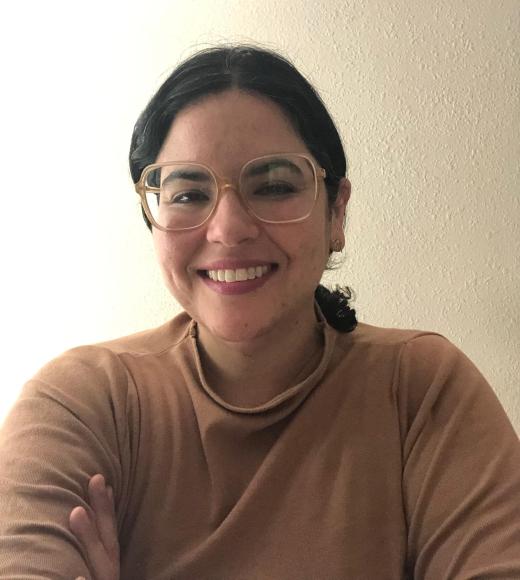
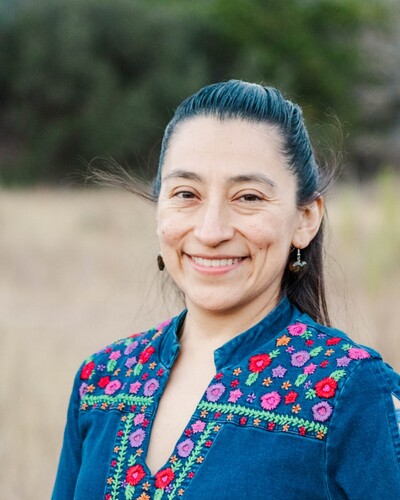
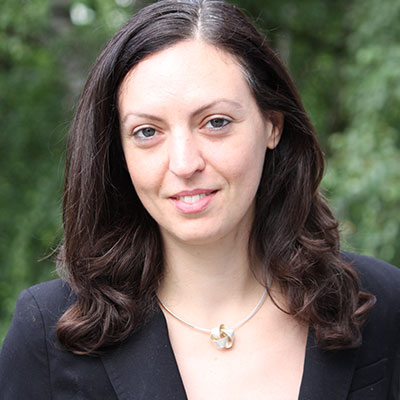
Serra Hakyemez is Assistant Professor of Anthropology and Global Studies at the University of Minnesota, currently on leave until January 2023. Her research examines the intersection of counterinsurgency warfare and judicial violence in Turkey's Kurdish regions, focusing on prison solidarity networks and decolonial resistance. She employs interdisciplinary methods combining political anthropology, legal studies, and ethnography to analyze state violence and resistance movements. Education includes: Ph.D. in Cultural Anthropology, Johns Hopkins University, 2016 M.A. in Sociology and Anthropology, Central European University, 2008 M.Sc. in Social Policy, London School of Economics, 2006 B.A. in Political Science & Business Administration, Bogazici University, 2005 Her research investigates the juridical and visual economies of counterinsurgent violence, with ongoing work on prison-based solidarity and insurgent justice frameworks in Kurdistan. Publications explore themes including feminist resistance in conflict zones, archival politics of state violence, and the anthropology of dissent. Awards include: ACLS Fellowship Wenner-Gren-Hunt Fellowship
Laura A. Meek is an Assistant Professor in the Department of Anthropology at the University of British Columbia Okanagan , specializing in Medical Anthropology , Decolonial Science and Technology Studies , and East African research . She holds affiliations with interdisciplinary networks like the UBC-O Science and Technology Studies Collective and co-directs the Storying Otherwise: Creative Ethnographic Writing Hub . PhD, MA in Anthropology (University of California, Davis) MA in Women’s Studies (George Washington University) Honors BA in Comparative Human Development (University of Chicago) Her research examines counterfeit pharmaceuticals and bodily epistemologies in Tanzania, framed through feminist , decolonial , and anti-racist lenses . She investigates leprosy elimination campaigns and fugitive science practices across Africa and Hong Kong, with recent work focusing on creative ethnographic prose and critical disability studies . Her publications span high-impact journals like Social Science & Medicine and Medical Anthropology Quarterly , addressing themes of radical uncertainty and world-making practices . Laura’s 15 most recent articles (2021–2025) analyze: pharmaceutical counterfeits in East Africa, the temporal politics of leprosy , anti-colonial global health , and creative writing as research . Her work bridges Indian Ocean connections and STS frameworks to critique neocolonial health governance. 2025 Collaborative Research Mobility Award 2024 Wenner-Gren Workshop Grant 2023 MAE–MAT Early Career Paper Award 2021 Society for Humanistic Anthropology Creative Ethnographic Prose Prize 2018 Wenner-Gren Dissertation Grant 2013 NSF Doctoral Dissertation Grant She supervises M.A. and Ph.D. students in UBC-O’s Interdisciplinary Graduate Studies programs, particularly in global health , African politics , and STS . Her professional service includes co-chairing the 2026 Cascadia Medical Anthropology Seminar and serving on the American Anthropological Association Nominations Committee .
Jennifer Robinson is Professor of Human Geography at University College London (UCL), with a distinguished career spanning institutions like the London School of Economics, The Open University, and University of Natal. Her work bridges global urban studies, postcolonial geography, and comparative urbanism, reshaping urban theory through critiques of modernity and neoliberalism. She co-directs the UCL Urban Laboratory and has led international conferences like At the Frontiers of the Urban (2019). Her research focuses on reorienting urban studies through postcolonial and global South perspectives, advocating for comparative methods to transcend Eurocentric frameworks. Key themes include urban governance, political geography, and large-scale development, particularly in African cities. Recent publications highlight trends in global urban theory, comparative urbanism, and the interplay of finance and urban development. She has received prestigious awards such as the RGS-IBG Murchison Award (2009) and an ERC Advanced Grant (2019), and has been widely cited in Geography and Urban Studies. RGS-IBG Murchison Award (2009) Fellow of the Society of South African Geographers (2016) ERC Advanced Grant (2019) Robinson has examined over 30 PhD theses internationally and held editorial leadership roles, including Editor-in-Chief of the Studies in Urban and Social Change book series. She directs comparative research programs funded by ESRC and contributes to scientific assessments like the UK Research Excellence Framework.
Tatiana Sánchez Parra is an Assistant Professor of Cultural Anthropology at the University of Tennessee. Her research focuses on reproductive violence and justice in contexts of war and transitional justice, particularly in Colombia and Latin America. She employs feminist peacebuilding, social reproduction frameworks, and creative/arts-based methodologies in her work. Previously, she held a Marie Skłodowska-Curie Actions Fellowship at the University of Edinburgh and remains a visiting researcher there. Education: Ph.D. in Sociology, University of Essex (2018) M.A. in Theory and Practice of Human Rights, University of Essex (2013) M.A. and B.A. in Social Anthropology, Universidad de los Andes, Colombia (2007/2006) Key research interests include: Gendered victimhood in transitional justice Reproductive autonomy and social reproduction in militarized contexts Creative methods for knowledge production Environmental devastation and conflict legacies Her book ‘Born of War in Colombia’ (2024) examines how children born of conflict-related sexual violence remain marginalized in Colombia’s transitional justice systems. Recent publications analyze Colombia’s Truth Commission, feminist methodologies, and reparations frameworks. Awards include the prestigious Marie Skłodowska-Curie Actions Fellowship (2018-2020). She co-edits special journal issues on gender-based violence in Latin America and Colombia’s peacebuilding processes. Teaching includes courses on anthropology of human rights and reproduction/sexuality studies. She collaborates with Afro-Colombian communities and transitional justice actors to advance transformative justice measures for conflict-affected populations.
Rana Jaleel is an Associate Professor in the Department of Gender, Sexuality, and Women's Studies at the University of California, Davis, within the College of Arts & Sciences. She holds multiple leadership roles, including Chair of the Cultural Studies Graduate Group, Chair of the Designated Emphasis in Feminist Theory and Research, Faculty Advisor for the Sexuality Studies Minor, and Co-Director of HATCH: The Feminist Arts & Sciences Initiative. She is also a 2021–2024 College of Arts & Sciences Dean's Faculty Fellow. Education: Ph.D. in American Studies, New York University J.D., Yale Law School MFA in Poetry, University of Michigan, Ann Arbor Rana Jaleel’s research centers on the politics of evidence, examining how harm is recognized or erased in legal, cultural, and political contexts. Her work critically engages with reproductive labor, race, gender, sexuality, property, and international law. She draws from feminist theory, critical ethnic studies, legal studies, and decolonial thought to interrogate the intersections of power, knowledge, and violence. Her interdisciplinary approach is reflected in her contributions across law, cultural studies, and creative writing. Her publications and editorial projects reveal a strong focus on racial capitalism, settler colonialism, queer/trans of color critique, and feminist legal theory. She explores how international legal frameworks for sexual violence are shaped by imperial and racial power. Her work frequently appears in journals such as Critical Ethnic Studies Journal , Cultural Studies , and Brooklyn Law Review . She has co-edited special issues on democracy, gendered citizenship, and racial capitalism, demonstrating a commitment to collective scholarly work. Scientific Awards: Author of Color First Book Award from Duke University Press for The Work of Rape Rana Jaleel is actively involved in academic service and mentorship. As Co-Director of HATCH and leader of the Write the Future! Lab, she fosters creative and critical scholarship among undergraduate students, particularly from women/queer/trans of color and transnational feminist perspectives. She serves on the Editorial Collective and Board of The Critical Ethnic Studies Journal and is a member of the American Association of University Professors’ Committee A on Academic Freedom and Tenure. Her leadership extends to admissions and curriculum development in interdisciplinary programs. She is co-editing a forthcoming issue of South Atlantic Quarterly on 'Queer/Trans of Color Transits and the Global Imaginaries of Racial Capitalism' and continues to develop projects that bridge creative practice, legal critique, and feminist theory.
Kristine Andra Avram is a Visiting Researcher at the Center for Conflict Research (ZfK) at Philipps University of Marburg, serving as a Post-doctoral fellow in the BMBF project 'Transformations of Political Violence' (2024-2025). Her work bridges peace and conflict studies, narratology, and social sciences with a focus on meaning-making in contexts of political violence and state repression. Her educational background includes a PhD in Political Science (summa cum laude, 2022) from Philipps University of Marburg, an MA in Peace and Conflict Studies (2010-2013) with study abroad at the University of Haifa, and a BA in Communication Science and Romance Studies (2007-2010) from the University of Erfurt, including Erasmus at Complutense University of Madrid. Avram's research examines how narratives shape interpretations of violence, influence reckoning with traumatic pasts, and inform transitional justice efforts. Using interdisciplinary narrative and (auto)ethnographic methods, she reveals storytelling as a site of agency and resistance—both for processing historical violence and envisioning just futures. Her work centers on concepts like responsibility, truth, and hope within post-communist contexts, particularly Romania. Her recent publications (2023-2025) demonstrate methodological innovation in narrative analysis applied to political violence, with increasing attention to researcher positionality and reparative methodologies. Articles span qualitative frameworks, courtroom narratives, postcolonial critiques of peacebuilding, and ethical dimensions of studying violence. Key scientific awards include: Dissertation Award from Südost-europagesellschaft (2023) Honorable Mention from Gert-Sommer-Award for Peace Psychology (2023) Mobility Grant from EISA (2023) Scholarships from MARA, Friedrich Ebert Foundation, and University of Haifa She has secured significant research funding including a Fritz Thyssen Foundation grant (2017-2022) as co-applicant and has taught courses on narrative reconstructions of the past at Philipps University Marburg and Goethe University Frankfurt. Her advisory work includes designing memory projects and conflict resolution initiatives with pax christi Rhein-Main. Avram actively collaborates within the Center for Conflict Research's interdisciplinary teams, focusing on political violence, transitional justice, and narrative methodologies in post-communist contexts through projects like 'Ascribing Individual Criminal Responsibility' and 'Transformations of Political Violence'.
Dr. Martha Sidury Christiansen is a Professor of Applied Linguistics/TESOL at the University of Texas at San Antonio , where she serves in the College of Education and Human Development . She is the Principal Investigator of Project RESPETO , a NSF-funded initiative exploring racial equity in engineering education. Her work spans sociolinguistics, digital literacies, and raciolinguistic analysis, with a focus on transnational multilingual communities. Born in Veracruz, Mexico Ph.D. in Foreign/Second Language Education (Ohio State University, 2013) M.A. in English Composition (Indiana University, 2007) B.A. in English Language Teaching (Universidad Veracruzana, 2002) Her research examines how transnational youth navigate digital spaces through multiliteracies , challenges Western academic writing norms via Mexican decolonial methodologies , and investigates raciolinguistic intersections in identity formation. The 15 most recent publications reveal a strong focus on digital communication , transnationalism , and critical pedagogy across journals like TESOL Quarterly and Language@Internet . 2023-2025: Expanding raciolinguistic frameworks in digital contexts 2021-2022: Analyzing multimodal identity construction 2019-2020: Exploring Mexican bilinguals' online language use She has received multiple honors including ACUE Fellow (2023), Fulbright Scholar (2017), and Faculty Leadership Fellow (2021-2022). Her presentations at conferences like ICOLLITE and DDVM Lab highlight her expertise in critical sociolinguistic awareness and digital discourse analysis . Dr. Christiansen actively consults for nonprofits on linguistic equity and multilingual education .
Mienah Z. Sharif serves as an Assistant Professor at the University of California - Berkeley in the School of Public Health - Division of Community Health Sciences, with an affiliate appointment in Epidemiology at the University of Washington. Her academic journey includes a PhD from the University of California Los Angeles (2016), an MPH from the same institution, and a BA in Economics and Government from Smith College. PhD, University of California Los Angeles, 2016 MPH, University of California Los Angeles BA, Economics and Government, Smith College Dr. Sharif employs a social justice, global, and intersectional approach to examining health inequities among racial and ethnic minority groups across the lifecourse. Her research centers on structural factors, differential exposure to adverse social conditions, and psychosocial factors influencing health and wellbeing. She extends her work on racism and discrimination to examine religious identity as structural inequality through the racialization of religion. As a mixed-methods researcher, she prioritizes community-engaged research aimed at guiding health and social policies addressing systemic inequities. Her publication record demonstrates consistent focus on structural determinants of health, with recent work examining Palestinian health equity, immigrant and refugee health during the pandemic, and critical race approaches to health research. Her articles span public health, epidemiology, and social justice domains, with increasing emphasis on practical applications for policy development and health equity interventions. Dr. Sharif's scholarly contributions reflect a commitment to addressing health disparities through rigorous research grounded in critical race theory and social justice frameworks. Her work bridges academic research with community needs, emphasizing the importance of structural interventions to address systemic health inequities.
Irene Albers is a full Professor at Free University of Berlin's Department of Philosophy and Humanities, holding dual appointments at the Peter Szondi Institute for General and Comparative Literature and Institute for Romance Philology since 2004. She chairs both the Examination Board and Doctoral Committee for General and Comparative Literature, serves as Trustee of Studienstiftung des deutschen Volkes since 2004/05, and has been Principal Investigator for the Friedrich-Schlegel Graduate School for Literary Studies and Cluster Languages of Emotion since 2007. Her research bridges comparative literature, anthropology, and visual culture with institutional leadership spanning editorial projects and international conferences. Her educational background includes: Born in Bremen (1967) Romance Studies, Philosophy, and German Studies at Universities of Tübingen, Tours, and Konstanz M.A. from University of Konstanz (1993) Ph.D. from University of Konstanz (1999) on literature and photography in Émile Zola, Proust, and Claude Simon Albers' core research examines literary anthropology through colonial/postcolonial lenses, focusing on French literary engagement with Africa, surrealism, and literature-photography intersections. She pioneered studies on Michel Leiris' ethnological poetics and Claude Simon's photographic techniques, extending to historical emotion research (anatomy of affects, body language) and romance novella traditions. Her work consistently challenges Eurocentric literary canons through primitivism critique and heteronomy aesthetics, emphasizing textual restitution and cultural reclamation. Recent publications (2018-2025) reveal a sharp turn toward colonial restitution ethics, particularly in oral literature provenance. Articles increasingly analyze literature as colonial loot, connecting French modernism with African/Caribbean contexts through collaborative projects with anthropologists like Eléonore Devevey. This trajectory builds from earlier surrealist studies to concrete frameworks for decolonizing literary scholarship, spotlighting institutional complicity in cultural appropriation while advancing symmetrized modernity revisions. Scientific awards include: Senior Fellow and Prize Winner of the Zukunftskolleg, University of Konstanz (2009) Albers supervises master's and doctoral students through dedicated AVL colloquia while securing major research funding as Principal Investigator for Friedrich-Schlegel Graduate School (2007-present) and Cluster Languages of Emotion (2007-2012). Her current DFG-funded project 'Literature as Colonial Loot?' with Andreas Schmid pioneers philological provenance research. Earlier, she contributed to Collaborative Research Center 511 'Literature and Anthropology' (Konstanz, 1999-2002) and DFG-funded conferences on Claude Simon. She leads the DramaNet research project and co-edits the 'machina' series at transcript Verlag since 2010. As board member (2007-2009) and deputy (2008-2012) of Cluster Languages of Emotion, she coordinates Area D 'Cultural Codings of Emotions'. Her Zukunftskolleg fellowship (2012-2013) and Marcel Proust Society collaborations underscore sustained engagement with literary anthropology networks.
Britt Kramvig is a Professor at the School of Business and Economics , part of the Faculty of Biosciences, Fisheries and Economics (BFE) at UiT The Arctic University of Norway. Her research intersects decolonization , Indigenous (Sámi) studies, and creative industries , with a focus on storytelling, archive decolonization, and Arctic land-seascapes. She coordinates PhD studies in Tourism and Northern Studies and teaches courses on qualitative methods, climate change impacts on tourism, and knowledge co-production. Research Interests: Kramvig explores the decolonial potential of Indigenous archives , creative industries as decolonial praxis , and Arctic environmental humanities . Her work emphasizes ontology over epistemology , art-science collaborations (e.g., Dark Ecology, BAT), and indigenous survivance in tourism and cultural policy. She actively disrupts appropriation processes in Arctic landscapes through pluriversal storytelling. Key Collaborations: Kramvig contributes to international projects like Surviving the Unthinkable and The New Sámi Renaissance , advocating for indigenous data sovereignty and decolonial research ethics . She leads interdisciplinary efforts to integrate Sámi epistemologies into environmental science and policymaking. Recent Publications: Her 2023-2025 works address Arctic decolonization , indigenous archival practices , and co-creation in tourism , often published in journals like Environmental Research Letters and GeoHumanities . Notable topics include counter-mapping , indigenous survivance , and collaborative listening in Arctic soundscapes. Academic Affiliations: Member of the Norwegian Scientific Academy for Polar Research and the Indigenous Voices research group at UiT. She participates in the OKTA - Sami Art and Friction-Filled Communities on Festivals project.
Giovanna Gioli is a Senior Lecturer in Human Geography at Bath Spa University's School of Sciences. She is a co-investigator in the Leverhulme Trust-funded project Digital Climate Futures , exploring decolonial and justice perspectives in climate change adaptation. Her research focuses on political ecology, climate migration, gender equity, and socio-ecological resilience in mountain regions of the Global South, particularly South Asia. PhD in Political Philosophy (University of Parma) MA in Political Philosophy (University of Pisa) MSc in European Studies and Migration (London School of Economics) Her research interests intersect political ecology, climate change adaptation, and the socio-cultural dimensions of migration. She examines how gender, conflict, and environmental hazards shape livelihoods and vulnerability in regions like Pakistan, Nepal, and the Hindu Kush Himalaya. Her work challenges dominant narratives, advocating for justice-oriented approaches to digitalized climate adaptation and decolonizing environmental research frameworks. Gioli has contributed to major projects such as HI-AWARE, analyzing vulnerability in glacier-dependent river basins, and authored commissioned reports for UN Women on migrant workers' socio-economic impacts in Nepal. She also co-edited Water Security across the Gender Divide and Thinking as Anarchists , advancing interdisciplinary debates in environmental humanities and critical theory. Teaching: Directed BSc Global Development and Sustainability at Bath Spa University (2020–2025), module leader for Cities and Environment , and teaches interdisciplinary research methods in environmental humanities. Grants: Leverhulme Trust (Digital Climate Futures, 2023–2026), HI-AWARE (2014–2018), and others addressing environmental migration and vulnerability. She is affiliated with the Research Centre for Environmental Humanities and the Climate, Hazards and Environmental Change Research Cluster at Bath Spa University. Her work bridges philosophical inquiry (e.g., Deleuze, Sartre) with applied research on environmental displacement, emphasizing the need for equitable, community-centered solutions.
Song-Chong Lee is an Associate Professor of Religious Studies and Philosophy at the University of Findlay, focusing on the intersection of race, religion, and pedagogy. His work addresses systemic inequities and explores innovative teaching methods in theological education. Affiliation: University of Findlay, College of Arts and Sciences, Department of Religious Studies Key Themes: Race matters in classrooms, social justice, trauma-informed teaching, online education challenges, and anti-racist strategies. In his October 2, 2014 blog post titled "In the Classroom, Race is More Than Race," Lee reflects on navigating racial homogeneity at his institution and the evolution of his pedagogical focus toward inclusion. He contributes to discussions on emotional labor in teaching, democratic classroom practices, and the adaptation of pedagogy during crises like the COVID-19 pandemic. Notable Collaborations: Wabash Center for Teaching and Learning in Theology and Religion Focus Areas: Decolonial practices, embodied learning, and addressing white privilege in education.
Dr. Marco Vieira is an Associate Professor in International Relations at the Department of Political Science and International Studies (POLSIS) within the School of Government at the University of Birmingham, where he serves as Undergraduate Admissions Lead. He joined POLSIS in January 2010 after teaching positions at LSE, King's College London, and SOAS, establishing a career focused on postcolonial Southern powers and ontological security theory. His educational background includes a PhD in International Relations from LSE, an MA in International Relations from the Catholic University of Rio de Janeiro, and a BA in Social Sciences from the same institution. His research examines the political identity and global influence of emerging states, particularly Brazil, through frameworks of South-South cooperation, global governance reform, and ontological security. Key thematic clusters in his work include: Ontological Security and Postcolonial Subjectivity Global South Middle Powers in International Order Climate Change and HIV/AIDS Politics Non-Alignment and Distributive Justice Regional Integration in South America/Africa Theoretical Innovations in International Relations Dr. Vieira's publication record spans top journals including Global Policy , Cooperation and Conflict , and Review of International Studies , with recent work (2023-2025) analyzing Bolsonaro's climate policies, Ukrainian War non-alignment, and decolonial subjectivity. His research demonstrates consistent engagement with how emerging powers navigate identity crises while reshaping global institutions. He teaches core courses including Rising Powers and Global Order (MA), Power in Global Politics (MA), and International Relations Theory (UG), contributing to POLSIS's pedagogical mission. Dr. Vieira co-authored the book 'Challenges to Emerging and Established Powers' and serves within the International Relations and Security Theory research group, though no specific scientific awards are documented in the provided materials.
Dr. Bryce Henson is an Assistant Professor in the Department of Communication & Journalism at Texas A&M University, with an affiliation in the Africana Studies Program. He holds a PhD in Communications & Media from the University of Illinois, Urbana-Champaign, focusing on cultural studies and interpretative theory. His research bridges African Diaspora studies, global Black intellectual traditions, and media analysis, with a particular focus on Brazil and the Caribbean. Education: PhD in Communications & Media (Cultural Studies), University of Illinois, Urbana-Champaign Graduate Minor in Latin American & Caribbean Studies Research: Henson examines Black cultural production in Brazil, including hip-hop, urban studies, and marronage/aquilombamento. His book Emergent Quilombos: Black Life and Hip-Hop in Brazil (2023) earned multiple awards, including the NCA Book of the Year Award. Current projects explore Brazilian Carnival’s entanglement with racialized violence and Lélia Gonzalez’s amefricanidade theory to analyze Pan-African connections beyond North America and Africa. Awards: 2024 NCA Critical/Cultural Studies Division Book Award 2024 NCA Ethnography Division Best Book Award 2024 Roberto Reis First Book Prize Honorable Mention Teaching & Grants: Henson teaches courses on Black media, global media, and critical ethnography. He received a 2023 Fulbright Distinguished Chair to research Brazilian Carnival at Universidade Federal da Bahia (2024). He advises students on qualitative methods and social justice research. Professional Roles: Advisory board member for the Association for the Study of the Worldwide African Diaspora (ASWAD), Associate Editor of Transforming Anthropology , and active member of NCA, ASA, and BRASA.
Professor Barbara Pini is a faculty member at Griffith University's School of Humanities, Languages and Social Science , with a focus on rural sociology, gender studies, and media analysis. She holds a PhD from Queensland University of Technology (2001) and an MBA from the University of New England (1997). Research Interests: Pini's work examines rural identities, gender representation in media, disability studies, and affective geographies. Her projects often intersect with Sustainable Development Goals like Gender Equality and Reduced Inequalities , using interdisciplinary approaches to analyze visual culture, policy, and social narratives. Funded Research: She has received grants from the PA Research Foundation (2021-2022) and the Australian Research Council (2011-2017) for studies on emergency care and rural disability experiences. Scientific Awards: Notable grants include the ARC Discovery Projects DP110102719 and PA Research Foundation's 'Rethinking Emergency Medicine' grant. Teaching & Supervision: Pini has supervised over 14 doctoral and master's students at Griffith University, including Hannah Ruth Adler, Marnie Cruickshank, and Laura Rodriguez Castro, across topics like medicinal cannabis, gendered financialization, and decolonial research.