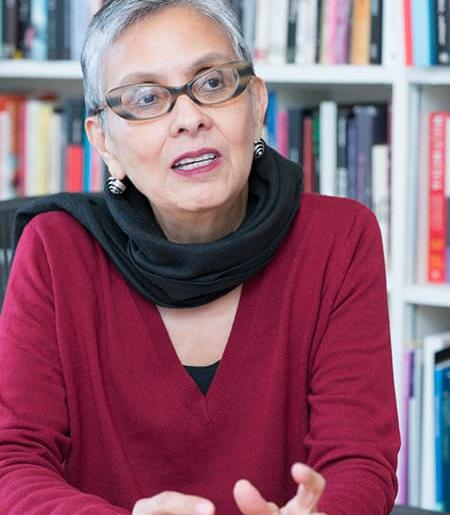
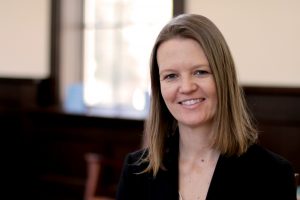
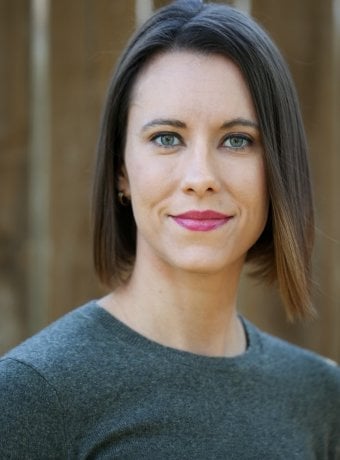
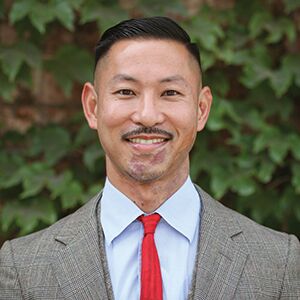
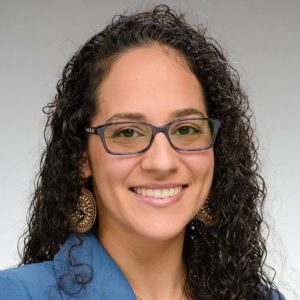
Claire Bowern is Professor of Linguistics at Yale University specializing in historical linguistics, language documentation, and Australian Indigenous languages. Her research employs computational phylogenetics to study language evolution and supports language revitalization through digital archives and fieldwork methodologies. Recent publications address: Phylogenetic signal in lexical evolution across language families Digital infrastructure for endangered language documentation (FLEx software analysis) Decolonizing linguistics pedagogy and research practices Her work consistently integrates linguistic, anthropological, and computational approaches to analyze language diversity and change. She contributes to global databases including Grambank and D-PLACE, examining links between linguistic, cultural, and environmental patterns.
Amanda Phillips is an Associate Professor at Georgetown University, affiliated with the Departments of English, Film and Media Studies, Women’s and Gender Studies, and American Studies. Their research focuses on feminist and queer theory in digital media, with a particular emphasis on critical game studies and digital humanities. Selected publications include Gamer Trouble: Feminist Confrontations in Digital Culture and co-editing the Queer/Trans/Digital book series. Their scholarship appears in journals such as ROMchip , Feminist Media Histories , and Games and Culture . Research Interests: Digital media and gender politics Queer theory in gaming contexts Decolonial and anti-racist digital humanities Critical analysis of game mechanics Digital labor and precarity Affective histories of gaming Scientific Awards: Mellon/ACLS Dissertation Completion Fellow Academic Leadership: Former chair of the American Studies Association Digital Humanities Caucus Co-founder of the #transformDH Collective Editorial work on special issues of Game Studies and Antares: Letras e Humanidades Previous Institutions: IMMERSe Postdoctoral Fellow at University of California, Davis Ph.D. recipient from University of California, Santa Barbara with emphasis in Feminist Studies
Maria Fernandez is an Associate Professor at Cornell University's College of Arts and Sciences, Department of History of Art and Visual Studies. She holds a Ph.D. from Columbia University and specializes in the history and theory of digital art, cybernetics, feminist media arts, and posthumanism. Ph.D., Columbia University Research Focus : Maria's work bridges cybernetics, feminist media arts, posthumanism, new materialism, BioArt, and AI in art. She investigates how women artists in new media contribute to posthumanist and new materialist discourses, with a current book project on British cybernetician Gordon Pask. Publications span digital art history, Latin American modernism, and feminist cybernetics. Her articles appear in Leonardo , Art Journal , and Third Text , with a focus on interactivity, media theory, and technological aesthetics. Scientific Awards : Arvey Book Award by the Association for Latin American Art (2015) She co-edited Domain Errors: Cyberfeminist Practices (2002) and Latin American Modernisms and Technology (2018). Her advising policy emphasizes formal departmental application reviews.
University of North Carolina at Chapel HillUnited States
Courtney Rivard is an Assistant Professor in English & Comparative Literature at the University of North Carolina, Chapel Hill, with a secondary appointment at the School of Data Science & Society. She directs the Digital Literacy and Communications (DLC) Lab, focusing on digital humanities, critical game studies, and archival rhetorics. Her research bridges rhetoric, digital methods, and social justice, examining how archives and digital tools shape narratives around race, gender, and national identity. Dr. Rivard holds a Ph.D. from the University of California, Santa Cruz (2012). Her book Layered Lives (2022) combines archival and computational methods to analyze Depression-era life histories. She has secured grants from NEH, ACLS, and UNC initiatives, supporting projects like the Critical Gaming Initiative and oral history archives on PFAS contamination. Her teaching emphasizes digital literacy and public engagement, including courses on data rhetoric, game studies, and multimodal composition. The DLC Lab hosts the Greenlaw Gameroom, a game-based classroom funded by Lenovo, fostering critical pedagogies through play. Research Labs: Digital Literacy and Communications Lab, Greenlaw Gameroom Grants: NEH, ACLS Digital Extension Grant, UNC Arts & Humanities Fellowships Key Projects: Critical Gaming Initiative, Photogrammar collaboration, “Forever Chemicals” oral history archive
Claudia Berger is a Visiting Assistant Professor at the School of Information, Pratt Institute, and serves as the Digital Humanities Librarian at Sarah Lawrence College. They are actively engaged in digital scholarship, critical making, and interdisciplinary research at the intersection of libraries, technology, and the humanities. Education: MSLIS and Advanced Certificate in Digital Humanities, School of Information, Pratt Institute MA in Classics & Ancient History, University of Exeter BA in Electronic Media & Art and Classics, Bard College at Simon’s Rock Their research focuses on innovative methodologies in digital humanities, particularly data physicalization, digital environmental humanities, and critical engagement with data through craft and tactile experiences. They explore how digital tools can be reimagined through embodied and inclusive practices, often integrating queer perspectives and ecological awareness into scholarly work. Their recent publications reflect a strong trend toward interdisciplinary making, environmental justice, and pedagogical innovation in library and information science. Themes include countermapping, plant-human relations, craft-based digital scholarship, and inclusive professional identity formation. Their work bridges technical practice with critical theory, emphasizing accessibility and material engagement. Professional Service: Editor, dh+lib and dh+lib Review Deputy Secretary, Association for Computers and the Humanities (ACH) Former Librarian, The Mellon Foundation (supporting research in higher learning, arts and culture, public knowledge, and humanities in place) Claudia Berger is deeply involved in mentoring and shaping the future of information professionals through curriculum analysis, editorial work, and collaborative projects. While no formal grants or advising relationships are listed, their leadership in digital humanities education and community-building initiatives demonstrates significant scholarly impact. They maintain an active public research presence through a Zotero repository on physical data visualization.
Jennifer Nish serves as Associate Professor of Rhetoric and Composition at Michigan Technological University, holding dual affiliations with the Academy of Teaching Excellence and the Institute of Computing and Cybersystems (ICC). Her interdisciplinary work critically examines power dynamics in digital activism and transnational feminist movements. Her academic credentials include: Ph.D. in English from the University of Kansas B.A. in English & Psychology from the University of Nebraska at Lincoln Dr. Nish's research centers on intersections between rhetorical practices and systems of power, with signature contributions in transnational feminist rhetoric, disability justice advocacy for Long Covid/ME communities, and digital media activism. Her monograph Activist Literacies: Transnational Feminisms and Social Media Rhetorics establishes frameworks for analyzing contemporary activism, while recent projects expand into chronic illness narratives and globalization's impact on rhetorical studies. She teaches graduate courses in Disability Studies and undergraduate Advanced Composition. Analysis of her 2016-2024 publications reveals evolving methodological priorities: early work focused on digital campaign rhetoric (e.g., Humans of New York analysis), while current research integrates crip theory with transnational feminist approaches to address disability justice in academic labor and chronic illness communities. This trajectory demonstrates increasing engagement with embodied knowledge systems and intersectional activism. As an ICC member, Dr. Nish contributes to cyber-social systems research through rhetorical perspectives on technology-mediated activism and community formation.
Gina Bloom is a Professor of English at the University of California, Davis, with affiliations in the PhD programs in Education and Performance Studies. Her research spans Shakespeare, early modern drama, gender theory, and digital humanities, focusing on games, performance, and educational technologies. PhD, MA, and Certificate in Women's Studies from the University of Michigan BA from the University of Pennsylvania Her work includes the award-winning digital game Play the Knave and a decolonial pedagogy curriculum for teaching Shakespeare. She collaborates with UC Davis’s ModLab and DataLab, emphasizing social justice and immersive learning. Awards include Best AR/VR Game (2022) and Shakespeare Publics Award (2025). Her publications blend game studies, theater history, and feminist theory, with recent articles addressing decolonial education and digital embodiment. Winner, Shakespeare Publics Award (2025) Finalist, GEE! Learning Game Award (2023) Winner, Best AR/VR Game Award (2022)
Rachel Devorah Wood Rome is an Assistant Professor in the Electronic Production and Design (EPD) department at Berklee College of Music, where she teaches creative coding, live coding, and music technology. Her work bridges electronic music, improvisation, and critical theory, with a focus on sonic cyberfeminism, archival practices, and the social meanings of sound and space. Ph.D. in Music Composition and Computer Technologies, University of Virginia (2018) M.L.I.S., San José State University (2017) M.A. in Music Composition, Mills College (2013) B.Mus. in Horn Performance, CUNY Queens College (2007) Her research explores superhuman prolongation, opaque complexity, and the re-signification of archaic tools in sonic media. She values machines for their patience and memory, and her creative practice emphasizes critical agency in technology design and use. She performs under the name 'mehetabel' when using archival materials in improvised electronic music. The most recent publications and performances reflect a deep engagement with AI and music, live coding, feminist media theory, and spatialized sound. Her works often involve real-time data processing, generative systems, and collaborative improvisation, situating sound within broader social, political, and technological contexts. Ruth Anderson Installation Prize (IAWM) New Music USA Grant Fellowships from MIT OpenDocLab, Adrian Piper Foundation, Ina GRM, New Museum, and Jefferson Scholars Foundation Residencies at EMS Stockholm, STEIM Amsterdam, MassMoCA, and Cove Park Rome advises emerging artists in electronic music and creative coding, many of whom have gone on to establish their own practices. She is also active in academic service, including curriculum development, faculty governance, and labor organizing as a Councilor for the Berklee Faculty Union. She leads initiatives in DEI, sound design, and coding pedagogy within the EPD department. She has been involved in interdisciplinary collaborations with artists, technologists, and institutions worldwide, presenting work in galleries, festivals, and academic conferences across North America, Europe, and Asia. Her leadership extends to nonprofit arts organizations, where she has served as Executive Director and grantwriter.
Vijay Iyer is the Franklin D. and Florence Rosenblatt Professor of the Arts at Harvard University, holding a joint appointment in the Department of Music and the Department of African and African American Studies. His work bridges music studies, Black studies, and cognitive science, focusing on embodied music cognition and Afro-diasporic musical traditions. As a graduate advisor in Creative Practice and Critical Inquiry (CPCI), he mentors doctoral students at the intersection of artistic practice and academic research. PhD in Technology and the Arts (UC Berkeley, 1998) BA in Mathematics and Physics (Yale, 1992) A globally recognized composer-pianist, Iyer’s scholarship decenters Eurocentric paradigms in music cognition through case studies of West African and African-American musics. His creative outputs include 24 albums and commissions for ensembles like the Silk Road Ensemble and International Contemporary Ensemble. Current research explores speculative musicalities, digital culture, and the politics of spatial-temporal experience in Black music. Recent publications analyze microtiming in jazz, collaborative improvisation, and the ethical dimensions of musical practice. His accolades include a MacArthur Fellowship, Doris Duke Performing Artist Award, and multiple DownBeat Magazine Jazz Artist of the Year titles. At Harvard, he teaches courses like Black Speculative Musicalities and co-founded the CPCI doctoral program.
Massachusetts Institute of TechnologyUnited States
Catherine D’Ignazio is an Associate Professor at the Department of Urban Studies and Planning , School of Architecture and Planning , Massachusetts Institute of Technology (MIT) . She serves as the director of the Data + Feminism Lab , which focuses on feminist technology, data literacy, and social justice. Her work spans AI bias , gender-based violence , and equitable urban planning , with a strong emphasis on intersectional approaches to data science. Education : She holds an MS from the MIT Media Lab , an MFA from the Maine College of Art , and a BA in International Relations from Tufts University (Summa Cum Laude, Phi Beta Kappa). D’Ignazio’s research explores the intersection of technology , design , and social justice , particularly through grassroots data activism and feminist AI. Her 2024 book , Counting Feminicide: Data Feminism in Action , analyzes how communities collect and use data to challenge gender-related violence. Earlier, her 2020 book Data Feminism (co-authored with Lauren Klein) outlines ethical data science practices. Scientific Awards include recognition from the Tanne Foundation , Turbulence.org , and the Knight Foundation . Her art projects have been exhibited at venues like the Venice Biennial and the ICA Boston . She teaches courses such as Interactive Data Visualization & Society and Urban Science for Public Good , emphasizing participatory design and critical data literacy . Her lab collaborates with global networks like the Design Justice Network and Data Against Feminicide .
Rebecca Lemov is a Professor of the History of Science at Harvard University's Faculty of Arts and Sciences, specializing in the intersection of science, technology, and society. Her research examines pivotal moments in the history of human and behavioral sciences, with a focus on mind control, archival practices, and data-driven epistemologies. PhD in Anthropology, UC Berkeley BA in English Literature, Yale University Her recent work investigates brainwashing techniques from Cold War-era experiments to modern surveillance capitalism, analyzing how data and technology shape human cognition. She also explores the evolution of behavioral engineering and the ethical challenges of preserving endangered anthropological archives. Her publications span topics like cybernetics, predictive policing, and the quantified self, reflecting a deep engagement with interdisciplinary methodologies. Lemov’s forthcoming 2025 book, The Instability of Truth , continues her exploration of coercive persuasion in digital contexts. As Director of Undergraduate Studies, she mentors students in courses covering big data history, animal studies, human experiments, and technologies of mind control. She has held visiting scholar positions at the Max Planck Institute for the History of Science in Berlin (2010–11, 2013–14), contributing to working groups on archival science and data historiography.
Jonathan Hsy is a Professor of English at George Washington University, affiliated with the Columbian College of Arts & Sciences. He holds additional roles as Director of Undergraduate Advising in the English Department, co-director of the GW Digital Humanities Institute, and affiliated faculty in Women’s, Gender, and Sexuality Studies, as well as the Sigur Center for Asian Studies. Hsy’s research focuses on medieval literature, disability studies, critical theory, and global medievalisms. His work bridges historical and contemporary issues, exploring intersections of language, race, gender, and disability. Education: PhD (2007), MA (2002) from the University of Pennsylvania; MA (2001), BA (2000) from Stanford University, with a minor in Human Biology. Research Interests: Hsy’s expertise includes medieval literary and cultural studies, antiracist medievalisms, digital humanities, and Asian American cultural studies. His publications, such as Antiracist Medievalisms: From “Yellow Peril” to Black Lives Matter (2021), challenge traditional narratives by centering marginalized voices. He co-edits A Cultural History of Disability in the Middle Ages (2020) and leads collaborative projects like Global Chaucers. Publications & Grants: Over 20 peer-reviewed articles and books address topics from medieval disability to global Chaucerian studies. Recent grants include a $3.5M Mellon Higher Learning Grant for RaceB4Race and a Folger Shakespeare Library fellowship. His work has appeared in PMLA , Journal of Bioethical Inquiry , and postmedieval . Awards & Leadership: Recipient of the John Hurt Fisher Award (2015) and multiple fellowships. He chairs initiatives like the MLA’s Committee on Disability Issues and co-founded Medievalists of Color. His teaching emphasizes disability justice and digital pedagogy. Labs & Collaborations: Directs the GW Digital Humanities Institute, fostering projects like the Digital Medieval Disability Glossary. Leads crowdsourced efforts such as the Race and Medieval Studies bibliography, promoting equity in academic networks.
Raquel Coelho is an Assistant Professor at the University of Pittsburgh's School of Computing and Information (SCI) and a Research Scientist at the Learning Research and Development Center (LRDC). She holds a PhD in Learning Sciences and Technology Design from Stanford University, with a focus on human-centered applications of emerging technologies in learning environments. Her joint appointments include senior researcher roles at the University of Bergen's SLATE and Columbia University's TLTL, alongside her founding role in Learning Sciences Brazil Affiliate. Education: PhD in Learning Sciences and Education Data Science (Stanford University), postdoctoral research at University College London and University of Bergen, and teaching at University of Nottingham's Learning Sciences Research Institute. Research Interests: Proleptic thinking in technology design, leveraging future-oriented frameworks to shape present-day educational systems. Focus areas include AI ethics in education, data visualization for learning, and culturally responsive pedagogical practices. Her lab, ProlepSys, emphasizes 'prolepsis'—imagining future possibilities to guide current design decisions—integrating human-machine collaboration for developmental advancements. Teaching Philosophy: Project-based, ungraded doctoral and undergraduate courses emphasizing design thinking, critical discourse, and practical research skills. Courses include INFSCI 3350 (Learning Sciences & Technology Design) and INFSCI 0410 (Human-Centered Systems Design). Lab & Collaborations: ProlepSys lab members include Cassandra Kelley (project coordinator) and undergrad researchers (Eliza Callahan, Erick Makita, etc.). The lab prioritizes equitable technology integration, avoiding 'lock-ins,' and maintaining human agency through design principles like 'use is design' (Pea) and Bruner's 'back and forward between possible and actual.'
Jih-Fei Cheng is Associate Professor and Chair of the Department of Feminist, Gender, and Sexuality Studies at Scripps College, where he teaches and researches at the intersection of science, media, surveillance, and social movements. He holds a PhD in American Studies and Ethnicity with an emphasis in Visual Studies from the University of Southern California, an MA in Asian American Studies from UCLA, and a BA in Communication from UC San Diego. His interdisciplinary scholarship engages feminist, queer, and decolonial theories to analyze the political economies of virology, global health, and racial capitalism. His research centers on the historical and transnational entanglements of science, empire, and social justice. Key areas include the institutionalization of queer politics, the geopolitics of HIV/AIDS, and the racialized foundations of virology. His co-edited volume AIDS and the Distribution of Crises (Duke UP, 2020) rethinks the pandemic as a network of overlapping crises shaped by colonialism and neoliberalism. He is currently working on a book project titled Materialist Virology , which historicizes virology within Euro-American empire. Cheng’s recent publications span journals such as History and Technology , Radical History Review , and GLQ , with 2025 articles on financial contagion and reservoirs signaling his continued engagement with interdisciplinary frameworks linking finance, disease, and history. His work often collaborates with artists and activists, exemplified by writings on Candice Lin’s art and co-organized dialogues on care and intravention during the pandemic. He has been recognized with multiple awards, including the Lavender Graduation Award (2023, 2016), Professional Development Grants (2019–2020, 2016–2017), and fellowships from USC and the American Antiquarian Society. His teaching and service reflect a deep commitment to LGBTQIA inclusion, racial justice, and community-based scholarship. Lavender Graduation Award for providing safe and inclusive spaces for LGBTQIA students, Queer Resource Center, The Claremont Colleges (2023) Professional Development Networks Grant at The Claremont Colleges (2019–2020) Diversity Teaching Award Nominee, The Claremont Colleges (2018) EnviroLab Asia Research and Conference Award (2017–2018) Lavender Graduation Award (2016) Professional Development Networks Grant (2016–2017) Research Fellow, Summer Institute for the Center for Historic American Visual Culture, American Antiquarian Society (2014) Visual Studies Summer Research Award, USC (2014) New Directions Fellow, USC Center for Feminist Research (2011–2012) Tritia Toyota Fellowship (2001–2002) Cheng has advised and collaborated with numerous scholars and activists, though no formal advisees are listed. His work is deeply rooted in community engagement, having previously worked in HIV/AIDS social services and served on the Board of Directors at the HIV League. He was managing editor of American Quarterly (2010–2013) and has taught at UCLA and Hunter College. His research is supported by interdisciplinary networks and collaborative projects, including digital humanities initiatives and art-theory praxis. He is involved in multiple collaborative research and publishing projects, often working with artists like Candice Lin and scholars such as Alexandra Juhasz and Nishant Shahani. His recent special issue on 'Reservoirs' brings together scholars from anthropology, media studies, and philosophy to rethink historical and ecological crises. His lab-like collaborative environments include feminist media praxis collectives and interdisciplinary workshops on crisis, care, and decolonial knowledge.
Dr. Karla Badillo-Urquiola is an Assistant Professor in the Department of Computer Science and Engineering at the University of Notre Dame's College of Engineering. She directs the EPOCH Research Lab, focusing on technology-driven solutions for youth and marginalized populations. Ph.D. and M.Sc. in Modeling and Simulation (University of Central Florida) B.Sc. in Psychology (University of Central Florida) Her research integrates human-centered and participatory design methods to address adolescent online safety, particularly for teens in foster care. She advocates for diversity, inclusion, and equity in computing through her work with SIGCHI's Latin American HCI Community. Recent publications span topics like AI ethics, digital resilience, and cross-cultural design. Her awards include the McKnight Doctoral Fellowship and the Order of Pegasus Induction (UCF, 2020). Dr. Badillo-Urquiola collaborates with institutions like Notre Dame’s Lucy Family Institute for Data and Society and partners in Mexico on health monitoring systems. She mentors underrepresented students in STEM while balancing motherhood to two daughters.