Carmen María Muñoz Herrera is a Collaborating Professor in the Department of Educational Sciences at Cardenal Herrera CEU University, specializing in Didactics and School Organization. She teaches in the Bachelor’s Degree in Early Childhood and Primary Education and the Master’s Degree in Secondary Education Teaching. Additionally, she serves as a Quality Assurance Officer at the Castellón Campus. Diploma in Special Education Teaching, CES Cardenal Spínola San Pablo CEU (2009) Degree in Psychopedagogy, CES Cardenal Spínola San Pablo CEU (2009) Master’s Degree in Special Education, University of Valencia (2013/14) Religious Education Teaching Certificate (Ecclesiastical Declaration of Academic Competence), CES Cardenal Spínola San Pablo CEU (2009) Her research focuses on Educational Inclusion , with a strong emphasis on Universal Design for Learning (UDL), Active Learning Methodologies, and Didactic Programming. She actively collaborates with educational centers on training initiatives related to classroom practice, including Learning to Learn Competence. Her doctoral studies are centered on Educational Inclusion. Scientific Awards : Extraordinary End of Degree Award in Psychopedagogy (2009) ÁNGEL HERRERA AWARD (14th, 15th, and 18th Editions)
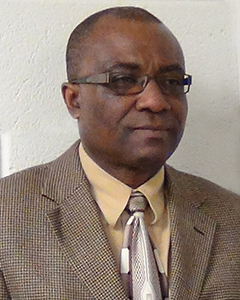
Dr. Victor Oguejiofor Okafor serves as Professor and Department Head of Africology and African American Studies at Eastern Michigan University, where he has been a faculty member since 1995. Previously, he held positions as Interim Director of African American Studies and tenure-track assistant professor at North Carolina State University. His academic leadership extends beyond EMU, as evidenced by his 2019 service as an invited co-external reviewer for the African and African American Studies program at the University of Central Arkansas. Dr. Okafor's educational foundation includes: Ph.D. in Africology & African American Studies from Temple University (1994) Master of Public Affairs (MPA) with concentration in Development Management from Indiana University Bloomington (1988) BA in Journalism (with Business minor) from Indiana University (1986) His scholarly contributions have established him as a leading authority in establishing Africology as a distinct academic discipline with its own epistemological framework. Dr. Okafor's research examines African political economy, Black politics and public policy, African civilization, multiculturalism, and Afrocentricity as theoretical paradigms. His work consistently addresses the crucial question of disciplinary identity within Black Studies, particularly the debates surrounding nomenclature (Africology vs. African American Studies vs. Black Studies vs. Africana Studies). Analysis of his publication trajectory reveals a sophisticated evolution from foundational theoretical work to contemporary applications. His recent scholarship demonstrates increasing engagement with global perspectives, positioning Africology as a model for global studies that centers African experiences. The Civil Rights Movement presentations for Michigan educators (2023) showcase his commitment to translating academic knowledge for broader public understanding, while his 2024-2025 publications on human rights theory and African political development reflect continued scholarly innovation. Dr. Okafor's significant scholarly contributions have been recognized through prestigious awards: Distinguished Scholar Award for Outstanding Scholarship, Teaching and Service in Africana Studies from Tennessee State University (2017) Great Michigan Read Scholar appointment by Michigan's Humanities Council (2017-18) Recognition as 'Most Valuable Professor' by Eastern Michigan University's men's basketball team (Winter 2014) His professional service extends to journal editing and manuscript reviewing for publications including the Canadian Journal of African Studies, Sage Publications, and the Journal of Black Studies. As an expert court witness on African cultural matters and Igbo language interpreter, he bridges academic knowledge with practical community needs. His recent three-part lecture series on the Civil Rights Movement for over 300 Michigan educators, sponsored by the Michigan Department of Education, exemplifies his commitment to public scholarship and educational outreach beyond the university setting.
Viorel Grigorcea is a Senior Lecturer at the Department of Computer Science within the Faculty of Mathematics and Informatics at the University of State of Moldova (USM). He has been with USM since 1997, becoming a senior lecturer by competition in 2002, and has served as Vice-Dean of the Faculty of Mathematics and Informatics since that same year. His academic journey began with a Bachelor's degree in Applied Mathematics from USM (1991-1996), followed by a Doctorate in Computer Programming from the Institute of Mathematics and Informatics of the Romanian Academy of Sciences (1996-1999). His teaching portfolio includes a comprehensive range of computer science courses: Artificial Intelligence Logic Programming Functional Programming Object-Oriented Programming Programming Fundamentals Programming Techniques Computer Architecture Operating Systems Expert Systems Grigorcea's research has evolved over time, with early work focusing on analogical reasoning, case-based reasoning, and attribute modeling in artificial intelligence systems. In recent years, his research has expanded to include educational assessment, particularly evaluating school results and basic skills of primary and secondary school graduates in Mathematics, Romanian, and Russian. His scientific activity includes continuous collaboration since 2001 on the institutional project 'Research and development of theoretical and practical aspects of modern programming technologies,' building on his earlier work in artificial intelligence systems. Grigorcea is associated with the Web Programming Section at USM, reflecting his engagement with practical programming technologies and applications.
Maria-Cristina Marinescu serves as a Lecturer in the Department of Mathematics and Data Analytics at IQS School of Management. With a strong foundation in computational methods and data analysis, she contributes significantly to both teaching and research within the institution. Her academic profile demonstrates consistent scholarly activity with 44 documented scientific production items spanning over two decades. Dr. Marinescu's research interests center on Machine Learning, Data Analytics, and Artificial Intelligence, with notable applications in epidemic modeling, wireless sensor networks, and programming models. Her work bridges theoretical computer science with practical applications addressing real-world challenges in public health, digital well-being, and medical diagnostics. The fingerprint analysis of her work shows strong emphasis on Machine Learning (100%), Learning Systems (100%), and Transportation Models (100%), with substantial contributions to Programming Models (84%) and Wireless Sensor Networks (77%). Her recent publications reveal a trend toward interdisciplinary research that combines computational methods with societal challenges. She has made significant contributions to epidemic modeling during the COVID-19 pandemic, developing methods for accurate incidence rate estimation in Spain and analyzing information gains from multiple epidemic model outputs. Additionally, her work extends to medical applications including research on ocular ischemia and glaucoma, as well as innovative approaches to automated metadata annotation using machine learning techniques. Dr. Marinescu actively leads and participates in multiple research projects including Uncovering patterns of unconscious reactions to fake content (as Principal Investigator), MobilePressure (focused on reducing children's smartphone exposure), and ADAMIQS: Applied Data Analytics and Modelling IQS . These projects demonstrate her commitment to addressing contemporary issues through data-driven approaches while mentoring students and collaborating with interdisciplinary research teams.
Raffi Khatchadourian is an Associate Professor in the Department of Computer Science at Hunter College and a member of the Doctoral Faculty of The Graduate School and University Center's Ph.D. Program in Computer Science at the City University of New York (CUNY). He leads the PONDER Lab @ CUNY and is a member of the CUNY Institute of Computer Simulation, Stochastic Modeling, and Optimization (CoSSMO). His research lies at the intersection of software engineering, programming languages, and reliable machine learning systems. He investigates how program analysis, automated refactoring, and type theory can ease the burden of correctly, efficiently, and securely evolving large and complex software. His work spans several key areas including automated refactoring of Java programs, empirical studies of software development practices, migration of imperative Deep Learning programs to graph execution, and the application of software engineering methodology to improve statistical programs and artificial intelligence. His research has been externally supported by the National Science Foundation (NSF), the Japan Society for the Promotion of Science (JSPS), Amazon Web Services (AWS), and the Verizon Foundation. Dr. Khatchadourian's recent publications demonstrate a strong focus on improving Deep Learning systems through automated refactoring techniques, analyzing technical debt in machine learning systems, and addressing concurrency challenges in modern programming languages. His work frequently appears in top-tier conferences including ICSE, ASE, ESEC/FSE, and FASE. His scientific achievements have been recognized with numerous awards including the EAPLS Distinguished Paper Award at FASE '25, EAPLS Best Paper Award at FASE '20, and a Distinguished Paper Award at IEEE SCAM '18. He has also received fellowships from JSPS and NSF EAPSI, along with the Eleanor Quinlan Memorial Award for Excellence in Teaching. As an advisor, Dr. Khatchadourian has mentored numerous PhD, Master's, and undergraduate students, including Tatiana Castro Vélez who recently accepted a tenure-track Assistant Professor position at University of Puerto Rico. He has served on multiple program committees for major conferences including ICSE, ASE, ECOOP, and GPCE, and has organized events such as the New York Seminar on Programming Languages and Software Engineering (NYPLSE). He also mentors students through NYU GSTEM and ACM SIGPLAN-M programs. Dr. Khatchadourian maintains active research collaborations across institutions and leads the PONDER Lab @ CUNY, which focuses on programming, optimization, and novel development environments for reliable software. The lab provides opportunities for undergraduate, master's, and doctoral students interested in programming languages and software engineering research.