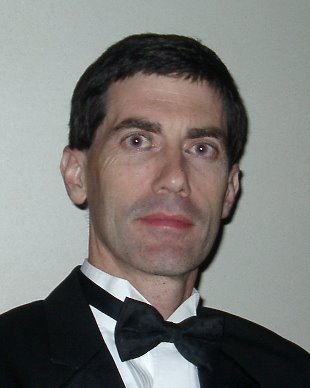
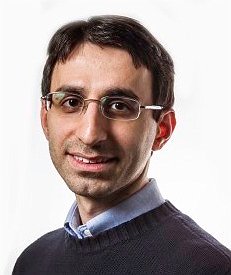
Przemysław Andrzej Wałęga is a Senior Researcher at the University of Oxford , affiliated with the Department of Computer Science . He also holds roles as a College Lecturer at St Catherine's College and a Junior Research Fellow at Kellogg College. His research focuses on formalizing dynamic systems using logics in AI, with an emphasis on computational complexity. Research Interests: Knowledge Representation and Reasoning Temporal, Interval, and Metric Logics Stream Reasoning Computational Complexity of Logics Scientific Awards: Junior Research Fellow, Kellogg College Recent Publications: His work addresses reasoning with metric temporal operators in Datalog, materializability, stratified negation, and practical implementations like MeTeoR. These contributions span theoretical analysis and scalable reasoning systems.
Jan Christiansen is a Professor in the Department of Information and Communication at Flensburg University of Applied Sciences. He specializes in Programming Languages and Programming Theory, teaching in the Applied Computer Science program. His research focuses on functional logic programming, probabilistic programming, formal verification, and compiler design. His key research areas include the integration of functional logic programming into Haskell, probabilistic programming semantics, and formal methods for verifying Haskell programs in Coq. He has contributed to tools like Sloth for strictness analysis and has explored foundational aspects of encapsulated search in Curry. His work bridges functional programming, logic programming, and probabilistic models, emphasizing practical implementations and theoretical rigor. Christiansen leads the Academic Advisory Service and co-founded TechStartUp@HS-Flensburg. His recent publications span compiler plugins for embedding functional logic in Haskell, probabilistic library implementations, and monadic approaches to program verification. His research bridges academia and practical software development, with implications for both theory and industry.
Thomas W. Reps is a Professor in the Department of Computer Science at the University of Wisconsin, holding the position since 1985. He has served as President and Co-founder of GrammaTech, Inc. since 1988, and held visiting roles including Guest Professor at the University of Paris 7 (2007-08), Visiting Researcher at CNR in Pisa, Italy (2000-01), and Guest Professor at the University of Copenhagen (1993-94). He previously served as Associate Chairman of the Computer Sciences Department at Wisconsin (1990-93) and held postdoctoral roles at Cornell University and INRIA. Reps' research spans programming languages, software engineering, and computer security, with a focus on static program analysis, machine-code analysis, and program slicing. His work in model checking, software maintenance, and analysis techniques for information security has significantly impacted the field of computer science. 2017 ACM SIGPLAN Programming Languages Achievement Award 2015 WARF Named Professorship 2005 ACM Fellow 2000 Guggenheim Fellowship 1986 NSF Presidential Young Investigator Award Reps' publications highlight advancements in interprocedural dataflow analysis, weighted pushdown systems, and symbolic computation. His work bridges theoretical foundations with practical applications in software verification and security, creating tools that have shaped modern program analysis techniques. He has collaborated extensively with researchers like Somesh Jha, Mooly Sagiv, and Gogul Balakrishnan across institutions in Europe and the U.S.
Aleks Nanevski is a Research Professor at the IMDEA Software Institute in Madrid, Spain. He holds a Ph.D. in Computer Science from Carnegie Mellon University (2004) and completed postdoctoral research at Harvard University and Microsoft Research. His research focuses on programming languages and formal verification, particularly integrating dependent type systems with imperative features like concurrency and pointers. He co-leads the Functional Concurrent Separation Logic (FCSL) project, advancing verification techniques for concurrent programs. Education & Affiliations: Ph.D. in Computer Science, Carnegie Mellon University (2004) Postdoctoral Fellowships: Harvard University (USA), Microsoft Research (UK) Joined IMDEA Software Institute in 2009 Research Interests: Nanevski designs languages and logics that unify programming with formal verification, leveraging type theory to ensure correctness in systems with imperative features. His work emphasizes concurrency, pointer arithmetic, and modular reasoning in concurrent separation logics. Recent efforts include declarative linearizability proofs and contextual modal types for algebraic effects. Professional Activities: Program Chair: HOPE 2017, LOLA 2012 PC Member: OOPSLA 2024, POPL 2023, and multiple top-tier conferences Advising & Team: Current advisees: Jesús Domínguez, Joakim Öhman Former advisees include Ilya Sergey (Postdoc), Germán Delbianco (PhD), and Nikita Zyuzin Labs/Teams: Leads the FCSL project , developing tools for verifying fine-grained concurrent programs using dependent types and separation logic.
David G. Mitchell is an Associate Professor in the Department of Computing Science at Simon Fraser University (SFU). He is part of the School of Computing Science and affiliated with the Computational Logic Laboratory. His research focuses on propositional satisfiability (SAT) and finite domain constraint satisfaction (CSP), exploring their complexity and practical algorithm design for applications in formal verification and related tasks. Education : Ph.D., Computer Science, University of Toronto, 2002 M.Sc., Computing Science, Simon Fraser University, 1993 B.Sc., Cognitive Science and Artificial Intelligence, University of Toronto, 1989 Research Interests : Mitchell's work bridges mathematical logic and computer science, emphasizing SAT-based problem solving, constraint modeling languages, and automated reasoning. His contributions include advancements in clause learning, resolution complexity, and declarative programming frameworks for solving NP problems. He has developed tools like MXC and Enfragmo, which apply SAT techniques to real-world applications. Students : Mitchell has advised numerous graduate students, including current PhD candidates Mona Mehdizadeh and Sima Jamali, and past advisees such as Sahba Etezad, Heng Liu, and Faraz Hach. His students' work spans algorithm optimization, constraint satisfaction, and formal verification. Labs/Teams : He is a member of the Computational Logic Laboratory at SFU, contributing to research in logic-based problem-solving and algorithm development.
Ronald Fagin is a Research Fellow at IBM Research - Almaden, renowned for his groundbreaking contributions to database theory, finite model theory, and reasoning about knowledge. His work bridges logic with practical applications in computer science, including entity resolution, query answering, and uncertainty modeling. Ph.D. in Mathematics, UC Berkeley B.A. in Mathematics, Dartmouth College His research focuses on applying logic to computer science, particularly in database theory, finite model theory, and knowledge representation. His recent work explores quantifier complexity, multi-structural games, and ontology-driven data integration. His publications span database theory, logic, and information extraction, with a strong emphasis on formal frameworks and complexity analysis. Key themes include entity linking, uncertainty reasoning, and algorithmic voting theory. Member of National Academy of Sciences Member of National Academy of Engineering Recipient of Gödel Prize and IEEE Technical Achievement Award Laurea Honoris Causa (Italy) and Docteur Honoris Causa (France) Senior Fellow of ACM, IEEE, and AAAS Ronald Fagin has mentored prominent collaborators in database theory and information extraction. His research includes leading projects on imprecise probabilistic logic and developing frameworks for knowledge representation under uncertainty.
Bart Bogaerts is a Professor at the Vrije Universiteit Brussel , affiliated with the Federated Labs AI and Robotics and the Department of Informatics and Applied Informatics . His research centers on Approximation Theory , Logic Programming , Knowledge Representation , and Constraint Satisfaction Problems , with a focus on formalizing reasoning methods and optimizing computational systems. His recent publications emphasize certified algorithms, semantic web traversal, and formal verification, reflecting collaborations with institutions like KU Leuven and Maastricht University. Key themes include: Algorithm Certification : Integrating Coq for verified logic programming and optimization techniques. Web Technologies : Distributed subweb specifications and query processing frameworks. Nonmonotonic Reasoning : Advancing approximation fixpoint theory in knowledge representation. Scientific recognitions include the AAAI 2022 Distinguished Paper Award and the IJCAI 2021 Distinguished Paper Award . Dr. Bogaerts supervises PhD students such as Samuele Pollaci, Robbe Van Den Eede, and Dirk Vandesande in joint programs with VUB and KU Leuven.
Karol Draszawka serves as an Assistant lecturer at Gdańsk University of Technology, specifically within the Department of Computer Systems Architecture in the Faculty of Electronics, Telecommunications and Informatics. His academic work focuses on developing innovative approaches to artificial intelligence and machine learning problems. Dr. Draszawka's research interests span multiple domains of computer science, with particular emphasis on neural networks , reinforcement learning , and computer vision applications . His work demonstrates expertise in developing agents capable of solving complex logic tasks, improving multi-label classification systems, and implementing practical computer vision solutions for publishing sector applications. His research often bridges theoretical AI concepts with practical implementations, particularly in the areas of augmented reality and mobile applications. His publication record shows consistent contributions to the field from 2020 through 2024, with work appearing in journals like Applied Sciences-Basel and Communications in Computer and Information Science. His research demonstrates a progression from foundational AI concepts (like the Wumpus World environment) to increasingly sophisticated neural network applications and practical implementations in publishing technologies.
Hamid Bagheri is an Associate Professor in the School of Computing at the University of Nebraska-Lincoln, where he conducts cutting-edge research at the intersection of software engineering, security, and formal methods. He also serves as a faculty associate of the Institute for Software Research (ISR) at the University of California, Irvine, and co-directs the ESQuaReD Lab (Engineering Software Quality and Reliability through Deductive methods), which focuses on ensuring software quality through rigorous engineering approaches. Dr. Bagheri's research spans several critical areas including security of mobile devices and IoT systems, scaling formal verification with machine learning, software analysis and testing, dependable cyber-physical systems, and automated program repair and fault localization. His work combines theoretical rigor with practical applications, addressing real-world challenges in software security and reliability through publications in top venues like ICSE, FSE, ASE, and IEEE/ACM Transactions journals. His recent publications demonstrate a strong trend toward integrating machine learning techniques with formal methods to enhance software analysis capabilities. This includes leveraging transformers for database design optimization, neuro-symbolic approaches for certified software synthesis, and large language models for repairing formal specifications, reflecting his ability to adapt to emerging technologies while maintaining a strong theoretical foundation. Dr. Bagheri has received numerous prestigious awards including the EPSCoR FIRST Award, the NSF CISE Career Research Initiation Initiative Award, multiple Distinguished Paper Awards from top conferences, and teaching honors such as the SoC Student Choice Outstanding Teaching Award (2023-2024) and the CSE Outstanding Teaching Award (2020-2021). As an advisor, Dr. Bagheri has mentored several successful PhD students including Mohannad Alhanahnah (who joined Chalmers University as a tenure-track faculty member in Fall 2024) and Clay Stevens (who joined Iowa State University as a tenure-track faculty member in Fall 2023). His research has been supported by significant grants from NSF and other funding agencies, with recent work focusing on automated specification repair, security analysis of IoT systems, and verification of network protocols. The ESQuaReD Lab, which Dr. Bagheri co-directs, brings together a multidisciplinary team focused on addressing critical challenges in software quality and reliability through innovative engineering approaches and formal analysis techniques, with applications spanning mobile security, IoT systems, and cyber-physical systems.
Alice Tarzariol is a Researcher at the Institut für Artificial Intelligence und Cybersecurity within the Faculty of Technical Sciences at Alpen-Adria-Universität Klagenfurt. She specializes in computational logic, optimization algorithms, and their applications in artificial intelligence. Her research focuses on advancing Answer Set Programming (ASP) techniques for complex problem-solving, including production scheduling, symmetry breaking, and constraint learning. She also explores interdisciplinary applications such as cancer data analysis through logic programming frameworks. Her work emphasizes improving algorithmic efficiency and developing tools for combinatorial optimization, formal verification, and bioinformatics. She contributes to projects like the institute’s efforts to strengthen regional knowledge transfer and serves on the Curricularkommission für das Erweiterungscurriculum Gender Studies. Her research spans both theoretical advancements in computational logic and practical implementations in industrial and medical domains. Key themes in her publications include symmetry detection and lifting, constraint satisfaction, and inductive logic programming. Recent work highlights declarative approaches to production scheduling and efficient symmetry-breaking methods. Her research has implications for automated decision-making, systems modeling, and data-driven healthcare solutions.
Chitta Baral is a Professor in the School of Computing and Augmented Intelligence at Arizona State University (ASU), part of the Ira A. Fulton Schools of Engineering. He joined ASU in 1999 as an Associate Professor and was promoted to Full Professor in 2002. His research focuses on artificial intelligence, natural language processing, vision-language systems, and neuro-symbolic approaches. He directs the Cognition and Intelligence Lab (COGINT Lab) and has authored influential works like the book Knowledge Representation, Reasoning and Declarative Problem Solving (Cambridge University Press). His academic journey includes a B.Tech from IIT Kharagpur, and M.S./Ph.D. from the University of Maryland, College Park. Baral's work spans theoretical contributions (e.g., Answer Set Programming, logical reasoning) and applied domains like cybersecurity, biomedical informatics, and robotics. He has held editorial roles at top AI journals, led KR Inc., and collaborated with organizations like the Mayo Clinic. His recent research emphasizes LLM instruction engineering, bias mitigation, and multimodal reasoning benchmarks. He teaches advanced courses in NLP and advises students in AI-related areas.
Azalea Raad is a researcher at Imperial College London, actively contributing to the fields of programming languages, formal methods, and concurrency. She has a strong presence in top-tier academic conferences such as POPL, PLDI, SPLASH, and ICFP, serving in key roles including program committee member, session chair, and organizing committee member across multiple tracks and co-located events. Her research interests center on weak memory concurrency, non-volatile memory, program logics, separation logic, concurrent reasoning, and verification . She has pioneered work in incorrectness logic and under-approximate reasoning , enabling scalable bug detection in concurrent and persistent systems. Her work bridges formal theory with practical systems challenges, particularly in memory models and semantics for C/C++ and assembly-level concurrency. The recent publications highlight a strong trend toward formalizing memory persistency , extending memory models , and developing logical frameworks for bug detection . The keywords across her work include concurrency, verification, program logics, and systems correctness, with sub-fields spanning separation logic, incorrectness logic, TSO, RDMA, and crash consistency. Her research increasingly focuses on scalable and compositional methods for analyzing unsafe libraries and binaries. She has contributed to academic service through organizing workshops such as O'Hearn Fest , The Future of Weak Memory , and Incorrectness , and has co-chaired the Student Research Competition at POPL. While no grants are explicitly mentioned, her leadership in multiple conference tracks suggests active involvement in funded research and student mentorship. Azalea Raad leads or contributes to collaborative research teams focused on formal semantics and verification tools, often working within frameworks like Isabelle/HOL and developing new logical systems for program analysis. Her personal website, https://www.SoundAndComplete.org , serves as a hub for her research outputs and projects.
Kristopher Micinski is an Assistant Professor at Syracuse University in the Department of Electrical Engineering and Computer Science. His research focuses on Programming Languages, Security, and Systems, particularly in static analysis and logic programming. PhD Students: Arash Sahebolamri (graduated May 2023), Yihao Sun (since 2020), Chang Liu (since 2023), Neda Abdolrahimi (since 2023) Email: kkmicins@syr.edu Research interests include high-performance implementations of declarative languages (e.g., Datalog and Scheme), formal methods for program security, and systems-level innovations for scaling static analyses. He has contributed to conferences like OOPSLA, CC, and Scheme with work on optimizing Datalog engines and extending logic programming paradigms. Recent publications explore topics such as Scaling control-flow analyses using Datalog extensions (OOPSLA 2023) Macro-based compilation for performance gains in lattice-oriented Datalog (CC 2022) Data-parallel Datalog execution (CC 2021) Symbolic execution and SAT solvers in program analysis (e.g., projects involving Chaff, EXE, and CDCL) He teaches undergraduate and graduate courses in programming languages, including CIS352 (Programming Languages) and CIS700 (Formal Methods and Symbolic AI). Current projects include NSF-funded research on declarative analytics and DARPA V-SPELLS for verified software security.
Neelakantan R. Krishnaswami is a Professor of Computer Science at the University of Cambridge, affiliated with the Computer Laboratory and a Fellow of Trinity College . His research focuses on program verification, programming language design, and the intersection of logic, semantics, and type theory. PhD in Computer Science from Carnegie Mellon University (2011) His work addresses foundational challenges in programming languages, including refinement type systems with explicit proofs, deterministic parsing with fused lexing, and verification of systems code using separation logic. He has also contributed to bidirectional typechecking, higher-order reactive programming, and logical models for concurrency. Recent publications highlight trends in refinement types with explicit proof terms, parser combinator optimization, and formal verification of C and WebAssembly code. These works span type theory, denotational semantics, and practical compiler design. Distinguished Paper Award, POPL 2020 Distinguished Paper Award, PLDI 2019 He has collaborated extensively on projects involving functional reactive programming, logical relations, and substructural type systems. His contributions include the design of the flap parser library and the Datafun language, which extends Datalog with higher-order features.
Sergio Tessaris is an Assistant Professor at the KRDB Research Center for Knowledge and Data, affiliated with the Faculty of Computer Science at the Free University of Bozen-Bolzano. His research focuses on semantic technologies, Description Logics, and data-aware workflows. University: Free University of Bozen-Bolzano School: Faculty of Computer Science Emails: Sergio.Tessaris@unibz.it, tessaris@inf.unibz.it Research Interests: His work centers on semantic technologies for data access and process management, including Description Logics reasoning algorithms, declarative business processes, and ontology-driven systems. He has contributed to temporal event data analysis, chatbot design for legal reporting, and SQL null value handling. Recent publications emphasize business process verification, constraint mining, and deep learning applications. Teaching Activities: Local coordinator of the European Masters Program in Computational Logic (EMCL) Lecturer for courses: Integrated Logic Systems, Computational Logic, Introduction to Artificial Intelligence, Non-monotonic Logics Teaching assistant for Semantic Web Technologies and XML/Semi-structured Databases Organisational Contributions: Co-organiser of DL 2007 and DL 2002 workshops Former member of Description Logic steering committee Program committee member for conferences including AAAI-06, ESWC, ISWC, and ODBASE