Manuel Carro is an Associate Research Professor and holds a dual appointment as Associate Professor at Universidad Politécnica de Madrid, Spain. He serves as Director and previously as Deputy Director at IMDEA. His research focuses on declarative programming languages, parallelism, service-oriented computing, and formal methods. He leads projects in the CLIP lab and participates in European/ national initiatives. Education: PhD in Computer Science, Universidad Politécnica de Madrid (2002) Research Highlights: Manuel investigates implementation of logic/constraint languages, quality analysis of service compositions, and data-driven behavior in service-oriented systems. He applies advanced operational semantics techniques like tabling and parallelism. His work also covers workflow analysis, visualization, and verification techniques. Affiliations: UPM Representative in NESSI ETP Steering Committee Conference Coordinator, Association of Logic Programming Labs & Teams: Active in the CLIP lab, focusing on programming language implementation and service-oriented computing research.
Professor Sebastian Sardina is a Professor in Artificial Intelligence at RMIT University's School of Computing Technologies. He holds a Bachelor's from South National University (Argentina) and a PhD from the University of Toronto (Canada). His research focuses on AI for dynamic systems, including automated planning, knowledge representation, and agent-oriented programming. He has contributed to enhancing agent programming languages with learning capabilities and advanced AI planning techniques. His work frequently appears in top AI venues like IJCAI and AAAI, with notable best paper nominations. Teaching interests include foundational CS courses such as Theory of Computation and Intro to AI. He actively promotes computational thinking through workshops for youth and educators, including roles in Victorian curriculum development (VCE Algorithmics). Supervision projects span hand gesture recognition, autonomous vehicle safety, and goal recognition in path-planning. His research has been presented globally and applied across domains like aviation safety, manufacturing systems, and healthcare. Recent trends in his publications emphasize goal recognition techniques (e.g., process mining applications), agent behavior modeling, and interdisciplinary AI applications in healthcare and automotive engineering. He has collaborated with industry and academic partners internationally, contributing to both theoretical advancements and practical AI solutions. Scientific Recognition: Multiple best paper nominations in AI conferences. Community Engagement: MAV conference presenter, VCAA Algorithmics curriculum panel member (2023). Supervision: Active mentor for 4+ research projects in AI planning and recognition.
Dr. Cécilia Pradic is a Lecturer in Computer Science at Swansea University's School of Mathematics and Computer Science. Her research focuses on theoretical computer science, logic, and automata theory with applications in programming languages and database systems. She is affiliated with the Computational Foundry at Bay Campus and holds an ORCID identifier (https://orcid.org/0000-0002-1600-8846). Her recent work emphasizes nested relational query synthesis, implicit automata in λ-calculi, and Weihrauch reducibility for computational problems. She teaches modules including Declarative Programming (CS-205), Software Concepts and Efficiency (CSCM12), and Problem Solving & Software Efficiency (CSCM712), using Java and Python as primary tools. Pradic's publications span topics like proof theory applications to database systems, formal methods for string transformations, and computational complexity analysis. She has supervised multiple graduate research students, including a current PhD candidate and an MRes graduate (2024). Her research bridges foundational theory with practical algorithm design, contributing to advancements in both academic and applied computing domains.
Magnus Madsen is an Associate Professor at Aarhus University, Department of Computer Science. He leads the development of the Flix programming language, a declarative tool integrating logic, functional, and imperative features with Java interoperability. His work spans type and effect systems, program analysis, and JavaScript bug-finding tools, particularly for asynchronous applications. Academic Affiliation: Aarhus University (Denmark) Leadership: Flix Programming Language Magnus's research focuses on programming language design, type systems, and static/dynamic analysis. This includes Datalog constraints, polymorphic effects, and nullability frameworks. His contributions to JavaScript analysis address asynchrony and concurrency challenges. Key trends in his work include declarative program analysis, effect system design, and Datalog-based frameworks like IFDS/IDE. Recent papers explore rank-polymorphic function inference, purity reflection, and stratification in logic programming. Scientific awards include: Sapere Aude grant (2023) Dahl-Nygaard Junior Prize (2022) STEM Grant (2022) Amazon Research Award (2021) DFF Project One (2020) ECOOP 2023 Distinguished Paper ICSE 2016 Distinguished Paper Current PhD students advised: Jonathan Lindegaard Starup, Matthew Lutze, Andreas Stenbæk Larsen (co-advised with Aslan Askarov), Caroline Palma Berger (co-advised with Clemens Nylandsted Klokmose).
Prof. Daniel N. Jackson is a Professor of Electrical Engineering and Computer Science at MIT, serving as Associate Director of the Computer Science and Artificial Intelligence Laboratory (CSAIL) and Director of the Middle East Education Through Technology (MISTI MIT-MEET) initiative. His research focuses on software dependability, formal methods, and design analysis, particularly through the Alloy framework. Jackson emphasizes lightweight formal methods to reduce development costs and enhance software safety, with applications in cybersecurity, autonomous systems, and safety-critical software. His work includes developing tools like Bluefish for declarative diagram composition and Riffle for reactive systems. He explores ethical software design frameworks to address dark patterns and advocates for concept-centric development. Jackson's contributions span academic publications, educational initiatives, and industrial collaborations, aiming to bridge formal methods with practical software engineering challenges. Recent projects involve certified control systems for autonomous vehicles, end-to-end dependability cases, and model checking for security flaws. His research integrates interdisciplinary approaches, combining programming languages, static analysis, and human-centered design principles.
Azalea Raad is a Reader (Associate Professor) in the Department of Computing at Imperial College London, leading the Veritas Lab. She holds a PhD in Computer Science from Imperial College London and is a UKRI Future Leader Fellow since 2021. Her research focuses on programming languages, formal verification, and persistent memory systems, particularly addressing challenges in weak memory models, concurrency, and software correctness. Affiliations: Co-director of the UK Research Institute on Verified, Trustworthy Software Systems Adjunct roles at Facebook (2020–2022) and Bloomberg (2022–present) Education: MEng from Imperial College London PhD in Computer Science from Imperial College London Research Interests: Azalea’s work bridges theoretical foundations and practical system implementation, emphasizing: Formal semantics of persistent and weak memory systems Verification frameworks for concurrent and persistent programs Bug detection in libraries and binaries Transactional memory and system validation Publications: Her recent work explores compositional bug detection, persistent programming principles, and scalable non-termination analysis. Key contributions include frameworks like IsaBIL and Memento, and foundational papers on RDMA robustness and C/C++ memory model extensions. Awards: UKRI Future Leader Fellowship (2021–present). Research recognized through collaborations with industry (e.g., Intel PMDK validation). Labs/Teams: Leads the Veritas Lab, advancing formal methods for trustworthy software systems.
Eric Koskinen is the Charles Berendsen Chair Associate Professor in the Department of Computer Science at Stevens Institute of Technology. His research focuses on improving concurrent software development for multi-core and distributed systems through advances in programming languages, verification techniques, and formal methods. He holds a PhD from the University of Cambridge and has held roles at Yale, NYU, and industry positions at IBM, Microsoft, and Amazon. Education: PhD (2013) University of Cambridge, MS (2008) Brown University, BS (2001) William & Mary Research Interests: Concurrent programming, formal verification, programming language design, and distributed systems Recipient of over $5M in grants from NSF/ONR/DARPA. Active in conference organization (POPL, PLDI) and has developed verification tools like CityProver and Veracity. Advises PhD students in concurrency research and teaches courses on programming languages, discrete structures, and software verification.
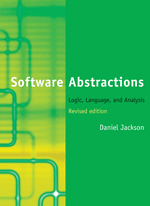
Roles and Affiliations: Daniel Jackson is a Professor of Computer Science and Engineering at MIT, and Associate Director of CSAIL (Computer Science and Artificial Intelligence Lab). He leads the Software Design Group, focusing on conceptual software design, formal methods, and cybersecurity. Education and Professional Background: Jackson's work includes collaborations with NASA, Toyota, and Massachusetts General Hospital. He earned his ACM Fellow distinction and authored influential books like Software Abstractions and The Essence of Software . Research Interests: Jackson's research spans conceptual software design, formal methods using Alloy, cybersecurity, and autonomous systems. His projects include Riffle (local-first applications), Wildcard (web customization), and Certified Control (safety-critical systems). Articles Trends: Recent work emphasizes cybersecurity in autonomous vehicles, declarative diagram composition (Bluefish), and end-user software customization. His publications bridge theory and practical applications, often addressing dependability and usability. Awards and Recognition: ACM SIGSOFT Impact Award (2016), ACM SIGSOFT Outstanding Research Award (2017), MIT MacVicar Teaching Fellow, and MLK Leadership Award (2018). Grants and Labs: Supported by NSF grants and collaborations with industry, Jackson's work includes MIT’s Future of Data Initiative and cybersecurity projects. His lab, the Software Design Group, develops tools like Alloy and explores new paradigms for software development.
Roland YAP Hock Chuan serves as an Associate Professor in the Department of Computer Science at the School of Computing, National University of Singapore (NUS), and previously held the role of assistant director at The Logistics Institute Asia Pacific (TLI-AP). His academic foundation was built at Monash University, Australia, where he earned comprehensive qualifications in Computer Science. Education: Ph.D. in Computer Science, Monash University, Australia M.Sc. in Computer Science, Monash University, Australia B.Sc. (Honours) in Computer Science, Monash University, Australia Research Focus: Renowned for pioneering the CLP(R) system that revolutionized Constraint Programming, Prof. Yap's work now spans artificial intelligence, security, programming languages, and social networks. His research bridges theoretical rigor with real-world applications, particularly in data analytics and knowledge compilation for industrial systems. Publication Evolution: His scholarly output reveals a strategic progression from foundational constraint logic programming (1990s) to cutting-edge security mechanisms and AI-driven solutions (2010s). Recent works demonstrate expertise in robust search algorithms, memory protection systems, and social network defense strategies, reflecting continuous adaptation to emerging computational challenges. Scientific Recognition: Best student paper award at SCA 2011 for social network research Best student runner-up paper at CIKM 2009 1995 Australian Computer Science Ph.D. Prize (1996) Praxa Computer Prize for theoretical computing achievements (1985) Academic Leadership: Prof. Yap directs the Tier 1 research project 'Investigating Product Configuration as Knowledge Compilation,' developing accelerated industrial solvers through innovative KC integration. His teaching portfolio includes advanced security courses (CS4239/5439/6231), shaping next-generation cybersecurity expertise. Mentoring excellence is evidenced by multiple student award-winning publications in top-tier conferences. Collaborative Infrastructure: Through his leadership role at TLI-AP, he contributes to NUS's interdisciplinary logistics research ecosystem, connecting computer science with supply chain innovation and operational optimization challenges.
Lukasz (Luke) Ziarek serves as Associate Dean for Academic Affairs and Associate Professor in the Department of Computer Science and Engineering at the University at Buffalo's School of Engineering and Applied Sciences. His work bridges theoretical computer science with practical systems engineering, focusing on real-time capabilities in distributed environments and safety-critical applications. His educational foundation includes a PhD in Computer Science from Purdue University (2011) and a BS in Computer Science from the University of Chicago (2003). Ziarek's research centers on formal verification of distributed protocols , real-time systems engineering , and mobile/embedded computing . He pioneers session type theory for IoT security, develops real-time variants of Android (RTDroid) and Standard ML (RTML), and investigates UAV software reliability. His work consistently addresses the tension between theoretical guarantees and practical system constraints in concurrency, timing, and security. Recent publications (2022-2025) reveal three dominant trajectories: formal methods for rate-based session types in IoT protocols, performance analysis of visual SLAM systems for robotics, and security vulnerabilities in embedded platforms like ARM TrustZone. These threads converge on ensuring correctness and timeliness in resource-constrained distributed systems. His scientific accolades include the IEEE Region One Technological Innovation Award (2023) and NSF CAREER Award (2018), reflecting dual excellence in research and education. IEEE Region One Technological Innovation (Academic) Award, 2023 President Emeritus and Mrs. Meyerson Award for Distinguished Undergraduate Teaching and Mentoring, 2022 NSF CAREER Award, 2018 SEAS Early Career Teacher of the Year, 2016 Halstead Award for Outstanding Research in Software Engineering, 2009 Intel Fellowship, 2008 GAANN Fellowship, 2004 Ziarek directs significant research initiatives including a $900K NSF UAV infrastructure project (as PI) and a $1.7M MRI grant for connected vehicle testing. His funding portfolio spans real-time systems, compiler design, and pocket-scale data management, emphasizing collaborative, interdisciplinary approaches to software reliability. CRI:CI-New UAV Infrastructure ($900K, PI 31%) NSF CAREER: Real-time Object-Oriented Systems ($500K, PI 100%) MRI: iCAVE2 Vehicle Testing ($1.7M, co-PI 14%) III: Just-in-Time Data Structures ($499K, co-PI 50%) II-EN: MLton Compiler Research ($606K, PI 63%) He leads an open-source ecosystem including RTDroid (real-time Android), Multi-MLton (parallel SML compiler), and BlueSeal (Android security analyzer), fostering community-driven advances in systems software.
Christine Rizkallah is a Senior Lecturer in the School of Computing and Information Systems at the University of Melbourne, Australia. She joined the university in December 2021 after serving as a Lecturer at the University of New South Wales (UNSW) from April 2018 to December 2021. Her research focuses on interactive theorem proving, formal verification, programming languages, and systems, with an emphasis on building practical tools for high-assurance software development. She leads a research group working on the Cogent and Dargent languages, aiming to reduce the burden of formal verification in systems programming. Education: PhD in Computer Science, Universität des Saarlandes and Max-Planck-Institut für Informatik, Germany (2015), thesis: Verification of Program Computations , supervised by Prof. Dr. Kurt Mehlhorn. MSc in Computer Science, Universität des Saarlandes, Germany (2009), thesis: Proof Representations for Higher Order Logic , supervised by Prof. Dr. Gert Smolka and Dr. Chad E. Brown. BSc in Computer Science, German University in Cairo, Egypt (2007), thesis: X2-Planner: A Hierarchical Task Network Planner for Real Time Gaming Applications , supervised by Prof. Dr. Slim Abdennadher and Dr. Thorsten Maier. Her research interests lie at the intersection of programming languages and formal methods. She develops domain-specific languages with strong type systems and verified compilers to enable trustworthy software systems. Her work spans algorithms, logic, security, and social choice theory, reflecting a strong interdisciplinary approach. She has published extensively in top venues such as POPL, ICFP, ASPLOS, JAR, and PACMPL, with a focus on certifying compilation, refinement verification, and mechanized reasoning. Her recent publications reveal a consistent focus on formal verification of systems software, particularly through the Cogent language and its ecosystem. Key themes include verified data layout refinement (Dargent), property-based testing, termination analysis, cost modeling, and integration with foreign functions. Her work combines theoretical rigor with practical implementation, often involving mechanized proofs in Isabelle/HOL and Coq. Scientific Awards and Recognition: Distinguished Artefact Award at SLE'22 (awarded to Zilin Chen for work under her supervision). First Prize, SPLASH'22 Student Research Competition (undergraduate), won by Raphael Douglas Giles. Second Prize, ACM-wide Student Research Competition (undergraduate, 2023), won by Raphael Douglas Giles. She has supervised numerous PhD, Masters, and Honours students, many of whom have continued in academia or industry research roles. She has received research funding through institutional support and collaborative grants, though specific grants are not detailed in the provided text. She is actively involved in the programming languages community, serving on program committees for POPL, ICFP, CPP, PLDI, and others, and holding leadership roles such as Program Chair for FUNARCH'25 and Diversity and Inclusion Co-Chair for PLDI'25. She teaches core courses including Declarative Programming and Models of Computation at the University of Melbourne. She leads a vibrant research team and collaborates widely across institutions including UNSW, University of Pennsylvania, and international partners. Her lab focuses on building verified systems using functional programming and formal methods, with strong ties to the DeepSpec project and the Isabelle/HOL community.
Dr. Stephanie Balzer is an Assistant Professor in the Principles of Programming Group at Carnegie Mellon University's School of Computer Science. Her research focuses on enabling failure-free software through formal methods like type systems and verification logics. She emphasizes compositional proofs for scalability and practical validation via software artifacts. Programming Languages Type Theory Program Verification Concurrency & Security Her recent work explores timed protocols, disentanglement logic, and multiparty session types. Articles demonstrate semantic logical relations for termination (2025), deadlock freedom in Rust embeddings (2022), and information flow control (2024). Key collaborative papers address cyclic process networks and separation logic frameworks. Scientific recognition includes: NSF CAREER Award (2025) ACM SIGPLAN Distinguished Paper (2022) ECOOP Distinguished Paper (2022) She supervises PhD candidates Yue Yao, Yinsen Zhang, and Zak Kent (with Guy Blelloch), plus Master's student Sonya Simkin. Former advisee Jules Jacobs received Cum Laude distinction at Radboud University. Active in academic service, Balzer chairs PLMW@POPL workshops and co-organizes Oregon Programming Language Summer School. She serves on program committees for LICS, POPL, and ICFP.
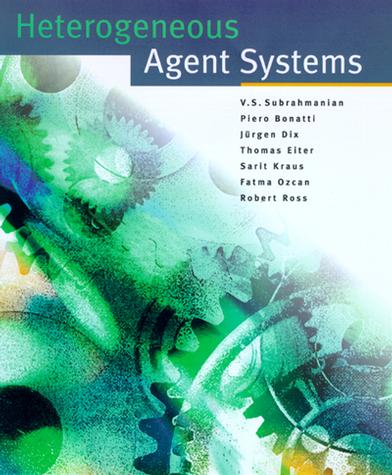
Thomas Eiter is a Full Professor at the Institute of Logic and Computation, Technical University of Vienna (TU Wien), where he serves as Head of Research Unit. He is a Full Member of the Division of Mathematics and Natural Sciences since 2022 and holds leadership roles within the university. His research focuses on knowledge representation and reasoning, computational logic, algorithms and complexity in AI, declarative problem solving, nonmonotonic logic programming and databases, and reasoning about actions and change. His work bridges theoretical foundations with practical applications in artificial intelligence, particularly in logic programming and knowledge-based systems. He has made significant contributions to Answer Set Programming (ASP), developing frameworks like DLV and HEX programs that enable sophisticated reasoning capabilities. His recent publications demonstrate a strong focus on stream reasoning (LARS framework), knowledge forgetting, modular reasoning systems, and the integration of logic programming with ontologies. His research shows consistent contributions to both theoretical foundations and practical implementations of AI systems over several decades. ACM Fellow (2020) Fellow of the European Association for AI (2006) Distinguished Paper Award of the 17th International Joint Conference on Artificial Intelligence (IJCAI, 2001) Prominent Paper Award of the Artificial Intelligence Journal (2013) Test of Time Award (10 years) of the International Conference on Logic Programming (2013) Eiter has led and participated in numerous research projects, both internationally funded (such as LogiCS@TUWien, Humane AI, AI4EU) and nationally funded (including projects like BILAI, TAIGER, and several FWF-funded initiatives). His research unit has received substantial support from European Commission programs (H2020) and Austrian funding agencies (FWF, FFG, WWTF). He is actively involved in the academic community as a member of the Austrian Academy of Sciences (ÖAW), Academia Europaea, and has served on the Executive Council of AAAI. His research unit maintains strong connections with international collaborators and has developed influential systems like the DLV answer set programming system.
Dr. Marina De Vos is a Senior Lecturer in the Department of Computer Science at the University of Bath. She leads research in knowledge representation and normative systems, with affiliations to multiple research centers including the Centre for Mathematical Biology and UKRI CDT in Accountable AI. Education: Postgraduate Certificate in Learning and Teaching in Higher Education, University of Bath (2010) Doctor of Science in Computer Science, Vrije Universiteit Brussel (2002) Master of Computing, Vrije Universiteit Brussel (1998) Research focuses on declarative programming paradigms, particularly Answer Set Programming (ASP) and normative multi-agent systems. Her work enables intuitive problem description in knowledge representation languages, with applications spanning structural engineering, music composition, legal reasoning, and policy modeling. Additional research interests include inductive machine learning, explainable AI, hybrid AI systems, and game theory. Recent publications demonstrate strong focus on norm synthesis in multi-agent systems, contextual reasoning, and governance frameworks for autonomous systems. This reflects a consistent pattern of applying formal computational methods to social and ethical dimensions of AI. Professional activities include keynote presentations at international conferences, workshop chair roles for major AI events, and external PhD examination responsibilities across European institutions.
Sunwoo Jeong is an Associate Professor in the Department of Linguistics at Seoul National University since 2023, having previously served as Assistant Professor at the same institution from 2019 to 2023. Prior to his appointment at Seoul National University, he was a Postdoctoral Research Fellow in the Program in Linguistics at Princeton University (2018-2019), following the completion of his Ph.D. in Linguistics from Stanford University (2013-2018). His educational background includes an MA in Linguistics (2011-2013) and BA in Linguistics (2006-2011), both from Seoul National University. Jeong's research spans multiple subfields of linguistics, with particular focus on the intersection of meaning, sound, and social context. Dr. Jeong's research primarily investigates context-sensitive semantic and pragmatic phenomena using experimental methodologies. His work examines how linguistic forms connect with complex interactional and social meanings, with special attention to Korean linguistics, intonation patterns, and the relationship between prosody and meaning. His publications reveal a strong interest in how grammatical structures interact with context to produce nuanced interpretations, particularly in questions, imperatives, and other speech acts. He has made significant contributions to our understanding of negative polarity items, rising declaratives, politeness phenomena, and gendered language use. The analysis of his recent publications shows consistent focus on experimental approaches to theoretical linguistic questions, with strong connections between formal semantic/pragmatic theory and empirical data. His work frequently bridges multiple sub-disciplines, connecting phonological patterns with semantic interpretations, and social meaning with grammatical structure, particularly in Korean language data. As an educator, Jeong has taught a wide range of courses including Introduction to Linguistics, Semantics, Experimental Linguistics, Advanced Semantics, and Seminar in Experimental Linguistics at Seoul National University. Previously, he taught Intonation and Varieties of Meaning at Princeton University, and served as a teaching assistant for courses in Semantics and Pragmatics, Language Acquisition, and Phonetics at Stanford University.