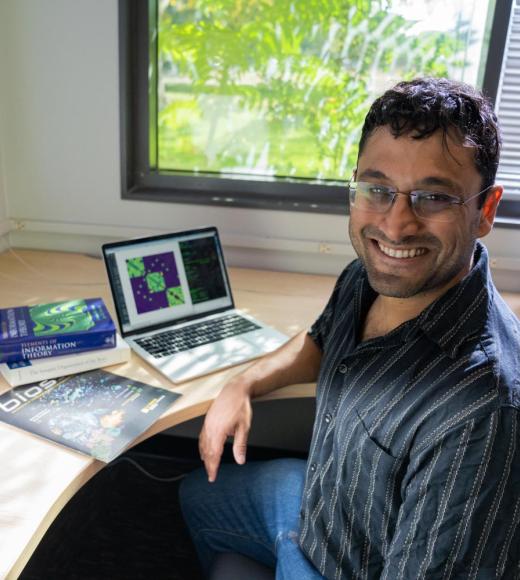
Maya Balakrishnan is an Assistant Professor of Operations Management at the Jindal School of Management (JSOM), University of Texas at Dallas. She holds a PhD in Business Administration from Harvard Business School (2024) and a BS in Computer Science from Stanford University (2016). Her primary research focuses on Human-AI collaboration, Corporate Social Responsibility, and Behavioral Operations Management. She teaches courses such as AI in Supply Chain Management (OPRE 4393) and Advanced AI in Supply Chain Management (OPRE 6383). Her research explores how humans interact with algorithms in operational contexts and the ethical implications of workforce diversity disclosures on consumer behavior. Recent work emphasizes trust-building through operational design and mitigating risks in human-AI systems. Her awards include multiple first-place recognitions in behavioral operations competitions and a best presentation award at the Advances in Decision Analysis Conference. Awards: 2024 Production and Operations Management Junior Scholar Paper Competition (1st Place) 2023 INFORMS Behavioral Operations Working Paper Competition (2nd Place) 2022 Best PhD Blitz Presentation (Advances in Decision Analysis) Dr. Balakrishnan is actively involved in professional organizations such as INFORMS and the Manufacturing and Service Operations Management Society (MSOM). Her work bridges behavioral insights with operational systems, addressing real-world challenges in AI ethics and supply chain innovation.
Stéphanie Novak is a Full Professor at the Department of Comparative Linguistic and Cultural Studies, Ca' Foscari University of Venice. Her research focuses on European institutions, transparency, accountability, collective decision-making, and international negotiations. She has published extensively in journals like the Journal of Common Market Studies and Global Policy, and co-edited a volume with Jon Elster on majority decisions. Current Assignments: Member of the Steering Committee of the Ca' Foscari International College; Delegate for Internationalization Research Interests include: EU institutional transparency and accountability Collective decision-making and consensus Intergovernmental relations and crises Legislative process conflict-resolution International negotiation dynamics Democratic compromise in supranational contexts Her 2023-2024 publications analyze transparency dilemmas, consensus fragility, and digital policy interoperability. Earlier works (2005-2020) examine voting norms, institutional hypocrisy, and EU global representation. Scientific Awards: Dalloz-Bibliothèque de thèses prize (doctoral thesis) Editorial Involvement: Associate Editor, Journal of European Policies (since 2017) Editorial Board, La Fabrique du Politique (since 2018) Former Board Member, La Vie des Idées (2009-2021) Grants & Projects: POLiN Project (2023-2025): Interoperability in EU digital health policies Universalism and Right of Man Project (2023-2026): Late Enlightenment political conditions Observatoire des Institutions Européennes (2014-2021): EU institutions and transparency
Iain Murray is Professor of Machine Learning and Inference at the School of Informatics, University of Edinburgh. His research focuses on developing flexible probabilistic models applicable across diverse domains including cosmology, neuroscience, perception, speech, sports, and text. Program Chair for ICLR (2018) Publications Chair for ICML (2017, 2018) Area Chair for AISTATS, ICLR, ICML, NeurIPS, and UAI Amazon Scholar (2018-2024), first appointed in Europe Murray's research interests center on probabilistic reasoning using machine learning, with specific expertise in density estimation and Markov chain Monte Carlo methods. His work spans theoretical foundations and practical applications, with significant contributions to neural autoregressive distribution estimation (NADE), real-valued NADE (RNADE), and pseudo-marginal slice sampling techniques. His research has enabled advances in flexible probabilistic modeling across multiple domains. His publications show consistent focus on advancing probabilistic modeling techniques, with recent work emphasizing neural autoregressive models, density estimation methods, and efficient sampling algorithms. The research trajectory demonstrates progression from foundational work on NADE to increasingly sophisticated deep learning approaches for density estimation and inference. Notable Paper Award for NADE work Amazon Scholar (2018-2024) Murray has supervised numerous PhD students who have gone on to prominent positions at Google DeepMind, NYU, stability.ai, and other leading institutions. His teaching responsibilities include the Machine Learning and Pattern Recognition course and project supervision. His research group focuses on developing tractable probabilistic models with applications across multiple scientific domains.
Prof. Dr. Sabine Windmann is a Professor at the Goethe University Frankfurt am Main , affiliated with the General Psychology II department. Her research spans cognitive psychology, social psychology, neuropsychology, and decision-making, with a focus on altruism, emotional processing, facial perception, and consciousness. Department: General Psychology II, Institute of Psychology University: Goethe University Frankfurt am Main Her work investigates biases in perception, memory, and decision-making, particularly how context and emotional states influence human behavior. Recent publications explore pandemic-related psychological profiles, waste separation behavior, and the neural correlates of altruism and cooperation. Recent trends in her research include mindfulness interventions , social dynamics during crises , and facial perception's role in social cognition . She has published in journals like Health Psychology Open , Personality and Individual Differences , and Frontiers in Psychology . Her lab collaborates internationally and engages in interdisciplinary studies, though no explicit scientific awards or student lists are detailed in the provided texts. Contact: s.windmann@psych.uni-frankfurt.de
Maurice Smith serves as the Gordon McKay Professor of Bioengineering at Harvard University's School of Engineering and Applied Sciences (SEAS), where he leads the Neuromotor Control Lab. His primary appointment resides within the Department of Bioengineering, focusing on the computational and neural mechanisms underlying human movement control. Smith's research centers on sensorimotor learning , motor adaptation , and neuromotor control systems . He investigates how the brain forms and retains motor memories, particularly examining cerebellar contributions to long-term sensorimotor memory and the dissociation between implicit and explicit learning pathways. His work frequently employs computational modeling to dissect neural tuning properties and motor variability regulation. Analysis of his recent publications reveals a strong emphasis on temporal dynamics in motor learning , cerebellar function in memory consolidation , and Bayesian frameworks for understanding sensorimotor adaptation . His research demonstrates consistent focus on how error processing, uncertainty, and neural plasticity shape motor memory formation across multiple timescales. Smith maintains active collaborations with researchers including Wilsaan M. Joiner, Yohsuke R. Miyamoto, and Nathan Sandholtz, as evidenced by frequent co-authorship patterns. His laboratory investigates fundamental questions in motor control with implications for neurorehabilitation and adaptive robotics.
William Sulis is an Associate Clinical Professor in the Department of Psychiatry and an Associate Member of the Department of Psychology at McMaster University, where he also directs the Collective Intelligence Lab (CILab). With a unique interdisciplinary background spanning mathematics, physics, and psychiatry, Dr. Sulis bridges the gap between theoretical science and clinical practice. His educational journey is exceptionally diverse: B.Sc. (Hon) in Mathematics with minor in Theoretical Physics, Carleton University (1976) M.D., University of Western Ontario (1980) M.A. in Mathematics, University of Western Ontario (1984) Ph.D. in Mathematics, University of Western Ontario (1989) FRCPC in Psychiatry (1984) Ph.D. in Theoretical Physics, University of Waterloo (2014) CRCPC in Geriatric Psychiatry (2015) Dr. Sulis's research explores the intersection of complex systems theory with psychological and psychiatric phenomena. His work on Collective Intelligence investigates how group dynamics emerge from individual interactions, while his research on Temperament and Psychobiology examines the continuum between normal personality variations and mental illness. He has made significant contributions to understanding Synchronization in Complex Systems and developed the concept of Transient Induced Global Response Synchronization (TIGoRS) , which has implications for neural coding and information processing. His theoretical work extends to Quantum Foundations and Process Algebra Theory , where he proposes novel approaches to quantum mechanics. Analysis of his recent publications reveals a consistent thread connecting complex systems theory with psychological and psychiatric applications. His work increasingly focuses on bridging the gap between temperament theory and clinical psychiatry, using mathematical and computational approaches to understand mental illness. Simultaneously, he continues to develop theoretical frameworks in quantum physics through process algebra models, demonstrating remarkable interdisciplinary range. Dr. Sulis has received several prestigious awards including The Governor General's Medal for having the highest overall grade point average in his graduating class, the Henry Marshall Tory Scholarship, and multiple Harry Stevenson Southam Scholarships. Throughout his career, Dr. Sulis has mentored numerous students across disciplines, supervising research projects spanning collective intelligence, semantic space modeling, network dynamics, and temperament studies. His Collective Intelligence Lab has served as a hub for interdisciplinary research connecting computer science, psychology, and psychiatry. Dr. Sulis has also been actively involved in professional organizations, serving as President of The Society for Chaos Theory in Psychology and the Life Sciences (1996-1998) and holding editorial positions for several journals including "Dynamical Psychology" and "Nonlinear Dynamics in Psychology and the Life Sciences." As Director of the Collective Intelligence Lab at McMaster University, Dr. Sulis fosters research exploring how complex adaptive systems can model cognitive and social phenomena. The lab serves as an intellectual nexus where mathematics, computer science, psychology, and psychiatry converge to address fundamental questions about intelligence, both individual and collective.
Béatrice Parguel is a CNRS Research Director at Paris-Dauphine University where she directs the Center for Marketing and Public Policy Research. Her academic career spans consumer psychology with a focus on experimental methodology, examining implications for public authorities in consumer information and education. Her research interests center on greenwashing, environmental labeling, ecology education for children, and reduction of over-packaging. She investigates how marketing practices influence consumer behavior, particularly in sustainable consumption contexts, with significant contributions to understanding luxury brand management, CSR communication, and the psychological mechanisms behind consumer responses to environmental claims. Her work bridges academic research with practical policy implications, often exploring the tension between commercial interests and public welfare. Parguel's publications reveal consistent themes in sustainable consumption, with a growing emphasis on food-related behaviors, digital activism, and luxury market dynamics in recent years. Her research employs rigorous experimental methods to uncover both conscious and subconscious consumer responses to marketing stimuli, particularly in ethically charged contexts. As director of the Center for Marketing and Public Policy Research, she leads a team investigating the intersection of marketing practices and societal impact, with particular attention to regulatory implications and consumer protection.
Alexander Pan is a third-year Computer Science PhD student at the University of California, Berkeley, advised by Jacob Steinhardt . His research focuses on developing safe machine learning systems, particularly sequential decision-making agents. He holds a dual bachelor's degree in Mathematics and Computer Science from Caltech, where he worked with Anima Anandkumar and Yuanyuan Shi . His recent work explores AI safety through topics like unlearning , LLM transparency , and reward hacking , with publications at premier conferences including ICML and ICLR. He has received recognition such as the FLI PhD fellowship and hackathon awards for projects like SimSquare and homES ReInvented . Scientific Awards: FLI PhD fellowship Best Social Network Hack - Stanford Hackathon 2021 Best Use of ESRI Technology - Caltech Hackathon 2020 ICML 2023 Oral Presentation
Klaus Schmidt is a Professor of Economics at Ludwig Maximilian University of Munich, holding the chair in the Department of Economics within the Faculty of Economics. His research focuses on theoretical and applied aspects of contract theory, game theory, and industrial organization, with significant contributions to understanding venture capital finance, privatization, and fairness in economic behavior. His educational background includes a Ph.D. in Economics from the University of Bonn (1991) with the dissertation "Commitment in Games with Asymmetric Information" and Habilitation (1994) with "Contracts, Competition, and the Theory of Reputation". Early academic support included scholarships from Studienstiftung des Deutschen Volkes (1982-87) and a German Academic Exchange Service grant (1988/89). Professor Schmidt's research centers on contract theory applications across diverse domains. His work on fairness and reciprocity (notably with Ernst Fehr) revolutionized behavioral contract theory, while contributions to venture capital finance and privatization established foundational frameworks for analyzing incomplete contracts in real-world settings. He employs rigorous game-theoretic modeling to address incentive problems in procurement, privatization, and organizational design. His publication record since 1991 reveals consistent focus on contract-theoretic problems, with increasing emphasis on behavioral aspects after 1999. Key thematic clusters include venture capital finance (2002-2003), fairness/reciprocity (1999-2000), and privatization/incomplete contracts (1995-1996), demonstrating evolution from pure theory to policy-relevant applications. Gossen Prize of the German Economic Association (2001) Commerzbank Prize of the Berlin-Brandenburg Academy of Sciences (2001) Teaching Prize of the Bavarian ministry of science (2000) Walter-Adolf-Jörn Prize (1993) German Academic Exchange Service Grant (1988/89) Studienstiftung des Deutschen Volkes Scholarship (1982-87) Professor Schmidt has secured major research funding including German Science Foundation grants for "Incomplete Contracts" (1999-present) and "Venture Capital Finance" (1998-present). His teaching excellence was recognized with Bavaria's highest teaching award (2000), and he maintains active collaboration with leading economists including Ernst Fehr and Monika Schnitzer. While specific student mentorship details aren't documented, his extensive publication record and seminar leadership indicate significant academic supervision.
Max H. Bazerman is the Jesse Isidor Straus Professor of Business Administration at Harvard Business School, specializing in negotiation, decision making, and behavioral ethics. His academic career spans several decades during which he has become a leading authority on how cognitive biases and ethical considerations influence organizational decision processes. Professor Bazerman's primary research interests include negotiation strategies, ethical decision making, judgment heuristics, and bounded awareness. His work explores how individuals and organizations can recognize and overcome cognitive limitations to make more ethical and effective decisions. He has pioneered research on blind spots in ethical judgment, the psychology of complicity, and decision architectures that promote better choices. His publications reveal a consistent focus on practical applications of behavioral science to real-world business challenges. Recent work examines resource allocation during crises, ethical leadership frameworks, and the role of experimentation in improving organizational decision making. The research shows increasing emphasis on systemic ethical failures and how individuals contribute to complicity in unethical behavior. Honorary doctorate from the University of London Life Achievement Award from the Aspen Institute's Business and Society Program Distinguished Educator Award from the Academy of Management Academy of Management Career Award for Scholarly Contributions to Management Lifetime Achievement Award from the Organizational Behavior Division of the Academy of Management Ethisphere's 100 Most Influential in Business Ethics Daily Kos' Heroes recognition for whistleblowing on the Bush Administration's corruption of the RICO Tobacco trial Bazerman has advised numerous organizations including Abbott, Aetna, AIG, Alcoa, Allstate, Amgen, and many others across 30 countries. His work bridges academic research and practical application, with significant influence on how businesses approach ethical decision making and negotiation strategy. He has trained doctoral students who now hold positions at leading business schools worldwide, including Harvard, Wharton, Kellogg, and Stanford.
Sha Yang serves as the Ernest Hahn Professor of Marketing at the Marshall School of Business, University of Southern California, where she has held full-time faculty positions since 2017 after progressing from Assistant to Associate Professor roles at New York University and UC-Riverside. Her research examines interdependencies in consumer preferences, social influences on decision-making, and competitive dynamics in advertising, pricing, and platform growth. Her educational background includes a PhD in Marketing (2000) and MA in Statistics (1998) from Ohio State University, complemented by an MA in Economics (1995) and BA in International Economics (1994) from Renmin University of China. Her methodological expertise spans Bayesian methods, structural modeling, and data analytics applied to consumer behavior. Yang's research portfolio reveals consistent focus on digital marketing phenomena, with recent work analyzing cross-category spillovers in advertising, review impacts under negotiated pricing, and psychological pricing effects in luxury markets. Her publications in Journal of Marketing , Management Science , and Marketing Science demonstrate interdisciplinary approaches bridging econometrics and behavioral insights. Among her recognitions is the Marketing Science Institute Young Scholar award. She has served as Associate Editor for Journal of Marketing (2017-present) and Marketing Science (2017-2024), reflecting her scholarly impact. Marketing Science Institute Young Scholar Associate Editor, Journal of Marketing (2017-present) Associate Editor, Marketing Science (2017-2024) VP, INFORMS Society for Marketing Science Administratively, Yang served as Vice Dean and Senior Vice Dean for Faculty and Academic Affairs at Marshall School of Business (2020-2023), overseeing faculty development and academic strategy. Her current research integrates causal inference methods with media and entertainment industry applications, supported by grants from marketing research institutions.
Rishidev Chaudhuri is an Associate Professor at the University of California, Davis in the Department of Neurobiology, Physiology and Behavior within the College of Biological Sciences. His research focuses on computational neuroscience and neural dynamics, employing mathematical models to investigate how neural circuits generate cognitive processes such as memory, perception, and decision-making. His work explores neural dynamics through models of memory systems, attentional mechanisms, and probabilistic inference. Recent publications highlight advances in understanding hippocampal memory scaffolds, parietal-frontal interactions, and neuromorphic computing inspired by brain architecture. Education: BA in Physics (Amherst College), PhD in Applied Mathematics (Yale University) Centers: Center for Neuroscience; affiliated with Applied Mathematics and Neuroscience Graduate Groups Scientific awards and honors are not explicitly mentioned in the provided materials.
Lifeng Zhou is an Assistant Professor in the Department of Electrical and Computer Engineering at Drexel University, where he leads the Zhou Lab focused on advancing robustness and reliability in multi-robot systems through integration of foundation models. His research addresses real-world challenges in environmental monitoring, disaster response, and urban mobility. Education PhD, Electrical and Computer Engineering, Virginia Tech, 2020 MS, Control Science and Engineering, Shanghai Jiao Tong University, 2016 BS, Automation, Huazhong University of Science and Technology, 2013 Research Focus Dr. Zhou's work integrates robotics, algorithms, game theory and machine learning to develop secure and scalable autonomous systems. Primary research thrusts include: Resilient multi-robot coordination in adversarial environments Large language model integration for robotic decision-making Game-theoretic resource allocation strategies Risk-aware planning for autonomous vehicles Publication Trends Recent work (2024-2025) demonstrates strong focus on large language model applications in multi-robot systems, with 12/15 articles exploring LLM integration for flocking, scene segmentation, and decision-making. Additional emphasis includes adversarial robustness in target tracking (5 articles) and autonomous driving applications (4 articles). Awards and Recognition Best Paper Award, WACV 2025 LLVM-AD Workshop Professional Service Associate Editor, ICRA Conference Editorial Board Laboratory Focus The Zhou Lab develops foundational algorithms for secure and scalable multi-robot systems, with current projects spanning environmental monitoring drones, disaster response coordination, and autonomous vehicle perception systems.
Haipeng Shen is a Professor of Innovation and Information Management at HKU Business School, The University of Hong Kong, serving as Associate Dean (EMBA and IMBA) and holding the Patrick S C Poon Professorship in Analytics and Innovation. He chairs the Business Analytics and Innovation program and joined HKU in 2015 after previously holding a professorship at the University of North Carolina at Chapel Hill. His academic credentials include: PhD in Statistics, The Wharton School of Business, University of Pennsylvania, 2003 MA in Statistics, The Wharton School of Business, University of Pennsylvania, 2000 BS in Mathematics, School of Mathematical Sciences, Peking University, 1998 Professor Shen's research focuses on data-driven decision making under uncertainty, with expertise spanning big data analytics, business analytics, healthcare analytics, and service engineering. He develops advanced statistical and machine learning methodologies to solve complex operational problems in call centers, optimize stroke care protocols, and enhance financial risk modeling, emphasizing real-time applications in high-stakes environments. Analysis of his recent publications reveals a consistent interdisciplinary approach bridging operations research, statistics, and domain-specific knowledge. His work demonstrates strong methodological innovation in time-series forecasting for service systems, risk assessment frameworks for medical complications, and covariance structure analysis for financial markets, with direct translational impact on business operations and clinical outcomes. His scientific contributions have been recognized with prestigious awards including: Most Influential Publication Award from China Stroke Association (2018) Fellow of the American Statistical Association (2015) Best Advisor of the Year Award from Academy of Asian Business (2018) Elected Member of International Statistical Institute (2015) Cluster Chair for Big Data Analytics at INFORMS International (2015) As an academic leader, Professor Shen has secured significant research funding from organizations including The Xerox Foundation and National Institute on Drug Abuse. He serves as Associate Editor for Management Science, Journal of the American Statistical Association, and Technometrics, while mentoring graduate students in statistical methodology and applied analytics. His current initiatives position HKU Business School at the forefront of healthcare innovation through big data analytics, driving collaborations with medical institutions to transform stroke care and hospital operations in Asia.
Lauren M. Lipner, Ph.D., is an Assistant Professor in the Clinical Psychology Doctoral Program at Long Island University (LIU) Post, within the College of Liberal Arts and Sciences. She holds a B.A. from Pennsylvania State University and earned her M.A. and Ph.D. in Clinical Psychology from Adelphi University in 2020. Her academic and clinical training includes an APA-accredited pre-doctoral internship at Pennsylvania Hospital/University of Pennsylvania Health System, a clinical postdoctoral fellowship at Mount Sinai Beth Israel, and a research and teaching postdoctoral fellowship at Adelphi University. Her research focuses on psychotherapy process and outcome, with an emphasis on the development and repair of the therapeutic alliance. Key areas include alliance rupture resolution, factors contributing to premature treatment termination, and methodological approaches to measuring therapeutic dynamics. She has contributed extensively to the literature through peer-reviewed journal articles, book chapters, and conference presentations. The most recent publications reflect a strong trend in advancing methodological rigor in studying alliance ruptures, utilizing control chart methods, single-case designs, and multi-method approaches. Her work bridges clinical practice with empirical research, particularly in cognitive-behavioral and integrative therapies for personality and anxiety disorders. Scientific awards and grants highlight her recognition in the field: Small Research Grant, Society for Psychotherapy Research (2021) Charles J. Gelso, Ph.D. Psychotherapy Research Grant, Society for the Advancement of Psychotherapy (APA Division 29, 2023) Dr. Lipner has served as Principal Investigator on funded projects including 'The relationship between therapist flexibility, alliance rupture resolution, and premature treatment termination' and 'Reasons for dropout measure: Development and validation.' She is actively involved in professional organizations such as the American Psychological Association (Divisions 12 and 29), the Society for Psychotherapy Research, and the Society for the Exploration of Psychotherapy Integration. She regularly presents her research at national and international conferences, contributing to training and supervision literature, particularly in CBT and alliance-focused models. While no specific lab or research team is explicitly named in the text, her collaborative work with prominent researchers like Jeremy D. Safran, J. Christopher Muran, and Jacqueline P. Barber suggests active participation in a research network focused on psychotherapy process and integration. Her contributions to handbooks and case studies further indicate a strong commitment to clinical education and training.