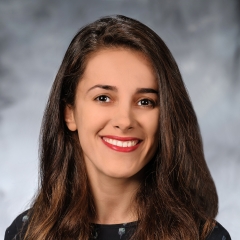
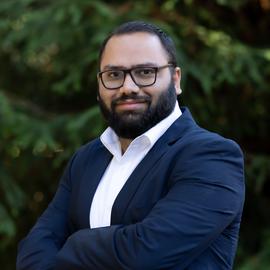
Mahnoosh Alizadeh is an Associate Professor in the Department of Electrical and Computer Engineering at the University of California, Santa Barbara (UCSB), affiliated with the Institute for Energy Efficiency and the Center for Control, Dynamical Systems and Computation (CCDC). She directs the Smart Infrastructure Systems laboratory and focuses on scalable control frameworks, data analytics, and market mechanisms for sustainable cyber-physical systems in smart grids and electric transportation. PhD in Electrical and Computer Engineering from UC Davis (2014) Recipient of the National Science Foundation CAREER award (2019) Associate Editor for IEEE Transactions on Control of Network Systems and IEEE Open Journal of Control Systems Her research spans theoretical work in networks, optimization, and AI, with applications in smart grids , electric transportation , and resilient infrastructure . She has contributed to safe optimization algorithms, decentralized learning, and game-theoretic approaches in resource allocation. Recent publications highlight advancements in safe optimization (safe linear bandits, conservative linear bandits), decentralized learning (robust federated learning), game theory (General Lotto games, resource allocation), and smart charging (mobility-aware EV scheduling). These works emphasize real-time decision-making under constraints, security, and robustness in cyber-physical systems. NSF Early CAREER Award Northrop Grumman Excellence in Teaching Award Her research group includes PhD students Spencer Hutchinson, Arghavan Zibaei, Nanfei Jiang, and Sajjad Ghiasvand, with alumni placed at institutions like Apple, Toyota, and the University of Colorado.
Gavin Schwarz is a Professor and Head of School at the School of Management and Governance within the UNSW Business School . He specializes in organizational change , organizational failure and inertia , and the dynamics of virtual teams , with a focus on how organizations fail during change processes and how to develop applied strategies for change management . His work spans diverse sectors including healthcare, technology, and education, with publications in leading journals such as Academy of Management Learning and Education and Administrative Science Quarterly . Education : PhD in Management (University of Queensland), MPhil (Hons) in Management (University of Auckland), BA in Management and English (University of Auckland). Grants : 2020 Brock University grant for "University communication in times of COVID-19" , 2020 UNSW Medicine grant for "Translation and change: Embedding effective change management in health" , and earlier Australian Research Council and Gordon J. Samuels Fellowship awards. His research explores the development of knowledge in organizational theories , with an emphasis on collective responses to change , HR management during crises , and technology strategy . He has contributed to understanding organizational communication , team innovation , and structural inertia . His 15 most recent publications cover topics from AI’s role in organizational change to pandemic-driven research adaptation, with keywords spanning management science , behavioral economics , and digital transformation . Scientific Awards 2021-2023 : Outstanding Reviewer Awards (Academy of Management Review) 2017-2020 : Best Reviewer Awards (Journal of Organizational Behavior) 2019, 2013, 2011 : Best Paper Finalist/Awardee (Academy of Management divisions) 2007, 2006 : Editorial Board Excellence (Academy of Management Journal) and Gordon J. Samuels Fellowship As an active supervisor in organizational change and HR development , his work supports healthcare innovation and digital transformation. He serves as Editor-in-Chief for the Journal of Applied Behavioral Science and is on the editorial boards of Academy of Management Review , Journal of Management , and Journal of Organizational Behavior . Contact: g.schwarz@unsw.edu.au
Thorsten Koch serves as Head of the Department of Applied Algorithmic Intelligence Methods within the Division of Mathematical Algorithmic Intelligence at Zuse Institute Berlin (ZIB). His research spans mathematical optimization, energy systems modeling, quantum computing applications, and scientometrics. Koch leads significant research projects including FAN (focusing on AI in scholarly communication), UNSEEN (energy scenarios), HPO-NAVI (research software visibility), and Multi-Energy Models for European Energy System Planning. Koch's research interests center on developing advanced optimization algorithms for complex systems, particularly in energy networks and scientific data analysis. His work bridges theoretical mathematics with practical applications in gas network optimization, wind farm design, portfolio management, and quantum computing. He has pioneered methods for large-scale mixed-integer programming, scenario generation, and the integration of machine learning with traditional optimization techniques. His recent publications demonstrate growing emphasis on quantum optimization, scientometrics, and the application of AI to scientific communication infrastructure. His publication trends reveal a strategic expansion from traditional mathematical optimization into quantum computing applications and scientific data infrastructure. Recent work shows increasing collaboration across disciplines - connecting energy systems analysis with financial modeling, integrating machine learning with optimization solvers, and applying computational methods to scientometrics. The 15 most recent articles highlight three major thrusts: quantum optimization (33%), energy systems modeling (27%), and scientific data infrastructure (40%), reflecting his leadership in both theoretical algorithm development and practical implementation for societal challenges. Koch actively contributes to research infrastructure through leadership roles in projects like KOBV (Berlin-Brandenburg Cooperative Library Network), HDC (Humanities Data Centre), and CIB (future library networks). His work on the DeepGreen initiative focuses on establishing legally secure workflows for implementing open-access components in scientific publication licensing agreements, demonstrating his commitment to open science principles and research data management.
Sainyam Galhotra is an Assistant Professor in the Department of Computer Science at Cornell University. His research focuses on developing data science tools for effective and responsible analytics, leveraging techniques from causal inference, data management, theoretical computer science, machine learning, and human-computer interaction to address challenges in trustworthy system design including robustness, explainability, and fairness. Education: Postdoc: University of Chicago PhD: University of Massachusetts Amherst (supervised by Barna Saha) BTech: Indian Institute of Technology Delhi (IIT Delhi) (supervised by Prof. Amitabha Bagchi) Research Interests: Dr. Galhotra's research spans several interconnected areas in data science and artificial intelligence. His work primarily focuses on Responsible Data Science , where he develops methods to ensure that data-driven systems operate fairly and transparently. Within this broad area, his specific interests include: Causal Inference techniques for understanding cause-effect relationships in complex data Algorithmic Fairness approaches to mitigate bias in machine learning systems Explainable AI methods that make black-box models more interpretable Data Management systems for efficient and reliable data processing Entity Resolution techniques for integrating data from multiple sources Trustworthy System Design that addresses robustness, explainability, and fairness His recent publications demonstrate a clear trend toward developing frameworks that combine causal reasoning with practical data management systems, particularly focusing on how to make data-driven decisions more transparent and equitable. The intersection of database systems with fairness considerations appears to be a particularly active area of his research. Scientific Awards: Rising Star in Data Science at the Data Science Institute, UChicago (Oct 2021) Computing Innovation Fellowship Award Recipient (by CRA, CCC and NSF) (Apr 2021) DAAD AInet Fellow (Feb 2021) ACM SIGMOD Entity Resolution Programming Contest – Top 5 finalist (May 2020) Most reproducible paper award in SIGMOD 2018 and 2019 (Jun 2019) First recipient of Krithi Ramamritham Computer Science Scholarship (Jun 2019) Best paper award in SIGSOFT FSE 2017 (May 2017) Dr. Galhotra is actively seeking students to collaborate with on his research projects. His work has been supported by various fellowships and awards, including the prestigious Computing Innovation Fellowship. He has mentored several students through his research projects, with a focus on developing the next generation of data scientists who can build responsible and trustworthy systems. His research group appears to focus on the intersection of database systems and responsible AI, developing tools like HypeR for causal reasoning, Ver for view discovery, and Nexus for correlation discovery in spatio-temporal data. This work suggests a cohesive research agenda centered around making data systems more transparent, fair, and user-friendly.
Chelsey R. Carter is an Assistant Professor of Public Health in the Department of Social and Behavioral Sciences at Yale School of Public Health with a secondary appointment in the Department of Anthropology. A Black feminist anthropologist of medicine, public health, and race from St. Louis, Missouri, Dr. Carter's interdisciplinary work bridges public health, anthropology, and critical race studies to address health inequities, particularly focusing on neurodegenerative diseases like ALS in Black communities. Dr. Carter received her BA in Anthropology from Emory University (2012), followed by an MPH and PhD from Washington University in St. Louis (2021), and completed a Presidential Postdoctoral Fellowship at Princeton University (2022). Her educational background reflects her commitment to both anthropological theory and public health practice. Her research examines the relationship between social determinants of health (particularly anti-Black racism, socioeconomic status, and gender) and neurodegenerative diseases such as amyotrophic lateral sclerosis (ALS) and motor neuron diseases. Dr. Carter employs ethnographic research and qualitative methodologies to investigate how embodied inequality impacts diagnosis, treatment, and engagement in clinical trials for Black individuals with ALS. She also leads research on precision medicine and genomic research in Black communities through The Black Genome Project and studies caregiving among persons impacted by ALS. Her scholarship has been funded by the National Science Foundation, the Andrew Mellon Foundation, and the Wenner Gren Foundation. Analysis of Dr. Carter's recent publication trends reveals a strong focus on health equity, particularly examining how systemic racism manifests in medical settings and contributes to health disparities. Her work spans multiple domains including neurodegenerative diseases, HIV/AIDS care, genomics, and mental health, with consistent attention to intersectional approaches that consider race, gender, and socioeconomic status. A notable pattern in her scholarship is the use of qualitative and mixed methods to center the lived experiences of marginalized communities, challenging dominant biomedical paradigms through a Black feminist lens. Principal's Development Fund Visiting Scholar (2024) Distinguished Teaching Award from Yale School of Public Health (2023) Funding from the National Science Foundation Support from the Andrew Mellon Foundation Wenner Gren Foundation grant Dr. Carter actively mentors students and has developed innovative teaching approaches, including her course 'Biomedical Justice: Public Health Critiques and Praxis,' which encourages students to bring their full selves into the classroom. Her research has been supported by significant grants that enable community-engaged work addressing health disparities. She emphasizes the importance of community partnerships in her research, ensuring that academic work serves and is accountable to the communities being studied. Dr. Carter is Founder and Director of The LEITH (Lived Experiences Igniting Transformations in Health) Lab, which addresses Black invisibility and misdiagnosis for rare neurodegenerative and genetic diseases. The lab brings together persons and caregivers impacted by rare diseases, researchers, clinical providers, educators, students, and activists to develop more humanizing and critical approaches in the rare neurodegenerative field. The LEITH Lab's vision centers on advancing anti-racist research, fostering awareness through education, creating palliative networks for support, and developing a pipeline of health equity scholars.
Philipp Koralus is the McCord Professor of Philosophy and AI at the University of Oxford and serves as Director of the Human-Centered AI Lab (HAI Lab) within the Institute for Ethics in AI. He is also a member of St Catherine's College. Koralus holds a Ph.D. in Philosophy and Neuroscience from Princeton University and a B.A. from Pomona College. His research focuses on the human capacity for reasoning and decision-making, exploring how these processes relate to artificial intelligence agents and large language models like GPT. He advocates for the Erotetic Theory of Reason (ETR), which posits that reason aims to resolve issues or questions directly, explaining both human rationality and fallibility. His work extends to moral judgment, definitions of intelligence, and interdisciplinary collaboration with computer scientists, psychologists, linguists, and neuroscientists. Koralus is preparing to launch the HAI Lab in Fall 2024, aiming to advance human-centered AI ethics and cognition research. His educational background includes advanced studies in philosophy and neuroscience, combining analytical rigor with empirical insights. Collaborations span diverse fields, including fisheries management through agent-based modeling and healthcare ethics in AI applications. He has published widely on topics such as attention mechanisms, visual perception, and the theoretical foundations of AI reasoning. Koralus regularly teaches graduate seminars on philosophy and AI, including upcoming sessions like 'Building the Philosophy to Code Pipeline' starting in 2025. He has supervised doctoral students in both philosophy and computer science but currently lists no specific advisees. His research has been recognized in symposia and commentary, though no formal scientific awards are explicitly mentioned.
Dr. Floris Peters is an Assistant Professor in Interdisciplinary Social Science at Utrecht University, specializing in Migration, Cultural Diversity, and Ethnic Relations. He holds a PhD from Maastricht University (2015) on citizenship's role in immigrant integration. His research focuses on citizenship policies, migration integration, and large-N administrative data analysis. Previously, he was a postdoctoral researcher in the ERC-funded 'Migrant Life Course and Legal Status Transition' (MiLifeStatus) project (2018–2021) and a Visiting Research Fellow at Malmö Institute for Studies of Migration, Diversity and Welfare (MIM). His work bridges migration studies, public policy, and social capital effects. Research interests include citizenship naturalization dynamics, socio-economic integration of migrants, and policy evaluation. Notable contributions explore the impact of dual citizenship, naturalization costs on immigrant decisions, and social capital's role in organ donation. Awards include the FASOS Valorisation Prize (2018) and APSA honors (2017). His interdisciplinary approach combines quantitative methods with policy analysis, addressing migrant life course trajectories and institutional conditions. He collaborates across institutions, leveraging administrative data to understand integration pathways and policy outcomes.
Jonas Eliasson is a Visiting Professor at Linköping University's Department of Science and Technology (ITN), focusing on Communications and Transport Systems. He concurrently serves as Director of Transport Access at the Swedish National Transport Administration and chairs the Planning & Construction committee of the Royal Academy of Engineering Sciences. Previously, he was Director of the Stockholm City Transportation Administration (2016–2019) and a professor at the Royal Institute of Technology (KTH) from 2007 to 2016. His research emphasizes transport policy design and evaluation, including cost-benefit analysis, transport pricing, railway capacity allocation, and public acceptability of policies. He advises governments on sustainable transport planning, congestion pricing, and socio-economic appraisals. His work bridges theoretical frameworks and practical implementation, with a focus on accessibility, equity, and climate targets. Key research themes include infrastructure cost overruns, traffic demand reduction strategies, and the integration of passenger and freight transport systems. Recent publications analyze policy impacts, forecasting methods, and carbon-neutral transportation systems. His interdisciplinary approach addresses both technical and socio-political dimensions of transport challenges. Eliasson collaborates with research groups like Railway and Public Transport and contributes to initiatives like the 'Next Generation Smart Transportation Systems' project. Despite extensive professional roles, no formal student advisees are listed. His work is disseminated through journals like Transportation Research Part A and policy reports for national and regional governments.
David R. Just is a Professor and Director of Graduate Studies at the Charles H. Dyson School of Applied Economics and Management at Cornell University. He holds a Ph.D. (2001) and MS (1999) from the University of California, Berkeley, and a BA (1998) from Brigham Young University. His research focuses on behavioral economics, examining how environmental and psychological factors influence economic decisions, particularly in food choices and agricultural contexts. His work on school lunch programs and low-cost behavioral nudges has been widely recognized. He co-directs the Cornell Center for Behavioral Economics in Child Nutrition Programs. Key research interests include the application of behavioral insights to public health, consumer decision-making, and agricultural policy. His studies often combine field experiments with econometric analysis to address real-world challenges, such as improving food accessibility and sustainability. His work has been featured in prominent media outlets and has influenced policy initiatives in food systems and nutrition. Roles: Professor, Director of Graduate Studies, Co-Director of Cornell Center for Behavioral Economics in Child Nutrition Programs. Education: Ph.D. and MS in Agricultural and Resource Economics (UC Berkeley), BA in Economics (BYU). Research: Behavioral economics, food policy, agricultural decision-making, and sustainable practices. Affiliations: Cornell SC Johnson College of Business, College of Agriculture and Life Sciences.
Wenhao Ding is a Research Scientist at NVIDIA's Autonomous Vehicle Group, focusing on enhancing the safety and robustness of physical autonomous systems, particularly autonomous vehicles. His research integrates multi-modal large language models, reinforcement learning, and causal discovery to improve model reasoning capabilities. He holds a Ph.D. from Tsinghua University's Department of Electronic Engineering, with a thesis on 'Generative AI for Critical Digital Twins.' Key research interests include safety-critical scenario generation, causal representation learning, and offline reinforcement learning. His work emphasizes closed-loop simulation for autonomous systems and has led to contributions like the SafeBench benchmarking platform and the RealGen scenario generation framework. He has received the 2022 Qualcomm Innovation Fellowship. Notable collaborations include projects with Prof. Marco Pavone at Stanford and internships at Amazon Lab126 (Astro team) and Bosch Center for AI. He actively reviews for top conferences (ICML, NeurIPS, CVPR) and journals (IEEE T-ITS, RA-L). His recent focus on privacy risks in robotics and causal-aware driving models underscores his commitment to trustworthy AI systems. He organizes conferences like the 2024 IEEE International Automated Vehicle Validation Conference and co-hosted the Secure and Safe Autonomous Driving (SSAD) Workshop at CVPR 2023. His interdisciplinary work bridges theory and practice, addressing critical challenges in autonomous systems' safety and generalization.
Kirby Nielsen is a Professor of Economics and William H. Hurt Scholar at the California Institute of Technology (Caltech), affiliated with the Division of the Humanities and Social Sciences. His research focuses on Experimental Economics, Decision Theory, and Microeconomic Theory. Contact him via kirby@caltech.edu (note: Gmail may be more reliable currently). Research interests emphasize experimental methods to study decision-making under uncertainty, preference structures, and behavioral anomalies. Recent work explores common ratio effects, gender confidence gaps, and team dynamics in economic contexts. Publications (2017–2024) address topics ranging from risk preferences to comparative analysis of human and primate decision-making. Notable themes include systematic testing of axiomatic models and the timing of information in strategic interactions. No awards or grants are explicitly listed in the provided materials. Education history is not detailed here, though his affiliation with Caltech suggests a strong academic pedigree in economics.
Devansh Saxena is an Assistant Professor at the University of Wisconsin-Madison, holding dual affiliations in the Information School and the School of Computer, Data & Information Sciences. His research focuses on sociotechnical practices of decision-making in high-stakes domains, particularly examining the social impacts of AI in government agencies, community-based organizations, and public health. Saxena employs mixed-methods approaches, blending computational and design methods to develop human-centered AI systems that prioritize equity and collective decision-making. He holds a Ph.D. in Computer Science from Marquette University, advised by Dr. Shion Guha and Dr. Michael Zimmer. His work intersects Human-Computer Interaction (HCI), Machine Learning, and FAccT (Fairness, Accountability, and Transparency in Sociotechnical Systems). Key areas of research include responsible AI, participatory algorithm design, and rethinking risk assessment in public sector systems such as child welfare. Saxena has received prestigious recognition, including the Best Paper Award at CHI 2023 and the Presidential Postdoctoral Fellowship at Carnegie Mellon University. Recent projects include analyzing algorithmic harms in child welfare through casenote computational analysis, advocating for participatory AI frameworks in government, and exploring ethical AI innovation in early-stage concept selection. His work emphasizes bridging technical and sociocultural dimensions to ensure technologies serve public interest.
Guodong Shi is Associate Professor at the University of Sydney's Australian Centre for Robotics, heading the Centre for Robotics and Intelligent Systems. His research develops theoretical frameworks for multi-agent coordination, distributed optimization, and networked control systems. Current projects investigate collective decision-making under information constraints, privacy-preserving optimization, and game-theoretic formulations for social and robotic networks. His group develops algorithms for distributed solution of linear equations, Boolean networks, and equilibrium seeking. Doctoral supervision includes projects on acrobatic legged robots, reinforcement learning for robotic stability, and safe control under dynamic environments. Laboratory capabilities support theoretical and experimental validation. Research has applications in autonomous swarm robotics, smart grid optimization, and social network analysis. Teaching includes graduate courses on networked systems and optimization.
Eunjung Lee serves as Assistant Professor of Business Analytics in the College of Business at Lewis University, bringing extensive industry experience from Samsung and LG alongside prior academic roles at Indiana State University. Her expertise bridges business analytics and educational technology with a pronounced focus on equity-driven research. Her educational foundation includes: Ph.D. in Information Technology Management, University of Wisconsin-Milwaukee M.B.A., Korea University B.S., Kwangwoon University Dr. Lee's research trajectory evolved from business analytics toward educational equity, with recent work emphasizing computational thinking in mathematics education, teacher preparation models, and machine learning applications for gifted identification. She investigates how digital tools transform pedagogy while addressing systemic barriers for underrepresented students. Analysis of her 2022-2025 publications reveals dominant themes in equitable gifted identification through cross-cultural validation of the HOPE rating scale, computational thinking integration in teacher training, and longitudinal studies of enrichment program impacts. Her methodology consistently combines quantitative analysis with equity-centered frameworks. No scientific awards were documented in available sources. While specific advising details remain unreported, her courses in Business Intelligence and Forecasting demonstrate applied analytics instruction. Research grants weren't specified in source materials. Collaborative structures like the Lowell Stahl Center for Entrepreneurship provide institutional context, though dedicated labs or research teams weren't explicitly referenced.
Johanna Ziegel is a Professor of Statistics at ETH Zurich, Switzerland, since 2024, and a Visiting Scientist at the Heidelberg Institute for Theoretical Studies (HITS). Previously, she held positions at the University of Bern, where she was promoted to Full Professor in 2023. Her research focuses on decision-theoretically sound methods for forecast evaluation, probabilistic forecasting, risk measures in finance, and applications in meteorology, medicine, and climate science. She is actively involved in editorial roles for journals like Bernoulli , JASA: Theory & Methods , and SIAM Journal on Financial Mathematics . Education: PhD in Stereological Analysis of Spatial Structures from ETH Zurich (2010), supervised by Paul Embrechts and Eva B. Vedel Jensen. Postdoctoral research at the University of Melbourne and Heidelberg University. Research Interests: Forecast evaluation, elicitable functionals, risk measures, isotonic regression, statistical calibration, and applications in finance, climate science, and biostatistics. Her work bridges theoretical statistics with practical challenges in uncertainty quantification and decision-making under uncertainty. Advising & Collaborations: Supervised 7 PhD students and mentored several postdocs. Collaborates with the Computational Statistics group at HITS and the Oeschger Centre for Climate Change Research. Her group explores distributional regression under order constraints and novel methods for forecast comparison. Recognition: Credit Suisse Award for Best Teaching (2022), H.I.T. Program for Academic Leadership (2021–2022). Active in professional service, including the Bernoulli Society Council and editorial boards.