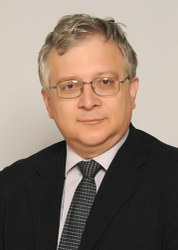
Assoc. Prof. Iliev Atanas is affiliated with the Faculty of Electrical Engineering and Information Technologies (FEIT) at the Ss. Cyril and Methodius University of Skopje. He holds the position of Associate Professor at the Institute for Power Plants and Switchgear. His academic journey includes a PhD (2003), MSc (1993), and BSc (1987) in Electrical Engineering from FEIT. His work experience spans over three decades, starting as a Junior Assistant (1987–1994), progressing to Assistant Professor (1994–2008), and attaining his current rank in 2008. His research focuses on optimizing power systems through advanced algorithms, particularly genetic algorithms applied to unit commitment, hydrothermal scheduling, and microgrid management. Key areas include renewable energy integration, grid reliability, and security-constrained optimization. He has contributed to over 50 publications addressing topics like dynamic programming for hybrid power systems, fuzzy logic for hydroelectric project evaluation, and reliability modeling of substations under distributed generation uncertainty. Notable contributions include developing novel self-adaptive genetic algorithms for short-term scheduling and energy management in hybrid systems. His work bridges theoretical optimization with practical grid challenges, emphasizing sustainability and resilience in power infrastructure.
Conny Almekinders is an Assistant Professor in the Department of Knowledge Technology and Innovation at Wageningen University & Research, focusing on seed systems, agricultural development, and participatory research approaches. His work bridges plant genetics, socioeconomics, and institutional dynamics to enhance crop seed systems globally. Key areas include potato and cassava seed systems, gender-responsive agricultural practices, and disease management strategies in developing countries. Research emphasizes seed degeneration, stakeholder collaboration in breeding programs, and policy analysis for resilient seed systems. He has co-supervised 25 PhD projects, including studies on decentralized seed multiplication in Kenya, hybrid potato breeding models, and community-driven development in Ethiopia. Notable contributions include developing diagnostic tools for root/tuber seed systems and evaluating farmer willingness-to-pay for quality planting materials in Southeast Asia. Almekinders has published over 168 peer-reviewed articles, datasets, and reports addressing seed systems' technical and social dimensions. His projects often involve international collaborations, such as the CRRIsP initiative on climate-resilient potato innovations and the RTB Seed System Toolbox. He actively participates in lectures and workshops promoting inclusive seed system transformation.
Dr. Xinxin Hu is an Associate Professor at the University of Houston-Downtown in the Department of General Business, Marketing, and Supply Chain under the Marilyn Davis College of Business. Her research focuses on decision-making under uncertainty, supply chain contracts, and retail management. PhD in Operations Management, University of Michigan MA in Statistics, University of Michigan BA in Operations Research, Fudan University Her research interests center on supply chain optimization, with a focus on lateral transshipment strategies, risk management, and sustainable operations. She has published in top journals like Management Science , OMEGA , and Production and Operations Management . Recent publications highlight her work in wind energy integration, decentralized inventory systems, and competitive distribution strategies. Her service roles include leadership positions in university academic policy and college-level scholarship committees.
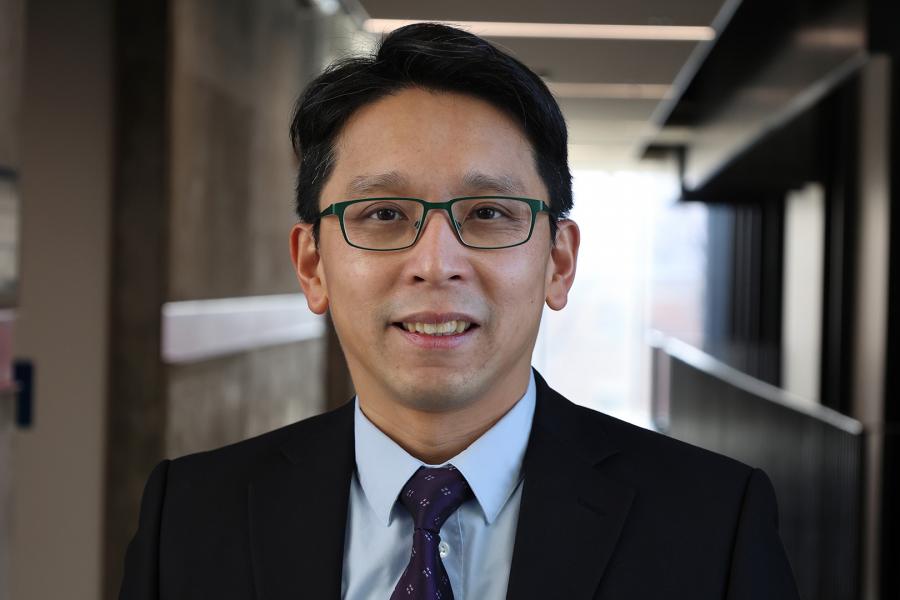
Dr. Carl Ho (Ngai Man) is a Full Professor and Canada Research Chair in Efficient Utilization of Electric Power at the University of Manitoba's Price Faculty of Engineering, Department of Electrical and Computer Engineering. Appointed Associate Head (Electrical Engineering) in July 2021, he leads the Renewable-energy Interface and Grid Automation (RIGA) Lab established with CFI funding in 2014. His educational background includes: PhD in Electronic Engineering (2007), City University of Hong Kong MEng in Electronic Engineering (2002), City University of Hong Kong BEng in Electronic Engineering (2002), City University of Hong Kong Dr. Ho's research focuses on power electronics applications for sustainable energy systems, with particular expertise in power conversion technologies for electric vehicles, renewable integration, and smart grid infrastructure. His work bridges industrial application and academic innovation, evidenced by over 40 IEEE journal publications, 80 conference papers, and 20+ patents. Current research emphasizes wide-bandgap semiconductor applications, power hardware-in-loop validation, and DC microgrid architectures for remote communities. Analysis of his recent publications reveals a strong trend toward practical implementation of power electronics solutions, with increasing focus on GaN/SiC devices, grid-forming converters, and modular architectures for microgrids. His work consistently addresses real-world challenges in efficiency, reliability, and cost-effectiveness across renewable integration, electric transportation, and power quality domains. Notable awards include: Second Place Winner for 2018 IEEE Transactions on Power Electronics Prize Paper Multiple IEEE JESTPE Star Associate Editor Awards (2022-2023) IEEE TPEL AE Excellence Award (2023) Best Student Team Regional Award in IEEE Empower a Billion Lives 2019 As an active mentor, Dr. Ho supervises numerous graduate students across multiple cohorts and leads significant research initiatives including NSERC Discovery Grants, MITACS collaborations with Power Integrations Inc., Research Manitoba Innovation Proof-of-Concept Grants, and Natural Resources Canada projects on zero-emission heavy vehicles. His RIGA Lab serves as a hub for industry-academic collaboration with Manitoba Hydro and transportation sector partners. The RIGA Lab, completed in 2016 and renovated in 2019, houses specialized equipment for power electronics prototyping, real-time simulation, and hardware-in-loop testing. Current projects include advanced wireless EV charging, GaN-based controller development, and DC microgrid solutions for remote communities, with recent recognition including a visit from Prime Minister Justin Trudeau in April 2023.
Prof. Dr. Rabia Karakaya Polat is a faculty member at Işık University's Faculty of Economics, Administrative and Social Sciences, Department of International Relations. She specializes in Political Science with research interests in Comparative Political Institutions, Political Communication, Turkish Political Life, Migration Governance, and Digital Politics. Education: PhD in Public Policy from De Montfort University (2001-2004), BA in Political Science and International Relations from Boğaziçi University (1995-1999) Awards: Marie Skłodowska–Curie Individual Fellowship, TUBITAK grant Her research focuses on migration policy narratives, refugee governance in Turkey, digital exclusion, and the political implications of technology. She has led projects like DATAMIG (migration control) and COREnet (migration and religious diversity). Recent articles examine Turkey-Ukraine geopolitical cooperation, Syrian refugee responses, and biometric migration policies. Scientific Awards Marie Skłodowska–Curie Programme Individual Fellowships Above Threshold Award TUBITAK, Türkiye She has supervised theses on topics including NATO's role in the Russia-Ukraine crisis and social media's impact on anti-immigration discourse. Her teaching includes courses on Political Theory, Turkey-EU Relations, and Internet Politics.
Elisa Capello is a Full Professor of Flight Mechanics at Politecnico di Torino, Department of Mechanical and Aerospace Engineering (DIMEAS). She serves as Contact person for internationalization of innovation and technology transfer, Member of the Interdepartmental Center PIC4SeR (PoliTO Interdepartmental Center for Service Robotics), and Deputy Coordinator of the Doctoral College in Aerospace Engineering. With over 100 publications, her work spans aerospace engineering, control systems, and robotics. Her research focuses on flexible spacecraft, flight control systems, robotic systems, and unmanned aerial vehicles. She designs guidance, control and navigation systems for aircraft and spacecraft, develops control systems for wind turbines and wind farms, studies flight mechanics of fixed and rotary wing aircraft, tests unmanned aerial systems, and plans mission control for autonomous systems. Her work bridges theoretical control systems with practical aerospace applications, with strong emphasis on experimental validation. Her recent publications demonstrate a strong focus on advanced control techniques for aerospace applications, particularly in UAV control, spacecraft formation flying, and robotic systems. There's a clear trend toward integrating machine learning with traditional control methods, as seen in transformer-based MPC and multimodal learning approaches. Her work spans theoretical development, simulation, and experimental validation across multiple platforms. Member of the Editorial Board of IEEE Control Systems Society (2019-) Member of the Scientific Committee - IEEE Technical Committee Aerospace Control (2016-) International FAI Judge for Helicopter Championship (2009-2015) Professor Capello supervises numerous PhD students working on topics including autonomous aerial vehicles, path planning, risk analysis, spacecraft dynamics, and control. She leads multiple research projects including CREATEFORUAS (2019-2022), Assessment of drag free control systems for L3 gravity wave observatory (2018-2019), and Guidance, Navigation and Control algorithms for in-Orbit servicing (2020-2021). Her international collaborations include institutions in the USA, Japan, and Germany. She is actively involved with the Flight Dynamics, Control and Simulation research group at DIMEAS and the DRAFT (DRones Autonomous Flight Team) at PoliTo, where she mentors students in developing autonomous flight capabilities for various applications.
Dr. Dima Alhadidi is an Associate Professor in the School of Computer Science at the University of Windsor. His research focuses on Cybersecurity, Data Privacy, Machine Learning, and their applications in Health Informatics, Cloud Computing, and Smart Grids. He holds a PhD in Computer Science and Software Engineering from Concordia University (2010). His research interests include secure federated learning frameworks, privacy-preserving techniques for genomic and health data, and adversarial machine learning defenses. Notable contributions include Trustformer (2025), secure aggregation methods in federated learning, and hybrid malware classification using deep learning. Recent work emphasizes mitigating membership inference attacks and developing privacy-preserving analytics for distributed systems. Dr. Alhadidi actively advises graduate students on topics like social network clustering (NICASN 2022) and federated learning security. No scientific awards are explicitly listed. His research spans theoretical frameworks (e.g., λ_AOP calculus) to applied systems in smart grids and healthcare informatics.
Dr. Ali Grami is an Associate Professor in the Department of Electrical, Computer and Software Engineering at Ontario Tech University, within the Faculty of Engineering and Applied Science. He holds a PhD in Electrical Engineering from the University of Toronto (1986), an MEng from McGill University (1980), and a BSc from the University of Manitoba (1978). His research focuses on satellite communications, digital transmission systems, and wireless networks. He has extensive industrial experience, including roles at Telesat Canada and Nortel Networks, and has contributed to pioneering projects like Canada's Anik-F2 Ka-Band satellite system. Dr. Grami has authored several textbooks, including Introduction to Digital Communications and Discrete Mathematics: Essentials and Applications . His work spans theoretical advancements (e.g., beamforming algorithms, spectrum access protocols) and practical applications in broadband satellite systems and cognitive radio networks. Awards include the United Nations TOKTEN Award (1995) and Nortel Award of Excellence (1989). He has designed academic programs at Ontario Tech, including the BEng, MASc/MEng, and PhD in ECE, and contributed to IT security programs. His teaching spans undergraduate and graduate courses in digital transmission, communication systems, and signal processing.
Noémie Jeannin is a doctoral assistant and PhD student at École polytechnique fédérale de Lausanne (EPFL), affiliated with the Laboratory of Photovoltaics and Thin Films (PV-LAB) within the School of Engineering and the Institute of Microengineering. She is a member of the Energy Doctoral Program (EDOC-EDEY) and serves as the doctoral student representative, contributing to academic governance. Her work is centered on sustainable energy systems, particularly the integration of renewable energy and transportation electrification. Her research focuses on the coupling of photovoltaic (PV) energy production with electric vehicle (EV) charging, using advanced geospatial modeling to quantify energy demand and mobility habits across Europe. She develops methodologies to assess charging flexibility and infrastructure needs, contributing to the European OPENGIS4ET project and the development of the Citiwatts open-source platform for energy transition planning. Her work spans disciplines including energy systems, smart grids, GIS, and sustainable urban mobility. The trends in her publications reveal a strong emphasis on spatial and temporal modeling of energy demand, policy-relevant analysis of electricity tariffs, and innovative solutions for grid integration of distributed energy resources. Her recent articles highlight practical applications in urban energy planning, EV charging behavior, and cost-effective alternatives to grid upgrades. Noémie is actively involved in teaching as an assistant for the course 'Energy Supply Economics and Transition (ENG-410)' and participates in academic service through her representative role. She collaborates with researchers such as A. Pena-Bello, C. Ballif, and N. Wyrsch, and her work is supported by European and institutional research initiatives. She maintains professional profiles on ORCID, Google Scholar, and LinkedIn, and her primary contact is via email at noemie.jeannin@epfl.ch. Her office is located at MC A2 208, EPFL.
Roberto Rojas-Cessa is a Professor in the Department of Electrical and Computer Engineering at New Jersey Institute of Technology (NJIT), affiliated with the School of Applied Engineering and Technology. His research focuses on networking, blockchain applications in smart cities, energy systems, wireless communications, and high-performance switching. He has led multiple National Science Foundation (NSF)-funded projects, including initiatives on controlled delivery power grids and next-generation network quality of service. Notably, his work explores blockchain for energy metering, sustainable environmental measures, and smart grid optimization. He is also a Senior Member of the National Academy of Inventors (2024). His research interests span network protocols, distributed systems, and IoT applications. Recent projects include AMI-Chain (a blockchain-based power metering system) and studies on indirect free-space optical communications for vehicular networks. He has contributed to advancements in medium access control for crowded networks and energy packet switches for digital microgrids. Rojas-Cessa’s work integrates machine learning for network management and flood impact analysis. He has developed tools for time-lapse analysis of urban data and agent-based models to evaluate electric vehicle adoption. His publications emphasize scalability, security, and efficiency in both traditional and emerging technologies. Grants: Collaborative Research on Power Grids (NSF, 2016–2018), NeTS-NR: Quality of Service Networks (NSF, 2004–2008) Awards: Senior Member of the National Academy of Inventors (2024) His lab activities include experimental evaluations of digital microgrids and blockchain implementations for carbon footprint tracking. He actively collaborates on projects addressing emergency communications and resilient energy distribution systems.
Lars Dittmann is a Professor at the Department of Electrical and Photonics Engineering at the Technical University of Denmark (DTU), leading the Networks Technology and Service Platforms section. His work bridges advanced networking technologies with real-world applications in healthcare and transportation. Academic Role: Professor, Head of Section University: Technical University of Denmark (DTU) Department: Networks Technology and Service Platforms Research Interests: Professor Dittmann specializes in Software-Defined Networking (SDN) , 5G and IoT technologies , and energy-efficient network design , with a focus on applications in telemedicine and transportation systems . His work integrates machine learning for privacy-preserving traffic analysis and explores optical networks for high-bandwidth scenarios. Scientific Contributions: His recent publications emphasize green cellular networks using SDN/NFV/C-RAN, IoT benchmarking for coverage and mobility, and secure edge architectures for railways. Collaborative projects like the Future Patient telerehabilitation program highlight his interdisciplinary impact. Supervision: He supervises PhD candidates such as Radheshyam Singh, focusing on SDN-based IoT security and 5G network optimization. Labs & Projects: Leads initiatives like EXplorative network PLAnnINg and Broadband Trial Integration , addressing challenges in network reliability , emergency communication , and optical data center scaling .
Stefan Decker is a full University Professor (Universitätsprofessor) at RWTH Aachen University, Germany, where he heads the Chair of Information Systems and Databases (Informatik 5) within the Faculty of Mathematics, Computer Science and Natural Sciences. He is actively involved in teaching, research, and the supervision of numerous ongoing and completed doctoral, master’s, and bachelor theses. Education & Academic Background Doctorate (Dr. rer. pol.) – field of Information Systems or related (exact institution/year not stated in text). Appointed as University Professor and Chair of Information Systems and Databases at RWTH Aachen University. Research Interests Prof. Decker’s work lies at the intersection of databases, knowledge graphs, semantic web technologies, data science, and cybersecurity . He investigates architectures and algorithms for large-scale, privacy-preserving, decentralized data analytics , develops ontology-driven information systems , and explores the use of large language models (LLMs) for educational technology, anomaly detection, and incident-response playbooks. Additional focal areas include smart energy systems, mixed-reality learning environments, FAIR data principles, and federated machine learning . Scientific Contributions & Trends His recent publications (2022-2025) demonstrate a clear trend toward explainable AI, LLM-enhanced systems, secure data spaces, and semantic interoperability . Key contributions include novel anomaly-detection frameworks for encrypted power-grid communications, knowledge-graph-driven chatbots for higher-education support, and methodological advances in decentralized analytics and FAIR data sharing. These works are disseminated in top-tier venues such as AAAI, IEEE ISGT Europe, ESWC, IDEAL, and various Springer LNCS and IEEE Transactions. Supervision & Grants Doctoral Theses Advised: A. T. Neumann – “Chatbots as professional companions in large-scale community information systems” (2024) S. M. Welten – “Methods for practical data sharing and decentralized analytics” (2025) Master’s Theses Co-Advised: A. R. Küsters – “Object-centric process constraints using variable bindings” (2025) Additionally supervising more than 30 ongoing bachelor, master, and doctoral projects covering topics such as LLM-driven cybersecurity playbooks, knowledge-graph construction for German law, privacy-preserving analytics in smart grids, and mixed-reality learning agents. Principal investigator or senior researcher in large collaborative projects including NFDI4DS, WestAI, champI4.0ns and several EU/national initiatives on sovereign data spaces and AI services. Labs & Teams Prof. Decker leads the Information Systems & Databases (DBIS) Research Group . The group operates well-equipped laboratories for knowledge-graph engineering, mixed-reality applications, privacy-enhancing technologies, and secure distributed analytics . Current team size exceeds 30 researchers including PhD candidates, postdocs, and scientific programmers, supported by national and EU funding streams.
Professor Roderich Groß is a faculty member at Technical University of Darmstadt, where he serves as Head of the RCPS Lab (Robotics, Control, and Physical Systems Laboratory). His extensive research career spans over two decades with publications dating back to 2006, establishing him as a leading figure in swarm robotics. His work appears in top-tier robotics journals including IEEE Transactions on Robotics, Nature Communications, and The International Journal of Robotics Research. Professor Groß's research focuses on swarm robotics, multi-robot systems, modular and reconfigurable robotics, and human-robot interaction. His work explores how groups of relatively simple robots can collectively perform complex tasks through decentralized control mechanisms. He investigates modular systems that can adapt their physical structure to different tasks and develops human-robot interaction paradigms that enable effective collaboration between humans and robot swarms. His research has practical applications in search and rescue, environmental monitoring, construction, and industrial automation. Analysis of Professor Groß's recent publications reveals a clear evolution from foundational swarm behaviors toward increasingly sophisticated applications. His work addresses critical challenges including energy management in robot swarms (CapBot), multi-operator control interfaces, heterogeneous systems for industrial applications, and bio-inspired collective behaviors. His research bridges theoretical swarm intelligence principles with practical implementation on physical robot platforms like Kilobots, with recent work integrating artificial intelligence techniques such as language models for swarm control. As Head of the RCPS Lab, Professor Groß leads a productive research group with extensive international collaborations. The lab works with various robot platforms focusing on both theoretical modeling and practical implementation of swarm behaviors, contributing significantly to advancing the field of swarm robotics from theoretical foundations to real-world applications.
Dr. Tan Wen Shan is a Lecturer in Mechatronics Engineering at Monash University Malaysia, specializing in power systems and renewable energy integration. He holds a PhD in Electrical Engineering from Universiti Teknologi Malaysia (2017), an MEng in Electrical Engineering (2013), and a BEng in Electrical and Electronics Engineering (2011). His research focuses on stochastic generation scheduling, energy storage systems, smart grids, and blockchain applications in energy markets. Education: BEng (Electrical and Electronics Engineering), Universiti Malaysia Sabah, 2011 MEng (Electrical Engineering), Universiti Teknologi Malaysia, 2013 PhD (Electrical Engineering), Universiti Teknologi Malaysia, 2017 Research Interests: Stochastic generation scheduling with renewable integration Power system flexibility and resilience Electricity market operations and blockchain Artificial intelligence in energy systems Publications and Projects: Recent work includes P2P energy trading, transportable energy storage, and resilience-based scheduling under natural disasters. Active projects include sustainable energy bike lanes in Kuala Lumpur and AI-assisted energy storage planning. His articles emphasize renewable energy forecasting, smart grid optimization, and decentralized energy systems. Awards: ITEX 2023 Prize (2023) IBM Call for Code 2022 Green Practice Challenge Accelerator Prize (2022) Teaching and Supervision: Unit Coordinator for TRC3500 (Sensors and Artificial Perceptions) and TRC3600 (Modelling and Control) Supervised multiple final-year projects on energy systems and smart grids (2023–2024).
Cuo Zhang is a Lecturer of Power Engineering and ARC DECRA Fellow at the University of Sydney's School of Electrical & Computer Engineering. He holds a B.E. (Hons.) from the University of Sydney (2014) and a Ph.D. in Electrical Engineering from UNSW (2018). His research focuses on smart grids, renewable energy integration, voltage control, and optimization of power systems. Key interests include distributed generation planning, energy storage systems, and demand response mechanisms. Dr. Zhang leads research on enhancing distribution network resilience through advanced control strategies and participates in the Net Zero Institute. He has secured grants such as the 2024 ARC DECRA project on renewables hosting capacity. Supervised students include Yunqing Zhang, working on robust renewables integration. His recent publications emphasize data-driven approaches, decentralized energy trading, and adaptive control for unbalanced networks. He explores machine learning applications in energy management and stochastic optimization under uncertainty. Awards include the University Medal for academic excellence. Awards: ARC DECRA Fellow Grants: 2024 Robust Renewables Hosting Capacity Enhancement Labs/Teams: Member of the Net Zero Institute