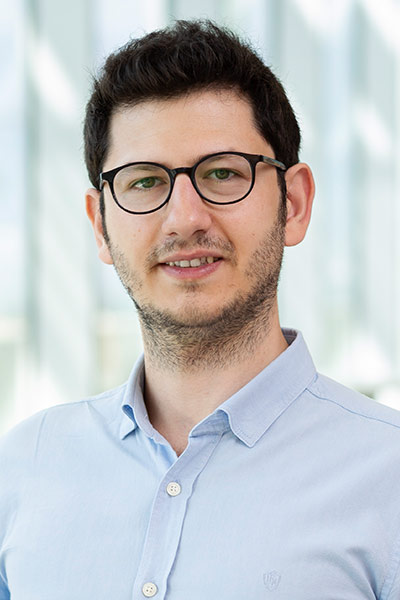
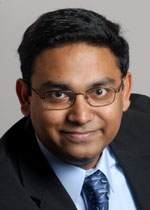
Dr. Burak Sarsilmaz is an Assistant Professor in the College of Engineering at Utah State University, specializing in Electrical and Computer Engineering. His research focuses on distributed control of multi-agent systems, adaptive control, and trajectory optimization for aerospace applications. Education: PhD in Mechanical Engineering, University of South Florida (2020) MA in Mathematics, University of South Florida (2020) MS in Aerospace Engineering, Middle East Technical University (2016) BS in Aerospace Engineering, Middle East Technical University (2013) Research: His work bridges control theory and practical applications in autonomous systems, with emphasis on robustness under uncertainty. Recent publications explore novel approaches to cooperative control and optimization in constrained environments. Students: Actively mentors graduate students including Akalu Desta Teklu and Kursad Metehan Gul. Leads the Autonomy, Robotics, Control, and Optimization (ARCO) research group. Awards: Holds a Canada Research Chair in Translational Cancer Research.
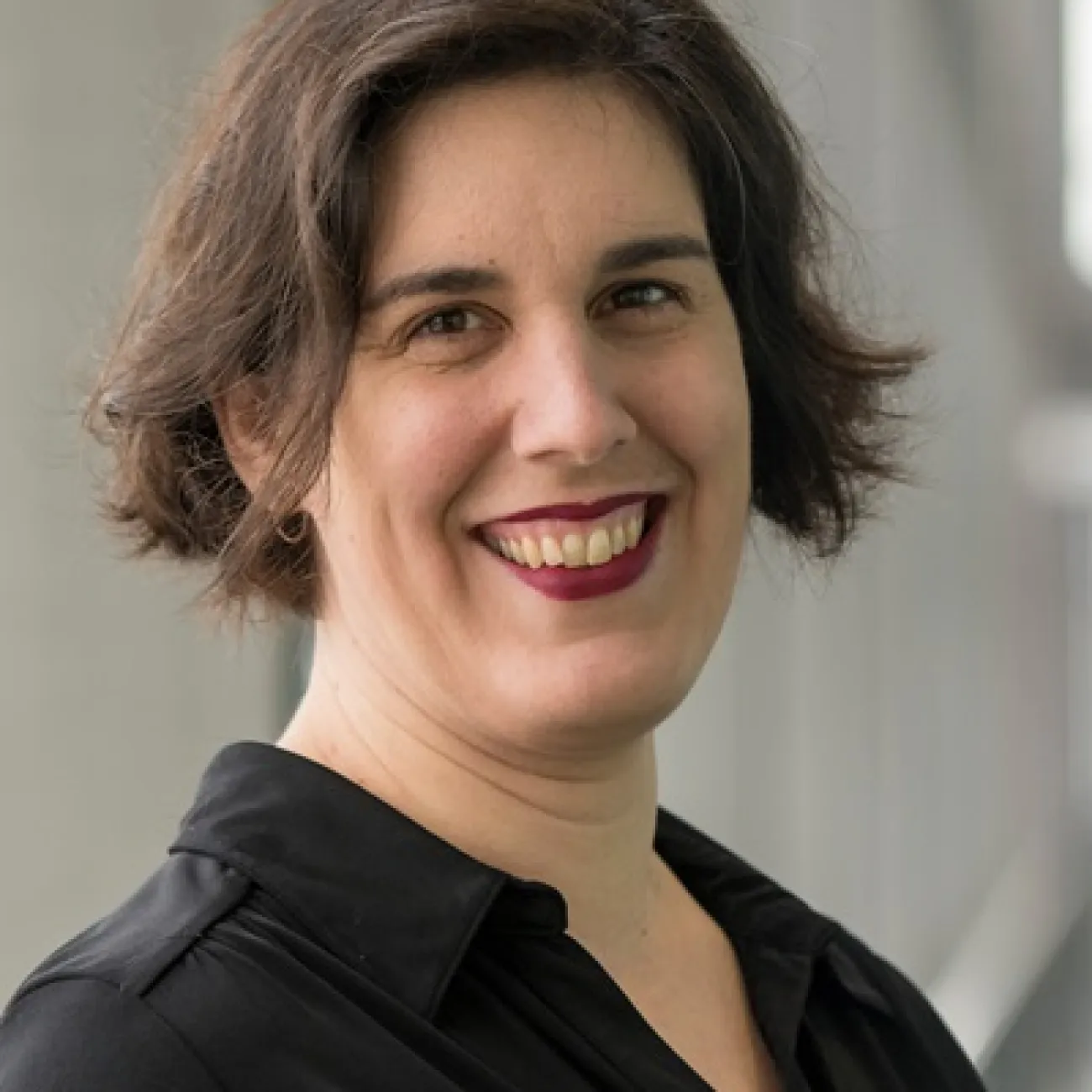
Yasmeen George is a Senior Lecturer in the Department of Data Science & AI at Monash University's Faculty of Information Technology. She holds a PhD in Medical Image Processing from the University of Melbourne (2018) and a Master's in Computer Science from the University of Ain Shams (2013). Her research focuses on AI applications in healthcare, particularly medical image analysis for conditions like cancer, glaucoma, and psoriasis. She co-founded the AIM for Health Lab at Monash IT and is a research affiliate at the Victorian Institute of Forensic Medicine. Education: PhD (Medical Image Processing), University of Melbourne (2018); Master of Computer Science (Medical Image Analytics), University of Ain Shams (2013). Research interests include AI-driven medical image analysis, machine learning, and cross-domain healthcare analytics in radiology, dermatology, and ophthalmology. Her work addresses challenges in automated disease detection, lesion segmentation, and severity assessment across modalities like 2D/3D imaging and text data. Recent articles focus on kidney segmentation, glaucoma detection, federated learning for breast cancer, and AI frameworks for hazardous waste policy. Her research has led to patents with IBM and grants from MRFF and NHMRC. Awards: Recipient of the 2023 Heidelberg Laureate Foundation Alumni Award. Collaborations include projects on clean energy sustainability and hazardous waste management through advanced AI techniques. She actively advises PhD students and engages in interdisciplinary research teams across Monash and industry partners. Labs/Teams: Co-founder of the AIM for Health Lab, affiliated with the Victorian Institute of Forensic Medicine.
Kyle Chard is a Research Professor in the Department of Computer Science at the University of Chicago and a researcher at Argonne National Laboratory. He holds a Ph.D. in Computer Science from Victoria University of Wellington (2011) and focuses on cloud computing, distributed systems, and high-performance computing. His work emphasizes scalable data management and automation in scientific research. Education: Ph.D., Computer Science, Victoria University of Wellington, 2011 BSc (Hons) and BSc in Computer Science and Mathematics, Victoria University of Wellington Research Interests: Kyle’s research bridges computational systems and scientific domains such as biology, earth science, and astrophysics. Key areas include distributed function serving (e.g., funcX), reproducible research (Whole Tale), and cost-aware cloud computing. His interdisciplinary approach addresses challenges in data-intensive computing and research automation. Publications: Over 150+ publications in top venues like IEEE/ACM conferences, focusing on workflow systems, distributed computing, and scientific data management. Recent work explores AI-driven workflows and exascale computing. Awards: IEEE TCHPC Early Career Award (2020) R&D100 Award (Globus Team, 2019) New Zealand Top Achiever Doctoral Scholarship Grants & Leadership: NSF-funded projects on distributed computing, reproducibility, and cloud infrastructure. Co-leads Globus Labs and the CERES Center for Unstoppable Computing. Community contributions include Parsl (parallel Python), DLHub (ML model serving), and funcX (function-as-a-service). Labs & Collaborations: Globus Labs: Data management and automation CERES Center: Resilient computing systems Collaborations with NASA, DOE, and NSF initiatives
Dr. Harshala Gammulle is a Research Fellow at Queensland University of Technology (QUT), School of Electrical Engineering & Robotics. She holds a PhD in Computer Vision from QUT (2019), receiving the QUT Executive Dean's Commendation for Outstanding Doctoral Thesis. Her expertise spans machine learning, computer vision, and spatio-temporal modeling for human behavior understanding. She leads interdisciplinary projects with funding from DST Group, SmartSat CRC, QLD DESI, and others. Research focuses include: human action recognition, medical anomaly detection, satellite image analysis, and AI for environmental monitoring. Key projects involve quantum-classical hybrid ML for biomedical signal analysis, disaster forecasting via hyperspectral data, and autonomous combat vision systems. She has supervised PhD/MPhil candidates in ML and quantum hybrid ML. Education: PhD (Computer Vision, QUT 2019), BSc (University of Peradeniya, Sri Lanka). Awards: WiT Emerging Achiever Technology Award finalist (2021), University Award for Academic Excellence (2015). Teaching includes units like Digital Signals and Image Processing (EGH444), and Computing & Data for Engineers (EGB103). Current grants involve QLD DESI, SmartSat CRC, and Rheinmetall Defence Australia collaborations. Active in labs like SAIVT and QUT's Early Career Research schemes.
Age Chapman is Professor of Computer Science at the University of Southampton. She leads research in data provenance, decentralized systems, and ethical AI through projects like ESPRESSO focused on secure personal data search. Her work bridges computer science with healthcare, heritage preservation, and social justice applications. Research interests include: privacy-preserving data architectures, algorithmic fairness in healthcare, and provenance tracking for AI systems. She directs PhD research across these domains and collaborates with the Alan Turing Institute and healthcare organizations. Publications demonstrate strong focus on decentralized data management (80% of recent papers) with growing emphasis on AI ethics. Awards include the SIGMOD Test of Time Award for seminal provenance research. Current grants support work on sovereign data ecosystems and healthcare AI fairness. She leads the Digital Health and Biomedical Engineering research group and collaborates internationally through the Alan Turing Institute and European partnerships. Manages labs exploring data trust architectures and healthcare AI systems.
Jeremy Crampton is an Adjunct Professor focusing on the societal and political implications of geolocational technologies. He is a leading scholar in critical cartography, surveillance studies, and spatial big data governance. His work explores how technologies like AI, blockchain, and geoweb platforms shape everyday life and power dynamics. He is a Fellow of the Alan Turing Institute and Royal Geographical Society (UK), and a member of the American Association of Geographers. His research spans over three decades, including a seminal 2010 monograph on critical cartography and ongoing projects on counter-GeoAI. He is currently writing The Map and the Spyglass: The New Geographical Analytics of Everyday Life , to be published by Verso. Crampton teaches GEOG 3146 - Political Geography , addressing how spatial technologies influence political structures and governance. Key themes in his work include algorithmic decision-making, geospatial surveillance ethics, and the interplay between technology and sovereignty. His recent articles analyze smart cities, festival security, and the societal impacts of locational data. He critiques techno-utopian narratives, advocating for equitable and transparent geospatial systems. Scientific awards include recognition for his contributions to critical GIS theory and digital geography. His interdisciplinary approach bridges human geography, technology studies, and policy analysis, influencing debates on data governance and spatial justice.
Feng Hao is a Professor of Security Engineering and Head of the Systems & Security research theme at the Department of Computer Science, University of Warwick. He holds a PhD from the University of Cambridge, supervised by Ross Anderson and John Daugman. His research focuses on real-world security problems, including cryptographic protocols, electronic voting systems, and IoT security. He has contributed to standards like ISO/IEC 11770-4 and RFC 8236 (J-PAKE), and his work has been recognized with grants such as the ERC Starting Grant (2012) and the ERC Proof of Concept Grant (2015). Education: PhD in Security Group (Computer Laboratory), University of Cambridge. Research interests include designing secure protocols for e-voting, password authentication, and privacy-preserving systems. Notable contributions include DRE-i, DRE-ip, and J-PAKE protocols. Professional service includes roles as a journal editor (IEEE Security & Privacy, Journal of Information Security and Applications), standards committee member (ISO/IEC), and grant reviewer (EPSRC, EU). Teaching includes advanced computer security and cryptography courses at both undergraduate and postgraduate levels. Awards and grants highlight his impactful work: top Google Scholar paper in Computer Security & Cryptography (2017), 3rd place in Economist Cybersecurity Challenge (2016), and significant ERC funding. His research team has conducted trials in e-voting systems, such as the Gateshead local elections (2019), demonstrating real-world application of his protocols.
Deepak Garg is a researcher at the Max Planck Institute for Software Systems (MPI-SWS) in Germany. His work primarily focuses on secure compilation , type theory , and formal verification of software systems. Conference Roles: He has served as an author and committee member in premier programming language conferences such as POPL , PLDI , ICFP , and ESOP since 2015. Research Interests include: Secure compilation techniques for hyperproperty preservation. Modal and refined type theories for cost analysis and concurrency. Formal verification of C code and probabilistic programs. Compiler correctness and decentralized multi-language verification. Contributions span foundational research in programming languages, with a focus on security, complexity, and concurrency. His work has been published in tracks like PriSC , OOPSLA , and ESOP , addressing topics such as data-flow back-translation and robust property preservation.
Adrian Francalanza is a Professor in the Department of Computer Science at the Faculty of Information and Communication Technology, University of Malta. His research is centered on formal methods, runtime verification, and concurrency, with a focus on monitorability and distributed systems. His research interests include: Runtime Verification and Monitor Synthesis Session Types and Protocol Safety Concurrency and Actor-Based Systems Branching and Linear-Time Temporal Logics Probabilistic and Decentralized Monitoring Formal Tools for Cyber-Physical and Distributed Systems The recent publications highlight a strong trend in theoretical and practical advances in monitorability, especially for branching-time and probabilistic systems. His work bridges theory with implementation, often resulting in tools like STMonitor and DetectEr. There is a clear emphasis on session types, runtime enforcement, and the verification of communication protocols in real-world systems such as REST APIs and SMTP. Scientific awards include: Distinguished Paper Award at ECOOP 2025 Best Paper Award at DisCoTec 2022 He has been actively involved in advising and organizing major academic events. He served as Program Chair for GandALF 2024 and 2025, FORTE 2024, and VORTEX workshops. He led a three-year project funded by Rannis on Theoretical Foundations for Monitorability in collaboration with Reykjavik University. He has received grants and recognition for developing practical tools such as DetectEr and STMonitor, which support runtime monitoring of Erlang and session-typed systems. He is associated with several research teams and labs, including: Runtime Verification and Monitorability Research Group at University of Malta Collaborators on the DetectEr project Developers of STMonitor and polyLarva tools International collaborators at Reykjavik University and beyond
Prof. Chris Dent is a Professor at the University of Edinburgh's School of Mathematics, specializing in the intersection of mathematical sciences and engineering. He holds a fellowship at the Alan Turing Institute and directs the Statistics Consultancy Unit. His career spans theoretical physics, operational research, and energy systems analysis, with notable contributions to National Grid strategies, policy-driven decision support, and pandemic data communication. Education: MMath (Cambridge), PhD in Theoretical Physics, MSc in Operational Research (Edinburgh). Research focuses on energy system reliability, uncertainty quantification, and interdisciplinary policy modeling. He critiques data communication practices in crises, advocating for rigorous reporting frameworks. Key activities include projects on electricity supply security, smart grid optimization, and post-pandemic economic recovery. Collaborations involve government bodies, the National Grid, and international energy networks. The Statistics Consultancy Unit supports cross-disciplinary projects in academia and industry.
Koushik Sen is a Professor in the Department of Electrical Engineering and Computer Sciences at the University of California, Berkeley. He holds a B.Tech from IIT Kanpur and M.S./Ph.D. from UIUC. His research focuses on Software Engineering, Programming Languages, and Formal Methods, emphasizing tools like DART, CUTE, and Jalangi for improving software reliability. He leads projects such as CORVETTE and Sky Computing Lab, and collaborates with Samsung Research America on JavaScript analysis. Sen has received prestigious awards including the Sloan Fellowship and ACM SIGSOFT Impact Award. Education: B.Tech, Indian Institute of Technology, Kanpur M.S. and Ph.D., University of Illinois at Urbana-Champaign Research Interests: Software Testing, Verification, Symbolic Execution, Security, and Quantum Computing. His work bridges automated testing (e.g., concolic testing) with machine learning for bug detection and program synthesis. Projects include Hindsight Logging for ML reproducibility and quantum circuit optimization (QFAST). Awards: NSF CAREER, IFIP Manfred Paul, ACM SIGSOFT Distinguished Paper (multiple), and Sloan Fellowship. Advising: Supervised over 30 students/postdocs, leading to faculty roles at UBC, CMU, and industry positions at Google, Facebook, and Samsung. Labs/Teams: Berkeley Center for Responsible, Decentralized Intelligence (RDI), EPIC Data Lab, and Sky Computing Lab. Active in quantum computing and hardware fuzzing (RTL-FuzzLab).
Bina Ramamurthy is a Professor of Teaching in the Department of Computer Science and Engineering at the University at Buffalo, affiliated with the School of Engineering and Applied Sciences. With over three decades of experience in STEM education and research, her work focuses on blockchain technology, data-intensive computing, and decentralized systems. PhD in Electrical Engineering, University at Buffalo (1997) Her research centers on blockchain application development, smart contracts, and decentralized finance (DeFi). She directs the Blockchain ThinkLab at UB and developed the SUNY-approved certificate program in Data-Intensive Computing. Her Coursera MOOC specialization on Blockchain (launched 2018) has enrolled over 400,000 learners globally. Selected for prestigious recognition: SUNY Chancellor’s Award for Excellence in Teaching (2019) UB President's Circle Award (2017) She has secured multiple NSF grants, including as Principal Investigator on four HDR/IIS-CISE grants, and co-led six SUNY Instructional Technology grants. Her teaching emphasizes hands-on learning, with in-person lectures and practical exercises in courses like CSE4/506 and CSE4/526.
Dr. Stavros Shiaeles is an Associate Professor in Cybersecurity at the Faculty of Technology , University of Portsmouth, and Co-Director of the Portsmouth AI and Data Science Centre (PAIDS) . With over 130 publications and 3000+ citations, he specializes in cybersecurity, applied AI, and threat mitigation frameworks. Academic Qualifications : PhD in Electrical and Computer Engineering (Democritus University of Thrace, 2013), MEng in Electrical and Computer Engineering (Democritus University of Thrace, 2007), MBA in Human Resource Management (University of Plymouth, 2016), and PG Cert in Academic Practice (University of Plymouth, 2017). Research Interests span cybersecurity, malware detection, blockchain, 6G networks, AI/ML applications, digital forensics, and post-quantum cryptography. His work addresses threats in IoT, financial systems, and critical infrastructure while exploring SDG4 (Quality Education) through cybersecurity training. Recent publications emphasize AI-driven anomaly detection (e.g., ransomware behavior analysis, 6G traffic monitoring), deepfake forensics, synthetic image attribution, and hybrid blockchain/AI security architectures. He also curates datasets for malware analysis and synthetic media classification. Scientific Awards : IEEE SMC TCHS Outstanding Service Award (2021). Grant Funding : Over €18M secured in EU Horizon 2020 grants, including €8M as Principal Investigator for the ongoing XTRUST-6G project. Active in KTPs, consulting, and research commercialization opportunities.
Seamus Ross is a Professor at the Faculty of Information, University of Toronto, where he served as Dean from 2009 to 2015 and currently directs the Bachelor of Information Program. He is also a Senior Fellow at Massey College and a Fellow at St Michael’s College. Previously, he was Professor of Humanities Informatics and Founding Director of HATII at the University of Glasgow (1997–2009), where he is now Professor Emeritus. He has held visiting roles at institutions such as IMIS-Athena Research Centre and has been active in numerous international research initiatives. His educational background includes a DPhil from the University of Oxford, an MA from the University of Pennsylvania, and a BA from Vassar College. Seamus Ross’s research centers on digital preservation, curation, digital humanities, and cultural heritage informatics. His work explores semantic extraction, genre classification, emulation, digital archaeology, and knowledge representation. He has contributed significantly to the development of digital curation frameworks and post-custodial models for archives and libraries. His recent publications reflect a sustained engagement with FAIR principles, open access, and the ethical dimensions of digital cultural heritage. The trends in his scholarly output highlight a strong focus on the intersection of technology and cultural memory, with an emphasis on practical frameworks for long-term access, digital stewardship, and interdisciplinary collaboration in digital humanities. Elected Corresponding Fellow, Royal Society of Edinburgh (2016) He has supervised multiple graduate students, including Cassandra D’Amico-Mazza and Hassan Asif, and has led numerous funded research projects, such as BlogForever, PLANETS, SHAMAN, and DL.ORG, supported by the European Commission, JISC, EPSRC, and others. He has also developed academic programs including the MSc in eDiscovery and Computer Forensics and the MA in Arts and Media Informatics. Ross has been actively involved in leadership and service, chairing committees such as the BI Admissions and Curriculum Committees, and serving on the Scientific Committee for international symposia and editorial boards including IFLA Journal , KULA , and Studies in Digital Heritage . He has organized key events like the Semantic Digital Archives workshops and the ALISE/ASIST accreditation panel, shaping discourse in LIS education and digital curation.
Lillian Wang is a Lecturer at the School of Information Technology, Monash University Malaysia. She holds a PhD in IT from Multimedia University (2020), MEngSc from Multimedia University (2012), and BSc (Hons) in Software Engineering (2006). With 15+ years of experience, she has served as an educator, trainer in educational technologies (e.g., Google Education, Blended Learning), and reviewer for international journals/conferences. Research focuses on Cloud e-learning, IoT in wastewater treatment, and security/privacy in educational platforms. Contributions to UN SDGs: Education (4) and Clean Water & Sanitation (6). Active in IoT-based solutions for healthcare (medication dispensing), smart attendance systems, and environmental monitoring. Her work includes 19+ peer-reviewed publications and collaborations across multiple disciplines. She is currently accepting PhD students in VR in education and AI/ML in wastewater management.