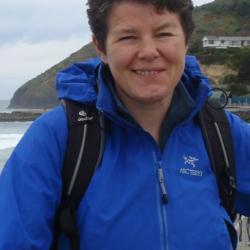
Professor Simon Godsill MA PhD FIET FIEEE is a University Professor of Statistical Signal Processing in the Department of Engineering at the University of Cambridge. He heads a research team specializing in statistical signal processing, digital audio restoration, and Bayesian inference. His work addresses the processing and analysis of digital speech, audio, tracking systems, and financial datasets, with a focus on probabilistic modeling and computational methods. Research interests include statistical signal processing , degraded signal restoration , and Bayesian computational methods . Recent publications emphasize Gaussian processes, variational inference, and multi-object tracking for applications in audio enhancement and financial data analysis. He co-founded the audio remastering company CEDAR Audio Ltd in 1988. Scientific awards: Fellow of the Institution of Engineering and Technology (FIET) Fellow of the Institute of Electrical and Electronics Engineers (FIEEE) Outside academia, he enjoys singing, cricket, piano/organ playing, and running. His team at Cambridge's Engineering department focuses on robust tracking algorithms and signal enhancement techniques.
Elliott Green is a Professor of Development Studies at the London School of Economics (LSE), where he holds a joint appointment in the Department of International Development. He earned a BA from Princeton University and an MSc and PhD from LSE, focusing on nationalism, ethnicity, and African development. His research integrates political science, economics, and sociology, with a focus on ethnic politics, African development trajectories, and national identity formation. Key areas include the political demography of modern Africa, patronage systems, and the impact of industrialization on ethnic assimilation. Green is the author of Industrialization and Assimilation: Understanding Ethnic Change in the Modern World (Cambridge University Press, 2022), which explores how industrialization reshapes ethnic identities. His work has appeared in top journals like the British Journal of Political Science , World Development , and Journal of Development Studies . He currently co-directs the MSc Development Management program and teaches the course 'Democracy and Development' at LSE. His research spans Sub-Saharan Africa, with fieldwork in Uganda, Tanzania, and Botswana. Notable contributions include analyzing ethno-regional favoritism in public goods provision and the role of urbanization in identity transformation. Green serves on editorial boards of prestigious journals and is active in professional organizations like the American Political Science Association. His recent work emphasizes the intersection of demographic trends, political systems, and long-term development outcomes. In addition to academia, Green contributes to public discourse through op-eds and media commentary on issues like immigration, nationalism, and global development challenges. His interdisciplinary approach bridges theoretical scholarship with real-world policy implications, making him a leading voice in African studies and development research.
Professor Aileen Mcharg is a leading academic in Public Law and Human Rights, holding a professorship at Durham Law School since 2019. Previously, she held chairs at Strathclyde, Glasgow, and Bristol Universities. Her research focuses on UK and Scottish constitutional law, devolution, and administrative law. She co-edits Public Law and serves on committees like the UK Constitutional Monitoring Group and the Scottish Government’s Expert Panel on Environmental Charges. Her research interests emphasize the UK’s territorial constitution, devolution dynamics, and Brexit’s legal implications. Notable contributions include analyses of the Miller Case, the Sewel Convention, and the UK Internal Market Act 2020. She frequently engages in interdisciplinary work, exploring energy law and policy post-Brexit. Recent publications include Constitutional change and territorial consent: The Miller Case and the Sewel Convention (2024) and The Silence of Constitutions (2024). She also contributes to blogs and journals on topics like the 2024 UK General Election’s constitutional implications and Scottish independence pathways. Her esteem indicators include roles as Research Excellence Framework panel member (2020), co-chair of the British-Irish Chapter of the International Society of Public Law (2018), and editorial board positions for Public Law and Journal of Energy and Natural Resources Law . Professor Mcharg advises PhD students and collaborates on grants exploring devolution, Brexit, and constitutional resilience. She is affiliated with Durham’s legal research networks and contributes to interdisciplinary projects on energy policy and constitutional futures.
Dr. Anton Lavrinienko is a Lecturer at the Department of Health Sciences and Technology at ETH Zürich, affiliated with the Biotechnology of Food Systems group. His research focuses on microbiome studies, environmental health, and the impact of pollution and radiation on ecosystems and microbiota. He is based in Zurich, Switzerland, and teaches the course Applied Bioinformatics: Microbiomes (Autumn Semester 2025). His work integrates molecular biology, ecology, and public health to address challenges in food systems and environmental sustainability. Research interests include microbial diversity in polluted environments, radiation effects on wildlife, and the application of genomics to biodiversity conservation. He collaborates on projects such as the European Reference Genome Atlas and studies microbial responses to anthropogenic contamination in urban and natural ecosystems. Dr. Lavrinienko’s studies often involve fieldwork in regions like Chernobyl, investigating how chronic radiation and metal pollution alter microbiota and organismal health. His findings contribute to understanding ecological resilience and human health implications of environmental stressors. He emphasizes open data standards and FAIR principles in microbiome research.
Torsten Berning serves as Associate Professor at AAU Energy within The Faculty of Engineering and Science at Aalborg University, Denmark. His research focuses on thermal engineering systems, hydrogen production technologies, and electro-fuels development, with significant contributions to fuel cell and electrolyzer innovation. His primary research domains include fuel cell engineering, electrolyzer technology, and computational fluid dynamics applied to energy systems. He investigates water management in proton exchange membrane fuel cells, heat and mass transfer in electrolysis cells, and efficiency optimization of hydrogen production systems. His methodology combines experimental validation with advanced CFD modeling to address durability and performance challenges in electrochemical energy conversion. Recent publications (2024-2025) demonstrate concentrated research on alkaline electrolysis systems and thermal management solutions. Key advancements include reducing gas crossover in electrolyzers, optimizing indirect evaporative coolers, and designing proton exchange membrane electrolyzers. His work leverages computational modeling to enhance efficiency and scalability of hydrogen production technologies while addressing multiphase flow and heat transfer complexities. Professor Berning actively supervises PhD candidates: H. D. Miller on Degradation Modeling and Lifetime Prediction of Electrolyzers D. L. Martinho on Computational Fluid Dynamics of Alkaline Electrolysis Cells W. Liu on Water Transport in Proton Exchange Membrane Fuel Cells His research is funded by multiple grants including EUDP's 'Boosting Economic Electrolyzer Stack Technology 2' (2022-2025) and the Danish Energy Agency's 'Degradation Modeling and Lifetime Prediction of Electrolyzers' project (2024-2027). He collaborates within AAU Energy's research ecosystem on hydrogen production systems and thermal management technologies, contributing to projects like the Adiabatic Cooling Systems for Decentralised Ventilation and advancing electrolyzer stack technology through industry partnerships.
Dr. Reuben Binns is an Associate Professor of Human Centred Computing at the University of Oxford , where he investigates intersections between computer science, law, and philosophy. His research focuses on data protection , machine learning ethics , and regulation of technology .
Professor Michael Pollitt is a faculty member at the University of Cambridge , holding the title of Professor of Business Economics . He serves as Director of the MPhil in Technology Policy Programme and is affiliated with the Centre for Business Research (CBR) . Additionally, he holds advisory roles on Ofwat's Water 2020 board and the National Infrastructure Commission's Regulatory Challenge Panel , and is a Joint Academic Director at CERRE Centre on Regulation in Europe . His research focuses on industrial economics , privatisation and regulation of utilities (particularly electricity), productive efficiency measurement , and the intersection of Christian ethics with business practices . He has advised numerous governmental and international bodies, including the UK Competition Commission , World Bank , and European Commission , and has consulted for major energy firms like National Grid and Eneco . His publications address critical energy and regulatory issues, with recent work exploring electricity market design , carbon pricing , net zero transitions , and infrastructure productivity . He contributes to academic governance as a member of editorial boards for journals such as The Energy Journal and Utilities Policy , and leads the Association of Christian Economists, UK .
Yogi Vidyattama is an Associate Professor at the Canberra School of Politics, Economics and Society, University of Canberra. He specializes in spatial microsimulation modeling, economic growth, income distribution, and fiscal decentralization. Previously affiliated with the University of Indonesia, he contributed to regional economic analysis in Indonesia. His research focuses on linking economic policies with spatial outcomes, including corruption determinants, healthcare access, and disaster resilience. Education: PhD in Patterns of Provincial Economic Growth from Australian National University (2008), Master's from ANU (2003), and Bachelor's in Fiscal Decentralisation from University of Indonesia (2000). Research interests include microsimulation modeling, regional economic disparities, and policy impacts. He has led 49 projects, including studies on electric vehicle policy, disaster capability mapping, and regional fast rail economic impacts. His work contributes to UN SDGs related to economic growth, inequality reduction, and disaster resilience. Publications span over 117 outputs, analyzing topics like Indonesia's regional corruption, Australian housing crises, and pandemic policy effects. Awards and recognitions are unspecified, but his roles in executive councils of ANZRSAI and PRSCO highlight peer recognition. Advised 10 students and maintains NATSEM's spatial models and GIS systems.
Dr. Cecile Guillaume is a Senior Lecturer in Organisation Studies & Employment Relations at the University of Surrey, affiliated with the People and Organisations department within the Surrey Business School . She is an internationally recognized expert in comparative employment relations with a focus on gender equality, trade union strategies, and workplace discrimination. Her research employs a multi-methodological approach combining quantitative surveys with qualitative case studies, ethnography, and historical analysis. Current projects include a 3-year ANR-funded study (2025–2028) on union representatives' health and well-being across France, Quebec, Belgium, and the UK. She has received grants from the British Academy/Leverhulme Trust and maintains strong international collaborations. Research Interests : Gender equality in employment relations Trade union responses to workplace discrimination Legal mobilisation and anti-discrimination law Neoliberal feminism and return-to-work programmes Comparative industrial relations (UK-France focus) Scientific Awards : Human Resource Management Journal Best Reviewer Award (2023) Advising : Co-supervises 3 PhD students across France and the UK. Grants : Leads ANR-funded SyndiCARE project and BA/Leverhulme research on UK Employee Volunteering programmes. Editorial Roles : Member of the Work, Employment and Society editorial board since 2008.
Chris Rogers is an Associate Professor of Political Economy and Public Policy at the University of Warwick's Department of Politics and International Studies (PAIS). He holds a PhD from Warwick and has held roles including Director of Undergraduate Studies (PAIS), Director of Education, and Deputy Head of Department until October 2024. Currently on study leave during the 2024/5 academic year, his work focuses on British political economy, public policy since 1970, Marxist state theory, cooperative organizations, and decentralization in capitalism. Education - PhD in Politics and International Studies (University of Warwick, supervised by Professors Peter Burnham and Wyn Grant) - ESRC Post-Doctoral Fellowship at Warwick - Leverhulme Trust Early Career Fellowship at the University of York Research Interests Rogers explores the intersections of political economy and public policy in post-war Britain, emphasizing Marxist frameworks to analyze statecraft, economic policy crises (e.g., 1970s stagflation), and alternative economic models like cooperatives. His work critiques neoliberal reforms and examines institutional transformations (e.g., privatization accounting practices). Recent studies include the political economy of austerity, financial regulation, and spatial decentralization. Grants & Awards - ESRC 1+3 PhD Scholarship - ESRC Post-Doctoral Fellowship - Leverhulme Trust Early Career Fellowship Advising & Grants Rogers supervises research on British economic policy, Labour Party strategy, and cooperative organizations. His grants include ESRC-funded PhD support and Leverhulme-funded early career research. Labs/Teams Not explicitly mentioned, but contributes to Warwick's PAIS research groups on political economy and public policy.
Simone Ferlin is an Adjunct Senior Lecturer at Karlstad University working with 5G and Internet evolution. She completed her PhD in computer science in 2017 at the Simula Research Lab and Universitetet i Oslo under the supervision of Dr. Ozgu Alay and Prof. Michael Welzl. Her PhD dissertation focused on increasing robustness in multipath transport with MPTCP. Dr. Ferlin's educational background includes a PhD in Computer Science from the Simula Research Lab and Universitetet i Oslo (2017). Her doctoral research centered on enhancing robustness in multipath transport protocols, specifically focusing on MPTCP (Multipath TCP). She also completed undergraduate work that contributed to a book project with Prof. Friedrich Oehme on electronics and circuit technology. Dr. Ferlin's research spans multiple domains at the intersection of networking, systems, and performance engineering. Her primary interests include network and system measurements, performance analysis, security, and congestion control. She investigates how networks like the Internet evolve, examining technology development, adoption patterns, and their impacts on various entities. Additionally, she explores ways to harmonize security and privacy while making them more usable and assessable. Her work particularly focuses on transport layer and multipath transport protocols, examining their performance and security aspects. She also investigates application and transport layer performance, automation, and monitoring. Her research extends to network programming in both Linux kernel and user space, mobile broadband networks from 2G to 5G, and their intersection with the Internet. She is deeply engaged in observability, distributed and system performance monitoring, and automation. Analysis of Dr. Ferlin's recent publications reveals a strong focus on next-generation networking technologies. Her work spans multiple domains including 5G/6G networks, transport protocols (particularly QUIC and MPTCP), network virtualization, container orchestration, and the application of machine learning to networking problems. She has increasingly incorporated large language models into network configuration and automation research. Her publications demonstrate a consistent emphasis on performance measurement, optimization, and security across diverse networking environments from the edge to the cloud. Dr. Ferlin has received notable recognition for her research contributions: Best paper award at IEEE ICIN'21 for 'Learning-based Incast Performance Inference in Software-Defined Data Centers' Applied Networking Research Prize (ANRP)'25 winner for 'NetConfEval: Can LLMs Facilitate Network Configuration?' Dr. Ferlin is actively involved in mentoring the next generation of networking researchers. She has co-supervised numerous Master's and PhD students across multiple institutions including Karlstad University, KTH, TU Berlin, University of Oslo, and universities in Brazil. Her students have worked on diverse topics including NAT64 performance comparison, system tracing visualization, network observability, ML applications to multipath transport, FEC integration with QUIC, high-performance networking for 5G, congestion control, shared bottleneck detection, multipath IoT applications, and container runtime performance. She is also involved in several significant research projects including Vinnova's SEMLA (Securing Enterprises via Machine-Learning-based Automation), Horizon Europe's CODECO (Cognitive Decentralised Edge Cloud Orchestration), and the Knowledge Foundation of Sweden's DRIVE (Data-driven Latency-Sensitive Mobile Services for a Digitized Society). Dr. Ferlin serves as Workshop Chair for ACM SIGCOMM '25, is a member of the ACM/IRTF Applied Networking Research Workshop (ANRW) steering committee, and co-chairs the Internet Congestion Control Research Group (ICCRG) at the IRTF. She previously served as Associate Technical Editor for IEEE Communications Magazine and has been active on numerous program committees for major networking conferences including SIGCOMM, CoNEXT, IMC, and PAM.
Professor Emma Mawdsley is a leading scholar in Human Geography at the University of Cambridge, where she contributes to the Geographies of Knowledge Research Group . As a Fellow of Newnham College and Director of the Margaret Anstee Centre for Global Studies , her work bridges academic rigor with practical engagement in global development politics. BA in Geography (St. John’s College, Cambridge, 1989-1992) PhD in Geography (St. John’s College, Cambridge, 1992-1996) Academic trajectory: Lecturer (1996-2003), Senior Lecturer (2009-2014), Reader (2014-2022), Professor (2022-present) Her research interrogates the politics of global development , focusing on South-South Cooperation (especially India-Africa dynamics), financialisation of aid, and the UK’s shifting development agendas. She leads the ESRC-funded project ‘Development Consultants and Contractors’ , analyzing private-sector roles in ‘Aidland’. Recent publications highlight trends in South-South partnerships , innovative finance, and decolonial approaches. Awards include the Leverhulme Research Fellowship and recognition as a Royal Geographical Society medalist. She supervises PhD students on topics like Sino-Indian development cooperation and postcolonial governance. As Director of the Margaret Anstee Centre, she fosters interdisciplinary global studies, connecting academia to policy through initiatives like the India-UK Development Partnership Forum .
Cristiana Dias de Almeida is an Assistant Professor and Director of the Bachelor's Degree in Social Work at Lusófona University in Porto. She holds a PhD in Social Work (2022) from Portuguese Catholic University and University of Coimbra, with prior degrees in Sociology from the University of Coimbra (Master’s 2009, Bachelor’s 2002). Her research focuses on social policies, network governance, and social intervention, conducted at Intrepid Lab/CETRAD. Recent publications analyze governance in local territories, welfare state dynamics, and social care service coordination. She leads projects like 'Network Governance in Local Territories' (2017–2022), funded by the Foundation for Science and Technology. Active in academic leadership and research, she contributes to transdisciplinary studies in social development and policy evaluation. Education: PhD in Social Work: Portuguese Catholic University & University of Coimbra (2022) Master’s in Sociology (specialization in local policies): University of Coimbra (2009) Bachelor’s in Sociology: University of Coimbra (2002) Research Interests: Her work explores the intersection of governance structures and social policy implementation, particularly in decentralized contexts. She investigates how network governance models translate into effective social interventions, with a focus on poverty reduction, institutional collaboration, and the evaluation of public welfare initiatives. Her studies often address the gap between theoretical governance frameworks and practical outcomes in local social services. Awards & Projects: Doctoral Research Fellowship (SFRH/BD/132279/2017) funded by Foundation for Science and Technology Lead researcher on multiple projects analyzing social policy governance and implementation Grants & Labs: Conducts research at Intrepid Lab/CETRAD, focusing on transdisciplinary development studies. Engaged in national and international projects addressing socio-economic challenges in low-density regions and sustainability.
Binitha V Thampi is an Associate Professor in the Department of Humanities and Social Sciences at the Indian Institute of Technology Madras (IITM), Chennai. She specializes in Gender and Development studies, focusing on intersections of gender, labor, migration, and governance. Her research examines neoliberalism’s impact on gender dynamics and spatial transformations in India. Her career includes a Fulbright Visiting Scholar position (2016-2017) at Rutgers University and prior roles as an Assistant Professor (2010-2016) and Research Associate at the University of Sheffield (2008-2010). She has authored/co-authored influential works such as New Lamps for Old: Gender Paradoxes of Political Decentralization in Kerala (2012) and published widely in journals like Women’s Studies International Forum and Environment and Planning A . Research focuses include: Gender and Labour Geography Decentralized Governance Urbanization Patterns Feminist Technology in Local Governance Key awards include the Fulbright Academic and Professional Excellence Fellowship . Her work bridges gender theory with empirical studies on political representation, household labor, and spatial marginalization in India’s socio-economic contexts.
Alexander Gurkov is a University Lecturer at the Faculty of Law, University of Helsinki. His academic work focuses on the intersection of traditional legal frameworks with emerging digital technologies, particularly blockchain applications in cooperative governance and financial systems. With expertise in International Commercial Arbitration and Comparative Law, he bridges Western and Russian legal traditions. Education LLM in International Commercial Arbitration Law, Stockholm University (2007-2008) LLM in Theory and History of Law and State, Saint-Petersburg State University (2006-2009) LLB (Hons) in Law, Saint-Petersburg State University (2002-2006) Research Focus Gurkov's research explores cooperative law frameworks, dispute resolution mechanisms, and the legal implications of blockchain technology. His recent work examines how decentralized autonomous organizations can align with traditional cooperative principles, public equity financing under EU regulations, and comparative analyses of personal data protection regimes in Russia. Publication analysis reveals consistent focus on digital transformation of legal systems, with recent emphasis on blockchain applications in cooperative governance and finance across European and Russian contexts. Awards Lecturer of the Year (2015) Lecturer of the Year (2014) Academic Activities Actively presents research at international conferences, with recent talks on blockchain-based cooperative governance at venues including 'Rethinking cooperatives in the decentralised economy' (2022) and blockchain applications in Russian cooperatives (2019-2020). Maintains memberships in Finnish and international legal organizations.