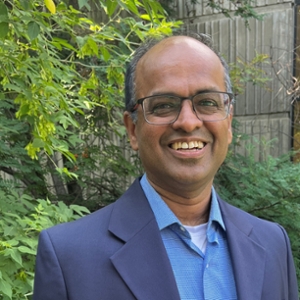
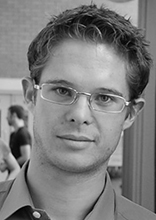
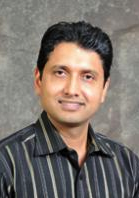
Prof. Ramakrishna Gokaraju is a Professor and Graduate Chair in the Department of Electrical and Computer Engineering at the University of Saskatchewan. His academic journey includes roles as Assistant Professor (2003), Associate Professor (2009), and full Professor (2015). He holds a B.E. from NIT Trichy (1992), M.Sc. and Ph.D. from the University of Calgary (1996, 2000). His research focuses on power system protection, smart grids, and sustainable energy systems, including small modular reactors (SMRs) and renewable integration. He has advised 8 PhD and 25+ Master’s students, with over 80 publications in top journals/conferences. Dr. Gokaraju’s honors include the Izaak Walton Killam Memorial Scholarship (1998–2000) and the Professor of the Year Award (2008). He has held visiting roles at the University of Manitoba (2009–2010), IIT Kanpur (2018), and institutions in Australia and India. His work emphasizes high-speed digital relaying, PMU-based solutions, and transient stability protection. Current research includes wind generator modeling, SMR integration, and energy storage systems for remote communities. His technical contributions span fault location algorithms, grid resilience enhancement, and GPU-based optimization for transport systems. Ongoing projects explore hybrid energy systems combining SMRs with renewables. Lab affiliations include the Power Systems Research Group at the University of Saskatchewan, focusing on smart grid innovation and sustainable energy solutions.
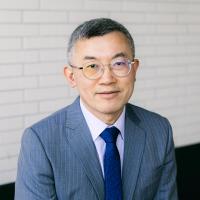
Professor Wei Cui is a distinguished scholar at the Peter A. Allard School of Law at the University of British Columbia, where he joined the faculty in 2013. His expertise spans tax law and policy, international taxation, and Chinese legal studies, with significant contributions to understanding the intersection of tax policy, climate change, and global economic governance. Professor Cui's educational background includes a BA from Harvard College, an MA in Philosophy from Tufts University, a JD from Yale Law School, and an LLM in Taxation from New York University School of Law. He maintains strong institutional affiliations with the Centre for Asian Legal Studies, Centre for Chinese Research, and Centre for Business Law at UBC. Professor Cui's research focuses on tax law and policy with particular emphasis on international taxation, carbon pricing mechanisms, Chinese fiscal systems, and the relationship between tax policy and development. His work bridges theoretical insights with practical applications in tax administration, examining how tax systems function in different political and economic contexts. He has made significant contributions to understanding China's tax system and its implications for developing countries, as well as analyzing innovative approaches to carbon pricing and digital taxation. His recent publications demonstrate a clear trajectory toward addressing contemporary challenges in tax policy, particularly the intersection of taxation with climate change mitigation and digital economy regulation. Professor Cui's research on carbon contracts for difference, output-based pricing systems, and digital services tax reflects his engagement with pressing policy questions facing Canada and the international community. Insight Grant from the Social Sciences and Humanities Research Council of Canada Insight Grant from the Social Sciences and Humanities Research Council of Canada Professor Cui has engaged in significant scholarly supervision and research collaboration, with his work supporting numerous graduate students and research projects. His professional background includes over 10 years of tax law practice with global law firms in New York and Beijing, service as Senior Tax Counsel at the China Investment Corporation (2009-2010), and consultancy roles with China's National People's Congress, Ministry of Finance, State Administration of Taxation, and the United Nations. Professor Cui maintains active research laboratories and teams focused on comparative tax systems, with particular attention to China's fiscal development and its implications for global tax governance. His current research projects examine the evolution of international tax design as part of the post-WWII international economic order and tax/subsidy policies designed to combat climate change and support innovation.
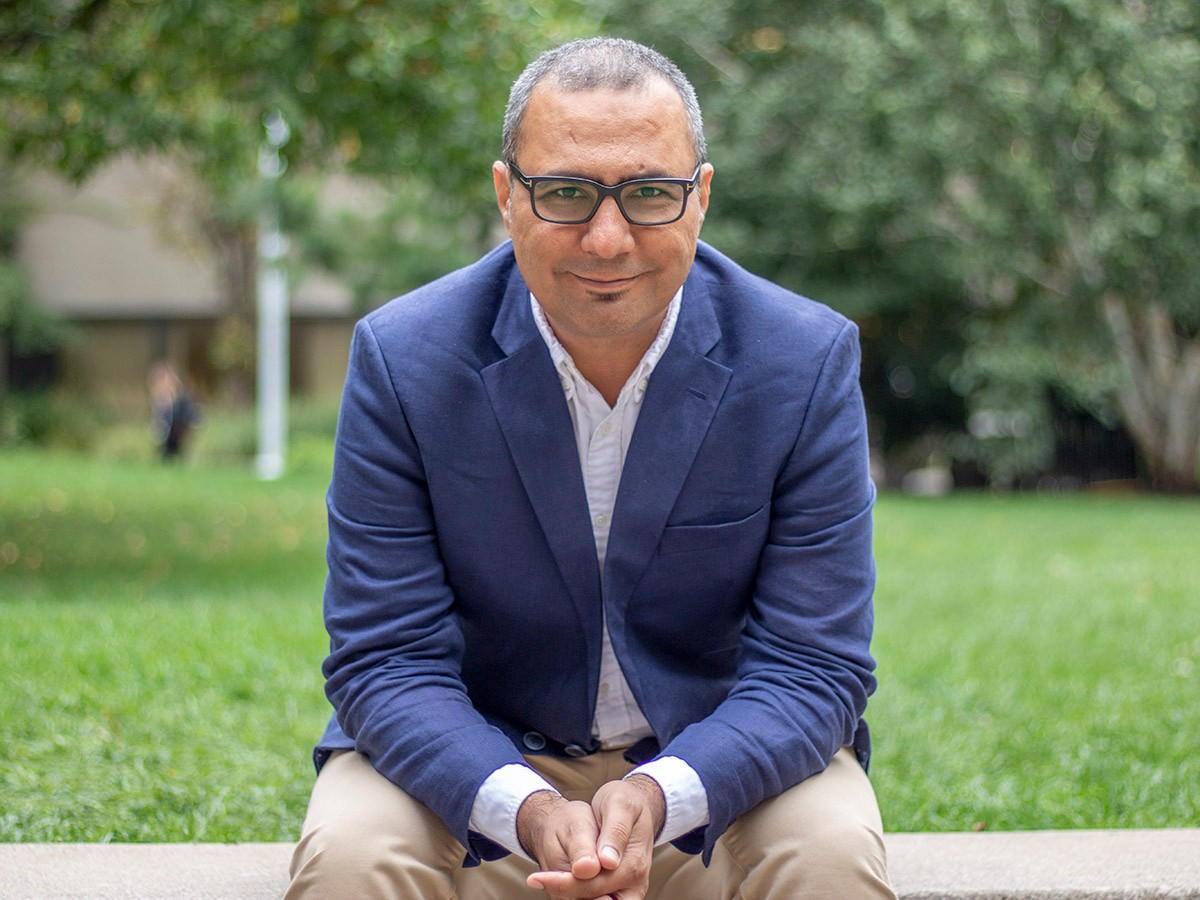
Bilal Farooq is an Associate Professor and Program Director for the Master of Engineering in Interdisciplinary Engineering (MEIE) at Toronto Metropolitan University, holding the Canada Research Chair in Disruptive Transportation Technologies and Services within the Department of Civil Engineering. His educational background includes a PhD from the University of Toronto (2011), MASc from Lahore University of Management Sciences (2004), and BSc from the University of Engineering and Technology (2001). Dr. Farooq's research pioneers disruptive transportation solutions through cyber-physical systems, AI/machine learning applications, behavioral modeling, and optimization techniques. His work specifically targets on-demand multimodal systems, sustainable urban transportation, urban air mobility, automated vehicles, and extended reality applications, addressing critical urban mobility challenges with human-centered approaches. Analysis of his recent publications reveals a strong trend toward quantum-enhanced computational methods, privacy-preserving federated learning frameworks, and sustainability-focused decarbonization strategies across transportation domains, with increasing emphasis on human factors and real-world implementation. Notable scientific awards include: Ontario Early Researcher Award (2018) Canada Research Chair (2017) MassMotion Academic Pedestrian Modelling Project of the Year (2016) Québec Early Researcher Award (2014) Dr. Farooq actively supervises graduate students and secures significant research funding through his Canada Research Chair position and Early Researcher Awards. He directs the Laboratory of Innovations in Transportation (LiTrans), which develops interdisciplinary solutions integrating mathematics, engineering, computer science, and economics to address emerging transportation challenges. LiTrans focuses on disruptive transportation technologies, complete streets design, cyber-physical systems, pedestrian dynamics, resilience, and climate change impacts, collaborating with industry and government partners to translate research into practical urban mobility innovations for smart cities worldwide.
Ahmed Hammad is an Associate Professor in the Department of Civil and Environmental Engineering at the University of Alberta's Faculty of Engineering, where he also serves as Director of Academic Integrity, ENG WIL, Co-op and Career Connections. With 25 years of industry experience as a Project Planning & Control Manager on global mega-projects (including Oil Sands, LNG, and Infrastructure across Canada, UAE, Australia, and Egypt), he brings extensive practical expertise to academia. Education: Doctorate of Philosophy, Construction Engineering & Management, University of Alberta (2009) Master of Science, Construction Engineering & Management, University of Alberta (1999) Master of Engineering, Construction Engineering and Management, Cairo University (1996) Bachelor of Science, Civil Engineering, Mansoura University (1989) Research Focus: Dr. Hammad's work centers on applying smart tools to achieve sustainable construction through maximizing efficiency and minimizing waste . His research employs Machine Learning , Multi-Criteria Decision Making , Knowledge-Based Decision Support Systems , and digital twin technologies to optimize project planning, resource allocation, and sustainable material selection. He investigates the integration of BIM and Augmented Reality to enhance construction processes while reducing environmental impact. Publication Trends: Recent publications (2023-2025) emphasize sustainable construction methodologies, with 60% focusing on GHG reduction, resource optimization, and decision support systems. Key themes include machine learning for labor estimation, TOPSIS/MCDM for sustainable material selection, and digital twins for production planning, reflecting his NSERC-funded projects on KBDSS and construction-oriented digital twins. Scientific Recognition: Best Paper Award at 8th International Conference on Industrial Engineering and Operations Management (2018) Best Paper Award at HBRC Green Smart Sustainable Buildings Conference (2024) Research Leadership: Dr. Hammad secures major industry-academic partnerships, including NSERC Mission Alliance Grants ($1.2M+) with 16 industry partners for GHG reduction projects and NSERC Alliance Grants with 9 partners for digital twin development. His completed projects include collaborations with the City of Edmonton and Alberta Ministry of Infrastructure on resource allocation models. Research Ecosystem: As leader of the Sustainable Construction Research Group (SCRG), he fosters industry-academia collaboration through regular workshops with construction firms and government agencies, focusing on translating research into practical tools for sustainable project delivery.
Patrick Baylis is an Assistant Professor of Environmental Economics at the Vancouver School of Economics, University of British Columbia. His research focuses on how people respond to environmental threats such as wildfires, air pollution, and extreme temperatures. He employs large datasets, natural language processing, and spatial information in his work, primarily using R/RStudio and Python for data analysis. Dr. Baylis earned his PhD from the University of California Berkeley in 2016 in Agricultural and Resource Economics. Prior to joining UBC, he was a postdoctoral fellow at the Stanford Center on Food Security and the Environment. He also worked as a research assistant at the Energy Institute at Haas and is a proud alumnus of Carleton College. His research interests span environmental economics with a particular focus on climate change impacts, energy economics, and behavioral responses to environmental threats. His work often examines the intersection of climate, health, and economic behavior, using innovative methods like social media data analysis to measure sentiment responses to temperature changes and other environmental factors. Analysis of his publication record reveals a strong focus on using big data approaches to understand human responses to environmental challenges. His work frequently appears in top journals including Nature Climate Change, PNAS, and the Journal of Public Economics. His research spans multiple subfields including wildfire economics, air quality valuation, climate migration, and the behavioral impacts of temperature extremes. Dr. Baylis has received significant media attention for his work, with coverage in major outlets including The New York Times, The Washington Post, The Guardian, and The Atlantic. His research on temperature and suicide rates, as well as climate perception, has been particularly influential in connecting environmental conditions with human behavior and mental health outcomes. He maintains an active research program examining critical environmental challenges, including wildfire risk, air pollution impacts, climate adaptation strategies, and the economic dimensions of climate change. His work combines rigorous economic analysis with innovative data collection and processing methods to provide new insights into how humans respond to environmental threats.
Amanda Giang serves as Assistant Professor at the University of British Columbia's Faculty of Applied Science, Department of Mechanical Engineering, holding a Canada Research Chair in Environmental Modelling for Policy. She maintains a joint appointment with the Institute for Resources, Environment and Sustainability (IRES). Her educational background includes a B.A.Sc. from the University of Toronto, followed by M.S. and Ph.D. degrees from MIT, with postdoctoral training at MIT and Harvard. Dr. Giang's research employs interdisciplinary approaches to develop modeling tools for environmental policy analysis, focusing on pollution assessment, environmental injustice, and the intersection of air quality, decarbonization, and equity. Her work emphasizes action-oriented partnerships with community organizations and government health/environment agencies. Current projects address freight transport decarbonization equity, cumulative impact assessment methodologies for overburdened communities, and holistic environmental impact evaluation in technology design. Her recent publications demonstrate expertise across environmental modeling, policy analysis, and justice frameworks, with significant contributions to understanding spatial inequities in environmental risk distribution and developing community-engaged research methodologies. UBC Killam Research Prize, 2023 Dr. Giang actively collaborates with community groups and government authorities through her LEAP (Learning, Environmental Assessment, and Policy) research group. Her work integrates technical modeling with real-world policy applications, particularly in urban environmental planning contexts where equity considerations are paramount. She has developed innovative frameworks for cumulative impact assessment and environmental justice analysis that directly inform regulatory decision-making processes. Her research laboratory focuses on developing open-source modeling tools for environmental policy analysis while maintaining strong community partnerships that ensure research addresses pressing local environmental justice concerns.
Andrew Rowe is a Professor in Mechanical Engineering at the University of Victoria (UVic), with affiliations to the Institute for Integrated Energy Systems (IESVic) and the Advanced Mechanical Research Laboratory (AMRLab). He holds a BEng from the Royal Military College of Canada, MASc and PhD from UVic, and is a licensed Professional Engineer (P.Eng). His research focuses on thermodynamics, energy systems, cryogenics, and heat transfer, with particular expertise in caloric cycles, hydrogen systems, and energy systems analysis. His research emphasizes decarbonization strategies, including hydrogen integration into natural gas networks, grid flexibility under electrification scenarios, and the optimization of magnetocaloric materials for energy-efficient cooling. AMRLab, led by Rowe, develops technologies for energy conversion, storage, and system optimization, addressing challenges in low-temperature thermal systems and integrated energy networks. Recent work explores the systemic impacts of electrification in transportation and buildings, leveraging open-source tools like the NExus Solutions Tool (NEST) for multi-scale energy-water-land system modeling. His projects often address regional energy challenges, such as British Columbia’s transition to renewable energy and grid infrastructure resilience. Key contributions include studies on gas system decarbonization via hydrogen blending, thermal-hydraulic modeling of energy systems, and experimental validation of magnetocaloric materials. Rowe’s publications highlight interdisciplinary approaches to climate mitigation, emphasizing the interplay between technological innovation and systemic policy frameworks.
Dr. Ralph Evins is an Associate Professor and Director of the Graduate Program in the Department of Civil Engineering at the University of Victoria. He holds affiliations with the Urban Energy Systems laboratory at Empa and ETH Zurich in Switzerland. His expertise spans building energy simulation, energy system optimization, and machine intelligence applications in sustainable design. Evins holds an MEng from Imperial College London and an EngD from the University of Bristol. His research focuses on computational problem-solving in energy systems, including surrogate modeling, optimization algorithms, and machine learning. He develops tools like the Holistic Urban Energy Simulation (HUES) platform and BESOS software framework to bridge building, district, and city-scale energy analysis. His work emphasizes holistic systems thinking, integrating energy hubs, thermal modeling, and digital twin technologies. Recent articles explore surrogate model refinement, inverse modeling for building characterization, and decarbonization strategies. He collaborates with industry to translate academic innovations into practical solutions. Evins advises students in energy systems and leads projects on net-zero building design, retrofit prioritization, and smart grid integration. His research addresses challenges in climate adaptation, energy efficiency, and sustainable urban development through interdisciplinary approaches.
Ben Amor is a Full Professor in the Department of Civil Engineering at the Faculty of Engineering, Université de Sherbrooke, where he serves as Director and Founder of the CIRMIB (Integrated Research Center on Sustainable Materials, Infrastructure and Buildings) and Director of Sustainable Development for the Faculty of Engineering. Previously, he held associate professor positions at Université Laval and Université de Sherbrooke. His research focuses on Life Cycle Assessment (LCA) methodologies applied to sustainable construction, circular economy implementation in building sectors, and building decarbonization strategies. He has pioneered regionalized LCA approaches for Arctic regions and developed frameworks for carbon budgeting in building sectors. His work bridges environmental science with practical engineering solutions for sustainable infrastructure. His recent publications reveal strong trends in building decarbonization pathways, material circularity in construction, and the integration of biogenic carbon accounting. He emphasizes both technological solutions and behavioral change strategies for achieving net-zero emissions in the built environment. ACLCA 2018 Life Cycle Assessment Leadership Award Life Cycle Academy Awards 2019 (two awards) Quebec Public Administration Excellence Prize 2023 for Scientific Collaboration Multiple university teaching awards including the Jacques-Bazinet Merit Award Professor Amor leads significant research grants totaling over $20 million, including NSERC Alliance grants for sustainable building materials and a $2 million Research Chair on Net Zero Strategies and Life Cycle Assessment. He directs the CIRMIB research center and the LIRIDE (Interdisciplinary Research Laboratory in Sustainable Engineering and Eco-design), supervising multiple doctoral candidates. His work includes developing LCA tools for Quebec's construction industry and advising government bodies on sustainable procurement policies.
Rajesh Karki is a Professor in the Department of Electrical and Computer Engineering at the University of Saskatchewan’s College of Engineering. He holds a B.E., M.Sc., and Ph.D. in related fields. His research focuses on power system reliability, renewable energy integration, and microgrid resilience, with particular emphasis on addressing challenges posed by extreme weather, cyber threats, and decarbonization targets. Dr. Karki’s work spans theoretical modeling, probabilistic analysis, and practical implementation strategies for smart grids, energy storage systems, and distributed generation. His educational background includes advanced degrees in electrical engineering, complemented by professional engineering licensure (P.Eng.). His research has explored diverse topics such as wind energy curtailment mitigation, energy storage optimization, and demand response mechanisms in developing economies like Nepal. He has authored numerous peer-reviewed publications on grid resilience, reliability economics, and cyber-physical system security. Key themes in his work include: (1) quantifying the reliability value of energy storage in active distribution systems, (2) modeling cyber-physical threats to microgrids, and (3) developing frameworks for extreme weather-resilient infrastructure. Despite the volume of his publications (over 50 articles), no specific awards or grants are explicitly listed in the provided materials. His research often intersects technical, economic, and policy dimensions of sustainable energy systems.
Dr. Paul G. O'Brien is an Associate Professor in the Department of Mechanical Engineering at York University, Canada, affiliated with the Lassonde School of Engineering. His research focuses on interdisciplinary clean energy solutions, including energy storage, thermophotovoltaic systems, decarbonization of buildings, and life cycle assessments. He leads the Advanced Materials for Sustainable Energy Technologies (AM-SET-Lab) and has authored over 50 journal articles. His work spans materials science, photonic crystal engineering, and radiative cooling technologies. Research interests include optimizing thermal energy storage systems, photonic crystal-based filters for solar applications, and CO2 capture via direct air capture systems. His lab develops materials for passive cooling, solar-thermal integration, and advanced photocatalytic CO2 reduction. Dr. O’Brien collaborates across engineering disciplines to address global energy challenges. Recent publications highlight innovations in ellipsoidal optical cavities for thermophotovoltaics, radiative cooling materials, and techno-economic assessments of carbon capture technologies. His work bridges fundamental material science with applied engineering solutions for sustainable energy systems.
John Peters serves as Associate Professor at Memorial University of Newfoundland within the Faculty of Business Administration and Department of Sociology, with additional appointments as Research Fellow at Montreal's CRIMT and Associated Professor at both Montreal's School of Industrial Relations and York University's Department of Politics. His educational background includes a Master's in History from the University of Michigan and PhD in Political Science from York University, building foundational expertise for his interdisciplinary work. Peters' research critically examines labor movements within financialized economies and climate crisis responses, focusing on decarbonization's impact on workers through frameworks of just transition and political economy. His scholarship bridges theoretical analysis of inequality with practical policy solutions for sustainable labor markets. Recent publications (2019-2022) reveal consistent thematic focus: financialization's erosion of labor power, climate-labor intersections, and policy pathways for equitable economic transformation, with significant emphasis on Canadian contexts and comparative frameworks. His research awards demonstrate sustained funding success: SSHRC Engage Grant (2023) analyzing unions' climate crisis strategies SSHRC Connection Grant (2022) exploring climate-work futures Multi-year SSHRC Partnership Grant (2017-2024) for institutional labor innovation Peters actively collaborates through CRIMT on sector-specific policy studies (auto, steel, aluminum) while developing union training programs for zero-carbon transitions, emphasizing worker capacity building for equitable clean energy economies.
Jonn Axsen is a Professor in the School of Resource & Environmental Management at Simon Fraser University (SFU), where he directs the Sustainable Transportation Research Team (START). With an academic career focused on mitigating transportation emissions, he bridges individual decision-making, social systems, technology, and public policy to advance sustainable mobility solutions. BBA, Business Administration (First Class Honours), Simon Fraser University MRM, Resource Management, Simon Fraser University PhD, Transportation Technology and Policy, University of California, Davis His research identifies solutions for decarbonizing road transportation, examining electric vehicles, alternative mobility systems, and policy frameworks. He emphasizes interdisciplinary approaches to understand consumer behavior, organizational transitions, and policy effectiveness in achieving zero-emissions vehicle adoption. Recent publications focus on policy mixes for ZEV adoption, automobility reduction, and consumer perceptions of emerging mobility technologies. Key trends include analyzing subsidy effectiveness, automaker responses to regulation, and cross-cultural differences in mobility preferences. His work appears in top venues like Nature Climate Change and Transportation Research Part D . Royal Society of Canada Fellow (2021) International Transport Forum Award (2012) Securing $2M+ in grants from SSHRC, Translink, Tesla, and PICS, Axsen collaborates with organizations including the UN, Transport Canada, and environmental NGOs. He serves as Senior Associate Editor for Energy Research & Social Science and sits on the US National Academies’ Transportation Research Board. The START team at SFU conducts applied research on sustainable transportation, integrating stakeholder insights with academic rigor. Axsen's lab focuses on bridging technical and social dimensions of mobility transitions through mixed-method studies.
Mark Jaccard is a Professor at Simon Fraser University's School of Resource & Environmental Management (REM). He has served as REM's Director and developed the Energy and Materials Research Group (EMRG), Canada's leading applied academic team in energy-economy-emissions (EEE) modeling. His work focuses on assessing climate policies through EEE models like CIMS-Urban, gTech, and CIMS. Developed EEE modeling frameworks for national and provincial climate policy analysis Advises political leaders globally on climate strategy Active media commentator and public speaker on climate economics Research Highlights Specializes in energy system decarbonization pathways Advocates for flexible regulations over carbon pricing Focuses on federal-provincial policy alignment Develops strategies for grid interconnection and energy storage Examines social license for large hydro and nuclear expansion Integrates political feasibility with economic modeling Scientific Contributions Co-developed gTech model with former students Authored The Citizen's Guide to Climate Success (2019) Recipient of Royal Society of Canada fellowship Advises international bodies like IPCC and CCICED
Evan Davies is a Professor in the Civil and Environmental Engineering Department at the University of Alberta's Faculty of Engineering. He has been a Full Professor since July 2021, following his promotion from Associate Professor (2015-2021) and Assistant Professor (2009-2015) positions at the same institution. Education: Ph.D. (Civil and Environmental Engineering), The University of Western Ontario, London, Ontario (2003-2007) M.E.S. (Environment and Resource Studies), The University of Waterloo, Waterloo, Ontario with field research in China and India (2001-2003) B.A.Sc. (Systems Design Engineering), The University of Waterloo, Waterloo, Ontario, including a year-long exchange at Technical University of Hamburg-Harburg, Germany (1995-2001) Evan Davies' primary research focuses on water resources planning and management, systems thinking and modeling, and sustainable development. His work develops and applies hydrological, water use, and water quality models to understand complex feedbacks among water availability, use, and quality within their social, economic, and environmental contexts. His research spans municipal to global spatial scales and daily to decadal time scales, aiming to provide decision-makers with tools to compare structural, management, and policy alternatives for sustainable water planning. His recent projects include global and regional-scale modeling of water security and the water-energy-food nexus, irrigation reservoir management, municipal water demand projections, flood risk management, and chloramine dissipation in stormwater pipes. Recent research trends show a strong focus on: Integrated assessment modeling of water-energy-food systems Climate change impacts on water resources Machine learning applications in hydrology Water security under decarbonization scenarios Flood risk assessment and management Sustainable urban water systems Scientific Awards: Faculty of Engineering Graduate Teaching Award, University of Alberta (2020-2021) Faculty of Engineering Undergraduate Teaching Award, University of Alberta (2018-2019) Doctoral Fellowship (CGS), Natural Sciences and Engineering Research Council (2005-2007) University of Western Ontario Graduate Tuition Scholarship (2005-2007) Ontario Graduate Scholarship in Science and Technology (2004-2005) Masters/Doctoral Fellowship (PGS A/B), Natural Sciences and Engineering Research Council (2002-2004) Davies has supervised numerous graduate students working on projects related to water resources planning and management. His research has been supported by various grants, including funding from the Natural Sciences and Engineering Research Council. He collaborates extensively with researchers at the Joint Global Change Research Institute (JGCRI) in College Park, MD, and with government agencies and industry partners on water management projects across Canada, particularly in Alberta's Bow River basin. Davies leads a research group focused on water resources systems modeling, which employs system dynamics, optimization techniques, and machine learning approaches to address complex water management challenges. His team collaborates with decision-makers and stakeholders to ensure research outcomes are directly applicable to real-world water management problems.