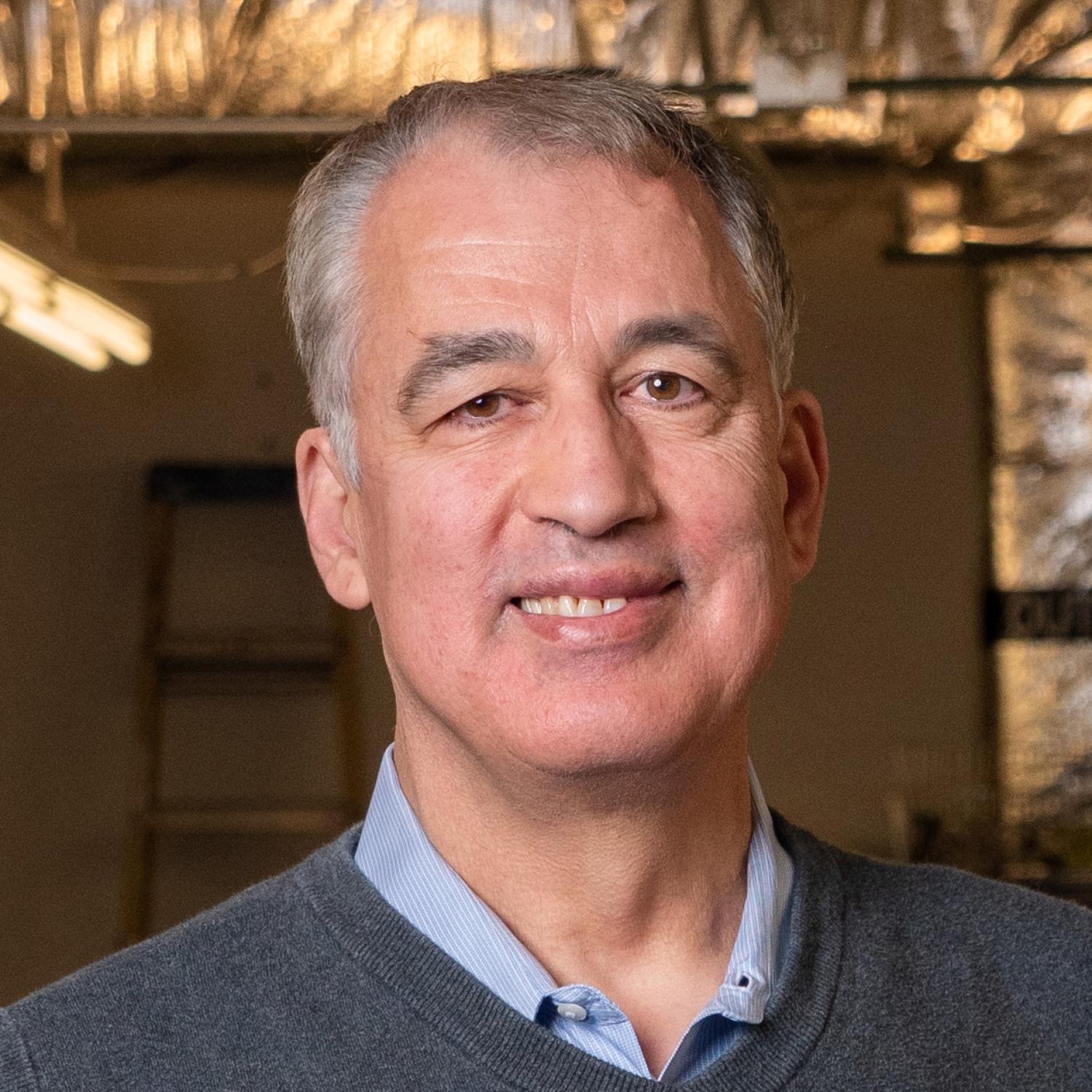
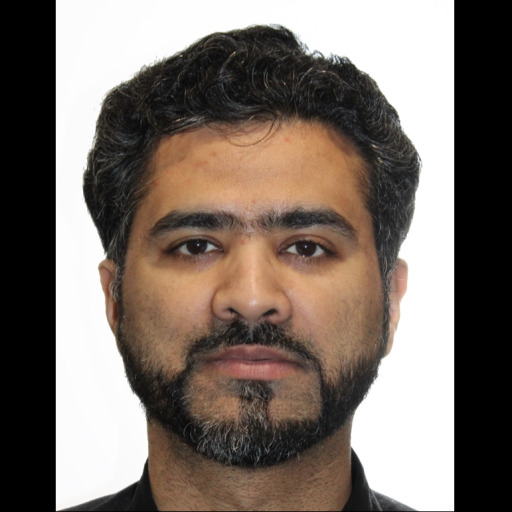
Assoc. Prof. Dr. Sema Alaçam Doğan has been affiliated with Istanbul Technical University since 2014, serving as an Associate Professor in the Department of Architecture . She has held administrative roles including Deputy Head of Department and Erasmus Coordinator. Education : PhD in Informatics in Architectural Design (2008-2014), MS in Informatics in Architectural Design (2005-2008), and BS in Architecture (1999-2005) from Istanbul Technical University. Her research explores Computational Design , Artificial Intelligence in Architecture , and Sustainable Material Innovation . She investigates digital tools for heritage preservation, daylight optimization in BIM, and cognitive development in architecture students. Recent publications analyze AI-assisted design literacy , machine learning for Sinan mosques , and environmental comfort in Harran houses . Her work integrates algorithmic frameworks with sustainable practices. Scientific awards include multiple ITU Publication and Performance Awards (2021-2024), FABFEST Prizes , and the 2024 Artemis Educator Award from NASA. Active projects like "Physical Computation in Architectural Drawing" and "Robotic Fabrication with Recycled Wind Turbine Blades" demonstrate her leadership in computational and sustainable research.
Dr. Ayşe Nihan AVCI is an Assistant Professor at the Department of Interior Architecture, Faculty of Architecture at Çankaya University. She holds a PhD in Design (2022), Master's in Interior Architecture (2017), and Bachelor's in Interior Architecture (2010) from the same institution. Her research focuses on lighting design's impact on health and well-being, biophilic design principles, and OLED/LED lighting technologies. She has been a full-time faculty member since 2015, progressing from Research Assistant (2015-2022) to Doctoral Researcher (2022-2024) before her current role. Education: PhD in Design, Çankaya University (2017-2022) MSc in Interior Architecture, Çankaya University (2014-2017) BSc in Interior Architecture, Çankaya University (2005-2010) Research Interests: Her work integrates lighting science with human-centric design principles, emphasizing: Salutogenic lighting strategies for health promotion OLED technology's circadian rhythm effects Biophilic daylighting in historical buildings Visual comfort in workplaces Publications: Over 15 peer-reviewed articles (2016–2025) focus on OLED/LED lighting applications, circadian rhythms, and daylighting in heritage buildings. Recent work explores salutogenic design in coffee shop environments and workplace environmental quality. Awards: No specific awards listed, but active in academic service: Member of Aydınlatma Türk Milli Komitesi since 2017 Member of TMMOB İç Mimarlar Odası since 2010 Reviewer for journals including PLANARCH Grants & Projects: Led a university-supported research project (2020–2021) on lighting design's health impacts. Currently teaches courses on lighting design, materials science, and interior design fundamentals.
Moncef Krarti is a Professor in the Department of Architectural Engineering at the University of Colorado Boulder, within the College of Engineering and Applied Science. His professional affiliations include roles as a Professional Engineer (PE) and LEED-AP. Krarti holds a Ph.D. (1987), M.Sc. (1985), and two Diplôme d'Ingénieur degrees (France, 1984/1982). His research focuses on evaluating energy efficiency technologies, optimizing building designs, and analyzing renewable energy systems. Key interests include HVAC controls, building retrofit strategies, and multi-benefit energy programs. Krarti has authored influential textbooks like Energy Audit for Building Systems and Energy Efficient Building Electrical Systems . Recent articles emphasize smart glazing systems, dynamic insulation, and geothermal heat pumps. His work addresses global challenges like urban heat islands and net-zero communities. Krarti has received prestigious awards including ASME Fellow (2015) and a 2023 Fulbright U.S. Scholarship. His research spans residential and commercial sectors, with case studies in Saudi Arabia, France, and the U.S.
Roel C.G.M. Loonen is an Associate Professor at the Unit Building Physics and Services within the Department of the Built Environment at Eindhoven University of Technology (TU/e), Netherlands. He holds joint appointments with EAISI High Tech Systems and EIRES Research groups, focusing on building performance simulation and energy systems. His work bridges academic research with practical applications through collaborations with SMEs in the building industry. Loonen received his BSc and MSc (cum laude) in Building Services from Eindhoven University of Technology, followed by a PhD in 2018 with a dissertation on 'Approaches for computational performance optimization of innovative adaptive facade concepts.' His educational background has positioned him as a leading expert in building performance simulation and sustainable building technologies. His research interests center on developing and applying modeling and simulation strategies to support decision-making for designing buildings that combine high indoor quality with minimal environmental impact. Key areas include adaptive facades, building-integrated renewable energy systems, and energy-efficient building envelopes. He specializes in creating and validating new building performance simulation models to advance innovative building technologies. His recent publications demonstrate a strong focus on practical applications of building performance simulation, with emphasis on residential energy efficiency, photovoltaic systems, and occupant-centered approaches to building design. The work shows increasing integration of machine learning techniques with traditional building simulation methods, particularly for sensitivity analysis and optimization of building performance. REHVA Young Scientist Award (2021) Best PhD supervisor award from Department of the Built Environment, TU/e (2018) First prize - REHVA International student competition (2011) Smart daylight control for optimal building performance (NWO Take-off award, 2018) Best paper award (2021) Loonen actively supervises PhD and Master's students, evidenced by his Best PhD Supervisor Award in 2018. He manages multiple research projects including Sustainable Summer Comfort (2024-2027), Modeling Innovative Use Scenarios for Future Domestic Comfort (2023-2026), and Just Prepare (2022-2026), with funding from sources including the Dutch Research Council (NWO). His professional service includes being a board member of the Dutch-Flemish IBPSA affiliate and co-chair of IBPSA World's website committee, plus reviewing for 35 academic journals. He leads research within the Building Performance group, focusing on creating practical tools and methodologies that bridge the gap between theoretical building performance models and real-world implementation in the construction industry. His work particularly emphasizes the integration of occupant behavior and practices into building performance models, recognizing that human factors are critical to achieving sustainable building performance in practice.
Professor Michael Davies is Professor of Building Physics and the Environment at the UCL Institute for Environmental Design and Engineering (IEDE) within The Bartlett School of Environment, Energy & Resources at University College London. He is also a member of the UK Climate Change Committee. With over two decades of academic experience, Professor Davies leads research at the critical intersection of building physics, environmental design, and public health, focusing on how the built environment impacts human well-being. His educational background includes: Doctor of Philosophy from the University of Westminster (1994) Postgraduate Certificate in Education from the University of York (1990) Bachelor of Science from the University of Manchester (1986) Professor Davies has pioneered transdisciplinary research methods, particularly in modeling health impacts and applying system dynamics approaches to address urban health challenges. His work demonstrates how healthy sustainable development can be achieved through innovative stakeholder participation and methodological advancements. His research spans building physics, climate change adaptation, indoor environmental quality, and the health implications of urban design, with particular attention to vulnerable populations and environmental justice considerations. His extensive publication record (over 300 outputs) reveals a consistent evolution toward more integrated approaches that connect building science with public health and climate policy. Recent work shows growing emphasis on health equity in climate adaptation, advanced modeling of complex urban systems, and the application of system dynamics to understand interconnected challenges in housing and urban environments. His research bridges technical building performance analysis with broader policy implications, reflecting his commitment to solutions that address both environmental sustainability and social equity. Professor Davies has secured significant research funding, including the prestigious EPSRC Platform Grant funding the Complex Built Environment Systems group at UCL (awarded only to "world leading" centers) and the Wellcome Trust-funded 'CUSSH' project. In total, he has served as PI or Co-I on approximately 50 research projects, demonstrating exceptional ability to lead large-scale, transdisciplinary research initiatives addressing critical urban challenges. As an educator, Professor Davies leads the 'Energy Context' module in the Environmental Design and Engineering MSc course and supervises EngD and PhD students. His teaching emphasizes the integration of energy systems within broader environmental, social, and policy contexts, preparing students to address complex sustainability challenges in the built environment sector.
Mikael Johansson is a Professor at Kungliga Tekniska Högskolan (KTH), specializing in Control Technology . He teaches and coordinates courses such as Distributed Optimization (FEL3311) and various advanced-level degree projects in computer science, electrical engineering, and systems engineering. His research spans Control Systems , Machine Learning , and Optimization , with a focus on asynchronous algorithms, federated learning, and applications in energy systems and construction. His work includes 15 recent publications on topics like neural networks, distributed optimization, and battery technology. Notable areas of contribution are in asynchronous learning, federated learning with privacy constraints, and quasi-Newton methods for optimization. His research bridges theoretical advancements with practical applications in urban design, healthcare, and autonomous systems.
Dr. Hassan Saeed Khan is a Lecturer (Assistant Professor) at Central Queensland University and an Adjunct Lecturer at the University of New South Wales . He holds a Ph.D. in Built Environment from UNSW (2018-2022), a Master of Science in Architectural Engineering from Politecnico di Milano (2010-2012), and a Bachelor of Science in Building and Architectural Engineering from UET Lahore (2003-2008). His research focuses on zero-energy buildings , radiative cooling materials , and urban heat mitigation . Ph.D. in Built Environment, UNSW Australia (2018-2022) MSc in Architectural Engineering, Politecnico di Milano (2010-2012) BSc in Building and Architectural Engineering, UET Lahore (2003-2008) Dr. Khan specializes in urban climatology , energy-efficient building systems , and climate-responsive urban design . His work includes fluorescent radiative coolers for urban surfaces, seasonal performance modulation of cooling materials, and microclimate evaluation in coastal regions. His research spans thermal performance of buildings, extreme heat event analysis , and renewable energy integration . His recent publications highlight scalable radiative cooling solutions, synoptic weather interactions with urban heat, and green infrastructure benefits in subtropical environments. Key projects include ARC Discovery grants on fluorescent materials and consultancy with BlueScope and Dulux for material performance optimization. HDR Completion Scholarship (UNSW, 2022) Data61 CSIRO Ph.D. Top-up (2019-2022) ADA HDR Research Output Awards (2021, 2022) UniverLecco Gold Merit Scholarship (Politecnico di Milano, 2010-2012) Award of Distinction (KFUPM, 2016-2017) Dr. Khan has supervised research in 4011 Environmental Engineering , 3302 Building , and 3304 Urban Planning . His interdisciplinary approach bridges building science , materials engineering , and climate adaptation . He employs tools like ENVI-met for microclimate analysis and DesignBuilder for energy modeling.
Jean-Louis Scartezzini is an Honorary Professor at École Polytechnique Fédérale de Lausanne (EPFL), affiliated with the School of Architecture, Civil and Environmental Engineering (ENAC) and the Solar Energy and Building Physics Laboratory (LESO-PB). His research focuses on natural/artificial lighting, solar energy systems, and building technology, with a strong emphasis on energy efficiency and sustainability. Director of LESO-PB since 1994 Founded and led several institutes, including the Institute for Infrastructure, Resources, and Environment (2002–2009) Doctorat in Physics from EPFL (1986) Extensive international collaborations, including visiting roles at NUS (2009) and LBNL/UCLA (1988) Research interests include: - Daylighting and lighting control systems - Passive/active solar technologies - Urban microclimate and energy systems - Stochastic simulation and predictive control Recent work addresses climate change impacts on energy systems, urban sustainability, and machine learning applications in energy optimization. Key publications span lighting health impacts, renewable integration, and microclimate modeling Awards include the European Solar Prize (2001/2002) and Walsh-Weston Bronze Medal (1998) Mentored over 20 PhD students, many leading in academia and industry (e.g., Marilyne Andersen at EPFL, Flavio Foradini at E4Tech).
Dr. Andrzej Ożadowicz is a University Professor at the Department of Power Electronics and Automation of Energy Conversion Systems within the Faculty of Electrical Engineering, Automatics, Computer Science and Biomedical Engineering at AGH University of Science and Technology in Kraków, Poland. His office is located in room 510, building C-1, with contact details including phone +48 12 617 50 11 and email ozadow@agh.edu.pl. He holds PhD, DSc, and Engineering degrees, reflecting his dual expertise in academic research and practical engineering applications. His research spans Power Electronics, Building Automation, Smart Grids, and IoT-driven energy systems. Key interests include energy efficiency optimization through digital twins and BIM, distributed energy resource integration , and AI-enhanced demand management . Notably, he pioneers applications of deep reinforcement learning in home energy systems and develops frameworks for Smart Readiness Indicator implementation. His work bridges theoretical innovation with practical case studies in building thermal modeling and dynamic façade systems. Recent publications (2021-2025) reveal three dominant trends: (1) Convergence of digital twin technology with building automation for real-time energy management; (2) Critical analysis of IoT security and interoperability in smart infrastructure; (3) Pedagogical innovations in engineering education through blended learning methodologies post-COVID-19. His scholarly output demonstrates consistent focus on energy transition challenges and smart grid evolution. Professor Ożadowicz actively contributes to the Discipline Council for Automation, Electronics, Electrical Engineering and Space Technologies at AGH. He is instrumental in the AutBudNet initiative —a network of certified laboratories for energy efficiency assessment that implements "learning by doing" principles in building automation education. His work with this consortium emphasizes practical validation of smart grid technologies and demand response systems.
Aaron Shugar is a Professor and current Bader Chair in Art Conservation at Queen’s University. With a background in archaeometallurgy and conservation science, he specializes in non-destructive analysis techniques for cultural heritage, including X-ray fluorescence (XRF), Raman spectroscopy, and hyperspectral imaging. His work bridges art history, material degradation, and technological innovation. Honours H.B.A. in Anthropology and Law & Society from York University M.S. in Archaeological Materials from the University of Sheffield Ph.D. in Archaeometallurgy from University College London His research focuses on historic artist’s pigments , ancient metallurgy , and technical history of artifacts , with particular interest in degradation pathways and manufacturing processes. Recent publications highlight trends in AI integration with XRF analysis and preservation of modern materials in art conservation. Bader Chair in Art Conservation Mellon Foundation Professor in Conservation Science Aaron co-directed the Archaeometallurgy Laboratory at Lehigh University, served as a guest scientist at NIST, and remains a research associate at the Smithsonian Institution. He actively contributes to TEFAF’s Scientific Vetting Committee and acts as a forensic materials expert for the Court of Arbitration for Art.
Brian M Deal serves as a Professor of Landscape Architecture within the School of Architecture at the University of Illinois at Urbana-Champaign, holding additional appointments in Urban and Regional Planning, the European Union Center, the Center for Latin American and Caribbean Studies, and the National Center for Supercomputing Applications (NCSA). His expertise bridges sustainable planning theory, energy systems, and spatial modeling to develop practical decision-support tools for community development and climate resilience. His educational foundation includes a PhD in Regional Planning (2002), Master of Architecture (1997), and BS in Architectural Studies (1983), all earned at the University of Illinois at Urbana-Champaign. Prior academic experience encompasses a decade of professional architecture practice and senior research at the Army Construction Engineering Research Laboratory (CERL), where he specialized in sustainable military facility design using spatial simulation. Deal's research centers on sustainable planning systems and climate adaptation, with current projects examining urbanization impacts on Korean rural amenities, advancing the University of Illinois' climate action plan (iCAP), and developing next-generation 'sentient' planning support systems. His work integrates land-use modeling, energy systems analysis, and decision-support technologies to address complex urban environmental challenges through interdisciplinary collaboration. Recent publications reveal a pronounced shift toward data-driven sustainability solutions, featuring AI applications for carbon-neutral planning, multi-scaled green infrastructure optimization, and socio-ecological modeling. Key themes include urban carbon sequestration, post-pandemic park dynamics, and climate-resilient coastal design, demonstrating consistent innovation in translating theoretical frameworks into actionable planning tools for real-world implementation. Professor Deal's scientific awards and honors were not detailed in the provided text. As faculty mentor to the Student Sustainability Committee and chair of campus sustainability planning efforts, Deal actively guides student development and institutional policy. His leadership of the LEAM Laboratory and SEDAC involves managing research grants focused on urban resilience, energy systems, and climate adaptation, fostering partnerships with government agencies and community organizations to deploy planning tools that directly impact community decision-making processes. Deal directs the Land Use Evolution and Impact Assessment Modeling (LEAM) Laboratory and Smart Energy Design Assistance Center (SEDAC), leading interdisciplinary teams in developing spatial simulation models and decision-support systems. His operational leadership extends to authoring the university's climate action plan and chairing campus sustainability committees, positioning him at the nexus of academic research, institutional policy, and community engagement for sustainable urban futures.
Professor Ahmad Taki is a Professor of Building Performance and Sustainability at De Montfort University, affiliated with the Leicester School of Architecture and the Institute for Sustainable Futures. He previously served as Director of the Architecture Research Institute (2018–2024) and has played a key role in national research assessment exercises (REF). University: De Montfort University School: Leicester School of Architecture Research Group: Architecture Research Institute, Institute for Sustainable Futures His research focuses on sustainable built environments, human thermal interaction, energy efficiency, and climate-responsive design, particularly in developing countries. He has extensive expertise in passive design, building physics, and socio-cultural integration in sustainable housing. His recent publications reflect a strong trend toward sustainable materials (e.g., rice husk ash, cardboard), retrofit strategies, thermal comfort in hot climates, and culturally sensitive design frameworks. His work bridges technical performance with social relevance, emphasizing affordability, well-being, and resilience. Energy Champion, COP28 Sustainability Climate Award (DMU, 2023) PVC Dean Award for Best Contribution to Research Environment (2018) Senior Fellow, Higher Education Academy (SFHEA) Chartered Fellow, Chartered Association of Building Engineers (CABE) Professor Taki has successfully supervised 27 PhD students and is currently supervising 10, demonstrating strong mentorship. He has secured numerous research grants from EPSRC, DMU, and GCRF, supporting projects on Schlieren imaging, evaporative cooling, and sustainable housing. He founded the BSc Architectural Technology and MSc Architecture and Sustainability programmes, highlighting his educational leadership. He leads research on indoor environmental quality, using advanced optical systems, and collaborates internationally on low-energy building solutions.
Professor Dominic O'Brien is a Professor of Engineering Science at the University of Oxford and Senior Research Fellow at Balliol College. He serves as Director of the UK National Hub in Quantum Computing and Simulation. His research focuses on optoelectronics, optical wireless communications, and quantum key distribution. He leads the optical communications group and has authored over 200 publications in these areas. His work emphasizes high-speed free-space optical systems, UV-based secure communication, and beam-steering technologies. Education: MA and PhD from the University of Cambridge, followed by a DPhil from the University of Oxford. His research interests include quantum networks, photonics, and energy-efficient optical systems. Notable projects include handheld low-cost quantum key distribution systems and terabit-per-second fiber-wireless links. He collaborates on initiatives like the WORTECS project for virtual reality applications using optical wireless. Publications span topics from UV solar-blind OWC to liquid crystal beam steering. His work bridges academic and industrial applications, addressing challenges in both classical and quantum communication systems. He contributes to standards for visible light communications and next-generation wireless infrastructure.
Roel Loonen is an Associate Professor at the Unit Building Physics and Services within Eindhoven University of Technology's Department of the Built Environment. Since October 2024, he has joined the EIRES Management Team, leading the Energy Transition in the Built Environment focus area alongside Lenneke Kuijer. His work emphasizes integrating energy efficiency with occupant comfort through advanced building simulation techniques. Academic Affiliation: Eindhoven University of Technology Management Role: EIRES Management Team Research Focus: Adaptive facades, building-integrated renewable energy, and occupant behavior modeling Loonen’s research explores modeling and simulation strategies for buildings that reconcile high indoor quality with minimal environmental impact. Key projects include collaborations with eyrise on solar shading glass and TNO on the ZIEZO project, which experiments with insulated glazing units that combine solar shading with bifacial photovoltaics at the SolarBEAT facility. His work spans computational methods for urban irradiation, occupant-facade interaction frameworks, and multi-domain thermal comfort modeling. The ZIEZO project exemplifies his approach to energy-efficient design by redirecting reflected light to enhance photovoltaic output while maintaining daylight comfort. His publications address challenges in adaptive façade systems, PV integration, and sensitivity analysis for heating demand. Loonen advocates for interdisciplinary collaboration to bridge technical innovation with societal implementation needs. Loonen’s educational contributions include co-teaching the interdepartmental master course Sustainable Energy Technology and developing interactive simulation-based teaching tools. He emphasizes connecting energy-related research to practical implementation through stakeholder engagement with municipalities, building companies, and grid operators. Key facilities involved in his research include SolarBEAT (for testing solar technologies) and TU/e’s simulation laboratories. His work addresses urban energy transitions by combining building physics with grid interactions, occupant behavior, and scalable PV system optimization.
Valentina Serra is a Full Professor at the Department of Energy (DENERG), Polytechnic University of Turin, and a member of the Future Urban Legacy Lab (FULL Center). She specializes in advanced building envelopes , energy performance , and indoor environmental quality , with a focus on experimental facilities and sustainable materials. Research Interests: Adaptive façades, PCM integration, thermochromic coatings, and acoustic absorption using natural waste materials. Projects: Scientific Director for EU-funded Wall-ACE (2016–2019), PRIN (2019–2021), and regional research initiatives like GRE_EN_S (2010–2012). Awards: Member of the Energy and Buildings editorial board since 2019, Program Chair for SEB-16, and organizer for IBPC 2015. Teaching: Course Lecturer for Eco-Friendly Architectural Design B at Politecnico di Torino since 2021. Students: Supervises PhD candidates like Ramona Russo and Giorgia Autretto, focusing on occupant-centric design and PCM-based systems. Patents: Co-inventor of the national patent NBT - Not Bed Technology .