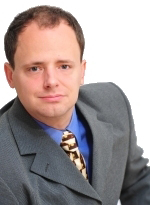
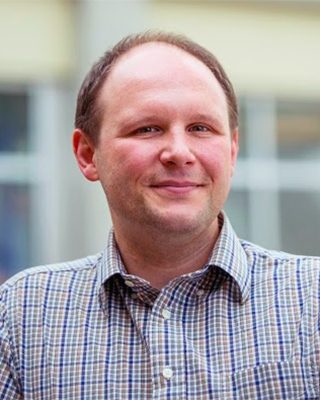
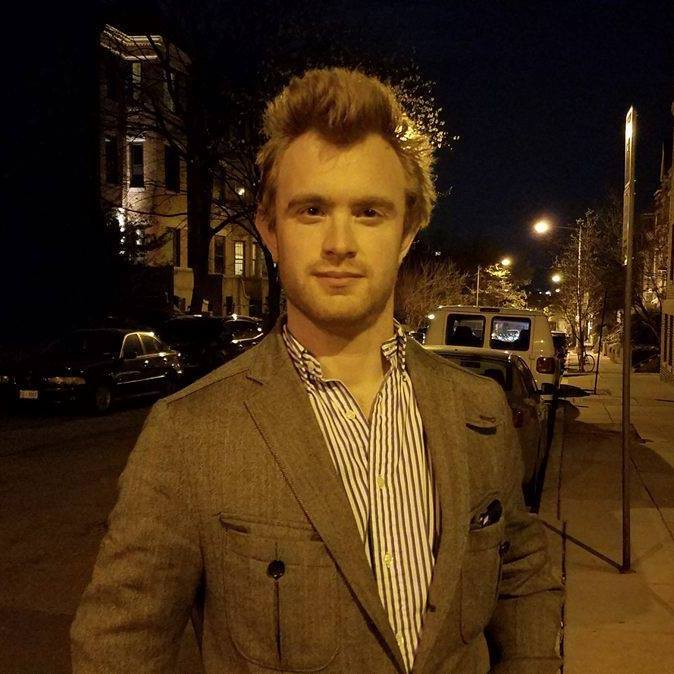
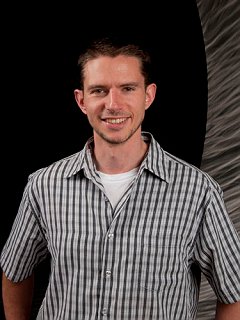
Christoph Koch is a Full Professor in the School of Computer and Communication Sciences at EPFL (Ecole Polytechnique Federale de Lausanne) , Switzerland. He has held academic positions at Cornell University (2007-2010, 2006), Saarland University (2005-2007), and TU Vienna (2001-2005). His research focuses on database systems, logic, programming languages, and data management.
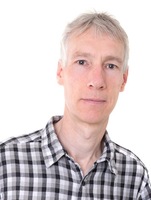
Ian Horrocks is a Professor of Computer Science at the University of Oxford and a Fellow of Oriel College. His research focuses on knowledge representation, description logics, automated reasoning, and semantic web technologies. He has held academic positions at the University of Manchester (2003–2007) and served as Chief Scientist at Cerebra Inc. (2001–2006). Horrocks earned his BSc (1st class), MSc, and PhD in Computer Science from the University of Manchester (1981–1997). His work includes foundational contributions to ontology languages (e.g., OWL) and reasoning systems such as HermiT and ELK. He has supervised over twenty doctoral students and postdoctoral researchers. His honors include Fellowships from the Royal Society (2011), ECCAI (2009), and the British Computer Society (2005). He serves as Editor-in-Chief of the Transactions on Graph Data and Knowledge and leads initiatives in semantic web standards and knowledge graph applications. Key Roles: Editor-in-Chief (Journal of Web Semantics), Co-Chair (W3C OWL Working Group) Grants: EPSRC Senior Research Fellowship (2005), numerous international collaborations Labs: Oxford Semantic Technologies, involvement in projects like RDFox and PAGOdA
Andrew Rice is a Professor of Computer Science at the University of Cambridge's Department of Computer Science and Technology, and holds the Hassabis Fellowship in Computer Science. He is also the Director of Studies in Computer Science at Queens' College. His research focuses on programming languages, software engineering, and machine learning applications in software development. He leads projects like Isaac Computer Science and ALTA (Automated Language Teaching and Assessment), advancing adaptive learning technologies. His work includes static analysis tools such as Error Prone at Google, energy efficiency studies in computing infrastructure, and contributions to the Computing for the Future of the Planet initiative. His teaching emphasizes practical skill development through flipped classrooms and video lectures, earning him the 2014 Pilkington Prize for teaching excellence. He has held visiting roles at Google and collaborated on energy consumption research for mobile devices and data centers. His research spans systems, networking, and natural language processing, with a strong focus on applying computational methods to real-world challenges. Key Projects: Isaac Physics/Computer Science, ALTA, Error Prone Static Analysis Research Themes: Programming Languages, Machine Learning, Energy Efficiency Awards: Pilkington Prize (2014)
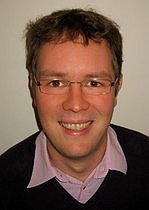
Tom Schrijvers is a Professor at the Department of Computer Science in the Faculty of Engineering Science at KU Leuven, Belgium. He leads the Programming Languages Group within the Declarative Languages and Artificial Intelligence (DTAI) research group. His research focuses on programming languages, particularly functional and logic programming, with special emphasis on Haskell, type systems, and algebraic effects. His research interests include: Functional Programming, especially Haskell Type Systems and Type Theory Algebraic Effects and Handlers Logic Programming, particularly Prolog Constraint Programming Domain-Specific Languages Programming Language Theory Prof. Schrijvers' recent research has focused on effect systems, staged programming, and language composition. His work on algebraic effect handlers has been particularly influential, providing new insights into how effects can be modularly composed and handled in functional languages. He has also made significant contributions to the understanding of type classes and their implementation in Haskell. His publications demonstrate a consistent focus on practical applications of programming language theory, with work spanning from foundational type theory to applied domain-specific languages for areas like fluorescence microscopy. His research often bridges the gap between theoretical programming language concepts and practical implementation concerns. Prof. Schrijvers has supervised numerous PhD students to completion, including Pieter Wuille, Benoit Desouter, George Karachalias, Steven Keuchel, Amr Saleh, Alexander Vandenbroucke, and Ruben Pieters. He currently supervises PhD students Klara Mardirosian, César Santos, Gert-Jan Bottu, Koen Pauwels, Birthe van den Berg, and Roger Bosman. His research group has received funding from various sources including EU projects like GRACeFUL. The Programming Languages Group at KU Leuven, which he leads, focuses on functional (Haskell) and logic (Prolog, Datalog, CLP) programming languages, as well as general programming language theory. The group has been active in numerous research projects and collaborations across Europe.
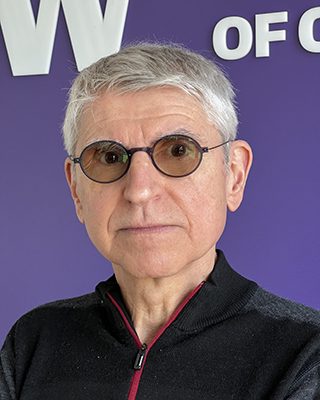
Dan Suciu is a Microsoft Endowed Professor in the Paul G. Allen School of Computer Science & Engineering at the University of Washington. His research focuses on data management, query optimization, probabilistic databases, parallel data processing, and information theory applications to databases. Awards : ACM Fellow (2011), American Academy of Arts and Sciences (2024), ACM SIGMOD Codd Innovation Award (2022), NSF Career Award (2001), Alfred P. Sloan Fellow (2001-2002). Research Trends : Recent work emphasizes cardinality estimation using Lp-norms, submodular width for query evaluation, dynamic query processing, and tensor program optimization. His publications highlight intersections between database systems and formal methods, driven by mathematical rigor. Key Collaborators : Mahmoud Abo Khamis, Dan Olteanu, Amir Shaikhha, Maximilian Schleich, Kyle Deeds, Moe Kayali. Advising : PhD students Gerome Miklau (2006), Christopher Re (2010), Paris Koutris (2016), Nilesh Dalvi (2008 runner-up), Yisu Remy Wang (2024 runner-up) have excelled in dissertation awards.
Neelakantan R. Krishnaswami is a Professor of Computer Science at the University of Cambridge's Computer Laboratory , and a Fellow of Trinity College . His research focuses on the intersection of program verification, programming language design, and foundational topics like type theory and semantics. His work spans areas such as refinement types, parser design, separation logic for systems software, and the semantics of reactive programming. Notable contributions include the Datafun language for higher-order Datalog and the λert type theory for explicit refinement types. He has also developed foundational frameworks for verifying imperative programs using advanced type systems and logical relations. Key publications include 'Explicit Refinement Types' (ICFP 2023), 'flap: A Deterministic Parser with Fused Lexing' (PLDI 2023), and 'CN: Verifying Systems C Code' (POPL 2023). His work frequently addresses challenges in efficiency, correctness, and modularity for both functional and imperative systems. His awards include Distinguished Paper Awards at PLDI 2019 and POPL 2020. His research integrates theoretical rigor with practical tooling, exemplified by contributions to languages like Coq, Lean, and Haskell.
Dan Olteanu is a Professor of Computer Science at the University of Zurich (since 2020) and holds a part-time role as a Computer Scientist at RelationalAI. Previously, he was a Professor at the University of Oxford (2016–2020) and had visiting roles at UC Berkeley (2013–2014) and LogicBlox (consulting, 2013–2017). His research focuses on database systems, probabilistic data management, and theoretical foundations of data processing. Education: PhD in Computer Science from Ludwig Maximilian University of Munich (2005), Diplom (M.Sc.) from Polytechnic University of Bucharest (2000). Additional roles include Fellow and Director of IT at St Cross College, Oxford. Research Interests: Factorized databases (FDB), probabilistic databases (SPROUT, ENFrame), Datalog engines (RDFox), query optimization (Distributed Query Optimization), and machine learning over relational data. Publications highlight contributions to incremental query processing, probabilistic inference, and scalable algorithms. Notable work includes the SPROUT query engine, FDB system, and theoretical results on query tractability. Awards: Best Paper Award at ICDT 2019. Grants from ERC, EPSRC, Google, and industry partnerships with Amazon, Microsoft, and others. Students advised include Robert Fink, Maximilian Schleich, and Haozhe Zhang. Active in academic service, editing journals, and organizing conferences like BNCOD and SIGMOD workshops.
Manuel Rigger is an Assistant Professor at the National University of Singapore (NUS), leading the TEST Lab (Trustworthy Engineering of Software Technologies) within the PL/SE group at the School of Computing. His research focuses on improving the reliability of data-centric systems through automated testing frameworks and formal methods. Education : PhD from Johannes Kepler University Linz (supervised by Hanspeter Mössenböck), postdoctoral work at ETH Zurich (Advanced Software Technologies Lab under Zhendong Su). Research Interests : Automated testing of database systems Programming language design and verification Incremental build systems Formal methods for software reliability Key Contributions : Developed tools like SQLancer (for finding bugs in databases) and CERT (performance issue detection). His work has uncovered over 800 bugs in real-world systems. Awards : Recipient of the ERC Consolidator Grant (2025) for groundbreaking research in software security and testing. Service Roles : Organizer of ICFP/SPLASH 2025 Outdoor Activities, committee member for OOPSLA Review, PLDI Artifact Evaluation, and ICSE Program Committee. Also actively involved in organizing workshops (e.g., Fuzzing & Software Security Summer School 2025).
Zachary Tatlock is an Associate Professor at the Paul G. Allen School of Computer Science & Engineering at the University of Washington, where he leads the Programming Languages & Software Engineering Group (PLSE) and the SAMPL Group. His research spans programming languages, formal verification, compilers, and computational fabrication. He is also an Amazon Scholar with AWS's Automated Reasoning Group and previously advised OctoML. Tatlock's work bridges theoretical foundations with practical systems, focusing on making it easier to write tricky code while ensuring correctness through rigorous proofs and measurements. PhD in Computer Science & Engineering, University of California, San Diego (2014) Thesis: Reducing the Costs of Proof Assistant Based Formal Verification Advisor: Sorin Lerner BS in Computer Science (Honors) and Mathematics, Purdue University (2007) Professor Tatlock's research focuses on the intersection of programming languages, formal methods, and systems. His work in compilers and formal verification aims to make it easier to write tricky code while ensuring correctness through rigorous proofs. He explores computational fabrication techniques that bridge digital design with physical manufacturing. His recent work on equality saturation (via the egg framework) has transformed program optimization and synthesis. Tatlock also investigates floating-point numerics, distributed systems verification, and hardware/software co-design, always seeking to balance theoretical rigor with practical implementation. Tatlock's recent publications demonstrate a strong focus on equality saturation techniques (egg framework), computational fabrication, and verified systems. His work increasingly integrates machine learning with program analysis and synthesis. There's a clear trajectory toward more practical applications of formal methods in real-world systems, particularly in numerical computing and fabrication. His research group has made significant contributions to e-graph technology, floating-point accuracy, and the verification of distributed systems. Distinguished Paper Award for Rewrite Rule Inference Using Equality Saturation (OOPSLA 2021) Spotlight Paper Award for Dynamic Tensor Rematerialization (ICLR 2021) Distinguished Paper Award for egg: Fast and Extensible Equality Saturation (POPL 2021) Faculty Appreciation for Career Education & Training (FACET) Award (2020) NSF CAREER Award: Verifying Distributed System Implementations (2017) Distinguished Paper Award for Automatically Improving Accuracy for Floating Point Expressions (PLDI 2015) Distinguished Teaching Award Nomination (2015) Professor Tatlock has advised numerous doctoral, master's, and undergraduate students who have gone on to prominent positions in academia and industry, including faculty positions at the University of Utah and Brown University, and leadership roles at companies like OctoML and Certora. His research is supported by significant funding from NSF, DARPA, DOE, and industry partners, totaling millions of dollars. Current grants include projects on computer-aided reasoning, formal verification, computational fabrication, and machine learning systems. He has served on numerous program committees and organized workshops including FPTalks, EGRAPHS, and PNW PLSE. As co-leader of the Programming Languages & Software Engineering (PLSE) research group and affiliate of the SAMPL Group at the University of Washington, Tatlock has developed influential tools including egg (an equality saturation toolkit), Carpentry Compiler, and Odyssey. His group actively collaborates with industry partners including Amazon Web Services, where he serves as an Amazon Scholar. The group has made significant contributions to equality saturation, floating-point accuracy, program synthesis, and computational fabrication, with applications ranging from compiler optimization to 3D printing.
Kihong Heo is an Associate Professor in the School of Computing and Graduate School of Information Security at KAIST (Korea Advanced Institute of Science and Technology) in South Korea. His academic career includes serving as an Assistant Professor at KAIST from 2017-2019 before being promoted to Associate Professor in 2020, following his postdoctoral research at the University of Pennsylvania. He earned both his Ph.D. and B.S. in Computer Science & Engineering from Seoul National University. Dr. Heo's research focuses on developing program reasoning systems for safe and reliable software, with specific interests in AI-based program analysis systems for detecting deep semantic software bugs, general-purpose program simplification systems for secure and efficient software, and scalable program synthesis systems for automatic software generation and repair. His work bridges the gap between programming languages, program analysis, and machine learning techniques to create next-generation programming systems. Analysis of his recent publications reveals a strong trend toward integrating machine learning techniques with traditional program analysis methods, with significant contributions in compiler validation, software security, fault localization, and program debloating. His research has practical impact, with some of his work incorporated into Facebook's Infer static analyzer. ACM SIGSOFT Distinguished Paper Award, FSE 2025 Amazon Research Award, 2024 The Soo-Young Lee Teaching Innovation Award, KAIST, 2024 Prize for Excellence in Teaching, KAIST, 2024 Best Artifact Award, ICSE 2022 ACM SIGPLAN Distinguished Paper Award, PLDI 2019 ACM SIGSOFT Distinguished Paper Award, ICSE 2019 Dr. Heo actively mentors graduate students, currently advising several Ph.D. candidates including Yeonhee Ryou, Taeeun Kim, and Sujin Jang, as well as master's students. He has served on program committees for major software engineering and programming language conferences including PLDI, ICSE, POPL, and SPLASH, demonstrating his active role in the academic community. His laboratory, the Programming Systems Laboratory at KAIST, focuses on creating innovative programming systems that leverage both semantic-based program analysis and AI techniques.
Aws Albarghouthi is affiliated with the University of Wisconsin-Madison, USA. He is an active researcher with significant contributions to program synthesis, formal verification, and machine learning. Key roles: Author, Session Chair, Committee Member in conferences like PLDI, POPL, VMCAI, SPLASH, and ICFP. Research spans quantum computing, differential privacy, and static analysis. Research Trends include: Quantum Circuit Compilation and Optimization Probabilistic Verification of Fairness and Privacy Synthesis of Datalog and MapReduce Programs Neural-Augmented Static Analysis Bias Detection in Data Security Robustness in Machine Learning
Kristopher Micinski is an Assistant Professor in the Electrical Engineering and Computer Science Department at Syracuse University. His research focuses on scalable program analysis, static analysis, and formal methods applied to computer security and privacy. He holds a PhD in Computer Science from the University of Maryland and a BS in Computer Engineering from Michigan State University. Education: PhD, Computer Science, University of Maryland at College Park BS, Computer Engineering, Michigan State University Research Interests: His work bridges theory and application of program analyses, emphasizing scalable static analysis frameworks, Datalog optimization for distributed systems, and security applications. Recent efforts include GPU-accelerated Datalog engines and large-scale malware analysis pipelines like Assemblage. Grants & Projects: NSF PPoSS Large: $1M grant for declarative analytics DARPA V-SPELLS: $400K for legacy software optimization Assemblage: $350K DoD grant for malware classification Teaching: He teaches undergraduate and graduate courses on programming languages (CIS352) and formal methods (CIS700), with materials publicly available on YouTube.
Stephen Chong is a Gordon McKay Professor in the Harvard John A. Paulson School of Engineering and Applied Sciences , where he co-directs the Undergraduate Studies in Computer Science program. His research intersects programming languages and information security , focusing on language-based security frameworks. Education : PhD in Computer Science from Cornell University (2008), B.Sc.(Hons) and B.A. from Victoria University of Wellington (New Zealand). Research : Develops tools like Formulog (Datalog + SMT for static analysis) and Accrue (Java interprocedural analysis), emphasizing security guarantees proportional to programmer effort. Grants : Funded by NSF , DARPA , AFOSR , and Google Faculty Research Award . Recent publications focus on neurosymbolic approaches (e.g., Guess & Sketch ), Datalog synthesis (e.g., Making Formulog Fast ), and quantitative robustness in cyber-physical systems. His group has pioneered formal methods for secure assembly transpilation and sensor attack modeling. Awards : NSF CAREER Award AFOSR Young Investigator Award Sloan Research Fellowship Advising : Supervised numerous PhD and senior thesis students, including Aaron Bembenek , Anitha Gollamudi , and Lucas Waye . Mentored projects like AbcDatalog (multi-threaded Datalog engine) and Shill (secure shell scripting). Labs/Teams : Leads the Programming Languages at Harvard group, collaborating with institutions globally. Organized workshops (e.g., NSF Workshop on Formal Methods for Security ) and chaired committees at conferences like CSF , POPL , and PLDI .
Tiark Rompf is an Assistant Professor at Purdue University , with research spanning programming languages, compilers, and systems. His work bridges domains including architecture, databases, machine learning, and AI through projects like Reachability Types and Rhyme. Co-director of the Purdue Center for Programming Principles and Software Systems (PurPL) Scientific Advisor at SambaNova Systems Previously a member of the Scala team at EPFL His research focuses on: Runtime code generation and advanced compiler technology Expressive data-centric query languages (Rhyme, Datalog) Reachability type systems for memory safety and effect handling Metaprogramming and logical relations for formal verification Recent publications highlight contributions to Datalog compilation (Flan), nested data structures (Rhyme), and polymorphic reachability types. He leads projects exploring: Compiler optimizations for emerging architectures (GPU, TPU, FPGA) ML-driven compiler improvements Secure multi-party computation via metaprogramming Scientific awards include: NSF CAREER Award (2016) Google Faculty Research Awards (2017, 2018) DOE Early Career Research Award (2017) ACM SIGPLAN PL Software Award (2019) GPCE Test of Time Award (2020) Students and alumni from his group have joined institutions like Databricks, DeepMind, Galois, and Meta. He teaches advanced compiler courses including: CS 590 - Advanced Topics in Compilers CS 352 - Compilers CS 502 - Graduate Compilers
Max Willsey is an Assistant Professor in the Department of Electrical Engineering and Computer Sciences at the University of California, Berkeley, since 2024. He specializes in program optimization, leveraging techniques from programming languages, databases, and systems to develop robust and accessible compiler frameworks. His research focuses on equality saturation, E-Graphs, and the integration of Datalog with compiler optimizations. He has contributed to advancements in unifying algorithmic approaches, enabling faster and more extensible program analysis. Teaching: CS 164 (Programming Languages and Compilers, Spring 2025), CS 265 (Compiler Optimization, Fall 2024), and CS 294-260 (Declarative Program Analysis and Optimization, Spring 2024). Research Highlights: Development of the egg and egglog projects, co-organizing the EGRAPHS workshop, and leading the EGRAPHS Community for e-graphs researchers. His recent articles highlight trends in unifying traditional hash joins with worst-case optimal joins, applying equality saturation to diverse domains like Datalog and tensor graph optimization, and advancing E-Graphs for program synthesis and formal verification. Scientific Awards: SIGMOD Record Research Highlight, 2024 MIT PL Review Selection, 2024 Distinguished Paper, OOPSLA 2021 and POPL 2021 NSF Graduate Research Fellowship Honorable Mention, 2018 Qualcomm Innovation Fellow, 2019 Service: Committee Member, PLDI 2025, POPL 2025, ASPLOS 2025 Co-organizer, EGRAPHS 2024 and 2023 workshops Interviewer, UC Berkeley Graduate Admissions Committee, 2024