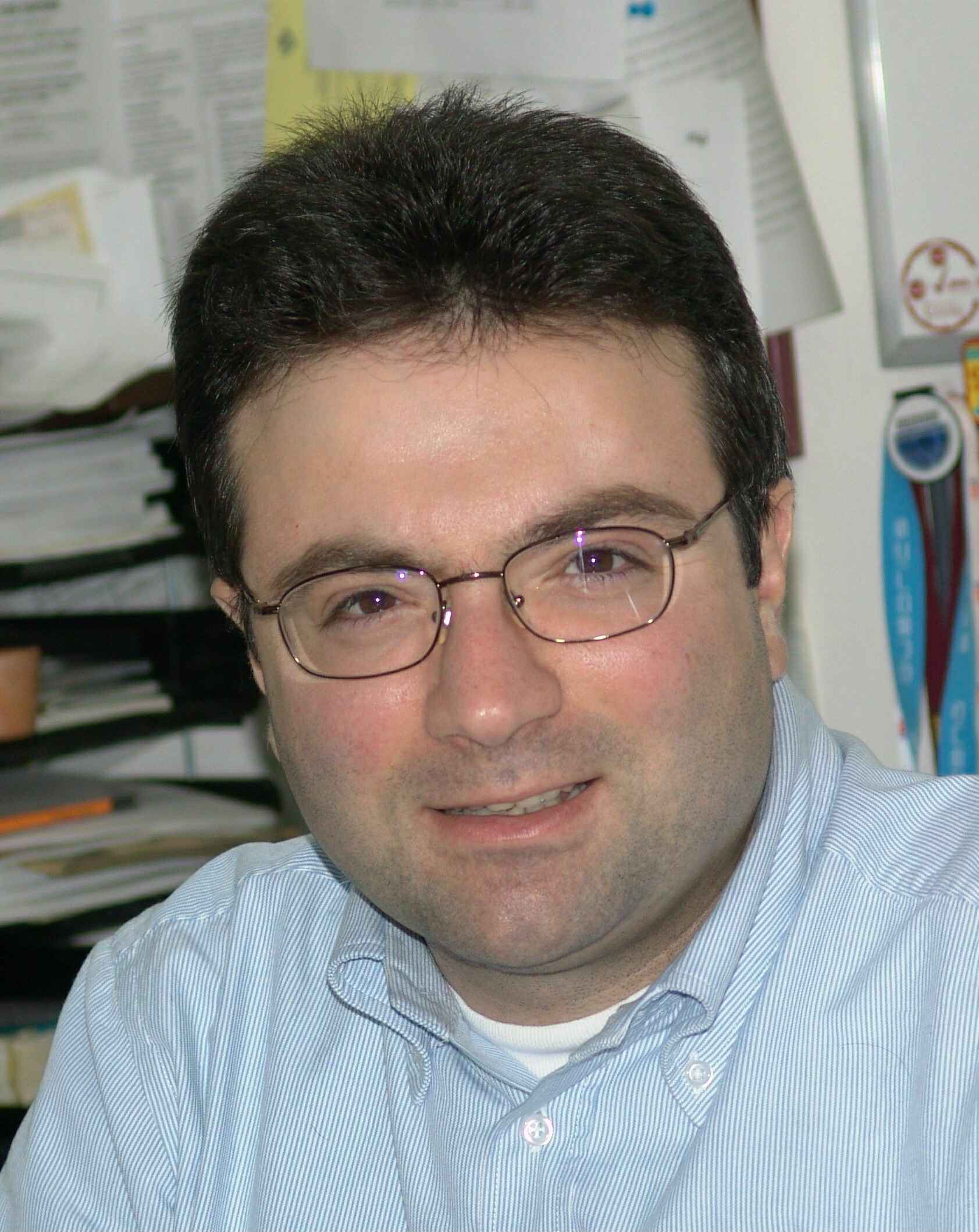
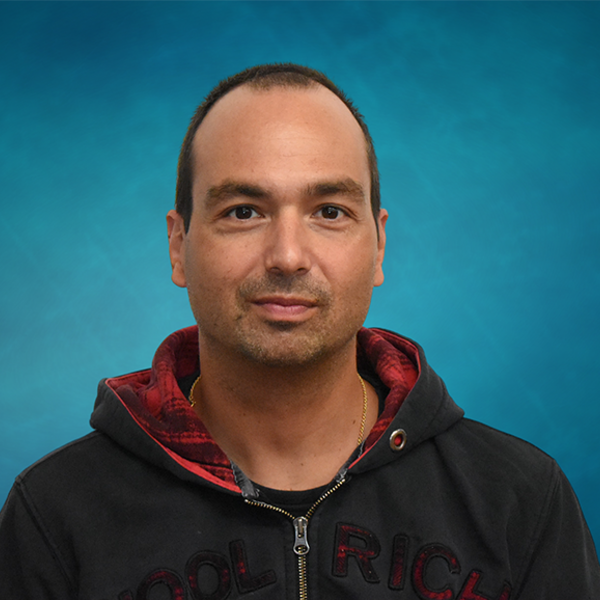
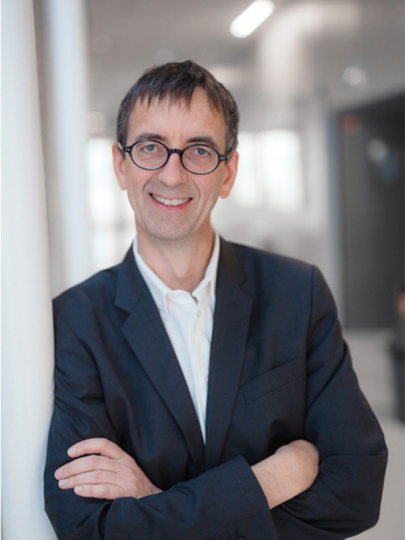
Nuno Pereira Lopes is an Associate Professor at Instituto Superior Técnico , part of Universidade de Lisboa , and a researcher at INESC-ID . He also serves as an advisor at FuriosaAI , focusing on tensor contraction processors for AI workloads. Research Interests : Compilers, formal verification of LLVM optimizations, machine learning frameworks, undefined behavior exploitation, probabilistic model checking, blockchain security, and many-core code generation. Teaching : Compilers and Computer/Informatics Engineering projects. Funding : Supported by Google, Matter Labs, NLnet, Oracle, PRACE, RNCA, and Woven by Toyota. Recent Publications focus on LLVM backend validation , PyTorch pipeline parallelism , C++ dynamic cast optimization , undefined behavior in C/C++ , and AI tensor processors . His work bridges compiler design, formal methods, and AI hardware. Academic Service includes representing Portugal in ISO/IEC JTC 1/SC 22 (C++), organizing FLoC'26 , and serving on program committees for PLDI, EuroLLVM, and CGO.
Amirhosein Taherkordi is a Professor in the Networks and Distributed Systems group at the Department of Informatics, University of Oslo, Norway. His research focuses on resource-efficiency, scalability, adaptability, dependability, mobility and data-intensiveness of distributed systems for emerging computing technologies including Internet of Things (IoT), Fog/Edge/Cloud Computing, and Cyber-Physical Systems (CPS). Dr. Taherkordi received his Ph.D. from the Informatics Department at the University of Oslo under the supervision of Prof. Frank Eliassen, with his thesis titled "Programming Wireless Sensor Networks: From Static to Adaptive Models." He holds an M.Sc. in Information Technology Engineering (Software Engineering) from University of Science and Technology and a B.Sc. in Computer Engineering from Sharif University of Technology. His research spans multiple domains of distributed systems with emphasis on practical applications. He investigates energy efficiency in wireless sensor networks, communication optimization in IoT systems, and adaptive resource allocation in edge computing environments. His work addresses critical challenges in network traffic classification, federated learning for vehicular networks, and data processing across heterogeneous platforms. Analysis of his recent publications reveals a strong trajectory toward communication-efficient federated learning techniques for vehicular networks, energy-aware protocols for IoT data collection, and advanced machine learning approaches for network traffic analysis. His research consistently focuses on optimizing resource usage while maintaining system performance and privacy in distributed architectures. Dr. Taherkordi actively contributes to several research initiatives including the CPS Lab at UiO for Cyber Physical Systems, DILUTE: Fluid Service Abstraction for Large-Scale Cloud IoT Systems, and the Gemini Centre on IoT at UiO. His work bridges theoretical advances with practical implementations in transportation systems, environmental monitoring, and industrial automation.
John Regehr is a Professor at the School of Computing, University of Utah, specializing in compilers, software testing, and formal verification. His research develops tools to improve software correctness and efficiency, including Csmith (random C program generator) and C-Reduce (test-case reducer). His group focuses on compiler validation, fuzzing techniques, and superoptimization, primarily targeting the LLVM infrastructure. Research interests span compilers, testing methodologies, formal verification, embedded systems, and program analysis. Recent work emphasizes practical tools backed by formal methods to detect and prevent software errors. Publications demonstrate strong trends in compiler verification and testing, with consistent focus on LLVM optimization correctness, translation validation, and automated bug detection through fuzzing and synthesis techniques. Scientific awards include: PLDI 2015 Distinguished Paper Award ICST 2014 Best Paper Award ACM SIGSOFT Distinguished Paper Award Leads a research group developing tools like Souper (superoptimizer) and Alive2 (translation validator). Maintains active academic service through program committees (PLDI, CGO, OOPSLA) and contributes to open-source compiler infrastructure.
Brandon Lucia is a Full Professor in the Department of Electrical and Computer Engineering at Carnegie Mellon University's College of Engineering. He leads the abstract research group focusing on the intersection of computer architecture, systems, and programming languages. His work bridges theoretical foundations with practical implementations in energy-constrained environments. Lucia's research centers on intermittent computing systems and edge computing in extreme environments. His work on energy-harvesting systems has established fundamental principles for batteryless computing, while his orbital edge computing research pioneers computational intelligence for nanosatellite constellations. These research thrusts address critical challenges in reliability, efficiency, and programmability for systems operating under severe power constraints. His publication record shows a clear evolution from foundational work on intermittent computing models to sophisticated applications in space computing and edge intelligence. Recent publications demonstrate increasing integration of dataflow architectures with energy-harvesting constraints, particularly in satellite constellations where computational resources must be managed across distributed, power-constrained platforms operating in extreme environments. NSF CAREER Award (2017) IEEE TCCA Young Computer Architect Award (2019) Sloan Foundation Fellowship (2021) ASPLOS Best Paper Awards (2018, 2020) OOPSLA Distinguished Paper and Artifact Awards (2015) Lucia actively mentors numerous PhD students including Brad Denby, Zhuo Cheng, and Emily Ruppel, many of whom contribute significantly to his research program. His abstract research group maintains strong industry connections while pursuing fundamental advances in computing systems. The group has developed multiple open-source tools including Legerdemain for program analysis and MultiCacheSim for cache coherence simulation. His laboratory work spans from theoretical foundations of intermittent computing to practical implementations in space systems. Current projects include computational nanosatellite constellations, energy-minimal dataflow architectures, and secure edge computing systems that operate reliably despite frequent power failures.
Heather Miller is a tenure-track Assistant Professor in the Software and Societal Systems Department within Carnegie Mellon University's School of Computer Science. Her academic journey includes prior roles as an Assistant Clinical Professor at Northeastern University's College of Computer and Information Science and as Executive Director of the Scala Center at EPFL. Miller's research centers on distributed and concurrent computation through the lens of programming languages, with particular emphasis on data-centric systems, big data processing, and edge computing. A defining theme throughout her work is composability - enabling construction of complex distributed systems through composition of components that are correct by construction. Her projects span distributable closures, flexible serialization techniques, futures and promises for asynchronous programming, and deterministic concurrent dataflow models. Her recent publications demonstrate strong trends in applying programming language theory to practical distributed systems challenges, with increasing focus on WebAssembly instrumentation, microservice resilience, and language model pipelines. This evolution reflects her commitment to bridging theoretical foundations with real-world system requirements. Dahl-Nygaard Junior Prize (2023) Mentorship forms a significant component of Miller's academic work. She actively supervises multiple PhD, MS, and undergraduate researchers at CMU, including Christopher Meiklejohn, Matthew Weidner, Huairui Qui, Ria Pradeep, and Luke Dramko. Her service contributions span numerous top-tier conferences including PLDI, SPLASH, ECOOP, and ICSE where she has served as committee member, chair, and keynote speaker. Miller co-founded the Curry On conference to foster industry-academia dialogue, hosting successful editions in Prague, Rome, Barcelona, Amsterdam, and London. She leads research groups focused on distributed programming models and maintains strong industry connections through Two Sigma, where she holds an affiliation. Her work consistently emphasizes practical open-source implementations, primarily within the Scala ecosystem where she's been a core contributor since 2011.
Twan Basten is a Full Professor in the Electronic Systems group at Eindhoven University of Technology (TU/e). He leads research on embedded and cyber-physical systems, focusing on model-driven design, computational models, and system dependability. He holds an MSc (1993) and PhD (1998) in Computing Science from TU/e, advancing from Assistant to Full Professor by 2009, and became the Electronic Systems group chair in 2013. His research spans international projects (FP5-7, H2020, ECSEL) and Dutch initiatives (STW, NWO, RVO), with over 200 publications and seven best paper awards. He has co-supervised 21 PhD students and actively participates in program committees and conferences. His work contributes to UN Sustainable Development Goals through innovations in smart systems. Education: MSc in Computing Science, TU/e (1993) PhD in Computing Science, TU/e (1998) Research Interests: Explores design methodologies for embedded systems, including scenario-based design, real-time scheduling, and performance analysis. Specializes in model-driven engineering and computational models to ensure system dependability. Active in projects like TRANSACT (real-time systems) and SAM-FMS (flexible manufacturing). Key Contributions: Co-author of 1 book and over 200 scientific publications Recipient of seven best paper awards Co-supervised 21 PhD degrees Senior member of IEEE and lifetime member of ACM Labs & Teams: Leads the Model-Based Design Lab and contributes to EAISI High Tech Systems initiatives. Collaborates on tools like TRACE4CPS for execution trace analysis and CReTS for vehicle platooning simulation.
Mark Oskin is an Adjunct Professor at the School of Computer Science and Engineering , University of Washington , focusing on Software & Hardware Systems . He leads the Sampa Group and collaborates on projects like HammerBlade and BlackParrot. University: University of Washington School: School of Computer Science and Engineering Department: Department of Electrical & Computer Engineering His research spans Computer Architecture , Parallel Computing , and Graph Processing , with additional expertise in Quantum Computing , Open Source Hardware , and Distributed Shared Memory . Ongoing work includes custom manycore devices for graph execution and open-source RISC-V designs. Past projects like Grappa and WaveScalar advanced distributed memory and dataflow execution. Recent publications include BlackParrot: An Agile Open Source RISC-V Multicore for Accelerator SoCs (IEEE Micro 2020) and Perceptual Compression of Video Storage and Processing Systems (SoCC 2019), reflecting trends in hardware-software co-design, quantum systems, and energy-efficient video processing. Best Paper Award , USENIX ATC 2015 IEEE Micro Top Picks , 2009 Mark has advised numerous students, including Amrita Mazumdar (IoT video compression startup), Brandon Lucia (CMU), and Steve Swanson (UC San Diego). He co-founded Corensic, a startup exploring deterministic multithreaded execution.
Yue Li is an Associate Professor at the School of Computer Science, Nanjing University, where they co-run the PASCAL Research Group with Tian Tan. Their work focuses on static program analysis techniques and tools for programming languages, software engineering, security, and hardware verification. PhD in Computer Science from UNSW Sydney (2016) Postdoctoral research at Aarhus University (Denmark) and UNSW Sydney B.Eng and M.Eng from Northwestern Polytechnical University (2010, 2012) Research interests center on Program Analysis and Programming Languages , with a focus on: Pointer analysis for database-backed applications Context sensitivity optimization Reflection analysis in Java/Android Operational semantics for hardware languages Distributed dataflow analysis frameworks Developer-friendly static analysis tools Key publication trends (2016-2025) span static analysis , pointer precision , reflection handling , and tool frameworks across conferences like OOPSLA, PLDI, ICSE, ISSTA, and journals including TOPLAS and IEEE TSE. Notable artifacts include Tai-e and Chianina systems. 2025: ICSE Best Artifact & Distinguished Paper Awards 2024: IEEE TSE Publication on Generic Sensitivity 2023: OOPSLA Distinguished Artifact, SPLASH/ECOOP committees 2021: National Youth Talent Support Program, ZiJin Scholar 2016: ECOOP Distinguished Paper, CGO Best Paper As co-PI of PASCAL Research Group, they lead projects on precision-guided analysis, microservice systems, and cloud-based dataflow frameworks, with teaching awards for SICP and Software Analysis courses.
Heiner Giefers is a Professor for Cloud Computing at the Department of Computer Science and Natural Sciences at Southwestphalia University of Applied Sciences since 2018. Prior to this position, he worked as a Research Staff Member at IBM Research - Zürich (2013-2018), focusing on hardware acceleration in cloud environments, implementation of big data algorithms on FPGAs, and development of hardware platforms for approximate and in-memory computing. Dr. Giefers received his doctorate (Dr. rer. nat.) from Universität Paderborn in 2012 with a dissertation titled "Design and Programming of Reconfigurable Mesh based Many-Cores." His academic journey at Universität Paderborn includes serving as an Academic Council Member (Akademischer Rat a.Z.) from 2008-2013 and as a Scientific Staff Member from 2006-2012, where he taught digital technology and computer architecture. Professor Giefers' research focuses on energy-efficient computing, particularly through hardware acceleration using FPGAs for cloud and AI workloads. His work spans cloud computing infrastructure, hardware-software co-design, approximate computing, in-memory computing, and energy-efficient implementations of machine learning algorithms. He has made significant contributions to the field of reconfigurable hardware for high-performance computing applications. His recent publications show a strong trend toward applying hardware acceleration techniques to artificial intelligence and machine learning workloads, with a particular focus on energy efficiency. His work bridges the gap between theoretical computer science and practical hardware implementation, often resulting in patented technologies that address real-world computing challenges in cloud environments. Best Paper Award for "Stochastic Matrix-Function Estimators: Scalable Big-Data Kernels with High Performance" (2016) Best Paper Award Nomination for "Energy-Efficient Stochastic Matrix Function Estimator for Graph Analytics on FPGA" (2016) Best Paper Award Nomination for "Analyzing the energy-efficiency of dense linear algebra kernels by power-profiling a hybrid CPU/FPGA system" (2014) Best Paper Award Nomination for "A Triple Hybrid Interconnect for Many-Cores: Reconfigurable Mesh, NoC and Barrier" (2010) Professor Giefers actively supervises numerous Bachelor's and Master's students, with over 50 completed theses covering topics from machine learning and cloud computing to IoT systems and hardware acceleration. He leads the "Energy-efficient AI" project (eki), which aims to increase the energy efficiency of AI systems through approximation techniques for FPGA implementation. Additionally, he collaborates with Prof. Dr. Christian Plessl on the "Digital teaching materials with Jupyter Notebooks" project, creating interactive learning materials that integrate teaching content, program code, and results into a single document. His work extends to practical applications through multiple patents related to FPGA implementations, neural networks, and memory systems, demonstrating his commitment to translating research into real-world solutions.
Tiziano De Matteis is an Assistant Professor in the @Large Research group at Vrije Universiteit Amsterdam's Faculty of Science, Department of Computer Systems. He also holds an affiliation with the Network Institute. His research focuses on overcoming post-Moore architecture challenges through parallel and distributed computing, high-performance systems, energy efficiency, and FPGA applications. Previously, he was a PostDoc at ETH Zurich's SPCL Group and earned his MSc/PhD from the University of Pisa. Education PhD in Computer Science, University of Pisa MSc in Computer Science, University of Pisa Research Interests Post-Moore architectures for distributed ecosystems Energy-aware parallel computing High-level abstractions for parallel software development FPGA-based hardware acceleration Data stream processing and distributed systems Recent Research Trends Recent work emphasizes: Data center risk analysis and sustainability Optimizing microservices and distributed scheduling LLM model offloading to NVMe storage Python-based data-centric programming productivity GPU interconnect performance in supercomputing Grants & Projects Participates in the EU-funded 'Extreme and Sustainable Graph Processing' project (2023-2025), exploring scalable graph algorithms and energy-efficient computing systems. Teaching Accelerator-Centric Computing Ecosystems Computer Organization Distributed Systems Systems Seminar
Nectarios Koziris is a Professor at the Department of Computer Science , National Technical University of Athens (NTUA) , and former Dean of the School of Electrical and Computer Engineering . His research focuses on Parallel and Distributed Systems , Computer Architecture , and Cloud Computing . Key Research Themes: Compiler-OS-Architecture Interaction, Datacenter Hyperconvergence, Sparse Matrix Optimization, Quantum Computing, FPGA Virtualization Leadership: Founder of ~okeanos (Europe's largest public Cloud IaaS), Co-founder of GFOSS , Member of IEEE Computer Society Greece, Advisor to Arrikto Inc. His work has led to over 180 publications with 5800+ citations (h-index 33) , including two Best Paper Awards (IPDPS 2001, CCGRID 2013) and Intel Recognition (2015). He has supervised 12 PhD students and participated in 15+ EU projects as coordinator or consortium partner. Scientific Leadership: Program Co-Chair for Europar 2012 , Organizer for IPDPS , ICPP , SC conferences, and active member in Cloud Computing Expert Groups for the European Commission.
Giorgio Scorzelli is a researcher at the University of Utah, serving as Director of Software Development for the Center for Extreme Data Management, Analysis, and Visualization (CEDMAV) and the National Science Data Fabric (NSDF) . He specializes in extreme data management, scientific visualization, and computational topology, with a focus on scalable solutions for climate science, materials science, and neuroscience datasets. His work emphasizes democratizing data access through platforms like OpenVisus , enabling efficient analysis of petascale and exascale data. Key contributions include orchestrating cyberinfrastructure, optimizing parallel I/O, and developing real-time visualization systems for heterogeneous resources. Notable scientific contributions include the NSF Grant #2127548 for NSDF development . His projects integrate cloud computing, geo-distributed storage, and FAIR digital objects to lower barriers to data democratization. Giorgio's research spans multi-resolution algorithms , computational topology , and 3D geometric modeling , with applications in infrastructure security, archaeological reconstruction, and biomedical imaging. His work bridges abstract mathematical frameworks (e.g., Boolean algebras, chain complexes) with practical software solutions.
James Shackleford serves as Associate Professor and Interim Associate Dean for Enrollment Management and Graduate Education in the Department of Electrical and Computer Engineering at Drexel University. His research bridges medical image processing, high performance computing, and emerging neuromorphic architectures with significant contributions to radiation therapy applications. Education: PhD in Electrical Engineering, Drexel University, 2011 MS in Electrical Engineering, Drexel University BS in Electrical Engineering, Drexel University Research Focus: Professor Shackleford's work centers on GPU-accelerated medical image registration (forming the core of the open-source Plastimatch software), real-time tumor motion management for radiation therapy, and digital spiking neuromorphic systems . His research integrates computer vision, machine learning, and embedded systems to solve clinical imaging challenges. Publication Trends: Recent work (2020-2024) reveals dual research trajectories: (1) advancing deformable image registration through CycleGAN-based domain adaptation for CT auto-segmentation in radiation oncology, and (2) pioneering neuromorphic computing with configurable hardware architectures, dataflow-based compilers, and resource-aware neural network mapping. These streams converge on high-performance solutions for medical imaging and efficient neural processing.
Miryung Kim is a Professor and Vice Chair of Graduate Studies in UCLA's Computer Science Department, where she directs the Software Engineering and Analysis Laboratory. She is renowned for her pioneering work in software evolution, code clone management, and establishing the emerging field of Software Engineering for Data Intensive Computing (SE4DA and SE4ML). Her research focuses on automated testing and debugging for Apache Spark, developer tools for heterogeneous computing, and conducting systematic studies of refactoring practices in industry. She led the first large-scale study of data scientists in industry and developed JDebloat, a Java bytecode debloating tool that made significant tech transfer impact to the Navy. Her recent publications demonstrate strong trends in fuzz testing for big data analytics and heterogeneous computing, with a focus on natural input generation, co-dependence awareness, and leveraging hardware probes for acceleration. Her work bridges software engineering with data-intensive and heterogeneous computing paradigms. ACM SIGSOFT Influential Educator Award (2022) ICSME Most Influential Paper Award (2023 and 2020) NSF CAREER award Google Faculty Research Award Okawa Foundation Research Award Humboldt Fellow ACM Distinguished Member As an academic advisor, she has produced eight tenure-track faculty members at institutions including Columbia, Purdue, and Virginia Tech. Her research has been supported by National Science Foundation, Air Force Research Laboratory, Google, IBM, Intel, Okawa Foundation, Samsung, and Office of Naval Research. She previously served as Program Co-Chair of ESEC/FSE 2022 and has delivered keynotes at ASE 2019 and ISSTA 2022. She maintains active industry collaborations, serving as an Amazon Scholar at Amazon Web Services and having spent time as a visiting researcher at Microsoft Research.
Jean-Yves Marion is a Professor at the University of Lorraine and director of LORIA (Laboratoire Lorrain de Recherche en Informatique et ses Applications) since 2013. He is a Senior Member of the Institut Universitaire de France (IUF) with appointments in both 2015 and 2025. He teaches at the École Nationale Supérieure des Mines de Nancy (ENSMN) and serves as a scientific advisor for the Cyber Campus. His educational background includes a PhD in Computer Science from the University of Paris 7 (1991), followed by post-doctoral research at Indiana University (1992-1993), and Habilitation to Direct Research (2000). He served as a lecturer at the University of Nancy 2 from 1995-2002 before becoming a professor at the University of Lorraine in 2002. Marion specializes in computer security with a focus on distinguishing malicious code from ordinary software through morphological analysis techniques. His research involves extracting the internal structure of code as if giving it an 'X-ray' to identify signatures of malicious behavior. He works extensively with the High Security Laboratory which maintains a collection of 6 million computer viruses for research purposes. His publications demonstrate a consistent focus on binary code analysis, malware detection, and implicit computational complexity. His work bridges theoretical computer science concepts like Kleene's recursion theorem with practical cybersecurity applications. Senior Member of the Institut Universitaire de France (2015) Senior Member of the Institut Universitaire de France (2025) As director of LORIA, Marion leads research teams working on cybersecurity challenges. His approach to malware analysis, which examines the 'skeleton' of code rather than surface features, represents an innovative methodology in the field. He has presented his work internationally at venues including the International Symposium on Foundations & Practice of Security (FPS 2016) and the International Workshop on Logic and Computational Complexity in Kyoto.