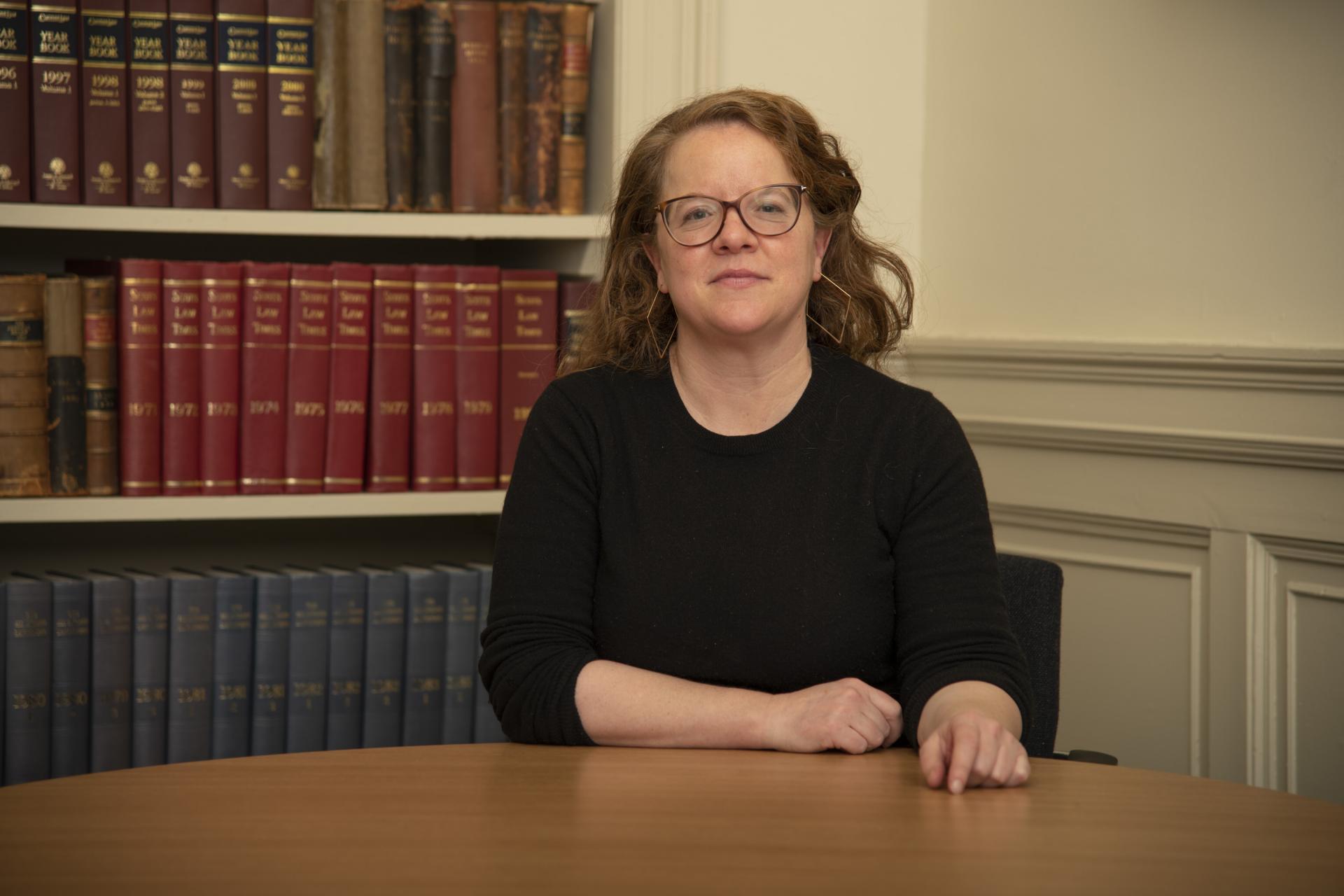
Philippa Metcalfe is an Honorary Research Fellow at the University of Warwick, affiliated with the Political and International Studies (PAIS) department. She holds a PhD from Cardiff University’s Data Justice Lab, supported by an ERC-funded DATAJUSTICE project. Her research critically examines datafied border and asylum regimes in Europe, focusing on how technologies obscure and intensify control over migrants and asylum seekers. She investigates the socio-political implications of 'black box' border technologies and their impacts on marginalized communities. Her current project, Datafied borders as opaque immigration policy , explores how data infrastructures shape border security and asylum processes in the UK and EU. Previous work includes analyzing biometric border systems, 'hostile environments' in urban contexts, and the intersection of technology with colonial power structures. She co-authored the 2023 Risking Lives report on AI-driven border policies and published in Geopolitics and First Monday . Metcalfe’s research bridges critical data studies, migration studies, and urban sociology. She advocates for community engagement and public accountability in tech governance. Her work highlights how data practices perpetuate exclusion while proposing alternative frameworks for justice in border governance.
Siri Lamoureaux is an anthropologist and Assistant Professor in the Sociology Department (Workplace Studies) at the University of Siegen, Germany. She is affiliated with the SFB 1187 project "Media of Cooperation" and participates in the "Technoscapes in Africa" project with Richard Rottenburg and other members of the Law, Organisation, Science and Technology (LOST) network. She is also an associate of the Max Planck Institute for Social Anthropology and the Centre d'études et de documentation économiques, juridiques et sociales (CEDEJ Khartoum) based in Sudan, and an active member of AOEN, the Africa Off-Earth Network. Her educational background includes: PhD in Social Anthropology (2017), Martin Luther University / Max Planck Institute for Social Anthropology, with dissertation titled "Virtuous language: gendered morality and ethnonational politics among Moro Christians in Khartoum" MPhil in African Studies (2009), Leiden University, with thesis "Message in a Mobile: mixed messages, tales of missing and mobile communities at the University of Khartoum" Master of Arts in Linguistics (2004), University of Oregon, with thesis "Applicative Constructions in Maasai" Bachelor of Arts in Linguistics (1999), University of California, Santa Barbara Lamoureaux is an anthropologist drawing inspiration from pragmatist approaches in linguistic and semiotic anthropology, Science and Technology Studies (STS), and moral and feminist philosophy. Since 2008, she has conducted extensive fieldwork in Sudan, particularly in the Nuba Mountains, focusing on digital technologies and activism, gender, social and religious movements, morality, language and literacy, sexual violence, and ethnic identity. Her current research extends these interests into the field of space science, studying how spatial and terrestrial scientific objects are identified, documented, categorized, and made actionable through sensory media technology. She examines satellite assemblages in desertification projects in the Africa Sahel and the Square Kilometer Array, a radio telescope observatory spanning Africa and Australia. Her publication record shows a clear trajectory from early work on mobile phone communication in Khartoum to sophisticated analyses of complex technoscientific assemblages in space science projects. While maintaining a consistent theoretical grounding in linguistic anthropology and STS, her research has expanded to address how values, norms, chronotopes, spirituality, emotions, and cognitive models figure in knowledge construction across diverse contexts—from the streets of Khartoum to astronomical observatories spanning continents. Dr. Lamoureaux is actively involved in multiple research projects: Technoscapes in Africa : Examines the coproduction of technicisation and spatial orders across Africa by focusing on datafication and remote sensing in health and environment domains Visualizing the electromagnetic spectrum : Explores how spatial and terrestrial scientific objects are identified, categorized and made actionable by scholars, technicians, and sensory media technology Nuba Mountains Studies : Provides a platform for research on the Nuba Mountain region Adaptation and Creativity in Africa (Completed): Examined how technologies and significations are entwined while traveling Virtuous Language (Completed): Explored identity and gendered moral enactment through Christianity among the Moro Nuba in Sudan Her teaching portfolio reflects her interdisciplinary approach, including courses such as "Artificial Intelligence: promises and practices," "Language, Media and Technology," "Telescopes, satellites, drones and the sociology of 'seeing'," and "Black Lives Matter," demonstrating her commitment to connecting anthropological theory with contemporary technological and social justice issues.
Anja Salzmann is a Postdoctoral Fellow at the SLATE: Centre for the Science of Learning & Technology, affiliated with the Department of Information Science and Media Studies at the University of Bergen. Her work focuses on responsible innovation in digital technologies, particularly in education and journalism. She holds a PhD from the University of Bergen, exploring mobile journalism and its societal implications. Her research interests include digital ethics, AI in education, surveillance capitalism, and sociotechnical systems. Education: Bachelor in Applied Media Sciences (Ilmenau University of Technology, Germany) Studies in Art History, German Linguistics, and Pedagogy (University of Bergen and Western Norway University of Applied Sciences) Her research critically examines the adoption of complex technologies by societal groups and advocates for ethical, human-centered approaches to AI and digitalization. Key themes include data privacy, algorithmic fairness, and the impact of digital technologies on democracy and journalism. Salzmann has participated in numerous panels and lectures, addressing topics such as AI in education, surveillance capitalism, and the future of journalism. She actively engages with policy frameworks like Responsible Research and Innovation (RRI) to promote socially just technological practices. Her work highlights risks associated with surveillance capitalism and advocates for democratic oversight of technological development. She collaborates with institutions like the Norwegian Data Protection Commission and contributes to national debates on digitalization in schools and universities.
Gabriel Pereira is Assistant Professor in AI & Digital Culture at the University of Amsterdam (UvA), based at the Media Studies department and the Institute for Logic, Language and Computation (ILLC). His primary affiliation is with the Natural Language Processing & Digital Humanities (NLP&DH) group. Pereira's research focuses on the critical study of data and algorithms, particularly as they intersect with vision, images, and surveillance systems. He brings an interdisciplinary approach that combines Science and Technology Studies (STS), critical algorithm studies, platform studies, and artistic interventions to examine how computational systems shape social relations and power structures. Pereira's research interests center on critical perspectives of computer vision and algorithmic governance, with particular attention to how these technologies operate in contexts of surveillance, platform labor, and digital culture. His work critically examines hegemonic computer vision systems that reinforce surveillance capitalism while exploring alternative ways of seeing and engaging with technology. He has conducted extensive research on Automated License Plate Recognition systems, WhatsApp disruptions in Brazil, and the political economy of smart surveillance projects like Curitiba's 'Digital Wall.' His methodology combines qualitative research with practice-based inquiry, including arts-based and interventionist approaches that challenge dominant technological narratives. His publication trends reveal a consistent focus on critical examinations of algorithmic systems, with growing attention to resistance practices, decolonial perspectives, and situated knowledge from the Global South. The articles show a trajectory from analyzing specific surveillance technologies toward broader theoretical frameworks for understanding algorithmic antagonisms and developing critical technical practices. His work consistently bridges theory and practice, often collaborating with artists and activists to create interventions that make visible the hidden operations of algorithmic systems. Independent Research Fund Denmark International Postdoc grant Deviant Practice Grant (Van Abbemuseum) Pereira actively organizes academic and artistic events, serving as Secretary of the Association of Internet Researchers and participating in the Tierra Común network. He co-organized the Con/Crit/Tec residency in São Paulo that brought together over 80 transdisciplinary researchers to explore alternative geographies of digital consciousness. His collaborative approach extends to numerous grant-funded projects examining platform labor, algorithmic surveillance, and critical data literacy. Pereira emphasizes organizing as an essential element of research work, facilitating knowledge exchange between academic, artistic, and activist communities. He is affiliated with multiple research collectives including the Center for Arts, Design and Social Research (CAD+SR), where he serves as a Researcher in Residence. His practice-based projects like 'Future Movement Future – REJECTED,' 'Algorithmic Sea,' and 'History of _rt' demonstrate his commitment to using artistic interventions as critical research methods. These projects often involve collaborations with artists, technologists, and activists to create alternative ways of engaging with and understanding algorithmic systems.
Raul Hakli is a University Researcher in Practical Philosophy at the University of Helsinki, working within the Faculty of Arts. He is affiliated with the RADAR research group focusing on Robophilosophy, AI ethics and Datafication, and is part of TINT – Centre for Philosophy of Social Science. Hakli serves as a supervisor for the Doctoral Programme in Philosophy, Arts, and Society. His research spans the intersection of philosophy, artificial intelligence, and social science, with particular expertise in: AI Ethics and Responsible AI development Robophilosophy and the philosophical implications of social robotics Social ontology and the nature of group action We-reasoning and collective intentionality Moral agency in human-AI collaborative systems Hakli's recent publications reveal a strong focus on how artificial intelligence systems, particularly social robots, interact with human social structures. His work examines trust mechanisms in human-robot groups, the extension of moral agency to AI systems, and the philosophical foundations of collective decision-making involving both humans and artificial agents. He has been instrumental in developing frameworks for understanding how robots can participate in social institutions while maintaining ethical considerations. Among his notable projects are: EthicAI4CARE (2024-2027): Implementing Ethics by Design in AI for the Healthcare Sector as Co-Principal Investigator REPAIR (2022-2025): Valuable breakages: repair and renewal of algorithmic systems as Participant S-FACTOR (2021-2024): Foundational research on Group Processes in Human-Robot Ensembles Ethical Risks and Responsibility of Robotics and Artificial Intelligence (2020-2024): As Project manager Towards Responsible Artificial Intelligence (2020-2024): As Principal Investigator Hakli actively contributes to the academic community through peer review for journals including International Journal of Social Robotics and Philosophy and Phenomenological Research. He regularly presents at conferences such as Robophilosophy, with recent talks focusing on AI responsibility and trust in human-robot groups.
Roland Meyer is a DIZH Bridge Professor for Digital Cultures and the Arts at the University of Zurich and Zurich University of the Arts (ZHdK) since July 2024. His work critically examines contemporary networked image cultures, focusing on algorithmic image processing, forensic practices, synthetic media aesthetics, and virtual image archives in the context of platform capitalism. PhD in Media and Art History (Karlsruhe Academy of Art and Design, 2017) Former research positions at Ruhr University Bochum, Humboldt University Berlin, and BTU Cottbus-Senftenberg His research spans: History of operative images AI-driven image synthesis Surveillance technologies Virtual archival systems Roland's publications and lectures analyze how digital platforms reshape visual epistemology, with recent work on Platform realism Synthetic media economies Forensic image practices DALL-E and Sora AI systems He organizes interdisciplinary symposia like As We May See (UZH) and Images Under Suspicion (Essen), and contributes to debates on AI's political visual implications through interviews with major media outlets.
Minna Ruckenstein is a Professor of Emerging Technologies in Society at the Consumer Society Research Centre, University of Helsinki. She directs The Datafied Life Collaboratory, focusing on digitalization/datafication processes with emphasis on emotional, social, political, and economic dimensions of algorithmic practices. Her work integrates anthropology of technology, science and technology studies, media/communication studies, and consumer economics. Current research projects include public values in algorithmic futures, re-humanizing automated decision-making, and everyday engagements with digital technologies in Helsinki, Shanghai, and Hangzhou. Notable outputs include the co-edited book *Everyday Automation* and her monograph *The Feel of Algorithms*. Key projects: Brokering Algorithmic Futures (2025–2026), REPAIR (2022–2025), and Citizen Mindscapes (2016–2018). Active in academic networks, she has organized over 180 events and served as a doctoral dissertation opponent.
Colin Porlezza is Associate Professor of Digital Journalism and Director of the Institute of Media and Journalism (IMeG) at the Università della Svizzera italiana (USI), Faculty of Communication, Culture and Society. He also leads the European Journalism Observatory (EJO) and holds an Honorary Senior Research Fellow position at City, University of London. Previously, he was a Research Fellow at Columbia University’s Tow Center for Digital Journalism. PhD in Communication Sciences – Università della Svizzera italiana Licentiate (BA/MA) in Communication Sciences – USI, specialization in Mass Communication and New Media Work experience at University of Zurich and University of Neuchâtel His research centers on digital journalism, with emphasis on automated journalism, artificial intelligence, datafication, disinformation, and journalistic ethics. He investigates how digital technologies reshape journalistic roles, norms, and practices, particularly in public service and hybrid news environments. His work bridges technical innovation with ethical and societal implications. The 15 most recent articles highlight a consistent trajectory in AI and journalism, focusing on automation, accountability, verification tools, and innovation. Keywords span communication, AI, ethics, and media policy, while subfields include algorithmic transparency, hybrid workflows, fact-checking, and value-sensitive design—reflecting a strong interdisciplinary focus on responsible technological integration in newsrooms. Knight News Innovation Fellowship Prof. Porlezza has secured major research grants from the Swiss National Science Foundation, Horizon 2020, Google Digital News Initiative, and OFCOM. He leads the JoIn-DemoS and Diacomet projects and previously directed Designing Hybrid Journalism and DMINR. He advises PhD students as Director of the PhD Program and collaborates with media organizations like SRG SSR and Tamedia. His advisory roles include the Austrian National Journalists' Study and Innovamedia network. He leads the Institute of Media and Journalism (IMeG) and the European Journalism Observatory (EJO), fostering collaborative research across Europe. These units serve as hubs for innovation, policy dialogue, and knowledge transfer between academia and professional journalism.
Sarah Perret serves as Senior Lecturer in Political Science and International Relations at ESPOL (Catholic University of Lille) since 2023. She maintains dual research affiliations as Associate Researcher at King's College London and the Laboratoire de Théorie politique (CRESPPA-CNRS), while contributing to the Chair of Geopolitics of Risk at École Normale Supérieure de Paris. Her institutional roles include lead collaborator for the ANR-PrAIrie project "Artificial Intelligence at the Border" (2023) and co-leadership of Working Group 1 within the international DATAMIG network. Her academic formation features a PhD in Political Science from University of Paris-Saclay, augmented by visiting research at Georgetown University. Post-doctoral work spanned War Studies at King's College London (2019-2023) and Geography at ENS Paris (2017-2019). Teaching appointments include Paris-Saclay, Paris 2 Assas, Paris 8 Vincennes, Georgetown, ENS, King's, and Sciences Po Paris. Perret's research critically interrogates how security policies reshape borders, identity, and mobility through (non)knowledge production and digital technologies like biometrics and AI. Her work exposes the epistemic violence inherent in EU border security apparatuses, examining how datafication processes generate errors, fakes, and subjectivities that reinforce exclusionary practices. Previous investigations covered naturalization legislation, securitization of immigration law, and counterterrorism impacts on French Muslim populations. Analysis of her 2022-2025 publications reveals three dominant trajectories: (1) critical examinations of border technologies' material and epistemic effects; (2) theoretical innovations in risk geopolitization and non-knowledge regimes; (3) political economy analyses of risk capitalization. These intersect at the nexus of migration governance, data politics, and security innovation, consistently challenging technocratic border management paradigms. Her professional profile extends beyond academia through prior roles as parliamentary attaché at the French National Assembly, World Bank consultant, and ministerial advisor. Current research initiatives include the ANR-PrAIrie project on AI border applications and DATAMIG network coordination, while her institutional home at ESPOL-Lab anchors interdisciplinary security studies.
Dr. Emily Postan serves as Senior Lecturer and Chancellor's Fellow in Bioethics at the University of Edinburgh's Edinburgh Law School, where she also holds the position of Deputy Director of the Mason Institute for Medicine, Life Sciences and the Law with lead responsibility for policy engagement. Her academic leadership extends to Director of Postgraduate Academic Guidance within the Law School. Her educational background includes a PhD from the University of Edinburgh (2017), LLM (Distinction), MA(Hons), and MLitt by research in Philosophy from the University of Edinburgh and University of Stirling. Prior to her academic career, she spent a decade in policy management at the Scottish Government. Postan's research centers on the intersection of biomedical technologies, personal information, and identity formation, with particular focus on how health informatics shapes our self-conception. Her work critically examines ethical governance frameworks for bioinformation, emphasizing the narrative dimensions of identity. She explores how AI-driven health data classification impacts belonging and social categorization, particularly through her current project 'Identity by Algorithm: Ethical Impacts of Categorisation by Health AI'. Her scholarly output reveals consistent engagement with neuroethics, genomic regulation, and AI ethics, with publications spanning from foundational identity theory to practical policy recommendations. The trajectory shows increasing focus on algorithmic governance in healthcare, culminating in the 2025 international consensus paper on AI trust frameworks. 2018 Rising Star lecture at International Neuroethics Society Annual Meeting Project leadership for Nuffield Council on Bioethics’ 2013 Novel Neurotechnologies report Key contributions to Scottish policy through Mason Institute submissions on organ donation, human tissue legislation, and Adults with Incapacity Act reforms As a doctoral supervisor, she mentors researchers in bioethics and medical law, currently guiding Gokce Kolukisa's work on 'Genome Editing in International Law'. Her Wellcome Trust-funded project 'Confronting the Liminal Spaces of Health Research Regulation' (2017-2021) established her as a leading voice in health research governance. Postan actively engages with media and policymakers on bioethics issues, bridging academic research and real-world application through the Mason Institute's policy portfolio.
Christopher O'Neill is a Research Fellow at the Alfred Deakin Institute for Citizenship and Globalisation, Deakin University. His research examines automation, facial recognition, and biopower, with emphasis on ethical, social, and political implications in contemporary societies. He holds a PhD from the University of Melbourne (2020) and has held positions at Monash University, Harvard University, and IRCAM-CNRS in Paris. His work intersects philosophy, media studies, and technology ethics. Recent publications analyze conspirituality in online scams, facial recognition in gambling regulation, pandemic automation, and Foucauldian critiques of information theory. His research addresses governance challenges in emerging surveillance technologies and automated systems.
Albert Meijer is Professor of Public Innovation at Utrecht University, where he heads the Public Management Group. His research examines governance in digital societies, with particular focus on smart cities, open data, and public sector innovation. He serves as Editor-in-Chief of Information Polity and chairs the European Group for Public Administration's e-government study group. His research explores: Co-production models in public services ICT-driven governance transformations Datafication of local governments Sustainable urban development frameworks Recent publications demonstrate strong emphasis on empirical analyses of digital governance frameworks and their societal impacts. Research frequently employs mixed-methods approaches to examine technology adoption in public administration contexts.
Dr Colin Porlezza is a Senior Lecturer at City St George's, University of London, where he joined in 2018, and serves as a Visiting Professor at the Institute of Media and Journalism (IMeG) at Università della Svizzera italiana in Lugano, Switzerland. A Swiss national from Zurich, he earned his doctorate, BA, and MA in Communication Sciences with a specialization in mass communication and new media at Università della Svizzera italiana. His academic journey includes previous positions at the University of Zurich and University of Neuchâtel. His research focuses on the datafication and hybridization of digital journalism , media accountability and transparency , and governance and ethics in digital journalism . He currently leads the DMINR project funded by Google Digital News Initiative, which develops AI tools for news verification while studying AI's impact on journalism. His recent work includes analyzing political representation in Swiss public broadcasting and examining AI's effects on journalistic authority. Porlezza has produced over 40 peer-reviewed publications including 20 journal articles, 25 book chapters, and two books with top publishers. His work spans critical areas including media accountability, accuracy in journalism, crowdfunding models, and entrepreneurial journalism. His research shows strong thematic continuity in examining how digital transformation affects journalistic practices and ethics. Principal Investigator of DMINR project (Google Digital News Initiative) Board member of Swiss Association of Communications and Media Research Former Co-Chair of Journalism Studies Section Advisory Board member of Austrian National Study of Journalists Member of international Network Innovamedia for journalism innovation Prior to his academic career, Porlezza co-founded the European Journalism Observatory (2004-2013) and worked as a freelance journalist for German-language publications including Neue Zürcher Zeitung. He has delivered keynotes for organizations including the Swiss Federal Media Commission, Forum Alpbach Talks, and British-Swiss Chamber of Commerce. Fluent in French, German, and Italian, he maintains strong connections between Swiss and international media research communities.
Liam Healy is a researcher at Goldsmiths, University of London, specializing in speculative design practices within migration contexts and borderscapes. His work primarily focuses on the European refugee crisis, particularly the 'Jungle' camp in Calais, France, and Lesvos in Greece, where he employs innovative research methodologies involving devices like tandem bicycles for documentation and exploration. His research interests span speculative design, borderscapes, refugee camp documentation, maintenance practices in DIY bike trails, and care ethics in unconventional spaces. He approaches these topics through a lens that combines visual anthropology, science and technology studies, and participatory design methods. His work critically examines temporality, agency distribution, and the politics of care within spaces of displacement and resistance. Analysis of his recent publications reveals a trajectory that moves from documenting refugee camps in Calais and Lesvos to exploring maintenance practices in DIY bike trails, suggesting an evolving interest in how communities care for spaces that exist outside formal governance structures. His work consistently challenges linear conceptions of time and problem-solving approaches in design, advocating instead for what he terms 'a-firmative speculation' that embraces complexity and multiple possibilities. He has been particularly active in creating multi-modal outputs, including academic papers, films, zines, exhibitions, and design interventions. His projects often involve collaborations with Jimmy Loizeau, Dominic Robson, and other researchers, demonstrating a commitment to collective knowledge production. His research methodology is characterized by the deployment of 'research devices' that enter into new compositions within field sites, recording interactions and possibilities without imposing predetermined solutions. This approach reflects his critique of conventional design practices and their relationship to bordering mechanisms in contemporary Europe.
Dr. Luis Hernan serves as Lecturer in Spatial Narratives at the University of Sheffield's School of Architecture and Landscape, concurrently holding leadership positions as Deputy Director of Postgraduate Research and Lead of the PhD by Design programme. He co-edits the open-access journal field: and contributes to institutional initiatives including the SSoA Feminist Library and curriculum decolonization efforts, demonstrating deep integration within the university's academic ecosystem. Education: PhD in Architecture, Newcastle University MSc in Architecture, Newcastle University BA in Architecture, Mexico (institution unspecified) His research investigates narrative as fundamental to architectural and urban experience, critically examining how stories shape spatial understanding through Latin American literary traditions. Key trajectories include utopian domesticities in smart technologies, Mexico-US border spatial politics through science fiction tropes, and deindustrialization narratives in Northern England. His transdisciplinary methodology uniquely fuses critical theory with creative practice in photography, poetry, and ficto-critical writing. Publication analysis reveals consistent thematic evolution from digital spatial atmospheres (2012-2016) toward decolonial border studies and Empire critiques (2018-2023), with increasing emphasis on anti-racist praxis and climate-responsive urbanism. Collaborative patterns show sustained partnerships with Ramirez-Figueroa on border technologies and Cheatle on anti-racist architecture, while solo works develop his monograph on Silicon Valley's spatial narratives. Scientific Awards: No awards documented in source materials Advising focuses on doctoral research in narrative architecture, decolonial theory, and speculative futures, though specific supervisees aren't named. Grant history isn't detailed, but collaborative publications indicate participation in bio-materialism projects (e.g., bacteria-based soil engineering) and digital humanities initiatives. He contributes to the Spaces, Culture and Politics Research Group and has collaborated on living systems projects involving bacterial hygromorphs and protocell research, suggesting engagement with interdisciplinary labs exploring biological computation and responsive materials at the architecture-technology interface.