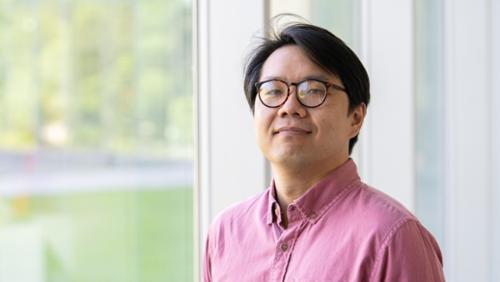
Akshay Narayan is an Assistant Professor of Computer Science at Brown University. His research focuses on computer systems and networking, particularly on improving specialization for dynamic network environments through novel abstractions. Education: PhD (2022), MS (2019), BSc (2015) from MIT and UC Berkeley His research addresses challenges in network congestion control, dynamic network environments, and systems optimization. He has developed abstractions for managing bandwidth variability and network complexity, with applications in datacenter transport and internet protocols. Recent publications explore topics like eBPF verification, automated reasoning for network architectures, and congestion control algorithm behavior. His work spans SIGCOMM, HotNets, IMC, EuroSys, and NeurIPS conferences. Scientific awards include NSF Graduate Research Fellowship, Irwin Mark Jacobs and Joan Klein Jacobs Presidential Fellowship, Best Artifact at EuroSys 2021, and Best Student Paper at SIGCOMM 2018. Narayan advises PhD students at Brown and serves on program committees for NSDI, SIGCOMM, and HotNets. He teaches courses like CSCI 2680 (Computer Networks) and CSCI 1675 (Designing High-Performance Network Systems).
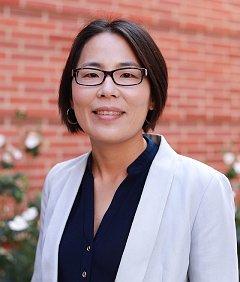
Miryung Kim is a Professor and Vice Chair of Graduate Studies in UCLA's Computer Science Department, where she directs the Software Engineering and Analysis Laboratory. She is renowned for her pioneering work in software evolution, code clone management, and establishing the emerging field of Software Engineering for Data Intensive Computing (SE4DA and SE4ML). Her research focuses on automated testing and debugging for Apache Spark, developer tools for heterogeneous computing, and conducting systematic studies of refactoring practices in industry. She led the first large-scale study of data scientists in industry and developed JDebloat, a Java bytecode debloating tool that made significant tech transfer impact to the Navy. Her recent publications demonstrate strong trends in fuzz testing for big data analytics and heterogeneous computing, with a focus on natural input generation, co-dependence awareness, and leveraging hardware probes for acceleration. Her work bridges software engineering with data-intensive and heterogeneous computing paradigms. ACM SIGSOFT Influential Educator Award (2022) ICSME Most Influential Paper Award (2023 and 2020) NSF CAREER award Google Faculty Research Award Okawa Foundation Research Award Humboldt Fellow ACM Distinguished Member As an academic advisor, she has produced eight tenure-track faculty members at institutions including Columbia, Purdue, and Virginia Tech. Her research has been supported by National Science Foundation, Air Force Research Laboratory, Google, IBM, Intel, Okawa Foundation, Samsung, and Office of Naval Research. She previously served as Program Co-Chair of ESEC/FSE 2022 and has delivered keynotes at ASE 2019 and ISSTA 2022. She maintains active industry collaborations, serving as an Amazon Scholar at Amazon Web Services and having spent time as a visiting researcher at Microsoft Research.
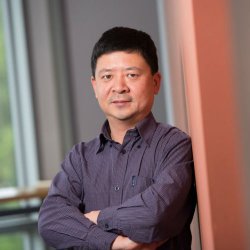
Marco Chiesa is an Associate Professor at the KTH Royal Institute of Technology in the Intelligent Network System Lab (INSight) group under the Division of Software and Computer Systems . His research focuses on computer networking, particularly Internet protocols and architectures, with emphasis on security, privacy, network design optimization, and Software Defined Networking (SDN) approaches. Current research areas: SDN, IXPs, stateful packet processing, network monitoring Teaching roles: Advanced Internetworking (IK2215), Computer Hardware Engineering (IS1200), Network Systems with Edge or Cloud Datacenters (IK2227) Email: mchiesa@kth.se Recent publications highlight advancements in high-speed packet processing, network security, and SDN applications. Key trends include leveraging programmable switches for stateful operations, improving BGP hijacking detection, and optimizing network monitoring on multi-pipeline architectures.
Marko Šarac is a Professor at Singidunum University in the Faculty of Informatics and Computer Science . He holds a Master's degree in Contemporary Information Technologies (2008) and a PhD in Advanced Protection Systems (2013) from the same institution. His research spans Cybersecurity, Artificial Intelligence, Blockchain, Internet of Things (IoT), Machine Learning, and Data Privacy . Education: Master: Contemporary Information Technologies, Singidunum University, 2008 PhD: Advanced Protection Systems, Singidunum University, 2013 Research Focus: SSL Traffic Security, Virtual Datacenters, Biometric Cryptography, and IoT Healthcare Systems Developed frameworks for Explainable AI in Metaverse Security , Blockchain-based IoT Security Gateways , and Machine Learning for Medical Diagnostics Notable Publications: 2025: CNN-enhanced attack detection for IoT-based Metaverse 2024: Modified Firefly Algorithm for medical dataset classification 2023: Space weather prediction using metaheuristics Projects: Co-author on 9+ books including Internet Marketing (2020) and Computer Network Security (2014) Contributed to 50+ peer-reviewed journals and conference papers on cybersecurity and AI Grants & Collaborations: Active in IEEE , ZINC , and Sinteza conference series Collaborated with researchers across Europe and Asia on IoT, Blockchain, and Cloud Security Contact: msarac@singidunum.ac.rs
Dr. Zhijun Wang is an Associate Professor of Research in the Department of Computer Science and Engineering at The University of Texas at Arlington. His work focuses on cloud and edge computing, resource management, task scheduling, and network traffic control. He holds a PhD in Computer Science from UTA (2005), an MS in Electrical Engineering from Penn State (2001), and a BS in Physics from Huazhong University of Science & Technology (1992). His research explores internet traffic control mechanisms , cloud resource allocation , and microservices architecture . Recent projects include NSF-funded work on tail latency guarantees for microservices ($600k grant, 2022-2026) and industry collaborations with Alibaba on datacenter transport protocols ($148k grant, 2018-2021). Publications highlight innovations like CurTail (tail latency scheduling) and Tailguard (data-intensive task scheduling). His work often combines price-aware protocols with distributed scheduling algorithms . Teaching focuses on foundational topics: discrete math, computer networks, and cloud computing. Grants: NSF (2022), Alibaba (2018) Key Patents: Tail Latency Scheduling (2023), Database Target Enforcement (2024) Recent Publications: 15+ papers since 2020 in top-tier venues
Dr. Saptarshi Sengupta is an Assistant Professor in the Department of Computer Science at San José State University (SJSU), leading the Machine Intelligence and Complex Systems (MICoSys) Lab. He advises the ACM student club at SJSU and holds a 'Alien of Extraordinary Ability' visa (Einstein Visa) from USCIS. His work focuses on resilient cyber-physical systems, risk analysis, and deep learning applications in healthcare and industrial systems. Education: Ph.D. in Electrical Engineering, Vanderbilt University M.S. in Electrical Engineering, Vanderbilt University B.Tech. in Electronics & Communication Engineering, West Bengal University of Technology Research Interests: Cyber-Physical Systems Security Healthcare AI for Cancer and Chronic Disease Prediction Battery Prognostics and Energy Systems Machine Learning for Complex Systems Analysis Key Achievements: Dr. T.M.A. Pai Gold Medal Award for Healthcare AI contributions Recipient of multiple best paper awards at international conferences Author of over 30 peer-reviewed publications Labs & Teams: Leads the MICoSys Lab, developing AI solutions for healthcare diagnostics, industrial prognostics, and smart infrastructure systems. Collaborations include interdisciplinary projects with biomedical and engineering domains.
Professor Ning Wang is a leading academic in communication systems at the University of Surrey's Institute for Communication Systems (ICS), School of Computer Science and Electronic Engineering. He holds a PhD from the University of Surrey (2004) and has expertise in 5G/6G networks, edge computing, and space-terrestrial integration. As a coordinator for the EuroMaster Programme and Communication Networks and Software (CNS) pathway, he leads research in network management, mobile video delivery, and IoT applications. His work has been featured in IEEE ComSoc Technology News three times since 2012. Current leadership roles include 5GIC Work Area 1 leader for content and network context. Research collaborations span global institutions like UCL, ETH Zurich, and industry partners like BT and InterDigital. Notable contributions include SDN-based space-terrestrial network integration (VDPA scheme) and O-RAN automation via federated DRL. Over 130 publications and active participation in standards bodies (IETF, 3GPP) reflect his impact on future network architectures. Educations: BEng in Computing (Changchun University of Science and Technology, 1996) MEng in Electronic Engineering (Nanyang Technological University, 2000) PhD in Electronic Engineering (University of Surrey, 2004) Research Focus: Future Internet design, network intelligence, content-centric networking, and satellite integration. Key projects include EU Horizon Europe SPIRIT (immersive telepresence), ESA TINA (satellite 5G functions), and EPSRC NG-CDI (converged digital infrastructures). His research emphasizes practical solutions like edge-AI for VNF splitting and holographic frame synchronisation. Grants & Projects: Over £20M in grants from EPSRC, EU Horizon, InnovateUK, and Royal Society. Active in EU-funded SAT5G (satellite-terrestrial 5G) and C-DAX (smart grid cybersecurity).
Daniel S. Berger is a Principal Researcher at Microsoft's Azure Systems Research Group in Redmond, focusing on the efficiency, sustainability, and reliability of cloud platforms . He is also an Affiliate Assistant Professor at the Paul G. Allen School of Computer Science at the University of Washington, where he teaches graduate classes. His research spans systems stack innovations for sustainability , including work on memory tiering , repair operations , and cooling systems (Zissou). He leverages system prototyping , simulation , and statistical modeling in his work, often collaborating with PhD students and postdocs from institutions like Columbia, University of Toronto, CMU, and Princeton. Recent publications highlight his leadership in CXL-based memory management , carbon-efficient cloud design , and latency-aware caching . His tools, such as Belatedly and FOO , have demonstrated significant improvements in cache performance and latency optimization. Best Paper Awards: USENIX OSDI 2023, HotCarbon 2023, ACM SOSP 2021. Distinguished Paper: ASPLOS 2023. His work has been integrated into Apache Traffic Server and Microsoft production systems , with open-source tools and datasets released for reproducibility. Collaborations include hardware and OS development teams within Azure and academia.
Han Dong is an Assistant Professor in the Department of Computer Science at Hamilton College, appointed to the faculty in 2025. His research bridges software and hardware systems to address sustainability challenges in large-scale computing environments. His educational background includes: Ph.D. in Computer Science from Boston University M.S. in Computer Science from University of Maryland Baltimore County B.S. in Computer Science from University of Maryland Baltimore County Dong specializes in optimizing datacenter-scale systems through machine learning-driven approaches to energy-performance trade-offs. His work targets fundamental improvements in software-hardware heuristics for sustainable computing infrastructure, with applications in distributed systems and operating system design. This research addresses critical industry needs for reducing the environmental impact of cloud-scale computing while maintaining performance. His professional recognition includes: Oak Ridge Institute for Science and Education (ORISE) Fellowship at the Food and Drug Administration Prior to joining Hamilton College, Dong held research positions at Red Hat (3 years) and served as a postdoctoral associate at Boston University. His technical contributions are reflected in active open-source projects related to network drivers and systems optimization, as evidenced by his GitHub repository activity.
Steve Blackburn is a research scientist at Google DeepMind and professor of computer science at the Australian National University in the College of Engineering and Computer Science. His primary research focus is on programming language implementation, with expertise spanning memory management, virtual machines, and performance analysis. He has served in significant leadership roles including Associate Dean for Diversity and Inclusion (2016-2019) and as Program Chair for PLDI 2015 and General Chair for PLDI 2023. Blackburn's research interests center on making software run faster and more power-efficiently on modern hardware. His primary areas include microarchitectural support for managed languages, fast and efficient garbage collection, and the design and implementation of virtual machines. He maintains a strong interest in sound methodology and infrastructure for successful research innovation. His work bridges theoretical computer science with practical systems implementation, with particular focus on memory management frameworks and performance benchmarking. His publication record reveals a consistent focus on memory management systems, with recent work exploring garbage collection in modern contexts including CRuby, Julia, mobile devices, and memory-disaggregated datacenters. His research shows an evolution from foundational garbage collection algorithms toward practical implementations addressing real-world constraints in contemporary programming languages and hardware platforms. A notable trend is his increasing focus on quantifying and understanding the true costs of garbage collection in production environments. Fellow of the ACM Blackburn has supervised numerous doctoral students including Zhen He, John Zigman, Robin Garner, Ting Cao, and currently advises Wenyu Zhao, Zixian Cai, and others. He has also served on multiple program committees for major conferences including PLDI, ASPLOS, ISMM, and OOPSLA, demonstrating his significant contributions to the programming languages and systems research community. His service includes editorial roles for ACM Transactions on Programming Language Applications and Systems from 2017-2020. He leads two major research infrastructure projects: the MMTk memory management framework and the DaCapo benchmark suite, both of which have become foundational tools for researchers in programming languages and systems. These projects reflect his commitment to shared research infrastructure and reproducible methodology in systems research.
Dr. Liang Zhang is an Assistant Professor in the Department of Engineering and Aviation Sciences at the University of Maryland Eastern Shore (UMES). He holds a Ph.D. in Electrical Engineering from New Jersey Institute of Technology (NJIT) and an M.S. in Information and Communication Engineering from the University of Science and Technology of China (USTC). His research focuses on machine learning, mobile edge computing, UAV communications, wireless communications, and IoT, with an emphasis on resource optimization and algorithm design. Education: Ph.D., Electrical and Computer Engineering, NJIT (2014–2020) M.S., Information and Communication Engineering, USTC (2011–2014) B.S., Electronic Science and Technology, Huazhong University of Science and Technology (HUST) Research Highlights: Dr. Zhang has pioneered work on deep reinforcement learning algorithms for UAV-assisted edge computing, caching optimization, and latency reduction in IoT systems. His contributions include the BRIDGES testbed project at George Mason University (GMU), supported by a $2.5M NSF grant, and the development of QoE-optimized frameworks for wireless VR and airborne networks. Awards & Recognition: Outstanding Dissertation Award (NJIT, 2023) Hashimoto Prize (NJIT, 2020) IEEE GLOBECOM Travel Grant (2016) Best Paper Award (IEEE ICNC, 2014) Professional Contributions: He has published 32 peer-reviewed articles and serves as a reviewer for IEEE journals. His work integrates machine learning with networking challenges, addressing practical issues like spectrum sharing in 5G, energy-efficient VM management, and dynamic resource allocation in optical networks.
Johan Eker is a Professor at the Department of Automatic Control at Lund University and an Adjunct Professor at ELLIIT: the Linköping-Lund initiative on IT and mobile communication . He is also a member of the LTH Profile Area: AI and Digitalization and LU Profile Area: Natural and Artificial Cognition . His research focuses on control engineering, telecommunications, cloud computing, real-time systems, IoT, and anomaly detection. He actively contributes to UN Sustainable Development Goals through his work. He has received notable awards including the Best paper runner-up award at IEEE CloudNet 2023 , Best Paper Award at RTCSA 2004 , and Best Student Paper Award at RTCSA 1999 . Key projects include: AORTA: Advanced Offloading for Real-Time Applications (2023–2025) ICS: Industrial Cloud Sandbox (2019) AutoDC: Autonomous datacenter for long-term deployment (2018–2021) He has organized workshops such as the Real-Time Cloud Workshop and serves on the advisory board for Internet of Things and People (IoTaP) .
Lingjia Tang is an Assistant Professor in Computer Science with expertise in artificial intelligence, machine learning, big data, and no-code automation. Her research focuses on developing machine learning algorithms for medical data analysis and advancing no-code automation tools to democratize technology access. Research Interests Artificial Intelligence & Machine Learning Big Data Analytics & Graph-Based Retrieval No-Code Automation & User-Centric Systems Data Quality & Ethical AI Considerations Scientific Contributions With over 20 publications in prestigious journals, Dr. Tang's recent work explores: Graph-based retrieval frameworks (GraphRunner, TOBUGraph) LLM calibration and evaluation (SLMEval) Memory subsystem optimization in datacenters Meaning-typed programming paradigms Multi-agent conversational AI systems Awards 2023 Award for contribution to machine learning technologies Teaching Dr. Tang teaches courses in artificial intelligence, algorithms, and computational theory with a dynamic interactive approach. Current Projects Machine learning algorithms for medical diagnosis No-code automation tools for non-technical users
Zapater Sancho Marina is an Associate Professor at the ReDS Institute (Institute of Reconfigurable and Embedded Digital Systems) within the School of Engineering and Management Vaud (HEIG-VD), part of the University of Applied Sciences and Arts Western Switzerland (HES-SO). She holds dual master's degrees in Electronic and Telecommunication Engineering from Universitat Politècnica de Catalunya (2010) and a PhD in Computer Science from Universidad Politécnica de Madrid (2015). Her career includes postdoctoral work at EPFL (2016-2020) and assistant professorship at Universidad Complutense de Madrid (2015-2016). Education BSc & MSc in Electronic Engineering (UPC 2010) PhD in Computer Science (UPM 2015) Research Focus spans cross-layer optimization of heterogeneous architectures for performance and energy efficiency, with emphasis on: Embedded systems (IoT/edge computing) High-performance compute architectures Analog in-memory computing for AI Thermal/power management in 3D chips Cloud-edge AI workload orchestration Publication Trends show expertise in RISC-V simulation frameworks, analog computing tiles for CNNs, virtual memory redesign, and AI-driven cloud performance prediction. Her recent work explores thermal-aware 3D chip management, hybrid-cache reliability optimization, and open-source teaching platforms for radio theory. Awards include a Spanish government PhD fellowship. She has led 4 European H2020 projects since 2016 and currently serves as PI for 4 industrial collaborations (Facebook/Intel/Huawei), Innosuisse projects, and HES-SO initiatives. Labs & Teams include the ReDS Institute, EPFL's Embedded Systems Laboratory, and collaborations with Yale/Edinburgh. She co-developed the ALPINE simulation framework and SO3 operating system modifications for Midgard project validation.
Clint Schow is a Professor and Vice Chair in the Electrical and Computer Engineering Department at the University of California, Santa Barbara. He leads an active research group focused on advancing optical interconnect technologies for data centers and high-performance computing systems. His work bridges electronics and photonics to develop energy-efficient, high-speed optical communication solutions. Dr. Schow's research interests center on optoelectronic/electronic integration and co-design , photonic switching , equalization techniques for high-speed optical links , optoelectronic devices , and integrated transceiver packaging . His group pursues several key research thrusts including low-power coherent links for datacenters, cryogenic optical links for quantum applications, low-power VCSEL-based optical links, and photonic switching technologies. These research areas address fundamental challenges in scaling data center networks while reducing energy consumption. His recent publications reveal a strong focus on O-band coherent optical communication, heterogeneous integration of photonic components, energy-efficient transceiver design, and novel architectures for data center interconnects. Schow's work demonstrates how coherent detection techniques can be applied to short-reach data center links to achieve higher bandwidth density and lower power consumption compared to traditional approaches. Fellow of Institute of Electrical and Electronics Engineers (IEEE) Fellow of Optical Society (OSA) Senior Member IEEE Professor Schow advises numerous PhD students working on cutting-edge optical interconnect technologies. His group receives funding from various sources to develop next-generation photonic solutions for data centers and high-performance computing environments. The Schow Group maintains strong industry connections and collaborates on projects addressing real-world challenges in optical communications infrastructure. The research group operates state-of-the-art laboratories for photonic device characterization, optical link testing, and system-level validation of novel optical interconnect architectures. Current projects include developing cryogenic silicon photonics for quantum applications and creating all-optical switching solutions for dynamically reconfigurable data center networks.