Helmholtz Centre for Environmental ResearchGermany
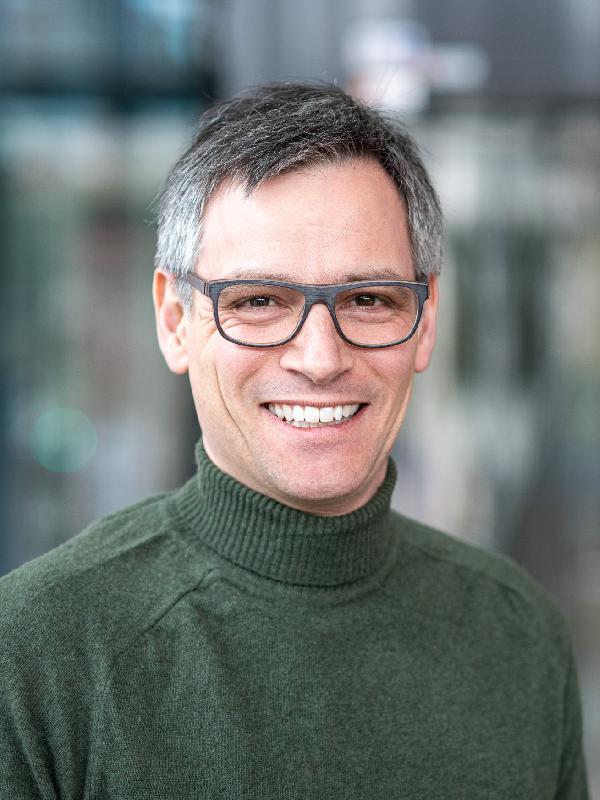
Prof. Dr. Jörg Hackermüller is a computational biologist with expertise in Omics data integration Toxicology Environmental risk assessment Non-coding RNA biology . He serves as Head of the Department of Computational Biology and Chemistry at the Helmholtz Centre for Environmental Research (UFZ) since 2024 and holds a Professorship at the Faculty of Mathematics and Computer Science at Leipzig University since 2021. His research focuses on Developing AI methods for chemical toxicity prediction Multi-omics integration for mechanistic toxicology Data standardization in environmental monitoring Non-coding RNAs as biomarkers in disease and toxicity and has produced 15+ recent publications spanning tools like multiGSEA and deepFPlearn+ . He collaborates with teams across UFZ Leipzig University Novartis Fraunhofer Institute and leads projects like InCeTo and SafePol , integrating exposome research with systems biology.
Hadiseh Alaeian is an Assistant Professor jointly appointed in the Departments of Electrical and Computer Engineering and Physics and Astronomy at Purdue University. She holds a Ph.D. in Electrical Engineering from Stanford University and previously served as a Postdoctoral Scholar/Group Leader at the University of Stuttgart in Germany. Education: Ph.D., Electrical Engineering, Stanford University Her research focuses on experimental and theoretical investigations in quantum photonics and cavity quantum electrodynamics (cavity QED). This work bridges fundamental quantum optics principles with applied photonics systems, exploring phenomena such as light-matter interactions at the quantum level. No specific awards, grants, or articles are listed in the provided text. For further details, consult her full profile or publications database.
Dr. Paolo Bergamo is a Senior Researcher at the Swiss Seismological Service (SED), ETH Zurich, since April 2016. He specializes in engineering seismology, focusing on earthquake site response models, ground-motion modeling, and seismic risk assessment. His work includes projects such as the Earthquake Risk Model Switzerland (ERM-CH23) and the SERA Horizon2020 initiative. He holds a PhD in Earth Sciences from Politecnico di Torino (2012) and advanced degrees in Environmental Engineering. Key research areas include soil amplification analysis, geophysical surveys, and the integration of empirical and computational methods for seismic hazard mitigation. His contributions span microzonation studies, site characterization using borehole and ambient vibration data, and the development of design-compatible waveforms for Swiss building codes. Education: PhD in Water and Territory Management Engineering, Politecnico di Torino (2012) MSc and BSc in Environmental Engineering, Politecnico di Torino (2008, 2005) Research Interests: Dr. Bergamo’s work emphasizes the collation of empirical ground-motion data with building codes, spatial modeling of soil amplification, and geophysical site characterization. He employs advanced techniques like surface-wave analysis, machine learning, and canonical correlation for seismic hazard assessment. Projects & Grants: ERM-CH23: Site response implementation and national seismic risk modeling SERA Project (Horizon2020): Site characterization indicators Swiss Federal Office for Environment-funded studies on microzonation and geophysical monitoring Labs & Teams: Active contributor to the Engineering Seismology group at SED, leading efforts in alpine valley seismic modeling and offshore site characterization in Lake Lucerne.
Professor Adrian Bell is Chair in the History of Finance at the ICMA Centre, Henley Business School, University of Reading, where he also serves as Associate Pro-Vice-Chancellor for Research (Prosperity and Resilience). He has been a faculty member since 1994 and leads a major AHRC-funded project, 'The People of 1381', examining the Peasants' Revolt through interdisciplinary economic and social lenses. His research integrates medieval financial systems with modern economic theory. His research interests span History of Finance , Medieval Economic History , Football Finance , Hundred Years War , and Higher Education Policy . He employs quantitative and archival methods to explore topics such as medieval real estate bubbles, credit systems, and pandemic economics. His work often bridges historical analysis with contemporary financial issues, such as the economic impact of football clubs on universities or lessons from the Black Death for modern crises. The 15 most recent publications reflect a strong trend in medieval financial systems , behavioral and market finance , and socioeconomic impacts of sports and pandemics . His articles frequently analyze long-term economic patterns, price formation, and institutional finance, combining history with econometrics. Key themes include market efficiency, credit innovation, and the social consequences of financial decisions. Professor Bell has received continuous research funding from prestigious bodies including the AHRC , ESRC , and Leverhulme Trust . Notable projects include: The People of 1381 (AHRC) The first real estate bubble in medieval England (Leverhulme Trust) The Soldier in Later Medieval England (AHRC) Advance contracts for wool supply (ESRC) Medieval foreign exchange and credit finance (ESRC) He has advised on numerous collaborative research initiatives and contributes actively to public discourse through media appearances, podcasts (e.g., The Unexpected World of Business), and blogs. He is a frequent expert commentator on financial history and football economics. His work is supported by research teams and digital platforms such as 1381.online and the medievalsoldier.org database. He also contributes to academic leadership as former Head of the ICMA Centre and Associate Dean (International).
Paavo Alku is a Professor of Speech Communication Technology at Aalto University's Department of Information and Communications Engineering. With academic credentials from Helsinki University of Technology (M.Sc. 1986, Lic.Tech. 1988, Dr.Sc.Tech. 1992), he has held academic positions at Asian Institute of Technology (1993) and University of Turku (1994-1999). Current research focuses on speech production analysis, parametric speech synthesis, and speech-based biomarkers for health monitoring Actively develops machine learning models for voice disorder detection and Parkinson's disease classification Principal investigator for projects including SymptoSonic (2024-2025) and HEART (2020-2024) His recent publications emphasize: Wavelet scattering for neurological speech analysis Fisher vector representations in voice disorder classification Machine learning approaches to vocal intensity categorization Respiratory aerosol emission during speech production Formant tracking through hybrid neural network/LP methods Awarded: IEEE Fellow (2020) Academy Professor (2015-2019) Multiple best student paper awards at ICASSP and Interspeech
Taiwo Amoo is an Assistant Professor of Business and Quantitative Methods at Brooklyn College, CUNY , where he has been employed since 1999. His academic career spans institutions including Baruch College (substitute and adjunct roles, 1993-1999) and Kaduna Polytechnic, Nigeria (1987-1988). With a PhD in Operations Research (University of Exeter, 1992) and a BSc in Statistics (University of Ibadan, 1986), Amoo specializes in operations management, statistical analysis, and educational innovation. Current position: Assistant Professor (Brooklyn College, CUNY) Key expertise: Operations Management, Queueing Theory, Rating Scale Methodology Technological proficiency: SAS, SPSS, Oracle Database Systems His research focuses on optimizing rating scale design , integrating technology in education , and interdisciplinary approaches to business programs . Publications from 2000-2002 examine biases in survey construction, humor as an educational tool, and the relevance of traditional disciplinary structures in modern academia. Notable awards include PSC CUNY Grants and recognition as the Best Statistics Student at the University of Ibadan. Current affiliations: Brooklyn College (CUNY) Past affiliations: Baruch College (CUNY), University of Exeter, Kaduna Polytechnic
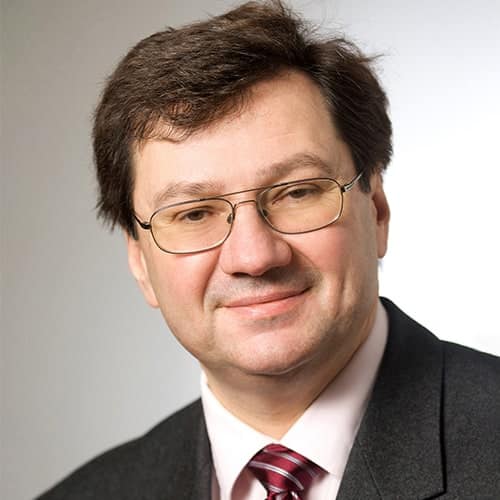
Alfred Taudes is a Full Professor at the Department of Information Systems and Operations, Institute for Production Management, Vienna University of Economics and Business (WU Vienna). He holds a doctoral degree and a Habilitation from WU Vienna in Business Administration and Management Information Systems, and a Magister degree from Vienna University. He has held assistant professorships at WU and visiting professorships at Augsburg, Münster, Essen, and Tsukuba University, Japan. He joined WU permanently in 1993 and served as head of the Department of Information Systems and Operations from 2010 to 2016. His research spans Operations and Supply Chain Management , Marketing Engineering , Knowledge Management , and the impact of Big Data and Blockchain on production systems. Using Complexity Science and Cryptoeconomics , he investigates digital production, integrated value chains, and market designs. He teaches undergraduate and graduate courses including Operations Strategy, Data Science, and IT seminars in WU’s International Supply Chain Master program, and has also taught at Japanese universities. His recent publications focus on blockchain privacy (e.g., CoinJoin analysis), CBDCs, MiCAR regulation, decentralized federated learning, and digital custody, reflecting a strong trend toward cryptoeconomics and blockchain-based systems in operations and finance. These works appear in top journals and conferences in information systems, security, and operations research. Cooperation Officer of the Year 2013/14 Distinguished Paper Award WI 2009 VHB Best Paper Award Nomination VHB Best Paper Award Dr. Wolfgang Houska - Recognition Award Alfred Taudes has coordinated major research projects such as the WWTF-project “Integrated Demand and Supply Chain Management” and the Special Research Area Adaptive Models in Economics and Management Science. He currently leads the research group on Cryptoeconomics at WU and chairs the scientific board of the Austrian Internet Offensive . His leadership extends to project management in initiatives like the Austrian Blockchain Center and research on decentralized finance and digital assets. He is actively involved in academic service, including organizing conferences like DEXA 2022, serving on editorial boards, and advising on research policy. His lab and research group focus on blockchain applications, digital transformation in operations, and the societal implications of big data.
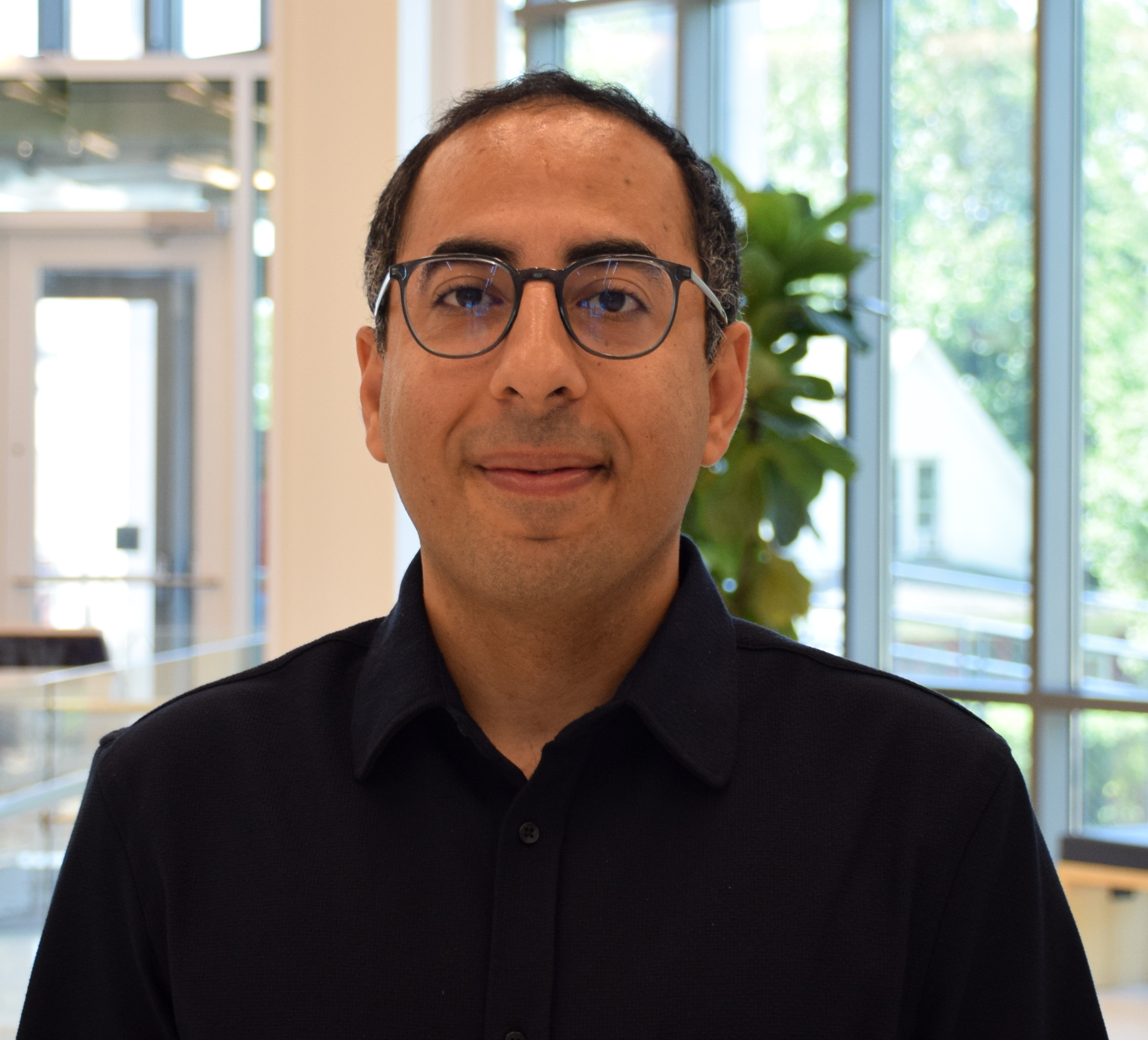
Mohsen Heidari is an Assistant Professor in the Department of Computer Science at Indiana University, Bloomington. He is affiliated with the IU Quantum Science and Engineering Center (QSEc) and the NSF Center for Science of Information (CSoI). He previously held positions as a Visiting Assistant Professor at Purdue University and as a Postdoctoral Research Associate at CSoI. Ph.D. in Electrical Engineering (2019) and M.Sc. in Applied Mathematics (2017) from the University of Michigan His research focuses span quantum computing, theoretical machine learning, and information theory. Key themes include: Quantum algorithm design and sample complexity Fourier-based learning frameworks Quantum-classical duality in learning problems Information-theoretic approaches to biological systems Article trends show a strong emphasis on quantum-classical learning intersections (6/15 papers), Fourier analysis applications (5/15), and information-theoretic foundations (12/15). Notable venues include NeurIPS, IEEE Transactions, and ISIT. He directs research involving: Quantum Neural Network development Quantum measurement simulation Quantum data compression techniques Quantum algorithm implementation constraints
New Jersey Institute of Technology (NJIT)United States
Xiaoning Ding is an Associate Professor in the Department of Computer Science at New Jersey Institute of Technology (NJIT). His research focuses on virtualization, multicore computing, cloud infrastructure optimization, and mobile systems. He leads projects addressing challenges in nested virtualization, memory management, and cache conflicts in distributed and cloud environments. Key research interests include optimizing task scheduling in cloud VMs, reducing TLB misses through huge page strategies, and mitigating interference in multi-tenant GPU clouds. His work on page placement mechanisms and dynamic page coalescing aims to enhance virtualized cloud performance. Ding has received federal funding, including an NSF grant for virtualization research in heterogeneous memory hierarchies (2016–2019). His research outputs span over 74 publications, with notable contributions in EuroSys, IEEE Transactions, and conferences like PACT. Media coverage highlights his studies on cloud computing and collaborative mobile systems, such as parking assignment algorithms. Beyond technical contributions, Ding advises students in interdisciplinary projects, exemplified by collaborations with Applied Math majors on cloud computing challenges.
Massachusetts Institute of TechnologyUnited States
Ibrahim Sabek is an Assistant Professor in the Thomas Lord Department of Computer Science at the University of Southern California (USC), with a courtesy appointment in the Dornsife Spatial Sciences Institute. He leads the Next-generation Data-Intensive Systems Group (NexDIG) and previously held postdoctoral positions at MIT's Data Systems Group and an NSF/CRA Computing Innovation Fellowship. He earned his PhD in computer science from the University of Minnesota, Twin Cities in 2020, with recognition for his dissertation's excellence. His research focuses on integrating machine learning and quantum computing into data management systems, emphasizing scalable systems design, algorithms, and data structures. Notable awards include the Google Systems and ML Junior Faculty Award (2025), the NSF/CRA Computing Innovation Fellowship, and the Best Demo Award at ACM SIGSPATIAL 2024. His work spans quantum-augmented database engines, learned query optimizers, and causal inference for system debugging. He actively serves on program committees for top conferences like VLDB and SIGMOD, and organizes workshops such as Q-Data. Current courses include CSCI 543 on modern data management, emphasizing prerequisites like CSCI-485/585. Key contributions include frameworks like LIMAO, TurboReg, and Flash, addressing challenges in spatial probabilistic modeling and scalable regression. His research bridges machine learning, quantum computing, and traditional database systems, with applications in spatial data analysis and system optimization.
Emmanuelle Picard is a Professor of Contemporary History at the École Normale Supérieure de Lyon (ENS de Lyon), affiliated with the UMR Triangle research unit since 2018. She directs the Laboratoire de l’Éducation (UAR 3773) and holds associate membership in the CIRST (Université du Québec à Montréal). Her research focuses on the history of higher education, academic professions, and assessment systems, with particular attention to institutional differentiation and comparative educational policy. Administratively, she has served as Director of Social Sciences at ENS de Lyon (2019–2022), Master’s program coordinator (2016–2019), and chair of the RESUP network since 2018. She co-leads the HELoïse network for academic databases and chairs the editorial board of Lectures . Her work bridges historical inquiry with contemporary educational challenges, as seen in her 2020 HDR on French academic professions and recent collaborations analyzing workforce dynamics in French and UK universities. Key contributions include studies on university governance, the evolution of academic evaluation systems, and the socio-historical dynamics of educational inequality. Her interdisciplinary approach integrates prosopography, archival research, and policy analysis, reflected in edited volumes like Examinations, Grades and Diplomas (2023) and articles in Comparative Education and Histoire de l’Éducation .
Tarmo Lipping is a Professor in the Department of Computer Science and Engineering at the Faculty of Information Technology and Electrical Engineering, University of Oulu. His work bridges computing sciences with biomedical engineering, environmental modelling, and data-driven societal applications. Doctor of Science (Technology), Information Technology – Awarded 14 Feb 2001 Master of Science (Technology), Information Technology – Awarded 10 Sept 1993 His research focuses on electroencephalography (EEG) , mental workload assessment , depth of anesthesia monitoring , and machine learning applications in healthcare and human-computer interaction. He also contributes to environmental informatics , particularly in land uplift modelling and radionuclide transport , aligning with UN Sustainable Development Goals. Recent publications highlight trends in transformer networks for EEG analysis , wearable HCI systems , data-driven food safety , and participatory municipal governance . His work integrates deep learning, signal processing, and real-world deployment. Scientific awards include: CIMO opettajavaihto (2017) Lipping has supervised numerous master’s students and served as an examiner in diverse topics including data vault modelling , telecom revenue estimation , and EEG hyperscanning . He has evaluated funding applications, acted as a journal reviewer (65 times), and contributed to editorial work. His activities reflect strong engagement in academic service and interdisciplinary research mentorship. He has contributed datasets on Fennoscandian land uplift , lake isolation , and archaeological shorelines to PANGAEA, supporting open science in geosciences and environmental history.
University of California, San FranciscoUnited States
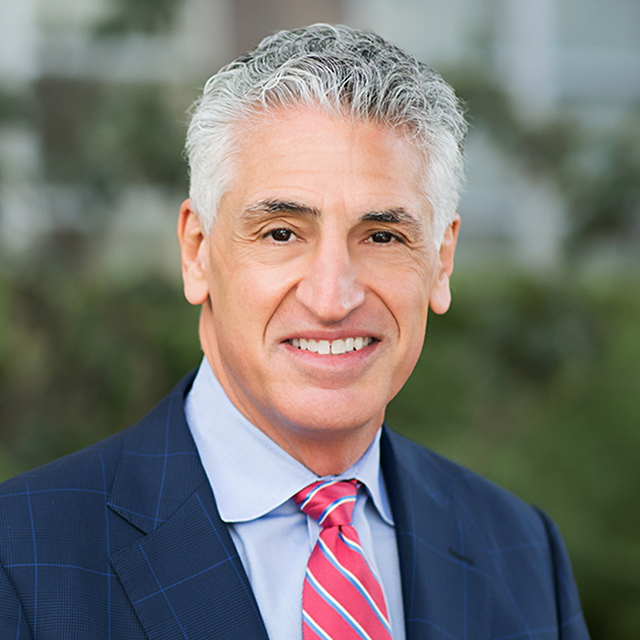
Dr. Michael S. Conte is Professor of Surgery at the University of California, San Francisco (UCSF) School of Medicine, where he serves as Co-director of the UCSF Heart & Vascular Center and Chief of the Division of Vascular & Endovascular Surgery. Specializing in vascular surgery, Dr. Conte focuses on diseases of the aorta, aneurysms, carotid artery disease, peripheral artery disease (PAD), and diabetic vascular disease, performing complex revascularization procedures to preserve limb function and prevent amputations. Dr. Conte received his medical degree from Albert Einstein College of Medicine in 1986, completed surgical residency at Weill Cornell Medicine, and vascular surgery training at Brigham and Women's Hospital and Harvard Medical School. His clinical and research work has significantly advanced the field of vascular surgery, particularly in chronic limb-threatening ischemia (CLTI) management. Dr. Conte's research interests center on vascular interventions, limb preservation strategies, diabetic foot complications, and vascular disease outcomes. He led the largest multicenter clinical trial of leg bypass surgery for severe PAD and has been instrumental in the BEST-CLI trial comparing surgical versus endovascular approaches for CLTI. His work investigates mechanisms of vascular injury response, angioplasty and bypass failure, and methods to identify patients at risk for poor outcomes. Analysis of Dr. Conte's recent publications (2023-2025) reveals a strong emphasis on CLTI management, diabetic foot care, health disparities in vascular treatment, and quality improvement in vascular surgery. His research spans clinical trials, systematic reviews, guideline development, and health services research, demonstrating consistent contributions to evidence-based vascular care. American Heart Association 2019 Peripheral Vascular Disease Distinguished Achievement Award San Francisco Magazine 2016 Bay Area Top Doctors Best Doctors, Inc. 2015 Best Doctors in America New York Weill Cornell Medical Center Alumni Council 2006 Distinguished Achievement Award NHLBI/Lifeline 1999 Mentored Clinical Scientist Development Award Dr. Conte has secured significant NIH funding for research on diabetic foot care and vascular interventions, serving as Principal Investigator on multiple grants including the UCSF Diabetic Foot Clinical Research Unit (NIH U01DK119100) and research on specialized lipid mediators in vascular injury (NIH R01HL119508). He has established multidisciplinary 'toe and flow' programs at UCSF focused on limb preservation for patients with diabetic foot complications. As an active member of the Society for Vascular Surgery and Society of University Surgeons, Dr. Conte serves on editorial boards for leading vascular journals and has contributed to clinical practice guidelines. His clinical practice emphasizes complex revascularization procedures, and he is board certified in Vascular Surgery by the American Board of Surgery.
Lusophone University of Humanities and TechnologiesPortugal
Paulo Mendes Pinto is a Researcher at Lusófona University , where he coordinates the Science of Religions area and leads the REC-XXI project on Religions, Education, and Citizenship. He has directed the Master’s and Bachelor’s programs in Religious Studies and serves as a Director of Advanced Islamic Leadership Training and Editorial Director of Lusófona University’s publications. His work bridges interreligious dialogue , state-religion relations , and cultural heritage projects with institutions like the Presidency of the Republic Museum and Calouste Gulbenkian Foundation . Education: PhD in Cultural Studies (University of Aveiro, 2021), Master’s in Pre-Classical History and Culture (University of Lisbon, 2001), Bachelor’s in History (University of Lisbon, 1997). His research focuses on religious freedom in Portugal, Jewish heritage , Islamic patrimony , and education for sustainability in museums and libraries. Through projects like MUBIESUS and Database of Islamic Heritage in Portugal , he explores intersections of critical pedagogy , environmental justice , and cultural diversity . His recent articles analyze symbolism in religious rituals , urban spirituality , and political uses of religious discourse . He is actively involved in public science initiatives, collaborating with the European Academy of Religions (founded in 2017) and the World Parliament of Religions (Ambassador, 2015–2018). No formal awards are listed, but his leadership in projects like the Mapping of the Neves e Sousa Collection and Community Engagement Against Radicalization underscores his institutional impact.
Samuel Levy is an Assistant Professor of Business Administration in the Marketing Area at the University of Virginia Darden School of Business. He teaches the marketing core course for the full-time MBA program and holds a B.S. in Economics from École Normale Supérieure Paris-Saclay, an M.S. in Marketing from Tilburg University, and a Ph.D. in Marketing from Carnegie Mellon University. His research focuses on customer analytics , data fusion , and privacy-preserving methodologies in marketing. He employs Bayesian econometrics , probabilistic machine learning , and deep generative models to address challenges in brand affinity, CRM optimization, and decision-making complexity. His work includes innovations like digital marketing twins for counterfactual analysis and privacy-preserving data fusion techniques for telecom industries. While no scientific awards or student advisement details are explicitly mentioned, his methodological contributions in Gaussian processes and Bayesian nonparametrics advance choice modeling and charitable giving research. He actively collaborates with scholars like Longxiu Tian and Alan Montgomery on high-impact projects.