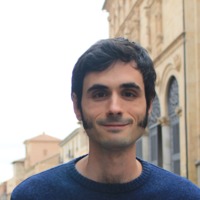
Elvira Patricia Pino Blanco is a Professor in the Department of Computer Science at the Barcelona East School of Engineering, Polytechnic University of Catalonia (UPC). She is a member of the ALBCOM research group (Algorithms, Bioinformatics, Complexity and Formal Methods) and has an extensive publication record spanning over two decades. Her research interests focus on formal methods in computer science, particularly in graph theory, logic programming, and database systems. She has made significant contributions to navigational logics for graphical structures, graph databases, and model synchronization using triple graph grammars. Her work bridges theoretical foundations with practical applications in software engineering and data management. Her publication trends show a consistent focus on graph-based approaches to computational problems, with recent work emphasizing logical approaches to graph databases and navigational query languages. She has published in high-impact venues including Journal of Logical and Algebraic Methods in Programming, Theoretical Computer Science, and various international conferences. Professor Pino Blanco has been involved in numerous competitive R&D projects related to algorithmics, bioinformatics, and formal methods. Her work demonstrates interdisciplinary connections between theoretical computer science and practical applications in data management and software engineering. She is affiliated with the ALBCOM research group which focuses on algorithmics, bioinformatics, complexity theory, and formal methods. This group represents a vibrant research community working at the intersection of theoretical computer science and practical applications.
Rodrigo Santamaría Vicente is an Associate Professor in the Department of Computer Science and Automation within the Faculty of Sciences at the University of Salamanca. His academic career centers on bridging computer science with biological research through advanced data analysis and visualization techniques. He serves as director of the Diploma of Specialization in Bioinformatics and Computational Genomics, demonstrating leadership in specialized academic programming. Dr. Santamaría earned his PhD in Computer Science from the University of Salamanca in 2009 with his thesis "Visual analysis of gene expression data by means of biclustering," supervised by Dr. Luis Antonio Miguel Quintales and Dr. Roberto Therón Sánchez. His academic journey began with an M.S. degree in Computer Science from the same institution. His research primarily focuses on Bioinformatics and Information Visualization, with particular emphasis on integrating diverse data sources, analysis algorithms, and visual representations to enhance understanding of complex biological problems. His work spans multiple subdomains including gene expression analysis, biclustering algorithms, phylogenetic tree visualization, and collaborative tagging systems. Santamaría's research group affiliations include both the BIOINFORMÁTICA research group and the CaUSAL (Cultura Académica, Patrimonio y Memoria Social) research group at the Institute of Functional Biology and Genomics. His publication record reveals a consistent trajectory of scholarly output since 2006, with recent work showing increased focus on biological applications of computational methods. His most significant contributions appear in the integration of visualization techniques with bioinformatics analysis, particularly through tools like BicOverlapper and Voronto that facilitate interactive exploration of complex biological data. The evolution of his work demonstrates progression from foundational algorithm development to increasingly sophisticated applications in systems biology. Author of the book "How Machines Organize: An Introduction to Distributed Systems" Director of the Diploma of Specialization in Bioinformatics and Computational Genomics Active contributor to R programming ecosystem with the biclust package As an educator, Santamaría teaches across multiple programs including the Master's Degree in Computer Engineering and previously taught Bioinformatics for the Biotechnology degree program. His teaching portfolio spans Bioinformatics (from both computer science and biology perspectives), Distributed Systems, and Service-Oriented Architectures. He maintains an active research laboratory focused on developing visualization tools for biological data analysis, with current projects emphasizing integration of gene expression data with biological ontologies and advanced biclustering techniques.
María Remedios Fernández Ruiz is an active Assistant Professor in the Department of Translation and Interpreting at the University of Malaga, where she contributes to both teaching and research in literary translation and postcolonial studies. Her academic career demonstrates a strong commitment to the study of African literature and its reception within Spanish contexts. Dr. Fernández Ruiz's research interests focus on postcolonial literature, with particular expertise in African literary traditions (both Anglophone and Francophone), translation theory, and comparative literature. Her work often bridges theoretical frameworks with practical applications, as evidenced by her development of the BDAFRICA database for tracking African postcolonial literature published in Spain. Her publication record shows consistent scholarly output across multiple domains, with recent work examining postcolonial literary taxonomies, pandemic-era educational adaptations, and the quantitative analysis of literary reception patterns. The trajectory of her research demonstrates increasing sophistication in methodological approaches, moving from theoretical literary analysis to data-driven bibliometric studies. As an active translator, she has brought significant English-language literary works to Spanish readers, including texts by Amy Liptrot and Dambudzo Marechera, demonstrating her practical engagement with translation beyond theoretical scholarship.
Elisa del Pilar Rodríguez Seguel serves as a Permanent Contract Professor in the Department of Cell Biology at the University of Seville, contributing to academic instruction and research within Spain's prominent public university system. Her position reflects a permanent, full-time faculty appointment with ongoing institutional commitment. Her scholarly work centers on foundational life sciences disciplines: Cell Biology (core focus) Molecular Biology Genetics Biochemistry Developmental Biology Cellular Physiology Professor Rodríguez Seguel maintains an active research profile documented through her ORCID registry (0000-0002-4950-8556), though specific publication trends and collaborative networks remain unquantified in available public records. Current project details may be accessible via the University of Seville's institutional research databases.
Iker García González serves as a Lecturer at Pompeu Fabra University within the School of International Business. He teaches the Programming and Big Data Analysis course as part of the Bachelor's Degree in International Business and Marketing program, a 4-ECTS elective course delivered in English. His academic expertise centers on practical data science applications for business contexts with specialized knowledge in: Programming languages: Python, R, SQL Data visualization tools: Tableau, Power BI, Metabase Database systems: MySQL Operating systems: Linux García González combines his academic role with professional experience as a Data Analyst at Cint, where he manages and analyzes large datasets while collaborating across departments to improve data accessibility. His teaching methodology emphasizes hands-on learning with real-world business datasets from commerce, logistics, and consumer preferences domains, preparing students for data-driven decision making in international business environments.
Juan Manuel Corchado Rodríguez is a Full Professor with Chair at the University of Salamanca, Spain, where he has held numerous leadership positions including Vice President for Research and Technology Transfer (2013-2017), Director of the Science Park, Director of the Doctoral School, and Dean of the Faculty of Science (elected twice). He belongs to the Department of Computer Science and Automation and leads the BISITE Research Group focused on Bioinformatics, Intelligent Computing Systems and Educational Technology. His educational background includes a PhD in Computer Sciences from the University of Salamanca (1998) with thesis titled "Multi-agent systems based on hybrid artificial intelligence algorithms for real-time predictions and complex series" supervised by Dr. José Rafael García-Bermejo Giner, and a second PhD in Artificial Intelligence from the University of the West of Scotland. Corchado's research spans multiple cutting-edge domains in computer science, with primary focus on multi-agent systems, artificial intelligence, and ambient intelligence. His work integrates these technologies to solve real-world problems in smart cities, healthcare monitoring, energy management, and accessibility. He has pioneered approaches that combine wireless sensor networks with intelligent agents to create context-aware systems that can adapt to user needs and environmental conditions. His research particularly emphasizes practical implementations that bridge theoretical advances with tangible applications. Analysis of his recent publications reveals a consistent trajectory toward increasingly integrated intelligent systems. His work has evolved from foundational multi-agent architectures like PANGEA to sophisticated applications in smart territories, energy management, and healthcare. A notable trend is the convergence of multiple AI techniques (neural networks, case-based reasoning, organizational models) within single frameworks. His research increasingly addresses societal challenges through technological solutions, particularly in sustainable urban development and assistive technologies for vulnerable populations. Corchado directs the BISITE Research Group (Bioinformatics, Intelligent Computing Systems and Educational Technology), which operates within multiple university institutes including the University Research Institute in Animation Art and Technology, the University Institute for Science and Technology Studies, and the Biomedical Research Institute of Salamanca. His team develops practical applications of AI and multi-agent systems across various domains, with particular emphasis on creating technologies that improve quality of life and operational efficiency.
María Belén Pérez Lancho is a Full Professor in the Department of Computer Science and Automation at the University of Salamanca, Spain. With over 25 years of academic experience since completing her PhD in 1995, she maintains active affiliations with multiple research groups including BISITE (Bioinformatics, Intelligent Computing Systems and Educational Technology), CaUSAL (Academic Culture, Heritage and Social Memory), and Process Supervision and Control. Dr. Pérez Lancho earned her doctoral degree from the University of Salamanca with her thesis "Integrated process control system: a practical approach" supervised by Dr. Eladio Sanz García. Her academic foundation in systems engineering and automation has evolved into diverse research applications across multiple domains. Her research program demonstrates remarkable breadth while maintaining technical coherence. She has pioneered context-aware multiagent systems for home care environments, developing architectures like HoCa and HoCCAC that monitor patients and optimize task scheduling. In environmental science, she created hybrid intelligent systems for forest fire prediction using Case-Based Reasoning with topology-preserving algorithms. More recently, she has addressed cybersecurity challenges in educational technology through two-factor authentication systems. Her work consistently bridges theoretical computer science with practical implementations in real-world settings. Analysis of her publication trajectory reveals a consistent focus on adaptive intelligent systems that respond to environmental changes. Her earliest work established foundations in systems engineering, which evolved into sophisticated multi-agent applications across healthcare, environmental monitoring, and security domains. The most recent publications continue this trajectory while addressing contemporary challenges in educational technology security. Dr. Pérez Lancho maintains extensive collaborative relationships, particularly with Juan M. Corchado at the University of Salamanca, as evidenced by numerous co-authored publications. Her research has been implemented in actual home care environments and environmental monitoring systems, demonstrating the practical impact of her work. Her research infrastructure includes: BISITE group focusing on intelligent computing systems and educational technology CaUSAL group examining academic culture and heritage Process Supervision and Control group applying her foundational work to industrial contexts These affiliations support her interdisciplinary approach to solving complex problems through computational methods.
Isabel Cristina Alfonzo De Tovar serves as a Professor in the Department of Hispanic, Classical Philology, and Arabic and Oriental Studies at the University of Las Palmas de Gran Canaria. She is an active member of GIR IATEXT (Division of Corpus Studies and Applied Linguistics) and the IU of Textual Analysis and Applications research institute. Her research specializes in historical linguistic analysis of Spanish lexicon, particularly focusing on: Evolution of Americanisms in Spanish and English Pre-1700 textual documentation of American language contact Corpus-based diachronic semantic studies Linguistic variation in colonial-era texts Dr. Alfonzo De Tovar contributes to significant national research initiatives examining lexical transfers between Spanish and English in early American documentation. Her current projects demonstrate sustained funding from Spain's Ministry of Science, Innovation and Universities for comprehensive database development in historical linguistics. As part of GIR IATEXT research group, she collaborates within specialized teams focusing on corpus methodology and applied textual analysis, contributing to the university's leadership in Hispanic philological research.
Daniel Ariza Lara serves as an Associate Professor of Health Sciences within the Department of Nursing at the University of Las Palmas de Gran Canaria. His academic profile is registered under the Branch of Knowledge: Health Sciences, with a specific focus in the CNEAI Field of Biomedical Sciences. His research centers on nursing science and biomedical applications within health contexts. The institutional affiliation indicates active engagement in the academic framework of the university's health sciences sector, though specific research methodologies or theoretical frameworks are not detailed in the available profile. Professional recognition includes an ORCID identifier (0000-0002-0367-4313) and ResearcherID (M-1908-2018), establishing his scholarly identity in academic databases. No documented graduate student supervision, research grants, or collaborative projects appear in the profile, consistent with the 'No data' status for Theses, Projects, and Fundings sections. Similarly, no laboratory affiliations or research teams are specified.
Josep Manuel Rodríguez-Gairín is a Professor at the University of Barcelona's Faculty of Information and Audiovisual Media, where he coordinates computer classrooms and provides technological advisory services. He holds a doctorate in Documentation from the same institution and has spearheaded major projects including the Matrix of Information for the Evaluation of Magazines (MIAR), International Registry of Authors-Links to Identify Scientists (IraLIS), and Directory of Experts in Information Treatment (EXIT). His research concentrates on open access policies, bibliometric analysis, scholarly communication infrastructure, and digital repository development. Rodríguez-Gairín founded Kronosdoc , a consultancy specializing in document management systems, and contributes to several academic initiatives including the E-LIS repository's technical council and the research center Ciepi. Recent publications (2011-2024) demonstrate sustained focus on journal evaluation methodologies, open access compliance, predatory publishing detection, and bibliometric tools. His work consistently bridges theoretical frameworks with practical applications in library and information science infrastructure. Awards: III Premio Álvaro Pérez-Ugena a la Comunicación de la Ciencia (2013) for the MIAR project He maintains active involvement in research teams including the Open Access validator MELIBEA and collaborates internationally on projects like ODiSEA (International Registry on Research Data). His technological initiatives include developing web services for interlibrary loan systems and bibliographic style creation tools.
Marta Somoza Fernández is a Professor in the Department of Library Science, Documentation and Audiovisual Communication at the Faculty of Information and Audiovisual Media, University of Barcelona. With over two decades of academic experience since 1999, she has established herself as a prominent figure in information science and library studies. Dr. Somoza Fernández holds a degree in Contemporary History (1989), Cultural Anthropology (1995), and a doctorate in Documentation (2009), all from the University of Barcelona. Her academic journey reflects a deep commitment to the evolution of information management and scholarly communication. Her research focuses on documentary databases, information retrieval systems, bibliometric studies, and user training methodologies. She has pioneered approaches to evaluating interactive tutorials developed by academic libraries, analyzing journal visibility in emerging citation indexes, and identifying predatory journals in bibliographic databases. Her work bridges theoretical frameworks with practical applications in library science. Analysis of her recent publications reveals a consistent focus on bibliometric evaluation of scholarly communication, particularly regarding Spanish journals in international databases. Her research demonstrates growing interest in journal evaluation systems like MIAR (Matrix for Information and Journal Evaluation) and the Emerging Sources Citation Index (ESCI). She has also maintained a strong commitment to information literacy through her studies on interactive training materials for academic libraries. Dr. Somoza Fernández has participated in significant research projects including "i-VIU: Grup d'estudis mètrics sobre el valor i ús d'informació" (2005-2014) and studies on the identification and evaluation of journals in Spanish humanities and social sciences research. Her work has been supported by institutions including the Department of Universities, Research and Information Society of the Catalan Government (DURSI) and the Ministry of Education and Science. Her teaching portfolio spans multiple disciplines within information science, including information sources for scientific research, nursing research methodology, user support and training, and communication techniques. She has developed specialized courses on web tutorials, information retrieval in scientific databases, and bibliography management tools.
Andreu Sulé Duesa is a Professor and researcher at the Faculty of Information and Audiovisual Media of the University of Barcelona, where he served as coordinator of the Master's in Digital Content Management from 2017 to 2023. He holds a Doctorate in Information and Communication and is actively involved in teaching and research activities. His institutional affiliation includes the Information, Communication and Culture Research Center at the University of Barcelona, where he collaborates on various research projects as an integral member. Education Doctor in Information and Communication Research Interests Professor Sulé Duesa's primary research focuses on knowledge organization , information representation , database design , and information retrieval . He has developed a significant research line dedicated to prison libraries, examining their organization, standards, and cultural impact within correctional facilities. His work bridges theoretical frameworks with practical applications in library science and information management. His research demonstrates a consistent commitment to improving information access in specialized contexts, particularly within prison environments. He has contributed to establishing guidelines for prison libraries in Catalonia and has conducted comparative studies on international prison library standards. His work also extends to metadata standards, digital libraries, and the application of technology in library services. Publication Trends Professor Sulé Duesa's recent publications (2020-2024) reveal a strong focus on two interconnected research trajectories. His work on prison libraries has evolved from establishing basic guidelines to conducting bibliometric analyses of research trends in this specialized field. Simultaneously, he has maintained active research in knowledge organization systems, particularly examining their application in the era of big data and massive information environments. His publications frequently address practical challenges in library science, including metadata understanding among LIS students, discovery tools in academic libraries, and copyright literacy. Professional Activities As Center PAT coordinator at the University of Barcelona's Faculty of Information and Audiovisual Media, Professor Sulé Duesa plays a key role in academic administration. His teaching responsibilities have included coordinating the Master's in Digital Content Management for six years (2017-2023), reflecting his expertise in digital information management. He is an active member of the Information, Communication and Culture Research Center at the University of Barcelona, contributing to multiple research projects. Coordinator, Master's in Digital Content Management (2017-2023) Center PAT coordinator, Faculty of Information and Audiovisual Media Member, Information, Communication and Culture Research Center Research Groups and Collaborations Professor Sulé Duesa maintains active collaborations with researchers across Spain and internationally, particularly in studies examining European Union research funding in social sciences and humanities. His work on prison libraries has fostered connections with correctional facility professionals and public library systems in Catalonia. He participates in professional conferences including ISKO Spain-Portugal meetings and Digital Humanities conferences, demonstrating engagement with both traditional library science and emerging digital scholarship communities.