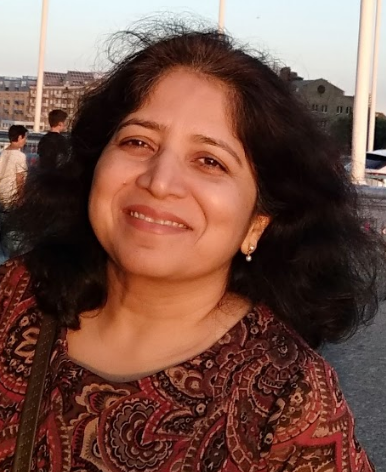
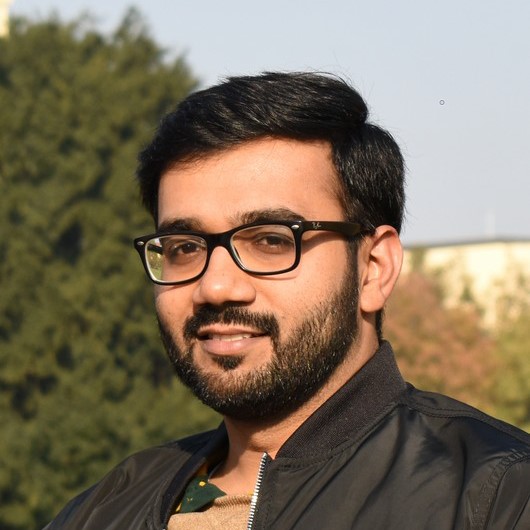
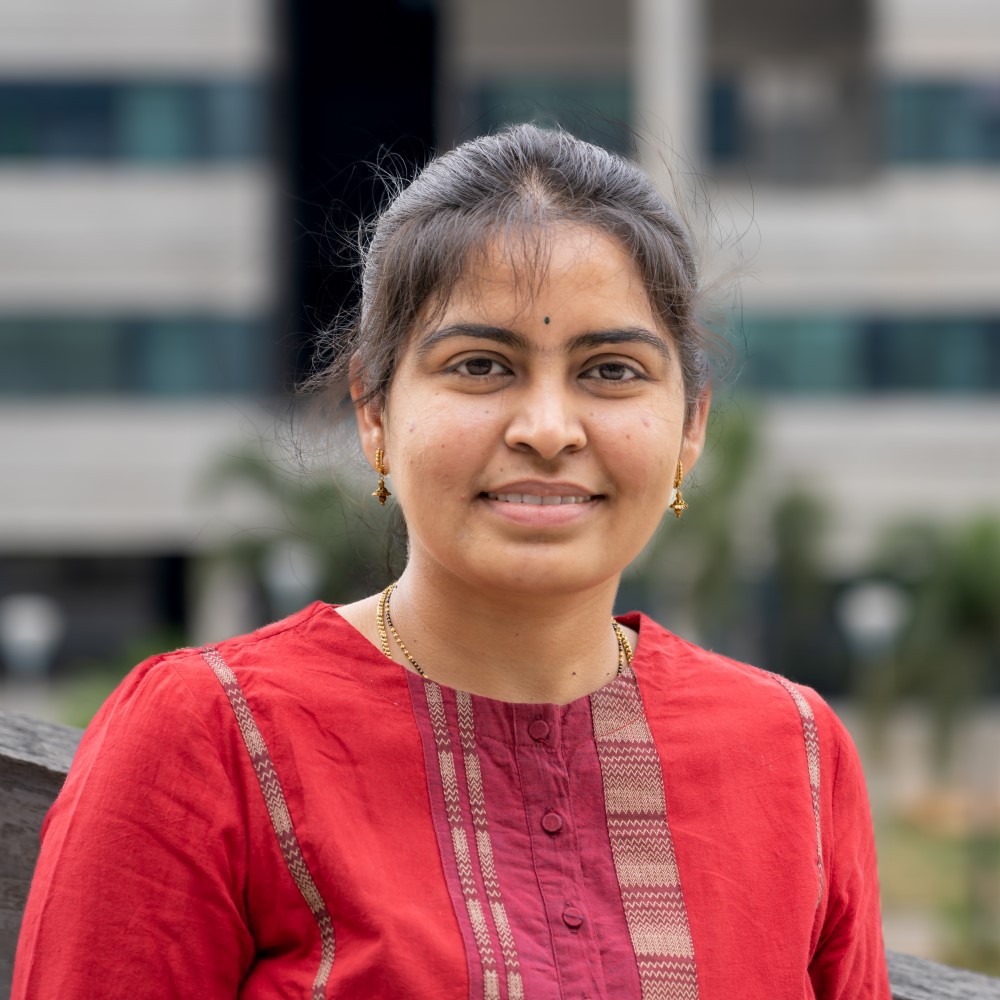
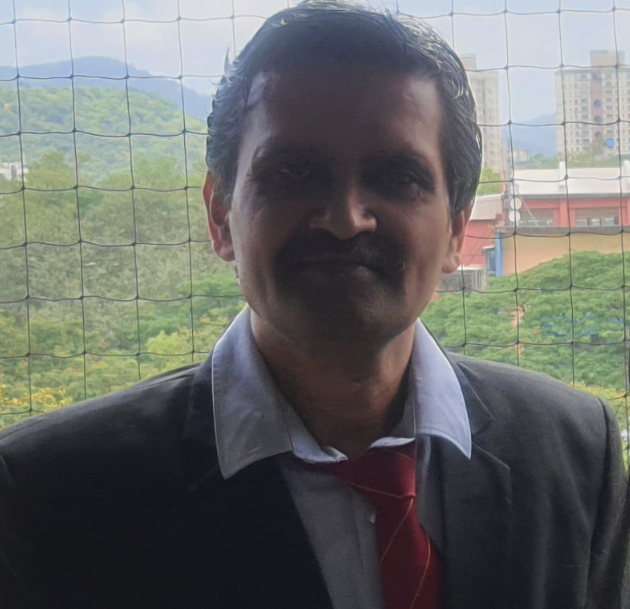
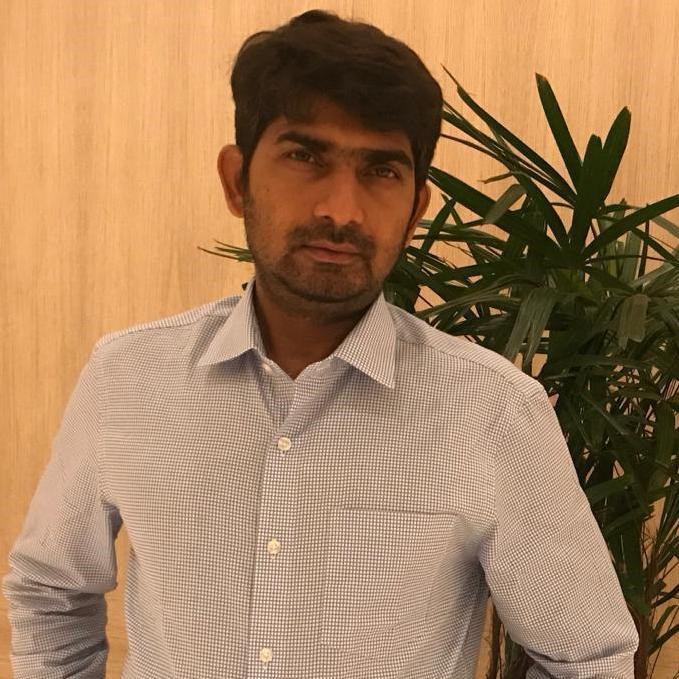
Sunita Sarawagi is a Professor at Computer Science and Engineering , IIT Bombay, and a member of AI Labs@CSE . She is also associated with the Center for Machine Intelligence and Data Science (CMInDS), which she founded in 2020. Education: PhD in Computer Science from UC Berkeley (Thesis: Query Processing in Tertiary Memory Databases), BTech in Computer Science from IIT Kharagpur Research Interests span machine learning , data analytics , graphical models , and structured learning , with applications in text segmentation, sequence modeling, domain adaptation, and human-in-the-loop systems. Her publications reveal a strong focus on integrating data mining with database systems , temporal data analysis , and information extraction using probabilistic methods. Professional Activities include serving on the IEEE John Von Neumann Medal committee (2017-), VLDB 2011 Research Track Co-chair , and multiple program committee roles at top conferences like ICML, KDD, and SIGMOD. Labs & Teams : Leads the SS Lab , a research group focused on probabilistic graphical models, sequence modeling, and data integration techniques.
Soumya Dutta is an Assistant Professor in the Department of Computer Science and Engineering at the Indian Institute of Technology Kanpur (IITK), where he leads the INSIGHT: Intelligent Scientific and Visual Computing of Big Data Research Group. He joined IIT Kanpur in October 2022 after working as a Scientist II at Los Alamos National Laboratory (LANL) from July 2019 to August 2022, and previously as a Postdoctoral Research Associate at LANL from June 2018 to July 2019. His educational background includes a Ph.D. and M.S. in Computer Science and Engineering from The Ohio State University (2011-2018), where he was part of the GRAVITY research group, and a B.Tech. in Electronics and Communication Engineering from West Bengal University of Technology, India (2005-2009). Research Interests: Dr. Dutta's research focuses on the intersection of machine learning, visual computing, big data, and high-performance computing. His primary research areas include Machine Learning for Visual Computing and Image Analysis, Big Data Visualization and Analytics, Data Science and HPC, Machine Learning for Scientific Computing, and Explainability and Interpretability of AI Models. His work addresses various big data characteristics including the 5 Vs: Volume, Velocity, Variety, Veracity, and Value. He develops techniques that make complex machine learning models more interpretable and explainable, enabling their effective adoption in real-life applications across scientific domains, social media, IoT, healthcare, and industry applications. Dr. Dutta's research group has secured multiple funded projects including: DAVi: An Intelligent Data Analytics and Visualization Framework (funded by ISRO), Intelligent Visual Computing of Extreme-scale Data for Accelerating Scientific Discovery (IIT Kanpur Initiation Grant), Enabling Interactive Big Data Analytics and Visualization at Exascale (SERB), Development of AI-Enabled National Portal for Efficient Search of Missing People (C3iHub), and Proactive and Generalized Deepfake Defense Mechanisms (C3iHub). Best Reviewer, Honorary Mention Award for IEEE Transactions on Visualization & Computer Graphics (TVCG), 2021 Best Paper Award at ISAV 2021, co-located with Supercomputing (SC) LAAP Award at Los Alamos National Laboratory, 2021 Best Paper Award at TopoInVis 2019 Best Paper Award at ISAV 2018, co-located with Supercomputing (SC) Best Poster Award in 12th Annual CSE Student Poster Exhibition, The Ohio State University, 2018 Best Poster Award in 11th Annual CSE Student Poster Exhibition, The Ohio State University, 2017 Best Paper Honorable Mention Award at IEEE Visualization Conference (IEEE VIS) 2016 Dr. Dutta actively mentors a large group of students including Ph.D., M.Tech., and B.Tech. students. His current Ph.D. students include Shanu Saklani, Sankhadeep Bhowmick, Ananya Chaturvedi, Arpita Santra, Anubhav Dixit (co-supervised), and Robin Shah. He has supervised numerous M.Tech. students with thesis topics ranging from uncertainty-aware neural networks to deepfake detection. Dr. Dutta currently teaches courses including CS360 - Introduction to Computer Graphics and CS661 - Big Data Visual Analytics. The INSIGHT research group collaborates internationally with researchers from Meta, Oak Ridge National Laboratory, and National Taiwan Normal University. The group's work focuses on building machine learning and data science-based solutions to analyze large-scale multifaceted data in a scalable way, enabling interactive and interpretable analytics of complex data from scientific simulations, social media, IoT, healthcare, and other application domains.
Dr. Arnab Bhattacharya is a Professor in the Department of Computer Science and Engineering at the Indian Institute of Technology (IIT) Kanpur since December 2020. He previously served as Associate Professor (2014–2020) and Assistant Professor (2007–2014) at IIT Kanpur. Education: PhD in Computer Science (2007), University of California, Santa Barbara MS in Computer Science (2007), University of California, Santa Barbara Bachelor of Computer Science and Engineering (2001), Jadavpur University Research Focus spans Databases , Data Mining , Information Retrieval , and Artificial Intelligence . His work emphasizes graph analytics , skyline queries , probabilistic data , and knowledge graph management . Article Trends reveal expertise in graph neural networks , trajectory-aware systems , statistical significance in databases , and legal/medical data mining . His methodologies often integrate chi-square statistics , approximate indexing , and provenance tracking . Scientific Awards: IBM Faculty Research Award Yahoo! Faculty Research and Engagement Program Award Best Paper at COMAD 2011 Best Student Paper at COMAD 2010 Top-Five Student Paper at ICDM 2005 ICDM Student Travel Award sponsored by IBM Contact: Office RM 409, Department of Computer Science and Engineering, IIT Kanpur Email: arnabb@iitk.ac.in | Phone: +91-512-259-7650
Nishchal K. Verma is a Professor at the Department of Electrical Engineering, Indian Institute of Technology Kanpur. He holds a PhD from IIT Delhi (2007), an M.Tech from IIT Roorkee (2003), and a B.Tech from DEI Agra (1996). His postdoctoral research includes work at the University of Tennessee (2009) and Louisiana Tech University (2008). Specialization: Fuzzy Logic, Health Monitoring, Intelligent Informatics Current Research Interests: Intelligent Data Mining, Computer Vision, Smart Grids, Biomedical Applications His research focuses on Fuzzy Systems , Machine Learning , and Health Monitoring with applications to power systems, biomedical data, and wireless sensor networks. He has developed technologies like the Transducers and Instrumentation Virtual Laboratory and Brain Computer Interface Laboratory , emphasizing predictive modeling and fault diagnosis. Key sponsored projects include DST-funded Fuzzy Rule-Based Image Prediction and DRDO-supported Visual Surveillance Systems . His work spans 15+ years of interdisciplinary publications in journals and conferences. Scientific Awards : Devendra Shukla Young Faculty Research Fellowship (2013-16) He has served as Associate Editor for journals and Chairman of IEEE chapters, with leadership roles in academic administration at IIT Kanpur.
Indian Institute of Technology Hyderabad (IITH)India
Vikas Krishnamurthy is an Assistant Professor in the Department of Mathematics at Indian Institute of Technology Hyderabad. His research focuses on applied mathematics , particularly vortex dynamics , applied complex analysis , and mathematical physics . He obtained his PhD from Imperial College London and held postdoctoral positions at Federal University of Pernambuco and University of Vienna. Current Role: Assistant Professor, IIT Hyderabad Education: PhD (Imperial College London), Postdoctoral Fellow (Federal University of Pernambuco, University of Vienna) His publications, including cover features in Proceedings of the Royal Society A , explore exact solutions for vortex equilibria, hollow vortex dynamics in compressible flows, and hybrid models combining Stuart vortices with point vortices. He co-organized applied mathematics symposia on flow instability and complex analysis applications. The zbMATH database lists 14 publications since 2018, with citations spanning fluid mechanics , partial differential equations , and geophysics . His collaborations include notable researchers like Adrian Constantin and Darren Crowdy.
Indian Institute of Technology Hyderabad (IITH)India
Jyothi Vedurada is an Assistant Professor in the Department of Computer Science and Engineering at the Indian Institute of Technology Hyderabad (IIT Hyderabad). Her research focuses on compilers, program analysis, high-performance computing (HPC), and software engineering. Prior to joining IIT Hyderabad, she was a postdoctoral researcher at Microsoft Research Lab in Bangalore and worked as a Software Engineer at Hewlett Packard in Chennai. Her research spans four major areas: Compiler Optimizations : Developing global compiler optimizations for CPU-GPU heterogeneous systems to enhance performance across varied hardware environments. ML for PL : Leveraging AI to overcome scalability and semantic challenges in program analysis, with applications in bug detection, API misuse recommendation, and algorithm description generation for Jupyter notebooks. Parallelization : Designing efficient GPU algorithms for tasks like Approximate Nearest Neighbour search and subgraph isomorphism optimization, alongside developing the Tensor Transposition Library for GPUs (TTLG). Concurrency Testing : Creating systematic testing frameworks for concurrent systems, including language-agnostic libraries and mock storage systems to validate weak isolation levels in databases. Scientific Awards & Recognition : Distinguished Artifact Award at ECOOP 2025 Google Research exploreCSR Award (2021) Tata Consultancy Services PhD Fellowship ACM SIGAI, SIGPLAN, and IEEE Travel Grants Advising & Collaborations : Supervising 11 PhD and MTech students, including Soumik Kumar Basu and Karthik V, with projects spanning compiler optimizations, HPC, and AI-driven software analysis. Collaborating with institutions like Microsoft Research and IIT Madras.
Rushikesh K. Joshi is a Professor in the Department of Computer Science & Engineering at the Indian Institute of Technology Bombay. His research focuses on computational models for programs, their structures and dynamics, including processes, interactions, concurrency, and distributed systems. He has taught advanced courses like CS 770 (Process Engineering), CS 787 (Language Engineering), and CS 757 (Design and Re-engineering). Research Interests: He specializes in software engineering, distributed systems, program analysis, and code refactoring. His work includes modular process modeling, trace language mining, and consistency models for business processes. He also explores objectification of procedural code through projects like Ox and AccessViz. Notable Projects: Anonymous Remote Computing (ARC), Filter Objects, Constore Graph Database, and Ox (objectification of Linux kernel structures). Funding sources include IBM, Microsoft, Infosys, and the Ministry of Information Technology. Scientific Contributions: His research has led to publications in IEEE Transactions, LNCS, and other venues. He has advised over 100 theses, including Ph.D. students Karnika Shivhare, Omkarendra Tiwari, and Vrinda Yadav.
Onkar Dikshit is a Professor in the Department of Civil Engineering at the Indian Institute of Technology Kanpur. He specializes in Geoinformatics and has made significant contributions to the field of remote sensing and geospatial technologies. His research interests include Remote Sensing Applications, SAR, Photogrammetry, GIS, GPS and Digital Image Processing for Engineering and Natural Resource Management Problems. Dr. Dikshit's work focuses on applying geospatial technologies to solve real-world problems in environmental monitoring, urban planning, and natural resource management. Dr. Dikshit has received the prestigious Professor B. B. Lal Chair Professor award, recognizing his contributions to the field. His research group consists of talented researchers including Sumanta Pasari, Saurabh Srivastava, Anand Mehta, Brajesh Kumar, Divyesh Varade, Jagadish B, and Naveen R. His work spans multiple disciplines including environmental science, geology, and engineering, with applications in air pollution monitoring, earthquake analysis, and urban environment management. Dr. Dikshit collaborates with researchers across various institutions and has published in high-impact journals across these fields.
Soumen Chakrabarti is a Professor in the Department of Computer Science and Engineering at Indian Institute of Technology Bombay. His work bridges graph theory, natural language processing, and knowledge representation, focusing on scalable solutions for complex information retrieval problems. He has held visiting positions at Carnegie-Mellon University and Google. Education: B.Tech from IIT Kharagpur, PhD from UC Berkeley Key research areas: Graph Neural Networks, Knowledge Graphs, Code-Switched Text Analysis, Temporal Reasoning His recent publications emphasize neural graph matching , code-switched NLP , and multi-modal QA systems , often integrating symbolic reasoning with deep learning. Awards include the WWW 1999 Best Paper Award and ECML/PKDD 2008 Best Student Paper . He leads projects like CRUSH4SQL for text-to-SQL parsing and CSAW for annotated web search. His lab collaborates with IBM and Google on graph representation learning and temporal knowledge graph completion.
Indian Institute of Technology Hyderabad (IITH)India
Dr. Sobhan Babu is an Associate Professor in the Department of Computer Science and Engineering at the Indian Institute of Technology Hyderabad (IIT Hyderabad). His research focuses on Big Data Analytics, Graph Theory, Algorithms, and Applied Machine Learning. He obtained his Ph.D. and MTech from IIT Bombay, and his BE from the University of Madras. Education Ph.D. in Computer Science, IIT Bombay MTech in Computer Science, IIT Bombay BE in Computer Science, University of Madras Diploma in Computer Engineering, AANM&VVRSR Polytechnic Research Interests His work bridges theoretical and applied Computer Science. In Graph Theory, he investigates structural graph properties, subdivisions, and directed graph algorithms. In AI/ML, he explores optimization techniques for VLSI design and power-efficient testing. His Big Data Analytics focus includes developing algorithms for efficient data processing and modeling. Publications His publications span VLSI optimization, algorithmic game theory, and graph theory. Key themes include power minimization in scan testing, market equilibrium algorithms, and graph structural conditions. Recent accepted works extend existing research on cycles and unicyclic graphs, indicating sustained theoretical contributions. Contact Email: sobhan@iith.ac.in Office: Room CS-307, Computer Science Building, IIT Hyderabad, Telangana, India.
Sumit Ganguly is a Professor in the Department of Computer Science and Engineering at the Indian Institute of Technology Kanpur (IIT Kanpur), where he has established himself as a leading researcher in database systems and algorithms. Education: PhD in Computer Science, University of Texas, Austin (1992) MS in Computer Science, University of Texas, Austin (1989) B.Tech in Computer Science, IIT Kanpur (1987) Professor Ganguly's research primarily focuses on database systems with special emphasis on algorithms for data streams. His work explores the theoretical foundations and practical implementations of database technologies, particularly in the context of streaming data where traditional database approaches face significant challenges. His research has contributed to developing efficient algorithms for frequency estimation, sampling techniques, and processing hybrid frequency moments in data streams, addressing critical challenges in big data analytics. His publications demonstrate a consistent focus on data stream algorithms, with significant contributions spanning from 2008 to 2012. These works explore connections between expander graphs and data stream processing, deterministic data structures, and methods for estimating various statistical properties of streaming data. His research bridges theoretical computer science with practical database applications. Professor Ganguly maintains an active research program within the Department of Computer Science and Engineering at IIT Kanpur, contributing to the institution's reputation for excellence in theoretical computer science and database systems research.
Abdul Ajees Abdul Salam is an Associate Professor in the Department of Atomic and Molecular Physics at the Manipal Institute of Applied Physics (MIAP), Manipal Academy of Higher Education (MAHE). He has held this position since April 2014, following his role as Assistant Professor-Senior Scale at the Centre for Atomic and Molecular Physics from January 2012 to March 2014. His educational background includes: B. Sc. in Physics from Bharathidasan University, India (1994) M. Sc. in Physics from Bharathidasan University, India (1996) M. Phil. in Crystallography & Biophysics from University of Madras, India (1999) Ph. D. in Crystallography & Biophysics from University of Madras, India (2003) M-FIILIPE FAIMER Fellow in Interprofessional Education (2016) Dr. Abdul Salam's research spans multiple interdisciplinary areas at the intersection of physics, chemistry, biology, and environmental science. His work focuses on structural biology, molecular interactions, and environmental remediation. He employs advanced techniques including X-ray crystallography, molecular docking, molecular dynamics simulations, and laser-induced crystallization to investigate protein structures, drug design, and environmental contaminants. His recent publications demonstrate a strong emphasis on antiviral and antibacterial drug development, material science for liquid crystals, and natural fiber composites. His scientific contributions have been recognized with several awards including the Best Presenter Award at ICCMEH 2015, multiple MAHE Innovation Awards (2016, 2020), and Best Poster Award from MAHE-FAIMER in 2017. Dr. Abdul Salam serves as a mentor for MAHE-FAIMER fellowship candidates and has extensive experience as a reviewer for numerous scientific journals including Current Medicinal Chemistry, Ecotoxicology and Environmental Safety, and Journal of Nanoscience and Nanotechnology Applications. He has also contributed significantly to scientific databases with 50 new mutations of influenza A virus submitted to GenBank, seven protein structures to the Protein Data Bank, and 27 new structures to the Cambridge Structural Database.
Sourav Chakraborty is a Professor in the Advanced Computing and Microelectronics Unit (ACMU) of the Computer and Communication Sciences Division at the Indian Statistical Institute (ISI), Kolkata, India. He joined ISI in July 2018 after serving as faculty at Chennai Mathematical Institute from 2010-2018. Previously, he held postdoctoral positions at Centrum Wiskunde & Informatica (CWI) in Amsterdam and Technion in Israel. Education: Ph.D. in Computer Science, University of Chicago (2008) M.S. in Computer Science, University of Chicago (2005) B.Sc. in Mathematics, Chennai Mathematical Institute (2003) Research Focus: Professor Chakraborty specializes in Theoretical Computer Science with emphasis on classical and quantum complexity of Boolean functions, including sensitivity analysis, property testing, and quantum database search. His work extends to graph algorithms, electronic commerce mechanisms, and coding theory. His research explores fundamental questions in computational complexity through innovative mathematical frameworks. Publication Trends: Recent work demonstrates a strong focus on property testing, sampling algorithms, and complexity theory, with significant contributions to streaming algorithms, Boolean function analysis, and quantum query complexity. His publications frequently appear in top theoretical computer science venues and exhibit consistent innovation in algorithm design and complexity boundaries. Awards & Honors: Praise from Donald E. Knuth for streaming algorithms research Inclusion in Oded Goldreich's 'my choices' list for Conditional Sampling and Huge-Object Model work Chakraborty's function named in his honor for Sensitivity Conjecture contributions Academic Service: Teaches courses in discrete mathematics and theoretical computer science, with detailed course materials available through institutional pages. Organized workshops including the 2020 Workshop on Sensitivity and Query Complexity at ISI.
Dr. A. Durga is an Assistant Professor in the Department of Metallurgical Engineering and Materials Science at the Indian Institute of Technology Bombay (IIT Bombay), where she has been serving since December 2021. She holds a Ph.D. in Materials Engineering from KU Leuven, Belgium, and a B.Tech. from IIT Madras in Metallurgical and Materials Engineering. Education: Ph.D. in Materials Engineering, KU Leuven, Belgium (2015) B.Tech. in Metallurgical and Materials Engineering, IIT Madras, India (2009) Her research lies at the intersection of computational materials science and advanced manufacturing. She specializes in computational thermodynamics , additive manufacturing , microstructure evolution , and phase transformations . Her work employs phase-field modeling and thermodynamic optimization to understand and predict material behavior during processing. The recent publications reflect a strong focus on predictive modeling in alloy systems, particularly in additively manufactured steels , solder joints , and superalloys . Her research integrates digital tools to accelerate alloy design and microstructure control, contributing to next-generation materials development. Scientific Contributions: Published in high-impact journals such as Scripta Materialia , Acta Materialia , and JOM Invited speaker at international seminars including the MateriAlZ Seminar Series (USA) Active Google Scholar profile with significant citations Dr. Durga has prior industrial and academic research experience at GE Research, Bangalore, and KTH Royal Institute of Technology, Sweden. She advises students in computational and experimental materials science, though specific advisees are not listed. Her work is supported by institutional and potentially external research funding, though specific grants are not detailed. She is part of the active research group within the MEMS department at IIT Bombay, contributing to the department’s vision in advanced materials development and industrial collaboration.
Deepak B Phatak is a Professor at the Department of Computer Science and Engineering, College of Engineering, Indian Institute of Technology Bombay. He has held leadership roles as Head of the CSE Department (1991–1994), Dean of Resources (1995–1998), and founding Head of the Kanwal Rekhi School of IT (1998–2002). His career spans over four decades at IIT Bombay, where he also briefly led the SJ Mehta School of Management (2004–2005) and held the Subrao M Nilekani Chair Professorship (2000–2013). Bachelor’s in Electrical Engineering from SGSITS Indore (1969) M Tech and Ph D from IIT Bombay His research focuses on Databases and Information Systems , Software Engineering , System Performance Evaluation , and IT-enabled Education and Strategy Planning . He pioneered applied research initiatives, including India’s first interactive distance learning program via VSATs (now CDEEP), the ISTE teacher training workshops, and the Aakash Project for low-cost educational tablets. He also established the Affordable Solutions Lab (ASL) to develop accessible technologies like Clickers and open-source e-learning tools. Dr. Phatak has guided 7 PhD and over 170 MTech students. His advisory roles span financial institutions (SBI, RBI, SEBI) and national boards (AICTE, Computer Society of India). He co-founded SINE, India’s top technology incubator, and contributed to the evolution of educational technology policy and practice nationwide. Skoch Foundation Lifetime Achievement Award (2003) Data Quest Lifetime Achievement Award (2008) Dewang Mehta Business School Lifetime Achievement Award (2010) Business Week: Listed among fifty most influential Indians (2009) IIT Bombay Excellence in Teaching Award (2009) IIT Bombay Industrial Impact Award (2010) Padma Shri for Science and Technology by Government of India (2013) His work includes creating India’s first IT incubator (SINE), launching the Ekalavya project for rural educational collaboration, and negotiating the globally recognized Aakash-2 tablet at Rs 2263. He remains a leading advocate for Open Source Software and teaching as a 'Dharma', aiming to position India as a technology-driven global leader.