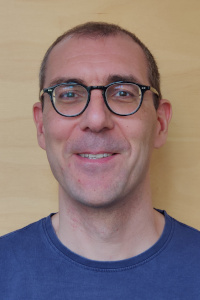
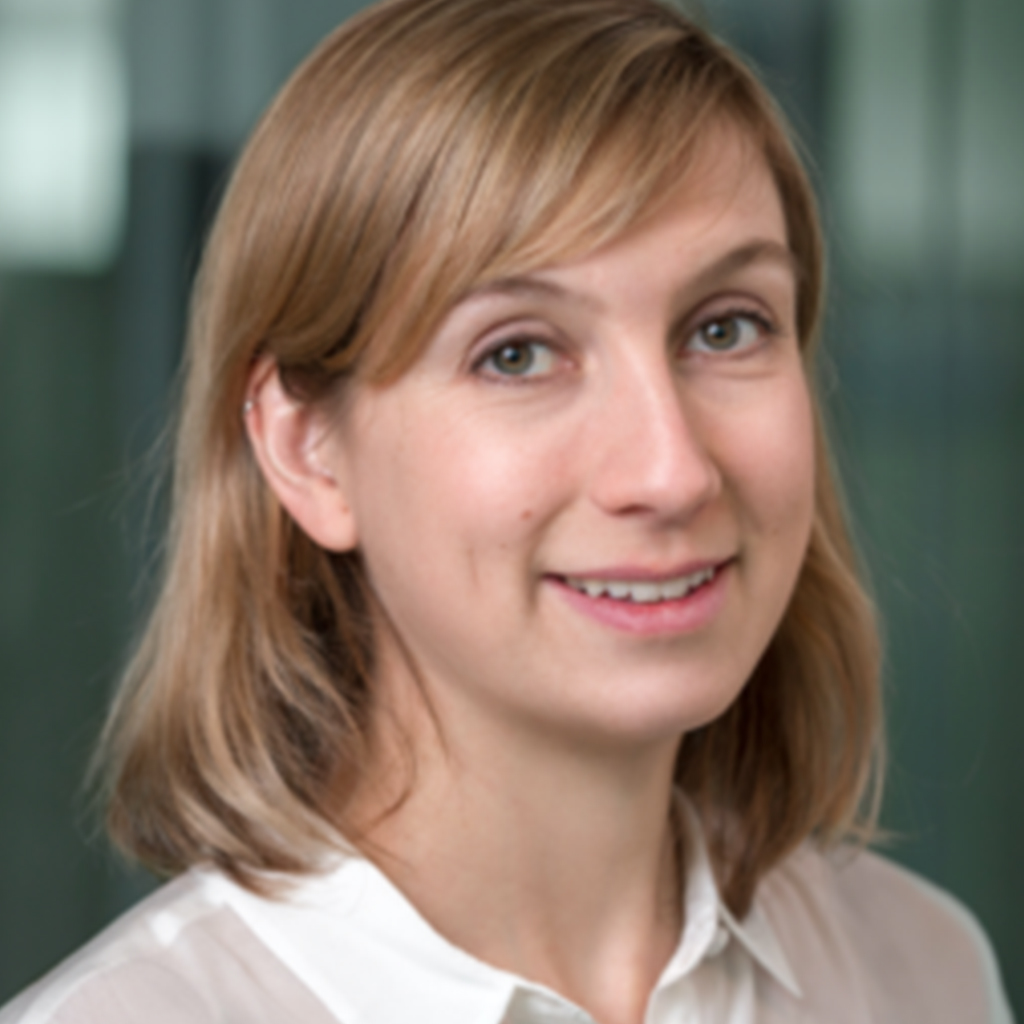
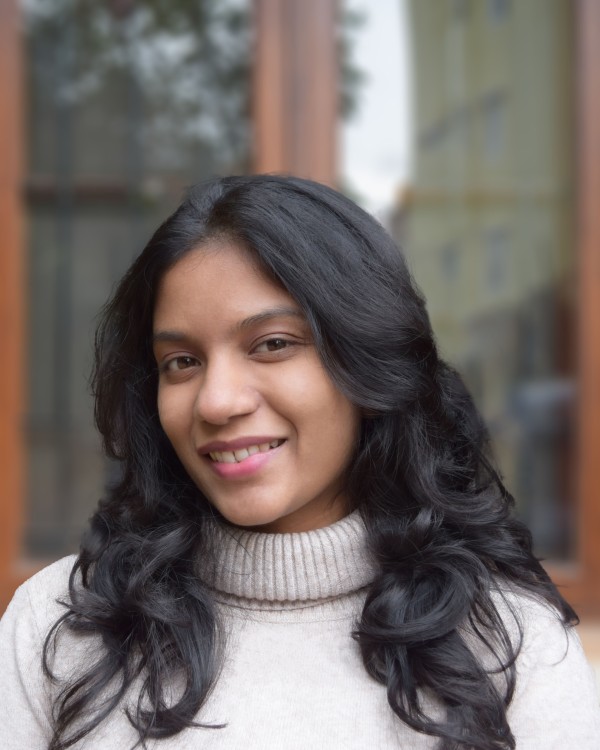
Professor Elzbieta Pustulka is a faculty member at FHNW University's School of Business, affiliated with the Institute for Business Informatics. Her research centers on databases, NLP, and AI-driven business process optimization. Research explores database pedagogy through gamification (SQL Scrolls), NoSQL implementations for ERPs, and automated information extraction techniques. Recent work emphasizes CI/CD practices in database development and educational game design for programming concepts. She supervises graduate students in projects spanning database indexing, logistics simulations, and AI-driven reporting systems. No scientific awards are noted.
Dr. Tilmann Zäschke is a researcher at the Professorship for Computer Science at ETH Zürich, Switzerland. His work focuses on database systems, data structures, and agile software development, particularly in the context of object-oriented databases and multidimensional indexing. Current affiliation: ETH Zürich Research areas: Database systems, data structures, schema evolution, agile development His research explores optimizing spatial data indexing through structures like the PH-tree, improving conceptual data models iteratively, and enabling agile development practices in object databases. Key trends in his publications include advancements in multidimensional indexing, graph data processing, and schema evolution techniques. Dr. Zäschke has contributed to academic literature on topics such as hypercube traversal algorithms, benchmarking graph data management, and adaptive model-driven systems development.
Anupama Unnikrishnan is a researcher at ETH Zurich, affiliated with the ETHCQST+ initiative focused on quantum science and technology. Her work intersects quantum computing and computer security, with a particular emphasis on probabilistic data structures and quantum network verification. Research Interests: Quantum computing and cryptography Security analysis of probabilistic data structures Verification protocols in quantum networks Recent Article Trends: Her publications explore adversarial contexts in data structures, authentication mechanisms for quantum teleportation, and anonymity in quantum networks, demonstrating a strong focus on security and integrity in emerging quantum technologies.
Prof. Peter Wurz is a Professor at the University of Bern's Faculty of Science and Chair of the Center for Space and Habitability (CSH) Steering Committee. His research focuses on planetary science, exosphere dynamics, and instrumentation for space exploration. He leads studies on Mercury's helium exosphere, icy moons like Europa, and cometary processes. Prof. Wurz is actively involved in missions such as the Jupiter Icy Moons Explorer (JUICE) and Solar Orbiter, contributing to instruments like the Particle Environment Package (PEP). His work emphasizes laser-based mass spectrometry for in-situ analysis of organic molecules and habitability indicators. He also explores surface interactions with solar wind, exosphere modeling, and innovative instrumentation for future missions to Pluto, Uranus, and the Interstellar Medium. Education details are not explicitly stated, but his academic trajectory aligns with advanced roles in space and planetary science. His research spans Mercury's magnetosphere, cometary outburst mechanisms, and the development of compact, autonomous analytical tools for planetary surfaces. Key projects include the DIMPLE experiment for lunar dating and the ORIGIN instrument for biosignature detection on icy moons. Research interests are structured around planetary surface processes, exosphere evolution, and advanced instrument design. He collaborates on missions targeting Jupiter's icy moons, comets, and Mercury, with a focus on understanding volatile release mechanisms and solar wind interactions. His work bridges theoretical modeling (e.g., SpuBase sputtering database) and experimental validation using lab analogs and spaceborne sensors.
Pascal Felber is a Full Professor at the Institute of Computer Science within the Faculty of Science at the University of Neuchâtel. His career spans significant industry experience at Oracle Corporation and Bell Labs before transitioning to academia, where he has established himself as a leading researcher in complex computing systems. His research interests focus on the theoretical foundations and practical applications of complex computing systems, particularly reliable, distributed, concurrent, and secure systems. Felber's work addresses critical challenges in large-scale systems including cloud computing, Internet of Things, and big data technologies. His research bridges theoretical computer science with practical system implementations. Analysis of his recent publications reveals a strong emphasis on Trusted Execution Environments (TEEs), secure computing, blockchain security, and privacy-preserving technologies. His work spans multiple domains from secure DNA alignment to phishing detection in smart contracts, demonstrating both theoretical depth and practical impact in addressing security challenges in modern distributed systems. Professor Felber has participated as a (co-)applicant in approximately twenty research projects funded by the EU (including VELOX, SRT-15, LEADS, ParaDIME, SafeCloud, SecureCloud, EBSIS, LEGaTO, VEDLIoT) and the Swiss National Science Foundation (SNSF). His teaching portfolio includes Bachelor's degree courses in French (Programming I & II, Languages and compilation, Web and network technologies, Concurrent and distributed systems) and Master's courses in English (Concurrency: Multi-core programming and data processing, Hot topics in operating systems seminar).
Jean-Paul Kneib is a Full Professor at the Laboratory of Astrophysics (LASTRO) within the School of Basic Sciences (SB) at École Polytechnique Fédérale de Lausanne (EPFL), Switzerland. He is also involved in the Space Sustainability initiative at EPFL and has held visiting positions at Caltech and CNRS institutions. His research focuses on cosmology, gravitational lensing, and next-generation spectroscopic surveys like DESI and Euclid. Education : PhD in Astrophysics (1993), Master in Astrophysics, Geophysics & Space Technics (1990), Engineer degree in Aerodynamics & Space Technics (1990), all from Toulouse University and École Nationale Supérieure de l'Aéronautique et de l'Espace. Research Interests : Kneib specializes in cosmology, using galaxy surveys and gravitational lensing to study dark matter and dark energy. His work includes strong lensing in galaxy clusters, redshift surveys for cosmic expansion analysis, and robotic fiber-positioner systems for spectroscopic instruments. He also contributes to space sustainability initiatives addressing orbital debris. Recent Publications emphasize deep learning for radio interferometry, Euclid mission early data, DESI BAO analysis, and novel methods for asteroid detection. Collaborative projects involve JWST observations of high-redshift galaxies and digital twins for CubeSats. Scientific Awards : ERC Advanced Laureate (for project "Light on the Dark") Marie Curie Fellowship Leadership Roles : Co-Lead of ESA Euclid "Strong Lensing" Working Group Co-Principal Investigator for CFHT-Stripe 82 project Developer of Fiber-Robot Positioner System for DESI collaboration
Tilia Ellendorff is a researcher at the University of Zurich , affiliated with the Department of Computational Linguistics under the Faculty of Arts and Social Sciences . She contributes to the Text Crunching Center (TCC) by developing solutions for text analytics, information extraction, and natural language processing . Her work bridges computational methods with biomedical and health-related domains, as evidenced by her involvement in the Digital Society Initiative (DSI) Community Health. Fields of Interest: Natural Language Processing, Biomedical Informatics, Text Mining, Information Extraction, Computational Linguistics, Machine Learning Her research focuses on creating annotated corpora, optimizing language models for clinical and biomedical texts, and advancing text mining tools for tasks like entity recognition and causal network extraction. She has contributed to collaborative initiatives such as BioCreative V and SMM4H, emphasizing hybrid approaches and multi-task learning. Contact: ellendorff@cl.uzh.ch
Dr. Jonathan Fürst is a Researcher at the ZHAW School of Engineering, part of the Intelligent Information Systems research focus at ZHAW Zurich University of Applied Sciences. His work spans AI-driven data systems, ontology matching, IoT applications, and cross-domain data integration. Key research interests include: AI applications in healthcare and education Machine learning for data integration and systems Multi-modal data exploration and natural language interfaces IoT networks and smart building technologies His projects include: AI-based Quality Management of BIM Models (project leader) DataGEMS : A data discovery platform for generalized exploratory search Multi-lingual data exploration systems Digital Health Zurich: Patient-centered clinical innovation Recent research trends emphasize explainable AI, weakly supervised learning, and real-world system robustness. His work bridges theoretical advancements with practical implementations in domains like healthcare, education, and smart infrastructure. No scientific awards are explicitly listed, though his active role in Horizon Europe projects reflects collaborative excellence. He contributes to interdisciplinary teams across data science, engineering, and healthcare.
Dr. Norman Juchler is a researcher at the Zurich University of Applied Sciences (ZHAW) within the Institute of Computational Life Sciences. He specializes in computational methods for medical diagnosis and disease modeling, particularly focusing on intracranial aneurysms and wearable technologies. His work integrates machine learning, radiomics, and biomechanical modeling to improve clinical decision-making in neurology and vascular medicine. Research Projects - Principal contributor to Stroke DynamiX, AneuX, and Digital Futures Lab initiatives. - Co-developed the AneuX morphology database for standardized aneurysm analysis (Zenodo, 2022). - Investigated wearable technologies for pediatric infection monitoring and atrial fibrillation detection via photoplethysmography. - Validated cerebral aneurysm rupture prediction models across international cohorts. Key Research Themes Morphological analysis of intracranial aneurysms Shape-based clinical biomarker development Machine learning in medical imaging Biomechanical modeling of vascular diseases Integration of wearable devices in clinical workflows Recent Contributions His 2023 studies demonstrated shape superiority over size in aneurysm diagnostics and advanced Meniere's disease etiology analysis through radiological heterogeneity. Ongoing work explores neurovascular instability markers and open-set recognition in hematology. Labs & Networks Affiliated with ZHAW's Digital Health Lab, Center for Computational Health, and Datalab. Active in interdisciplinary groups like The Interface Group and OSR4H consortium.
Prof. Rudolf Marcel Füchslin is a Professor at the ZHAW School of Engineering, specializing in Applied Complex Systems Science. His research spans interdisciplinary fields including biomedical engineering, quantum computing, medical physics, and data science. His work integrates computational modeling with practical applications in cancer therapy optimization, hyperthermia-radiation synergy, and quantum machine learning. He leads numerous projects involving advanced therapies, complex systems analysis, and AI-driven solutions. Notable projects include optimizing tumor control probability in hyperthermia-radiotherapy, developing quantum neural networks, and simulating droplet-based chemical systems. He has authored/co-authored over 50 peer-reviewed articles and edited books on topics like morphological computation and complex systems. Füchslin actively contributes to international conferences (e.g., ALIFE, ESHO) and collaborates with institutions globally. His research emphasizes translating theoretical models into real-world solutions, particularly in healthcare and engineering.
Prof. Martin Braschler is a Lecturer and Director of the Institute of Computer Science at ZHAW School of Engineering (Zurich University of Applied Sciences). He specializes in data science, information retrieval, and enterprise search systems. His interdisciplinary work bridges computer science, machine learning, and multilingual systems. Key projects include leadership in the DataInc, Skillue, and INODE initiatives, focusing on data integration, intelligent systems, and EU-funded research. He has published extensively in top journals like SIGMOD Record and Information Systems , emphasizing practical applications of data science in business environments. His research explores topics such as cross-language retrieval, algorithmic approaches for multilingual systems, and enterprise knowledge management. Research interests revolve around applied data science methodologies, information access evaluation (e.g., CLEF), and real-world implementation of machine learning techniques. He co-authored influential books like Applied Data Science: Lessons Learned for the Data-Driven Business and Multilingual Information Retrieval: From Research to Practice , highlighting transitions from theoretical research to industry solutions. Braschler has led multiple projects in collaboration with industry partners, focusing on scalable data systems and enterprise applications. Notable contributions include developing the INODE end-to-end data exploration system and pioneering work on untrained models for multimodal retrieval. His work on skill-extraction algorithms for job-matching platforms demonstrates practical impact in human resources automation. Braschler’s projects often address challenges in data integration, semantic search, and the evaluation of information systems in real-world contexts.
Prof. Dr. Maria Anisimova is a Professor at the Institute of Computational Life Sciences within the ZHAW School of Life Sciences and Facility Management. Her research focuses on computational methods in evolutionary genomics, bioinformatics, and molecular evolution. Key areas include tandem repeat analysis, ancestral sequence reconstruction, and cancer genomics. She leads multiple projects on colorectal cancer mechanisms, computational drug discovery, and evolutionary biology. Her work integrates statistical models and algorithms to address challenges in genome analysis, including indel evolution, phylogenetics, and natural language-based database querying. Notable contributions include tools like ARPIP, ProPIP, and TRAL, advancing sequence alignment and tandem repeat detection. She also explores the role of protein intrinsic disorder and tandem repeats in cancer biology. Prof. Anisimova’s interdisciplinary approach spans bioinformatics, computational biology, and clinical applications, with publications in journals like *Nature*, *Genome Biology*, and *Molecular Biology and Evolution*. She has authored a textbook on evolutionary genomics and contributed to major conferences and workshops in the field.
Deepika Raghu is a researcher at the Chair for Circular Engineering for Architecture (CEA) at ETH Zurich . Her work focuses on digitalizing existing buildings to advance circular economy principles in the built environment. Studied architecture at Siddaganga Institute of Technology (SIT) Masters in Advanced Architecture at Institute for Advanced Architecture of Catalonia (IAAC) Research explores leveraging artificial intelligence , computer vision , and non-proprietary datasets to analyze buildings for material reuse. Investigates preventing obsolescence through digital workflows and urban-scale resource mapping . Recent publications highlight 5D digital circular workflows , material passports , and AI-driven tools for circular construction. Utilizes Google Street View and demolition audit data to enhance building databases.
Olivier Canévet is a Lecturer at EPFL, affiliated with both the School of Engineering (STI) and the School of Life Sciences (VPA-AVP-DLE) divisions. He holds a dual role as a Research Engineer at the Idiap Research Institute and serves as a Lecturer in the Department of Electrical Engineering (IEM) and the EDEE-ENS teaching unit. His primary affiliations include the Learning and Information Systems Laboratory (LIDIAP) at EPFL. Education: PhD in Electrical Engineering from EPFL (2012–2016), supervised by Dr. François Fleuret. Engineering diploma from Télécom Bretagne (2007–2012). Additional experiences include a CNES internship on satellite imagery and CERN projects on Invenio ranking systems. He also spent a year managing geophysical observatories in the French Southern and Antarctic Lands. Research Interests: Focuses on Computer Vision, Machine Learning, and Deep Learning applications in human-robot interaction, security systems, and real-time perception. Specializes in depth-based networks for human pose estimation, multi-person tracking, and socially intelligent robotic systems. Article Trends: Recent work emphasizes real-time CNN architectures for depth-based human pose estimation, multi-party human-robot interaction datasets (MuMMER), and security systems leveraging depth maps (UNICITY database). Prior contributions include efficient sample mining techniques and domain adaptation methods. Grants & Funding: His PhD was funded by the Swiss National Science Foundation (DASH project). Current research benefits from EPFL's interdisciplinary infrastructure and Idiap's resources in machine learning and robotics. Labs & Teams: Leads projects at LIDIAP lab (EPFL) focusing on computer vision applications, collaborates with Idiap on security systems, and contributes to teaching initiatives in the EDEE-ENS unit.
Valentin Hartmann is a Researcher at the Data Science Laboratory (DLAB) within the School of Computer and Communication Sciences at École Polytechnique Fédérale de Lausanne (EPFL). His work focuses on advanced topics in data science, including differential privacy, optimal transport theory, and privacy-preserving machine learning. He holds a postdoctoral position and contributes to cutting-edge research in computational statistics and secure distributed learning. His research interests span multiple domains: (1) Development of privacy-preserving techniques for machine learning and data analysis, (2) Optimization of transport problems with applications in statistics and geometry, (3) Design of secure algorithms for distributed systems, and (4) Implementation of robust statistical methods through R packages like 'transport'. Valentin actively publishes in top-tier venues, with recent contributions addressing neural network behavior analysis, privacy risks in data distribution inference, and novel cryptographic approaches for collaborative learning. His work bridges theoretical foundations with practical software solutions, as evidenced by his development of the 'transport' R package for optimal transport computations. He is affiliated with the DLAB research group at EPFL's INN building (Office INN 315), contributing to interdisciplinary projects at the intersection of computer science, mathematics, and privacy engineering.