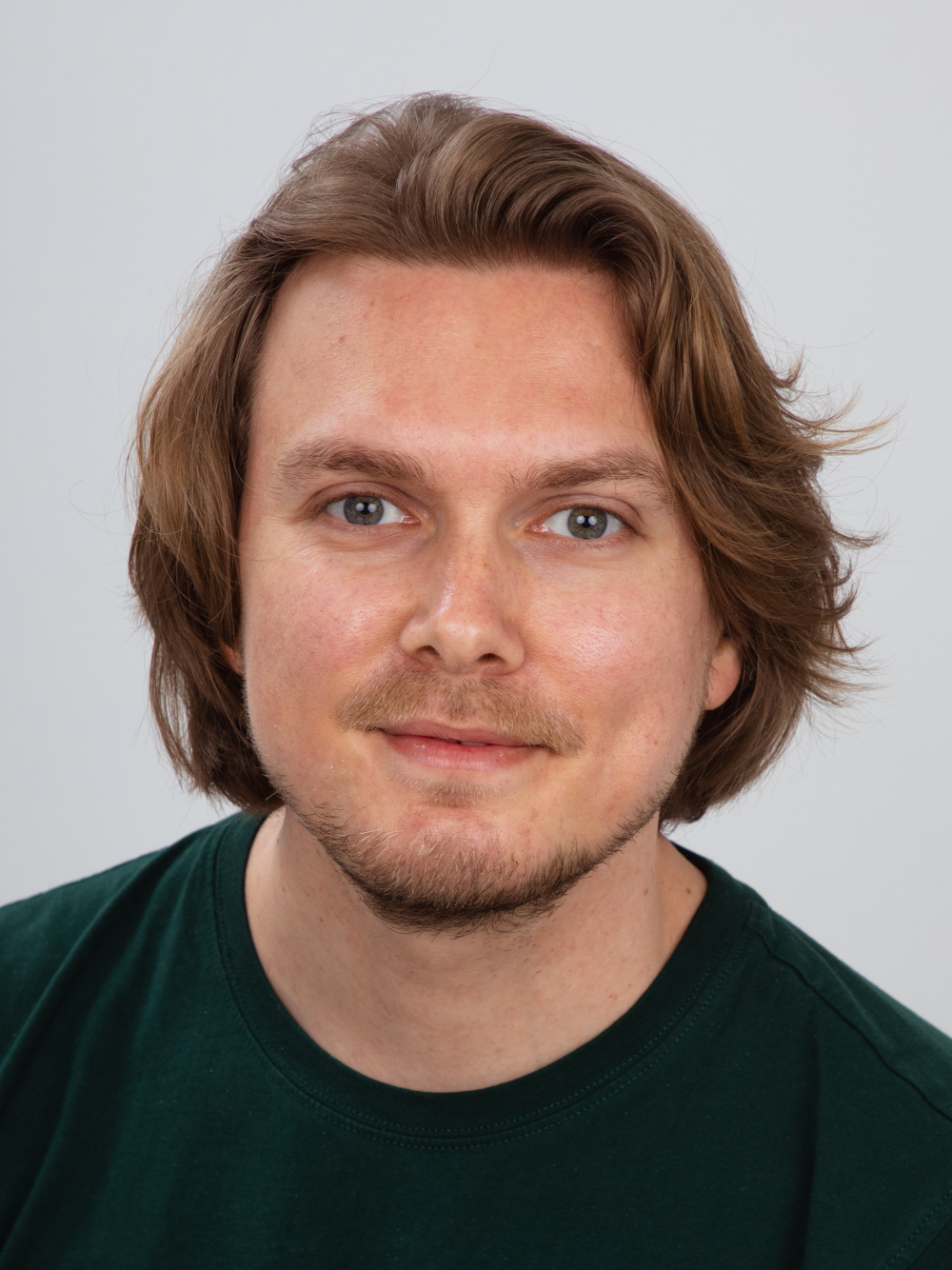
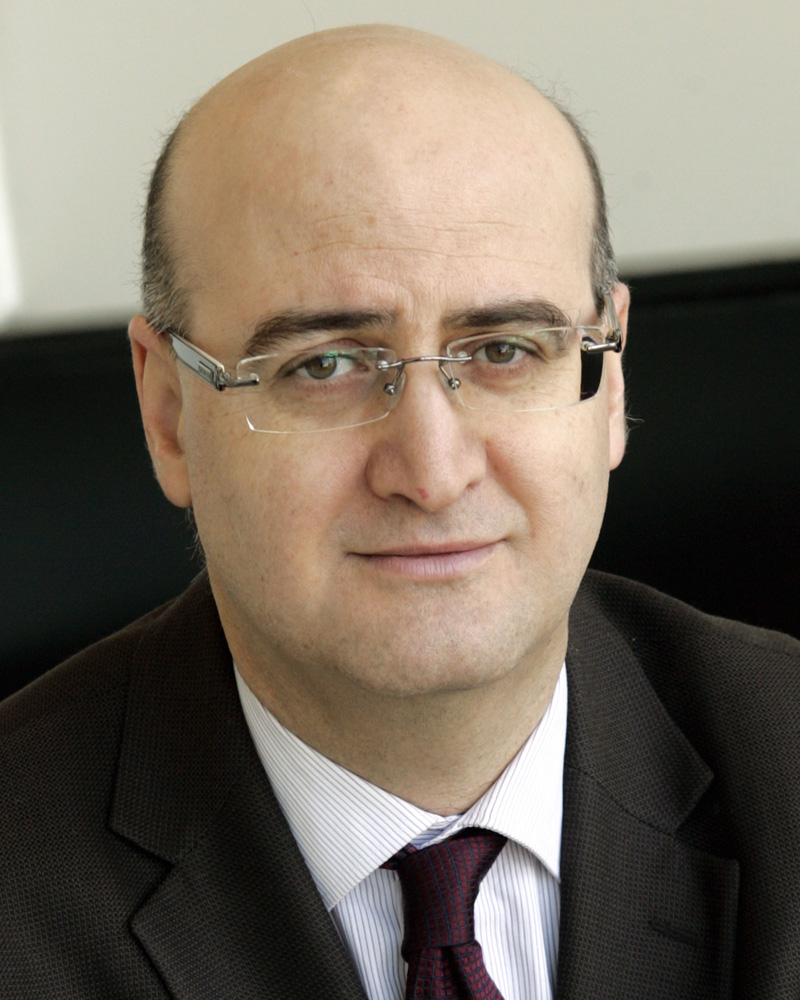
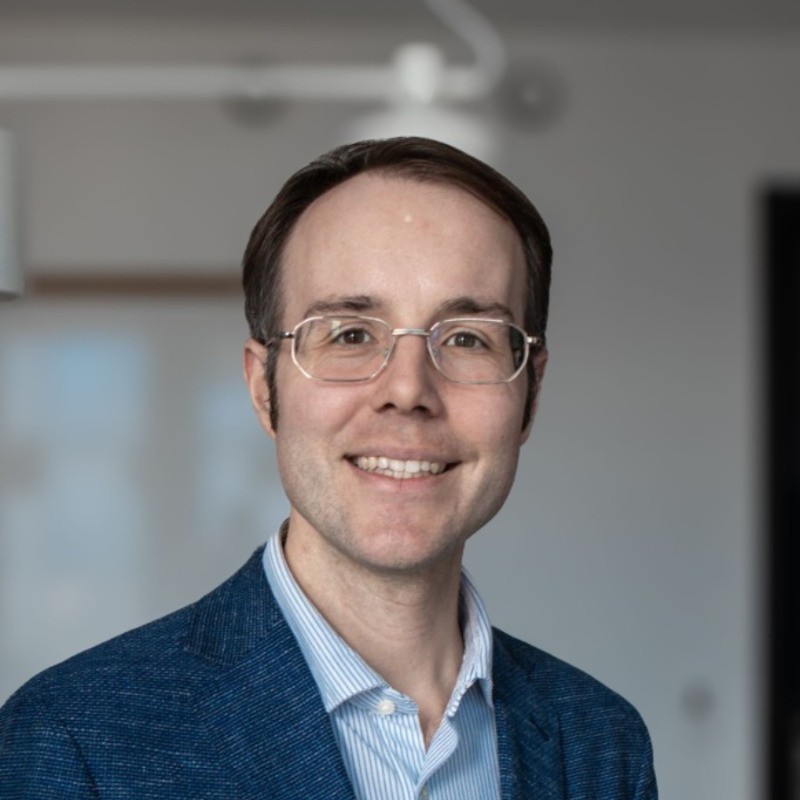
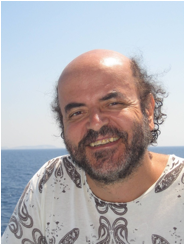
Christoph Koch is a Full Professor in the School of Computer and Communication Sciences at EPFL (Ecole Polytechnique Federale de Lausanne) , Switzerland. He has held academic positions at Cornell University (2007-2010, 2006), Saarland University (2005-2007), and TU Vienna (2001-2005). His research focuses on database systems, logic, programming languages, and data management.
Jan Dreier is a Research Fellow at the Institute of Logic and Computation at Vienna University of Technology. His research centers on structural graph theory and algorithmic meta-theorems, particularly exploring the boundaries of tractability for model checking problems. Dreier's work bridges theoretical computer science and discrete mathematics, focusing on graph decompositions, parameterized complexity, and logical expressiveness. Key research themes include monadic stability in graph classes, applications of model theory to computer science, and efficient algorithms for logical queries on structured graphs. His publication record shows consistent focus on graph sparsity concepts and algorithmic applications of logic, with recent work expanding into approximation methods for counting queries. Research demonstrates sophisticated applications of combinatorial methods to fundamental problems in computational complexity.
Professor Moncef Gabbouj is a distinguished academic and researcher currently serving as Professor of Signal Processing at the Department of Computing Sciences, Faculty of Information Technology and Communication Sciences, Tampere University, Finland. Previously, he held the same position at Tampere University of Technology before the merger in 2019. He has also held visiting professorships at prestigious institutions including Hong Kong University of Technology and Science, University of Southern California, and Purdue University. Ph.D. and MSc. in Electrical Engineering from Purdue University, USA (1989 and 1986) B.Sc. in Electrical Engineering from Oklahoma State University, USA (1985) Prof. Gabbouj's research spans multiple domains within signal and image processing, with a strong focus on machine learning applications. His primary research interests include artificial intelligence, machine learning, Big Data analytics, multimedia content-based analysis, indexing and retrieval, nonlinear signal and image processing, voice conversion, and video processing and coding. His work bridges theoretical advancements with practical applications across various industries, particularly in multimedia communications and biomedical applications. His extensive publication record demonstrates a clear evolution from traditional signal processing techniques toward more sophisticated machine learning and deep learning approaches. Recent work shows increasing focus on convolutional neural networks for various applications including ECG classification, video processing, financial time-series analysis, and image recognition tasks, reflecting the broader trend in the field toward deep learning methodologies while maintaining strong foundations in signal processing theory. IEEE Fellow (2011) Member, Finnish Academy of Science and Letters (2014) Knight, First Class, of the Order of the White Rose of Finland (2006) Nokia Foundation Recognition Award (2005) Nokia Foundation Visiting Professor Award (2012) Finnish Cultural Foundation for Art and Science Award (2017) TUT Foundation Grand Award (2015) Prof. Gabbouj has supervised 64 doctoral and 72 Master's theses, demonstrating his significant contribution to academic mentoring. His research has been supported by substantial funding, including research grants totaling 8.5 million Euro (2001-2015). He has served as Academy of Finland Professor during 2011-2015 and has been involved in numerous EU research projects including Horizon, ESPRIT, HCM, IST, COST, Tempus and Erasmus programs. As Editor, Guest Editor or member of the Editorial Board of 6 international scientific journals, he has significantly influenced the academic discourse in his field. He leads the Signal Analysis and Machine Intelligence (SAMI) research group at Tampere University and serves as the Finland Site Director of the NSF IUCRC funded Center for Visual and Decision Informatics. His research unit focuses on applying advanced machine learning techniques to solve complex problems in signal processing, computer vision, and multimedia analytics, with applications ranging from healthcare to multimedia communications and financial analysis.
Vienna University of Economics and BusinessAustria
Gabriel Felbermayr is a Professor of Economics at Vienna University of Economics and Business (WU) and Director of the Austrian Institute of Economic Research (WIFO) since 2021. He holds a PhD in Economics and has held academic positions at the University of Munich (ifo Center for International Economics), Kiel University (Chair in Economics), and the University of Tübingen. University Professor: WU Vienna (2021–) Director: WIFO Vienna (2021–) President: Kiel Institute (2019–2021) Research Interests include international trade theory, labor markets in open economies, European integration, migration economics, and climate-trade intersections. His work combines theoretical models with empirical policy analysis, focusing on globalization challenges, supply chain disruptions, and economic sanctions. Current Projects Trump 2.0 Transatlantic Tariff Scenarios Scientific Awards include recognition for his research contributions, though specific award names are not detailed in the text. He has led major projects for institutions like the Austrian Economic Chamber and the Foundation for Family Businesses. Education includes studies at the University of Linz and University of Florence (PhD). His publications span journals like Journal of International Economics , Review of World Economics , and World Development .
Emanuel Sallinger is a Full Professor at TU Wien's Databases and Artificial Intelligence Group and Vice Dean of Academic Affairs for Business Informatics and Data Science. He leads the Knowledge Graph Lab, focusing on scalable knowledge-based systems, reasoning in knowledge graphs, and AI integration. His research spans computational logic, database theory, and blockchain applications. Education: PhD in Computer Science (awarded 'sub auspiciis praesidentis rei publicae'), Master's degrees in Computational Intelligence and Informatics Management, and a Bachelor's in Software and Information Engineering. Research Interests: Knowledge graphs (construction, reasoning, scalability), logic-based systems, AI/ML integration with databases, enterprise architecture modeling, and financial knowledge systems. His work emphasizes practical applications like enterprise modeling, sustainable waste management, and regulatory compliance. Grants & Projects: Lead Vienna Science and Technology Fund (WWTF)-funded Knowledge Graph Lab. Involved in projects like 'Knowledge Graph-driven Tour Management' (sustainability), 'SustainGraph' (waste processing), and 'Enterprise Architecture Knowledge Graphs'. Teaching: Offers courses on Knowledge Graphs, Generative AI, Database Systems, and research methodology. Supervises doctoral and master's students in AI, databases, and knowledge representation. Labs/Teams: Knowledge Graph Lab at TU Wien, collaborating with industry on blockchain-based systems, financial AI, and enterprise architecture frameworks.
Stefan Woltran is a Full Professor in the Databases and Artificial Intelligence department at TU Wien. He serves as Vice Dean of Academic Affairs for the Informatics Master program and leads the Research Unit for Databases and Artificial Intelligence. His research focuses on logic-based AI, including Propositional Logic, Nonmonotonic Reasoning, Argumentation frameworks, Knowledge Representation, and Logic Programming. He coordinates the Double-Degree Program Logic and Computation. His research projects include analyzing formal properties of logic-based AI approaches, complexity analysis, and developing algorithms via logic and dynamic programming. Notable projects include the HYPAR and REVEAL-AI initiatives exploring abstract argumentation and AI problem-solving. He has contributed to over 150 publications since 2001, focusing on argumentation frameworks, computational complexity, and formal methods. Woltran teaches courses such as Abstract Argumentation, Formal Methods in Computer Science, and Theoretical Computer Science. His work integrates theoretical advancements with practical solver development, such as the ASPARTIX system for argumentation tasks. He actively participates in international conferences and competitions in computational argumentation, emphasizing the application of formal methods to real-world problems.
Victor Vianu is a Professor of Computer Science and Engineering at the University of California, San Diego and holds the INRIA International Chair at INRIA-Saclay in Paris. He has maintained continuous faculty status at UC San Diego since 1983 while developing extensive international collaborations, particularly with French research institutions including INRIA, ENST-Paris, ENS-Paris, and the University of Paris. His academic credentials include a Ph.D. in Computer Science from the University of Southern California (1983) and undergraduate studies in Mathematics and Informatics at the University of Bucharest (1974-1977). Professor Vianu's research spans computational logic, database systems and theory, and automatic verification. His work uniquely bridges theoretical foundations with practical applications in XML processing, workflow systems, and data-driven applications. He has made seminal contributions to understanding the theoretical underpinnings of database query languages and their expressive power, particularly in the context of XML technologies and workflow systems. His research demonstrates a consistent trajectory from theoretical computer science to practical database systems applications. His publication record reveals significant contributions to database theory spanning over three decades, with particular emphasis on XML technologies, workflow systems, and formal methods for data-driven applications. His work shows a clear evolution from foundational theoretical work to practical applications in business processes and web technologies. INRIA International Chair (2013) Fellow of the American Association for the Advancement of Science (AAAS) (2013) ACM PODS Alberto O. Mendelzon Test-of-Time Award (2010) Fellow of the Association for Computing Machinery (ACM) (2006) Professor Vianu has held significant leadership roles including Editor-in-Chief of the prestigious Journal of the ACM, numerous program committee chair positions for major database conferences (PODS, ICDT, ASIAN), and General Chair for ACM SIGMOD conferences. He has served on the executive committees of SIGMOD (1998-2000) and PODS (1993-2004), and was a member of the ICDT Council (1997-2007), demonstrating sustained influence in the theoretical database community. His extensive invited talks at major conferences including College de France, ACM PODS, and International Conference on Database Theory highlight his international recognition.
Alexander Selzer is a PreDoc Researcher in Databases and Artificial Intelligence at Vienna University of Technology. His research focuses on query optimization, database systems, and AI-driven data processing. His work bridges theoretical computer science and practical database engineering, emphasizing efficient algorithms for modern data challenges. Recent projects explore machine learning applications in query performance and distributed computing frameworks. He mentors students in database optimization research, including projects on structure-guided query techniques and SQL-based system enhancements.
Kostas Triantis is an Associate Professor of Biodiversity of Ecosystems at the Department of Ecology and Taxonomy, Faculty of Biology, National and Kapodistrian University of Athens. He holds a PhD from the University of Crete and has held post-doctoral positions at institutions including Oxford University and the University of Azores. His research focuses on island biogeography, macroecology, conservation biology, and the biogeography of Aegean invertebrates. He has served as a Visiting Professor at the University of Bayreuth and held roles in Greece’s Ministry of Environment. Triantis is a leading expert in land snail biodiversity and has contributed to over 70 peer-reviewed articles. Awards include Marie Curie Fellowship and editorial roles in journals like Journal of Biogeography . His work addresses species-area relationships, island ecosystems, and conservation strategies for endangered species. Current projects include understanding biodiversity patterns in the Aegean under the Anthropocene and global avian extinction dynamics. Education: PhD and MSc in Biology, University of Crete Post-doctoral fellowships at Oxford, Azores, and Patras Research Interests: Island biogeography, conservation biology, macroecology, ecological modeling, Aegean biodiversity His articles explore topics like ant biodiversity on Aegean islands, global avian functional diversity loss, and extinction debt on oceanic islands. Triantis collaborates internationally on projects such as the European Red List of terrestrial molluscs and biodiversity databases like MEDIS. He actively contributes to conservation policy through IUCN Red Listing assessments for over 200 Greek land snail species. Grants & Projects: Principal Investigator: 'Understanding the Anthropocene: the case of the Aegean Islands' (Hellenic Foundation for Research and Innovation, 2020–2023) Co-PI: 'Biodiversity on Oceanic Islands' (Portugal’s FCT, 2012–2015) Triantis leads the University of Athens’ Ecology and Taxonomy Department’s research on island ecosystems, emphasizing the interplay between ecological theory and conservation practice. His lab focuses on integrating spatial data and evolutionary dynamics to address biodiversity challenges.
Vienna University of Economics and BusinessAustria
Axel Polleres is a full professor at the Institute for Data, Process and Knowledge Management in Vienna University of Economics and Business (WU Wien). He leads the department of Information Systems and Operations Management while maintaining active research in knowledge graphs, semantic web technologies, and ontology engineering. PhD and Habilitation from Vienna University of Technology Former positions at University of Innsbruck, Universidad Rey Juan Carlos, DERI Ireland, and Siemens AG Co-chair of W3C SPARQL working group Editorial board member for Semantic Web Journal and IJSWIS His research focuses on: Querying and reasoning over ontologies Graph schema languages (SHACL, SPARQL) Wikidata constraint formalization Ontology reuse in collaborative platforms Crisis management knowledge graphs FAIR data principles implementation Recent publications analyze knowledge graph evolution, constraint validation methodologies, and semantic web standardization efforts. Key topics include: OWL/RDF interoperability solutions Unit conversion systems for Wikidata Partition-based query processing frameworks Network resilience analysis for urban planning Open data platform discovery tools Temporal analysis of collaborative knowledge graphs He has co-organized major conferences like ISWC2023 and ESWC workshops while maintaining active roles in European research projects. Current work involves spatiotemporal knowledge graphs for city resilience and semantic web infrastructure development.
Prof. Dr. Gabriele Rippl is a Full Professor and Chair of Literatures in English/North American Literature and Culture at the University of Bern, Switzerland, where she has served as Director of the Department of English since 2005. She previously held professorial positions at the University of Göttingen (2003-2005), and lecturing positions at the Universities of Freiburg, Zurich, Bern, Tübingen, and Bielefeld. Her extensive administrative experience includes serving as Dean of the Faculty of Humanities (2021-2023), Vice-Dean (2019-2021), and President of the Collegium generale (2007-2015) at the University of Bern. Her educational background includes a 'Habilitation' at the University of Constance (2002), a PhD in English and American Studies from the same institution (1995), and a DFG doctoral grant at the postgraduate school 'Theory of Literature and Communication' (1989-1995). She has held numerous prestigious fellowships including at Sidney Sussex College, Cambridge (2002), the University of Wales (2003), UCLA (2015), and the Center for Advanced Studies in the Humanities Morphomata Kolleg, Cologne (2017). Current Research Focus: Cultural Sustainability Key Area: Intermediality (text-picture relationships, particularly ekphrasis and eco-ekphrasis) Specialization: Anglophone world literatures across historical periods Theoretical Framework: Literary theory with emphasis on postcolonial and transcultural perspectives Additional Interests: Autobiography and life writing, literature and anthropology, seriality studies Prof. Rippl's recent publications demonstrate a clear trajectory toward environmental humanities, particularly through the lens of eco-ekphrasis, while maintaining her longstanding expertise in intermedial studies. Her work bridges literary analysis with broader cultural, ecological, and sustainability concerns, reflecting an increasingly interdisciplinary approach that connects literary studies with environmental science and cultural sustainability frameworks. The publications reveal a sophisticated integration of visual culture studies with contemporary ecological concerns, particularly in how literary texts represent and engage with environmental imperatives. 2020-present: Member and President of Specialised Committee Careers, Swiss National Research Council 2017: Fellowship at Center for Advanced Studies in the Humanities Morphomata Kolleg, Cologne 2015: Visiting Scholarship at UCLA supported by SNSF 2014-present: Member of AcademiaNet – European Expert Database of Outstanding Female Academics 2008: Fellowship at University of Western Ontario As an advisor, Prof. Rippl has supervised numerous doctoral candidates working on diverse topics including world literature, intermediality, postcolonial studies, and environmental humanities. Her current research projects include 'Anglophone Life Writing Today: Transcultural Figurations – Intermedial Constellations,' 'Mediating the Ecological Imperative: Modes and Formats of Engagement,' and interdisciplinary work on 'Cultural Sustainability.' She leads the 'Der ökologische Imperative' SNSF Sinergia project (2021-2024), which brings together scholars from English studies, art history, and social anthropology. She also serves on multiple Swiss National Science Foundation committees, demonstrating significant influence in national research policy. Prof. Rippl directs the interdisciplinary Walter-Benjamin-Kolleg research platform 'Auto_Bio_Graphie,' collaborating with Dance Studies, Spanish Literature, and Visual Anthropology. She previously led the SNF Doctoral research group on 'Seriality and Intermediality in Graphic Novels' and the project 'Cosmopolitanism and Identity in Contemporary Indian Literatures in English.' Her editorial work includes the peer-reviewed journal Anglia and the Anglia Book Series, where she has published extensively on intermediality, cultural sustainability, and world literatures.
Gerti Kappel is a full professor at the Institute of Information Systems Engineering at TU Wien, affiliated with the Business Informatics Group (BIG). Since 2020, she has served as Dean of the Faculty of Informatics at TU Wien, previously holding the role of Dean’s team member responsible for research, diversity, and financial affairs (2016–2019). She previously held a full professorship in computer science (database systems) and led the Department of Information Systems at Johannes Kepler University Linz (1993–2001). Her research focuses on Model Engineering, Web Engineering, and Process Engineering, particularly in cyber-physical production systems. She has co-authored influential works such as UML@Work (2005), UML@Classroom (2015), and Web Engineering (2006). Key projects include leadership roles in Vienna Informatics Living Lab (2018–2019), MPM4CPS (2014–2019), and ARTIST (2012–2015), addressing topics like model versioning, cloud architecture modeling, and inter-organizational systems. Her recent articles explore circular systems engineering, IoT-based simulation environments, and model-driven approaches for time-series analytics and cloud applications. She actively contributes to academic governance, including managing the Office of the Dean (E199-01) and overseeing faculty services. Her work emphasizes bridging theory and practice through collaborative frameworks like ERPEL and TROPIC . Grants: Projects funded by Austrian Research Promotion Agency, European Cooperation in Science and Technology, Vienna Business Agency, and others. Advising: Supervised over 15 graduate theses, including recent works on model-driven techniques for railway planning, debugging frameworks for modeling tools, and cloud-based IDEs. Labs/Teams: Leads research within the Business Informatics Group (BIG) and collaborates with the Vienna Informatics Living Lab for applied systems engineering.
Wolfgang Sandberger (b. 1961) is a Professor of Musicology and Director of the Brahms-Institut at Musikhochschule Lübeck. Specializing in German music history from the 17th to 19th centuries, he focuses on composers like Brahms, Bach, and Handel, as well as music philology and reception history. He has secured over €1 million in grants from DFG and Schleswig-Holstein for digitization projects, advancing musicological research accessibility. Education: Master's in Musicology, Philosophy, and History (Münster/Hamburg); PhD in Musicology His research integrates interdisciplinary approaches, including iconography, performance practice, and editorial methodologies. He leads major editorial projects such as the Brahms-Briefwechsel-Verzeichnis and Göttinger Händel-Beiträge. Sandberger holds leadership roles in organizations including the Göttinger Händelgesellschaft and the International Dieterich Buxtehude Society, fostering collaborative scholarly initiatives. Awarded the Joachim Jungius Society of Sciences Award (1996), he emphasizes outreach through radio collaborations and public engagement with Brahms' legacy. His work bridges academic rigor with public dissemination, making complex musicological research accessible to broader audiences.
Christos H. Papadimitriou is a prominent academic currently serving as the Donovan Family Professor of Computer Science at Columbia University. He has held prestigious positions at institutions including UC Berkeley, UC San Diego, Stanford University, and MIT. His research spans the theory of algorithms, computational complexity, and game theory, with significant contributions to databases and optimization. Education: Electrical Engineering at National Technical University of Athens, Ph.D. in Computer Science from Princeton University. Papadimitriou's work bridges computer science with economics, focusing on computational complexity and game theory. His influential textbooks, such as Elements of the Theory of Computation and Computational Complexity and Combinatorial Optimization , remain foundational resources. Awards: Knuth Prize, Gödel Prize (jointly with Elias Koutsoupias), IEEE Charles Babbage Award, Kalai Game Theory and Computer Science Prize, IEEE John von Neumann Medal, and multiple honorary doctorates from institutions like ETH Zurich and EPFL. Memberships: American Academy of Arts and Sciences, US National Academy of Engineering, Academia Europaea, and US National Academy of Sciences. With over 300 publications and 25,000 citations, his novel Turing (2003) also highlights his interdisciplinary creativity.
Lukas Grasmann is a Researcher at the Faculty of Informatics, Vienna University of Technology (TU Wien), based in the Databases and Artificial Intelligence research group (Institute E192-02, Room HA0302). His contact details include email lukas.grasmann@tuwien.ac.at and phone +43-1-58801-192216, with professional activities centered on cutting-edge database technologies and AI applications. His educational qualifications comprise: Bachelor of Science (BSc) Diplom-Ingenieur (Dipl.-Ing.) in Engineering Grasmann's research spans database systems and artificial intelligence with emphasis on big data analytics, distributed query processing, and skyline query optimization. His work focuses on integrating specialized query paradigms into Apache Spark SQL for efficient large-scale data analysis, particularly applied to perishable food supply chain optimization for waste reduction. This intersects computer science fundamentals with sustainability-driven practical implementations. His 2022-2023 publications reveal a concentrated research trajectory in enhancing Spark SQL's capabilities for skyline queries, addressing both theoretical optimization challenges and real-world deployment in distributed environments. The work demonstrates consistent innovation in bridging database theory with big data infrastructure, advancing scalable solutions for multi-criteria decision problems. Scientific recognition: No formal awards or fellowships documented in source materials Research funding and collaborations include: Lead researcher on FFG-funded project "AI-driven collaborative supply and demand matching platform for food waste reduction" (2022-2025) Contributor to HyperTrac project (2018-2022) focusing on traceability systems Active participant in KnowledgeGraph initiative (2020-2028) developing semantic knowledge networks He operates within TU Wien's Databases and Artificial Intelligence research ecosystem (Institute E192), collaborating with specialists like Pichler and Selzer on database scalability challenges. The group maintains strong industry connections through applied projects targeting supply chain intelligence and food waste analytics.