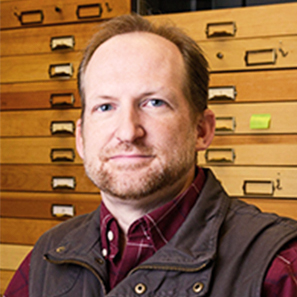
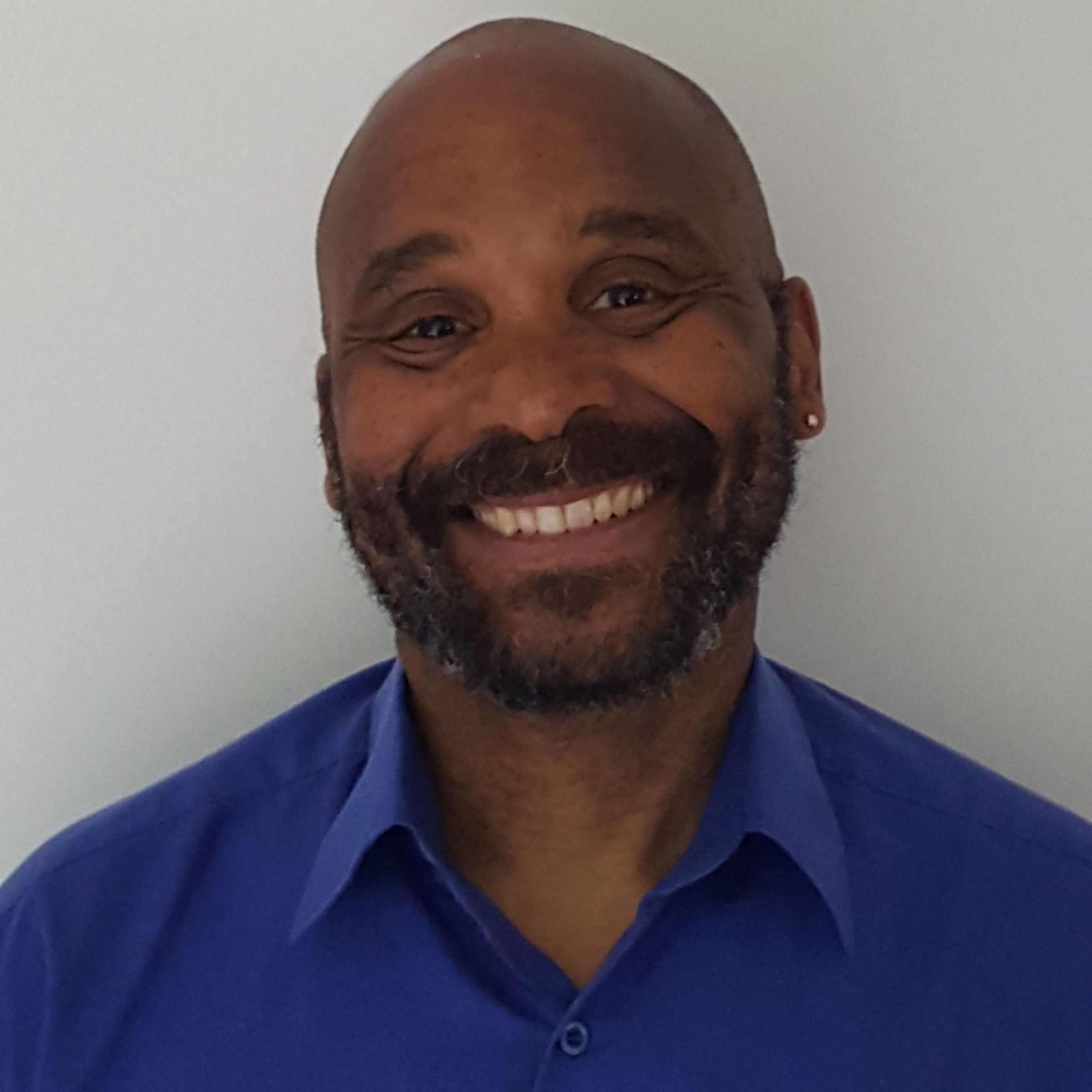
Dr. John Abbott is an Associate Professor and Chief Curator at the University of Alabama Museums , where he leads the Department of Museum Research & Collections. With a PhD in Entomology from the University of North Texas (1999), his career spans academic research, conservation initiatives, and public outreach. Education: PhD (1999), MS (1998) from University of North Texas; BS (1993) from Texas A&M Academic Role: Associate Professor at University of Alabama Museums since 2016 Research Leadership: Editor-in-Chief of International Journal of Odonatology Research Focus: Specializes in Odonatology (dragonfly and damselfly studies), combining systematics , biogeography , and conservation biology with innovative citizen science approaches. Key projects include: Conservation genetics of endangered dragonflies Population dynamics of American Burying Beetle Citizen science data collection networks Field guide development (Texas and North America) Wing evolution and digitization projects Scientific Contributions: Author of 4+ field guides, with 1500+ research photos documenting global insect diversity. His work appears in journals like Freshwater Biology and Biological Invasions . Awards: Notable recognition includes the Hamilton Book Award at UT Austin for his Damselflies of Texas publication. Outreach: Active nature photographer and science communicator, maintaining platforms like OdonataCentral and PondWatch for public engagement.
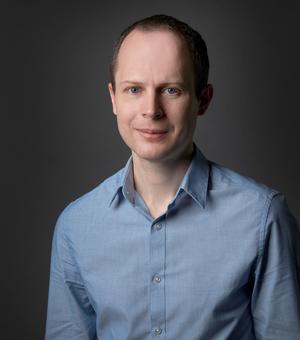
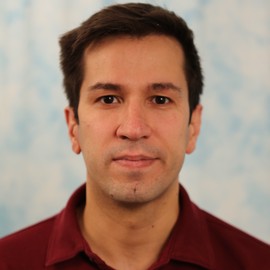
Periklis Andritsos is an Associate Professor at the University of West Attica's Department of Informatics and Computer Engineering. Previously, he served as an Assistant Professor at the University of Toronto's Faculty of Information (iSchool). He holds a PhD in Computer Science from the University of Toronto (2004), with postdoctoral research under Professors Renée J. Miller and Kenneth C. Sevcik. His research focuses on data clustering, process mining, customer journey analytics, and database design. He co-founded Thoora Inc. (winner of TechCrunch 50 2009) and Odaia.ai, applying his work to real-world applications in banking and urban transport systems. Education: PhD in Computer Science, University of Toronto (2004); MEng from National Technical University of Athens (Diploma in Electrical & Computer Engineering). Awards: Multiple Best Paper Awards (ICPM 2021, ADBIS 2019), TechCrunch 50 Award, and recognition in industry collaborations with institutions like the National Bank of Denmark and Lausanne Municipality. Research Interests: Process mining for customer journey mapping, categorical data clustering (notably the LIMBO algorithm), and applications in sales process optimization, data warehousing, and entity lifecycle management. Service: Program committee roles at EDBT, SIGMOD, KDD, and other conferences; editorial contributions to journals and special issues. His work on LIMBO remains a benchmark in categorical clustering, while recent efforts in process mining have pioneered customer journey analytics. He actively engages with industry, notably through Odaia.ai's application of his research in customer journey mapping tools.
Marianne Winslett is a Professor at the University of Illinois' Siebel School of Computing and Data Science, affiliated with the Department of Computer Science since 1987. Her research focuses on data security, information management, and privacy in cyber-physical systems. She co-led the TrustBuilder project, advancing access control and authentication in open computing environments, and directed the Advanced Digital Sciences Center (ADSC) in Singapore from 2009–2013, addressing challenges in data analytics and smart grids. Her work includes pioneering methods to ensure privacy in biomedical data analysis. Education: Earned her doctorate in Computer Science from Stanford University and worked at Bell Labs before joining Illinois. Awards: ACM Fellow (2006), NSF Presidential Young Investigator (1989), University Scholar, and Stanley H. Pierce Award for advising. She has supervised 24 PhD theses and mentored numerous graduate students, particularly supporting female scholars. Research Interests Secure data management in distributed systems Privacy-preserving techniques for biomedical data Adversarial attack detection in cyber-physical systems like smart grids Elastic resource scheduling in cloud environments Query optimization under differential privacy constraints Key Contributions Developed frameworks for self-supervised learning in smart grid cybersecurity Pioneered causal mechanism transfer networks for mechanical system domain adaptation Advanced auto-scaling strategies for real-time stream processing (DRS/Elasticutor systems) Labs & Teams Former Director of the Advanced Digital Sciences Center (ADSC), a University of Illinois research outpost in Singapore focusing on data analytics and IoT applications.
Dr Andrew Shapland is the Sir Arthur Evans Curator of Bronze Age and Classical Greece at the Ashmolean Museum and Supernumerary Fellow in Archaeology at Jesus College, University of Oxford. He holds MA (Cantab) and PhD (UCL) degrees. His research focuses on Minoan material culture, human-animal relations in Bronze Age Crete, and the history of Aegean archaeology. He has directed excavations at Palaikastro since 2020 and co-directed the Knossos Urban Landscape Project. Notable exhibitions include 'Labyrinth: Knossos, Myth & Reality' (2023) and 'Troy: Myth and Reality' (2019). His 2022 monograph on human-animal relations explores Cretan cultural practices through material evidence. Education: BA Archaeology & Anthropology, Peterhouse College, Cambridge MA and PhD in Archaeology, UCL Institute of Archaeology Research Interests: Bronze Age Crete, Minoan art and architecture, history of archaeology, and First World War discoveries in Macedonia. Current projects include digitizing the Sir Arthur Evans Archive and fieldwork at Palaikastro. Teaching: Undergraduate courses on Homeric Archaeology and handling sessions at the Ashmolean. Graduate modules on Aegean Bronze Age archaeology. Fieldwork & Exhibitions: Co-curator of major exhibitions at the British Museum and Ashmolean. Active in Knossos research and post-war archaeological legacy studies in the Balkans.
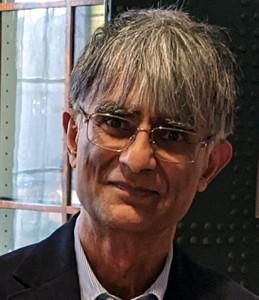
Sir Harshad Bhadeshia is Professor of Metallurgy at the School of Engineering and Materials Science, Queen Mary University of London. A distinguished academic holding Fellowships of the Royal Society (FRS), Royal Academy of Engineering (FREng), and Institute of Materials, Minerals and Mining (FIMMM), his career has been dedicated to advancing the fundamental understanding of metallurgical phenomena with practical industrial applications. His work bridges theoretical developments with real-world engineering challenges in steel technology and sustainable materials design. Professor Bhadeshia's research focuses on the theory of solid-state phase transformations, with particular emphasis on predicting and verifying structural development in complex metallic alloys, especially multicomponent steels. His interests span physical and chemical metallurgy, phase transformations, mathematical modeling, alloy design, and materials algorithms. He has made significant contributions to understanding hydrogen interaction with iron and its compounds, bainite formation, and the development of nanostructured steels with exceptional properties. His work on computational approaches to materials science has led to practical tools for steel design and manufacturing. Analysis of his recent publications reveals a sustained focus on fundamental metallurgical phenomena with practical applications across multiple domains. His research spans steel design for specific applications (rails, welds), phase transformations (bainite, pearlite), hydrogen-related phenomena, and computational materials science. A consistent theme is the integration of theoretical understanding with practical engineering solutions, particularly in addressing challenges related to sustainability, hydrogen embrittlement, and advanced manufacturing techniques like additive manufacturing. Fellow of the Royal Society (FRS) Fellow of the Royal Academy of Engineering (FREng) Fellow of the Institute of Materials, Minerals and Mining (FIMMM) Knighthood for services to metallurgy Extensive publication record spanning decades Development of freely available teaching resources through the Materials Algorithms Project (MAP) Professor Bhadeshia has mentored numerous researchers throughout his career, evident from his extensive collaborative publication record. His work has been supported by significant research grants, particularly in the areas of steel development, phase transformations, and sustainable engineering. He has led major research projects addressing critical challenges in materials science, including hydrogen embrittlement, high-temperature performance of steels, and computational design of advanced alloys. His research group has made substantial contributions to understanding the fundamental mechanisms governing steel behavior under various conditions. Based at Queen Mary University of London, Professor Bhadeshia leads research within the Centre for Sustainable Engineering. His team focuses on metallurgy, particularly steel research, phase transformations, and computational materials science. Current research directions include developing steels with enhanced resistance to hydrogen embrittlement, designing sustainable steel alloys with reduced carbon footprint, and advancing computational methods for predicting microstructure-property relationships. The group maintains strong industry collaborations, ensuring their research addresses real-world engineering challenges while advancing fundamental scientific understanding.
Frank Papenmeier is a Professor in the Department of Psychology at the University of Tübingen, within the Faculty of Science. His research focuses on event cognition, human-robot interaction, visual working memory, and visual attention. He coordinates the 'Coordination Cognitive Psychology and Research Methods' research group. His work explores how people perceive and interact with dynamic environments, including studies on event segmentation, cognitive offloading, and aesthetic judgments. He has contributed to over 100 peer-reviewed articles, with recent work addressing topics like the impact of framing on art perception and the role of AI in education. Papenmeier's research integrates experimental methods with interdisciplinary approaches, including collaborations on teleoperation systems and AI-based tutoring. He has presented at major conferences such as the European Society for Cognitive Psychology and the Psychonomic Society. His lab emphasizes methodological rigor, evidenced by contributions to replication databases and open science initiatives. Education: Not explicitly stated in the text, but his titles include Dr. rer. nat. (Doctor of Natural Sciences) and Diplom-Psychologe (Psychology Diploma). Research Interests: His primary areas include event cognition, human-robot interaction (e.g., helping behavior toward robots), visual working memory (e.g., spatial configuration processing), and cognitive offloading (e.g., impact on memory and performance). He also investigates aesthetic judgments and narrative comprehension through eye-tracking and experimental paradigms. Articles Trends: Recent work addresses applied topics like cookie consent interfaces, AI in education (e.g., R programming tutors), and perceptual effects in 3D cinema. His studies often bridge cognitive theory with real-world applications, such as usability design and social robotics. Labs/Teams: Leads the research group 'Coordination Cognitive Psychology and Research Methods' at the University of Tübingen. Collaborates with interdisciplinary teams on projects involving robotics, AI, and human-computer interaction.
Lise Getoor is a Professor in the Department of Computer Science at the University of California, Santa Cruz, within the Baskin School of Engineering. She previously held positions at the University of Maryland, College Park and has established herself as a leading researcher in statistical relational learning and neuro-symbolic artificial intelligence. Her research focuses on developing principled approaches to reasoning and learning with rich, relational data. She has made significant contributions to probabilistic soft logic, statistical relational learning, knowledge graph construction, and the integration of symbolic and neural approaches to AI. Her work bridges theoretical foundations with practical applications in areas including social network analysis, sustainable recommendations, cyberbullying detection, and fair machine learning systems. Analysis of her recent publications reveals a strong trend toward neuro-symbolic integration, with increasing focus on combining neural networks with logical reasoning frameworks. Her research demonstrates consistent innovation in developing scalable algorithms for structured prediction across diverse application domains while addressing critical issues of fairness and interpretability in AI systems. Professor Getoor has advised numerous PhD students who have become active contributors to the field, including Connor Pryor, Charles Dickens, Eriq Augustine, and Varun Embar. Her research has been supported by multiple grants from major funding agencies, though specific details aren't provided in the current data. She leads research in the Statistical Relational AI (StaRAI) Lab at UC Santa Cruz, where her team develops frameworks that combine logical reasoning with probabilistic modeling to address complex real-world problems requiring both structured knowledge and statistical learning.
Dr. Yaguang Zhang is a Clinical Assistant Professor at Purdue University, jointly appointed in the Department of Agricultural & Biological Engineering (ABE) and the Department of Agricultural Sciences Education & Communication (ASEC) . Holding a Ph.D. in Electrical and Computer Engineering from Purdue (2021), he specializes in data science , digital agriculture , and UAV-aided wireless communication systems , with applications in intelligent transportation, proactive road maintenance, and engineering education. Education: Ph.D. and M.Sc. in Electrical and Computer Engineering (Purdue), B.Eng. in Communication Engineering (Tianjin University) Research Interests span cutting-edge domains including: Digital Agriculture: GPS-based field shape generation, product traceability trees, and automated metadata collection for agricultural operations Wireless Communication: Millimeter-wave channel modeling, UAV relay systems, and rural network coverage optimization Smart Infrastructure: Pavement condition assessment tools, sun-shadow simulation for road treatment, and vehicle automation platforms Recent Publications emphasize scalable solutions for agricultural IoT, machine learning in crop monitoring, and interoperable data frameworks. His scientific awards include: 2024 Outstanding Engineering Teacher (Purdue) 2024 ASABE Superior Paper Award 2020 FFAR Student Poster First Prize Multiple NSF/IEEE travel supports Grants from USDA, NSF, INDOT, and industry partners (CableLabs, Nokia) fund projects like tractor autopilot development, rural 6G networks, and pavement monitoring systems. He mentors graduate students in agricultural robotics , data science , and connected vehicle research .
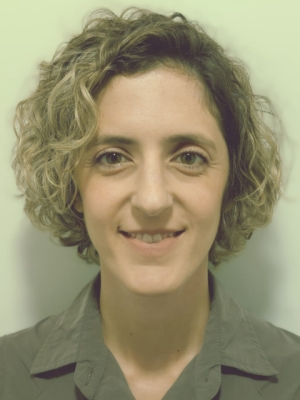
Dr. Fernanda Belizario Silva is a Lecturer at ETH Zürich's Department of Civil, Environmental and Geomatic Engineering, specializing in Sustainable Construction. She holds a PhD from the University of São Paulo, with research stays at the Fraunhofer Institute and ETH Zürich. Her work focuses on Life Cycle Assessment (LCA) methodologies for decision support, particularly in simplifying LCA tools for developing countries like Brazil. She developed the Sidac system, a streamlined LCA tool for construction products, and contributed to life cycle inventories for Brazilian cementitious products in the ecoinvent database. Education: Bachelor's in Civil Engineering (2008), Polytechnic School of the University of São Paulo Master's in Construction Process Planning (2012), University of São Paulo PhD in Sustainable Construction and LCA (2023), University of São Paulo Research Interests: Embodied environmental impacts of buildings Simplified LCA methods for developing nations Carbon footprint reduction in construction materials Hygrothermal behavior of construction systems Her recent articles explore carbon savings in concrete structures, recycled asphalt strategies, and CO2 footprints of building materials. She collaborates with industry partners to bridge research and practical sustainability solutions. Currently, she holds a postdoctoral position at ETH Zürich's Chair of Sustainable Construction. Professional Affiliations: Member of RILEM (International Union of Laboratories and Experts in Construction Materials).
David McKie is an Ottawa-based journalist and adjunct professor specializing in investigative journalism, data journalism, and freedom-of-information law. He holds a Master of Journalism from Carleton University and currently teaches at the University of King’s College School of Journalism, Carleton University, and Ryerson University. As National Observer’s Deputy Managing Editor, he combines academic and professional roles, focusing on training journalists in computer-assisted reporting and access-to-information requests. His research interests include leveraging public records for investigative stories, data-driven journalism techniques, and fostering transparency through legal frameworks. McKie has authored/co-authored multiple textbooks on journalism practices and has received prestigious awards for investigative work, including the Michener Award and RTNDA honors.
Prof. Harald Bugmann is a Full Professor of Forest Ecology at ETH Zurich's Department of Environmental Systems Science. He previously held roles as Assistant Professor (1999–2004) and Extraordinary Professor of Forest Ecology. His research focuses on long-term dynamics of forest ecosystems under environmental change, particularly in mountain forests and disturbance regimes like wildfires. He contributed to the IPCC and led projects under the IGBP's Global Change and Terrestrial Ecosystems (GCTE) and Mountain Research Initiative (MRI). Education: PhD in Terrestrial Ecology from ETH Zurich (1994), M.Sc. in Limnology, and studies in Systematics/Ecological Biology. Awards include the ETH Medal for his PhD and MSc theses, and the Swiss Limnology-Hydrobiology Award (1990). Research Interests: Climate change impacts, forest resilience, and ecological modeling. Key contributions include studies on drought-driven tree mortality, nitrogen's role in soil carbon dynamics, and participatory scenario processes for climate adaptation. Awards: ETH Medal for PhD thesis (1994) Swiss Limnology-Hydrobiology Award (1990) ETH Medal for MSc thesis (1989) Grants & Projects: Leads the MainWood project on sustainable forest use and collaborates on initiatives like the Forest Ecology Group (FE.ETHZ.CH). Labs/Teams: Director of the Forest Ecology Group at ETH Zurich, involved in the Zurich Forest Lab (Waldlabor Zürich) for applied research and knowledge transfer.
Kristopher Micinski is an Assistant Professor in the Electrical Engineering and Computer Science Department at Syracuse University. His research focuses on scalable program analysis, static analysis, and formal methods applied to computer security and privacy. He holds a PhD in Computer Science from the University of Maryland and a BS in Computer Engineering from Michigan State University. Education: PhD, Computer Science, University of Maryland at College Park BS, Computer Engineering, Michigan State University Research Interests: His work bridges theory and application of program analyses, emphasizing scalable static analysis frameworks, Datalog optimization for distributed systems, and security applications. Recent efforts include GPU-accelerated Datalog engines and large-scale malware analysis pipelines like Assemblage. Grants & Projects: NSF PPoSS Large: $1M grant for declarative analytics DARPA V-SPELLS: $400K for legacy software optimization Assemblage: $350K DoD grant for malware classification Teaching: He teaches undergraduate and graduate courses on programming languages (CIS352) and formal methods (CIS700), with materials publicly available on YouTube.
Hamed Nabizadeh Rafsanjani, Ph.D., P.E., ENV SP is a Lecturer at the University of Georgia (UGA) College of Engineering since 2018. He holds a Ph.D. and master’s degrees in Construction Engineering and Management from the University of Nebraska-Lincoln (UNL). Prior to UGA, he served as an assistant professor and visiting lecturer at various universities, earning accolades such as the Best Teacher Award and Best Researcher Award. His research focuses on IoT, AI, and Digital Twin technologies applied to Architecture, Engineering, and Construction (AEC) industries. As director of iSC-LAB, he develops IoT-based platforms to analyze building occupants’ energy-use behaviors and improve learning environments. His research interests span smart building systems, non-intrusive energy monitoring, and occupant behavior analysis. Key projects include a global occupant behavior database and an IoT-based smartphone energy assistant (iSEA). He has secured grants from agencies like the National Science Foundation (NSF), contributing to studies on energy efficiency, construction project management, and sustainability in built environments. Rafsanjani’s publications (2018–2023) emphasize AI-driven solutions for AEC, IoT applications in energy management, and adaptive learning systems. His work bridges technology and human behavior to optimize building performance and educational outcomes. Awards reflect his dual excellence in pedagogy and research, with ongoing contributions to the Sustainable Human-Building Ecosystems field.
Feras Saad is an Assistant Professor in the Computer Science Department at Carnegie Mellon University, affiliated with the Principles of Programming and Artificial Intelligence groups. He received his Ph.D. in Computer Science from the Massachusetts Institute of Technology (MIT) in 2022, where his dissertations on probabilistic programming systems earned him the George M. Sprowls PhD Thesis Award and Charles & Jennifer Johnson MEng Thesis Award. His research focuses on developing scalable computing systems for probabilistic modeling and inference, integrating ideas from programming languages and probabilistic AI. Key research themes include probabilistic programming languages, automated probabilistic model discovery, statistical estimation and testing, random sampling algorithms, and applications in science and engineering. His lab explores new techniques to improve reasoning systems through automation, accuracy, and scale. Dr. Saad has published extensively in top venues including PLDI, POPL, ICML, and Nature Communications. His work spans foundational computational questions to practical software systems for probabilistic inference. Research trends show consistent focus on bridging theoretical computer science with practical applications in probabilistic modeling, with recent advances in random sampling algorithms and probabilistic programming systems. Awards and honors include: George M. Sprowls PhD Thesis Award in Artificial Intelligence and Decision Making (2023) Charles & Jennifer Johnson MEng Thesis Award in Computer Science (2017) Editor's Highlight for Nature Communications paper (2024) He currently advises graduate students Gaurav Arya and Thomas Draper in the Probabilistic Computing Systems Lab. His research is supported by software libraries including GenSQL, BayesNF, and SPPL that enable practical applications across scientific domains.
Ruben Martins is an Assistant Research Professor and Master’s Program Director at the School of Computer Science, Carnegie Mellon University. He holds a Ph.D. from the Technical University of Lisbon, followed by postdoctoral research at the University of Oxford and UT Austin. His work focuses on constraint programming, program synthesis, and formal verification, with applications in improving programmer productivity and automating data science tasks. Education: Ph.D. in Computer Science, Technical University of Lisbon (2013) Postdoctoral Researcher, University of Oxford (2014-2015) Postdoctoral Researcher, UT Austin (2015-2017) Ruben's research bridges constraint programming with program synthesis, aiming to automate tasks such as vulnerability detection, code repair, and SQL synthesis. He developed Open-WBO , a MaxSAT solver that won multiple gold medals and is used in real-world optimization scenarios like seating arrangements for events. His work integrates large language models (LLMs) with traditional methods to enhance software analysis and debugging. Awards: Distinguished Paper Award at PLDI 2018 Gold Medal in MaxSAT Competitions for Open-WBO Advising & Grants: Ruben advises Master’s students and directs courses such as 15639, 15604, and others. His research has been supported by grants focusing on program synthesis and cybersecurity. Labs/Teams: Leads development of Open-WBO and contributes to projects like Crabtree (Rust API testing) and Pryde (evasion attack analysis).