Alvin Cheung is an Associate Professor at the University of California at Berkeley, affiliated with the Department of Electrical Engineering and Computer Sciences (EECS). He leads the Data Systems and Foundations group, Programming Systems group, Sky Lab, and SLICE Lab, while also serving as a faculty affiliate at the Berkeley Institute for Data Science. His research focuses on integrating data management, programming languages, and software systems to develop tools for scalable data processing pipelines and improved data programming experiences. PhD students advised: Sahil Bhatia, Mick Kittivorawong, Jongseok Park Research keywords include Data Management , Programming Languages , Program Synthesis , Formal Verification , and Machine Learning . His recent work explores Verified Lifting techniques for database applications, stencil computations, and cloud systems, alongside novel programming paradigms for geospatial video analytics and speculative decoding. His publications from 2023-2025 demonstrate trends in LLM-driven code optimization , automated SQL equivalence , and neural code generation across domains like tensor operations and geospatial video systems. Notable scientific achievements include the Dahl-Nygaard Prize (2024) , VLDB Early Career Award (2023) , and CHI Best Paper Award (2021) .
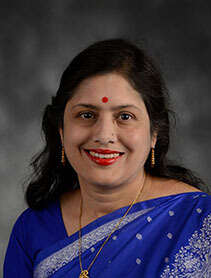
Claudia Álvarez Aparicio is an Assistant Professor at the Department of Mechanical, Informatics and Aerospace Engineering, within the College of Industrial, Informatics and Aerospace Engineering at the University of León. Her work focuses on robotics, cybersecurity, and machine learning applications in autonomous systems. Doctorate in Machine Learning for Service Robots (2022) Research interests span Robotics , Cybersecurity , and Machine Learning . Her recent publications analyze Cybersecurity in robotic platforms, SQL injection detection , blockchain-based black boxes , and unsupervised learning for traffic anomalies. Key themes include LiDAR sensors , autonomous systems , and security evaluation .
Zhenlin Wang is a Professor and Chair of the Department of Computer Science at Michigan Technological University's College of Computing. He earned a BS (1992) and MS (1995) from Peking University, and a PhD in Computer Science from the University of Massachusetts, Amherst (2003). He joined Michigan Tech in 2003 as an assistant professor, became associate professor in 2009, and full professor in 2015. University: Michigan Technological University School: College of Computing Department: Computer Science Academic Rank: Professor His research bridges compilers, operating systems, and computer architecture , with core focus on memory system optimization and virtualization. Key research areas include: Memory hierarchy optimization Cache replacement modeling GPU programming and architecture Virtualization and cloud computing Datacenter resource management Heterogeneous memory systems Recent publications analyze GPU speculation (GSpecPal), hardware-assisted virtualization (Accelerating Address Translation), and graph neural network-based memory inefficiency detection (GRAPHSPY). His work often integrates compiler analysis with hardware insights for performance improvements. Scientific Awards NSF CAREER Award 0643664 (2007-2012) NSF SaTC2225424 (2022-2025) Best Paper Award at ICS’23 (FLORIA paper) He has advised numerous PhD and MS students in memory systems, virtualization, and distributed computing. Current advisees include Shiwei Ding (PhD candidate) and Junyao Yang (PhD candidate).
Prof. Dr. Gjergji Kasneci is a Professor of Responsible Data Science at the Technical University of Munich (TUM), leading the Chair of Responsible Data Science. He holds affiliations with the TUM School of Social Sciences and Technology and the TUM School of Computation, Information and Technology. His research focuses on ethical, legal, and societal aspects of AI, emphasizing transparency, fairness, and robustness in machine learning algorithms. Prof. Kasneci’s academic journey includes a PhD in Computer Science from the University of Marburg (2009), postdoctoral research at Microsoft Research Cambridge, and leadership roles at the Hasso Plattner Institute and SCHUFA Holding AG. He was an Honorary Professor at the University of Tübingen (2018–2023) and currently serves as Vice Dean and Information Officer at TUM. Key awards include the Seoul Test of Time Award (2018) and an Honorary Professorship from the University of Tübingen (2019). He leads initiatives like the AI in Finance Lab and contributes to AI policy through projects such as the EU-funded AI4POL initiative.
Professor Willy Zwaenepoel is a distinguished academic and Dean of the Faculty of Engineering at the University of Sydney. He holds Fellowships from ACM, IEEE, and ATSE. His research focuses on distributed systems, operating systems, and experimental computer science. Previously, he spent two decades at Rice University and nine years as Dean of EPFL's School of Computer and Communication Sciences before joining Sydney in 2018. Education: BS/MS, Ghent University (1979) MS/PhD, Stanford University (1980/1984) Research Interests: His work emphasizes distributed systems and operating systems, with contributions to key-value stores, transactional systems, and large-scale graph processing. Recent projects include optimizing geo-replicated systems and improving datacenter scheduling efficiency. Articles Trends: Recent publications address OS scheduling (Nest), distributed graph mining (Tesseract), and transactional systems' performance limits. He explores hardware-software co-design for multicore systems and energy-efficient data centers. Awards: Fellow of ACM (2021) Fellow of IEEE (2020) Fellow of ATSE (2019) Grants & Advising: Active grants include adaptive key-value store research (2021) and large-graph processing systems (2018). He advises PhD students and postdocs on distributed systems and storage challenges. Labs/Teams: Leads the Sydney systems research group focusing on scalable distributed systems and cloud infrastructure.
Dr. Sikha Bagui is a Distinguished University Professor in the Department of Computer Science at the University of West Florida , within the Hal Marcus College of Science and Engineering . She previously served as Chair of the department and Founding Director of the Center for Cybersecurity. Her research spans Big Data Analytics, Machine Learning, Data Mining, and Database Design, with extensive publications and funded projects from NSF and NSA. Ed.D. in Curriculum & Instruction: Math & Stat / Science / Computer Science, University of West Florida M.B.A., University of Toledo B.S., Cuttington University (Liberia) Dr. Bagui's research centers on data-intensive computing , focusing on scalable algorithms for Big Data analytics, optimization in distributed environments (Hadoop, Spark, Hive), and applications in cybersecurity such as intrusion detection and phishing classification. She is particularly known for her work in data preprocessing, association rule mining, and improving classifier performance on imbalanced datasets. Her recent publications reveal a strong trend toward cybersecurity applications of machine learning , leveraging frameworks like MapReduce and Spark for scalable solutions. Topics include network traffic classification, load balancing in FP-Growth, and resampling techniques for intrusion detection. Her work bridges theoretical algorithm development with practical implementation in real-world Big Data systems. Distinguished University Professor Askew Fellow NSF CSForALL Grant ($300,000) NSA NCAE Grant ($375,511) Dr. Bagui has successfully led multiple federally funded research projects and mentored numerous students through research and academic programs. While specific advisees are not listed, her leadership in research groups and outreach initiatives like Women in Computing demonstrates strong mentorship. She has also authored influential textbooks used internationally. Her lab and research efforts are aligned with the UWF Smart Home Research , AI Research Group , and High Performance Computing Research , contributing to interdisciplinary innovation.
Alexander Loeser is a researcher active in natural language processing (NLP) and its applications in clinical and financial domains. He has contributed to diverse areas including clinical outcome prediction, transformer-based reinforcement learning environments, domain knowledge integration, and information extraction from text. His recent work focuses on evaluating large language models' financial literacy via domain-specific languages and addressing data drift in clinical NLP tasks. Key Research Areas: Clinical decision support systems and outcome prediction Domain knowledge injection into transformer models Biased news article detection Interactive NLP systems for entity linking Methodological Focus: Reinforcement learning and attention mechanisms Multi-task and self-supervised learning Active sampling for annotation efficiency Topic segmentation and classification Loeser has collaborated extensively with researchers like Wolfgang Nejdl, Betty van Aken, Felix Gers, and Paul Grundmann, with publications spanning from 2012 to 2025. His work emphasizes interpretability, generalization, and practical deployment of NLP models in real-world domains.
Anna Queralt Calafat is an Associate Professor at the Universitat Politècnica de Catalunya (UPC), affiliated with the Department of Services and Information Systems Engineering at the Barcelona School of Informatics. Her research focuses on High-Performance Computing (HPC), distributed systems, and data governance, with notable contributions in knowledge graphs, cloud-edge continuum management, and parallel workflow optimization. She leads projects funded by European and national grants, including contributions to strategic research agendas like ETP4HPC. Queralt has supervised doctoral students like Jonathan Marti and Rizkallah Touma, and her work spans over 100 publications in top venues such as Future Generation Computer Systems and the International Semantic Web Conference. She actively participates in conference committees and has received a Best Student Paper Award for collaborative research. Her educational background includes a degree in Computer Engineering and a doctorate in Software. She is part of research groups inSSIDE and DTIM, advancing areas like HPC integration with big data analytics. Key projects include automated data lifecycle management and fog-to-cloud distributed processing. Her work bridges theoretical models with practical systems like DataClay and PyCOMPSs, emphasizing scalable and efficient computing solutions.
Jorge Augusto Meira is a Research Scientist at the University of Luxembourg's Interdisciplinary Centre for Security, Reliability and Trust (SnT), specifically within the Services and Data Management research group (SEDAN). He holds a PhD in Computer Science from the University of Luxembourg (2014) and has 15+ years of experience spanning industry and academic research roles including software development, system analysis, data science, project management, and principal investigator positions. His research focuses on machine learning applications in anomaly detection (e.g., anti-money laundering), big data analytics, recommendation systems, and database optimization. Notable areas include cybersecurity for blockchain networks, insurance risk modeling using Hawkes processes, and energy-efficient database architectures. Publications span topics like vehicle routing optimization, natural disaster prediction models, and privacy-preserving data systems. He has contributed to both theoretical advancements and practical implementations in areas like smart grid monitoring and aviation predictive maintenance. His work frequently bridges AI techniques with real-world infrastructure challenges across transportation, finance, and healthcare sectors. Led by Prof. Radu State, the SEDAN group focuses on service-oriented architectures and data management innovations. While no formal awards are listed, his extensive publication record reflects sustained contributions to interdisciplinary tech research.
Pierre-Yves Schobbens is a Full Professor at the University of Namur, Faculty of Computer Science, specializing in software verification and formal methods. He serves as the Director of the Research Group on the Foundations of Computer Science (FOCUS) and holds leadership roles including President of the Research Center on Information Systems Engineering (PReCISE), Chair of the International Affairs Commission for the Faculty of Computer Science, and Chair of the Doctoral Commission for Exact Sciences at the university. Education: Bachelor in Philosophy, Université Catholique de Louvain (UCL), 1982 Master in Applied Mathematics and Economics, UCL, 1983 Master in Computer Engineering, UCL, 1984 Doctorate in Computer Science, UCL, 1992 Research Interests: Professor Schobbens specializes in software product lines, software verification, formal methods, agent-oriented software, and model checking. His research focuses on developing rigorous approaches for software development and verification, particularly in the context of variability-intensive systems. He has made significant contributions to the field of featured transition systems, which enable the verification of software product lines. His work bridges theoretical computer science with practical applications, addressing challenges in real-time systems, adaptive software, and database performance. Recent research directions include applying artificial intelligence techniques to software quality assurance, energy-aware computing, and the development of context-aware systems. Research Trends: Professor Schobbens' recent publications demonstrate a strong focus on the intersection of formal methods and emerging technologies. His work increasingly incorporates AI and machine learning techniques to address traditional software engineering challenges, particularly in software verification and testing. There's a notable emphasis on energy efficiency in computing systems, variability modeling for database performance testing, and the application of formal methods to self-adaptive systems. His research maintains a strong theoretical foundation while addressing practical concerns in software development. Scientific Awards: Most Influential Paper Award, VAMOS 2024 (ten-year award) Most Influential Paper Award, Software Product Lines Conference 2020 Most Influential Paper Award, International Requirements Engineering Conference 2016 Best Presentation Award, SAFECOMP 2012 Advising and Grants: Professor Schobbens has supervised 94 students across various levels. He leads multiple significant research projects including SQUAL.AI (Software Quality through Artificial Intelligence, 2025-2026), ERNEST (schEduler foR eNErgy autonomouS ioT, 2024-2025), and CYBEREXCELLENCE (Cyber Security Excellence project within the Walloon Region, 2022-2027). His research has been consistently funded since 1999, demonstrating sustained impact and relevance in his field. Laboratories and Research Teams: Professor Schobbens directs the Research Group on the Foundations of Computer Science (FOCUS) and is a key member of the Research Center on Information Systems Engineering (PReCISE). He also contributes to the Namur Digital Institute (NADI) and Namur Research Institute for Life Sciences (Narilis). His research group focuses on formal methods for software engineering, particularly addressing challenges in software product lines, model checking, and adaptive systems.
Aaron Tabor is an Assistant Professor at the University of New Brunswick . His research focuses on bridging Human-Computer Interaction (HCI) with Biomedical Engineering and Health Informatics to develop innovative rehabilitation technologies and wellness-oriented systems. Email: q4k8p@unb.ca Office: Room GE109A His work emphasizes inbodied interaction design , which integrates internal physiological processes into technology development. Key areas include breathing exercise systems for ADHD and chronic disease management, EMG feedback for spinal cord injury rehabilitation, and gamification in therapeutic interventions. Research Trends : The provided articles highlight his focus on three domains: (1) gait analysis using underfoot pressure sensors and deep learning, (2) respiratory therapy through biofeedback and idle games, and (3) inbodied interaction frameworks that leverage neuro-physiological pathways for self-tuning systems. These works often intersect machine learning , gamification , and non-invasive physiological monitoring .
Witold Andrzejewski is an active researcher in computer science, focusing on data deduplication pipelines, co-location pattern mining, and GPU-accelerated algorithms. His work bridges academia and industry, with publications analyzing customer record deduplication in the financial sector, performance optimization of spatial data processing, and comparative studies of statistical modeling versus machine learning approaches. 2025: Co-location pattern mining with Euclidean metrics 2024: Customer data deduplication parameter tuning 2023: Text similarity measures in financial applications
Carlo Curino is a researcher at Microsoft Research , focusing on database systems, cloud computing, and machine learning integration. He has collaborated extensively with institutions including MIT, Microsoft, and the University of Wisconsin-Madison. His research spans Geo-distributed data analytics Automated configuration tuning Tensor-based database systems Data lake optimization Spark performance engineering Recent publications highlight his work on AI-driven systems like MotherNet and Rockhopper , alongside contributions to query processing over compressed data and log-structured tables. Collaborators include prominent figures such as Raghu Ramakrishnan and Jesús Camacho-Rodríguez . Key projects involve LST-Bench (cloud storage benchmarking), AutoComp (data compaction), and PyFroid (commodity workstation analytics). His work bridges database optimization with modern machine learning demands in enterprise environments.
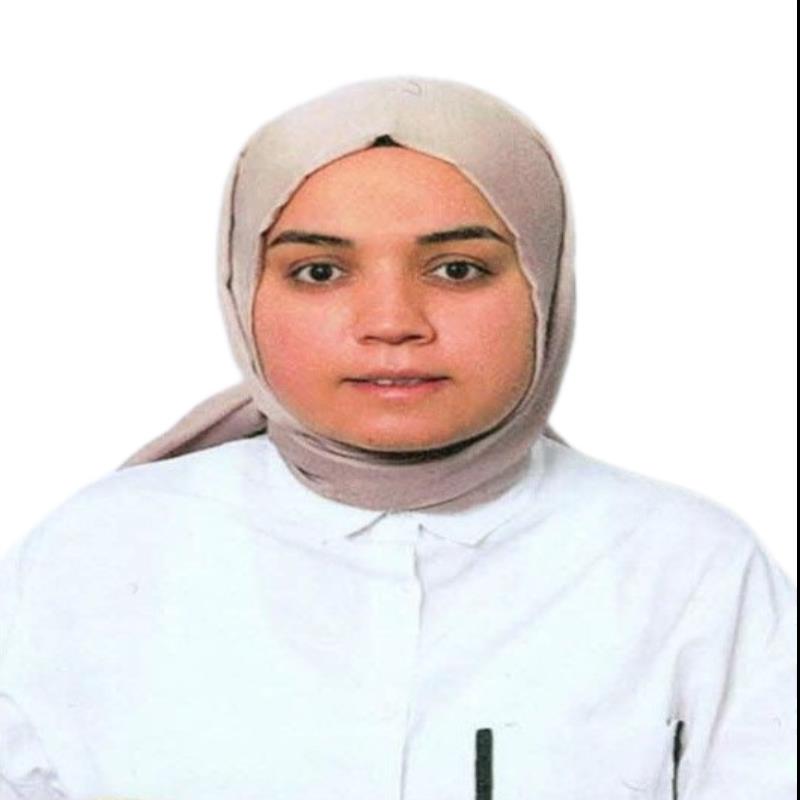
KÜBRA UYAR is a Lecturer at Alanya Alaaddin Keykubat University's Rafet Kayış Faculty of Engineering, Department of Computer Engineering. She previously worked as a Research Assistant at Selçuk University's Faculty of Technology (2022-2023) and continues her academic contributions in image processing and artificial intelligence. PhD in Computer Engineering (2022), Selçuk University MSc in Computer Engineering (2017), Selçuk University BSc in Computer Engineering (2014), Melikşah University Double Major in Mathematics (2014), Melikşah University Her research focuses on Artificial Intelligence , Computer Vision , and Medical Image Analysis , with a strong emphasis on Machine Learning and Image Processing . Current work includes developing explainable AI models for retinopathy diagnosis and optimizing CNN architectures for biomedical applications. Recent publications highlight trends in Deep Learning for agriculture (chestnut classification), Medical Imaging (retinopathy, leukocyte detection), and Optimization (CNN hyperparameters, B-spline algorithms). Her work bridges Computer Science with Healthcare and Industrial Applications . Key projects include the Data-Intensive and Computer Vision Research Laboratory Infrastructure Project (2020-2021) and the Selçuk University Weather Monitoring System (2018-2020), both funded by higher education institutions.
Carlos Guestrin is the Fortinet Founders Professor of Computer Science at Stanford University, Director of the Stanford AI Lab (SAIL), and Senior Fellow at the Stanford Institute for Human-Centered AI (HAI). He also serves as Chief Scientist at Visual Layer and Virtue AI, and is a Member of the National Academy of Engineering. His research centers on Machine Learning Methods, Explainability, Fairness & Ethics of AI, and Machine Learning Systems. He develops interpretable and reliable models, addresses algorithmic fairness, and builds efficient large-scale ML systems through frameworks like XGBoost. His work bridges theoretical rigor with real-world applications in healthcare and human-centered AI. His recent publications (2023–2025) demonstrate leadership in generative AI evaluation, model reliability, and ethical frameworks. Key trends include developing live benchmarks for research synthesis, on-device calibration techniques, multi-objective optimization with constraints, and societal impact assessment tools—showcasing a trajectory from foundational ML systems to responsible AI deployment. Honors include: Member of the National Academy of Engineering Details about his advising and grant activities were not provided in source materials, though his leadership roles indicate extensive mentorship and funding oversight. As Director of SAIL, he shapes one of the world’s premier AI research centers, while his HAI fellowship drives interdisciplinary initiatives ensuring AI advances human welfare. His industry roles at Visual Layer and Virtue AI translate academic research into practical AI solutions.