Bettina Kemme is a faculty member at McGill University in Montreal, Canada. Her research focuses on database systems , distributed computing , and cloud data management . She has made significant contributions to database replication, consistency models, and middleware frameworks for scalable applications. Research Themes : Database replication, distributed systems, cloud computing, and software engineering. Notable Collaborations : Jörg Kienzle, Joseph Vinish D'silva, Yunjia Zheng, and Marta Patiño-Martínez. Publications span critical areas such as graph database view management, transactional recovery in key-value stores, and latency-aware publish/subscribe systems. Her work is published in venues like VLDB , ICDE , Middleware , and SRDS .
Jeremy Edwards serves as a Professor in the Department of Chemistry at the University of New Mexico, where he maintains an active research program at the intersection of pharmaceutical chemistry, genomics, and computational biology. His work spans multiple disciplines with a particular focus on developing innovative technologies for DNA sequencing and analysis. Professor Edwards' research interests center around Pharmaceutical Chemistry, Quantitative Biology, and Genomic Technologies. His work has significantly contributed to the fields of metabolic engineering, genome sequencing, and systems biology. He has pioneered approaches in nanopore sequencing technology and developed computational frameworks for analyzing complex biological systems. His research group has made notable contributions to understanding metabolic networks through flux balance analysis and in silico modeling, with applications ranging from bacterial metabolism to mammalian systems. Analysis of Professor Edwards' publication record reveals a strong trend toward developing cutting-edge genomic technologies and computational approaches for biological analysis. His recent work focuses on spatial transcriptomics, nanopore sequencing innovations, viral genome surveillance, and target illumination for drug discovery. The publications demonstrate a consistent trajectory from foundational metabolic modeling work toward increasingly sophisticated genomic technologies and applications in drug target identification and validation. Professor Edwards has established himself as a leader in computational genomics with an extensive publication record including highly cited papers such as "In silico predictions of Escherichia coli metabolic capabilities are consistent with experimental data" (1297 citations) and "The Escherichia coli MG1655 in silico metabolic genotype: Its definition, characteristics, and capabilities" (1295 citations). His work on metabolic modeling has been particularly influential in systems biology. As an active researcher, Professor Edwards has mentored numerous students and collaborators, though specific student names aren't documented in the available materials. His research has attracted significant funding supporting the development of genomic technologies and computational approaches. His laboratory appears to focus on the intersection of bioinformatics, molecular biology, and engineering, with particular emphasis on next-generation sequencing technologies and their applications. Professor Edwards leads a research group that integrates computational modeling with experimental approaches to tackle challenges in genomic analysis and metabolic engineering. His team has developed innovative tools like the Sentieon Genomics Tools, described as "a fast and accurate solution to variant calling from next-generation sequence data." The group's work spans from fundamental research on DNA sequencing technologies to applied projects in viral surveillance and drug target identification.
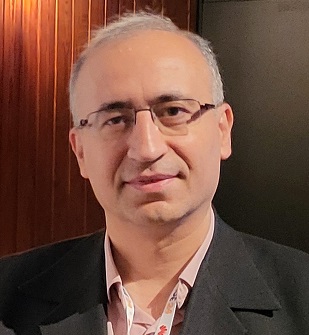
Abbas Heydarnoori is an Assistant Professor in the Department of Computer Science at Bowling Green State University (USA) since 2022, and previously held a faculty position at Sharif University of Technology (Iran) from 2012 to 2022. He earned his Ph.D. in Computer Science from the University of Waterloo (Canada, 2009), and M.Sc. and B.Sc. in Software Engineering from Sharif University of Technology (2001 and 1999). His research focuses on AI-driven software engineering (AI4SE/SE4AI), leveraging data science and AI to address challenges like fault localization, bug prediction, and code comprehension. He analyzes software repositories (e.g., GitHub, Stack Overflow) to improve developer productivity and software quality. He has contributed to tools like CrowdSummarizer and ExceptionTracer, and his work spans topics such as microservices architecture, API usage analysis, and code summarization. Teaching includes graduate/undergraduate courses on AI for Software Engineering, Database Systems, and Software Engineering. His service roles include editorial board membership at Science of Computer Programming , and PC membership in conferences like MSR, SANER, and FSE. His research group actively publishes on automated code analysis, documentation generation, and developer productivity tools, with a focus on empirical and data-driven approaches.
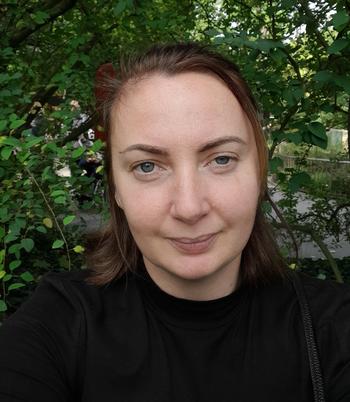
Dr. Oksana Buzhdygan is a Senior Researcher in Theoretical Ecology at the Department of Biology, Faculty of Biology, Chemistry, Pharmacy at Freie Universität Berlin. She holds a PhD in Ecology from Chernivtsi National University and has held postdoctoral positions at institutions including the University of Georgia (USA) and Freie Universität Berlin. Her research focuses on biodiversity-ecosystem functioning links, multitrophic interactions, and ecological network analysis. Education: BSc, MSc, and PhD in Ecology (2000–2008), Chernivtsi National University, Ukraine Postdoctoral Fellowships: University of Georgia (2010–2012), Freie Universität Berlin (2013–2021) Research Interests: Environmental change impacts on biodiversity and ecosystem functions Ecological network analysis of multitrophic systems Food web dynamics in grasslands and freshwater ecosystems Publications reflect her expertise in biodiversity effects on energy flow, human impact on ecosystems, and plant diversity drivers. Her work bridges theoretical ecology with applied conservation challenges, particularly in grasslands and agroecosystems. Labs/Teams: Member of the Tietjen Group (Theoretical Ecology at Freie Universität Berlin), collaborating widely in international projects on biodiversity and ecosystem services.
Yannick Benezeth is a Professor of Computer Science at Université de Bourgogne Franche-Comté in Dijon, France, where he teaches courses on databases, optimization, and image/video processing at the IUT de Dijon. He conducts research at the ImViA research laboratory (EA7535), focusing on video health monitoring and video analytics applications. His academic journey includes serving as an Associate Professor from 2011-2024 and earning his Habilitation à Diriger des Recherches (HDR) in 2019. Dr. Benezeth's research interests center on video-based health monitoring systems, particularly remote photoplethysmography (rPPG) for non-contact vital sign measurement. His work spans computer vision , video analytics , and physiological signal processing , with applications in stress detection, abnormal event recognition, and health monitoring. He has developed several publicly available datasets including UBFC-Phys, UBFC-RPPG, and IMVIA-NIR that have become valuable resources for researchers in affective computing and remote physiological monitoring. His publication record demonstrates consistent contributions to top computer vision venues including CVPR, ICPR, and IEEE Transactions. Recent work shows a clear trend toward multimodal approaches combining video analysis with physiological signal processing, particularly in psychophysiological stress studies. The UBFC-Phys dataset published in 2021 represents a significant contribution to affective computing research with over 50 participants and comprehensive physiological measurements. As a research supervisor with HDR qualification, Dr. Benezeth leads projects in the ImViA laboratory focusing on video analytics for healthcare applications. His team has developed innovative methods for background subtraction, abnormal event detection, and skin tissue segmentation that have been adopted by other researchers through his publicly shared code and datasets. Current work appears focused on improving the robustness of video-based physiological measurement under realistic conditions.
Andreas Rauber is an Associate Professor in the Department of Data Science at Technical University of Vienna. He serves as Curriculum Coordinator for Bachelor and Master programs in Business Informatics and Data Science, and chairs the Curriculum Commission for Business Informatics. His research focuses on Information Systems Engineering, Logic and Computation, and Visual Computing, addressing challenges in data management, digital preservation, and reproducibility in e-science. He leads projects like OS Trails and FAIR-AI, emphasizing FAIR principles and trustworthy research infrastructures. Rauber has contributed to over 150 publications, including works on data citation frameworks, adversarial ML defenses, and reproducibility in IR. His work bridges technical innovation with policy, exemplified through roles in the EOSC Support Office Austria and RDA Austria initiatives. Key projects include establishing FAIR data practices across universities and advancing digital preservation through repositories like DBRepo. He coordinates international collaborations, such as the EU-funded EOSC-Life and EGI Advanced Computing projects. His teaching spans courses in machine learning, information retrieval, and research methods, fostering next-generation data scientists.
Vineet Pandey is an Assistant Professor at the Kahlert School of Computing, University of Utah, and a Responsible AI Faculty Fellow starting Spring 2025. His research focuses on human-centered computing tools to bridge communities and institutional experts in science and medicine, emphasizing digital health and citizen science. He holds a Ph.D. in Computer Science from UC San Diego (2013-2019) and postdoctoral roles at MIT (2022-2023) and Harvard University (2020-2022). Education: Ph.D. in Computer Science, UC San Diego (2013-2019) Postdoctoral Researcher, MIT (2022-2023) Postdoctoral Fellow, Harvard University (2020-2022) Research Interests: Designing systems for community-led scientific work Remote health assessment tools for neurological disorders Social platforms for public participation in policymaking Collaborations with rare disease communities and healthcare institutions Articles Trends: Recent work spans motor impairment monitoring in ataxia-telangiectasia, digital phenotyping in ALS, and citizen science platforms like Galileo. Earlier contributions include key-value store systems and microbiome research via the American Gut Project. Scientific Awards: 2019 School of Engineering Henry Booker Award for Exemplary Ethical Engineering Advising/Grants: Supervises PhD/MS/BS students on HCI projects in digital health and citizen science. Alumni include Jenny Yijun Zhan (MSD) and Gunasekhar Athuluri (CS MS). Teaches courses like 'Designing Digital Health Systems' and 'Designing Human-Centered Systems'. Labs/Teams: Leads a multidisciplinary group collaborating with medical experts, rare disorder communities, and institutions. Current projects include fine-finger tracking for motor performance analysis and platform design for participatory science.
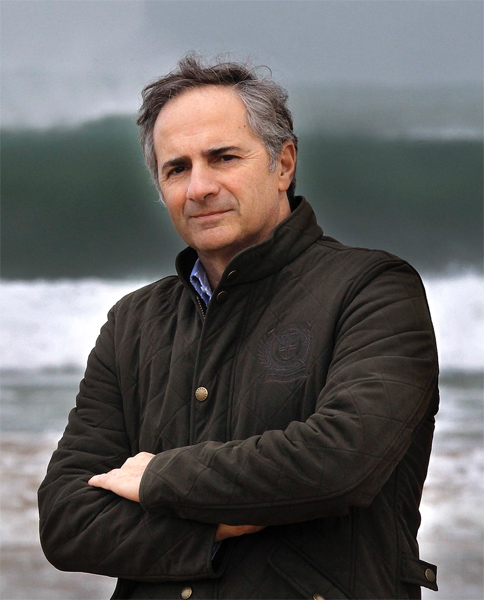
Iñigo J. Losada is a Full Professor at the School of Civil Engineering, University of Cantabria, and Research Director at the Environmental Hydraulics Institute (IHCantabria). He co-founded the Cantabria-Cornell Engineering Exchange Program and serves as Scientific Director of the Cantabria Coastal and Ocean Wave Basin. His work focuses on coastal dynamics, climate change adaptation, and ocean renewable energy. Coordinating Lead Author for IPCC reports (2014-2019) Editor-in-Chief of Coastal Engineering Ranked 2nd in Ocean Engineering citations (1992-2019) His research emphasizes: Coastal protection using green and grey solutions Wave interaction modeling with coastal features Climate change risk assessment and adaptation Wind and wave energy conversion systems Recent publications analyze global wave power variability, coral reef flood protection benefits, and nature-based coastal defenses. His work bridges experimental facilities (Cantabria Coastal Basin) with policy impact across 25+ countries. Scientific Awards King Jaime I Award (2018) John G. Moffat-Frank E. Nichol Award (2017) Navy Medal of Merit (2017) Member of Spanish Royal Academy of Engineering Losada has led over 25 EU/national projects, >80 technology transfer initiatives, and supervised 23 PhD students, shaping coastal protection policies and ocean energy development in Europe. His experimental infrastructure ranks 6th globally in Ocean Engineering (Shanghai Ranking, 2017).
Dr. Michelle Allen is a Lecturer at the School of Biological, Earth & Environmental Sciences , University of New South Wales (UNSW). Her research focuses on molecular biology, environmental microbiology, and bioinformatics, particularly the analysis of microbial communities in extreme environments such as deep sea sponges, Antarctic lakes, and stromatolites. Current Role : Postdoctoral Research Associate at the Centre for Marine Science and Innovation, UNSW (2023–present). Prior Roles : Senior member of the Cavicchioli Lab (2006–2022), NASA Planetary Biology Internship (2003), PhD student (2001–2006), and Lab Manager (2000–2001) at UNSW. Dr. Allen employs advanced techniques like long-read sequencing, metagenome-assembled genome (MAG) binning, and phylogenetics to study microbial adaptation, diversity, and nutrient cycling. Notable contributions include the discovery of novel organisms, viral interactions, and metabolic pathways in Antarctic ecosystems. Her recent publications span topics like sponge holobiont interactions, endolithic bacterial survival strategies, and global microbiome hypermutation. Key journals include ISME Journal , Applied and Environmental Microbiology , and Nature Communications . Despite her extensive involvement in mentoring students, no specific names are listed in the provided text.
Camilo Mora is a Professor in the Department of Geography at the University of Hawaii at Manoa, where he maintains an active research laboratory and teaches courses on environmental issues, biogeography, and data analysis. His academic journey began with a BSc in Marine Biology from Universidad del Valle in Colombia (1999), followed by a PhD in Biology from the University of Windsor, Canada (2005). He completed postdoctoral fellowships at the University of Auckland (2005), Scripps Institution of Oceanography (2006-2008), and Dalhousie University (2008-2010). BSc, Marine Biology, Universidad del Valle, Colombia (1999) PhD, Biology, University of Windsor, Canada (2005) Postdoctoral Fellow, University of Auckland (2005) Postdoctoral Fellow, Scripps Institution of Oceanography (2006-2008) Postdoctoral Fellow, Dalhousie University (2008-2010) Mora's research spans interconnected lines focused on understanding biodiversity patterns and their modification by human activities, with particular emphasis on climate change impacts. His lab specializes in big data analytics applied to diverse environmental challenges including heatwaves, disease transmission, marine ecosystems, and even unconventional topics like Bitcoin's environmental footprint. The Mora Lab operates on a 'divide and conquer' approach to tackle large research questions by breaking data gathering into individual parts that can be concatenated into central databases. Mora has received the CSS Excellence in Research award (2014) for his significant contributions to environmental science. His influential publications include groundbreaking work on the global risk of deadly heat (2017), the projected timing of climate departure from historical variability (2013), and the finding that over half of known human pathogenic diseases can be aggravated by climate change (2022). CSS Excellence in Research (2014) Highly cited publications in Nature and Nature Climate Change Research featured in major international media outlets Development of innovative research methodologies for large-scale analyses Mora leads an active research group that engages students in the full scientific process from idea generation to publication. His approach to mentoring involves creating yearly classes where graduate students, professors, and international advisors collaborate to tackle significant research questions, with papers typically completed within a single semester. His Carbon Neutrality Challenge project, spearheaded by his daughter Asryelle Mora, provides a practical mechanism for individuals to offset carbon emissions through tree planting. The Mora Lab maintains a distinctive approach to environmental research, working on seemingly diverse topics from reef fishes to Bitcoin, united by their reliance on big data analytics. This interdisciplinary methodology has produced impactful research across multiple domains of environmental science and climate change impacts, establishing Mora as a significant contributor to our understanding of humanity's environmental challenges.
Alexander Refsum Jensenius is a Professor of Music Technology and Director of the RITMO Centre for Interdisciplinary Studies in Rhythm, Time and Motion at the University of Oslo. He also leads the fourMs Lab and co-founded the MishMash Centre for AI and Creativity. His work bridges musicology, psychology, and technology, focusing on embodied music cognition, human motion analysis, and creative applications of AI. Notably, he pioneered research on air guitar motion and human micromotion through projects like the Oslo Standstill Database . Educated at the University of Oslo (BA in Music and Mathematics, MA in Musicology) and Chalmers University of Technology (MSc in Applied IT), Jensenius holds a PhD in Music Technology from UiO. He has held visiting researcher roles at UC Berkeley, McGill University, and KTH. Leadership roles include Department of Musicology Head (2013–2016) and Steering Committee Chair for the International Conference on New Interfaces for Musical Expression (NIME, 2011–2022). Research interests span music-related body motion, AI in creative contexts, and open research practices. Key contributions include the Music Moves and Motion Capture MOOCs, the Musical Gestures Toolbox software, and monographs like Sound Actions and Sonic Design . His work emphasizes interdisciplinary collaboration, with projects addressing ventilation systems' acoustic properties and cell culture vibrational effects. Awards include the European Open Data Champion recognition. He advocates for open science and maintains extensive digital archives of research materials, emphasizing institutional web pages as critical research infrastructure.
Zaman Noor is a Senior Lecturer in the Department of Computer Science and Engineering at The University of Texas at Arlington (UTA), where he has been serving since September 2022. He previously held an Adjunct Professor role at the same institution from January to August 2022 and was a Lecturer at Port City International University from 2015 to 2016. PhD in Computer Science, The University of Texas at Arlington, 2021 BS in Computer Science, Chittagong University of Engineering, 2019 His research focuses on Distributed Systems , Large Scale Computation , and Big Data Analytics , with an emphasis on optimizing array-based programming models for distributed environments such as Spark SQL. He explores compiler techniques for translating high-level array operations into efficient distributed queries, enabling scalable data analytics. Zaman Noor's publications reveal a strong trend in bridging programming languages with database systems, particularly through the translation of array-based loops and graph programs into optimized SQL-based distributed execution plans. His work intersects computer science, database systems, and high-performance computing, targeting applications in cloud computing, big data management, and machine learning infrastructure. He has received recognition for his research, including the Best Paper Award at IEEE BigData Congress in 2018 . Best Paper Award, IEEE BigData Congress, July 6, 2018 Zaman Noor advises master's students, including Priyank Gupta, and serves on thesis committees. He is actively involved in teaching and curriculum development, offering courses in distributed systems, cloud computing, and algorithms. He also contributes to academic service as a faculty advisor for the Google Developer Student Club and The Cornerstone, and as a member of the Publicity Committee. He leads and participates in educational initiatives and student mentorship, particularly in cloud computing and big data technologies, and supports student research through thesis supervision and committee roles. Zaman Noor is affiliated with research and teaching teams focused on data-intensive systems and distributed computing. His GitHub profile indicates engagement with open-source machine learning frameworks, including contributions to TensorFlow-related repositories, reflecting his interest in practical implementations of large-scale computation.
Dr. Pedro Henrique D. Batista is a Senior Research Fellow at the Max Planck Institute for Innovation and Competition, specializing in intellectual property law with a focus on innovation, biotechnology, genetic resources, and traditional knowledge. His research addresses regulatory frameworks for biodiversity, patent law reforms, and the intersection of IP with public health and climate change. Education: PhD in Law, Ludwig-Maximilians-Universität München (2013-2024) LL.M., Ludwig-Maximilians-Universität München (2012-2013) Bachelor of Law, University of São Paulo (2006-2011) Research explores the legal challenges of emerging technologies, including CRISPR and digital genetic sequences, and policy solutions for equitable innovation. His work critically examines international agreements like the Nagoya Protocol and TRIPS flexibilities. Publications emphasize regulatory coherence in intellectual property, with recent focus on WIPO reforms, antimicrobial resistance incentives, and climate-related patent frameworks. Articles frequently engage with EU law, Latin American IP systems, and global governance. Awards: Finalist, Best Diploma Thesis Award, University of São Paulo Law School (2011) Coordinates the Smart IP for Latin America Initiative and contributes to international bodies like the CBD Working Group on Digital Sequence Information. Part-time roles included editorship of GRUR International and IIC journals.
Ruben Martins is an Assistant Professor at Carnegie Mellon University's School of Computer Science and serves as the program director of the Master of Science in Computer Science (MSCS) . His research focuses on the intersection of constraint programming, program synthesis, analysis, and verification, with recent work aiming to make formal methods tools more accessible through automated reasoning. Ruben earned his Ph.D. with honors from the Technical University of Lisbon, Portugal (2013) , followed by postdoctoral research at the University of Oxford (2014-2015) and UT Austin (2015-2017) . Research Interests : Ruben's work bridges constraint programming and program synthesis , with applications in software verification , optimization , and automated reasoning . He has developed award-winning tools like Open-WBO , a modular MaxSAT solver that has won gold medals in international competitions. His publications span top-tier venues such as POPL , PLDI , FSE , SAT , and CP , often addressing real-world challenges from program analysis to network security. Scientific Awards include: Distinguished Paper Award at PLDI 2018 Distinguished Paper Award at FSE 2021 Distinguished Paper Award at SAT 2022 Gold medals for Open-WBO in MaxSAT competitions Teaching & Advising : Ruben mentors Ph.D., Master’s, and undergraduate students in research projects related to program synthesis, formal methods, and constraint solving. He teaches courses such as Bug Catching: Automated Program Verification and Advanced Topics in Logic: Automated Reasoning and Satisfiability , emphasizing hands-on experience with tools like Why3. His advising spans topics from AI-driven program repair to network protocol verification , fostering collaboration across disciplines.
James Curley is an Associate Professor in the Department of Psychology at the University of Texas at Austin, part of the College of Liberal Arts. He is Co-Director of the Behavioral and Social Data Science Major and Principal Investigator of the Social Dynamics Lab. His research focuses on the neurobiological basis of social behavior, social hierarchies, and long-term physiological changes linked to social status. He earned his B.A. from the University of Oxford and a Ph.D. from the University of Cambridge, followed by postdoctoral work at Cambridge before joining Columbia University in 2012. At UT Austin since 2017, he has received awards including the Affordable Education Champion (2021), Dr. Wendy Domjan Excellence in Teaching Award (2021), and President’s Associates Teaching Excellence Award (2022). His teaching includes courses on statistics, R programming, and social behavior analysis. Curley’s lab investigates social dynamics through interdisciplinary approaches, combining behavioral studies with genomic, transcriptomic, and neuroendocrine analyses. He emphasizes open educational resources, co-authoring an open-access textbook for statistics and developing interactive learning tools. His work spans animal and human social systems, exploring how early life experiences shape behavior and how social hierarchy impacts neural and physiological processes. He has published extensively on topics like social dominance, gene expression, and the application of network models to understand social interactions. Teaching highlights include PSY 317L (statistics for behavioral sciences), PSY 120R (R programming), and UGS 302 (Being Social). His commitment to affordable education and innovative pedagogy has been recognized nationally. Research collaborations include studies on primate microbiota, stress vulnerability in depression models, and transgenerational epigenetic effects. He maintains affiliations with platforms like GitHub and Google Scholar, reflecting his embrace of open science principles.